
(This is the fourth in a series of articles looking back at the Kafila experience over the last nearly two decades. Previous articles in this have been written by Subhash Gatade, Aditya Nigam and J Devika.)
Time has a funny way of flowing, stopping, or vanishing altogether. Looking back at 2008 I cannot believe it’s been a decade and a half and a little more since I joined a motley group of friends and strangers writing for a collective blog called Kafila., who had in their own way responded to a particular historical and political moment, as Aditya has written. At the time, I was ill-informed about the possibilities of online media in general, and in particular, of blogging as a way to Run from Big Media – our tagline. Perhaps it was for the best, since trawling through mine and others’ early essays I am struck by the sheer anarchy of topics on display. My own concerns at this prelapsarian moment ranged from the Disneyfication of childhood in America, to the global media orientalism on the solar eclipse, and student suicides and the seductions of the film industry in Mumbai. Over time, the articles on the blog became more directly political for most of us, a function possibly of the increasing polarisation in the country and region at large. I also developed some pet obsessions – sewer deaths, industrial accidents and deaths in general, and the state of higher education and teacher’s movements in India. On the whole I see now that I wanted to write most about labour.
When it started, Kafila to me was as a way to run from rigid editorial guidelines, the urgency of 24×7 news cycles and sometimes from one’s own intellectual and journalistic obsessions, to an open pasture where you had the space to explore a range of ideas. It did mean we unleashed ourselves on an unknown audience, but in the sixteen years that have followed since that early pasture grazing, the audience has come through and come back again and again, forming and unforming around authors, ideas, hashtags and events. The inchoate, often anonymous readership and the autonomous, deeply impassioned, even frequently explosive nature of those interactions remain to me the most treasured parts of being part of Kafila. In the posts, the comments section and in guest posts written independently or in response to one of the Kafila authors posts, the conversations would start and continue sometimes for months. Naturally, this was much more the case during ‘peak moments’ – events that the entire country and region was focused on including the IAC/Anna Movement; the Singur-Nandigram events, the Delhi gang rape of 2013 and other equally heinous rapes around the country that suddenly began to capture mainstream media’s attention; the JNU attacks and arrests and protests that followed; the suicide of Rohith Vemula; the CAA protests.
Looking back again, when the disillusionment with big media has not only deepened in these times but been additionally seasoned with suspicion about fake viewerships and bot troll armies, even the worst, most bruising of those reader vs author or reader vs reader fights seems like a gift the readership bestowed unknowingly on us, and on time as it passed. A stupendous archive of public engagement as it stands now – a kind of Kafilore.
Six years after my joining Kafila, the NDA coalition brought the Hindu supremacist BJP to power, and overnight, the sense of urgency in all of these conversations intensified manifold. To us at Kafila, even as we were getting smarter at reading the ground, and managing the technology and logistics of running an online blog, the election of 2014 brought up serious new concerns around media ownership for the mainstream press. Sometimes this had the unintended effect of strengthening the alternate media space and some Kafila members began to write for other blogs; or co-write for them, so we could reach wider and more diverse audiences.
To many readers from around the country and the world, the Kafila homepage may have conveyed a sense of cosiness – as if all 22 of us were not only literally on the same page on the blog, but sharing a giant living room and many cups of tea, thrashing out “the Kafila position” on things. Nothing could be further from the truth. I still – sixteen years later – haven’t met many co-authors, and know them only by their names and posts. Authors didn’t always have the time to read each other’s posts and even the smaller group that handles admin can go weeks without communication. On top of this, the fights! The intense ideological, political, intellectual disagreements that took place amongst Kafila authors – on issues ranging from our political convictions and affiliations to how to deal with anonymous comments and commentators that were becoming exhausting trolls – they are an archive of Kafilore in themselves. I remember sometimes being in a trance of comments, moderation, disputes on moderation, counter-comments and posts and email avalanches that lasted for days.
And looking back now, how else could it be? If we were to run from big media and party politics, we couldn’t legislate these things. We had to work them out case by case however tiring it got. Further, we had to stand behind our word when we said we allowed open disagreement and full free speech. This sometimes meant guest posting an article furiously critical of something we had written. When it happened to me, it was a sobering and humbling experience. And for that reason, likely more valuable than the posts in which I got thousands of views. I was forced to think about my unconscious prejudices, my location, and always, the question of reception in a polity as large and diverse as ours. Sadly, for many, many readers and observers and commentators on the outside, Kafila could never quite shake its image of being a clique. I hope when more histories from this incredible archive of Kafilore are written – both about the blog and the times it was responding to – that image is dented and eventually fades away.
In sum, I don’t think any of us – even the founding members and indefatigable warriors still active on the blog – really understood what a miracle it was to have a non-funded, independent media collective functioning for so long and with such a wide impact. We had our day jobs and daily struggles, and we were often late to the party in terms of catching up with everything that was unfolding in the alternate media space. On the other hand, Kafila was sometimes the first to notice something that mainstream media would later pick up.
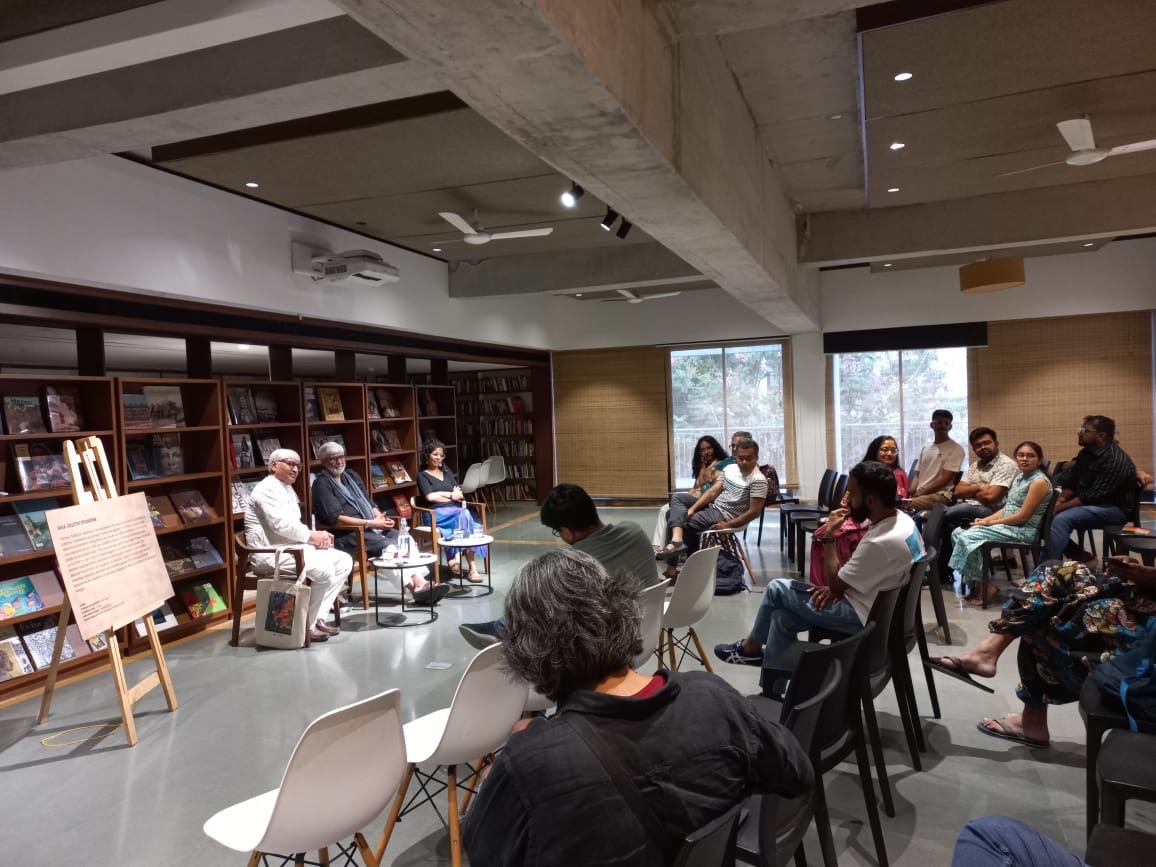
As others have written, the online and independent/new/social media space exploded in the decade that followed Kafila’s establishment. The question of relevance of a blog like this today is always in the air when we meet or communicate, as we did at the recent panels in Bangalore and Delhi looking back at eighteen years of Kafila. Multiple exciting suggestions were offered at these events by long-time supporters or new followers. Kafila may host long-form essays in the future; a podcast or a series of short videos could be in the offing. In any case, Kafila signals a moment in the life of the country/region/world and it made something unknown appear into the light. So we continue to Dissent, debate, create!
 KAFILA - COLLECTIVE EXPLORATIONS SINCE 2006