Tag Archives: general Elections 2014

A Chronicle of an Event Foretold? Sankaran Krishna

Guest Post by SANKARAN KRISHNA 

As journalists, academics and other pundits scramble to make sense of the just concluded elections to the Indian parliament, one can discern a few broad strands of opinion. One group – lets call them the Optimists – point to India’s almost seven-decades long experiment with electoral democracy and aver that we have the institutional strength and resilience in civil society to keep Prime Minister Narendra Modi and his Bharatiya Janata Party confined to a moderate middle that will be, ultimately, not very different from other regimes (single-party or coalition) that have ruled from Delhi. Prominent voices among the Optimists are Ashutosh Varshney, Ram Guha and Pratap Bhanu Mehta.

A second group – lets call them the Alarmists- see the BJP’s clear parliamentary majority (albeit arising from a mere 31% of the popular vote) as inaugurating an era of unapologetic Hindu majoritarianism that could severely strain and irreparably damage the plural fabric of Indian society. They are especially concerned about the fate of the Muslim minority and regard the 2002 pogrom in Gujarat as a foretaste of things to come.  The Alarmists range across activists like the late Asghar Ali Engineer, politicos like Mani Shankar Aiyar and intellectuals such as Akeel Bilgrami.  Continue reading A Chronicle of an Event Foretold? Sankaran Krishna
History and Idealism in the Aam Aadmi Party’s 2014 Victories in Panjab: Puninder Singh

Guest post by PUNINDER SINGH

article-2625216-1DBB956700000578-258_634x367

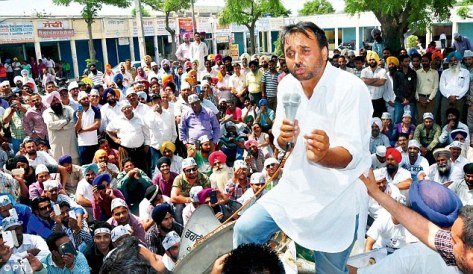
Bhagwant Singh Mann, now AAP MP from Sangrur, on the campaign trail

The Indian general election of 2014 will firstly be remembered for the signal self-destruction and implosion of independent India’s three-quarters-of-a-century-old ruling dynasty and its political arm, the Congress Party. Whether the unexpected series of victories by the fledgling Aam Aadmi Party (AAP) in Panjab will be remembered as an interesting anomaly, or as a galvanizing moment of genuine political change, remains to be seen. But just how a party that only a few months ago was essentially unknown on the national political scene, short on funding, and with virtually no organizational infrastructure, managed to secure 25% of the popular vote and four of thirteen Lok Sabha seats in Panjab (with a narrow miss on a fifth seat) is a tale that needs to be told. Although the newly demarcated role of the AAP as the gadfly and moral conscience of the political scene has been important to its success from a national perspective, it was the intersection of a new political ideology with a particular historical juncture that enabled the AAP to emerge as a giant-killer in Panjab where it met with frustrating disappointment in every other Parliamentary election that it contested elsewhere in India. 

The AAP’s success in Panjab comes almost exactly thirty years after the devastating events of 1984, including Operation Bluestar (the Indian army’s full out assault on one of the holiest of Sikh shrines, Harmandir Sahib, and the adjacent Akaal Takht, one of the seats of Sikh temporal power), the subsequent assassination of then Prime Minister Indira Gandhi, and in its aftermath, the Congress Party-orchestrated retaliatory massacres of thousands of Sikhs in New Delhi. The timing of the AAP’s success in Panjab precisely three decades after 1984 is by no means coincidental, but rather is closely tied to the unfolding history of Panjab in the post-1984 period. The momentous events of 1984 were followed by the tumultuous period of 1984-1992 in Panjab. Continue reading History and Idealism in the Aam Aadmi Party’s 2014 Victories in Panjab: Puninder Singh

Excitotoxins and MSG. (Or, the Modi Style of Governance)

download

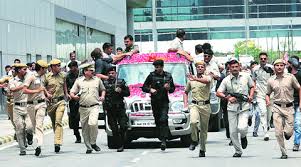
Prime Minister Elect of the world’s largest democracy arrives at the airport in New Delhi

Image Ravi Kanojia, Indian Express May 18, 2014

Circulating on Facebook for two days, and still unreported in mainstream media, is the story of overjoyed BJP workers attacking two mosques in Dakshina Kannada Lok Sabha constituency. Inebriated saffron activists, raising Hara-Hara Modi slogans, attacked two Masjids in separate places of the district on May 16th, after the poll results were announced.

The BJP activists also tried to harm the Imam of Muhiyuddin Juma Masjid, but he managed to escape from the hands of the miscreants.

Meanwhile, another group of miscreants, believed to be BJP activists, reportedly pelted stones at a Masjid in Suralpady near Kaikamba under the limits of Bajpe police station.

Today’s Hindu reports that a Muslim chicken stall owner was beaten up by a gang at Hoode village.

Mr. Ais told The Hindu that he was cooking food, for nearly 400 students at a nearby school, when seven persons came on four motorcycles asked for him with his daughter Ayesha at around 4.30 p.m. They later pushed her and came to him and asked if he was present when a victory procession [of the Bharatiya Janata Party] was taken out on May 16, to which he replied in the negative. They then beat him up.

But none of this muck sticks to the Teflon visage of Modi, ever. Continue reading Excitotoxins and MSG. (Or, the Modi Style of Governance)