
By SANJAY KAK
“Kashmir will haunt India the way Algeria haunts France.”
I remember that from ten years ago, on one of those early e-groups, the provocation almost buried in the dense threads that made up conversation there. “It will haunt Indian intellectuals”, the young Kashmiri correspondent had promised darkly, “in the way Algeria continues to haunt the French”. From its first pages, as the eponymous young narrator of The Collaborator walks us into the heart of his terrors, and introduces us to his hell, Mirza Waheed’s novel gives notice that the long overdue time of that haunting may be upon us.
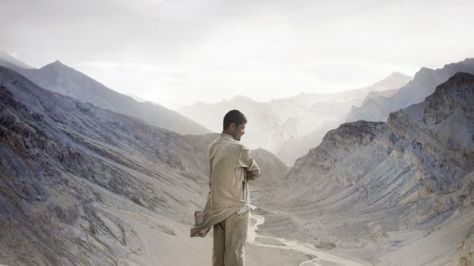
The book is set somewhere in the mountains of Kashmir, but not the unchanging, pastoral idyll of Bollywood cinema, of Gulmarg’s meadow and Pahalgam’s river; nor the ordered beauty of the Mughal imagination, of Shalimar and Nishat bagh. Instead it’s located in the present, in its “militarized wilderness”, in Nowgam, a “new village” settled in the violent aftermath of 1947. The mortal cut of the partition of Kashmir between India and Pakistan put a sudden end to the nomadic life of this community of Gujjar pastoralists, and Nowgam has grown in the way scarred tissue forms over wounds. Almost half a century later, sandwiched between the belligerence of those two nations, in the shadow of Koh-i-gham, the mountain of sorrow, the sound of heavy artillery fire being exchanged across these rugged peaks has become routine.
Read the full review, published in Biblio, here (download .pdf).
 KAFILA - COLLECTIVE EXPLORATIONS SINCE 2006