
Guest post by SOHUL AHMED
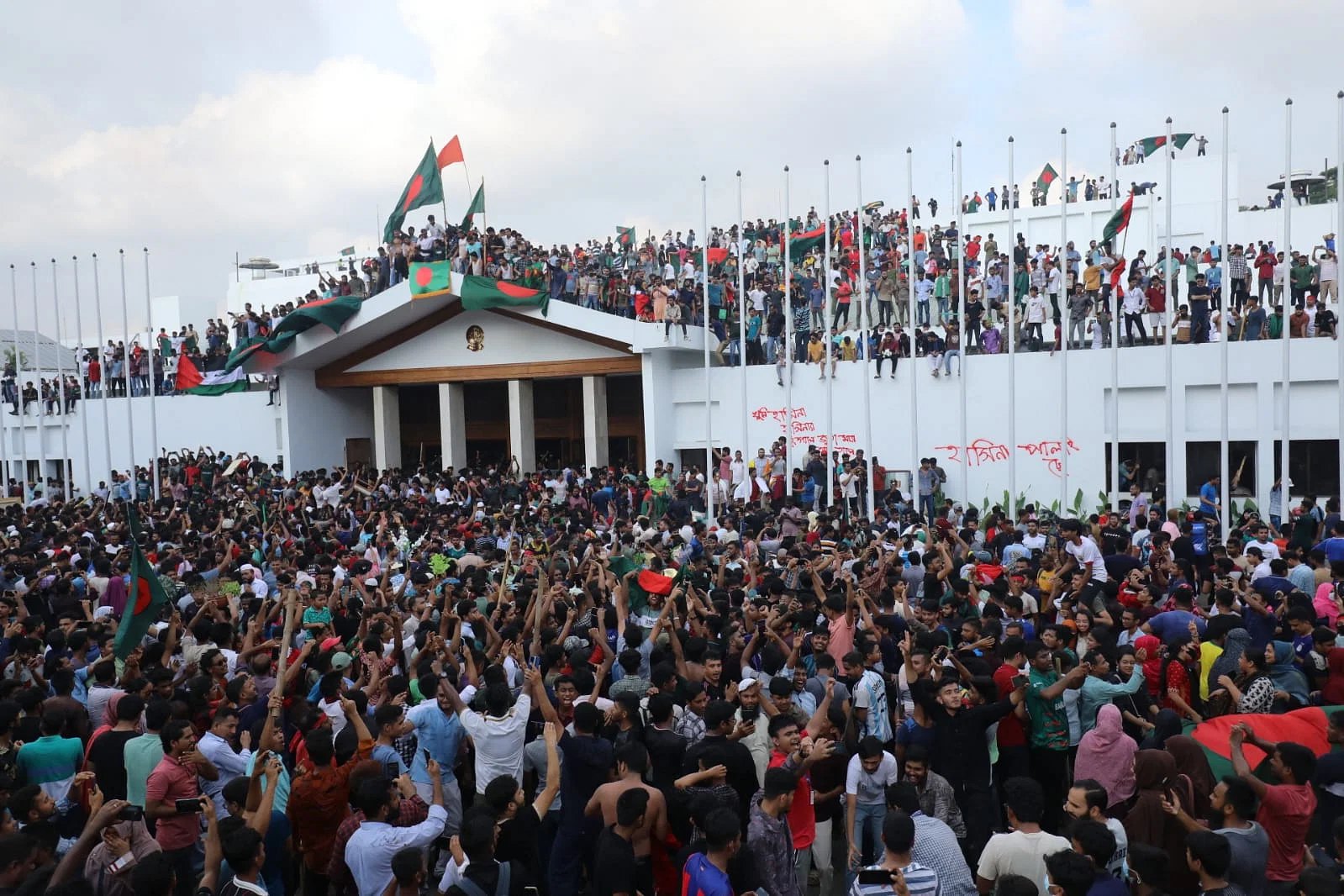
The statement issued on 24 September 2024 by the Lemkin Institute for Genocide Prevention titled ‘Statement on Threats to Democracy in Bangladesh’[1] has drawn our attention not only due to misrepresentation of facts but also because it aligns more with the narrative of the ousted autocratic regime led by Sheikh Hasina and her party Awami League than with the aspirations of the people of Bangladesh. The statement has failed to capture the complexities of the situation in Bangladesh and thereby presents a misguided narrative about the uprising and its aftermath. Under the circumstances we feel obligated to respond to set the record straight and point out the inaccuracies in the statement.
The Lemkin statement links the current political instability to the legacy of the 1971 genocidal events and describes Sheikh Hasina’s resignation as an ‘enormous watershed moment,’ warning that it could pave the way for the return of political groups that were associated with and denied the genocidal violence of 1971. The statement also alleges that individuals involved in the International Crimes Tribunal of Bangladesh (ICTB) are being arrested for their roles, suggesting an attempt to distort the history of 1971. Additionally, it warns that mobs with ‘anti-liberation war ideology’ are attacking Awami League members and minorities with ‘genocidal intent’. Furthermore, it accuses political parties of exploiting the student movement to destabilize the government.
The statement fails to highlight the monumental threats to democracy (engineered elections, extrajudicial killings and enforced disappearances, weaponization of the Digital Security Act, use of lethal force against citizens) that characterized the Awami League’s 15-year rule, its mobilization of the Liberation War of 1971 as an ideological framework for consolidating authoritarianism, and ground realities that discredit its perplexing claims of “genocidal intent.”

The Erosion of Democracy Under the Awami League: The Key Missing Point
The title of the statement implies that the ‘threats to democracy’ have emerged after August 5, when Sheikh Hasina fled the country in the wake of a popular uprising which cost more than 800 lives in a period of less than two weeks. Yet, over the past decade academics, media, international rights groups and institutions which track the state of democracy worldwide have noted the precipitous decline of democracy in Bangladesh. For example, Varieties of Democracy Institute (V-Dem) has been identifying the country as ‘moderate autocracy’.[2] Academics have been describing the Hasina regime as autocratic.[3] An incisive discussion on the pathway of the rise of autocracy in Bangladesh is offered by political scientist Ali Riaz on his book, Pathways of Autocratization: The Tumultuous Journey of Bangladeshi Politics.[4]
These studies have demonstrated that after coming to power in 2009, the Awami League chose a path that led to the concentration of power in the hands of Prime Minister Sheikh Hasina. Through three consecutive engineered elections it had created one-party legislatures, decimated civil society, constructed a partisan civil administration, and a compromised judiciary. As for the elections, New York Times described the 2018 election as ‘farcical’[5] and The Economist described it as ‘transparently fraudulent’, the FIDH (International Federation for Human Rights) called the 2024 election as ‘an election in name only’.[6]
In contrast, the Lemkin statement presents Sheikh Hasina as a popular democratic leader by noting that she has been elected five times since 1990. However, her last legitimate election was in 2008; as noted previously her elections in 2014, 2018, and 2024 were far from being “elections” in the true sense of the term. The 2018 election was characterized as ‘farcical’[7] and ‘bad for democracy.’[8] The 2024 election, in particular, was boycotted by all parties in Bangladesh and is widely regarded by international media as a dummy or sham election.[9] In fact, it can be argued that the Awami League government, which came to power through fraudulent elections held under party control in 2014, 2018, and 2024, had operated illegally and unconstitutionally. Therefore, the claim that she has been ‘elected’ five times is far from the truth; in reality, she was legitimately elected only twice, while the other three terms were without any mandate from the people.
The entire tenure of Hasina was marked by widespread incidents of extrajudicial killings and enforced disappearances. Following Sheikh Hasina’s resignation in early August, at least three people who were ‘disappeared’ were released from ‘Aynaghor’ in the country. The Awami League regime had employed systematic enforced disappearances against dissenters and political opponents and introduced a torture cell known as ‘Aynaghor.’[10] According to the Bangladeshi NGO Odhikar, between 2009 and June 2024, at least 708 cases of enforced disappearances were reported.[11] Of those cases, many were found dead and many of them are still missing. International human rights organizations have repeatedly documented cases of enforced disappearances and called for investigations. For example, Human Rights Watch published a report in 2021 titled Where No Sun Can Enter: A Decade of Enforced Disappearances in Bangladesh, which stated that ‘enforced disappearances, in particular, have become a hallmark of Prime Minister Sheikh Hasina Wazed’s current decade-long rule.’[12] ‘Human Rights Watch also found that the authorities use enforced disappearances – and the threat of enforced disappearances – to silence critics, chilling free speech.’ It also recommended that the ‘UN should ban death squads from peacekeeping missions,’ as it was revealed that officers involved in these crimes were deployed in peacekeeping operations.[13]
Alongside enforced disappearances, extrajudicial killings and the implementation of draconian law such as the ‘Digital Security Act’ have fostered a climate of fear in Bangladesh, effectively silencing the entire public sphere. UN-appointed independent human rights experts highlighted in 2023 that, ‘Bangladesh [was] using enforced disappearances, extrajudicial killings to silence rights defenders.’[14] Over the past 13 years, around 2,597 individuals have lost their lives due to extrajudicial executions, fatal shootings, and custodial torture across the country[15]; however, these numbers have significantly declined since the U.S. sanctions were enacted in December 2021. A report from Human Rights Watch noted, ‘The rise in enforced disappearances in Bangladesh has been accompanied by other serious violations that security forces have deployed against critics and the political opposition as part of the Awami League’s increasingly authoritarian rule… Authorities have arrested hundreds of Bangladeshis, even children, for peaceful protests or for criticizing the government on social media. Most of these arrests are under the Digital Security Act…Security forces have killed hundreds of people, including opposition members and activists, in ‘crossfire’ incidents or ‘gunfights,’ euphemisms for extrajudicial killings…’[16]
It is against these egregious violations of human rights that a popular uprising in July-August ousted the dictatorship of Sheikh Hasina. Unfortunately, the Statement of the Lemkin Institute has failed to mention them and thus presented a narrative which is inaccurate and highly misleading. It has not taken into account the extensive media coverage which showed that citizens rallied against long-standing oppression and discrimination. The student protests and the state violence directed at them fueled this collective anger, leading to widespread participation in the movement, regardless of party affiliation. During the last days of the regime, Hasina employed all law enforcement agencies, particularly the Bangladesh Police, to suppress the movement, which resulted in the massacre of nearly 800 citizens. Ultimately, the Bangladesh Army’s refusal to partake in the massacre compelled her to flee the country.
The popular uprising—highly spontaneous and horizontal—involved all sections of society, including various political, intellectual, and cultural groups. Almost all political parties in Bangladesh have been highlighting the threats to democracy and advocating for the restoration of democracy for a long time. However, the statement overlooks these realities and claims that political parties (essentially referring to all of the AL regime’s existing political opponents) used the student movements to destabilize the government, while failing to underscore how the Awami League systematically caused the erosion of democracy in Bangladesh during its tenure.
Liberation War and Genocide: An Ideological Framework for Autocratic Government
The most prominent theme throughout the statement revolves around the genocidal events and the Liberation War of 1971. Besides linking the current political instability with the events of 1971, the statement presents a skewed historiography of Bangladesh that centers exclusively on Sheikh Mujibur Rahman, claiming that he ‘secured Bangladesh’s independence from Pakistan.’ While Sheikh Mujib’s role in the birth of Bangladesh is undeniably significant, focusing solely on him, while systematically erasing the contributions of other leaders, reflects a common tactic used by the Awami League to monopolize the narrative of the Liberation War.
The statement frames the fall of the dictator (‘resignation of Sheikh Hasina’) as an ‘enormous watershed moment,’ claiming that if the current trajectory continues, those involved in the 1971 genocidal violence, and those who later denied it, may return to political power. The statement’s claim that the Awami League government initiated trials against those associated with the 1971 genocide is true but to suggest that now, with the fall of the Awami League, there is fear that these groups could reemerge in politics is highly exaggerated. The statement also expresses concern that this group may ‘rewrite history,’ potentially distorting the established narrative of the Liberation War. This is ironic because over the past 15 years, the AL had practically rewritten history to fit to its narrative emphasizing the supremacy of one leader and the party while undermining the role of other leaders and the people.
It is in this context that two points warrant our attention. First, this movement is entirely unrelated to the genocide trials. While it includes people from all segments of society, including those alleged to have ties to groups associated with the genocide, the statement overlooks an important fact—ironically, the Awami League itself campaigned in alliance with these same groups at times. Historically, the Awami League played a role in bringing these groups back into mainstream politics, which undermines the narrative presented in the statement.
Second, while the Awami League promised justice when they came to power in 2009, they weaponized the genocide trials as a political tool, disregarding international concerns and imposing capital punishment. The trials were heavily criticized and deemed ‘flawed’[17] due to the lack of due process and procedural weaknesses, with many perceiving them as ‘political witch-hunts.’[18] In effect, the Awami League distorted the judicial process and exploited the deep-seated desire for justice, turning it into a political maneuver under the guise of delivering justice.
Reducing the history of the Liberation War and genocide to a narrow party narrative has been the most significant ideological tool that enabled the Awami League’s shift towards autocracy. By monopolizing the legacy of the war, they labeled anyone outside their narrative of events as ‘anti-Liberation force,’ marginalizing opposing voices and using this rhetoric to consolidate power. They would not even hesitate to engage in such slander against any freedom fighter.[19]
In the name of upholding the ‘spirit of the Liberation War,’ political parties, groups, and individuals were marginalized for their political positions. Criticism of this notion was framed as unpatriotic, or even treasonous. Notably, the International Crimes Tribunal (ICT) convicted journalists, even freedom fighters, for contempt over their critiques of the trial process. Professor Bina D’ Costa, an eminent scholar on the 1971 genocide and justice, pointed out that ‘the contempt proceedings illustrate the recent justice conundrum in Bangladesh and raise questions about the restricted spaces for public discussion and disagreement regarding what justice is and what it means.’[20]
The use of the Liberation War and genocide narrative against dissent had become a clear pattern, particularly evident in this popular uprising. Over the past fifteen years, whenever people have protested with legitimate demands, Sheikh Hasina and the Awami League government have branded them as ‘Razakars’ or anti-Liberation forces. This tactic was even used during the 2018 student quota reform movement, where participants were labeled children of Razakars.[21]
In mid-July, when Sheikh Hasina insulted the protesters by labeling them as ‘Razakars,’ it further ignited and intensified the movement. The term ‘Razakar’ holds deeply negative connotations in Bangladesh, as it refers to collaborators with the Pakistani military during the 1971 genocide. As a result, students during this recent movement chanted indignant slogans like, ‘I asked for rights, and I became a Razakar,’ (Cheyehilam Adhikar, Hoye gelam Razakar) and ‘Who are you? Who am I? Razakar!/ Who says this? The dictator, the dictator’(Tumi ke Ami ke, Rajakar Rajakar, Ke boleche ke boleche, Soirachar, Soirachar). It is evident from the slogans and the context that the students did not claim to be ‘neo-Razakars,’ as suggested in the statement. Instead, they rejected the term ‘Razakar’ as a deeply offensive slur. The insult caused significant emotional distress among the protesters. However, the statement not only attempts to legitimize Sheikh Hasina’s labeling of dissenters as ‘Razakars’ but also misinterprets the slogans as ‘neo-Razakar.’ The tone and tenor of the statement raises the question of whether it took the AL’s narrative at face value.
The way the statement addresses the issue of rewriting history suggests a belief in a single, party-driven version of history—specifically the version propagated by the Awami League. However, a basic understanding of history acknowledges that it is multi-faceted, comprising various perspectives rather than a singular partisan narrative. Reducing history to a partisan account serves as a political tool for autocratic or fascist regimes. For years, the Awami League government has weaponized the history of the Liberation War as an ideological tool to sustain its autocratic rule. Independent historiography has been suppressed through laws such as the Digital Security Act. Due to the culture of fear, as explained earlier, consequently, the partisan history of the Liberation War has effectively become the national narrative. Sheikh Mujib and the Liberation War have been turned into ideological instruments, used to justify the regime’s actions. Institutions tied to the Liberation War have become mere propaganda outlets, and sculptures of Mujib have become symbols of this autocracy.
In response to a regime that deployed such strategies, it is not unusual for popular uprisings to target symbols of power, as has been witnessed in Bangladesh. Protesters have repeatedly called for the historiography of the Liberation War to be liberated from the autocratic grip of the Awami League, seeking to preserve an independent and multifaceted historical narrative.
Misrepresentations Surrounding Genocidal Intent
The most unfortunate aspect is that this statement arrives at conclusions that are either partially true or completely false. The statement claims that the government is arresting judges, prosecutors, human rights workers, journalists, and others involved in the ICTB process, which is incorrect. In reality, those being arrested are individuals who were involved with the massacre in July, which resulted in the deaths of nearly 800 people, as well as those who advocated for and justified this violence, and those who participated in various misdeeds during the previous autocratic regime.
However, it is true that there are significant criticisms regarding these arrests, concerns that in some instances, due process is not being followed and that adequate security is not being provided during court proceedings. Civil society has already expressed deep concerns regarding arbitrary cases. It is unfortunate and regrettable that, the legacy of the Awami League regime of such cases is continuing. What is, however, positive is that such concerns can now be expressed without the fear of being subjected to persecution.
Secondly, the statement claims that mobs with an ‘anti-Liberation War ideology’ attacking the Awami League, Hindus, and other religious minorities indicate genocidal intent. This assertion is nothing short of a blatant lie. One cannot help but question how an organization that focuses on genocide can so readily label such a sensitive issue as indicative of genocidal intent. Furthermore, how has the institute assessed the ideology of the ‘mob’? This seems to stem from an unquestioning acceptance of the Awami League’s narrative.
Mob violence and the persecution of minorities have long been serious issues in Bangladesh, reaching their peak under the Awami regime. Notably, Awami League leaders and activists have been involved in nearly all attacks against Hindus during their time in power.[22] Following the mass uprisings, the massacre of July sparked an outpouring of public anger directed at Awami League leaders, particularly those long associated with murder, corruption, and looting, resulting in attacks on their property. Although the mass protests that followed this violence led to some retaliatory actions and residences belonging to some Hindu Awami League leaders were attacked, such acts were swiftly condemned and contained.
Additionally, alarming falsehoods and propaganda regarding the persecution of minorities were spread by Indian media, inciting panic across the country and complicating the situation.[23] In the wake of the post-revolutionary violence, protesters, students, and various political parties, including the BNP and others, have implemented measures to safeguard minority communities from possible attacks. By framing this post-uprising mob violence as ‘genocidal intent’, the Institute demonstrates a profound misunderstanding of the situation.
For Truth and Justice
The July mass uprising is one of the rare instances of non-violent, spontaneous, and horizontal civil resistance. From the very beginning, the protesters employed a range of non-violent methods and tactics—such as demonstrations, rallies, civil disobedience, direct action, and non-cooperation. However, the situation escalated into violence when Awami League General Secretary and Road Transport and Bridges Minister Obaidul Quader urged ‘party members to be vigilant against subversive agendas’[24] and the government ordered the Bangladesh Police to ‘shoot on sight.’ [25]Between 15 and 19 July, the police and Border Guards Bangladesh killed nearly 300 protesters. The total number of casualties from the mass uprising is still unknown, as efforts to compile the list are ongoing.
The statement repeatedly highlights targeted attacks on Awami League leaders, but does not specify that they were not orchestrated or systematic but rather a spontaneous outburst of public rage against the brutal actions of the Awami regime. While we do not condone these attacks, we cannot ignore that the statement has completely omitted any acknowledgment of the systematic massacre over a period of 20 days, seemingly failing to recognize this as a crime. The Lemkin Institute, while voicing support for peaceful protest, fails to condemn the Awami regime’s violent suppression of the protest, which included the massacre of civilians.
On previous occasions, the Institute has raised its voice for the trial of the 1971 Genocide trial, and we were glad to see such a stance as we too seek justice for the 1971 Genocide, but we are surprised and shocked to see that it has not raised its voice against the July-August 2024 massacre and demanded justice for those who have lost their lives for their rights to live in a democratic system. We hope the Institute will join us in demanding that those who have committed crimes against humanity in the past years, especially between mid-July and mid-August be held accountable.
- Sohul Ahmed, a researcher at the 1971: Genocide-Torture Archive & Museum in Khulna, focuses his work on genocide, violence, history, politics, and decolonization studies.
[1] See, https://www.lemkininstitute.com/statements-new-page/statement-on-threats-to-democracy-in-bangladesh?sfnsn=wa
[2] See, Transformation Index BTI 2022: Governance in International Comparison. Gütersloh: Verlag Bertelsmann Stiftung.
[3] See, Savoia, Antonio, and Niaz Md. Asadullah. 2019. “Bangladesh Is Booming, But Slide Towards Authoritarianism Could Burst the Bubble.” The Conversation, February 28. https://theconversation .com /bangladesh -is -booming -but -slide -towards -authoritarianism -could -burst -the -bubble -112632.
[4] Ali Riaz, Pathways of Autocratization: The Tumultuous Journey of Bangladeshi Politics, Routledge, 2024
[5] See, https://www.nytimes.com/2019/01/14/opinion/editorials/bangladesh-election-sheikh-hasina.html
[6] See, https://www.fidh.org/en/region/asia/bangladesh/bangladesh-an-election-in-name-only
[7] See, https://www.nytimes.com/2019/01/14/opinion/editorials/bangladesh-election-sheikh-hasina.html
[8] See, https://www.washingtonpost.com/world/2018/12/31/why-bangladeshs-landslide-election-result-is-bad-its-democracy/
[9] See, https://www.aljazeera.com/news/2024/1/3/dummy-candidates-coerced-voting-inside-bangladeshs-election-charade
[10] See, https://www.thedailystar.net/opinion/editorial/news/locate-and-free-all-victims-enforced-disappearance-3675346
[11] See, https://www.thedailystar.net/news/bangladesh/news/enforced-disappearance-govt-sets-inquiry-commission-3688236
[12] See, https://www.hrw.org/report/2021/08/16/where-no-sun-can-enter/decade-enforced-disappearances-bangladesh
[13] See, https://www.hrw.org/news/2021/08/16/bangladesh-86-victims-enforced-disappearance-still-missing
[14] See, https://news.un.org/en/story/2023/07/1138572
[15] See, https://interactive.netra.news/extrajudicial-killings-bangladesh/#:~:text=In%20total%2C%20police%20officers%20were,used%20euphemism%20for%20extrajudicial%20executions.
[16] See, https://www.hrw.org/report/2021/08/16/where-no-sun-can-enter/decade-enforced-disappearances-bangladesh
[17] See, https://www.hrw.org/news/2016/03/23/bangladesh-war-crimes-verdict-based-flawed-trial ; https://www.aljazeera.com/news/2014/12/23/bangladesh-war-trials-justice-or-politics
[18] Bina D’Costa, Of Impunity, Scandals and Contempt: Chronicles of the Justice Conundrum, International Journal of Transitional Justice, Volume 9, Issue 3, November 2015, Pages 357–366, https://doi.org/10.1093/ijtj/ijv023
[19] See, https://en.banglaoutlook.org/opinion/234810
[20] Bina D’Costa, 2015
[21] See, https://bdnews24.com/bangladesh/ministers-comments-lead-divided-quota-reform-protesters-to-unite
[22] See, https://en.banglaoutlook.org/investigation/234580
[23] See, https://www.aljazeera.com/news/2024/8/8/islamophobic-alarmist-how-some-india-outlets-covered-bangladesh-crisis
[24] See, https://www.dhakatribune.com/bangladesh/352427/quader-asks-party-men-to-take-position-to-resist
[25] See, https://www.theguardian.com/world/article/2024/jul/20/bangladesh-police-given-shoot-on-sight-orders-amid-national-curfew
 KAFILA - COLLECTIVE EXPLORATIONS SINCE 2006