
Guest post by SOHUL AHMED
[We bring for our readers, this essay by Sohul Ahmed, which details the context and background of the recently held Bangladesh election. Though a cacophony of voices from the Right to the Left in India had already pronounced their shared judgement of an “Islamic takeover” of Bangladesh via the July Uprising, what this essay details the extremely significant political process through which the July Charter was formulated, signed on to by 33 parties, and how the most orderly and peaceful election was held in the country just two weeks ago. This article rebuts the general impression created by this Right-Left propaganda in India that supreme chaos reigns in Bangladesh. Since this article was written, a new government has been formed with a Hindu and a Chakma-Buddhist face each, in the cabinet. The main Islamic party has been trounced in the elections. So much for all the doomsday prophesies about post-July Bangladesh. That does not mean everything is fine – and Ahmed explains the complications that still exist. – AN]
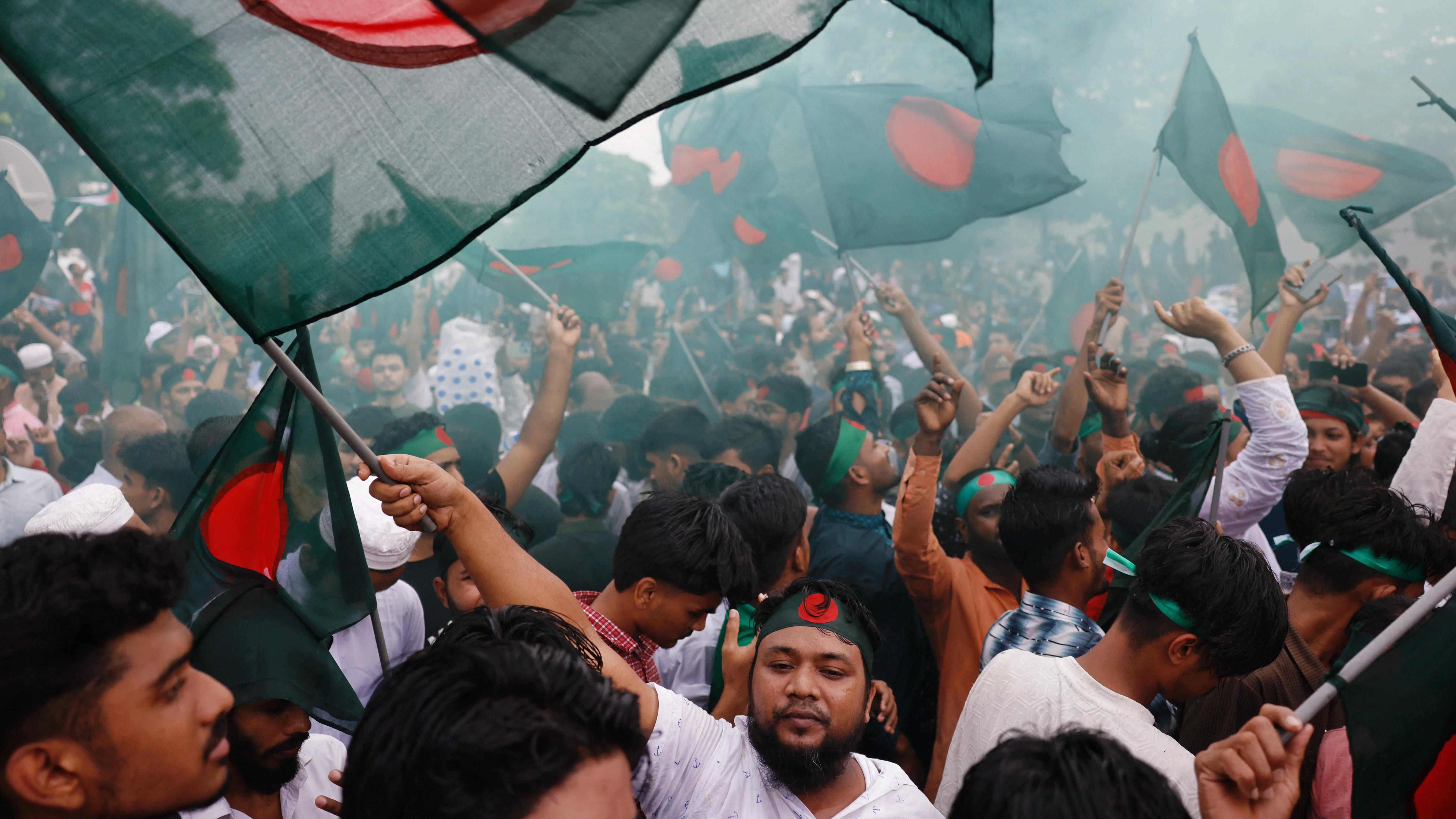
Bangladesh stands at a crucial juncture in its political transition following the July Uprising. The country witnessed its national election almost one and a half years after the ousting of Sheikh Hasina’s autocratic regime – an election widely regarded as one of the most consequential moments in the country’s political history. Our characterization of this election as “crucial” or even “historic” has deep roots in Bangladesh’s recent electoral experience.
This is the first genuinely competitive election after 2008. Although three national elections were held under Hasina’s rule, all remain highly controversial and deeply flawed. Before the 2014 election, the then-ruling Awami League (AL) amended the constitution and abolished the caretaker government system, fundamentally altering the electoral process. Consequently, the 2014 election was boycotted by major opposition parties. While most political parties participated in the 2018 election, it was widely criticized for massive irregularities, including allegations that a significant portion of votes had been cast the night before polling day. These experiences once again led opposition parties to boycott the 2024 election. As a result, an entire generation born after the 1990s has effectively been deprived of exercising its voting rights in three consecutive elections. For many young citizens, the 2026 election was the first meaningful opportunity to cast their vote.
The AL regime has often been characterized by scholars as autocratic or hybrid in nature. A defining feature of Bangladesh’s democratic backsliding was the erosion of electoral integrity, which effectively disenfranchised citizens. The absence of credible mechanisms for peaceful transfer of power ultimately created conditions that culminated in the July Uprising, whereby the ruler was removed from office by force rather than through ballots. Yet this crisis of power transfer is not entirely new. Since its independence in 1971, Bangladesh has struggled to institutionalize a stable mechanism of peaceful democratic alternation in power since once in office, incumbents have proven difficult to remove through purely electoral means. In fact, the people of Bangladesh have never been able to participate in two consecutive peaceful and credible transfers of power through elections. This political backdrop renders the 2026 election both crucial and profoundly historic.
Referendum: Why and How?
During Sheikh Hasina’s rule, political activists, academics, and civil society organizations had repeatedly criticized the regime, seeking to identify the structural roots of Bangladesh’s democratic crisis. A central question shaped much of this debate: why did democracy in Bangladesh fall into crisis again after a popular movement toppled military ruler Hussain Muhammad Ershad in the 1990?
This inquiry gradually shifted the focus towards what many described as a structural crisis of the state, particularly the ‘Constitution’. Although the Constitution adopted in 1972 promised a democratic republic, its functional design was seen as highly centralized and executive-dominant. It concentrates extensive power in the hands of the Prime Minister. Consequently, during the anti-autocracy and anti-Hasina struggle, ‘constitutional and institutional reform’ became a primary demand. It is argued that without structural reform, elections would merely reproduce the same cycle of authoritarian consolidation.
Following Hasina’s fall, the discourse of reform quickly gained public traction. Since the recurring crisis stemmed largely from the absence of a credible and peaceful mechanism for the transfer of power, institutionalizing such a mechanism became central to the post-uprising political agenda. Slogans increasingly emphasized systemic transformation. Drawing on both pre-July activism and post-July popular demands, the interim government established several reform commissions. These commissions addressed key sectors, including Public Administration, Anti-Corruption, the Judiciary, the Police, the Constitution, the Electoral System, Local Government, Women’s Affairs, Labour Rights, Mass Media, and Healthcare. Each commission produced reports identifying structural limitations, proposing recommendations for reform. Based on the reports of the Constitutional, Public Administration, Police, Electoral System, Judicial, and Anti-Corruption Reform Commissions, a National Consensus Commission was formed to review and consolidate these recommendations. The Commission initiated a long dialogue process in three phases, engaging political parties and a broad range of stakeholders to develop a consensus-based framework for political and administrative reforms.
After extensive dialogue and debate, a consensus was reached on major issues, though with recorded notes of dissent in certain areas. On the basis of this consensual framework, a July Charter was drafted and signed by 33 political parties. By signing the charter, these parties committed themselves to implementing the agreed reforms in Parliament upon/if securing representation. This is particularly significant because, for the first time in Bangladesh’s history, the political actors engaged in direct dialogue and negotiations to resolve a deep structural crisis without any foreign mediator. The proposed referendum is fundamentally about this consensus-building process. It seeks public approval for the reform framework agreed upon by political parties. Citizens are being asked whether they endorse the consensus and authorize elected representatives to implement the reforms. Under this arrangement, the next Parliament will assume a dual role. First, it will function as a regular legislative body. Second, the Parliament will simultaneously operate as a Constitutional Reform Council, mandated to implement the required constitutional reforms within 180 days.
The present election, while marking a return to a competitive electoral system in Bangladesh after years of contested or boycotted polls, also it aspires to establish a sustainable political settlement by institutionalizing structural reform. The referendum mechanism seeks a transformation of the constitutional and institutional framework, aimed at making the political system more accountable, balanced, and people-centred.
The Changed Political Landscape
The election therefore unfolded within the dramatically transformed political landscape, reshaped by the July Uprising. For decades, Bangladesh’s political arena was defined by a binary between the AL and the Bangladesh Nationalist Party (BNP). From the restoration of parliamentary democracy in the 1990s until 2008, these two parties alternated in government. The Jatiya Party (JaPa) and Bangladesh Jamaat-e-Islami (JI) were also significant actors, typically aligning themselves with one of the two major parties.
The AL-led camp was generally characterized as centre-left, while the BNP-led camp was considered centre-right. JI’s controversial role in 1971 made the public sphere highly polarized and morally contested. This structured polarization between two identifiable blocs defined Bangladesh’s political competition for nearly two decades. However, after 2008, this binary equilibrium was gradually dismantled. The AL systematically suppressed opposition forces, marginalizing BNP and other parties, and effectively consolidating a dominant-party system for nearly 15 years. The July Uprising erupted in this context. What began as a movement demanding reform of the government job quota system escalated into a spontaneous mass uprising after state-sponsored violence reportedly killed more than a thousand people during July–August. Amid the turmoil, Sheikh Hasina fled the country, and many top Awami League leaders also left. Subsequently, a fact-finding mission by the United Nations identified evidence of crimes against humanity during the July violence and pointed to the role of the ruling party in it. Victims of enforced disappearance were reportedly released following the regime’s collapse, intensifying public demands for justice.
In this charged environment, a strong popular sentiment emerged demanding accountability of the former ruling party. Many argue that it would be unjust for a party accused of involvement in mass killings to resume normal political activities before facing trial. As a result, the AL’s participation in reform dialogues and electoral politics has become highly contested, effectively excluding it from the current political process. This absence has fundamentally reshaped the political landscape. Former allies such as the BNP and JI are no longer aligned in the same configuration. The BNP remains the largest and most organizationally established party. Meanwhile, student leaders from the uprising have formed a new political platform, the National Citizen Party (NCP), presenting themselves as a potential ‘third force’ and advocating a ‘new settlement’ in politics. Although the NCP describes itself as centrist, its strategic electoral alliance with JI and other Islamist parties has positioned it closer to the centre-right in practical terms.
At the same time, the BNP appears to be recalibrating its position toward the centre-left, at least rhetorically. Its public stance against mob violence and its emphasis on institutional stability have made it more acceptable to segments of the urban middle class and civil society. In the absence of the AL, Bangladesh is thus witnessing a reconfiguration of political alignments. On one side stands a repositioned BNP, increasingly occupying centre-left political space; on the other, a centre-right bloc shaped by JI and the NCP. Despite these shifts, the BNP remains the most popular and organizationally dominant party in the current landscape.
‘Results’ in a Reshaped Political Landscape
The BNP secured a massive landslide victory in the election, and the people endorsed the referendum with a clear ‘yes’. BNP and its allies won 212 seats, JI and its allies secured 77 seats, Islami Andolan Bangladesh won 1 seat, and others obtained 7 seats. Of the 77 seats won by JI and its allies, the NCP secured 6 seats. Meanwhile, approximately 68.1% of voters supported the referendum, indicating broad public endorsement of the proposed reforms outlined in the July Charter.
The scale of the BNP’s victory is not entirely surprising given the political landscape. As the largest and most experienced party, BNP had been widely projected by major surveys over the past year to win the election. The rise of far-right tendencies among certain fanatic groups – including incidents such as vandalizing religious shrines and attacks on media outlets like Prothom Alo and The Daily Star – alongside visible increase in mob violence, reshaped voter perceptions. In this environment, BNP’s comparatively moderate rhetoric and its positioning against mob violence made it a more reassuring choice for segments of the middle class and civil society.
However, the rise of JI – winning 68 seats on its own (77 with allies) – drew even more attention than the BNP’s landslide victory. Several factors help explain this development. First, the absence of the AL from the political arena created electoral space for it, since Bangladesh has a large segment of floating voters, and the removal of one major pole of competition inevitably redistributed votes. Second, JI performed particularly well in Khulna and Rangpur divisions. Rangpur had historically been a stronghold of the JaPa, but with JaPa’s organizational decline in the region, JI successfully occupied that political space. Pre-election surveys had already indicated that JI would perform strongly in the Rangpur belt. Third, JI benefited from alliances with other Islamist parties, support from segments of young voters associated with the NCP, and internal conflicts within BNP. In several constituencies, rebel BNP candidates divided the vote, indirectly benefiting JI. Fourth, after August 5, sections of BNP’s grassroots activists became embroiled in allegations of crimes such as murder, extortion, and local-level corruption. In many violent incidents, BNP-affiliated individuals were reportedly involved. These developments alienated some voters, who then shifted toward JI in the absence of alternative options. Fifth, many of the seats won by JI were located in border areas. It can be argued that issues such as border killings and anti-India sentiment – narratives that JI has actively mobilized – resonated strongly in these constituencies.
However, JI failed to make significant gains in regions known for major religious shrines, such as Sylhet or Chittagong. Incidents of shrine vandalism by far-right Islamist groups over the past one and a half years likely played a role in limiting its appeal there. Moreover, during the campaign, JI’s public stance on certain women-related issues seems to have alienated segments of female voters, indirectly benefiting BNP. Taken together, the landslide victory of BNP and the simultaneous rise of JI should not be interpreted purely through an ideological lens. Rather, the results reflect the dynamics of the current political situation and the pragmatic calculations of Bangladesh’s traditionally fluid electorate.
Two additional issues also deserve attention. First, the online sphere was overwhelmingly dominated by activists and supporters of Bangladesh JI. Major YouTube influencers – operating from abroad – openly supported JI and amplified its narratives through coordinated propaganda efforts. Their digital activism, combined with the earlier electoral success of JI’s student wing in university campus elections, created a strong perception that JI was poised to secure a far larger parliamentary presence. The actual election results suggest, however, that the influence of this online campaign was far more limited in real-world electoral politics.
Second, there had been sustained propaganda from the AL camp claiming that, in its absence, Islamist forces – particularly JI – would come to power. This narrative was closely linked to the broader insinuation that the July Uprising itself was fundamentally pro-Islamist. During its years in office, AL repeatedly claimed that it alone could prevent an Islamist takeover. This became its justification for autocratic consolidation of power. The electoral outcome challenges both that narrative and the charge that the July Uprising was inherently pro-Islamist. The outcome reflects a more complex political reality.
If we turn to the NCP, the student-led party secured 6 seats, largely with the active support of JI. However, internal divisions within the party – particularly over the decision to join the JI alliance – clearly weakened it. The split over this strategic choice undermined its cohesion at a critical moment. Moreover, the NCP did not have sufficient time to build a strong organization capable of converting its supporters into committed voters. At the same time, its ambiguous stance on mob violence, relative silence on the vandalism of religious shrines, and participation in rallies widely perceived as anti-women contributed to a negative public image. Although the alliance with JI enabled the party to secure six seats, it also damaged its centrist claim and reinforced the perception that it was leaning toward the right.
Remarkably, after many years, Bangladesh witnessed an election with almost zero casualties – a stark contrast to past polls, where election days were marred by violence. No attacks on minority communities occurred following the vote. This is a historic and unprecedented moment, given that electoral violence against minorities had been a recurring feature of previous elections.
The ‘Left’ – Visible in Protest, Marginal in Ballot
The leftist or pro-left sphere in Bangladesh is broadly divided into two groups: partisan activists affiliated to formal left parties, and non-partisan or independent left-leaning activists. There are significant differences between these two camps in terms of strategy, positioning, and public perception. A few left parties aligned themselves with the dominant narrative of the AL during the previous regime. As a result, they are widely perceived as having justified or normalized AL’s governance practices and historical framing.
At the same time, another section of party and non-party left activists remained consistently active in protest politics throughout the last regime. They played visible roles in major movements, including the Save Sundarbans Movement, the Quota Reform Movement, the Road Safety Movement, and ultimately the July Uprising. Labor rights protests were also a regular part of their activism. In particular, the student wings of leftist parties were highly active in anti-Hasina protests for a long time. In some cases, they even took positions that differed from those of their parent organizations. However, the left parties did not sufficiently engage with the longer-term agenda of institutional and constitutional reform that later became central to post-July politics. After July, sections of the left faced backlash from pro-rightwing groups, largely due to the earlier alignment of few left parties with AL. Nevertheless, both party and non-party left activists continued to take strong public positions against mob violence, vandalism of religious shrines, and other forms of injustice. They remained visible and vocal in street politics.
During the election, several well-known leftist leaders contested in different constituencies. Some pro-left figures aligned with the BNP, while others ran independently. However, left parties failed to build a broader electoral alliance. In several constituencies, multiple left candidates competed against one another, fragmenting their vote base. Due to organizational weaknesses and lack of preparation for electoral politics, they all suffered heavy defeats.
After July, when the student-led NCP emerged, it initially attracted activists from across ideological backgrounds, including many from the left. However, many leftists gradually distanced themselves from the party. Younger activists who identify as “neo-left” often feel disconnected from traditional left parties, which they view as outdated in rhetoric and political imagination. In this context, new initiatives have begun to take shape. One such effort is the formation of a platform called Network for People’s Action (NPA), which seeks to develop a pro-democratic, social-democratic political alternative. At present, left politics in Bangladesh stands at a critical juncture. Traditional left parties appear to be fading, struggling to connect with the aspirations and language of the younger generation. It can be said, in the words of Antonio Gramsci, that the old is dying and the new has yet to be born. While leftists remain active in street movements and civil society, their presence in electoral politics remains weak and fragmented.
The Road Ahead
The election 2026 is a critical step in the democratic transition process that started after the July Uprising. However, significant challenges, like the implementation of the July Charter, remain. Despite broad consensus among political parties on key provisions and methods of implementation, translating this consensus into concrete action remains uncertain. The struggle over the Charter’s reform is likely to extend beyond Parliament and into public spaces. Opposition groups may allege violations, while the government may invoke its popular mandate to justify its approach. The upcoming 180-day implementation period will serve as a litmus test: it will determine whether Bangladesh’s democratic transition proceeds smoothly or risks slipping back into cycles of conflict and political instability.
The road ahead remains long and complex. Bangladesh’s democracy will continue to face serious tests, including the unresolved question of the Awami League’s political role – a potential flashpoint for future conflict. The proposed institutional reforms have yet to be realized. Yet there is reason for cautious optimism: if Bangladesh can consolidate peaceful power transfer and ensure that the right to vote is fully respected and exercised over the long term, it could fundamentally reshape the country’s political trajectory.
- Sohul Ahmed is a researcher, writer, and activist based in Dhaka, Bangladesh.
 KAFILA - COLLECTIVE EXPLORATIONS SINCE 2006