
Guest post by ASHISH KOTHARI
Abstract [1]
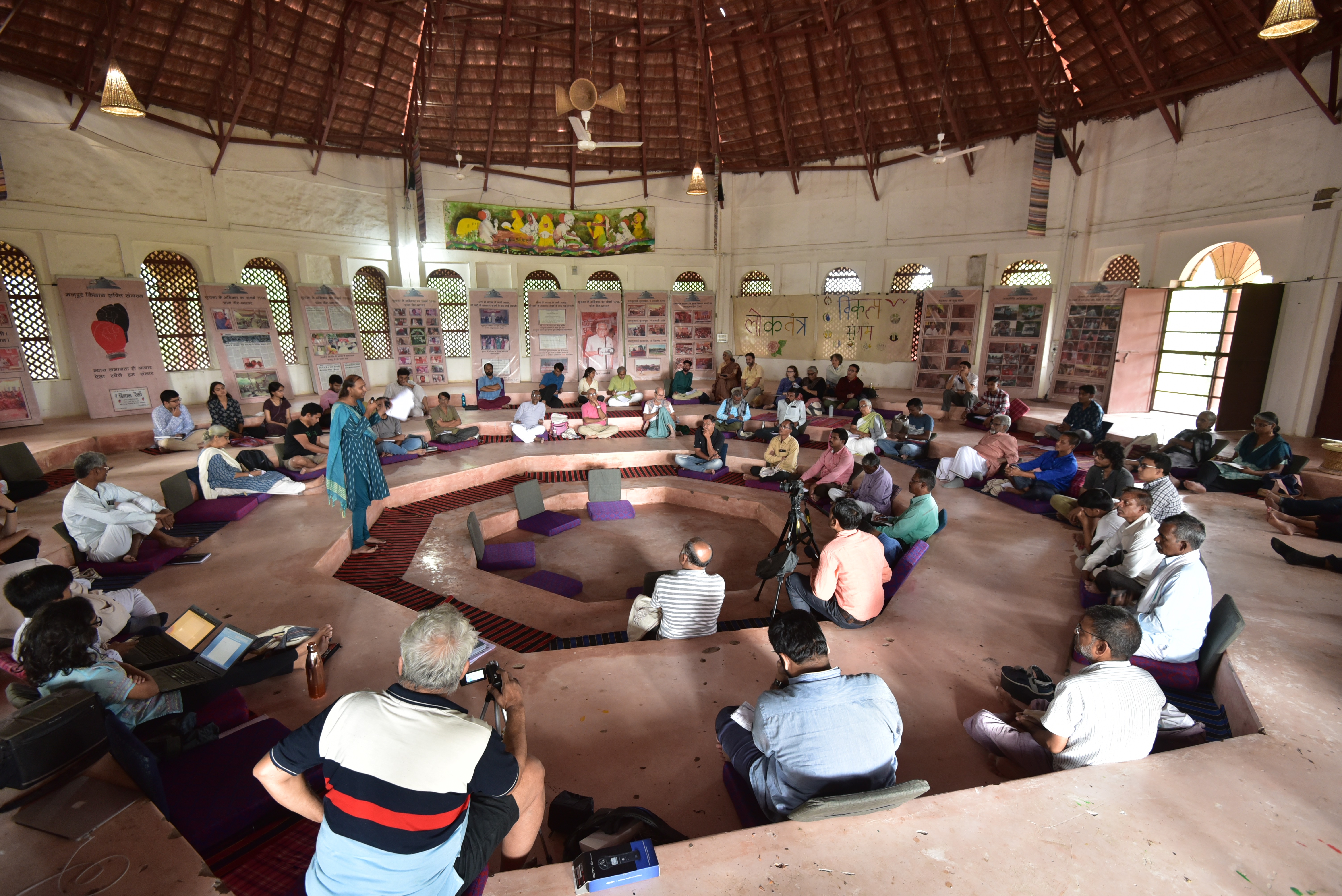
The multiple crises humanity confronts require fundamental shifts in how we relate to the Earth and to each other. This entails tackling the roots of these crises head-on, including the structures and relations of patriarchy, racism, colonialism, capitalism, statism, and anthropocentrism. This in turn needs to be done within the context of visions of the ideal society we want. This essay presents a process in India, Vikalp Sangam (Alternatives Confluences), that has attempted for a decade to document, visibilise, network, and create collaborations amongst movements and groups involved in alternative approaches for justice, equity, ecological sustainability. It describes the process and its various components, the challenges and opportunities of bringing very diverse groups from different cultural contexts together, the potential of a bottom-up and participatory visioning process, and the excitement of attempting to bridge conventional traditional-modern, practitioner-intellectual, urban-rural, and other divides.
Keywords: Democracy; Visioning; Alternatives; Environment; Civil society
Introduction: The Making of Vikalp Sangam
A decade is not a short span of time – and yet, it is too short. These are the contrasting thoughts I have as I contemplate a process that I have been part of since its initiation, as I and my colleagues enter into a phase of reviewing whether it is on course to meeting the objectives it began with. This is Vikalp Sangam, or Alternatives Confluence, a national platform established in India in 2014.
 KAFILA - COLLECTIVE EXPLORATIONS SINCE 2006