
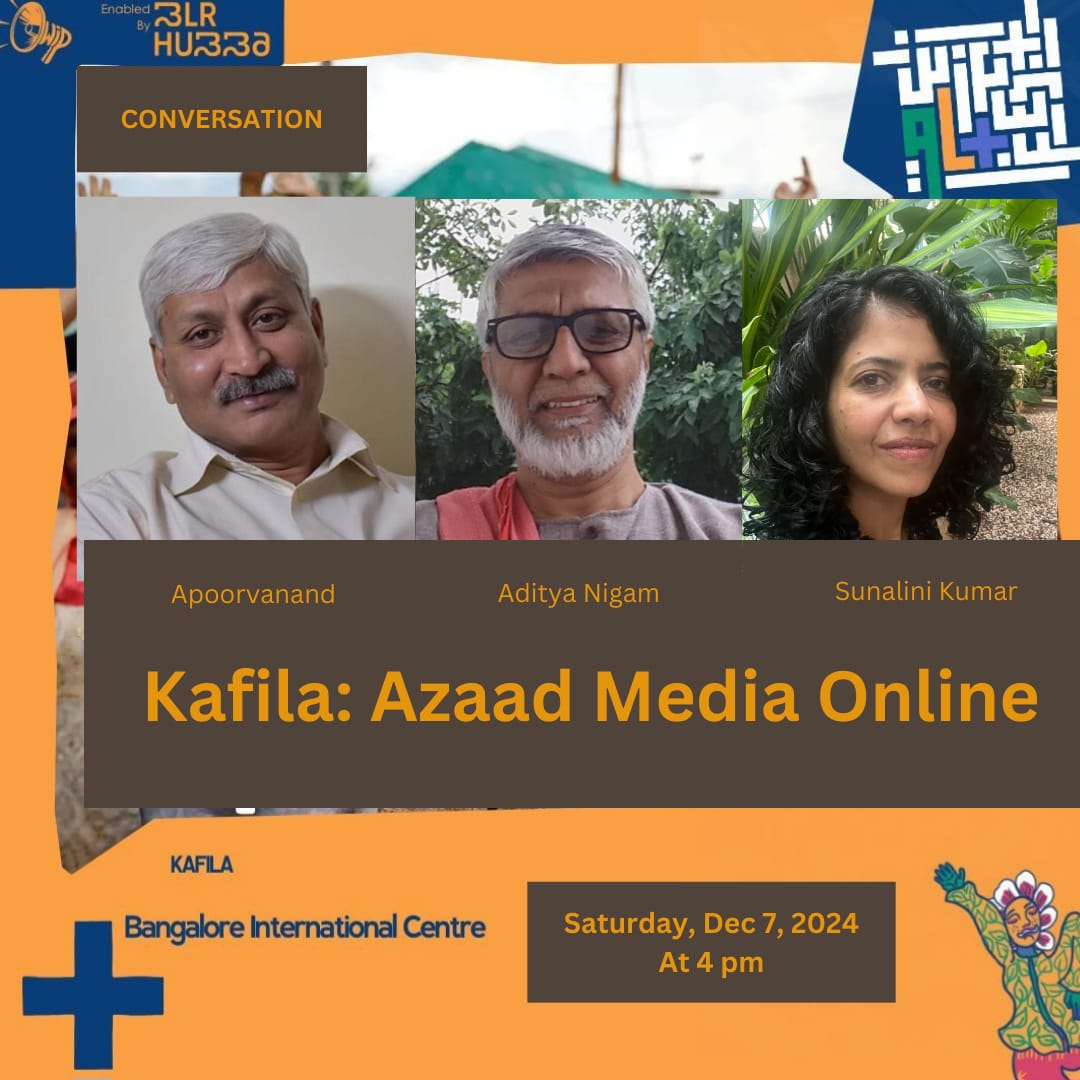
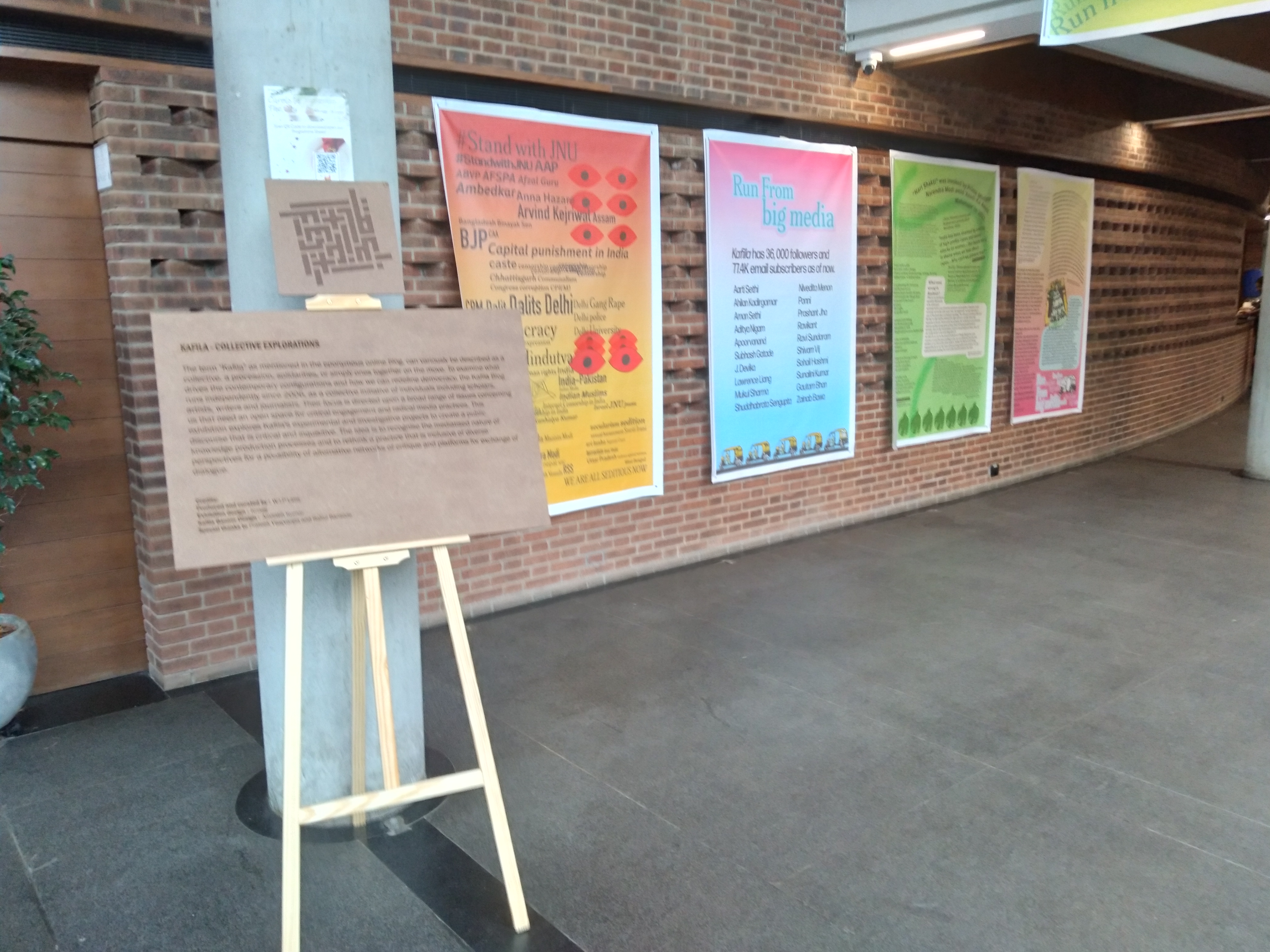
An expanded version of the presentation at the panel on Kafila held as part of the W.I.P alt.FEST held in Bangalore and Delhi in December 2024. While the first post in this series by Subhash Gatade is linked below in the text, the third by J. Devika can be read here.
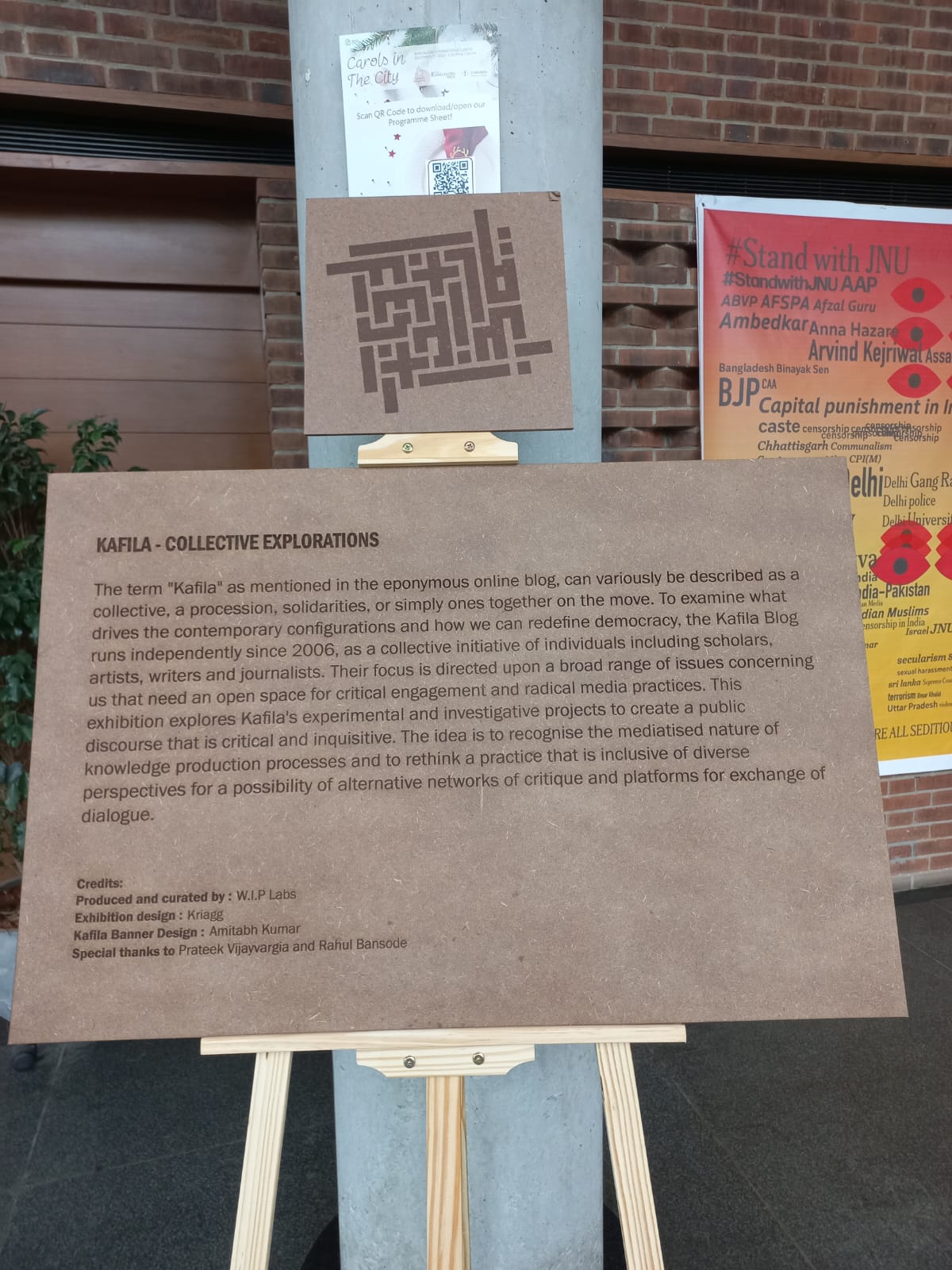
Kafila was formally launched on 6 November 2006 at a session of the India Social Forum in Delhi, though its first post had gone up a couple of weeks earlier, on 19 October. However, there is a prehistory to the actual formal formation of Kafila which goes back to two earlier movements that had brought many of us together.
As rightly mentioned by Subhash Gatade in his reflections, the first of these was the movement against the relocation of polluting/ hazardous industries starting from late 1996. It was this movement that, perhaps for the first time in India brought the issue of workers’ rights into the discourse on urban pollution and environment. It took the discussions on urban planning, linking air and water pollution, zoning, transport policy and questions of workers’ occupational health, outside the charmed circles of urban planners. Initiated by the Indian Federation of Trade Unions, the formation of the Delhi Janwadi Adhikar Manch was the platform that had enabled this by bringing all of us together.
The second, more proximate movement that we were all involved in was during the 2002 anti-Muslim carnage in Gujarat. It was the period of the first NDA (National Democratic Alliance) headed by the BJP) government. There was desperation all around. A loose coalition called the Aman Ekta Manch was formed in order to campaign, collect relief materials for the victims of the violence and to send volunteers to Gujarat to help people build back their lives.
During this period, we realized something that had long been felt – media spaces had completely shrunk, in at least two ways. First, there was no space left for any independent voice being heard – it was a time of neoliberal partying and anything remotely resembling what the media used to call ‘negative stories’ was considered blasphemous. Celebratory stories and editorials about ‘globalization’ went hand in hand with a tectonic shift to the right: media common sense increasingly aligned itself with the position of the Hindu Right – in the name of ‘fighting terrorism’, national security and so on. In some instances, sections of the televisual media fancied themselves as the ‘new opposition’ (a term actually used by a television personality in a newspaper article) – as when they covered the Gujarat carnage. Secondly, closely linked to the first, all political debate came to be framed by television channels in their studios where the model was the WWF-type ‘Big Fight’ that only allowed two sharply polarized positions to be expressed with a lot of noise. In short, there was no space left for any calm and reasoned exchange and deliberation on the complex issues we faced.
In one instance that we directly experienced, the forum that was to later become Aman Ekta Manch, had organized a huge march in Delhi against the Gujarat carnage – on 15 March 2002. At a time when all political parties were paralyzed, this independent march was by all accounts quite unprecedented but was totally ignored by the media that would otherwise play up even a 20-230 people strong group of Bajrang Dal walas in their antics.
It was through such experiences of the Manch that some of us started thinking in terms of setting up an independent media space, using the possibilities opened up by the Internet. Of course, those were the days of Web 1.0 – static websites with little interactive possibilities but they too had been used quite effectively by groups linked to the Seattle protests and by anarchist groups elsewhere in Latin America and Europe. The Indymedia platform was one such. There was an aborted attempt at setting up an Indymedia network in India too but that is another story. Some efforts were made in trying to set up such a platform at that time. However, I guess we were ourselves not quite prepared to take on the project partly because many of us were not really convinced about the potential of the web space, and partly because the old technology required far greater technical expertise to manage it. By 2006, with the emergence of the blogosphere as a dynamic space (then mainly dominated by some right-wing sites in India), we found it possible to pick up the threads once again. with the help of our friends in Sarai (CSDS) and Shivam Vij who was then totally into the blog world, we embarked on our journey.
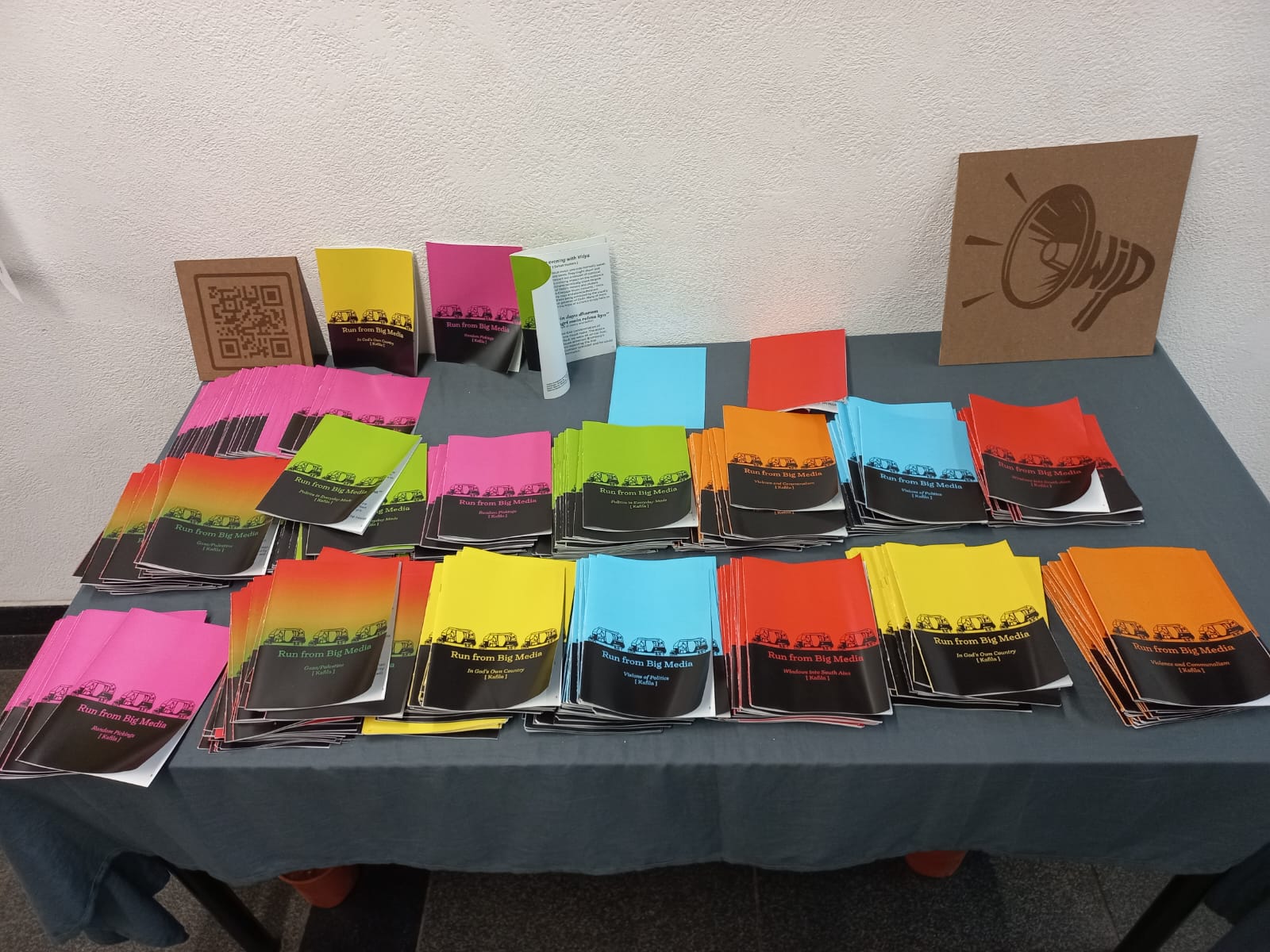
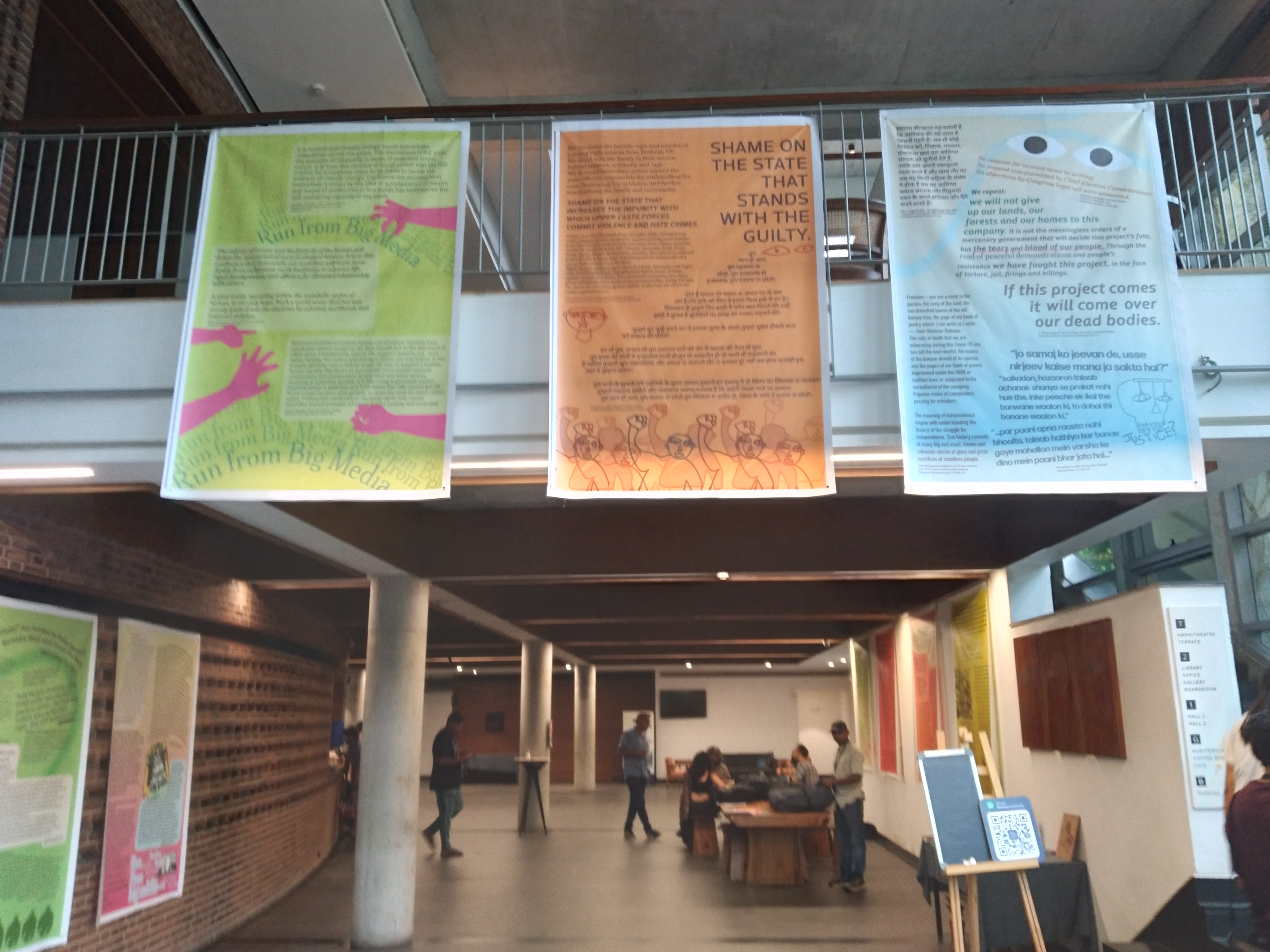
“Run from Big Media” became our tag line. However, one of the other concerns for many of us was that we were also interested in creating a space for democratic debate on the Left, which has generally had an abysmal record in this respect. Disagreement with established parties only brought forth invectives and many of us felt that a new culture of democratic debate alone can help us rethink and re-imagine the Left project for the future. That is also why the connection with the World Social Forum process has become a catalyst.
As it happens, Kafila had to plunge headlong into the debate on land acquisition and neoliberalism in West Bengal under the ruling Left Front, within a very short time of its formation. Land acquisition in Singur had already happened at gun point so to speak and had led to massive protests earlier that year – 2006. The following year was to the Nandigram uprising against the proposed land acquisition in the area, which assumed almost insurrectionary proportions from where the ruling CPI-M had to face popular ire. A year later, however, Nandigram was “liberated” by the ruling party, killing a large number of peasants. Not only was this the first big intervention that we at Kafila had to engage in, it was also significant for us in another sense. Very soon, perplexingly, those who stood with the struggling peasants of Nandigram found a letter addressed to them, signed by eminent Western Leftist intellectuals like Noam Chomsky, Tariq Ali, Howard Zinn, Susan George, Mahmood Mamdani, Akeel Bilgrami, Victoria Brittan among others published in the pro-CPI-M The Hindu. The letter was basically an appeal to “friends in Bengal” to remain with the CPI-M and not “split the Left”, given the need to stay united against US imperialism. Some of us at Kafila contacted other friends on the Left who we knew were equally dismayed at the development. Together we drafted a statement – an open letter to Noam Chomsky, Howard Zinn et al – that was signed by writers and intellectuals like Mahasweta Devi, Sumit Sarkar, Uma Chakravarty, Tanika Sarkar, Arundhati Roy, Sibaji Bandyopadhyay and many others, including some of us from Kafila. It was published on Kafila and had an important effect in that some of the signatories withdrew their signature/s while some of the others sent us a second letter clarifying their position (linked here for those interested).
Nandigram was not just a one-off episode however and its reverberations continued for a very long time. All that is a matter of historical record. For some of us this experience also opened up for further investigation, the larger question of capitalism’s inevitability and the place of agriculture/farming in our collective future.
If the Nandigram debate found most of us on the same side, the subsequent major debate that erupted, that on the India Against Corruption movement (popularly known then as the Anna Hazare movement) saw us on Kafila taking completely opposed positions. We argued and debated and fought – and that debate continued well into the subsequent period when the Aam Aadmi Party formed government in Delhi. Despite the arguments becoming acrimonious at times, we saw to it that it did not affect our personal relationships and trust.
Then came the period of the rise of the present regime and a complete transformation of the situation. If the political situation took a turn for the worse, with a fascistoid and virulently anti-Muslim government in office, there was another change that took place that was important from our point of view. Scroll.in started in early 2014, followed by The Wire in May 2015. Soon other platforms also came into being and most of them were directly in the news business. With so many new and kindred platforms, the digital space for democratic discourse certainly expanded but at the same time, because of the changed political situation, so did the need to write in more and more spaces increase. For us as Kafila, guest posts by non-Kafila people as well as detailed engagement with comments had been very important. But once this imperative took over, many Kafila members too found it necessary to write on other forums.
From the beginning, we have kept Kafila a non-funded and totally voluntary enterprise. That too has taken its toll. Since we have no hired staff and we all do/did Kafila work on our spare time, as professional responsibilities have increased, some of the members have found less and less time for Kafila work. Therefore, around the time of our tenth anniversary, in 2016, we decided to also shift gear and move towards making Kafila a space for reflection and deliberation. Our tag line changed from “Run from Big Media” to “Dissent, Debate, Create”.
This period has also seen the relatively freer Web 1.0 being replaced by the corporations-controlled Web 2.0, which despite being dynamic and interactive poses new problems of digital surveillance and control. It is heartening of course that there are also attempts afoot to reinvent Web 1.0 at another level that can be kept free of the attempts of governments and corporations to control them. We look forward to that future incarnation when there will also be a proliferation of democratic spaces of dissent. The struggle will continue in a myriad ways.
 KAFILA - COLLECTIVE EXPLORATIONS SINCE 2006
Dear Aditya, Thanks for your detailed reflections on Kafila. Had completely forgotten about the WSF meeting and the efforts for setting up an independent media space.
Kudos to you and others for catalysing this process
LikeLike