
Conversations on Palestine with an activist, a poet, a scholar
Teredide Mane O Baa Athithi (Come in, I have opened my doors dear guest) is an offshoot of Mere Ghar Aakar Toh Dekho, a national campaign in India, in Karnataka. It aims to counter the forces of hate, bigotry and polarization that have gained ground in the country by redrawing boundaries and expanding notions of trust and community. The campaign involves participants from diverse backgrounds opening their own homes and hearts to guests from equally varied locations. Teredide Mane has grown as a community, learning and unlearning through practice the concepts of guest and host, home and house, consent and comfort, celebration and sharing, listening and observing—both commonalities and diversity. [Content and editing by Madhu Bhushan, Winnu and Anita Cheria. Illustrations and design by Winnu]
We invite you into this moving and powerful conversation that has been reproduced largely in the speakers’ own words, and hope that you will add to it and take it forward. Read the whole conversation here (https://shorturl.at/JzvI5). Or a shorter note on the conversation here (https://shorturl.at/NkLHz).
Over the past months, the genocide in Palestine has come up multiple times in our meetings. Apart from engaging in acts of protest and solidarity, there was a need to go beyond ‘news noise’, and meet people engaged with and from Palestine. We decided to create a virtual space, one that was safe and intimate, to be able listen deeply to friends we had connected with in the course of our work and life journeys. This conversation, with Lisa Suhair Majaj, Smadar Lavie and Issa Samander in October, 2024, came about as a result of this intention.

Lisa Suhair Majaj is a passionate Palestinian American poet whose writings and poetry echo with the spirit of the land and people that she was herself exiled and alienated from.
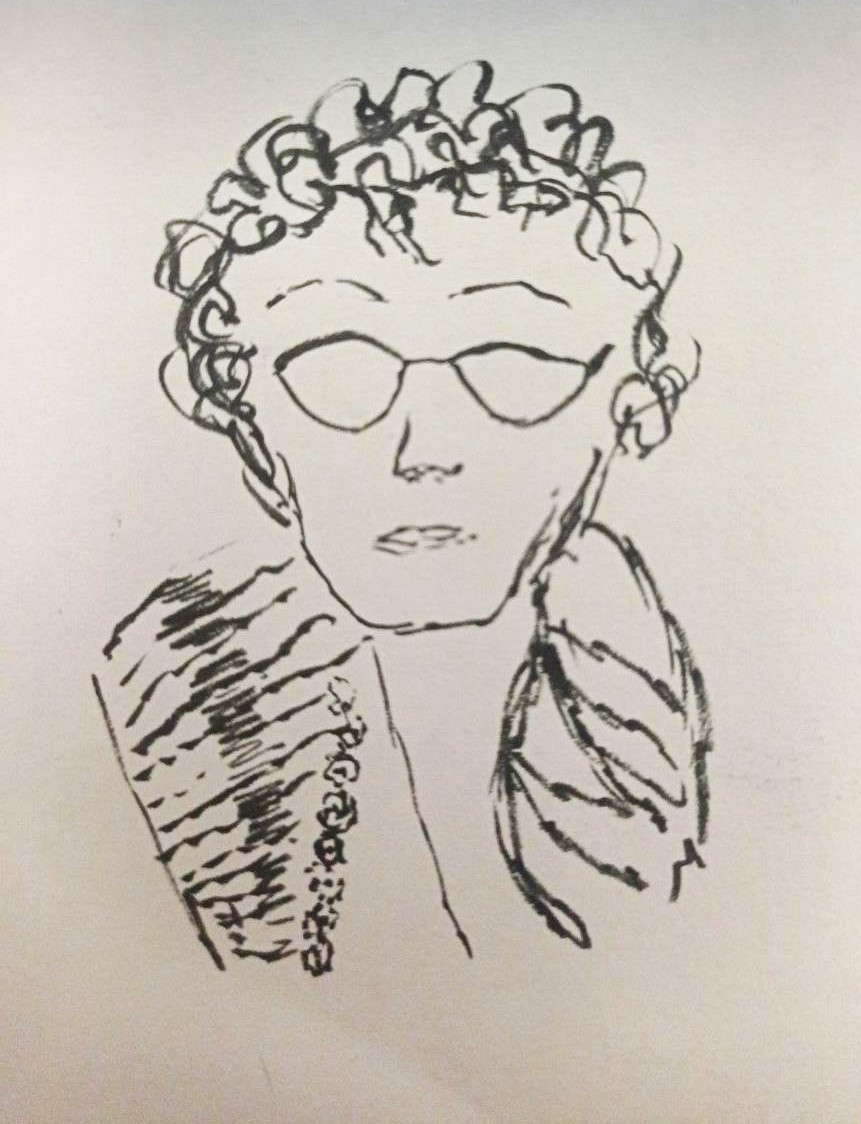
Smadar Lavie is a University of California professor emerita of anthropology, co-founder of Ahoti (sistah in Hebrew), Israel’s feminist of color movement, and decades-long activist against the discrimination of Mizrahi Jews in Israel and for justice in Palestine.
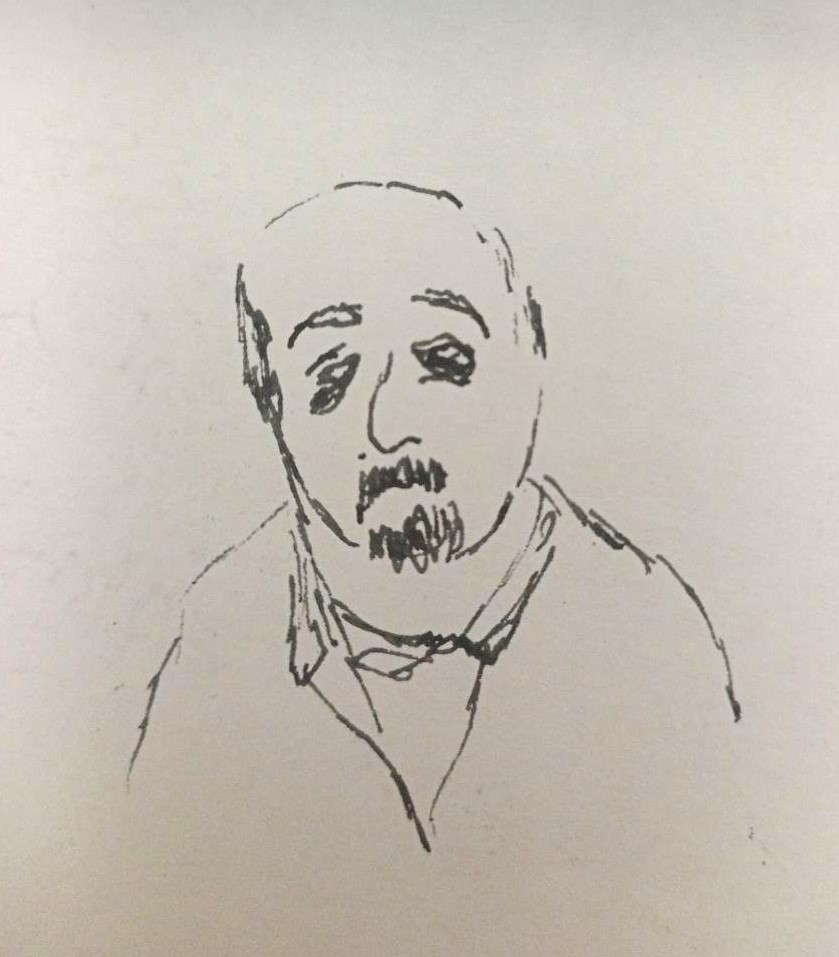
Issa Samander is a “retired” activist of the Palestinian movement engaged with land and housing rights, who refuses to be removed from his land and remains rooted in Ramallah in the West Bank continuing to amplify the voices of his people in their demand for freedom and dignity.
The conversation was guided by Revati Laul the author of The Anatomy of Hate (2018), a book about the Gujarat riots. She has been living and working in Uttar Pradesh to build connections between communities in areas deeply affected by communal violence.
On a Saturday evening, we—friends, colleagues, activists and concerned citizens—met to listen, learn and journey together. Unlike its near total absence on the global map, Palestine was an overwhelming presence in this virtual room. A Palestine that revealed itself not just as the site of violent political and historical erasure but also as a palimpsest of personal memories and collective histories, layers of despair, rage and hopelessness grafted on to enduring resistance, impossible love and indestructible hope. Here are highlights of the conversation, reproduced largely in the speakers’ own words.
Contents
Memories of a Bygone Time and Place. 4
Zionism, Apartheid and Genocide. 9
The Mundane and Brutal Reality. 9
The Internal Racism of the Zionist Project. 10
Hope and Remembering: Two Sides of Resistance. 13
Strengthening Solidarities and Dissolving Binaries. 15
Solidarity, and Who Falls Through the Gaps. 16
Alliances Beyond the Binary. 17
Memories of a Bygone Time and Place
Lisa and Smadar began by sharing the sights and sounds, tales and talismans of their childhoods. They spoke of growing up different and with differences; feeling both rooted in and like strangers in their own land and to their people; and not totally marked by hate for and alienation from “the other”—the Arab or the Jew.
Atypical Homes
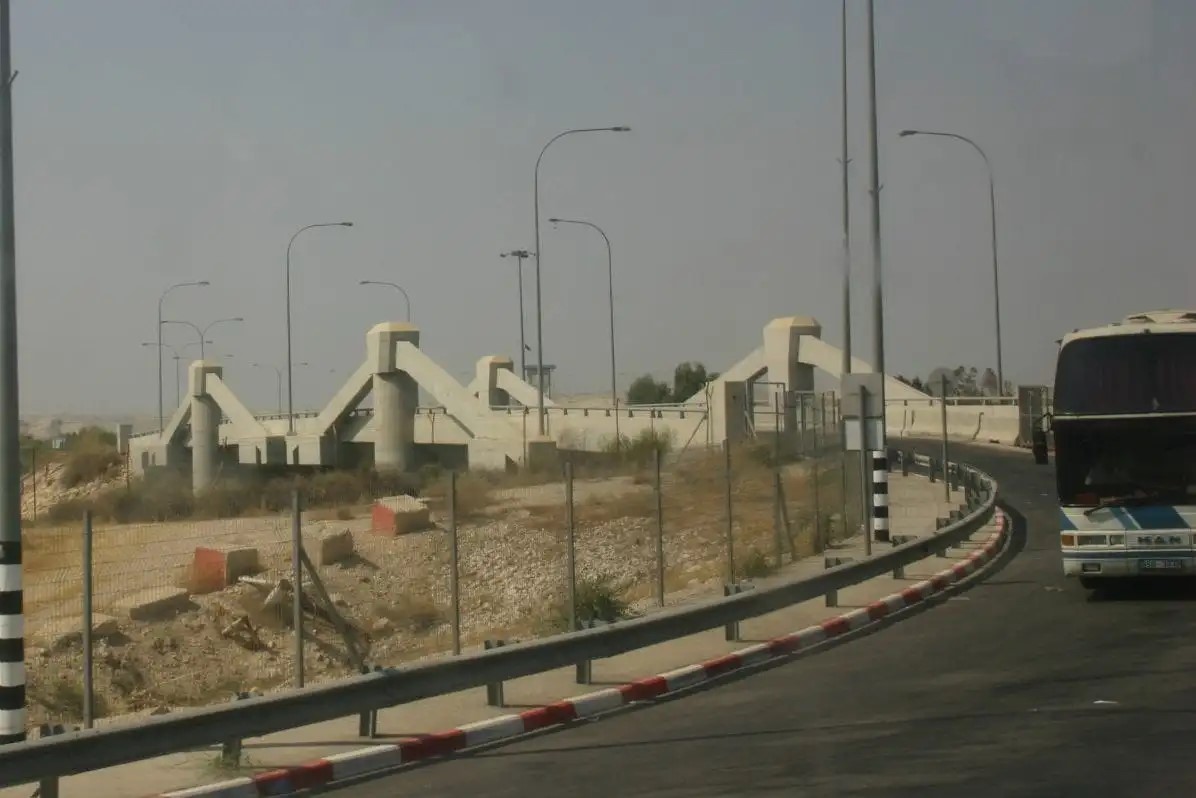
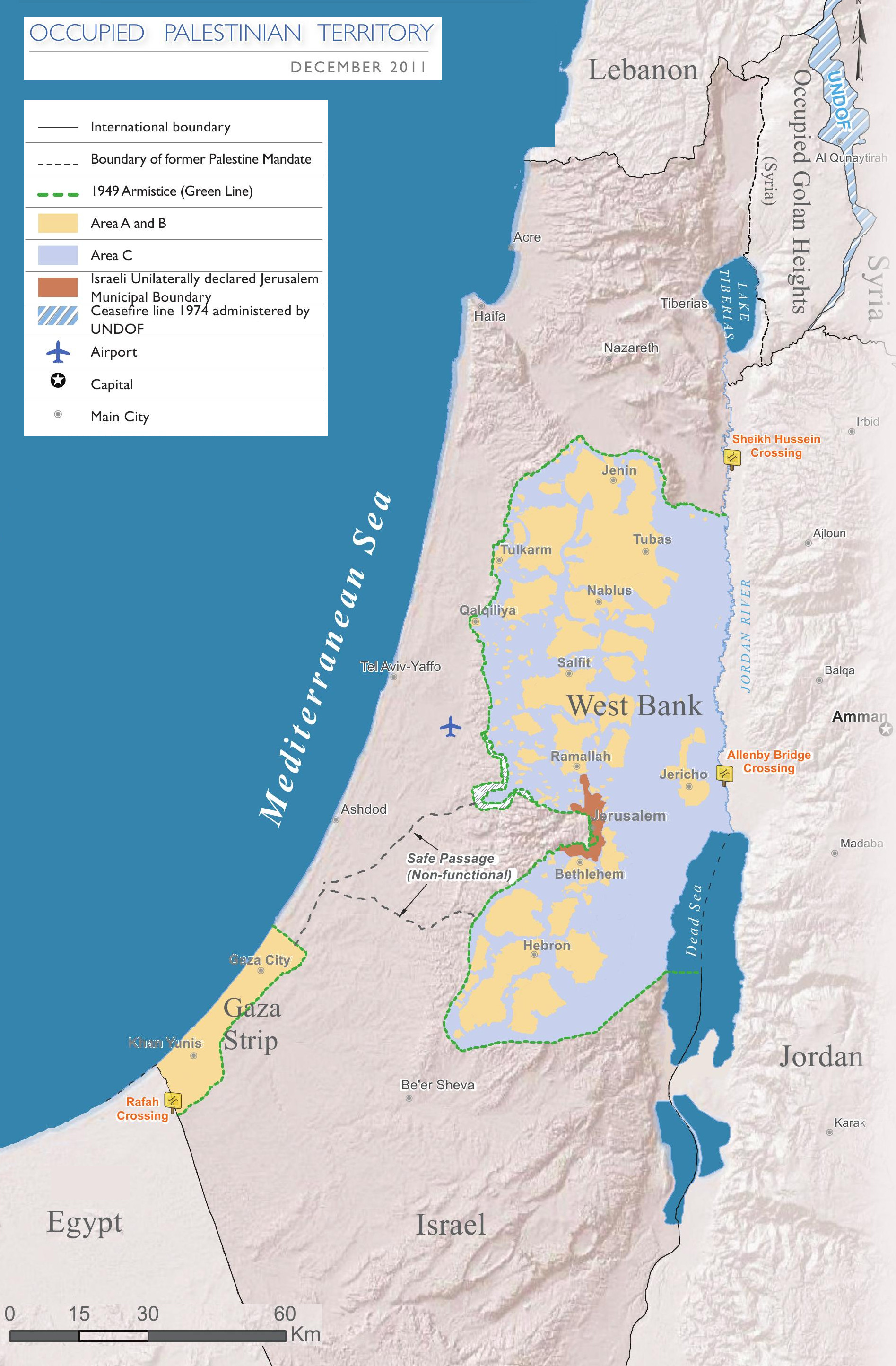
Lisa: How did I become who I am? I was born in the US to a Palestinian father and an American mother. I grew up in Jordan, where much of my father’s family ended up (they were not allowed to return to Palestine). We spoke only English at home, and I attended an American school. But I was surrounded by Palestinian relatives—my grandmother, aunts, uncles, and cousins. My Jerusalem relatives with permits would cross the bridge from Jerusalem to Jordan for family visits. I remember the closeness I felt to my visiting cousins as we played games in the garden or lay on our backs on the rooftop looking up at the shooting stars. Despite often feeling an outsider due to my lack of fluent Arabic and my American identity, I felt part of a larger Palestinian family—different, yet included. So many parts of my identity and experience coming together made me who I am.
Smadar: I come from a very atypical Israeli home. Israeli Jews are often conceived as homogeneous, but Israeli Jewish society has a well delineated color line between Ashkenazi Jews, originating in Yiddish-speaking countries, and Mizrahi (Easterner) Jews, originating in the Asian and African Muslim worlds and the margins of Ottoman Europe. My mother was a Jerusalemite of Yemeni origin. My father was a Lithuanian holocaust survivor. He died when I was in my early twenties and never shared with me his concentration camp experiences. My father had his doubts about the Zionist project of settling Palestine but he knew that for holocaust survivors such as himself, immigrating to Israel was the only option after the Second World War.
My parents’ main arguments were about politics. Like many Mizrahi families, my mother’s family was way more nationalistic. Yet, I always felt like a guest on this land. My mother saw herself as indigenous, given her family’s deep roots in Jerusalem, but my father’s identity was diasporic. My Arab phenotype always trumped my Ashkenazi privilege and I was discriminated against accordingly.
Despite often feeling an outsider due to my lack of fluent Arabic and my American identity, I felt part of a larger Palestinian family—different, yet included. So many parts of my identity and experience coming together made me who I am.
~ Lisa
On the whole, I had a happy childhood. I was brought up to be a concert pianist. My parents encouraged all aspects of my creativity, sparing me from the strict Zionist indoctrination that starts as early as the daycare center, even before kindergarten. Sadly, their actions received harsh criticism from my immediate extended family.
At school, our education—allegedly socialist—was ultranationalist, preparing us to sacrifice our lives for Israel and for our compulsory military service. In elementary school, every morning would start with calisthenics, Soviet style. This was before the post-1967 Americanization of Israeli culture. The exercises ended with barking “A country without a people to a people without a country” and raising the flag. The emphasis was on producing a physically strong body of the “new Jew”. On Holocaust Memorial Day, when we watched documentaries about Jews in the concentration camps, we would often giggle. They were so skinny and weak—unlike us tough Zionist Israelis. But this was back in the early 1960s. These days, such films are treated with empathy on the one hand, and on the other, this horrendous holocaust experience is hijacked and weaponized in order to justify Israeli violence, defined as “self-defense.”
I became politically active when I was 16, when I participated in a demonstration for the right of return of the Palestinian villagers expelled from their homes in Bir`am. Ironically, a left-wing kibbutz, Bar`am, settled on their lands and prevented their return. My mom objected, while my dad was supportive of my participation in the protests.
Holograms of History
Lisa: There were silences in my family about the Palestinian Nakba—as is perhaps common among people who have lived through trauma. I was not taught the history of what happened to my grandmother’s family in Jaffa [an ancient port city, now part of Tel Aviv-Yafo], where both my grandparents’ families were originally from. I was not taught the history that resulted in my childhood being in Jordan instead of Palestine.
Politics were discussed in Arabic, and perhaps my father thought I would absorb it by osmosis. My aunt had been murdered in Jerusalem by a Jewish Irgun terrorist in 1948. Later my uncle moved to Amman, Jordan, with his mother and two children. They were the closest family to me when I was growing up. But nobody spoke to me about my aunt’s death. I found out by accident—as an adult—why the cousins I grew up with had no mother. Everyone was focused on survival.
At the same time, I was never taught to hate. My family in Palestine, like most Palestinians, spoke of warm relationships with Jewish neighbours before 1948. In my extended family history, there is also someone who married a Jewish woman.
In 1970, when I was nine years old, the Jordanian army attacked Palestinians and killed and expelled many during what is known as Black September. Our house was in the middle of the fighting, situated between a building held by the Jordanian army and a field held by Palestinian militia. We were trapped for weeks, with the fighting taking place literally in our backyard and bullets bouncing off our walls. We ran out of food and water. The army targeted and burned my grandmother’s apartment. Luckily my father had already managed to bring my grandmother, uncle and cousins to our house to shelter with us.
During this time, I was reading The Diary of Anne Frank, which I had checked out from the school library before school closed due to the crisis. The book made a big impression on me. I remember I felt great empathy for Anne Frank. I found points of connection in the experience of being locked inside with limited food and water and danger just outside.
Although I was not taught Jewish history, I learned it on my own. As I got older, I read books about World War II. When I went to the US, I read about the Vietnam war and became aware of the struggle against apartheid in South Africa. I felt drawn to learning about war experiences as my childhood had been shaped by war—the 1967 war, which I have distinct memories of, 1970 Black September and the 1973 war. In Lebanon, where I went to college, I experienced the civil war and the Israeli invasion of Lebanon. My refugee boat was taken by the Israeli navy to Israel for interrogation.
In the US, I had hoped to “belong” but instead I felt an outsider. I was routinely asked discriminatory questions such as whether I carried a Kalashnikov in my backpack (the assumption being that all Palestinians are inherently violent). When my mother, who had come to the US for medical treatment, mentioned to someone that she had married a Palestinian, she was asked why she had married a terrorist! When people got to meet and know me, they sometimes said to me, “I never thought before this that Palestinians are human.” I became friends with some of these people, but it is a difficult thing to have such things said to one’s face.
As I wrote in my poem “Palestine Hologram”, we are told Palestine “never existed and never will.” But what I gradually came to understand, almost by osmosis, was the certainty that we are, that I am, Palestinian.
As I mentioned, my grandmother was from Jaffa, but after 1948 she could not go there. And after 1967, it was only with his American passport that my father could return to the West Bank where he was born, and Jerusalem, where he grew up. Even then, he was never sure if he would be allowed in.
There were silences in my family about the Palestinian Nakba […] nobody spoke to me about my aunt’s death. I found out by accident—as an adult—why the cousins I grew up with had no mother. Everyone was focused on survival.
~ Lisa
One of the deepest desires of most Palestinians is to be at least buried in Palestine, even if they are not allowed to live there. During my childhood, an aunt died in Jordan. She still had the Jerusalem permit and the family was able to take her back to Palestine for burial. But, on crossing the bridge from Jordan to Palestine the Israelis dumped her body out of the coffin onto the ground and probed her corpse for hidden contraband—a desecration.
When my father died, we tried hard to take his body from Jordan to Palestine for burial. An American journalist friend tried to help us get permission, but it was not granted. It seems that even dead Palestinians are considered dangerous, because to be buried In Palestine is another way to lay claim to the land. Finally, we took his body to the US to bury next to my mother; but the day after the funeral in the US we got word that approval had been granted to take him to Palestine. We then had to decide whether to disinter his body and transport it to Palestine or not. We decided against it because there was no guarantee that the Israelis would actually allow us in once we got there. It was bad enough to be homeless in life; we did not want him homeless in death as well.
Zionism, Apartheid and Genocide
Issa and Smadar shared stories from the present, of the violence that consumes their lives and the lives of their loved ones in different but all-pervading ways. Smadar reflected on the current violence, and contextualised Zionism, how it has been constructed over the decades, and its internal racial hierarchies that divide Jewish communities.
The Mundane and Brutal Reality
Issa: I have worked with land owners whose lands were taken and given to Jewish settlers. There were also others who worked with me against house demolition. Those were hard times but this time is the worst. Sometimes you don’t know what to think and how to understand what is happening. For instance, there was a worker from Gaza who could not return and so had to stay back. He said, “my children are calling me and saying “come back, we have no food, no water”. When he went back, he found that he had lost his entire family. And when he went searching for his father, he found his head 300m away.
What can you say or do when a mother comes crying and asks, “give me my child”? And when the body of a child is given, everybody prays, hoping that it is not her own. Soldiers are putting these incidents on videos, displaying children as souvenirs and throwing their bodies to the women. They can’t even recognize the bodies except by weight. If it is 20kg it is child. If it is 60kg it is an adult.
Lisa: The brutality of this is unbearable. My friend lost 18 members of his family. What do I say to him? Only that we are here and will stay. What good is anything against this machinery of violence? What use is poetry? What good are even words at this time?
I have lived my life knowing that if you are Palestinian and Arab, you are marked as a hologram. Nobody gave me a narrative; I was never given indoctrination. I lived, I learnt. I made myself political. I joined different groups online and offline to talk and learn. As Palestinians, we used to be desperate to make people understand. Not anymore. What is happening is clear. Even people who call themselves Zionist are increasingly beginning to see what is happening; even those who still argue that the origins of the Zionist project were meant to be different. Decent ethical people do not want to see this violence and are angry that this is happening in their name. They don’t want this genocide to happen.
When I see photos of children at soup kitchens with their pots of food, I see that they are not smiling any more. They just look tired. And hungry.
The question is: where do we go from here? What kind of people do we want to be?
Palestine Hologram
Palestine never existed (and never will!) — Hebron settler’s sign
So you and I, Lisa, are holograms. — Nevart Kankashian
In the universe of our dispossession, we scatter:
shimmering holograms, phantasms dispersed
to light, dismissed as mirages by the image makers—
though in the universe of our living, alive in our flesh,
we wake Palestinian, breathe Palestinian, sleep
and dream Palestine, touch Palestine
to the foreheads of our children, die Palestinian.
Beneath my father’s tombstone in far America,
his bones lie in exile, light-years from home.
But his grave holds only an echo. His spirit,
that nebula of longing, has broken free
from the soil that closed above him, has traveled
to the source, splintered soul drinking deep.
One day the laser beams of denial will falter.
Till then we hover, holograms of history:
The Internal Racism of the Zionist Project
Smadar: These days, while the Gaza genocide by the enormous might of the Israeli Defense Force (IDF) continues to speed on, the world is silent. This is such a disproportional response to the barbarous murder of 1200 Israelis, mainly civilians, by the Hamas on October 7, 2023. The Zionist settler-colonial project in Palestine is about racial and religious superiority. These days, it’s straightforward about the elimination of the Palestinian people from the river to the sea and beyond. Since the negotiations of the Camp David agreement with Egypt in 1978 (according to which Israel gave back the Sinai peninsula, which it had occupied in the 1967 war, to Egypt in return for continuing to occupy and cleanse the West Bank—another territory that it occupied in 1967—of its Palestinian population), it became quite clear that due to the biblical-messianic mission of Zionism, Israel wants sole control over the land and water resources of the West Bank. Gaza and its Palestinian refugees have always been a bothersome reminder of the 1948 Nakba, to discipline and get rid of.
While Netanyahu is portrayed as the boogeyman, the racial formation of Zionism goes back to 1882. Secular European Jews conceived of Palestine as the solution to Europe’s “Jewish Problem”, i.e., anti-Semitism. To demonstrate self-sufficiency vis a vis the British colonizers of Palestine, they did not want to rely on indigenous Palestinian labor so they imported Yemeni Jews and kept them in near-slavery conditions. In the early days of the Ashkenazi settlement of Palestine, the know-how of Palestinian labor was more appreciated and better paid than Yemeni Jewish labor.
Israeli Jewish society has a well delineated color line between Ashkenazi Jews, originating in Yiddish-speaking countries, and Mizrahi (Easterner) Jews, originating in the Asian and African Muslim worlds and the margins of Ottoman Europe.
~ Smadar
After the foundation of the Israeli state in 1948, there was a mass importation of Mizrahi Jews from the Arab and Muslim worlds to beef up the Jewish demography and create impossible conditions for the expelled Palestinian refugees to return to their homes. But another result of this was that one of the biggest fears of the Ashkenazi-Zionist regime was a possible coalition between the subaltern Mizrahim and the Palestinians who were allowed to remain in what was now Israel. So, Mizrahim were socialized to hate the Arab in themselves and strive to integrate as second-rate Ashkenazim.
The ticket into entering Israeli adult society is military service. It used to be that Ashkenazim dominated the elite commando infantry units of the IDF. But when hi-tech cyber military roles were introduced, they shifted to these units. These roles demand superb high school education in the sciences and English, and the better schools are in the Ashkenazi well-off neighborhoods. Parents are also very happy that their children serve in these cyber-warfare units because the bases are located in central Israel, safer than the border zone with the Arab states where the infantry units were sent. These days, Mizrahim populate the infantry and suffer the highest casualties. Their lives are cheaper, and are seen as more expendable by the regime, and less resources are invested in their military training than in the training of the cyber units.
During the Gaza genocide, the world has seen the photos of Mizrahi soldiers wearing Palestinian women lingerie or holiday caftans, looting Palestinian homes, and even selling Palestinian belongings on e-Bay, before blowing up Palestinian homes. But it’s the upper-class Ashkenazim who create the algorithm that enables tech-savvy pilots to bomb and kill 300 Palestinian civilians for every suspected Palestinian guerilla. It’s the upper-class Ashkeanzim who are selected as pilots for the Israeli air force and follow the computer programs that instructs them where to drop their highly destructive, US-made bombs. Likewise, the Gaza mass starvation policy, or what is known as the “Generals’ Plan” is also designed by Ashkenazi elite retired generals of the IDF. The Mizrahim are its subcontractors. Don’t get me wrong. I do not wish to be apologetic for the Mizrahi IDF soldiers’ barbarism. Yet, images of IDF male soldiers wearing Palestinian lingerie are way more photogenic than the computer screens at the secretive central Israel military offices where the Gaza genocide is planned and strategized.
~~~~
When I was stranded in Israel with a 9-year stop-exit order (early 1999 to the end of 2007), to stay sane, I joined efforts to establish and maintain a Mizrahi feminist movement, and was involved in many other anti-racist initiatives. Around the 2006 Lebanon war, a handful of us created a network of Mizrahi anti- or post-Zionist activists who dreamt of one democratic state, Palestine/Israel. For Ashkenazi anti-Zionists and Palestinian nationalists this one state vision has been quite abstract. But we thought about the practicalities of daily life in this one state because our constituencies are here to stay. We have no options to immigrate out of Israel when this one state happens— unlike many Ashkenazim who have equipped themselves with EU citizenships. We discussed how to distinguish between Islam, Judaism and a secular construction of citizenship. We thought about the revision of family laws so that inter-religious marriage is legal. Presently, in Israel, inter-religious marriage is not legal. We thought of other institutions—education, health, welfare—and how to ensure that these will be secular with equal access to all citizens. We imagined a new geography due to the return of the Palestinian refugees. We hoped for an alternative scenario. Sadly, as time passed it became difficult to envision a secular unified state. And due to the current killing fields, we split. These days, the Mizrahi feminist movement is divided along the lines of Israeli society. Some have turned to the bosom of the right-wing Mizrahi majority communities. Others belong to the HaMitpak’him, “the disillusioned” (literally, “the sobering up” in Hebrew)—feminists who since October 7 have joined the choir of the “us or them”, embracing the idea that for survival one ought to eliminate the “them”.
Hope and Remembering: Two Sides of Resistance
What is the role of hope and unwavering responsibility? Issa, who stands in the midst of displacement and destruction, refuses to give in to despair, seeing the realities around him clearly but always keeping one eye out for any glimmer of light, and remembering the subversive power of acts of love, healing and solidarity against state violence and impunity. Smadar, having seen the roots of violence in Zionism, refuses to condone any part of it, never letting the darkness it brings be forgotten.
Issa: When you see you are in a desperate situation, you must also see what is the opposite. We must see the brave Jews in the US—young people who are doing such a great job. It tells other human beings that they are not alone. That there is somebody who cares about them. We are a people who are determined to live here. We are not going to evaporate. People who are in power don’t understand the other side. Their minds are drunk with power and their only logic is to kill. But now people across the world are more aware.
I used to tell my Jewish friends that what happened in Germany was terrible but that Germany is trying to change itself and repair the criminal things they did. The problem is that the victims did not learn the lesson. They are showing new ways of how fascists can operate and oppress. The censorship in Israel is very high. They don’t see what their sons and soldiers are doing. And the media is not even liberal. It has failed.
“We are a people who are determined to live here. We are not going to evaporate. People who are in power don’t understand the other side. [History] will go with people who still have the human spirit.”~ Issa
And yet the opposite of what is going on will prevail and things will change and become better. It is much better now in terms of being seen as compared to the seventies. A girl once ran away from me because she thought I was a terrorist! It is said that in 1948 when Palestine was taken—with its flowers, fruits and cats—nobody knew even knew about it. Now everybody knows what is happening. That is why we have hope. Politicians don’t care about their people or their countries. They are opportunists and have no courage. But they are ruined—history will not go their way. It will go with people who still have the human spirit.
Smadar: I am afraid that I cannot share Issa’s optimism. This recent war on Gaza is not just one more episode in the endless cycle of Hamas rockets fired on Israel and mass Israeli bombings of Gazan civilians—it is way beyond an Israeli revenge for the Hamas October 7 attack. It is a war of extermination of the Palestinian people—fast steps toward the Zionist Final Solution of the Palestine problem. Many Israelis say that “in 1948, we should have finished the job”, i.e. expelling all Palestinians from mandatory Palestine. The slogan “from the river to the sea” was originally coined by early Zionists.
When you ask me if the South Africa model is applicable to the Palestine-Israel conflict I would not agree. South Africa did not have a Holocaust to weaponize—the primordial Zionist justification of Israeli violence. Likewise, South Africa did not have a forceful lobby, such as AIPAC (American-Israeli Public Affairs Committee), that had the power to buy or ax politicians or elite university presidents.
Hamas might have a fantasy of repossessing Palestine without its Israeli Jewish inhabitants, but their military tools are pickup trucks, scooters and gliders. It is Israel, supported by the US and the EU, who has the military might and the power to design and execute mass killings by bombardments, starvation and denial of medical care; and the power to then execute local journalists trying to cover these events and prevent any international media from entering Gaza.
There are thousands of Israelis who support a cease fire and an exchange between the Israeli civilian and soldier hostages held in the Hamas Gaza tunnels and Palestinian guerilla prisoners held in Israeli jails. Yet in order to generate this large support for the demonstrations against the Israeli regime, the issue of the hostages and cease fire is completely disconnected in mainstream Israeli discourse from the occupation of the West Bank, the current expulsion of West Bank refugees from their homes, and the subsequent demolitions of these homes. Likewise, the siege of Gaza prior to October 7 or a just solution for the 1948 Nakba that accommodates both Palestinians and Israelis are also controversial. Israeli Jews ought to realize that their country and society must to go through a major corrective surgery in order to achieve peace. Cyclical violence in the form of wars or smaller-scale “operations” in Gaza will not allow for long-term, peaceful civic life for the Jewish population between the river and the sea, a population whose hold on a demographic majority in the entire territory is steadily dwindling.
For Ashkenazi anti-Zionists and Palestinian nationalists this one state vision has been quite abstract. But we [Mizrahim] thought about the practicalities of daily life in this one state because our people are here to stay. We hoped for an alternative scenario.
~ Smadar
My idea of a possible way out is one democratic state of Palestine and Israel with equal rights for all. But I don’t see this happening. Most Israelis are comfortable with an apartheid system that privileges Jews and are supportive of the genocide. I am very pessimistic about any idea of peace in Palestine.
Issa: I agree with Smadar that the balance of power is not in our favour and is with Zionists. But Israeli society will change. Why am I saying this? I know of Israeli soldiers who would come and bully our children and go back to become more violent back in their own homes. We would challenge them saying, “Take the settlers away and put them in Israeli neighbourhoods and experience what they are doing in Palestine.” Israel has to face the consequences of their fantasy. It is a powerful state. And yet, Palestine will come through as it did in 1948.
Yes, Hamas too has its fantasies. People in Gaza are speaking out now louder and louder because they are the victims. The Hamas leaders outside are not in touch with reality. People in Gaza refused the Hamas as did the West Bank earlier.
We will not raise the white flag. Our goal should be to push until this massacre is stopped. Meanwhile, we will continue marrying each other…living our lives.
Don’t think that the young Palestinians of today will give up. They are angry and have lost trust in everybody. We have lost trust in everybody. We have nothing to lose. I am an old man and I am saying this. I have nothing to lose. So, what more can you do to us? You can only harm yourself. The future will be ours.
Our goal should be to push until this massacre is stopped. Meanwhile, we will continue marrying each other…living our lives.
~ Issa
I want to tell you also about the heroism of women in Gaza. In the midst of the violence, they are inventing new ways to make fire; to cook food for their children with the little they can get. They are alone with no husbands and yet they make their children feel safe through the bombings. They are the real heroes. I salute them.
I have to leave now for a funeral. Being part of this has been very emotional for me. It has restored my spirits and renewed the humanity within myself. Thank you.
Strengthening Solidarities and Dissolving Binaries
Issa’s words hung in the air, affirming resistance and vulnerability as ways to dialogue, debate and disrupt binaries as we seek justice, dignity and peace as a collective. The meeting ended with a discussion on what acts could amplify our collective angst, anger and solidarity and hold an intractable power like Israel accountable. Smadar spoke about the need to understand and account for the differences between various parts of what is often seen as one homogenous Jewish community. She also shared several specific actions, inspiring precedents and resources. Lisa reaffirmed the need to look beyond binaries, to hold on to hope and build on solidarities. Adding to the voices of Smadar and Lisa were Arvind Narrain, Nisha Abdullah, Aishwarya Ravikumar and Rukmini Iyer, each of whom have engaged in solidarity with the Palestinian cause in their own ways, who had been invited to share their responses.
Solidarity, and Who Falls Through the Gaps
Smadar: We need to differentiate between diaspora Jews and Israeli Jews. In the Jewish diaspora, it is so encouraging to observe the formation of Palestine solidarity social movements and NGOs such as the ever growing US Jewish Voice for Peace, the European Jews for a Just Peace, the British Jewish Network for Palestine and Jews for Justice in Palestine, the Australian Jews Against the Occupation, Canada’s Independent Jewish Voices, or South African Jews for a Free Palestine and similar movements in Germany, France, Austria and other EU countries whose membership, albeit small vis a vis the well-organized pro-Israel Jewish lobby, continues to grow. These organizations and movements are constantly under governments’ surveillance and public attacks over allegations of espousing Anti-Semitism, as if any legitimate critique of the Israeli state is hate speech against Jews.
Due to the Ashkenazi hegemony, the Mizrahi dilemmas are ignored by both the Palestine solidarity NGOS and the mainstream Jewish community establishment.
~ Smadar
Yet let us revisit the paradoxical Jewish demographics. The majority membership of these diaspora organizations is Ashkenazi. Indeed, 85% percent of world Jewry is Ashkenazi, and its majority dwells in the diaspora. Only 15% of world Jewry is Mizrahi, and they mainly reside in Israel. Most establishment diaspora Jewish organizations conceive of these movements for Palestine solidarity as striving to eliminate the state of Israel and expel Israeli Jews out of Palestine. Yet due to the Ashkenazi hegemony, the Mizrahi dilemmas are ignored by both the Palestine solidarity NGOS and the mainstream Jewish community establishment. Where would Mizrahim go? War-torn Iraq or Yemen? North Africa? Not trusting the long-term existence of the Israeli state, many Israeli-Ashkenazi Jews, descendants of Holocaust survivors, equipped themselves with European Union passports. For a while, a few Mizrahi Jews who could prove a clean Sephardic lineage were able to equip themselves with Spanish or Portuguese citizenships. But Israel’s Mizrahi majority has no such escape options.
Boycott and Resistance
A practical solution to hold Israel accountable to its land theft, starvation and mass killing of Palestinians is the BDS (boycott, divestment, sanction) movement that, given the current events, continues to gather momentum. The Israeli regime spends millions of NIS (new Israeli Shekels) to fight the BDS movement because it is conceived as a direct threat to Israeli scientific, cultural and commercial collaborations mainly with Northern Europe and North America. These collaborations have always allowed Israeli universities and research institutes to receive funding for their cutting-edge scientific innovations and artistic exchanges. Israel has invested funds and raised funds from the diaspora in order to have Israeli musicians, authors, filmmakers, artists and scientists demonstrate abroad what is dubbed “the nicer face of Israel”. The BDS movement is focusing on academic and cultural boycotts, which given the Gaza genocide, are gathering momentum despite harsh censorship measures and punishments enacted by elite universities and governments of the US and Europe.
The Israeli regime spends millions of NIS (new Israeli Shekels) to fight the BDS movement because it is conceived as a direct threat to Israeli scientific, cultural and commercial collaborations.
~ Smadar
The BDS movement’s efforts to curtail business partnerships and funding opportunities with Israeli tech firms and pharmaceutical companies are not as successful, however. Israeli tech firms and research institutions are deeply involved in developing surveillance tools and weapons. These are therefore still highly integrated into the global markets. In contemporary Europe, these relationships face civilian pressure, and therefore the Israeli markets for tech, weapons and other products are shifting toward South and South East Asia. These days, the Israeli economy is directed toward India, China, and other “far-east” markets.
Alliances Beyond the Binary
We need to continue creating and fighting for South-South alliances that will short circuit the US and Europe stranglehold of the South, which Israel also benefits from. We need sustained consciousness raising against Israel’s sophisticated propaganda and its US-European governmental support; to find new words to speak about the in-situ colonialist practices of Zionism; to coalesce as transnational feminists. In the North, we need to provide legal aid for those of us active in such South-South coalitions because we pay a heavy personal, financial and professional price for our activism.
We need to move away from talking about Palestinians vs. Jews. We are talking about human beings and humanity and taking a stance for justice and human life. That is the shift we need.
~ Lisa
Likewise, we need to also criticize the Palestine Liberation movement for almost always ignoring the Mizrahim. Sadly, at this point in time, any repair work is not realistic. Upholding the binarism of Israel and Palestine and the global left’s demonizing all Jews and Israelis as implicated in the Zionist colonial project does not assist us in this task. Mizrahim have been willfully reduced to the subcontractors of the Eurocentric project in Palestine. In the Palestine-Zionism equation, they have more to lose if they side with Palestine than if they are active participants in the Zionist project. In my fantasy world, I imagine the formation of a Mizrahi-Palestinian coalition. But given the events that have unfolded since October 7, I think such a coalition is unfeasible.
The numbers of those of us who still believe in a just solution to the colonization of Palestine and the establishment of post-Holocaust Israel are dwindling. But we can’t lose hope.
Lisa: I don’t know how to make the leap from genocide to practicality. But I have never seen the kind of support for Palestine from around the world that is coming from people now—even if not from governments. Students and other protestors are coming out in thousands, tens of thousands, and even more. Protests at universities include not only students but also faculty members, such as the professors at Harvard who staged a silent study session in the library. And they, like the students who first staged these sessions, were also banned from the library by the administration. It is crucial to note that these protests include many Jews. Groups such as Jewish Voice for Peace have been prominent in taking a stand against genocide. We need to move away from talking about Palestinians vs. Jews. We are talking about human beings and humanity and taking a stand for justice and human life. That is the shift we need.
Solidarity in India
Aishwarya Ravikumar, Bangalore for Justice and Peace
We, the youth of Bangalore, have been coming together in rage and in compassion. We are working with student communities and other collectives to build awareness on the violence in Palestine. We also are making efforts to pressurize the Indian Government. Along with organizing a campaign, we are writing letters to Members of Parliament and reaching out to officials multiple times in the context of organizing protests and taking permissions. As students we are involving coalitions, trying to stay consistent in a campaign – organizing protests, discussions, and film screenings. While on paper India is with Palestine, the leadership is largely with Israel. The Government position has been to crack down on protests, but we are not giving up.
Nisha Abdullah, Theatre practitioner
Apart from organising and participating in protest action, artists and academics have been actively stepping in with solidarity events that educate about Zionism as a political agenda, about the question of Palestine and the lives of Palestinian people under settler colonialism and apartheid. With teach ins, screenings, readings of plays and memories, fundraisers, dialogue circles, mourning circles—all of which have been consistently done to keep the events at Gaza alive in people’s consciousness.
Alongside there have been many attempts at engaging with student groups in universities that have academic tie ups with Israeli universities. This is long term work, but the work has begun. And has seen some small successes—like students protesting at convocations and engaging their management in dialogue on academic boycott.
The limitations placed by the regime in power here aside, the attempt is to intervene as often as possible and as much as each context allows—to consistently not allow the situation in Gaza to be forgotten. To remind consistently that there are no winners in this war zone—even those of us who turn away from the brutality in Gaza will suffer from the brutalisation of our hearts.
Arvind Narrain, Lawyer, People’s Union for Civil Liberties, Karnataka
I think it is incumbent upon us to listen closely to what Issa said. He said that this meeting left him with a feeling that he is not alone and that there are people in the world to whom the loss of Palestinian lives matter, especially young people throughout the world. The moving recounting by Aishwarya and Nisha as to how groups in Bangalore in spite of police repression continue to stand in solidarity with the people of Palestine are a testament to how the unconscionable suffering imposed upon the people of Palestine, evokes the sentiment that what is being violated by the Israeli assault is our common humanity. When our common humanity is violated, we have no option but to stand up.
Issa concluded his moving sharing by stating that ‘you have given me some spirit which I lost’ and that ‘some of his lost feelings had come back’. That itself is the important meaning of this meeting. Solidarity is always precious and valuable to those in difficult circumstances and it is incumbent upon us to extend and widen that that circle of solidarity.
It is our responsibility to the people of Palestine that we continue to cultivate the fragile plant of hope. We can’t give in to cynicism or what people call ‘realism’, (Israel has powerful backers and nothing will change) but we must instead continue to dream that the world will be a better place. Our dreams are not airy nothings, with no foundations but rather draw their sustenance from a vigorous defence of a rules based international order, a certainty that genocide as the ‘crime of crimes’ cannot be countenanced and the rules of war cannot continue to be violated with impunity by Israel.
Since they are few and we are many and we stand for right against might, we have to believe that we will win.
Rukmini Iyer
In the shadows of our indifference
Persists a war…
What if I told you,
That it’s not a war between countries,
But a war on childhood?
What if I told you,
It’s not about capturing terrorists,
But about telling you that you’re a lesser form of life?
What if I told you,
It’s not a matter of victory and ceasefire,
But about making mothers believe their progeny
Are mere pawns, soldiers in waiting?
When you say you’re apolitical,
Or you’re too busy and occupied,
Or you’re taking care of your mental health,
While you avoid the news
Or blame governments for ruining the world
Or conveniently believe you’re too insignificant
May I ask that you look into the mirror?
What if I told you,
That this war will not end,
And that you will live in a broken, shaken world,
Run by adults who were never children,
With lives that are meaningless without putting others down,
With mothers as factories of soldiers,
Wombs as weapons of war…
Does that bring the war any closer?
The war is not ‘over there’
It resides in our indifference,
In our refusal to see.
 KAFILA - COLLECTIVE EXPLORATIONS SINCE 2006
One thought on “Conversations on Palestine: Teredide Mane O Baa Athithi”