
Tag Archives: communists

Red Dreams, Saffron Marches – Longue Durée of India’s Struggles and Strategies of Power: S. M. Faizan Ahmed

Guest post by S.M. FAIZAN AHMED

[The author writes about the current scenario, reflecting on the one hundred years of the communist movement as well as of the RSS. In these important reflections Ahmed recounts the great achievements of the communist Left, while at the same time speculating on where the RSS scored over it – leaving us with a number of questions to seriously ponder about. – AN]
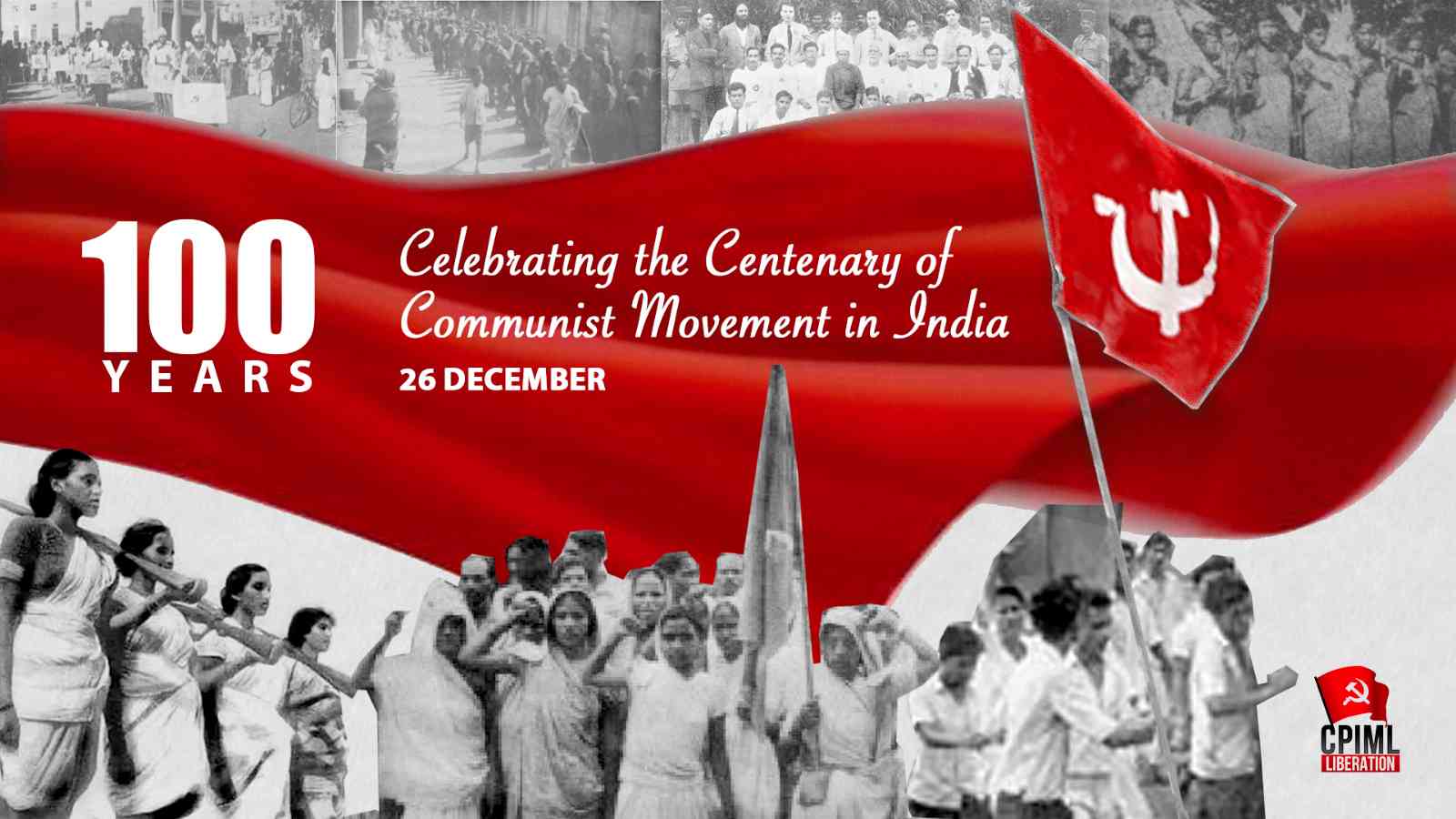
Image courtesy Liberation

On October 1, 2025, a day before Gandhi’s birth anniversary, long revered and associated with ahimsa and moral conscience, the government unveiled a ₹100 coin at the Dr. Ambedkar International Centre, 15 Janpath, marking a century of the Rashtriya Swayamsevak Sangh. A day earlier, as if to turn ideology into spectacle,  a Shakha parade, named Path Sanchalan, traced its way through Jawaharlal Nehru University—once a fortress of dissent and the audacious poetry of thought. The rhythmic march of uniformed bodies through corridors once alive with debate did more than display ceremony; it signaled a shift in the republic’s moral conscience, where the choreography of discipline seeks to mute the dialectic of doubt, and the university—once a sanctuary of questioning minds—becomes a stage for the theatre of obedience. Continue reading Red Dreams, Saffron Marches – Longue Durée of India’s Struggles and Strategies of Power: S. M. Faizan Ahmed
Jyoti Basu and the Passing of an Era

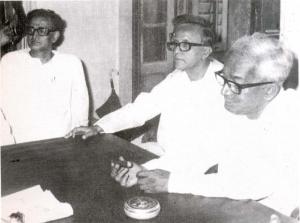
Jyoti Basu, Promode Dasgupta and Saroj Mukherjee

With the passing away of Jyoti Basu, the curtain comes down on an entire chapter of communist history in this country. Basu may have been the last of a generation that learnt its politics in the stormy days of the anticolonial struggle and who lived through the ups and downs of politics – from the underground days of the 1930s and 1940s to the initiation into the ways of parliamentary democracy. The long engagement with parliamentary democracy was to lead to Basu’s – and the communists’ – long stint in power. And Basu was one of those rare communists for whom democracy was not a mere strategic imperative but a value to be internalized.

Basu belonged to a generation of communists who worked their way from the bottom up. Trained in Law in England, Basu returned to India, determined to work in the communist movement. Muzaffar Ahmed, the then secretary of the undivided communist party sent him to work among the railway workers. It was there, working among and organizing the railway workers that Basu entered mass politics.  It was probably in this process that Basu developed his distinctive style of politics – a style that we have yet to understand fully.

Continue reading Jyoti Basu and the Passing of an Era