
Guest post by AMAN DEDHIA
It has been a while since my time in Rajasthan. It took a while to collate and make sense of everything I saw, understood and documented during my time there. I have tried to write down the major parts of it in this not-so-short document. To set some context, in the two weeks I was there, I met the people from the Oran padh yatra, people from KRAPAVIS and other organisations and, most importantly, stayed in a few villages in Jaisalmer where the people were kind enough to show me around. What started with an urge to understand orans, conservation and their problems with solar projects, took me on a journey that at its core was about understanding wastelands and autonomy.
Orans
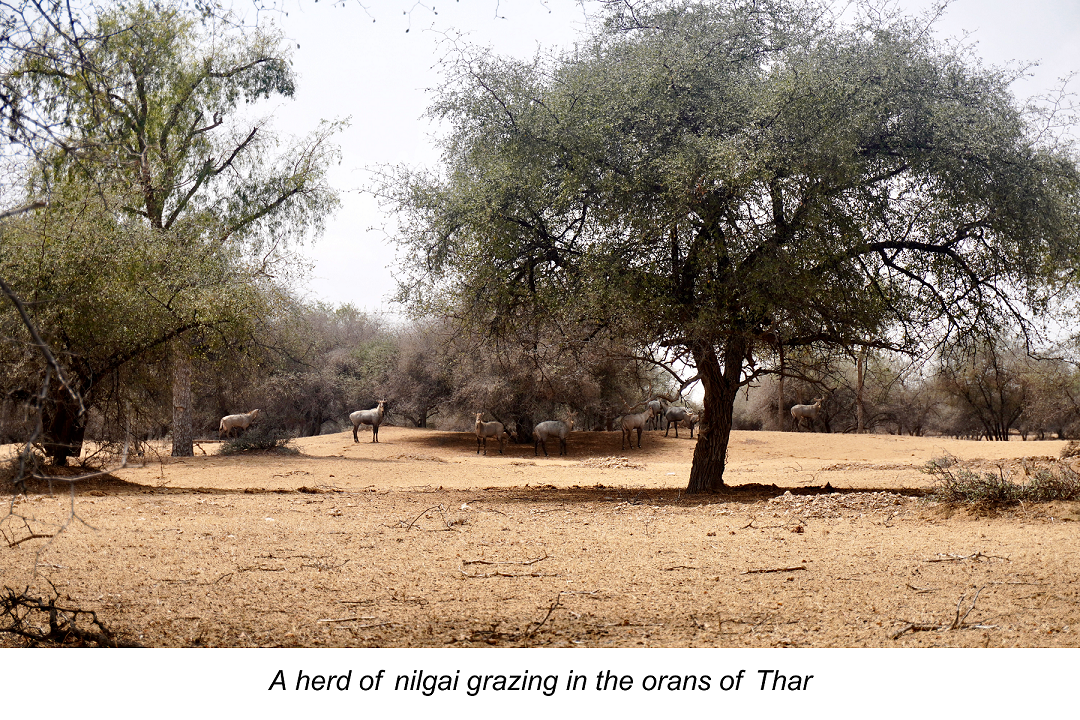
I’d like to begin by shedding some more light on what orans (also known as deobani or rundhs) are, since they’ve been at the centre in the attempts to protect the region. Orans are sacred groves that belong to the temples of the villages and are protected ecosystems spread out across Rajasthan in every village you go. They’re basically community conserved desert forests holding a significant religious value. I came across herds of neelgai, peacocks, gazelles, huge herds of cows and goats, all grazing in these orans. They are protected in the sense, they are not used for agriculture and are mostly community conserved, being used as grazing grounds and for non-timber forest products. That is not to say that there are no encroachments on these lands. Many villagers have encroached on the boundaries of these orans for farming, borewells, shops and other establishments. A lot of people, especially in western Rajasthan do depend on these orans for livelihood. Regions that are mostly dry and on the fringes, which is a huge part of Jaisalmer, only have seasonal farmlands, if any, dependent on the short monsoon rains. A decent amount of people here are primarily dependent on pastoralism. Orans are a major part of the grazing lands supporting their pastoralism and in turn, their livelihood. There are roughly 25,000 orans across Rajasthan, accounting for roughly 6 lakh hectares of land.[1] Another important thing to note is that all of these orans have some sort of water body, mostly made and maintained by the people, that plays a key role in making the ecosystem thrive, providing an oasis for the fauna and flora of the region. Continue reading Wastelands of Rajasthan: Aman Dedhia

