
Tag Archives: European Union

Jorg Haider to Geert Wilders : Far-right Normalised in Europe

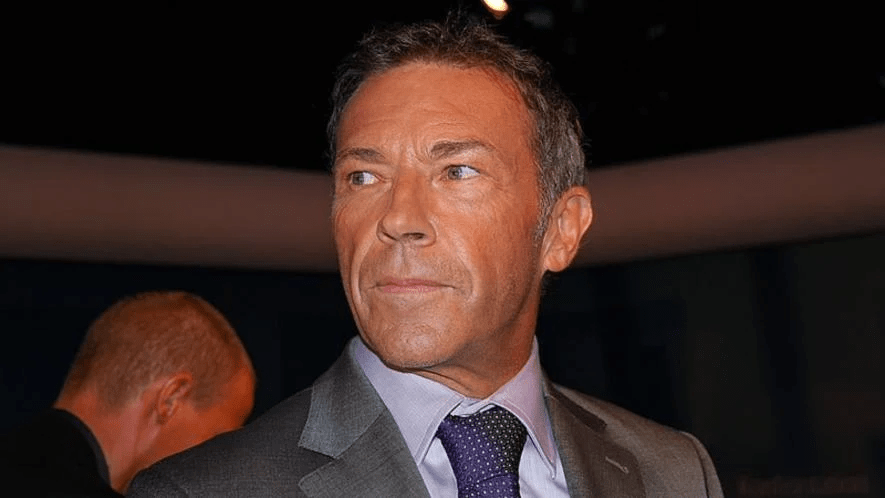
Jorg Haider. Image Courtesy: Wikimedia Commons

Jorg Haider, a far-right Austrian politician who died in 2008, is largely forgotten. It is also forgotten that merely two decades ago, he was considered a very dangerous man in Europe, whose ascent to power had prompted rare European Union unity aimed to thwart his ambitions.

Twice elected as governor of the southern state of Carinthia, Haider—who opposed immigration and was critical of Islam and Muslims—once praised the Nazi regime’s “employment policies”. 

His Freedom Party of Austria allied with another party, the OVP, which allowed Haider to become the country’s chancellor. But the possibility of a ‘right-wing extremist’ ruling a European Union member country prompted the other 14 members to join hands punitively against Australia, putting Haider out of the chancellorship race.

The European Union stuck by the 1997 Treaty of Amsterdam principles and emphasised that nobody would be allowed to “breach them”. 

Many European countries threatened to recall envoys from Austria, and some said that Austria could be shunted out of the union if the need arose. The Belgian foreign minister at the time said, “Europe can very well do without Austria. We don’t need it.

After much water has flown down the Thames, the Rheins, the Danubes and all other rivers of Europe, the world has Geert Wilders in the Netherlands, a “political earthquake”, whom some consider more extreme and fanatical than Haider. But Wilders’ views on immigration and Islam cause no similar outrage in European capitals today.

Wilders’s party, which promised to ban mosques and compared the Quran with the infamous Mein Kampf, has won 37 seats in a 150-member Parliament. It is now the number one party in the country’s parliament. 

( Read the full text here)


Piketty and the Economic Crisis in the Euro Zone: Cenan Pirani

PikettyGuest post by CENAN PIRANI

Though the US has seemingly bounced back from the 2008 financial crisis, southern European countries like Portugal and Greece are currently dealing with debt situations that were once only characteristic of the “developing world”. In order to stabilize their economies after the 2008 crisis these European countries took on a series of IMF and European Central Bank loans in which rates of interest were higher than the countries’ rates of GDP growth, thus stagnating their economies for the foreseeable future.

This situation that currently befalls these countries’ economies was explained by Thomas Piketty in a recent interview he gave for the major Portuguese newspaper, PÚBLICO. Piketty, who has become a prominent public intellectual due to the popularity of his recent work, “Capital in the 21st Century”, was in Portugal this week in order to discuss the economic future of the country with some of its political figures. Besides outlining the problem, he discusses possible courses of action for the countries to release themselves from perpetual debt and austerity. These ideas ironically enough come out of the paths once carved by those now economically dominant countries in the Euro Zone, specifically France and Germany. Continue reading Piketty and the Economic Crisis in the Euro Zone: Cenan Pirani

The European Union And The Twin Civil Wars In Syria/Iraq: Peter Custers

Is this one of those rare occasions where policymakers self-critically correct a gigantic blunder? Or is it a cold turn-about guided by pure self-interest? On August the 15th, the Foreign Ministers of EU-countries gathered in Brussels and decided that each would henceforth be free to supply arms to Kurdish rebels fighting Sunni extremists of ISIS in the North of Iraq. Even Germany which in the past had been unwilling to furnish military supplies to warring parties  in ‘conflict zones’, is now ready to provide armoured vehicles and other hardware to the Kurds opposing ISIS’ advance. The decision of Europe’s Foreign Ministers may surprise some, for barely a year and four months ago, in April of 2013, the European Union had lifted a previously instituted ban on all imports of Syrian oil (1). Moreover, the lifting of this boycott was quite explicitly intended to facilitate the flow of oil from areas in the North-East of Syria, where Sunni extremist rebel organisations had established a strong foothold, if not overall predominance over the region’s oil fields (2). ISIS was not the only Sunni extremist organisation disputing control over Syrian oil fields. Yet there is little doubt but that the fateful decision the EU took last year has helped ISIS consolidate its hold over Syrian oil resources and prepare for a sweeping advance into areas with oil wells in the North of Iraq (3).  Continue reading The European Union And The Twin Civil Wars In Syria/Iraq: Peter Custers