
Tag Archives: nuclear power

Understanding the Empty Promises of Nuclear Energy: Nityanand Jayaraman

This is a review by NITYANAND JAYARAMAN of M.V. Ramana’s book The Power of Promise: Examining Nuclear Energy in India (Penguin/Viking).

Narayanasamy’s monthly promises of power from the Koodankulam nuclear plant may be something of a joke in Tamil Nadu. But the periodic promises served a function. They kept one section of Tamil Nadu hopeful that commissioning Koodankulam will solve the state’s power crisis, and therefore resentful of the agitators who were seen to be putting their own lives, livelihoods and safety over the needs of the state.

In late 2012  Penguin published the first solo book by Princeton University-based physicist M.V. Ramana. The book is titled The Power of Promise: Examining Nuclear Energy in India.
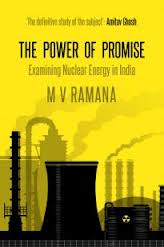
downloadRamana’s commentary is witty, articulate and rich with anecdotes. He makes a solid case for his central thesis – that delivering on the promises of power or security were never the actual goal of India’s nuclear program, and probably never will be. Rather, promises are the engines that power the program, he argues. By holding out the twin ideals of unlimited electricity and infallible security in the form of a credible nuclear deterrent, India’s nuclear establishment has carved for itself an enviable position. It is answerable to no one but the Prime Minister, and can spend billions over decades with nothing to show for the expense.

Continue reading Understanding the Empty Promises of Nuclear Energy: Nityanand Jayaraman

Are We Not Alive: Women’s Voices from Kudankulam

Guest post by ANITHA. S

As I sit here in my home village of Idinthikara watching the hot sun light up the waves rolling onto the shores, I think of the news that has hit the world today about the Koodankulam Nuclear Power Plant. All of you must have seen the news that Madras High Court has given the go-ahead for the KKNPP.

When we carried the dead body of democracy and burnt it in the outskirts of our village on Aug15th, 2012, little did we realize that so soon we would witness the real death of democracy. As this last nail is being tightened on our lives, we realize how insignificant has been our voice. But this has only strengthened our vow to be together. Continue reading Are We Not Alive: Women’s Voices from Kudankulam

Updates from Koodankulam

Via NITYANAND JAYARAMAN

Koodankulam: Curb on Free Speech

Video Interviews with  eminent legal scholar Dr. Usha Ramanathan and Adv. R. Vaigai, a senior lawyer from the Madras High Court.

Since March 19, 2012, when Tamil Nadu Chief Minister Jayalalithaa announced that work on the controversial Koodankulam nuclear plant could be resumed, and even before that actually, the protesting villagers have been at the receiving end of a vicious state led campaign to paint their non-violent struggle as a violent one, and to crush their campaign into silence by using harsh sections of the Indian Penal Code. More than 7000 cases of “sedition” and “waging war against the Government of India” have been filed just in the Koodankulam police station just between September and December 2011. These are part of 107 cases filed against 55,795 people during the same period. That is probably more than in any other police station in India. Certain sections of the media too have played the role of a willing partner in propagating the State’s propaganda. In pursuing this counter-campaign against its own people, the State Government has placed itself above the law of the land and pursued an openly anti-democratic agenda.

See interviews in two parts at at 

1. chaikadai.wordpress.com

2. chaikadai.wordpress.com

PRESS RELEASE

Cases against K-protestors a parody of law: Fact Finding Team

18 April, 2012. CHENNAI – A fact-finding team headed by senior journalist Sam Rajappa confirmed that the Government had indeed restricted movement of essential goods and people in the days following the Chief Minister’s March 19th declaration announcing her support to the nuclear plant. The report, which was released at a press conference in Chennai, noted that the spirit of opposition to the nuclear power plant was very high, and warned that arresting the leaders could lead to a serious law and order problem in the region.

Continue reading Updates from Koodankulam

The Earthquake and Japan: Kojin Karatani

[We are posting below a piece by Japanese philosopher and literary critic Prof Kojin Karatani, sent to us by a friend. Karatani has authored a number of works, including a very important recent book Transcritique: On Kant and Marx (MIT Press 2003). In this brief but thoughtful piece, Karatani talks about the ways in which the experience of the earthquake is forcing many Japanese people to rethink the whole idea of becoming a world economic power and its concomitant idea of development. AN]

I was on the streets of Tokyo when the earthquake struck. The ground shook violently, while buildings swayed around me for a long time. It was beyond anything I had experienced before, and I sensed that something terrible had happened.  My first thought was of the Kobe earthquake that killed more than 6,000 people in 1995.  Although I did not experience the Kobe earthquake first hand, it hit the region of my hometown where many close relatives lived, and so I headed immediately to the scene of the disaster. I walked the streets where building after building had collapsed into rubble.

Clearly, the scale of the current disaster far surpasses that of the Kobe earthquake. For it also includes the damage caused by the tsunami to coastal regions across hundreds of kilometers as well as the danger of nuclear catastrophe. Yet these are not the only differences. The Kobe earthquake was completely unexpected. Aside from a small number of experts, no one had imagined the possibility of an earthquake there. The recent earthquake, on the other hand, had been anticipated. Earthquakes and tsunamis have struck the Northeastern region of Japan throughout its history, and frequent warnings had been sounded in recent years. Meanwhile, nuclear power had always given rise to strong opposition, criticism, and warnings.  Yet the scale of the earthquake went far beyond any prior anticipation.  It was not that anticipating the scale of such a disaster was impossible, just that people had purposely avoided doing so.

The full article can be read in Counterpunch.