
Guest post by RAJESH RAMAKRISHNAN
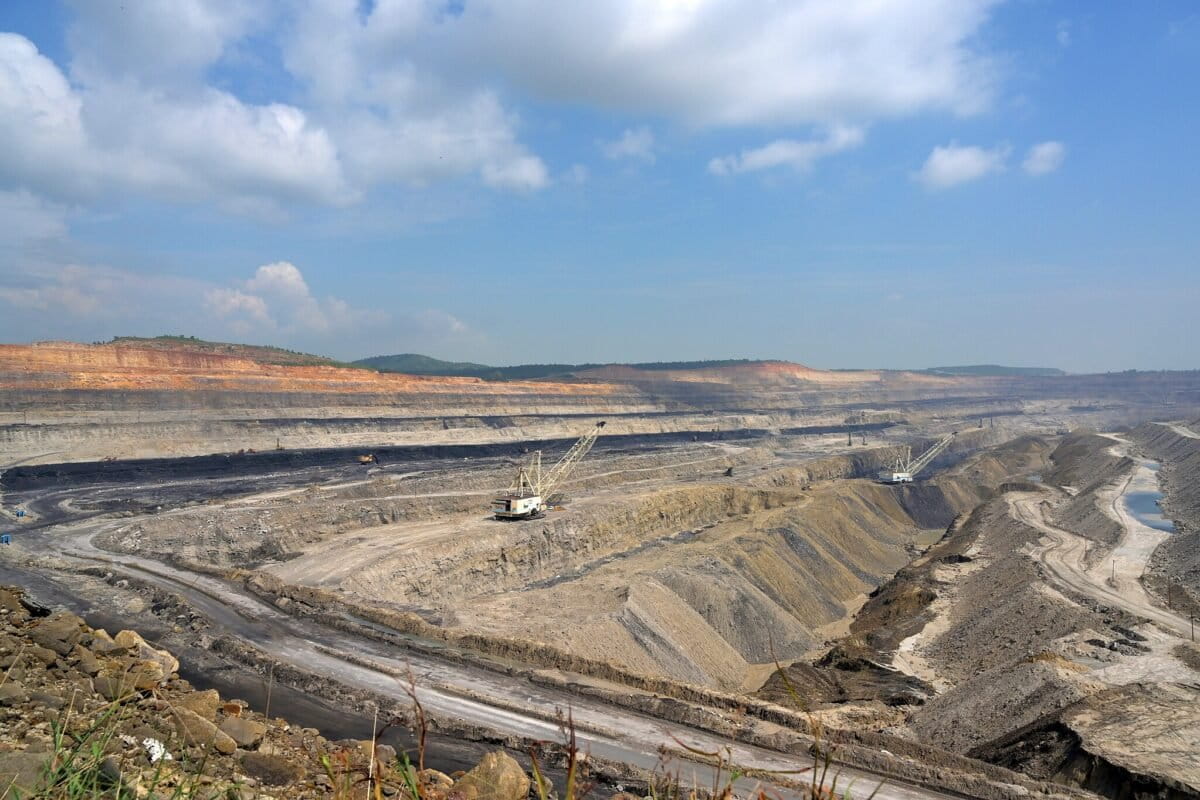
The Mines and Minerals (Development and Regulation) Amendment Act 2026 is yet another blow struck by the BJP government at the Centre on behalf of corporates and against nature-dependent primary producers (farmers, fishers, forest-dwellers and pastoralists) of the country and the jal-jangal-zameen that sustains them. Touted as a law to bring about a uniform taxation regime for mining in the country, it will instead help corporates finish off the mineral wealth of the country in a short time leaving nothing for future generations, aggravate environmental destruction and human distress, while disempowering State Governments from redressing the damage. Every effort must be made to repeal this Amendment which only strengthens capitalist extractivism.
The Amendment:
While the MMDR Act already empowers the Union to control regulation of mines and development of minerals, the 2026 Amendment empowers it to regulate mineral-bearing lands. Mineral bearing land is defined by the Amendment as any land having mineral contents in accordance with parameters prescribed by the Union Government. The Amendment prohibits a State from imposing specified levies, except in accordance with conditions or restrictions prescribed by the Union. This applies to any tax, cess, or other such levy on: (i) mineral rights, or (ii) mineral bearing lands, whether based on mineral quantity, mineral value, royalty or otherwise. The Amendment deems unpaid or unrecovered dues of any such State Government levies prior to the Amendment invalid. While any State Government levies already deposited or recovered will not be liable to be refunded. The main objective of this Amendment is to erase tax arrears owed to States by mining companies and create a predictable fiscal regime for investors in mining – foreign and domestic. In doing so, it raises serious questions about Parliament encroaching on the taxing powers of State legislatures and the division of powers between the Union and States as envisaged under the Constitution.
Constitutional questions – powers of the Union and of States:
The background to the Amendment Act is the Supreme Court’s nine-judge bench judgement of 25.07.2024 in Mineral Area Development Authority v. Steel Authority of India (‘MADA’). The Court had ruled that as per Entry 50 in the State List under the Constitution, States have complete, absolute and exclusive power to impose taxes on mineral rights. But Parliament may impose restrictions, including complete prohibition, on the powers of States to impose such taxes by law relating to mineral development. The 2026 Amendment uses this handle given by the 2024 judgement. The Court had also ruled that mineral-bearing land falls under Entry 49 of the State List, and States have the authority to tax it based on the quantity of minerals produced or the royalty payable. Entry 49, unlike Entry 50, is not subject to any Parliamentary limitation. Hence, it is in the exclusive domain of the State Legislatures to tax mineral bearing lands without any interference by Parliament.
However, the 2026 Amendment completely bars States from taxing mineral rights or mineral bearing lands, except in accordance with conditions or restrictions prescribed by the Union. This goes against the meaning of Entry 50, because instead of Parliament limiting States’ powers, by this Amendment States can exercise their authority to tax mineral rights only if the Union places conditions or restrictions. Entry 50 thus becomes a dead letter for States. Also, the 2026 Amendment extends Union control to mineral-bearing lands by defining mineral-bearing land as any land having mineral contents in accordance with parameters prescribed by the Union Government. This goes against the powers of States under the Constitution because Entry 49 is not subject to the Union in any way, and because the Union legislature cannot change the definition of mineral-bearing land according to rules framed by the Union executive.
The Court in its 2024 judgement had also said that tax demands could be raised by State Governments for the period beginning April 1, 2005, subject to a phased payment schedule. It is these tax demands that stand invalidated by the 2026 Amendment, benefiting public-sector and private mining companies that have legacy dues to State Governments. But a legislation cannot override a Court judgement merely by declaring “Notwithstanding anything contained … in any judgment, decree or order of any court.” The legislation has to alter the basis of the judgement. The 2026 Amendment is not altering the basis of the 2024 Supreme Court judgement, which was based on interpretation of powers of the Union and States under the Constitution on mining rights and on mineral-bearing lands.
The 2026 Amendment rewards States that collected legacy taxes dating back to April 1, 2005, while States that did not or are still in the process of doing so lose the possibility altogether. This is bound to be challenged as a violation of Article 14, which guarantees equality before the law.
Anticipated impact on mineral-rich States
The 2026 Amendment, by taking away the taxation powers of States, deprives them of their autonomy to use revenue from mining for human development and social welfare. For example, it ends the validity of the Jharkhand Mineral-bearing Land Cess Act, that generated Rs. 13,442 crore in 2025-26, which was 68% of the State’s non-tax revenue and 11% of its total revenue receipts.[1] The Act mandates that the revenue be used only for augmenting healthcare services, education, social security, agriculture, rural infrastructure, drinking water and sanitation. The Orissa Rural Infrastructure and Socio-Economic Development Act, 2004 (ORISED Act) had levied a tax of up to 20 per cent on the annual value of mineral-bearing lands. The revenue was to be used by the State Government for improvement and development of infrastructure, implementation of production programmes, promotion of education, health, sanitation and employment in rural areas, backward areas and mining areas. It was struck down by the Odisha High Court in 2005 after a legal challenge by mining companies. The State appealed in the Supreme Court. While the case was pending, the 2024 judgement of the Supreme Court renewed hope that if the Court also upheld the ORISED Act, Odisha would receive arrears of about Rs. 1 lakh crore in 12 annual instalments, and the State could raise an additional Rs. 12,000 crore every year through the ORISED tax. The 2026 Amendment has ended the possibility of receiving arrears and additional annual revenue.
States with mineral wealth will now be pushed towards increasing mineral production for sustained fiscal gains. An example is Odisha, where mining revenue has grown steadily since 2021-22 and is projected to reach Rs. 53,000 crore in 2026-27, accounting for 75% of its non-tax revenue.[2] This revenue growth has been driven by renewal of mining leases and auctioning of new mineral blocks, not through additional levies. Odisha auctioned 79 mineral blocks, and earned about ₹87,000 crore in premium between 2020-21 and 2025-26.[3]
Clear winners: mining companies
When the Supreme Court pronounced its 2024 verdict, the Federation of Indian Mining Industries (FIMI) had complained that that the mining industry stood to lose Rs. 1.5 lakh crore to 2 lakh crore due to tax arrears.[4] Tata Steel disclosed that it could owe around Rs 17,347 crore in retrospective taxes to Odisha.[5] The Amendment wipes out the arrears of companies that have not yet paid them. It also reduces the tax burden on their future operations.
The argument of mining corporates, now echoed by the Government in defence of the 2026 Amendment, is that States do not need to impose any additional levies on mining because mineral auction premiums, the entire royalty levied by the Union Government, and District Mineral Foundation funds go to the States. All these revenues will increase if mineral-bearing lands are acquired quickly, more mining blocks are auctioned, and the winning companies are facilitated to get environmental, forest and wildlife clearance at the earliest, so that production can begin without delay. The message being given to State Governments is to protect and enhance their revenue by bringing more and more area under mining, and more production of minerals, in the shortest possible time. This fuels higher and quicker profit for mining companies.
Implications for nature-dependent primary producers:
The deregulation of mining, which has been accelerating since 2015, has been accompanied by dilutions of protective environmental and social legislation and regulations like the Forest (Conservation) Act, 1980; the Environmental Impact Assessment (EIA) Notification, 2006; non-implementation and violation of the Forest Rights Act, 2006 and Panchayats (Extension to Scheduled Areas) Act, and bypassing of the The Right to Fair Compensation and Transparency in Land Acquisition, Rehabilitation and Resettlement Act, 2013 by State Governments.
Apart from dilution of laws, there is outright violation of laws by State Governments in Schedule V areas to facilitate mining by leasing land to private entities, bypassing consultation with Gram Sabhas and fabrication of Gram Sabha consent, forcible land acquisition despite Gram Sabha objection, police intimidation, and arrests of activists. The FRA is routinely violated by mass rejection of rights claims without following the process of the law, illegal diversion of forest land for mining projects without fulfilling the mandatory requirement of recognizing rights or obtaining Gram Sabha consent, retrospective cancellation of granted forest rights, eviction from forest land, and displacement of forest-dwellers for compensatory afforestation.
The result of deregulation and liberalisation in mining accompanied by dilution and violation of protective legislation and regulations was 57% increase in mineral production between 2011-12 and 2024-25.[6] At the same time, between 2008-09 and 2022-23, almost 60,000 hectares of forest land was diverted for mining.[7] Between 2014-15 and 2023-24, more than 40,000 hectares of forest land was diverted for mining and quarrying.[8] There is no central nationwide official count available for the number of people physically displaced due to mining, or the number of people who have lost their livelihood. Academic estimates of displacement between 1960 and 2000 vary from 15 lakh[9] to 25.5 lakh.[10] The traditional living spaces of nearly one-fourth of Adivasi communities, whose total population across India is 2.6 crore, stand within the borders of Odisha, Chhattisgarh and Jharkhand. Seventy percent of India’s coal reserves are found within these three states. It is a paradox that the geographies rich in resources are also the spaces where the most marginalised live. It is this “resource curse” that the 2024 judgement had sought to reverse.
In this context, the 2026 Amendment with its big push for increased mining and more production in the shortest time, will spell greater destruction of jal-jangal-zameen and the livelihoods of primary producers dependent on them – adivasis and other traditional forest-dwellers, toiling farmers, traditional fishers and pastoralists. The loss of large areas of old-growth forests, commons and agricultural lands under green cover will alter hydrological regimes, including river flow and groundwater, and irreversibly erode biodiversity, affecting areas wider than the immediate vicinity of mines. The loss of valuable carbon sinks and climate buffers will both contribute to climate change and degrade the ability to adapt to it, affecting larger populations than just the directly mining-affected. The reckless expansion of mining is a part of extractive, capitalist Anthropocene, which will have irreversible consequences. For example, findings from coal mining regions in India reveal consistent patterns of topsoil loss, increased compaction, reduced moisture retention, and significant depletion of soil organic carbon. Widespread contamination by toxic elements such as chromium and lead, along with acid mine drainage, further degrades soil quality. At the landscape scale, central Indian coalfields show marked decline in forests and water bodies, accompanied by growth of mining pits, overburden dumps, and transport corridors that fragment habitats and disrupt hydrology.[11]
Strategic mobilisation against the Amendment:
Movements and organisations in mineral-rich States should strategically mobilise to get the Amendment repealed. In each State, organisations of Adivasis and other traditional forest-dwellers, toiling farmers, fishers and pastoralists should come on to a common platform for this purpose. The dangers posed by the Amendment should be widely disseminated. State Governments should be compelled to mount a legal challenge to the Amendment in the Supreme Court. While the objective of the Amendment is to push States to enhance mineral production in the shortest possible time, the movements should demand that the State Government impose a ceiling cap on the annual production. This is in consonance with the key principles that the Supreme Court followed in the Goa mining case and the Bellary illegal mining case, following from the Rio Declaration of the UN Conference on Environment and Development in 1992:
- The Precautionary Principle: Where there are threats of serious or irreversible damage, lack of full scientific certainty shall not be used as a reason for postponing cost-effective measures to prevent environmental degradation, including a ban or restriction on mining.
- The Principle of Intergenerational Equity: The right to development must be fulfilled so as to equitably meet developmental and environmental needs of present and future generations. There is an obligation to extract minerals in a controlled, responsible manner so that succeeding generations may also enjoy the state’s natural wealth.
- The Principle of Sustainable Development: A balance must be struck between economic development and environmental stewardship, through a framework for monitored, scientific extraction.
- The Polluter Pays Principle: The polluter should, in principle, bear the cost of pollution, with due regard to the public interest. Mining leaseholders should bear the financial and physical burden of restoring lands degraded by mining, through mandatory reclamation and rehabilitation plans for all mines to restore the ecology of the region.
In addition, movements should continue the struggle to get PESA and FRA implemented, oppose their violation, and oppose dilution of EIA. State Governments must be urged to amend their state forest laws, necessitating compliance with the FRA for forest diversion proposals.
[1] Jharkhand Budget Analysis 2026-27
[2] Odisha Budget Analysis 2026-27
[3] MMDR Amendment Act, 2026: A Stronger Push for Mining-Led Development
[4] SC verdict on mining royalty case to have large financial impact, ET Legal, 14.08.2024
[5] MMDR amendment sparks revenue fears, Odisha may lose over ₹1 trillion dues, Business Standard, 23.08.2026
[6] Mineral and non-ferrous metal production on growth track in FY 2025-26, Press Information Bureau, 04.06.2025
[7] Data: Over 3 Lakh Hectares of Forest Land Diverted for Non-Forest Use in the Last 15 Years; factly.in, 21.08.2023
[8] Answer to Lok Sabha question on 21.07.2025
[9] Fernandes, Walter (2006). “Mines, Mining and Displacement in India.” In Singh, Gurdeep,
Laurence, David and Kauntala Lahiri-Dutt (eds.). (2006). Managing the Social and Environmental
Consequences of Coal Mining in India, The Indian School of Mines University, Dhanbad, pp. 333-344.
[10] Downing, Theodore E. (2002). Avoiding New Poverty: Mining-Induced Displacement and
Resettlement, IIED and WBCSD, London, Research Paper No. 58.
[11] Coal mining in India: a study of environmental problems and effects on soil resources due to surface coal mining
Rajesh Ramakrishnan is Convener, Campaign to Defend Nature and People (CDNP)

