
This is the text of a lecture I delivered at Universidad Nacional Autónoma de México (UNAM), Mexico City, on August 21, 2026.
It reflects decades of thinking and writing and engagements with other feminists and with students in my courses. At the end I have listed my works from 2004 to 2024 that make earlier forms of these arguments. Full references and citations to other scholars’ work whom I mention here, can be found in those. Here I post only the text of the lecture. A link to the recording is given at the end.
Doing Feminism from the Global South
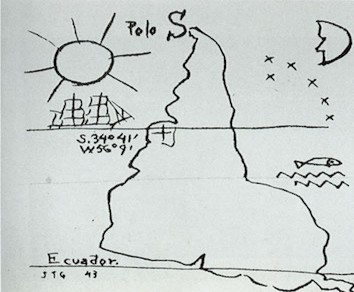
Joaquin Torres Garcia America Invertida 1943
I am deeply honoured to be invited to speak on this very special occasion celebrating UNAM’s 75th anniversary. I congratulate you all on this occasion, and would like to express my deepest gratitude to the university for giving me this opportunity.
As you can see from the title of my lecture, we will use the term “doing” feminism rather than “being” feminist because I prefer to see feminism as a set of practices that take different shapes in different contexts rather than something that essentially constitutes the self. Of course I would call myself a feminist, but that identity is produced by my understanding and practices, not some essential core. In claiming feminism in this way, I draw on feminisms of the global South that have been suspicious of the idea of a Universal subject of feminism – Woman. Any mainstream feminism that claimed universal Woman has been challenged as representing the dominant identity of the region – caste, race, class. So what we have experienced in the global South are multiple feminisms in every context, that arose simultaneously initially as struggles against both imperialism and patriarchy, and eventually challenge dominant feminisms as well.
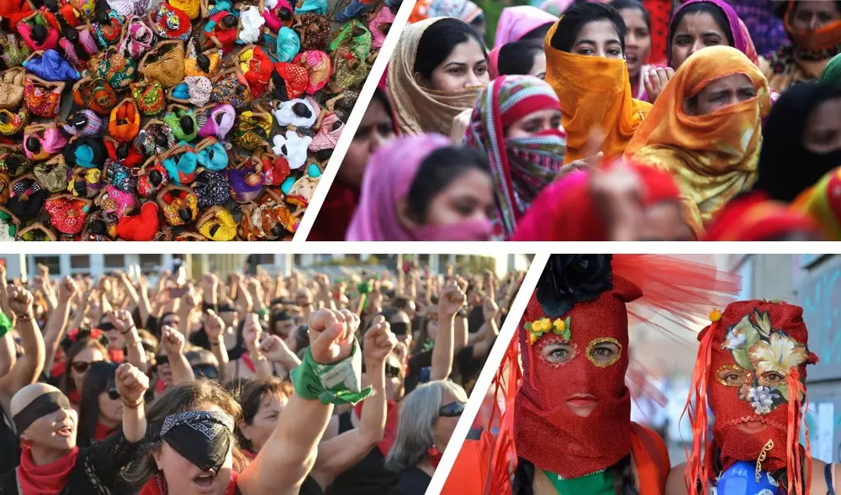
I will address two interlinked themes in this lecture – first, the challenge to the idea of a universal feminist subject; and second, the contestations over the value of modernity.
Challenges to the idea of a universal feminist subject
Let us start with the understanding that to “do feminism” at all one has to reject the codes that make the world meaningful, make it appear reasonable. The maintaining of social order requires the faithful performance of prescribed rituals over and over again throughout one’s lifetime. Complex networks of cultural reproduction are dedicated to this sole purpose. But the ultimate goal of all this unceasing activity is to produce the effect of untouched naturalness.
When one tries to do feminism however, one looks at the world with a feminist gaze, and this gaze undoes social order, reveals the strenuous, complex formatting that goes on below the surface of what looked smooth and complete.
What do I mean by feminism? A feminist perspective recognizes that the hierarchical organizing of the world around gender is key to maintaining social order; that to live lives marked as ‘male’ and ‘female’ is to live different realities. But simultaneously, to be a feminist is to imagine occupying the marginal, relatively powerless position with reference to every dominant framework that swallows up the space at the centre.
For instance, most women who are university professionals would be in a relatively powerful position with regard to working class men they interact with daily – the taxi driver, the janitor, in India, the domestic servant; and if this woman is a dominant caste Hindu in India, or white American anywhere, she would be relatively powerful with regard to men who are not dominant caste or white. At the same time, she would experience her relative powerlessness as a woman if faced by a man in a position to attack her sexually, regardless of his class or caste position; or when she compares her life choices and autonomy with those of a man of her class. Needless to say, it is not only ‘women’ who can adopt feminism as a political stance and way of life, but men who choose to do this have to be taking a stand against the privileges that they could otherwise take for granted.
Feminism is thus not about individual men and women, but about understanding the ways in which ‘men’ and ‘women’ are produced as a binary and inserted into patriarchies that differ according to time and place.
When a feminist ‘sees’ from the position of marginality s/he has deliberately chosen to occupy, it is a gesture of subversion towards power; it disorganizes and disorders the settled field, resists homogenization, and opens up multiple possibilities rather than closing them off.
To be a feminist is to understand that different identities – located hierarchically as dominant or subordinate – are produced at different times and in different spaces, by different structures of power, but to be aware particularly of processes of gendering. By ‘gendering’, I mean the ways in which people are produced as ‘proper’ men and women through rules and regulations of different sorts; some of which we internalize, some which have to be violently enforced. But to be a feminist is also to recognize that apart from gender-based injustice, there are multiple structural inequalities that underlie social order, and to believe that change is possible, and to work for it at whatever level possible.
Now, what do we mean by the global South? The way I see it, invoking the global South is also a gesture against universalizing the subject.
The term global South does not here refer to a geographical region, nor to a category within a developmental discourse. It is intended to indicate a space of thought, the possibility of revaluing and learning from speech that exists in the margins, of reworking the co-ordinates of intellectual labour to free ourselves from Eurocentric universalising narratives, and to destabilise the East–West distinction which is routinely made in the context of thought and intellection. Such conceptualisation might make spaces within the geographical global North part of the global South – as, for instance, the thought of African Americans in the United States of America, and of Indigenous people in the Americas and Australia.. This would apply also perhaps to some parts of Europe – around the Mediterranean, for example, or parts of Eastern and Central Europe with histories that cut through all neat continental divisions.
The supposedly natural division of this part of the world into continents – Europe, Africa, Asia – is anything but natural. Spatially, North Africa, West Asia, and Southern Europe are more contiguous with one another than with other parts of “their” continents. Moreover, as scholars of Oceanic Studies point out, oceans have not historically separated pieces of land; rather, they have acted as conduits of communication. In other spheres, too, long hidden or conveniently invisible connections between the three discursively separated continents around the Mediterranean have been made visible.
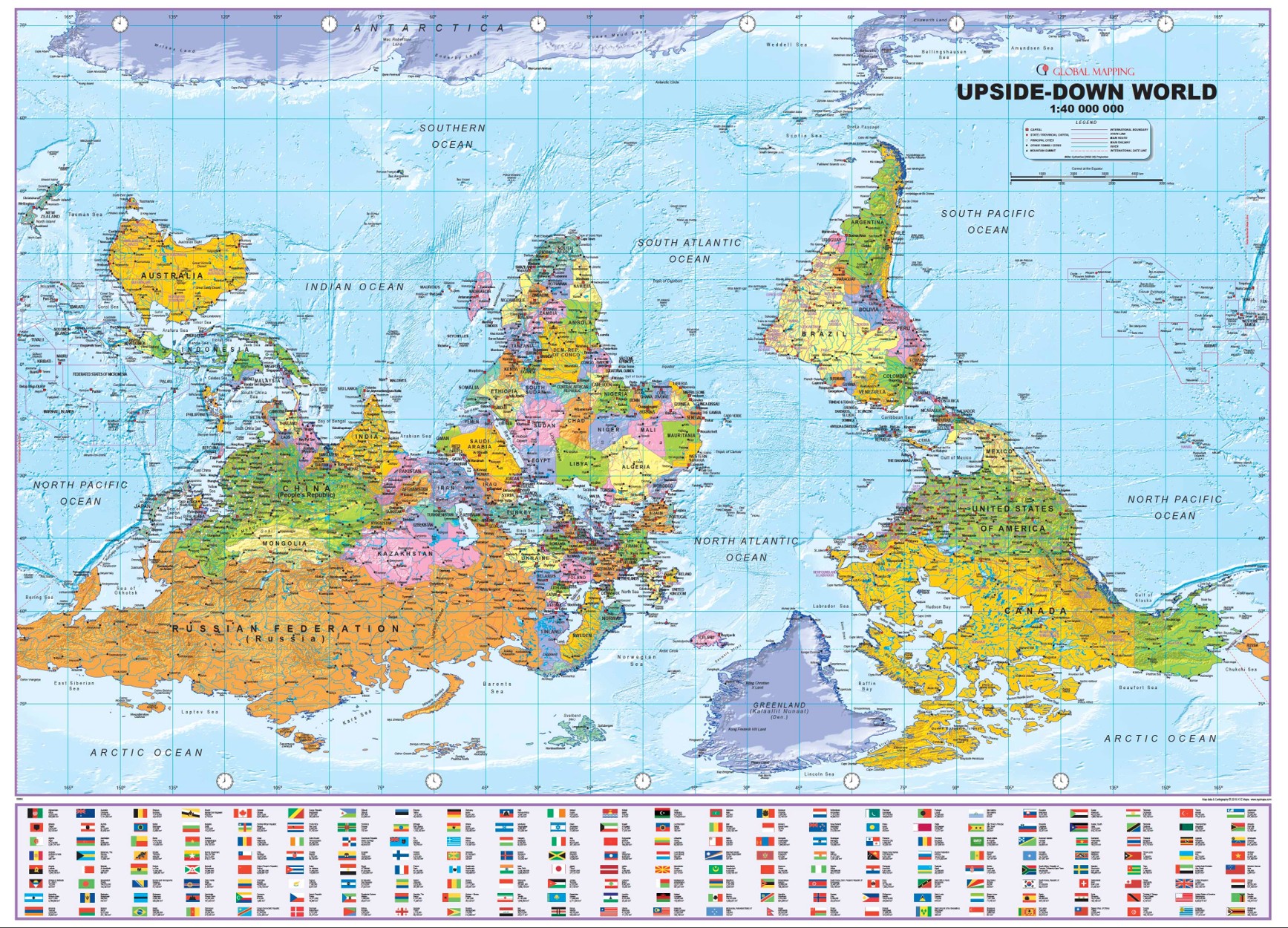
I will note here in passing that the term global South assumes certain histories of normalised cartography which are challenged by strategies such as “upside down maps”. The politics of cartography deserves a separate lecture by itself! But we will bracket this for another time.
The Argentinian philosopher Walter Mignolo asserts, “I am where I think”, that is, you constitute yourself (I am) in the place where you do and think. I read this statement not as a claim to ahistoric indigeneity, authenticity, or superiority vis-à-vis “the West” – a stance very familiar in India from the Hindu nationalist framework. Rather, it is an insistence on privileging location, a recognition that spatial and temporal co-ordinates inevitably suffuse all theorising. A sensitivity to location invariably leads to a productive contamination of the purity of empty universalist categories with specific histories, thus challenging their claim to speak about everywhere from nowhere, pointing towards unexpected other histories that unsettle the idea of a single point of origin.
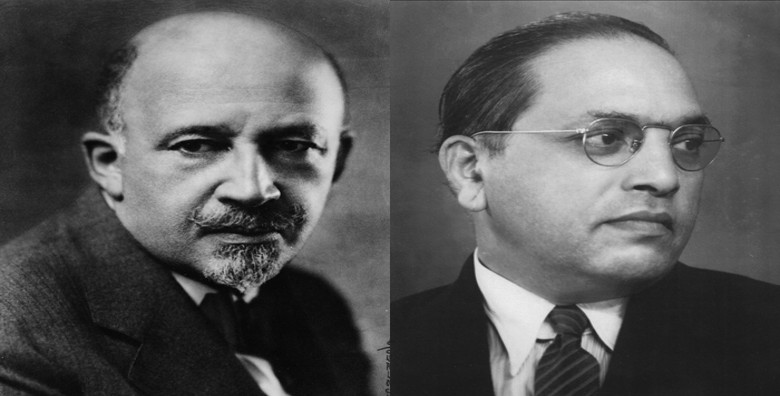
The hemispheric divide is bridged by links of the global South with the South-within-the-North. Latin American decolonial feminism has found allies in the Latina/x feminist tradition of the United States. Latina/x “symbolically encapsulates identity conditions of migration, immigration, and diaspora to the United States from countries in Latin America and the Caribbean” and can capture a range of identities (e.g. Afro-Latina, Afro-Caribbean, Nuyorican, Xicana). Dalit intellectuals in South Asia have been in conversation with Black politics and scholarship in the USA from the time of the correspondence between B.R. Ambedkar and W.E.B. Du Bois in 1946 – when Ambedkar hoped to follow Du Bois in submitting a petition to the UN on the plight of India’s Untouchables – down to the present.
The Dalit Panther organisation founded in 1972 by Namdeo Dhasal, J.V. Pawar, Raja Dhale, and Arjun Dangle was explicitly inspired by the Black Panthers of the USA; at its peak, for about five years, it provided inspiring and militant leadership to young Dalits. Activists like Thenmozhi Soundararajan, founder of Equality Labs, who studies the practice of caste discrimination among South Asians in the USA, have made explicit connections between Dalit and Black experience. Equality Labs’ report Caste in the United States was discussed widely among Black audiences.
A more recent alliance is between postsocialist and postcolonial feminisms exploring their “uneasy affinities” (Madina Tlotsanova).
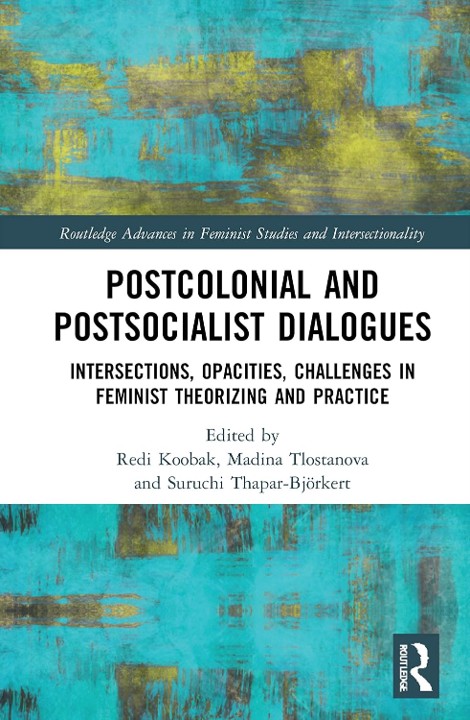
On the one hand postsocialist scholars are seen by postcolonial scholars as more aligned with the North; on the other the concept of “postsocialist precarity” – referring to “geo-historical experiences resulting from the dismantling of state socialist modernity and the (re-)incorporation of relatively closed economies into the capitalist neoliberal order” (Tlotsanova) – draws the two closer in their shared critique of imperialism, capitalism, and heteronormativity. However, while racism tends to be less visible in the postsocialist imaginary, the conversation with postcolonialism brings the issue of racialised hierarchies into focus.
We can begin to see what thinking the global South involves – the attempt to bring into conversation with one another concepts and categories that have emerged from different spatio-temporal locations is key. This conversation would have to be produced with the sharp awareness of incommensurability, mistranslation, productive misreading, and above all, and always, the awareness of the materiality and politics of location.
It should be clear by now that I do not suggest that the South is homogeneous, nor is the North. The issues of heterogeneity, power, and dissent within the global South is not generally addressed by postcolonial or decolonial thinking, where the objects of critique remain empire/coloniality. However, feminist thinking must be alert to debates and contentions within the South in order to take seriously the heterogeneity and power relations internal to the South.
This brings us to the question of translation, not merely between languages but between conceptual universes.
A striking instance of translation as appropriation is the application of “gender” to African societies, for example.
African feminists have pointed out how Western feminism has universalised the concepts of “woman” and “patriarchy”, failing to see the actual, very different structures of societal power in operation. Oyeronke Oyewumi argues that gender as a category did not operate in any significant way in pre-colonial Yoruba and many other African cultures.
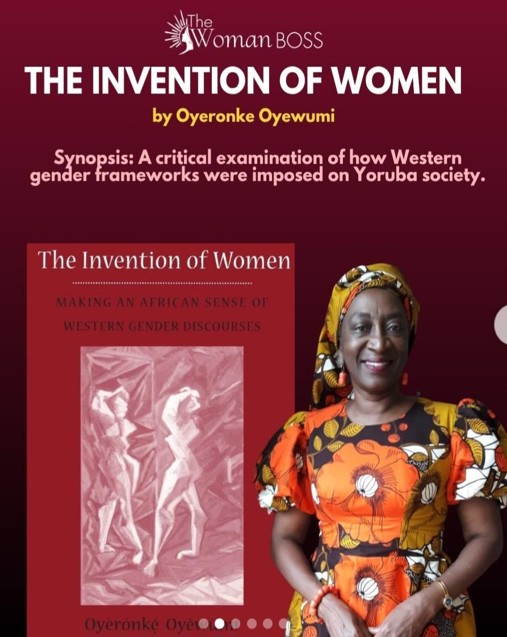
Western post-Enlightenment philosophy privileges appearance (“seeing”), and therefore the body, and assumes certain structures of social difference based on these. Differences not visible to the eye in the same way are not understood. Oyewumi cites a study on the Ga traders of Ghana that refers to them as “market women”, drawing all its conclusions from this foundational premise even when the identity of traders in West African societies is not gender-specific. Through her own work Oyewumi argues that, among the Yoruba, seniority is the defining axis of hierarchy, not gender.
Nkiru Nzegwu shows how the “metaphysics of gender” erodes cultural specificity and the historicity of societies such as that of the Igbo. Even Ifi Amadiume, a Nigerian scholar – as she struggles to produce a culturally grounded account of the position of women – is caught up in this metaphysics, says Nzegwu. Gender identity in Igbo society, in Nzegwu’s account, is “a flexible, fluid, state of being, and is tied to social roles and functions that demand deliberative rationality from females”, and here too the principle of organisation is seniority. Nzegwu argues that Amadiume, even as she recognises the fluidity of gender roles, is trapped in the metaphysics of the binary gender model because she describes non normative gender roles in binary terms – as for example “male daughters and female husbands”.
Another important feminist voice from Africa is Sylvia Tamale, whose Decolonization and Afro-Feminism (2020) sees as a key decolonial move the assertion of a reworked Pan-Africanism that is both decolonial and Afro-feminist.
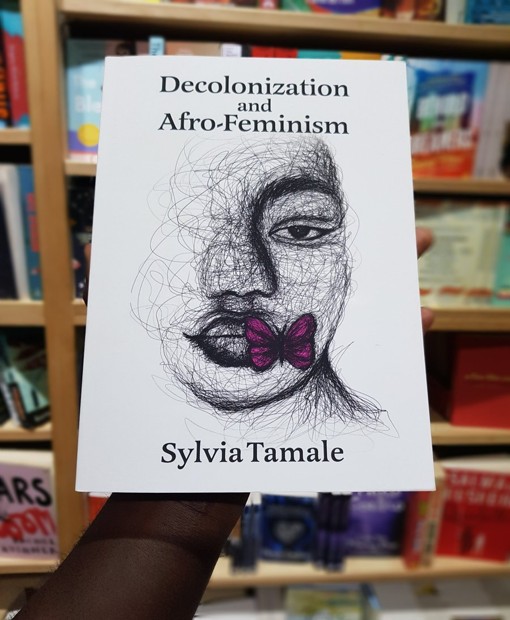
Tamale is critical of the Western human rights paradigm based on the fragmented individual. She proposes instead the African philosophy of Ubuntu (from the Zulu language) which thinks in interconnected terms and is better geared to social justice. Ubuntu is far from “I think therefore I am”, and is rather “I am because you are” – a person is a person through other people. This idea echoes a theme characteristic of thought in the global South – the discomfort or lack of identification with the individual as assumed by Western modernity. The above is only a brief account of a dense discussion among African scholars, offered here to indicate what it might mean to listen to internal conversations seriously.
Among feminists in Latin America, too, as you would be aware, the term “gender” has been seen as problematic, but for a different reason. In an essay on Latin American feminist philosophy and politics, Stephanie Rivera Berruz states that gender entered the region with the translation of Gayle Rubin’s scholarship into Spanish. The term was translated into Spanish as género, whose direct translation is more akin to “genre” or “species”. Latin American feminists have contested the legitimacy of gender as a category of feminist analysis, for they see it as depoliticised and appropriated by states and funding agencies. These feminists have generally used the concept of patriarchy, preferring it because “it offered a framework grounded in ideological and socioeconomic conditions that allowed for articulating the cause of women’s oppression.” The interlinked ideas of decoloniality and translation are central to Latin American feminist thought, as translation is “politically and theoretically indispensable for feminist, anti-racist, decolonial, and anti-imperial alliances.” Drawing on Sonia Alvarez, Berruz draws our attention to the understanding that difference emerges as a rich terrain from which to engage others. It is evident that this “difference” refers to differences internal to feminism too, not merely between the hemispheres. This understanding involves accepting degrees of incommensurability. However, the idea is not to abandon translation but to “recognize the complexity and diversity of speaking positions with which we engage.” The term transloca has been coined to indicate both the processes of translation (“trans”) and the material effects of location (“loca”) – “the transloca highlights multiple dimensions that shape conditions of difference.”
In this understanding decolonisation cannot occur without de-patriarchalisation. The project of decolonial feminisms is not framed by “privileging one category of analysis over another (e.g. race over gender); rather, it proposes a systemic critique focused on the conceptual framework of dominant Latin American feminisms, calling attention to the ways it has reified classism, sexism, racism, and heteronormativity.” (Berruz).
Contestations over Modernity
This brings us to the second theme I would like to explore, the legacy of modernity and feminist claims to it. The major part of struggles against patriarchy and the Brahminical caste order in South Asia have invoked the values of modernity as they were presented to us by British colonialism – equality and freedom to determine one’s self – against the shackles of a rigid hierarchical caste order. Indian historian Uma Chakravarti developed the concept of “Brahmanical patriarchy” to indicate that caste hierarchy and gender hierarchy are the closely interconnected organising principles of the brahmanical social order.
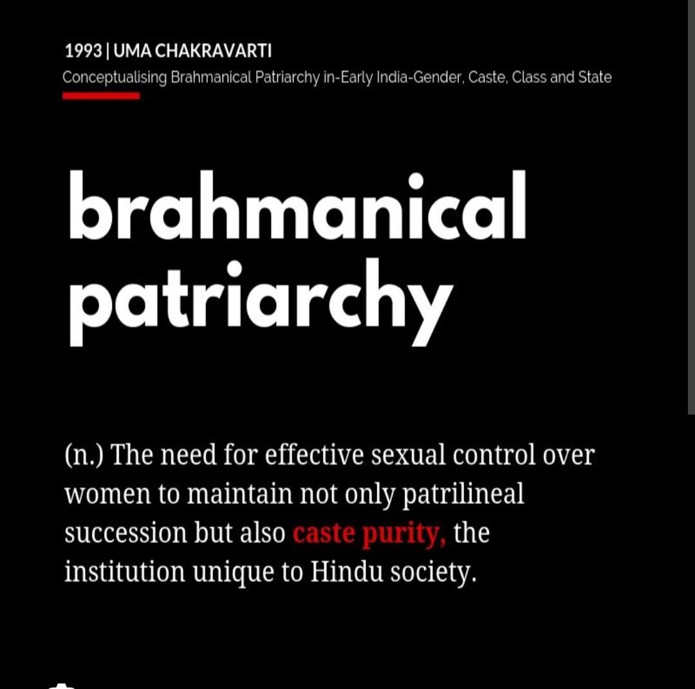
The maintenance of this order requires the subordination of the “upper” caste woman and effective sexual control over her to maintain not only patrilineal succession but also caste purity, the institution unique to Hindu society.
From this perspective, any critique of modernity as forming part of the coloniality/modernity dyad is looked at with suspicion, as giving legitimacy to traditional forms of oppression. Among feminists in Africa too, Oyewumi faces critical notice, because she is seen to be implying that it is the lack of gender in the Yoruba language which she sees as indicative of the non-relevance of gender. However, this is a reductive reading of her argument, in my opinion. The arguments that Amadiume and Oyewumi make, as noted earlier, is that gender was not a structuring principle in pre-colonial societies of modern Nigeria. As Nzegwu, whom I quoted earlier, states, gender was a fluid, flexible state of being and women were considered capable of rational thinking, an idea that is anathema to the European Enlightenment.
However, we must note that the “cleaning up” of uncontrollable forms of sexuality accompany modernity and the values that come with it – progress, the inevitability of historical forms, the language of rights. Thus, while the language of rights did enable many subaltern sections against indigenous elites, this language was not uniformly empowering, and had devastating consequences for many other, equally subaltern groups who were drastically marginalised and disciplined by these new codes, norms and forms of identity. I will explain this through the example of matriliny and its abolition, in a particular community in the southern state of Kerala a little further on.
Let me quote Indian philosopher Ashis Nandy:
“Modern colonialism won its great victories not so much through its military and technological prowess as through its ability to create secular hierarchies incompatible with the traditional order. These hierarchies opened up new vistas for many, particularly for those exploited or cornered within the traditional order. To them the new order looked like – and here lay its psychological pull – the first step towards a more just and equal world…Many many decades later…it has become obvious that the drive for mastery over men is not merely a by-product of a faulty political economy but also of a world-view which believes in the absolute superiority of the human over the non-human and sub-human, the masculine over the feminine, the adult over the child, the historical over the ahistorical, and the modern or progressive over the traditional or the savage.”
Faced with an idea of history in which what comes later in time is necessarily “better” and “more progressive” than what came before, one must remember Walter Benjamin’s words – “There is no document of civilization which is not at the same time a document of barbarism.” To accept what comes later in time as necessarily “better” is in other words, to assume the moral superiority of the tendencies that were victorious.
It is impossible to engage with what is called “sexuality” in contemporary India without recognizing its passage through the complexity of the practices that were homogenized under the sign of Modernity. It is equally important to insist that this kind of scholarship is not an “indigenist” critique of “the West” – that is, what is at issue is not discourses of Place, but of Time.
There is a large body of feminist scholarship suggesting that the “social reform movements” of nineteenth century India demonstrate anxieties of control over women, their bodies and their sexuality, and articulated complex and contested inter-relationships between ‘women’ on the one hand and on the other, emerging notions of citizen, nation and community.
It is now generally accepted that expressions of non-normative sexuality and desire, far from being “Western” imports, as Hindu-right wing critics of feminism in India allege, have much older histories. Scholarship in several fields has shown that earlier forms of sexuality, family and property arrangements that did not conform to modern bourgeois patriarchal ideals, were reconstituted to fit these ideals by a strange partnership of British colonial institutions on the one hand and the modernizing nationalist elites who opposed the British, on the other.
The transformation of matriliny among the Nair community in Kerala offers a striking instance of the hegemonizing drive of Victorian norms of conjugality. In the nineteenth century nearly fifty percent of the population of Kerala , of different castes and communities, were matrilineal – marked by property and lineage passing from mothers to daughters; households consisting of adult sisters living with their brothers and the women’s children by polyandrous relationships. It has been pointed out by scholars (K Saradamoni, G Arunima, Praveena Kodoth, J Devika) that matrilineal kinship in Kerala has the unique status of being the only kinship system in the world to be legally abolished. The Malabar Marriage Act of 1896 that did so was produced amidst a liberal discourse of progress, freedom and individual identity, very much within the framework of the wider nationalist debates in the nineteenth century on “social reform”. The “reformers” or the proponents of marriage legislation were influenced by the ideology of social evolution in which communal property, polyandrous relationships and matrilineal descent were the vestiges of a savage past. The term ‘concubinage’ began to be used by British courts in India in the 19th C to refer to the traditionally easier forms of divorce and the widespread acceptance of the serial heterosexual relationships of Nair women, thus making these features something the Nair elite began to be ashamed of.
This is just one example of legal and social interventions over the nineteenth and early twentieth centuries in India, intimately and explicitly tied to the values of modernity, gradually disciplined a range of non-normative sexualities and family arrangements. Similarly, in the context of Sri Lanka Malathi de Alwis, in her study of the famous frescoes of bare-breasted women at Sigiriya, asks the question “Can the sexual be part of a nation’s heritage?”
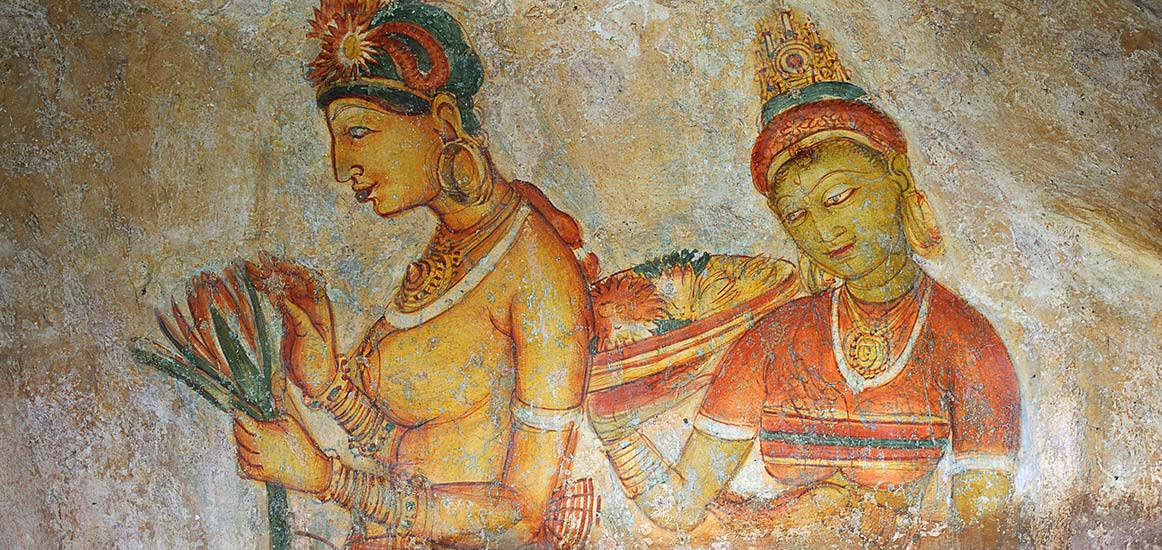
De Alwis offers a complex account of the recuperation for Sri Lankan nationalism, of the Sigiriya fresoces showing bare breasted women (attributed to c. 6th C AD) – “the only examples of an open celebration of the sensuality of the female body in Sri Lankan painting.” Ultimately, the figures were recovered by nationalist discourses as desexualized and respectable by clothing them, that is, painting diaphanous clothing over them. The sexual it seems, could never be part of the modern nation’s heritage.
There is abundant scholarship which establishes that the delegitimation of homosexual desire and the production of the naturally heterosexual, properly bi-gendered (unambiguously male or female) population of citizens, with the women respectably desexualized, is a process that is central to nation formation all over the globe. A significant and revealing instance is the fascinating account of Iran’s “long nineteenth century” by Afsaneh Najmabadi who argues that it was the cultural encounter with Europe that produced in Iran “the heteronormalization of love and the feminization of beauty.” She further offers the stark conclusion that the modernist project of women’s emancipation in Iran bore the “birthmark of disavowal of male homosexuality.”
It is impossible to engage with what is called “sexuality” in contemporary India without recognizing its passage through the complexity of the practices that were homogenized under the sign of Modernity. The polyvalence of gender identities and sexual desire prevalent even up to the nineteenth century in India was sutured in a variety of ways, through legal and social interventions that disciplined a range of non-normative sexualities and family arrangements. Ruth Vanita and Saleem Kidwai in their path-breaking collection Same-Sex Love in India trace from ca. 1500 BC up to the present, writings in Indian languages about “love between women and love between men who are not biologically related.”
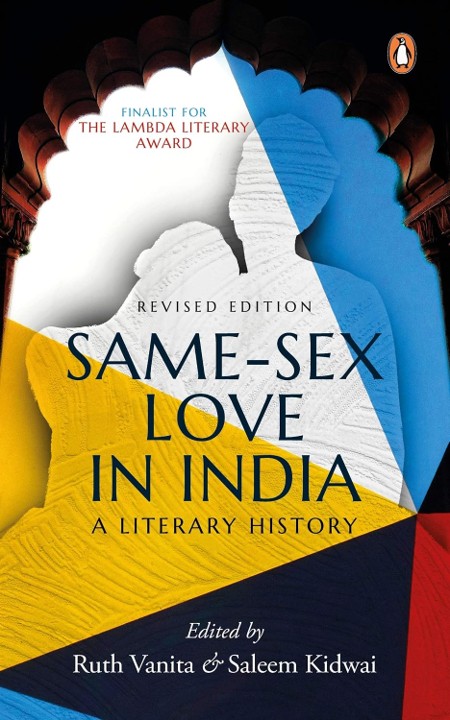
It is only in the nineteenth century, Vanita and Kidwai argue, that “a minor homophobic voice that was largely ignored by mainstream society in precolonial India…becomes a dominant voice.”
To reiterate, it is important to insist here that the scholarship that makes this kind of argument is not an “indigenist” critique of “the West” – that is, as I said earlier, what is at issue is not discourses of Place (here versus West), but of Time (Modernity versus the non-Modern), leading us to the realization that the values of modernity have not been unambiguously emancipatory, have often eradicated spaces of relative autonomy, and produced new forms of subjection.
Indigenist critiques of “the West” are part of a now familiar Hindu right-wing claim to be “decolonizing”. In India, it is actually a project of recolonizing.
This project is an ongoing counterrevolution on the question of women, trying to recolonise the spaces liberated by Indian feminist movements since the 19th century onwards. Access to legal abortion, limited as that right is in Indian law, seems to be under threat with several references by the patriarchs of Hindutva to the “falling birth rate” of Hindus. The implication is clear. “Hindu” women are expected to produce more sons for Bharat Mata, Mother India. Second, the freedom to choose one’s sexual/romantic/marriage partner has been under threat with the “love jihad” campaign that propagates the widespread rumour that there exists a systematic campaign involving Muslim men seducing Hindu women to convert them to Islam. This accusation is palatable for all families of course, because no family wants an inter caste or interreligious marriage. What protected adult choices were the Constitution and the law. This last has become increasingly unreliable. Indeed even legally the status of women as citizens is becoming tenuous with the passing of legislation such as the Uttarakhand Uniform Civil Code (2025) in a state ruled by the Hindu nationalist BJP. The most revealing provision of this law is the surveillance over and state control of “live-in” relationships, requiring self-declaration to a registrar who will grant or not grant permission after a thorough enquiry. Failure to register such relationships is a criminal offence. Several court judgements on various matters over the last ten years have stressed the “sanctity of marriage”, and the reinsertion of women into the patriarchal family is becoming more visible in many spheres. A senior Hindu right-wing journalist asked – “Is Simone’s feminism better or Savitri’s feminism, who brings her dead husband back to life?” He went on to say how positive the ancient text Manusmriti is from a women’s perspective because it is written in it that “no decision can be made without her permission after she enters her in-laws’ household.”
Two points are notable from the perspective of my recolonisation argument. First, the re-insertion of women firmly back into the patriarchal family, the husband’s family (as wife and daughter-in-law). Even “feminism” is indicated by protecting your husband’s life.
Second, more significantly, “Simone” (he is referring to de Beauvoir) as Western feminist is counterposed, not to actual feminist inspirations from our subcontinent of which there are several, but the counter icon offered is the very essence of a recolonising Brahminising and patriarchal ethos – Savitri the mythological figure who brought her husband back to life by her steadfast chastity.
It is clear therefore that whatever the Hindutva project calls decolonising is in fact a recolonisation project – some degree of superficial de-Westernization (replacing of English with Hindi and Sanskrit) masking a project of Brahminical supremacy and devastating capitalist transformations for the private profit of mega corporations.
I will conclude this section on the contestations over modernity by drawing our attention to a different mode of reclaiming modernity, not simply accepting modernity as certain values as brought to our parts of the globe by coloniality. I was fascinated to come across an essay by Silvia Rivera Cusicanqui who deploys the idea of ch’ixi – the Aymara idea of something that is and is not at the same time – for example, it is both white and its opposite black. Ch’ixi combines the Indian world and it opposite without ever mixing them. This concept expresses the existence of a society with “the parallel co-existence of multiple cultural differences that do not extinguish but antagonize and complement each other.” The modernity that emerges from these relations is “a more organic one than imposed by the elites” who merely ventriloquize theory from the north.
What would such a modernity look like in concrete terms and why do we feel compelled to call it modernity at all is precisely what needs more conversations.
Citizenship and economies of care
Why is citizenship a feminist Issue for feminism from the global South?
The answer: because citizenship is primarily based on proof of birth in a heterosexual patriarchal family, an institution that structurally undergirds caste, class, and gender injustice.
The structure and ideology of the patriarchal family is best illustrated by the reactions to the growing feminisation of migration flows, both internal and external, and increasing flows of “single” women migrating abroad as independent labourers in search of better lives for themselves and their families.
One response has been to frame such movement in terms of “trafficking”. But an intensely destabilising perspective on citizenship and migration is provided by feminist critiques of anti-trafficking initiatives. The notion of “trafficking in persons” has become closely linked to the abolitionist position on sex-work. It has acquired great clout and visibility internationally, with feminists from the first world leading anti-trafficking campaigns. In their definition, trafficking is linked to migration, and trafficking being understood as “forced migration”. Many feminists, especially from the global South, on the other hand, are critical of anti-trafficking initiatives, particularly of the US Anti-Trafficking Act 2000. They show how these initiatives collapse the distinction between (voluntary) sex-work and (coerced) trafficking, treating all cross-border movements of women as coerced, thus excluding these women from legal recognition and casting their families as criminals. There is also militant opposition from sex-workers themselves to anti-trafficking policies being promoted by Western and South Asian countries, and some feminists and human rights groups.
The feminist legal scholar and activist Flavia Agnes has suggested a conceptual move away from the notion of a vulnerable subject to that of the risk-taking subject. She argues that migrants, including those in sex-work, exercise agency and demonstrate decision-making abilities which seek to maximise their own survival as well as the survival of their families. For example, many women negotiate the terms of their own movement and utilise technological networks to plan their migration and keep in touch with others in their country of origin. Women’s perceptions of themselves and of their “exploiters” provide a further challenge to the traditional and stereotypical images of victim and perpetrator. For example, while the dominant image of women in the sex industry is that of subjugated, dominated, objectified, and abused persons who are preyed upon by conniving men, studies of women in the sex-tourism industry in various countries reveal that women view it as an arena of negotiation to improve their own economic situation.
Many scholars and activists have suggested that we need a political practice that questions the very legitimacy of the sealed national borders which we have come to take for granted over the last century. National border regimes must be opened up as well as labour markets organised through them. There must be an end to discrimination based on one’s nationality: these are the demands of the growing group of No Borders activists across the world. A radical political practice is called for – “struggles for a decolonized commons” that challenges the barbed-wire borders of nation-states.
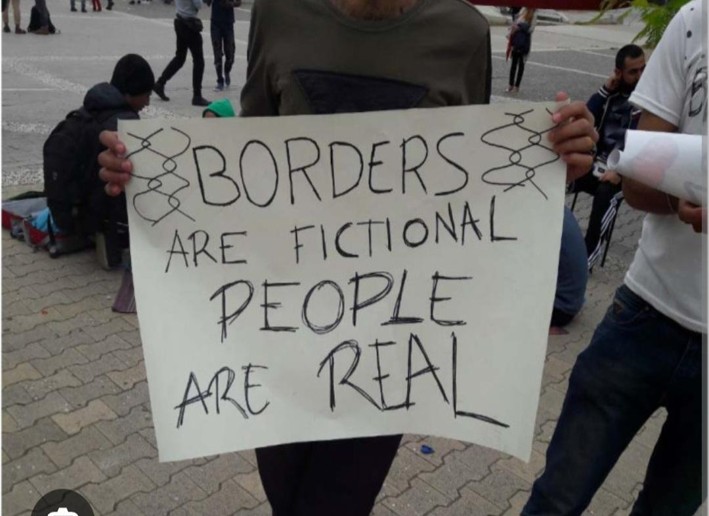
We need to question citizenship by birth also from the perspective of the biological, familial foundation of citizenship outlined at the beginning of this section. This foundation remains unthought and unquestioned in progressivist narratives of citizenship. Compulsory heterosexuality undergirds most forms of identity – caste, race, and community identity are produced through birth. But what we fail to note and criticise adequately is that birth in a particular kind of family also determines the quintessentially modern identity of citizenship. The purity of these identities, of these social formations, and of the existing regime of property relations is protected by the strict policing and controlling of sexuality, and by the institutions of compulsory heterosexuality. Thus, the family as it exists, the only form in which it is allowed to exist – the heterosexual patriarchal family based on marriage and the sexual division of labour – is key to maintaining nation, state, and community. The imperative need is to restructure institutional and public spaces in a manner that will enable the breaking down of this division of labour as well as the normativity of this particular form of the family.
What then would be the basis of citizenship if the naturalised notion of “birth” is deconstructed in this way? We would be forced to think of alternative sources of citizenship rights – through claims to family ties by heterogeneous and fluid forms of intimacy that refuse to be legible to the state, and, equally importantly, as located in the place of labour, not birth.
Finally, a feminist practice from the South includes the Degrowth feminists located in the North. Degrowth philosophy rejects GDP as an indicator of economic well-being and proposes a framework for transformation to a lower and sustainable level of production and consumption, “a shrinking of the economic system to leave more space for human co-operation and ecosystems.”
Feminist degrowth insists on recognition of care-work as work, and “an end to the subalternisation of reproduction in service to the realm of production.” The social organisation of labour and care-work needs to be democratically rebuilt. Our economies that are in the grips of “the growth paradigm founded in heteropatriarchal capitalist principles” must be led towards emancipation.
Conclusion
Feminism speaks up at the most inconvenient times. During the armed conflict between India and Pakistan in mid-2025, when a violent jingoistic atmosphere prevailed in the region, one thousand individual feminists and ten organizations from both sides of the border issued a statement that condemned war. The statement read in part:
“We, as feminists, are fundamentally anti-war and anti-militarism. We denounce the war economy that thrives on violence and destruction, and the deeply patriarchal structures that fuel and sustain it.
The past year has been marked by a surge in global violence, with devastating images from Gaza and other conflict zones becoming a daily occurrence, tragically desensitising many to the true horrors of armed conflict. Indian and Pakistani governments and opinion-makers seem uncaring of the catastrophic consequences of war and the immense devastation it would cause. Only those who are manufacturing and selling weapon systems to our governments will benefit from war. War further entrenches, exacerbates and perpetuates existing inequalities, disproportionately affecting women, gender and religious minorities as well as children. Such hostilities serve as a distraction from what people really need: education, health, employment, social protection, safety and well-being.
We, feminists from India and Pakistan, firmly believe that war is never the solution. We call for a dismantling of power structures that sustain violence. The logic of war—rooted in nationalism, toxic masculinity, and colonial-era borders—must be rejected. In both countries, women activists, journalists, and peace-builders have long advocated for dialogue, de-escalation, and diplomacy. Yet, our voices are consistently sidelined and overwhelmed by the inflammatory rhetoric and assertive militarism that dominate the public sphere.
We call on the governments of India and Pakistan to prioritise and engage in dialogue and diplomacy to resolve differences.”
As Indian feminist Kamla Bhasin said – “I am not the wall that stands at the border. I am the crack in that wall.
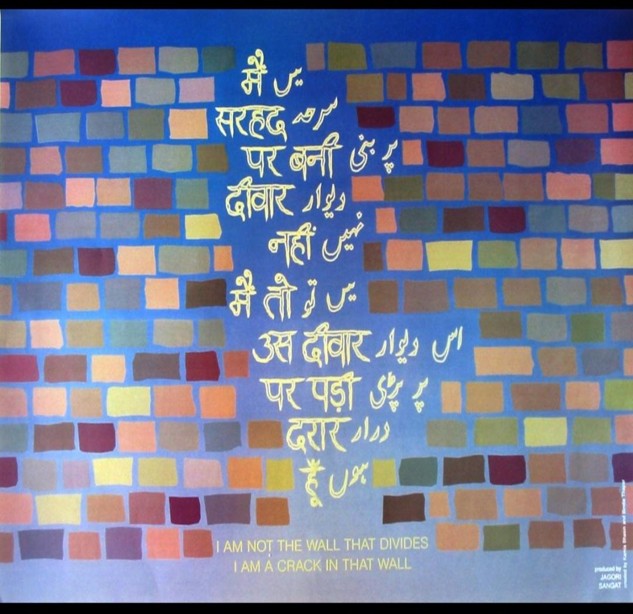
Feminist transformation is not one moment of revolution. Feminist practices seep into the groundwater of wherever we are, transforming common sense. Let me conclude with the recent massive, successful student protests in India under the banner of Cockroach Janta Party, that resulted in the resignation of the Education Minister.
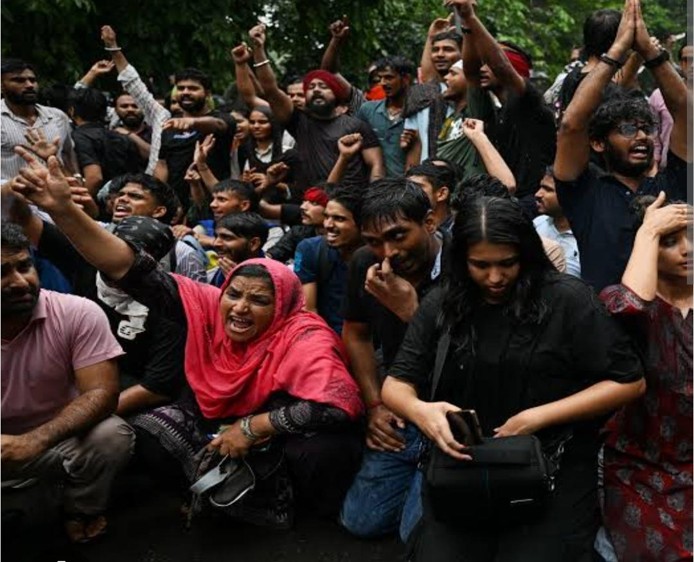
That space of protest was extraordinary in its joyousness and irreverent mockery of power by young people of all classes and genders.
The universe of the protest became a sort of utopian queer feminist space of mutual caring and feeding and companionship that went beyond class and caste – revolutionary and unimaginable in a society of graded inequality, to use Ambedkar’s pointed term. People donated hand-fans and the protesters used them to fan one another. Food was brought by Muslim and Sikh sympathisers, and everybody ate together. Young boys went around offering sanitary napkins to women. The shoes and slippers lost in the stampede of the baton charge by police, were carefully collected, organised in pairs to the extent possible and set up at the protest site under a sign that said “Free footwear”.
It was a space in which all taboos were breakable, in which all people of all genders and classes and ages felt comfortable and safe, jostling up against each other in the humid heat of Delhi’s June and July. So many many reels were made of women saying how safe they felt in that crush. In Delhi, one of the most unsafe cities in India.
Let me leave you with this last incident. One young woman laughingly says to a reporter in Hindi, surrounded by other young people, “I am here, but I am tired. I’m having my periods. Par kya karein, desh ke liye khoon bahana toh padta hai”. What to do, one has to shed blood for the nation. Her friends cheer.
In one throwaway line she punctured the hollowness of toxic masculinist nationalism, inserting the woman’s body and its fecundity at the centre. Not blood signifying death, but blood signifying the possibility of new life. Proud, unashamed, amused.
Feminism is not an organization that one formally joins, and it can never be the isolated achievement of individual women. To be a feminist is to feel part of the history that has produced us; it is to insert oneself into centuries of thick, textured narratives of struggles and celebrations that transcend national boundaries; to hear the strains of songs of anger and sorrow and militancy in many tongues; to remember our heroines, our foremothers; the younger people who follow us, break the rules and build new worlds, and above all, to feel an enormous sense of continuing responsibility.
[References for works cited here can be found in Recovering Subversion. Feminist Politics Beyond the Law 2004; Sexualities (Introduction and Chapter 1) 2007; Seeing like a Feminist 2012/2022; Secularism as Misdirection. Critical Thought from the Global South 2023/2024]
Link to recording of the lecture at UNAM, Mexico City. Please use headphones as sound quality varies.

