
Guest post by BARNALI MUKHERJI
[In this post Barnali Mukherjee looks back at a moment of history in the politics of the Hindutva Right and its enablers – and draws parallels with the current state of the TMC rebels and discusses what this might mean for the antifascist struggle.]
At a time when 14/15 crore citizens of this country stand on the brink of losing their voting rights, the opposition is yet to call a nationwide general strike or coordinated action. The RSS wants to bring back the British-era rule where one could remain a “citizen” without enjoying the right to vote. But the question is, how meaningful can the struggle against fascism be if the opposition fails to also vocalize a demand for the legal immunity of public representatives?
Fascism is, by definition, an anti-vote ideology. To enforce a policy centered around “one country, one-two-or at best three industrialists,” the fascists must reduce its reliance on the masses. Thus, they are anti-vote and anti-peoples-representation. Exploiting the inherent limitations of parliamentary democracy, the fascists aim to establish a system that is effectively voteless and parliament-less. Rendering public representation irrelevant is embedded within our country’s Constitution itself—an advantage the BJP is exploiting.
Threats to Parliamentary Immunity and Democracy
Although one may cite Articles 105 and 194 of the Indian Constitution to argue that the Constitution itself recognizes public representation as the soul of democracy, these provisions have proven ineffective in practice. According to these two articles, a Member of Parliament (MP) or a Member of Legislative Assembly (MLA) can speak fearlessly according to their conscience inside Parliament or the Assembly and cannot be prosecuted for any speech or voting choice made within the House. Because parliamentary democracy relies heavily on the rights of the opposition, these provisions were originally intended to safeguard the opposition’s very existence and protect a multi-party system.
However, good intentions have not matched reality. The protective shield has proved itself largely ineffective. If a lock fails to function precisely when thieves and robbers approach, what value does that lock hold? Facing the BJP today, these articles are proving pitifully inadequate.
Under these provisions, the right to speak or act fearlessly exists only while Parliament or an Assembly is in session; stepping outside that protected zone leaves representatives vulnerable. Any party in power can disrupt the life of a people’s representative if it intends to—and the BJP is pursuing this intention aggressively. The Constitution created a semi-crippled system that renders these articles ridiculous against a ruling party like BJP. Today, even during parliamentary or assembly sessions, MPs and MLAs hesitate to speak or act fearlessly because agencies like the Enforcement Directorate (ED) and the Central Bureau of Investigation (CBI) are at their doorsteps, threatening their families’ safety. Consequently, defections have become widespread, New kind of defections, which not merely result in opposition members joining the ruling party but also give rise to a new kind of opposition—a so-called “responsible and cooperating” opposition. This Bengal model may engulf the entire country.
Furthermore, the judiciary over these decades of independence has made little effort to safeguard or strengthen these two provisions. By contrast, if we examine the immunities enjoyed by other pillars of the State—such as the judiciary, the armed forces, and the bureaucracy—those safeguards have proven far more resilient, even when confronting the BJP. As a result, fascist ideologies can now unabashedly call for stripping MPs and MLAs of their pensions, even as the pensions of judges, IAS, IPS, and military officers double. In a capitalist system where worth is measured by money, this disparity makes it clear that MPs and MLAs are treated more like subservient subjects than the soul of the Constitution.
The principle that “everyone is equal before the law” is in essence, bad in law. Indeed, the Supreme Court itself noted that under Articles 105(1) and 105(2), freedom of speech for MPs is distinct from—and broader than—the general freedom of speech of citizens under Article 19. Therefore, to protect multi-party democracy and the survival of the opposition, elected representatives ought to have significantly stronger protections. The reality, however, is the exact opposite. Anyone—even a police constable—can arrest an MP or a Chief Minister at any moment, despite holding a vastly lower constitutional rank.
In contrast, a military officer, a top bureaucrat, or a judge enjoys virtually unlimited immunity. Arresting a military officer is nearly impossible. Their secrecy acts as an impenetrable wall that even the Right to Information (RTI) Act struggles to pierce. Before this Act, internal crimes within the military were routinely swept under the rug. Even when the law was introduced, numerous loopholes were retained under the guise of immunity; information cannot be disclosed without the explicit permission of the Central Information Commission (CIC), effectively suppressing data on 95% of corruption and human rights violations. Furthermore, military officers face almost no fear of arrest since it requires the central government sanction. They operate under their own military laws, are rarely compelled to appear in civil courts, and face no pressure from ex-partite rulings. The immunity granted under AFSPA is practically limitless. Crucially, their trials occur in their own military courts, meaning no outsider can verify whether favoritism or personal vendettas drive the outcomes.
Judges similarly enjoy vast immunity. Hardly anyone can touch a judge; even their judgments cannot be discussed in Parliament unless an impeachment motion is moved. Similarly, issuing an arrest warrant against a high-ranking administrator requires prior governmental approval, while Article 361 of the Constitution grants generous immunity to the President and state Governors. Even a comparatively lower rank government officer are found to enjoy more immunity, these days, than an MLA. The condition of an elected panchayat pradhan or a municipality chairman in this regard is abysmal, to say the least.
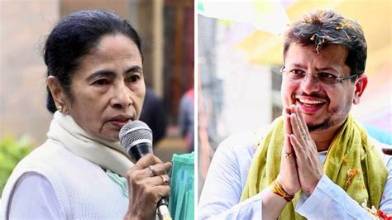
Tragically Public Representatives hold a minimal shield, and whatever meagre protection was there, is being stripped off by the BJP government. For instance, the CBI must seek permission from the Assembly Speaker before arresting an MLA. Yet, the BJP through the Prevention of Money Laundering Act (PMLA) is bypassing the State Assembly through ED intrusion. Had MPs and MLAs retained even a fraction of proper protection, figures like Ritabrata or Sudip Banerjee would not need to observe the centenary of the Responsive Cooperation Party today.
The Ritabrata Banerjee’s faction is a bunch of cowards is true. However, a cowardly and corrupt individual has the right to become a judge, a bureaucrat, or an MP/MLA. Someone who has served prison time—can still be elected as an MP or MLA. By stationing the ED at people’s doorsteps, the BJP aims to fragment existing opposition parties and engineer new ones that frame themselves as a “responsible opposition”—parties that will effortlessly pass the BJP’s legislative bills. The rulers are playing a double role as rivals as well.
While a courageous few may stand tall without fear of prison or yield even with bulldozers parked outside their homes, parliamentary democracy cannot survive on the backs of a small handful. Every party contains a mix of cowardly and corrupt individuals in varying proportions. If a tailored, compliant opposition is manufactured from these elements, the country will effectively be left without a parliamentary opposition. Democratic governance is not defined merely by the right to protest in the streets. The communists who claim to be upholding the flag of dialectical materialism should primarily realise and recognise this dialectics of parliamentary democracy.
In a major 2024 judgment delivered by a bench led by Chief Justice D.Y. Chandrachud, the issue of parliamentary immunity for representatives was analyzed at length. Justice Chandrachud noted:
“In view of political realities, if the parliamentary immunity conferred upon MPs/MLAs is whittled down, it would enhance the possibility of abuse of law by the political parties in power…”………”The concept of constitutional privileges and immunities is not in derogation of the Rule of Law, but it is a distinct feature of our constitutional structure.”
The primary argument or excuse used by fascists as deceptive as it is simple: Should public representatives be given a license to engage in rampant corruption? Yet they never raise this question regarding the immunity granted to the military, governors, the president, bureaucrats, or judges. Here, one can quote Justice Gajendragadkar:
“There exists a conflict between providing privileges to an MP/MLA (Articles 105, 194) and Article 32, that is the right to move the court… and a rule of harmonious construction needs to be adopted.”
Fine words of My Lords cost nothing, but who will actually implement them?
There is little enthusiasm from MPs, MLAs, or the opposition to remedy this injustice. Those who fail to protect their own rights now claim to lead the nation! Instead, they are content merely demonstrating how they are supposedly cleaner than rival opposition parties. In Bengal, the Congress is pleased if it can pull a few members from the Trinamool Congress (TMC); the CPI(M) is content if its rally crowds swell; and the TMC leaders are satisfied simply standing alongside Mamata Banerjee. When the broader opposition fails to demand legal immunity and shows no interest in reforming the Constitution, one must assume that—much like the BJP—they consider the Constitution virtually dead. After all, only the dead remain static. Taking advantage of this passivity and surrender, Ritabrata Banerjee’s group today dutifully marks the centenary of the Moonje-Kelkar-Jayakar faction’s shameless opportunism.
The Moonje-Kelkar-Jayakar Party
The Responsive Cooperation Party was formed in 1926 with the intent of cooperating with the British administration rather than engaging in non-cooperation. When the Swaraj Party was initially formed, it housed both the liberal-secular stream of the Congress—represented by Motilal Nehru and Chittaranjan Das—and the hardline Hindu Right, represented by figures like Moonje, Kelkar, and Jayakar. This Hindu Nationalist wing favored armed resistance similar to the Anushilan Samiti, yet they did not make self-sacrifices as the Samiti’s members did. Their approach was simple: let the revolutionaries hang while they reaped the political benefits. Stripped of patriotism, armed movement deteriorates into mere violence and communal hatred.
Before the 1926 elections, the Swaraj Party fractured, giving rise to this party of “responsible opposition” aligned with British cooperation. One of the Swaraj Party’s major missed opportunities was that the “Bengal Pact” remained confined to Bengal rather than being applied nationally—a failure attributable to the Congress leadership, the policy which could have averted Partition. After 1925, the Moonje-Savarkar caucus sought to operate independently of the Congress. Meanwhile, Deshbandhu Chittaranjan Das and Motilal Nehru moved forward with non-cooperation as their core policy, viewing cooperation with the British as out of the question. Seizing this opening, regional figures like Jayakar and Kelkar elevated themselves to national prominence, establishing the “Responsive Cooperation Party” with the blessings of the British and guided by RSS ideology—joining hands with the imperial power under the guise of “responsible opposition.” Today’s NCPI or the Ritabrata faction in West Bengal can be seen as the political heirs of Moonje’s legacy.
The formation of this party was driven not only by cooperation with the British, but also by a deeper political maneuver surrounding partition. Their primary objective was to shut down every avenue of compromise between the Congress and the Muslim League. Following the Montagu-Chelmsford Commission of 1919, discussions surrounding the distribution of power between the center and the provinces began, leading the minority Muslim community to look beyond separate electorates. Demand grew among Muslims for provincial autonomy. Out of 11 governor-ruled provinces, 4 had a Muslim majority, as did 1 out of 6 commissioner-ruled territories. Because Hindus formed the majority in the remaining 12 administrative units, Muslim leadership favored vesting residual powers with the provinces. The Lucknow Pact of 1916 had included separate electorates, a condition Congress formally accepted in writing. Although internal opposition within Congress was strong, its leadership managed it by boycotting the 1920 elections—a boycott critics argue was designed primarily to deny Muslims the benefits of separate electorates.
This raises the question: was the formation of the Swaraj Party similarly motivated? While both Congress and the League boycotted the elections, the Swaraj Party began contesting them in 1923, before quickly merging back into Congress. By participating in 1923, they won 43 seats, followed by nearly 40 seats in 1926; once the Swaraj Party merged, these seats reverted to Congress.
Ahead of the Simon Commission’s arrival, the Muslim League with no seats, sought a compromise. In March 1927, they convened a session in Delhi, offering to drop their demand for separate electorates in exchange for joint electorates with reserved Muslim seats in Bengal, Punjab, and Sindh. Congress leadership agreed to convene an all-party conference to draft a joint constitution. This development naturally alarmed the British, Savarkar, Moonje, Kelkar, and Jayakar.
It is said that Motilal Nehru favoured the Delhi Proposals and maintained dialogue with M.A. Jinnah. However, by attempting to appease Jayakar and Kelkar, Motilal, Gandhiji, and Patel ultimately alienated Jinnah and published the ‘Nehru Report’, which clearly denied every proposal of Delhi resolution of Muslim league. Leftists were also invited during the adoption of the Nehru Commission—their role is a subject for another discussion. The League’s Delhi Proposals represented a federal demand that pushed back its own hardline elements, yet it was rejected. An insulted Jinnah declared a “parting of ways” and presented his 14 Points, which articulated a clearer vision for a federal framework.
Congress lacked the intent to share power through a genuinely federal structure. This provided the League’s hardline faction—including pro Partition figures like Iqbal , the author of Sare jahan se accha..
The late historian Sumit Sarkar claimed that the opportunity to frame the 1940 resolution of Muslim League as self-governance rather than a call for two separate nations, was a blunder of Congress. This anti federal mindset later became the main driver behind the opposition to the Cripps Proposal (1942). Meanwhile, the Left lobby within Congress took a tragically firm stance against a federal framework at the Haripura Congress (1938), purportedly to intensify the struggle against feudal lords—effectively placing socialism and federalism at odds with one another. A similar pattern played out during the Cabinet Mission of 1945. However a detailed analysis of this is out of scope of this article.
By creating a lasting rift between Jinnah and Gandhi through the Nehru Report, Kelkar, Jayakar, and Moonje turned their full attention to the RSS. The rise of the Responsive Cooperation Party in 1925–1926 weakened the Indian National Congress and split the Swarajist vote across the Central Legislative Assembly and Central Provinces.
Today, as a foundation for an anti-fascist coalition named INDIA was taking shape—with Mamata Banerjee serving as one of its key architects—shameless Ritabrata’s faction broke away, creating rifts in Hindu-Muslim unity. Therefore, the opposition across the country must unite around the demand for legal protections for public representatives to prevent further such defections.
Finally let’s not forget the courageous few – and not cowards – will lead the rest against fascism.
Barnali Mukherji writes and comments regularly on political matters in the Bengali media and is also an activist based in Kolkata.

