Freedom in the university and outside it: Atul Sood

Guest post by ATUL SOOD

Nobel Laureate Paul Krugman spoke online at a recent Distinguished Public Lecture at the Ashoka University (March 12, 2021), hosted by Arvind Subramaniam, Director, Ashoka Centre for Economic Policy. He spoke on “Is Labor-Intensive Exporting Still a Feasible Development Strategy?”

Kugman said that in this globalized world, for India to get into the market space vacated by the Chinese manufacturers, particularly for labour-intensive goods, it will have to be ready to do two things: First, make policy choices that are realistic and not ‘precocious’ and second, be ready to accept that rights and freedoms of labour, in particular will be sacrificed.  The wise counsel of Krugman was that India will have to be prepared to negotiate the space between rights/freedoms and share in the world market of course, up to the point where “labour is not getting killed”. Continue reading Freedom in the university and outside it: Atul Sood

Exploring ‘Hindu’ and ‘Muslim’ Through Medieval Sanskrit Narratives: Rahul Govind

In this guest post, RAHUL GOVIND gives us, by way of a review of Audrey Truschke’s book, a glimpse of the world of medieval Sanskrit and what they tell us about ‘Hindu’ and ‘Muslim’ identity in their own time.

The Language of History – Audrey Truschke

Why Audrey Truschke’s The Language of History is essential reading for every Indian (and Pakistani and Bangladeshi)

There is the view that the medieval period of Indian history witnessed an all-consuming battle between Hindus (who were native to India) and Muslims (who came to India as conquerors).  This originated as a typical colonial strategy of ‘divide and rule’ in the 19th century, but then transformed into a communal politics that ultimately led to Partition. In India today this very view is becoming a dominant one, where the medieval period is assumed to be nothing but the destruction of an ancient indigenous Sanskritic culture by invading Muslims.

Continue reading Exploring ‘Hindu’ and ‘Muslim’ Through Medieval Sanskrit Narratives: Rahul Govind

An open letter regarding unscientific epidemiological practice and Islamophobia in a textbook of Medical Microbiology

During the period of drafting this open letter, the publishers have withdrawn the book. We however feel that the concerns raised continue to hold good and are putting this open letter out in the larger interest of ethical medical practice.

To

Dr Apurba S Sastry, Associate Professor, Jawaharlal Institute of Postgraduate Medical Education and Research, Puducherry, India 

Dr Sandhya Bhat, Professor of Microbiology, Pondicherry Institute of Medical Sciences (PIMS), Puducherry, India. 

Dear Drs Sastry and Bhat,

Greetings! We are writing this open letter to you with reference to the 3rd edition of the Microbiology textbook “Essentials of Medical Microbiology” which both of you have authored, and about the unscientific and seemingly prejudiced choice of using as an epidemiological example, the Tablighi Jamaat (Society of Preachers) gathering organised in India between March 13-15, 2020 .

We are a group of doctors, researchers, academicians and social activists who would like to express our deep concerns about this example on the grounds of it being unscientific and also running the risk of inculcating discriminatory, in this case, Islamophobic ideation in public health teaching and more importantly in the minds of future generations of health professionals. Below we briefly present cause of these concerns and urge you to immediately withdraw copies of the said textbook from the market along with a statement from you clarifying that the Tablighi Jamaat congregation is not epidemiologically significant for the spread of the COVID-19 virus and therefore the book is being removed from sales and will also not include as an example in subsequent prints. Continue reading An open letter regarding unscientific epidemiological practice and Islamophobia in a textbook of Medical Microbiology

When tractors marched in Washington DC: Nadia Singh

This post is the English translation of an article in Punjabi by NADIA SINGH, published first in Punjabi Tribune.

In a February long ago, in 1978 to be precise, thousands of American farmers  rode into Washington D.C. on their tractors, from all across America. Some travelled  for days together, covering journeys of hundreds of miles. What was the mission behind their long and arduous expedition? They were demanding fair prices and an equitable model of agricultural development.

Image courtesy modernfarmer.com

In the 1970s US had initiated drastic changes in its agrarian policies under the “Get Big or Get Out” paradigm. This policy sought to replace small family run farms and consolidate them into large-scale factory farms. Policy makers in the US believed that industrial farming represented a more efficient and profitable economic model, compared to small and medium farms run independently by farmers. Continue reading When tractors marched in Washington DC: Nadia Singh

Loss of Hindustan – A Symposium III: Hilal Ahmed

This article by HILAL AHMED is the third and final contribution in the set of three reviews/ comments on Manan Ahmed Asif’s Loss of Hindustan. The first contribution by Dwaipayan Sen can be read here and the second by Dilip M. Menon can be accessed here.

A Political Reading

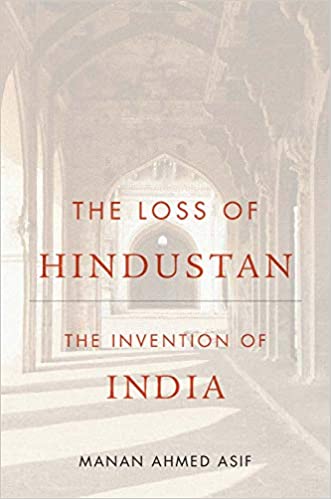
Loss of Hindustan – Manan Ahmed Asif

This is a provocative book in two different ways. It provokes us to interrogate the supposedly foundational propositions that constitute the very first article of the Indian Constitution: ‘India that is Bharat’. The book destabilizes the very language—the concepts, categories, frames—by which we are trained to envisage India as a historic entity and/or as a civilization.

The author does not merely engage in producing a deconstructionist version of India’s past. He, unlike others, incites us to imagine the unimaginable: the idea of Hindustan. The book introduces us to a rich archive of Persian scholarship and explores the ways in which Hindustan as a concept as well as a geo-political reality is erased to pave the way for a new intellectual imagination, India.

The Loss of Hindustan is also provocative in an overtly political sense. The book cannot be described as an intellectual-historical project. It raises a few powerful political questions especially in relation to the placing of modern history in postcolonial projects of nation building. Continue reading Loss of Hindustan – A Symposium III: Hilal Ahmed

Loss of Hindustan – A Symposium II: Dilip M. Menon

This article by DILIP M. MENON is the second of the three pieces that comprise the symposium on Manan Ahmed Asif’s Loss of Hindustan. The first contribution by Dwaipayan Sen can be read here. The final contribution by Hilal Ahmed can be accessed here.

The Loss of Longing

Loss of Hindustan – Manan Ahmed Asif

“Nostalgia is not what it used to be.” – Simone Signoret

To look back these days evokes less anger or longing and more a sense of gazing on ruins. Like the Angel of History, so evocatively described by Benjamin, we are being blown with our backs to an unknown future, gazing at the relentless pile of wreckage that accumulates behind us. The idea of a nation that we once imagined together is buried somewhere in the debris, our residual idealism detects its gleam sometimes. This sense of melancholy propels different shades of politics, one of which does a fine combing through the rough texture of history to recover lost visions. The other seeks to resist the lure of the past and think exigently within the horizon of the present. A hard headed engagement with contemporary times comes rooted in the belief that there is no space of authenticity or of an archive of resistance awaiting us in the past: there is no ‘there’ there. However, the mode of thinking that informs the historical discipline requires us to look back, and see the filiations with the present as much as the future. The fact that we occupy a future past (that is to say, we live in a moment that was once imagined as a future, utopian or otherwise) can be an occasion for cynicism as much as a fillip for renewed action. Continue reading Loss of Hindustan – A Symposium II: Dilip M. Menon

Loss of Hindustan – A Symposium I: Dwaipayan Sen

Manan Ahmed Asif’s recent book Loss of Hindustan: The Invention of India* has aroused considerable interest that goes beyond academic readers. Since the book deals with a matter that concerns not just our past but also how we imagine our future, we at Kafila decided to try out a symposium on it – on an experimental basis, since we do not generally carry book reviews as such. We will be serially publishing three reviews/ comments on the book, by DWAIPAYAN SEN, DILIP M. MENON and HILAL AHMED, over the next few days, in the hope of provoking some discussion. We also hope to get the author’s response to these contributions. This first piece is by DWAIPAYAN SEN. The second contribution by Dilip M. Menon can be read here. You can read the final piece by Hilal Ahmed here.

Loss of Hindustan – Manan Ahmed Asif

This book is the most recent addition to a growing tradition of precolonial history-writing that depicts India as a land of milk and honey before the coming of the colonial flood.  Evidently, a European understanding of India as Hindu replaced an earlier, native understanding of India as Hindustan, rendered a home for all faiths.  Such arguments are based on the close reading of Muhammad Qasim Firishta’s Tarikh-i Firishta, and its appropriation by scholar-administrators in the employ of the East India Company.

Continue reading Loss of Hindustan – A Symposium I: Dwaipayan Sen

In Search of the Tukde-Tukde Gang!

WHATEVER HAPPENED TO THE BOMB-MAKING FACTORIES IN WEST BENGAL?

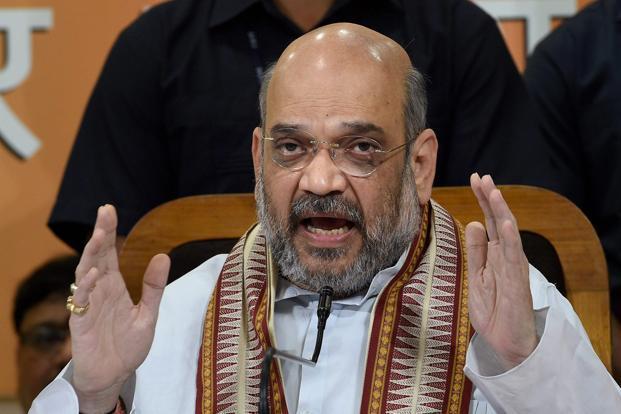
amit shah

Image Courtesy: PTI

Are the Ministry of Home Affairs (MHA) and its in-charge, Home Minister Amit Shah, at variance with each other? This question has acquired a new meaning as, within a year, there have been at least two occasions when the MHA has not supported Shah’s public claims on matters with a direct bearing on the internal security of the country.

Take the interview of Shah done by a news channel last October. He claimed in it that the law and order situation had “gone for a toss” in West Bengal. The state, he went to the extent of claiming, had “bomb-making factories” in “every district”. This explosive claim of the number two in the Union Cabinet was lapped by mainstream media and soon there were calls to impose President’s Rule in the state.

Four months later, it has become clear that the ministry Shah heads has not a clue about his claim. Continue reading In Search of the Tukde-Tukde Gang!

Marxism’s Long March in the Global South

Arab Spring composite image, courtesy Middle East Eye ( and AFP, Reuters, Creative Commons)

It is interesting that though Marxism was born in Europe, it has found its most enduring habitat in the Global South, but this has meant very little in terms of its overall theoretical formation and structure. Thinking about this encounter of ‘Marxism’ and the ‘Global South’ – the continents of Africa, Asia and Latin America – is a daunting task for the sheer range of experiences and questions it has thrown up. It has thrown up fundamentally new concerns as well as produced, in practice, some of the most grotesque outcomes.  But the task is also daunting because despite the range of experiences that Marxism has gone through and has put us through, it has not so far given us any serious body of theoretical knowledge that reflects this experience. It has not given us anything like the way, say,  Tibetan, Chinese, Japanese and Sinhala Buddhism have produced their own versions of Buddhist philosophy. One could also perhaps say the same thing about Christianity in Europe, where – at least up to a point – its philosophy was elaborated and innovated or transformed by the best minds of their time.

Continue reading Marxism’s Long March in the Global South

नरेंद्र मोदी स्टेडियम: आज़ादी के नायकों की जगह लेते ‘नए इंडिया’ के नेता

मोटेरा स्टेडियम का नाम बदलना दुनिया के इतिहास में- ख़ासकर उपनिवेशवाद के ख़िलाफ़ संघर्ष कर आज़ाद हुए मुल्कों में, ऐसा पहला उदाहरण है, जहां किसी स्वाधीनता सेनानी का नाम मिटाकर एक ऐसे सियासतदां का नाम लगाया गया हो, जिसका उसमें कोई भी योगदान नहीं रहा हो.

नरेंद्र मोदी स्टेडियम. फोटो: रॉयटर्स)

Courtesy – नरेंद्र मोदी स्टेडियम. फोटो: रॉयटर्स

क्रिकेट का खेल भारत का सबसे लोकप्रिय खेल है. पिछले दिनों यह खेल नहीं बल्कि इस खेल के लिए फिलवक्त मौजूद दुनिया का ‘सबसे बड़ा क्रिकेट स्टेडियम’ एक अलग वजह से सुर्खियों में आया.

मौका था अहमदाबाद के मोटेरा स्टेडियम- जिसे सरदार वल्लभभाई पटेल स्टेडियम के तौर पर जाना जाता रहा है – के नए सिरे से उद्घाटन का, जो वर्ष 2015 में नवीनीकरण के लिए बंद किया गया था और अब नयी साजसज्जा एवं विस्तार के साथ खिलाड़ियों एवं दर्शकों के लिए तैयार था.

याद रहे कि पहले गुजरात स्टेडियम के तौर जाने जाते इस स्टेडियम का स्वाधीनता आंदोलन के महान नेता वल्लभभाई पटेल – जो आज़ादी के बाद देश के गृहमंत्री  भी थे- के तौर पर नामकरण किया गया था, जब तत्कालीन गुजरात सरकार ने स्टेडियम के लिए सौ एकड़ जमीन आवंटित की, जिसका निर्माण महज नौ महीनों में पूरा किया गया था. (1982)

दरअसल हुआ यह कि जिस दिन उसका उद्घाटन होना था, उस दिन अचानक लोगों को पता चला कि अब यह सरदार वल्लभभाई पटेल स्टेडियम नहीं बल्कि ‘नरेंद्र मोदी स्टेडियम’ के तौर पर जाना जाएगा.

सबसे विचित्र बात यह थी कि इस नामकरण को बिल्कुल गोपनीय ढंग से किया गया. गोपनीयता इस कदर थी कि खुद समाचार एजेंसियों प्रेस ट्रस्ट आफ इंडिया या एएनआई आदि तक को पता नहीं था कि उसका नामकरण किया जाने वाला है.

जाहिर था कि पीटीआई या एएनआई जैसी संस्थाओं की सुबह की प्रेस विज्ञप्ति भी उसे सरदार वल्लभभाई पटेल स्टेडियम के तौर पर संबोधित करती दिख रही थी. यह अलग बात है कि अगली प्रेस विज्ञप्ति में अचानक नरेंद्र मोदी स्टेडियम का जिक्र होने लगा.

अब जैसी कि उम्मीद की जा सकती है कि इस नामकरण- जो दरअसल नामांतरण था- पर तीखी प्रतिक्रिया हुई. न केवल इसे सरदार वल्लभभाई पटेल के अपमान के तौर पर देखा गया बल्कि यह भी कहा गया कि एक पदेन प्रधानमंत्री का नाम देकर प्रस्तुत सरकार ने एक तरह से दुनिया में अपनी हंसी उड़ाने का ही काम किया है.

विपक्ष ने साफ कहा कि यह एक तरह से मोदी के पर्सनालिटी कल्ट को अधिक वैधता प्रदान करने का काम है. मिसालें पेश की गईं कि समूची दुनिया में भी ऐसी मिसालें बहुत गिनी-चुनी ही मिलती हैं, जो अधिनायकवादी मुल्कों में दिखती हैं.

( Read the full text here : http://thewirehindi.com/160559/renaming-of-motera-stadium/)