Category Archives: Bad ideas

होली और जय श्रीराम:योगेश प्रताप शेखर

Guest Post by Yogesh Pratap Shekhar

फरवरी के महीने से विश्वविद्यालय परिसर में विद्यार्थियों का आना-जाना शुरू हो गया है । परिसर गुलज़ार रहता है । कक्षा के बाहर छोटे-छोटे समूहों में उन की आवाजाही और उन के बीच किसी भी विषय की चर्चा मन को एक सुकून देती है । कहीं-कहीं दोस्ती और आकार लेता प्रेम भी महसूस होता है । यह भी अत्यंत सहज एवं स्वाभाविक लगता है । विश्वविद्यालय केवल कक्षा मात्र के लिए नहीं होते न ! वहाँ एक नई दुनिया होती है । नए संबंध भी बनते हैं । पिछले एक माह से परिसर में लौटी रौनक़ मन में उत्साह जगाती है । फिर आया मार्च का महीना । होली के त्योहार का महीना !  रंग और गुलाल का उत्साह ! चार दिन की छुट्टी से पहले परिसर में ‘होली-मिलन समारोह’ आयोजित हुआ ।

उत्साह से भरी होली की गतिविधियों के दौरान अचानक ही ‘भगवा झंडा’ परिसर में लहराया जाने लगा । ‘जय श्रीराम’ के नारे भी सुनाई दिए । होली में ‘जय श्रीराम’ के नारे ! सोचने मात्र से ही मन सिहर उठता है । होली और छठ ऐसे त्योहार हैं जिनमें न तो पुरोहित की ज़रूरत होती है और न ही किसी प्रकार के कर्मकांड की । ‘होलिका-दहन’ की परंपरा भी इस पर्व में ब्राह्मण-पौराणिक वर्चस्व की स्थिति को प्रदर्शित करती लगती है । ऐसा इसलिए कि होली की पूरी संकल्पना और इस पर्व के मिज़ाज को देखकर ‘होलिका-दहन’ का इस से  ठीक-ठीक जुड़ाव महसूस नहीं होता ।

भगवा झंडा:जय श्रीराम

Continue reading होली और जय श्रीराम:योगेश प्रताप शेखर

Hate Grips The Nation: A book to mark 20 Years Of the Gujarat pogrom

ANHAD released a book on 28 February in an online event to mark 20 years of the Gujarat pogrom. As a reminder that it was a long campaign and organization of hate against Muslims in the state which made this pogrom possible. That hate has now gripped the entire country. We need to stop it before it is too late.

The book has essays by Father Cedric Prakash, Harsh mander, Syeda Hameed , Shabnam Hashmi and Apoorvanand and a list of hate speeches and hate crimes. The compilation of hate speeches and hate crimes against the religious minorities has been done by Leena Dabiru and Tarun Sagar .

The book can be accessed here:

https://rb.gy/p5f9q8

Help Us Fight ‘Progressive ‘ Cyberlynching: An Appeal from Kerala

The infamous infant-snatching case in Kerala has opened up too many harsh truths about this society. It is not easy to express the pain in acknowledging it. After all, for many of us who have stuck back here with the intention of participating in what was once a fairly vibrant political life, this monstrosity that looms over all aspects of life, private and public (as so terrifyingly evident in the experience of Anupama Chandran) is a daunting sight. Not that there weren’t glimmers of it earlier, but the full menace has become visible only now.

Continue reading Help Us Fight ‘Progressive ‘ Cyberlynching: An Appeal from Kerala

How Could You Allow This to Happen? Urvashi Butalia Writes to the Kerala Chief Minister

Dear Chief Minister


Throughout the terrible times we have seen these last two years, it is the news from Kerala that has helped so many of us to keep faith in governance – that a state can be honest, open, participatory, concerned for its people, focused on health, and not play politics, all of these have been remarkable and many of us, Keralites and non-Keralites alike, have drawn valuable lessons from the Kerala experience.

Continue reading How Could You Allow This to Happen? Urvashi Butalia Writes to the Kerala Chief Minister

Let Good Sense Prevail — An Open Letter to the Kerala Chief Minister: Padmini Swaminathan

That the entire state machinery, ostensibly at the behest of parents who are important functionaries in the ruling party, has been deployed to not only keep the baby, mother and father apart but hem them in such a way that redressal will require untangling of very many complex issues that have deliberately been tied together, reveals the deep and destructive patriarchal underpinnings of the party and family.

Continue reading Let Good Sense Prevail — An Open Letter to the Kerala Chief Minister: Padmini Swaminathan

The Anti Muslim Violence of Tripura: What the Government and Media did not want us to hear

Guest Post by Samriddhi Sakunia

“I am 44 years old and to date, I haven’t seen this level of violence in my life. There is nobody who is ready to take responsibility for whatever is happening here”, said Abdul Mannan, a businessman in Kailashahar, Tripura.

For 9 days anti-Muslim violence-ravaged Tripura, the Northeastern state of India. But neither the government nor the ‘mainstream’ media wanted to treat it with the seriousness it demanded. Muslims in different parts of Tripura have been facing communal violence by mobs led by the affiliates of the ruling party. The violence was and is being sought to be naturalized by calling it a response to the violence against Hindus in Bangladesh.

It all started on 21st October when a video surfaced over the internet where a mob in the militant Hindutva outfit, the VHP (Vishwa Hindu Parishad), with swords, stones, and sticks in their hands took out a rally against the killings of Hindus in Bangladesh. After that rally, Tripura saw massive violence against the Muslims in the State. Neither did such rallies nor did the violence against Muslims stop after 21st October. After the video went viral all over social media, reports started pouring about several mosques getting vandalized and a sense of fear gripped the Muslims in Tripura.

If you scan the pages of the mainstream newspapers or the TV coverage of that period it would appear that there was nothing wrong with Tripura. It shows however what is wrong with us, our media and the government.

Continue reading The Anti Muslim Violence of Tripura: What the Government and Media did not want us to hear

Is Kanhaiya the moral spine Congress needs?

( First published in the Times of India website as https://rb.gy/uei9cb)

The news of Kanhaiya Kumar joining the Congress has surprised and shocked many of his admirers. Moving from a Communist party to a bourgeois party is seen as regression. Some view it as his attempt to ‘mainstream’ himself. The truth is that both are political parties which believe in parliamentary democracy.

Continue reading Is Kanhaiya the moral spine Congress needs?

CATHOLIC WOMEN URGE BISHOPS TO FOSTER PEACE, NOT STRIFE

Guest Post By Jose Kavi, Matters India

New Delhi: A group of Catholic women says they are deeply concerned over a bishop’s controversial statement that now threatens communal harmony in India.

In a statement endorsed by 89 Catholic women from across India urges the Catholic Bishops’ Conference of India and its Kerala unit to take special steps to foster peace and avoid strife.

The September 16 statement bemoans that a Kerala bishop used unfortunately “Narcotic Jihad,” a term coined without foreseeing its dreadful consequences for various communities in the country.

The text:

A Statement by Concerned Catholic Women of India

We are living in trying times in India when divisive communal forces have become a serious threat to the secular and pluralistic social fabric of our great nation. The insecurities and vulnerabilities resulting from the deepening majority-minority divide between religious communities are increasingly unveiled and this leads to a growing fear of the ‘other’, whichever community the other may belong to.

It is against this highly volatile backdrop that we want to locate the current polemics triggered by the ‘Narcotic Jihad’ controversy in Kerala, which has fueled hate and mistrust between two religious communities that have a track record of peaceful coexistence in the state through the ages.

It is very unfortunate that the term “Narcotic Jihad” was coined and used by someone holding a responsible position in the Catholic Church leadership in Kerala without foreseeing the dreadful consequences of using such an expression.

While it is argued that Bishop Joseph Kallarangatt, the prelate of the diocese of Palai has used this expression as a precautionary measure to safeguard catholic youth from getting trapped by terrorist forces, the terminology deployed is extremely dangerous as it cuts deep into the core religious sensibilities of a community. The use of narcotics is a very serious crime in any part of the world and it is possible that there could be deeper links between the narcotic business and terrorism. If at all this is true, it is up to the government machinery to address it, not the bishops. To brand one particular community with the narcotic label and that too without substantiating evidence is an equally serious offence as it destroys the health and wellbeing of a society. Besides polarizing religious communities that have been coexisting thus far without major conflicts in this state, allegations of this nature have led to divisions even within the Christian community and its families.

Amidst this chaos, it is sad to see the Church becoming a puppet in the political games that are being played by those who want to draw mileage out of this tumultuous situation. As Pope Francis rightly states in Fratelli Tutti, “today, in many countries, hyperbole, extremism and polarization have become political tools.”(No.15).

We strongly object also to the term “Love Jihad” referring to the inter-religious marriages of Catholic women with Muslim partners. This term undermines a woman’s autonomy to choose her partner in life, as well as the freedom of the woman to change her faith if she so wishes. These freedoms are guaranteed by the Universal Declaration of Human Rights as well as by the Constitution of India. We demand that women be respected and treated as adults who can freely exercise their rights. Negating their freedom to choose their life partner or their faith violates their human dignity and deprives them of their personal agency. Using expressions like “Love Jihad” only serve to sow seeds of hate and divisiveness between communities and in the bargain and poison young minds.

These developments run counter to the CBCI Guidelines for Inter-religious Dialogue framed in 1977 and updated in 1989, which states: “We are committed to build up one nation out of many traditions.” In the ‘Document on Human Fraternity for World Peace and Living Together’ jointly signed by Pope Francis and the Grand Imam of Al-AzharAhmad Al-Tayyeb at Abu Dhabi in 2019, it is clearly stated that “Freedom is a right of every person: each individual enjoys the freedom of belief, thought, expression and action. The pluralism and the diversity of religions, color, sex, race and language are willed by God in His [sic] wisdom, through which He [sic]created human beings.”

In spite of this call for unity and tolerance, we have failed to counteract the forces of communalism within the Church. Only dialogue with others can build a culture of LOVE, which is the only commandment that Christ has given us. It becomes imperative then that we as Church sow not the seeds of discord but of unity and peace in our country today.

We, the undersigned Catholic women, are deeply concerned about the Church becoming a counter-witness and so, we urge the ecclesiastical leadership in Kerala and at the national level to take immediate steps that will heal the wounds caused by this controversy. We hope that this crisis becomes for the Church a moment of grace to commit itself once again with renewed passion to the mission of the ‘Kin-dom of God’ founded on justice, truth and inclusive love as shown by Jesus Christ.

1. Ms Virginia Saldanha, Mumbai
2. Dr. Kochurani Abraham, Kerala
3. Dr. Astrid Lobo Gajiwala, Mumbai
4. Adv. Flavia Agnes Mumbai
5. Adv. Philo Thomas, Pune
6. Adv. Sr. Julie George SSpS, Mumbai
7. Dr. Annie Kunnath, Delhi
8. Dr. Maria GorettiGonsalves, Pune
9. Dr.Brinelle D’souza, Mumbai
10. Dr.Lidwin Dias, Mumbai
11. Dr. Maureen Lobo, Navi Mumbai
12. Dr. Sr. AnithaChettiar DHM, New Delhi
13. Dr. Sr. Hazel D’Lima DHM, Mumbai
14. Dr. Sr. Jacinta D’Souza DHM Mangalore
15. Ms Aloma Lobo Bangalore
16. Ms Anita Cheria, Bangalore
17. Ms Anita Manuel, Pune
18. Ms Anita Rodricks, Belgavi, Karnataka
19. Ms Annette D’Almeida CAP, Pune
20. Ms Annie Rose Trichy, Tamilnadu
21. Ms Assisa, Trichy, Tamil Nadu
22. Ms Assumpta Selvaraj, Karaikudi, Tamilnadu
23. Ms Beschi Trichy, Tamilnadu
24. Ms Buddy Ubale, Mumbai
25. Ms Cecilia Soares, Mumbai
26. Ms Christina Samy, Karur, Tamilnadu
27. Ms Coral D’Sylva, Mumbai
28. Ms Evelyn Williams, Pune
29. Ms Glory, Trichy, Tamil Nadu
30. Ms Jacintha W Rosario, Pune
31. Ms Jennifer Rebello, Pune
32. Ms Josephine Sagayam, Bangalore
33. Ms Judy Siqueira, Pune
34. Ms Lee Lobo, Bangalore
35. Ms LeelaD’Sa, Mumbai
36. Ms Lilly Thomas Palocaren, Thrissur, Kerala
37. Ms Manohari Doss , Madurai, Tamilnadu
38. Ms Marcia DCunha, Mumbai
39. Ms Maria Fernandes, Cuddalore, Tamilnadu
40. Ms Marina Colasco, Pune
41. Ms Marina D’Souza GSPG, Mumbai
42. Ms Olga Netto, Goa
43. Ms Philomena Machado DHM, New Delhi
44. Ms Rachael Alphonso, Mumbai
45. Ms Rajakumari Michael, Bangalore
46. Ms Raynah Braganza Passanha, Pune
47. Ms Reena Biju, Ahmedabad, Gujarat
48. Ms Rita Joseph, New Delhi
49. Ms Ritamma David, Madurai, Tamilnadu
50. Ms Sheela.P.L. Thrissur, Kerala
51. Ms Urusula Nathan Trichy, Tamil Nadu
52. Ms Yoesphin,Trichy,Tamilnadu
53. Prof. Dayana, Madurai, Tamilnadu
54. Sr. Alice SJC, Naragund, Karnataka
55. Sr. Anbarasi PBVM Chennai, Tamilnadu
56. Sr. Arpan Carvalho BS, Faridabad, Haryana
57. Sr. BasantiLakra SCN, Mokama, Bihar
58. Sr. Clare ICM, Chennai
59. Sr. Elsa PBVM, Chennai
60. Sr. Florine ICM, Patna, Bihar
61. Sr. Francoise Bosteels SDS, Bangalore
62. Sr. Jessin SJC, Naragund, Karnataka
63. Sr. Joel SCN, Chatra, Jharkhand
64. Sr. Jyoti SMMI, Chappra, Bihar
65. Sr. JyotishaKannamkal SND, Patna, Bihar
66. Sr. Leena SCN, Ranchi, Jharkhand
67. Sr. Lisa Pires PBVM, Goa
68. Sr. Lissy Joseph SCCG, Hyderabad
69. Sr. Lucy Kurien SCC, Maher, Pune
70. Sr. Maggie Allesu DHM, Mumbai
71. Sr. Malini Manjoly, Mokama, Bihar
72. Sr. Manju Kulapuram SCSC, Patna, Bihar
73. Sr. Mary James MCJ, Ahmadabad, Gujarat
74. Sr. Meena Dominic DHM, New Delhi
75. Sr. Meera RGS, Kerala
76. Sr. Mina Lalitha Barwa HM, Odisha
77. Sr. Mudita Sodder, RSCJ, Mumbai
78. Sr. Nancy Vaz, FDCC, Mumbai
79. Sr. Noella de Souza MCJ, Mumbai
80. Sr. Patricia D’Souza, RSCJ, Mumbai
81. Sr. Philomena D’Souza FMA, Bombay
82. Sr. Premila Dias FMM, Putney, London
83. Sr. Rita SCN, Trichy, Tamil Nadu
84. Sr. Rosaria RJM, Gujarat
85. Sr. Sabina RGS, Chennai
86. Sr. Shanti Fernades RSCJ, Pune
87. Sr. Shanti Picardo FC, Siliguri, W. Bengal
88. Sr. Suganthi, Palayamkottai, Tamil Nadu
89. Sr. Vimala Verghese RSCJ, Rishikesh

Continue reading CATHOLIC WOMEN URGE BISHOPS TO FOSTER PEACE, NOT STRIFE

Time to dump ’empowerment’? Feminism, women and the state in kerala today

This reflection has been long coming: the whole idea of women’s empowerment has been steadily deteriorating in Kerala since some years now. Actually, even from the side of the government, there is much less talk about it, even though it flowed into Kerala in the 1990s through the government, somewhat neoliberalized already, after the Beijing Conference. The national environment has of course been especially hostile with Hindu majoritarian conservatives in power whose ideas about ‘Indian culture’ do not offer any prospect of expanding the resonances and meanings of women’s empowerment — the opposite being more likely. But in Kerala too, interest in it has decidedly shrunk. Among its former constituents, especially the women’s self-help groups, it means little other than income-generation and entry into local politics.

Continue reading Time to dump ’empowerment’? Feminism, women and the state in kerala today

खूब काट-छाँट और गहरी छील-छाल रंदों और बसूलों से मेरी देखभाल

मुक्तिबोध शृंखला की 40वीं और अंतिम कड़ी

तकरीबन 20 वर्ष पहले पढ़ी फ्रांसिस व्हीन लिखित कार्ल मार्क्स की जीवनी का अंतिम अंश या उस अंश में चित्रित मार्क्स को भूलना मुश्किल है। यह एक पत्रकार की वृद्ध मार्क्स से मुलाक़ात का वर्णन है। समंदर की लहरें पछाड़ खा रही थीं। पत्रकार ने मार्क्स से पूछना शुरू किया, “क्या है…?” उसकी बात लहरों के शोर में डूब गयी। उसने सवाल दुहराया, “क्या है…?” और मार्क्स ने उत्तर दिया, “संघर्ष!”

संघर्ष, केवल संघर्ष: जीवन का अर्थ यही है। लेकिन यहाँ ग़लतफ़हमी की गुंजाइश है। संघर्ष क्या सिर्फ संघर्ष के लिए? क्या जीवन मात्र संघर्षों का एक सिलसिला है,और कुछ नहीं? इसके खतरनाक निष्कर्ष निकाले जा सकते हैं। अगर यह बाहरी संघर्ष है तो क्या हमेशा प्रतिपक्ष या विपक्ष का चुनाव करते रहना है? संघर्ष को उसी तरह पूजनीय नहीं बनाया जा सकता जैसे पूँजीवाद में पूँजी या पैसे को और फिर उसके उत्तर में क्रांति को पूजनीय बना दिया जाता है. सतत क्रांति का नारा सतत शत्रु संधान में बदल जा सकता है।  

व्यक्ति का और समाज का मूल्य इसी कारण इससे तय होता है कि वह संघर्ष किसलिए किया जा रहा है। उस संघर्ष का मूल्य उसके उद्देश्य से निर्धारित होगा, उसकी ‘सफलता’ से नहीं। संघर्ष मात्र एक शब्द नहीं, प्रत्यय है। उसके साथ जिस दूसरे शब्द या विचार की तरफ मुक्तिबोध ध्यान दिलाते हैं, वह है प्रयत्न।  मुक्तिबोध के बारे में यह कहा जा सकता है कि वे जितने परिणति के नहीं,उतने प्रयत्न के रचनाकार हैं। प्रयत्न जिसका कोई अंतिम बिंदु नहीं है। कहीं विश्राम नहीं है। हर मंजिल जैसे आगे के लिए एक इशारा ही है।

Continue reading खूब काट-छाँट और गहरी छील-छाल रंदों और बसूलों से मेरी देखभाल

सिर्फ इंसान होने की हैसियत का गुरूर जैसे आसमान, पेड़, या मैदान की शान और शख्सियत

मुक्तिबोध शृंखला:39

“एक निर्मल निश्चल आत्मीयता मुक्तिबोध के स्वभाव की लुभावनी खूबी थी. एक साथ ही एक बेचैनी—अपने आपको जानने की, अपने आसपास की दुनिया और उसके लोगों को, उनके और अपने, उनके और दूसरों के संबंधों को समझने की …सच्चाई को, ज़िंदगी के अर्थ को किसी तरह हासिल कर लेने की तड़प.”

अपने मित्र मुक्तिबोध की, ‘ज़िंदगी और साहित्य’ के संस्कार में जो उनसे कतई भिन्न थे, रचनाओं को उनकी मृत्यु के कोई डेढ़ दशक बाद संपादित करते हुए नेमिचंद्र जैन ने यह लिखा. उनके कोई एक दशक बाद नंदकिशोर नवल ने ‘मुक्तिबोध:ज्ञान और संवेदना’ में लिखा,

“मुक्तिबोध की कविताएँ पढ़ते समय जो चीज़ हमारा ध्यान सर्वप्रथम आकर्षित करती है, वह है…ओजस्विता और उदात्तता.”

नेमिजी ने उनमें जिस तड़प और बेचैनी को महसूस किया वही इस उदात्तता का कारण है. मुक्तिबोध का शायद ही कोई पाठक उनकी रचनाओं के आवेश से अछूता रह पाया हो. प्रायः आवेश, ओजस्विता को बौद्धिकता और विवेक के लिए बाधक माना जाता है. शायद इसीलिए अशोक वाजपेयी ने अज्ञेय में विवेक देखा मुक्तिबोध में नहीं. लेकिन भावनाओं में एक सूक्ष्म दृष्टि होती है और उसकी व्यापकता भावनाओं की व्यापकता से तय होती है. मुक्तिबोध ने विवेक और भावना के बीच की कल्पित खाई को ज्ञानात्मक संवेदना और संवेदनात्मक ज्ञान की अपनी अवधारणाओं से पाट दिया था. एक के बिना दूसरे का महत्त्व यदि शून्य नहीं तो अल्प है. इसीलिए मुक्तिबोध की कविताओं की तीव्र और गहन ऐंद्रिकता से अप्रभावित रहना कठिन है, वहीं उनको पढ़ते वक्त ही मार्क्स की यह बात समझ में आती है कि इंद्रियाँ ही सिद्धांतकार होती हैं.  

Continue reading सिर्फ इंसान होने की हैसियत का गुरूर जैसे आसमान, पेड़, या मैदान की शान और शख्सियत

मित्र : बिना तुम्हारे, यह यथार्थ हो जाएगा उद्भ्रांत व्यंग्य श्री-हीन दीन

मुक्तिबोध शृंखला:38

“मुक्तिबोध की कविताओं में सदैव एक साथीपन का भाव है.” शमशेर बहादुर सिंह ने ‘चाँद का मुँह टेढ़ा है’ की भूमिका में लिखा. इसके साथ यह कि मुक्तिबोध की कविता जैसे “हमारी बातें हमीं को सुनाती हो और हम अपने को एकदम चकित होकर देखते हैं, और पहले से और भी अधिक पहचानने लगते हैं.”

साथीपन, मित्रता और क्या है अगर वह हमारा आइना नहीं जिसमें देखते हुए हम खुद को पहले से अधिक पहचानने लगते हैं. ‘अँधेरे में’ कविता के पहले अंश में पदचाप सुनाई देती है जिससे दिल की धड़कन बढ़ जाती है. जो सुनाई देता है, लेकिन नहीं देता दिखाई, वह कौन है? कविता में आगे एक आकार उभरता है. क्या वह इस ध्वनि का ही रूप है? लेकिन वह दिखाई तो देता है पर जाना नहीं जाता. और बाद में जब सलिल के तम श्यान शीशे में एक चेहरा उभरता है तो वह समझ में नहीं आता. कविता फिर जंगल के बीच एक खोह में मशाल के लाल प्रकाश के धुंधलके में वह दिखलाई देता है: गौर वर्ण, सौम्य मुख, दीप्त दृग, भव्य आजानुबाहु!

Continue reading मित्र : बिना तुम्हारे, यह यथार्थ हो जाएगा उद्भ्रांत व्यंग्य श्री-हीन दीन

कष्टजीवी चिर-व्यस्त रामू के सर्जनशील भाव चलते ही रहते हैं

मुक्तिबोध शृंखला:37

जिस सृष्टि को हम जानते हैं उसमें मनुष्य अकेला प्राणी है जिसके पास सृजन की क्षमता है। सृजन की क्षमता के मायने क्या हैं? मनुष्य ही अपनी प्रजातिगत सीमा को जानता है और उसका अतिक्रमण भी कर सकता है। प्रजातिगत सीमा या विवशता के दायरे में मनुष्येतर सृष्टि रहती है। अपने संरक्षण और अपनी अभिवृद्धि की क्रिया प्रत्येक प्राणी करता है। मनुष्य भी। लेकिन वह उससे आगे भी जाता है। वह अनिवार्य के दायरे से निकलकर अतिरिक्त के मैदान में भ्रमण करना चाहता है। कह सकते हैं कि यह अतिरिक्त ही उसकी मनुष्यता को परिभाषित करता है। अधूरेपन के अहसास से पीड़ित मनुष्य स्वयं को पूर्ण करने की यत्न योजना करता है। अधूरापन, अपर्याप्तता के बोध के कारण खुद में कुछ जोड़ने, कुछ नया जानने की प्रेरणा मिलती है। इसी के कारण हम अपनी ऐंद्रिक बाध्यताओं और सीमाओं का अतिक्रमण कर भिन्न (मनुष्येतर) संवेदनाओं से भी युक्त होते हैं।

यह अतिरिक्तता प्रजातिगत सीमाओं में और उनके बाहर हासिल की जाती है। अन्य प्रजातियों से मनुष्य के संबंध बनाने के प्रयास, और वह मात्र उन्हें अपनी प्रजाति की अभिवृद्धि के लिए उपयोगी मानकर नहीं, जाने कब से किए जा रहे हैं। ऐसा करते हुए मनुष्य अन्य प्रजातियों के कुछ अंश खुद में शामिल करता जाता है। मनुष्य के संवेदना तंत्र में जो जटिलता आती जाती है, वह इस कारण भी।

इस जटिलता का एक कारण यह  भी है कि मनुष्य जो कुछ भी करता है, उसे वह विचार का भी विषय बना लेता है।

Continue reading कष्टजीवी चिर-व्यस्त रामू के सर्जनशील भाव चलते ही रहते हैं

एक कण्टक पौधा ठाठदार मौलिक सुनील

मुक्तिबोध शृंखला:36

प्रत्येक व्यक्ति एक अभिव्यक्ति है। वह अपने समाज की अभिव्यक्ति है, अपनी परम्पराओं की भी अभिव्यक्ति है, लेकिन सबसे पहले और अंत में वह खुद अपनी अभिव्यक्ति है। जैसा गाँधी ने कहा था, मैं अपना गुरु खुद हूँ। मैंने खुद अपने आपको गढ़ा है, क्या इसे अहंकारपूर्ण उक्ति नहीं माना जाएगा? गाँधी से अलग मुक्तिबोध गुरु की आवश्यकता पर बल देते हैं। ‘ब्रह्मराक्षस’ कहानी को याद कर लें। उनकी कविताओं में उनका गुरु उनका मित्र भी है। जो भी हो, हर व्यक्ति एक अद्वितीय, विलक्षण अभिव्यक्ति है या उसे होना चाहिए।

अभिव्यक्ति के साथ जुड़ी हुई है उसकी भंगिमा। आम तौर पर अभिव्यक्ति सुनते ही विचार का ख्याल आता है। और वह ठीक है। लेकिन विचार की भी भंगिमा होती है। व्यक्ति विचार है तो वह भावलोक भी है। हरेक व्यक्ति एक भिन्न भावलोक। जैसे विचार की भंगिमा होती है उसी प्रकार भाव की भी। यह भंगिमा ही व्यक्ति को परिभाषित करती है। किसी से उसका अंदाज छीन लेना उसका खून ही है। सेंसरशिप का विरोध करते हुए कार्ल मार्क्स ने लिखा था कि वह हमें सिर्फ यह नहीं बताती कि क्या कहना, लिखना या दिखाना है बल्कि वह कैसे किया जाना है, यह भी निर्देशित करती है। वह हमसे हमारा अंदाज छीन लेती है और हमें किसी दूसरे के तय किए अंदाज में जीने, सोचने, महसूस करने को मजबूर करती है। इसीलिए आज के समाज में, जहाँ व्यक्ति की अभिव्यक्ति-संवेदना या जागृति इतनी तीव्र हो, इसके विरुद्ध विद्रोह उठ खड़ा होना स्वाभाविक है।

किसी भी रचनाकार का संघर्ष इसीलिए अभिव्यक्ति का संघर्ष ही होता है। उसका अपना अंदाज होगा, अपनी भंगिमा होगी लेकिन उसका मूल्य तो तभी होगा जब अन्य उसका आदर कर पाएँ, अन्यों में उसके प्रति उत्सुकता हो। इसलिए वह सम्प्रेषणीय भी बनाना चाहती है खुद को। और इसी कारण सम्प्रेषणीयता में बाधा भी आती है। कुछ व्यक्ति (अभिव्यक्ति) कठिन होते हैं। वह कठिनाई अन्य के लिए आमंत्रण भी हो सकती है और उसके भीतर हिंसा भी पैदा कर सकती है। अभिव्यक्ति का एक संकट यह भी है। उसके साथ हमेशा यह जोखिम है।

Continue reading एक कण्टक पौधा ठाठदार मौलिक सुनील

भीतर तनाव हो, विचारों का घाव हो कि दिल में एक चोट हो

मुक्तिबोध शृंखला:35

मुक्तिबोध के मित्र प्रमोद वर्मा ने 6 जनवरी 1958 को उन्हें एक पत्र लिखा। घर, परिवार, हारी-बीमारी की चर्चा के अलावा उसमें श्रीकांत वर्मा के पहले काव्य-संग्रह ‘भटका मेघ’ की समीक्षा को लेकर प्रमोद वर्मा के मन में जो द्वंद्व चल रहा है, उसका जिक्र है:

श्रीकान्त के ‘भटका मेघ की रिव्यू इस महीने जाने को है।….श्रीकांत की कविताओं में कतिपय बिम्बों के पुनरावृत्त होने की प्रवृत्ति तो नहीं दीख रही है? … मुझे उसकी इधर की कविताओं में न अनुभूतियों के नए शब्द दिखाई दे रहे हैं, न बिम्ब-चित्रों के अथवा द्वंद्वलय के नए प्रयोग ही। इस संग्रह में ही (अपेक्षतया कम मात्रा में) आपको अन्धकार, नदी, रात, कोहरा, वंशवट, चिड़िया, चमगादड़ जैसे इमेज कई कविताओं में मिल जाएँगे।

प्रमोद वर्मा को श्रीकांत वर्मा की कविताओं में बिम्बों और चित्रों का यह दुहराव देखकर चिंता है कि कहीं ये   ‘कंडीशंड साहित्यिक रिफ्लेक्सेस’ के लक्षण तो नहीं। उन्हें इसका पता है कि ‘इमेज’ की पुनरावृत्ति एक ही लेखक में होती है और वह कोई दोष नहीं माना जाना चाहिए,

यीट्स की कविताओं में डांसर का इमेज तो सेंट्रल इमेज है और वह न जाने कितनी बार आता है, परन्तु वह हर बार नए कॉन्टेक्स्ट में ही आता है और नए एसोसिएशन्स जगाता है। इस दृष्टि से वह हर बार पुराना होकर भी नया है।”

Continue reading भीतर तनाव हो, विचारों का घाव हो कि दिल में एक चोट हो

जन: उनके साथ मेरी पटरी बैठती है, उन्हीं के साथ मेरी यह बिजली भरी ठठरी लेटती है

मुक्तिबोध शृंखला:34

“मैं उनका ही होता, जिनसे

            मैंने रूप-भाव पाए हैं।

वे मेरे ही हिये बँधे हैं

             जो मर्यादाएँ लाए हैं।

मुक्तिबोध के आरंभिक दौर की कविता ‘मैं उनका ही होता’ की ये पंक्तियाँ तरुण कवि की आकांक्षा को अत्यंत सरल तरीके से व्यक्त करती हैं। वे कौन हैं जिनसे कवि ने अपने रूप और भाव पाए हैं, यह उस वक्त और बाद की रचनाओं से स्पष्ट हो जाता है। ये साधारण जन हैं, मामूली लोग जो मुक्तिबोध की कहानियों, कविताओं और निबंधों में अलग-अलग स्थितियों में ज़िंदगी से जूझते नज़र आते हैं। जिनसे रूप और भाव पाया है, मैं उन्हीं का होता, यह इच्छा है। 

मुक्तिबोध की कविताओं का एक गुण है दुहराव। भाव का, बिंब का, चित्र का दुहराव। वह उपयोगी है और आवश्यक क्योंकि मुक्तिबोध एक नई संवेदना का सृजन कर रहे थे। संवेदना की एक नई संरचना का सृजन, जो कवि या कलाकार का काम है। उसका अभ्यास खुद कवि को करना होता है और पाठक को भी उसका अभ्यास कराना होता है। इसलिए उसे दुहराना अनिवार्य है।

Continue reading जन: उनके साथ मेरी पटरी बैठती है, उन्हीं के साथ मेरी यह बिजली भरी ठठरी लेटती है

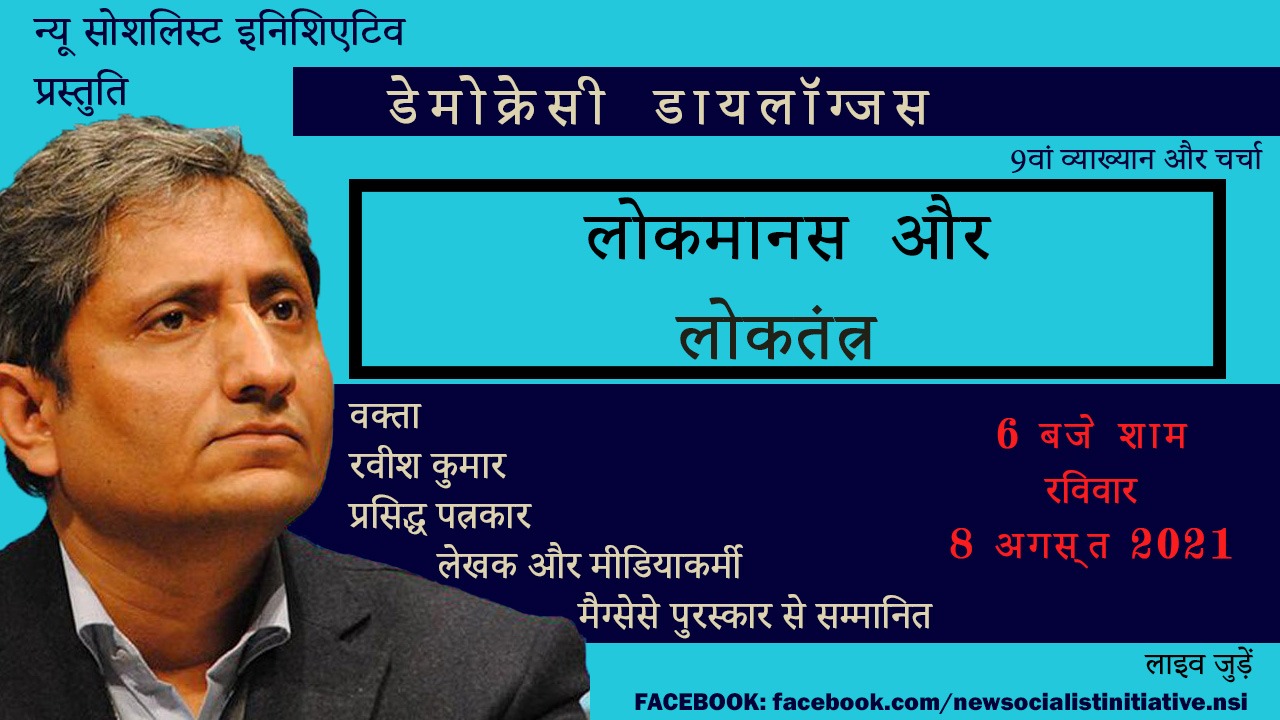
लोकमानस और लोकतंत्र : रवीश कुमार

न्यू सोशलिस्ट इनिशिएटिव की तरफ से शुरू की गयी आनलाइन व्याख्यानमाला ‘डेमोक्रेसी डायलॉग्ज’ की अगली कड़ी में मेगसेसे पुरस्कार विजेता, प्रख्यात पत्रकार और विश्लेषक रवीश  कुमार हमारे अगले वक्ता होंगे।  आप सभी जानते हैं कि  रवीश कुमार न केवल एक जानेमाने टीवी एंकर हैं बल्कि भारतीय राजनीतिक-सामाजिक परिदृश्य पर पैनी निगाह रखनेवाले निर्भीक लेखक हैं और साहसी टिप्पणीकार हैं। 

इस अवसर पर व्याख्यानमाला में आए चार महिने के अंतराल के प्रति भी हम खेद प्रगट करना चाहते हैं। इस के पीछे एकमात्र कारण कोविड महामारी की दूसरी लहर के चलते भारत की जनता पर बरपा प्रचंड कहर और भयानक त्रासदी ही है। हम सभी इस विभीषिका के गवाह रहे हैं और हममें से कइयों ने इस दौरान अपने आत्मीयों को, अपने दोस्तों-मित्रों को या अपने पड़ोसियों को खोया है। हमारे इर्द गिर्द मची इस तबाही के बीच व्याख्यानमाला के आयोजन को जारी रखना हमें मुनासिब नहीं लगा था।

रवीश चाहते हैं कि उनका व्याख्यान संवाद नुमा और बातचीत की शक्ल में हो। हमें पूरी उम्मीद है कि आप भी न केवल इस बातचीत को सुनना चाहेंगे और उसमें शामिल भी होना चाहेंगे। कार्यक्रम फेसबुक लाइव होगा। 

कार्यक्रम का विवरण इस प्रकार है :

न्यू सोशलिस्ट इनिशिएटिव

प्रस्तुति

डेमोक्रेसी डायलॉग्जस

9 वां व्याख्यान और चर्चा


विषय : लोकमानस और लोकतंत्र

वक्ता :रवीश कुमार 

प्रख्यात पत्रकार, लेखक और मीडियाकर्मी , मैग्सेसे पुरस्कार से सम्मानित 

6 बजे शाम, 8 अगस्त 2021

live link : facebook.com/newsocialistinitiative.nsi

WE REJECT THE GOVERNMENT’S DECLARATION OF ‘MUSLIM WOMEN’S RIGHTS DAY’

There has been a nationwide outpouring of condemnation, following the announcement by Mr. Mukhtar Abbas Naqvi, Minister of Minority Affairs, declaring Aug 1 as ‘Muslim Women’s Rights Day’ to mark the anniversary of the Triple Talaq law.

Over 650 citizens – Muslim and non-Muslim women, men and trans persons, women rights activists, human rights activists, academics, students and hundreds of citizens across from across India have issued a strong statement today,

The statement condemns and rejects this cynical optics of using Muslim women’s rights, in the face of an unprecedented onslaught against the rights of the Muslims in recent years under the present government. It voices strong opposition to declaring 1 August as Muslim Women’s Rights Day, calling it the celebration of a law that is fundamentally anti-minority, anti-women, anti-constitutional, and seeks only to disparage the Muslim community.

 The text of the full statement and signatories is given below.

 Citizens’ Statement: August 1, 2021

 Mr. MUKHTAR ABBAS NAQVI – WE REJECT THE GOVERNMENT’S CYNICAL OPTICS

WE REJECT ‘YOUR’ MUSLIM WOMEN’S RIGHTS DAY

 And we say, respectfully, “How dare you!”

Continue reading WE REJECT THE GOVERNMENT’S DECLARATION OF ‘MUSLIM WOMEN’S RIGHTS DAY’

संदेह, अविश्वास उतना न है नकारशील


मुक्तिबोध शृंखला:33

अधूरापन मनुष्य की अवस्था को परिभाषित करता है। पूर्णता उसकी आकांक्षा है। इस आकांक्षा के कारण ही वह दूसरों से रिश्ते बनाता है। व्यक्तियों, समुदायों, राष्ट्रों की सीमाओं को लाँघकर नए, अब तक जो अनजान रहा, उससे जुड़ना अपने अधूरेपन से लड़ना है। प्रकृति का सायास साहचर्य भी इसी प्रक्रिया का अंग है। ब्रह्माण्ड के हर कोने तक दृष्टि प्रसारित करना भी यही है। सम्पूर्ण ज्ञान व्यापार इस अधूरेपन से पार पाने का उपक्रम है। संघर्ष है।

अपने अधूरेपन को आखिर हम किस तरह परिभाषित करें? क्या वह मेरी न्यूनता है? मैं जिस स्थिति में हूँ वह मुझे मिली है। मैं उसके लिए जवाबदेह नहीं। लेकिन मैं उसी स्थिति से पहचाना जाता हूँ। क्या मैं उसी स्थिति का बंदी हो रहूँ या उसे बदलने की कोशिश करूँ? या क्या मैं मात्र उसके पार चला जाऊँ? बिना उस स्थिति  को छेड़े? क्या ऐसा करना संभव है? यानी खुद को पुनर्परिभाषित करना? 

अधूरेपन की चेतना के साथ जुड़ा हुआ है सीमितता का अहसास। मनुष्य अपने काल और परिवेश से सीमित होता है। कई बार, बल्कि प्रायः उनका कैदी भी। यह उसकी बनाई हुई नहीं, उसे मिली हुई अवस्था है। और उस उसका अभ्यास वह अनजाने ही करता रहता है जिससे वह एक एक आश्वस्तिकर अवस्था जान पड़ने लगती है। इस सीमाबद्धता का ज्ञान मनुष्य को हो, यह कि वह उसे जड़ बना रही है, इसके लिए उसे निरंतर सक्रिय रहना पड़ता है। उसके बिना वह उसी अवस्था को वरदान मानकर उसकी रक्षा में सन्नद्ध हो उठता है।

Continue reading संदेह, अविश्वास उतना न है नकारशील

इस तरह चूर्ण चट्टान हो कि रेणु-रेणु सूरज पर चले जाएँ

मुक्तिबोध शृंखला:32

अच्छी कविता और बड़ी कविता में फर्क होता है। अच्छी कविता के नियम बड़ी कविता पर लागू नहीं होते। जैसे आम तौर पर कविता का उद्घोषात्मक होना अच्छा नहीं माना जाता। उपदेशात्मकता और शिक्षापरक होना अच्छी कविता के गुण नहीं माने जाते। लेकिन बड़ी कविता शिक्षापरक, यहाँ तक कि उपदेशात्मक होकर भी बड़ी हो सकती है। मुक्तिबोध की कविताओं के इस पक्ष को सहज ही लक्ष्य किया जा सकता है। जीवन कैसा हो? अच्छा जीवन कैसे जिया जाए या मानवीय जीवन किसे कहते हैं और उसे हासिल करने का तरीका क्या है, मुक्तिबोध की कविताएँ इसकी सीख देती चलती हैं और ऐसा करती हुई दीखती भी हैं। उन्हें जैसे इसकी परवाह नहीं कि उन्हें कविता माना जाएगा भी या नहीं।

मुक्तिबोध की कविताएँ एक ‘मैं’ गढ़ती रहती हैं। वह ‘मैं’ अक्सर अपने आप से बात करता रहता है। उसके मन में एक उधेड़बुन सी चलती रहती है। ज़िंदगी की अपनी राह को लेकर, उस रास्ते पर चलने की अपनी तैयारी को लेकर, कभी कभी रास्ते के चुनाव पर भी। एक घोर आत्म-चेतस् व्यक्ति जो कभी चैन से नहीं रहता। क्योंकि उसकी एक निगाह भीतर को ओर मुड़ी होती है।

Continue reading इस तरह चूर्ण चट्टान हो कि रेणु-रेणु सूरज पर चले जाएँ

मेरे ही चंगुल से मुझको तुम मुक्त करो!

मुक्तिबोध श्रृंखला:31

“वीरान मैदान, अँधेरी रात, खोया हुआ रास्ता, हाथ में एक पीली मद्धिम लालटेन। यह लालटेन समूचे पथ को पहले से उद्घाटित करने में असमर्थ है। केवल थोड़ी-सी जगह पर ही उसका प्रकाश है। ज्यों-ज्यों वह पग बढ़ाता जाएगा, थोड़ा-थोड़ा उद्घाटन होता जाएगा।”

मुक्तिबोध रचना की प्रक्रिया के लिए एक रूपक प्रस्तुत कर  रहे हैं। अँधेरी रात, वीरान मैदान और एक खोया हुआ रास्ता। ‘खोया हुआ’ का आशय क्या है? यह वह रास्ता है जो जाना हुआ था और खो गया? यह प्रश्न ‘अँधेरे में’ कविता की खोई हुई ‘परम अनिवार आत्म संभवा अभिव्यक्ति’ के संदर्भ में उठाया जाता रहा है। क्या वह थी और खो गई या वह कभी मिली ही नहीं थी? ‘अँधेरे में’ की आख़िरी पंक्तियाँ हैं,

 “वह मेरे पास कभी बैठा ही नहीं था,

 वह मेरे पास कभी आया ही नहीं था,

तिलिस्मी खोह में देखा था एक बार,

आख़िरी बार ही।”

और आगे,

परम अभिव्यक्ति

अविरत घूमती है जग में

पता नहीं जाने कहाँ, जाने कहाँ

वह है।”

इसलिए हर गली, हर रास्ता देखना है, हर चेहरे पर गौर करना है, हर चरित्र में झाँकना है। मालूम नहीं वह अभिव्यक्ति कहाँ हो, कहाँ मिल जाए!

Continue reading मेरे ही चंगुल से मुझको तुम मुक्त करो!