
Killing it softly over two decades: Agrima Bhasin

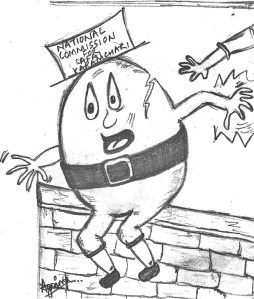
NCSK cartoon for Kafila

This is a guest post by AGRIMA BHASIN: No different from the caste hierarchy in India, the National Commission for Safai Karamcharis (NCSK) enjoys a marginal status, at the bottom, in the power hierarchy of commissions. “Why,” asked Former Prime Minister Narasimha Rao, “is it that the Commission for Safai Karamcharis is being subjected to the same discrimination as the safai karamcharis themselves? This is not something to be proud of.” He minced no words at the Conference of Welfare Ministers of States in 1996, to guilt the august gathering into recognising their culpability in deliberately weakening a competent commission. Continue reading Killing it softly over two decades: Agrima Bhasin

São Paulo: The City and its Protests: Teresa Caldeira

Guest post by TERESA CALDEIRA

In June 2013, a series of large demonstrations throughout Brazil have shaken up its main cities and political landscape.  They have also perplexed politicians and analysts alike, many of whom found themselves without solid references to interpret the novelty and oscillated between silence and old discourses.  It is always risky to interpret emerging processes. Minimally, we risk following secondary paths or, even worst, framing new events with the vocabulary made available by old interpretative models, exactly the ones that the new events are trying to displace. However, in order to reveal what is emerging it is necessary to risk, search for new hints, and follow signs already available.  Several references that can guide us to interpret the June events have been around for quite a while; others are new, but we can trace their lineage and contextualize them.

SP Batata 17 june
17th June, 2013

Continue reading São Paulo: The City and its Protests: Teresa Caldeira

Ishrat: Laltu’s poem

Laltu‘s poem written in 2004; published in Dainik Bhaskar in 2005.

‘इशरत’
एक 

इशरत!
सुबह अँधेरे सड़क की नसों ने आग उगली
तू क्या कर रही थी पगली !
लाखों दिलों की धड़कन बनेगी तू
इतना प्यार तेरे लिए बरसेगा
प्यार की बाढ़ में डूबेगी तू
यह जान ही होगी चली!
सो जा
अब सो जा पगली. Continue reading Ishrat: Laltu’s poem

Reading Violence in the Garo Hills : Rafiul Alom Rahman

This is a guest post by RAFIUL ALOM RAHMAN

The recent mob fury over the rumour of rape of a mentally challenged Garo girl and the consequent outburst of terror on migrant workers in Tura shouldn’t be read as a simple story of Garo men’s concern for women. If it was so, not so many labourers outside Tura would have been killed in cold blood by Garo miscreants. The claim that tribal society is free from the clutch of sexism, and that it is tribal women who face sexual abuse in the hands of non-tribals does not cut ice anymore. Continue reading Reading Violence in the Garo Hills : Rafiul Alom Rahman

A letter to Chetan Bhagat from Indian Muslim Youth

Given below is the text of a letter that was initially written by a group of individuals and sent as a rejoinder to the article written by Chetan Bhagat titled,Letter from an Indian Muslim Youth published in The Times of India on 30 June 2013. The letter was sent to The Times of India The signatories include non-Muslims, because a large number of the emails read, ‘I am not a Muslim but I am equally disgusted by Chetan Bhagat’s letter’. Given below is the text of letter followed by more than 200 signatures:

A Letter to Mr. Chetan Bhagat from Indian Muslim Youth

3rd July 2013

Dear Mr. Bhagat, Continue reading A letter to Chetan Bhagat from Indian Muslim Youth

Will ACP Kisan Shengal of Mumbai ATS be prosecuted?: Yug Mohit Chaudhry

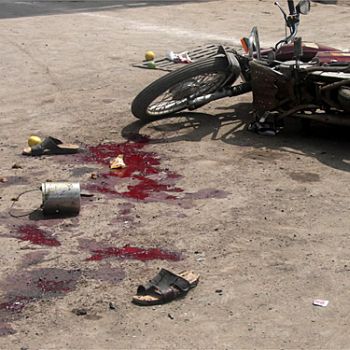
malegaon_blast_2

Guest post by YUG MOHIT CHAUDHRY: On Friday, 8th September 2006, four bomb blasts occurred in Malegaon killing thirty-one persons and injuring three hundred and twelve others. The case was originally investigated by the Maharashtra Anti-Terrorist Squad (ATS). After re-investigating the case, the National Investigation Agency (NIA) has concluded that the ATS fabricated evidence against nine persons. This unprecedented acknowledgement raises important questions about how terrorist cases are investigated, police misconduct and the rule of law in India. It remains to be seen whether the government will take action against the ATS investigating officer, Assistant Commissioner of Police (ACP) Kisan Shengal, for fabricating evidence on a capital charge. Continue reading Will ACP Kisan Shengal of Mumbai ATS be prosecuted?: Yug Mohit Chaudhry

Media manipulation on Ishrat continues: Vrinda Grover’s Protest Letter to Hindustan Times

To,
The Editor,
Hindustan Times

On the day the CBI is set to file its chargesheet in the Ishrat Jahan fake encounter case, Hindustan Times has chosen to report about it in a manner that is malicious, prejudicial and intended to manipulate public opinion. The report, “ ‘Ishrat Jahan had links with Kashmir Separatists’: CBI” by Mahesh Langa and Abhishek Sharan in the Delhi/ Ahmedabad edition of the newspaper is nothing short of defamatory. The headline attributes this ‘information’ to the CBI whereas in the text of the report, it is said that two of those killed along with Ishrat “were associated with secessionist groups in Kashmir”. Clearly, the CBI is not saying that Ishrat had any links with any group. This is a deliberate misrepresentation and a cheap trick to make connections where none exist in order to tarnish the reputation of a deceased girl who is no longer present to defend herself.  Continue reading Media manipulation on Ishrat continues: Vrinda Grover’s Protest Letter to Hindustan Times

Can The Real Shyama Prasad Mukherjee Ever Stand Up?

Image

It has been more than two years that A G Noorani’s important book ‘Article 370 : A Constitutional History of J and K’ (OUP, 2011, Pages 480) has hit the stands and has been able to clear many a confusions about the tumultuous era in post independence times pertaining to Jammu and Kashmir.

Basing himself on authentic documents, letters, memorandums, white papers, proclamations and amendments  the author, a constitutional expert himself, has not only provided new insights about the period but has also tried to bring forth an important summary of the developments then and the role played by different stakeholders. While we have been witness to a process of erosion of the article 370 today, the book underscores the politics behind its erosion, which was negotiated between Prime ministers Jawaharlal Nehru and Sheikh Abdullah and had a stamp of approval from Sardar Patel and Shyama Prasad Mukherjee.

For the  Bharatiya Janata Party (BJP), which daily invokes name of Shyama Prasad Mukherjee, founder of Bharatiya Jan Sangh – percursor to its present incarnation namely BJP – to oppose Article 370 which guarantees special status to Jammu and Kashmir – this exposure that the said Article had full approval from Mukherjee as well as then Home Minister Sardar Patel is nothing but blasphemous. Continue reading Can The Real Shyama Prasad Mukherjee Ever Stand Up?