All posts by Sohail Hashmi

Supporter of Causes no longer fashionable in these days of globalisation, script writer on documentaries on above causes and a chronic optimist

New Delhi – A Heritage Zone at 80!

[This article by Sohail Hashmi was earlier inadvertently posted under the name of Shivam Vij. The error is regretted.]

Connaught Place renovation for the Commonwealth Games, September 2010. Photo credit: AP

In 1988 Lutyen’s Delhi, was declared a heritage zone by prohibiting building activity within the 26 square kilometre area out of the 43 Sq. Km. area that falls within the civic control of New Delhi Municipal Committee (NDMC). A move has now been initiated to get the entire area declared a UNESCO World Heritage site.

The very logic of an area being declared a Heritage Zone should preclude any interference with the layout and design of the entire zone. Non-interference also means that, future building and development activity, if at all permitted, has to conform to the original parameters of design, materials, fittings and fixtures used, building techniques, landscaping and the kinds of trees planted in the heritage zone.

Even before the 1988 freeze on construction, there was a master plan for Delhi and it clearly identified the Lutyen’s Bungalow Zone as an area where high rises were not to be permitted. Continue reading New Delhi – A Heritage Zone at 80!

Who is a Dilliwala?

Chhat Puja at India Gate, Delhi. Photo credit: S. Subramanium / The Hindu

For most residents of New Delhi, the region known as Old Delhi falls within the realm of the unknown. Aside from business people and those who earn a living inside the walled city only a few from outside the walled city used to venture into, what is derisively called Dilli 6. At least this was the picture till very recently.

With the introduction of the Metro entry into and exit from the heart of the city, it has become less daunting. More and more people from outside the “walled city area” have begun to tentatively explore the narrow winding lanes of Shahjahanabad. Except for those who come to explore ‘history and heritage’ and their numbers are small, consisting mostly of fair skinned tourists, most others arrive to explore the fabled flavours of the street food of Old Delhi or Shahjahanabad to give the place its correct name.

Continue reading Who is a Dilliwala?

Hallowed precincts: The Viceregal Lodge of Shimla

This slideshow requires JavaScript.

Text and photographs by Sohail Hashmi
First published in
Terrascape

Those driving to Shimla through National Highway 22, reach a bypass known as Tuti Kandi, it is here that one has to decide if one wants to continue uphill to the former summer capital of colonial India or to avoid the busy, traffic jammed Shimla and carry on ahead to Kufri and beyond.

Continue reading Hallowed precincts: The Viceregal Lodge of Shimla

Asrar-ul-Haq MAJAAZ -1911-2011

Asrar-ul-Haq Majaaz was born in Radauli on the 19 October in 1911 or 1910 and died at 44 on 5 December 1955. After his initial education at Agra and Lucknow he came to Aligarh and completed his graduation in 1936. This was the year when Ali Sardar Jafri was expelled from AMU for indulging in political activities and also the year when the Progressive Writers Association (PWA), formed a little earlier in London, held its first conference under the chairmanship of Munshi Prem Chand at Lucknow, the city that Majaaz called his home. Continue reading Asrar-ul-Haq MAJAAZ -1911-2011

Don’t Treat us Like “Them”!

How inconsiderate of the Israeli spokesperson to club us, the self proclaimed largest democracy in the world and an atomic super power to boot, with the likes of failed states like Pakistan and with two others (Afghanistan and Iraq) that are currently being taught  the basics of democracy by  the marines of the most powerful  democracy in the world.

How  ungrateful of him,  considering the fact we are buying so many weapons from his country, have signed so many MOUs with her,   befriended her after betraying an entire people, who looked up to us because they thought that being founders and leaders of the Non Aligned movement we will stand with them .

We have done all this and more, in the weak -kneed statement protesting the attack on the freedom flotilla we did not even name the country that had perpetrated the crime

Despite all our most sincere efforts to accommodate them, this is how they treat us

Did the Israeli spokesperson think that we will not complain?

Did he really think that we will not seek to draw the attention of the comity of Nations and of Obama?

We will not be denied our democratic right to raise our voice of protest,

We will, with all the power at our command, appeal to world opinion and to the conscience of Benjamin Netanyahu and the entire Israeli cabinet not to club us with Pakistan, Afghanistan and Iraq.

We seek to inform Mr Yahu that we have no idea about the nature of his country’s relations with these three, what we do know is that we are friends of Israel. We have tried so hard to prove it to her and to her close ally the US, why does she not trust us. What more does she want from us? Why won’t she tell us?

Someone please help!

Gallows, Memorial, Prison, Fort, Lost City

(First published in the May 2010 issue of Terrascape. Photographs by HIMANSHU JOSHI.)

I am old and cranky and am getting balder and cynical by the day, I have started looking more and more like the medieval ruins that I haunt. This haunting of forgotten ruins, is probably the reason why I am a little out of touch with T20, IPL and such other earth shaking events. This is also perhaps why I tend to get more than a little edgy when people begin to talk of memorable matches, great catches and those classic innings, the moment I say Firozeshah Kotla ! These gentlemen and ladies have, in most cases, nothing to do with the game, that G.B.Shaw despised so vehemently, and yet they are all chronic enthusiasts of the game. Continue reading Gallows, Memorial, Prison, Fort, Lost City

Madhuri and Zeenat

I recieved a mail today about the  deafening silence on the 24X7 newsbreakers regarding La affaire Madhuri and it got me thinking.

Is it not a bit strange that an OB van is not stationed permanently at the Vikaspuri residence of Ms Gupta? How is it that her milk man, her vegetable seller, the retired army major/ or a school principal or an old acquaintance who lives a few houses away have not been interviewed 200 times in the last two days?

How is it that archival shots of Ms Gupta driving away in her car, or recent shots of her being led away  in hand-cuffs, pan shots of her house from across the road, shots of authentic looking documents, of the schools she went to, of interviews with her old parents asking them how does it feel to be parents of a traitor? etc., etc. are not being run in a 24 hour loop? Continue reading Madhuri and Zeenat

Bagh-e-Bedil

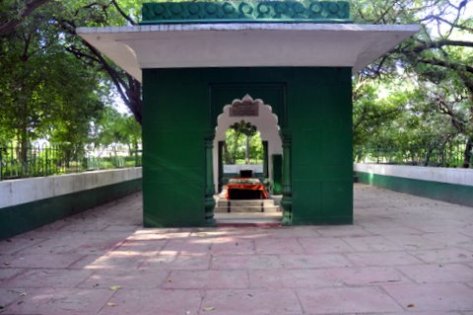
As part of the Festival of Spiritual Music being organised in February 2010, we are trying to rekindle interest in Mirza Abdul Qadir “Bedil’ one of the most significant poet of Persian from India. In fact Khusrau, Bedil and Ghalib are rated very highly in persian speaking countries. Khusrau and Ghalib need no introduction but Bedil has almost totally been forgotten in the Land of His Birth. Mirza Bedil is buried roughly opposite the dargah of Matka Peer, that all of you must be familiar with because of Bundoo biryaani wala.

We have got one of the finest qawwals of Delhi, Chand Nizami, and his group to specially prepare a few ghazals of Mirza Bedil and they will be presented in a qawwali mehfil at the shrine of Mirza Bedil on Feb 25,at 6.30 pm. Continue reading Bagh-e-Bedil

Royal Purple with a Green Crown

There is a story about Birbal and Akbar that goes something like this:

One day Akbar invited Birbal to join him at Lunch, one of the dishes served was the Brinjal, called Baigan in Hindustani, akbar liked the preparation and said as much, Birbal not only agreed but also praised the vegetable to high heavens, talking about its great qualities and about its ancient roots in the Indian lore.  Several days later he was invited for another meal with the Emperor and this time too Brinjal was on the Menu, Akbar did not like the preparation said that Baigan was an affront to finer sensibilities, Birbal promptly agreed and added that it had no taste of its own, had the consistency and colour of mud and destroyed anything that it was cooked with. Akbar remembered the fulsome praise that Birbal had just a few days earlier heaped upon the vegetable and reminded him. Birbal bowed his head and said, my lord, I am beholden to you, not to the Brinjal. Continue reading Royal Purple with a Green Crown

Enemy Property

There have been several news reports recently about attempts by the builder Mafia to capture properties near the Jama Masjid in Shahjehanabad (popularly, known as old Delhi) to build a 100 room hotel. Reports have also suggested the involvement of a local politician, though the politician has refuted the allegations very firmly.

This piece is not about the builder mafia or the local politician, but about another issue that has cropped up during the investigation of the attempted land grab. It has been found that the ownership of one of the properties is under dispute and a case has been going on for close to two decades.

The reports say that the disputed property belongs to the “custodian of enemy properties”. Even a cursory reading of the reports would reveal the identity of the original owners of these properties. The original owners of these properties were Muslims of Delhi.

Muslims, who had lived in Shahjehanabad for generations, some for centuries like the families of my ancestors. Continue reading Enemy Property

Tilting at Wind Mills Aren’t We

The Jamiat Ulama-e-Hind Conference held recently, has raised Cain through one of the 25 resolutions that were passed at the conference. The kind of noise that has been generated by this resolution has virtually air-brushed the other resolution out of reckoning. Did the remaining 24 resolutions not deserve closer scrutiny, especially in view of the fact that many of these resolutions had taken off from the recommendations of the Sachar Committee report.

The 24X7 “News” channels that claim to keep us updated on developments even before they occur, have by and large concentrated all their energies on this one resolution which claims that the “Singing of Vande Maatram is Un-Islamic”. Given the kind of attention that this resolution has already received, it may be worth our while to talk about some of the other resolutions before getting into the raging debate of Vande Maatram. Continue reading Tilting at Wind Mills Aren’t We

The Khirki and the Begumpur Mosques

This is to be read as a sequel to my earlier post, A Tale of Two Mosques.

First published in Landmark. Photographs by DEVNDRA CHAUHAN. Credit for the map drawings: NITIN SAINI.

The east gate of the Begumpur mosque

With the exception of Humayun’s tomb, and it is an exceptional structure, I have up to now stuck to my brief of talking about lesser known monuments of Delhi and will hopefully continue doing so as long as some monuments continue to exist incognito or till I am told to layoff. Considering that some of the readers have reacted favourably to my output I hope to continue to tread on what used to be a lonely trail.

Of late I have discovered fellow travellers on my jaunts, this path is no longer as lonely as it was when I began to see them in my teens in the company of my father who had strayed into archaeology from furniture designing, interior decoration and draughtsmanship. Continue reading The Khirki and the Begumpur Mosques

A Tale of Two Mosques

Kalan Masjid all dressed up

Ferozeshah Tughlaq (1351-1388), the last significant ruler of the Tughlaq Dynasty, built his capital of Ferozabad on the banks of the river Yamuna. The ruins of the city, that came to be called Ferozeshah Kotla in later centuries, are located behind the Indian Express building and the perpetually under-renovation Ferozeshah Kotla Cricket grounds that derive their name from this 5th capital at Delhi. Continue reading A Tale of Two Mosques

The Old Fort

(First published in Landscape. Photographs by HIMANSHU JOSHI.)

sized3
The South Gate as seen from within the fort. This became the back drop for the staging of Tughlaq

The Old Fort, popularly known as Puraana Qila, was known to both the Author of Asaar-us-Sanadeed- Syed Ahmad Khan and the author of Waqeyat-e-Daar-ul-Hukoomat Dehli- Bashir Ahmad as Qila-e-Kuhna. The three terms Old Fort, Puraana Qila and, Qila-e-Kuhna mean exactly the same thing, The first is English, the last is Persian and the second is Urdu. Somehow the Hindi equivalent Pracheen Durg has never been in use despite the popular, though as yet historically unsubstantiated claim that this is the site of the legendry Indraprasth or Inderpat built by the mythological Pandavas. Continue reading The Old Fort

SAHMAT press statement on prayers in protected monuments

SAHMAT
29, Ferozeshah Road, New Delhi -110001
Telephone-2 3070787,23381276
e-mail: sahmat@ vsnl.com

29.7.2009

Press Statement Continue reading SAHMAT press statement on prayers in protected monuments

Right Hand, Wrong Hand

I have two daughters, born 1984 and 1988. As they grew up we noticed that both of them were ambidextrous but gradually the 84 born started favouring her right hand over the left but the 88 born did the exact reverse. She began to rely more and more on her left hand to do things like eating, opening doors, picking up things, writing etc,things that “normal” people including my elder daughter do with their right hand.

A couple of interfering neighbours tried telling us to ‘teach’ our daughter to do things properly and not to eat or touch ‘saraswati’ with her dirty hand. Luckily we told these busy bodies to mind their own business and let her be. Continue reading Right Hand, Wrong Hand

Habib Tanveer and the Gond Myth of Creation

Several years ago while shooting for “Urdu Hai Jiska Naam” Subhash Kapoor, the director of the series and I had gone to Bhopal because we wanted Habib Saheb to anchor the series. While location hunting we went to see the Museum of Man – a sprawling open-air campus, spread on one side of the famous Shaamla hills in Bhopal. One area of the museum is dedicated to tribal myths and their theories of creation. The Gond myth of creation fascinated me greatly and I narrated it to Habib Saheb in the evening. Habib Sahib liked the story and took it down in as much detail as I could remember. Sometime later when I saw a performance of Zahreeli Hawa, Habib Saheb’s play on the Bhopal Gas tragedy, I realised that he had woven the Gond myth in the preamble of his play and had very effectively incorporated contemporary environmental concerns and the pillage of MNCs in this primordial tale of great simplicity and beauty. Continue reading Habib Tanveer and the Gond Myth of Creation

To Sharad Yadav

Respected Sharad Ji,

Namaskar.

I read with great interest your statement, as reported in the print media, on your likely future course of action in case the parliament was to go ahead with reserving 33% seats for women in the legislature.

One has been following your arguments against this proposed legislation over the past decade and more and has come to develop grudging admiration for your stand. Continue reading To Sharad Yadav

Balraj Sahni’s Convocation Address at Jawaharlal Nehru University, 1972

About twenty years ago, the Calcutta Film Journalists’ Association decided to honour the late Bimal Roy, the maker of Do Bigha Zameen and us, his colleagues. It was a simple but tasteful ceremony. Many good speeches were made, but the listeners were waiting anxiously to hear Bimal Roy. We were all sitting on the floor, and I was next to Bimal Da. I could see that as his turn approached he became increasingly nervous and restless. And when his turn came he got up, folded his hands and said, “Whatever I have to my I say it in my films. I have nothing more to say,” and sat down.

There is a lot in what Bimal Da did, and at this moment my greatest temptation is to follow his example. The fact that I am not doing so is due solely to the profound regard I have for the name which this august institution bears; and the regard I have for yet another person, Shri P.C. Joshi, who is associated with your university. I owe to him some of the greatest moments of my life, a debt which I can never repay. That is why when I received an invitation to speak on this occasion, I found it impossible to refuse. If you had invited me to sweep your doorstep I would have felt equally happy and honoured. Perhaps that service would have been more equal to my merit.

Please do not misunderstand me. I am not trying to be modest. Whatever I said was from my heart and whatever I shall say further on will also be from my heart, whether you find it agreeable and in accordance with the tradition and spirit of such occasions or otherwise. As you may know, I have been out of touch with the academic world for more than a quarter of a century. I have never addressed a University Convocation before. Continue reading Balraj Sahni’s Convocation Address at Jawaharlal Nehru University, 1972

The Great House Hunt

A rather fierce debate has been raging at Kafila, the instigator is Zainab, a “Muslim” married to a “Telugu Brahmin” who discovered how deep is the hold of antediluvian ideas and practices in a city that has for sometime been touted as the hub of 21st century India.

She wrote a simple account of her experiences while searching for a house on rent in Bangalore. The piece also touched upon issues like communal profiling, stereotyping entire communities and such like. Some of those commentating on the piece have made ‘clever’ attempts at obfuscation by raising issues like loan quotas for Muslims and such other totally extraneous arguments. Never having studied economics, banking and/or commerce, never having had the resources to apply for a bank loan and not having my life enriched by the immensely educational experience of house hunting in Bombay and Bangalore, I will not try to take on Ipsita or comment on the secular practice of discrimination against all house hunters if they do not belong to the caste, religion, region, gender or economic status of the landlord. Continue reading The Great House Hunt

The Discreet Poison of Aamir

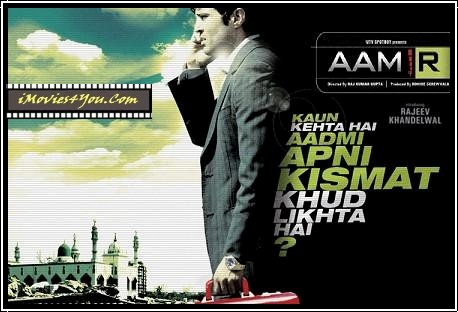
Aaamir the film

Aamir, a film about a man on the run, was released in June 2008, it was one of those rare films that was praised by critics and liked by viewers. I did not like the film, I was in fact very upset and disturbed about the film and thought about giving expression to my angst in writing, but this outpouring of powerful emotions never materialised, I would probably have never gotten down to writing this piece had Delhi 6 not arrived on the scene. Continue reading The Discreet Poison of Aamir