Category Archives: Politics

Slavery Exists in the UK Today: Report

Urban Britain is heading for Victorian levels of inequality
“The chasm between rich and poor seen in London today resembles the Manchester that Engels described in the 1840s” – so run the headlines of an interesting story in The Guardian by Tristram Hunt. Hunt, who is working on a new biography of Engels, finds interesting parallels of contemporary London, its social segregation and inequality with the London described by Engels in his Conditions of the Working Class in England: The poverty and and exploitation side by side with the sharp increase in middle class power on the one hand and its concentration in the hands of the filthy rich – 1 percent of the population controlling 24 percent of the national wealth. So much for the ‘trickle down’ effect. Hunt’s story itself is based on a report released last Tuesday (17 July). Some Glimpses of the report:

As the UK marks the 200th anniversary of legislation for the abolition of the slave trade, a new report shows how modern forms of slavery occur in the UK. Written by leading experts in the field, this report is the first comprehensive review of evidence about the extent of slavery in the UK today.

Contemporary slavery in the UK, produced by a joint research team from the University of Hull and Anti-Slavery International for the Joseph Rowntree Foundation (JRF), examines the nature of modern slavery and the conditions under which it occurs. It also contains detailed accounts of the circumstances being faced by those enslaved….

Slavery in contemporary Britain cannot be seen in isolation. Most of those working as slaves in the UK have come from elsewhere, often legally. This makes slavery an international issue. Many relationships of enslavement trap people by withdrawing their passports or ID documents, making escape unlikely. Evidence shows that those who protest about the appalling working conditions may be beaten, abused, raped, deported or even killed.

Bangladesh: Faces of Emergency and Human Rights Issues

<!– @page { size: 8.5in 11in; margin: 0.79in } P { margin-bottom: 0.08in } –>

Cholesh Richil had no charges of corruption or criminal activity in Bangladesh, which is ruled under emergency and a civilian caretaker government, backed by the army. An outspoken leader of the Garo indigenous community, who live in the Modhupur area north of Dhaka, Cholesh had been campaigning against the construction of a so-called ‘eco (ecology) park’ on their ancestral land, on the grounds that it would deprive them of their land and means of livelihood. He was arrested by the Joint Forces (army and police) personnel on 18 March 2007 and taken to Modhupur Kakraidh temporary army camp. Tortured for several hours before being taken to Madhupur Thane Health Complex, he was declared dead the same evening.

After Choesh Richil’s body was handed over to the Garo community church on 19 March, his family observed multiple bruises, nails missing from his fingers and toes, and cuts and scratches consistent with blade wounds. His testicles had been removed. Local government officials have stated that an ‘administrative inquiry’ into the case has been initiated, but none are aware of the terms of reference or the progress of the inquiry.

Continue reading Bangladesh: Faces of Emergency and Human Rights Issues

Why Hindol Sengupta needn’t fear Mayawati

hindol-senguptamayawati

Baba Hindol and Behen Maya

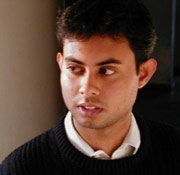
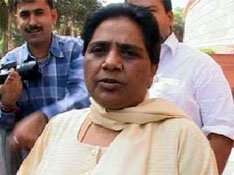
Please read this very important post on the CNN IBN website’s otherwise dull blog section. It has been written by Hindol Sengupta who covers fashion and suchlike for them. His point is that he can’t relate to Mayawati, and finds it ironic that the “backbone of the knowledge, entreneurial [sic] economy” should be a “non-vote bank”. He says that his class of people, his ‘type’ – People Like Us, to use a cliche – “rejoice every time Manmohan Singh takes stage” but alas, even he couldn’t win a Lok Sabha election from South Delhi.

The reason why I think it is an important post is that unlike most other PLUs, Sengupta makes no claim to ‘objectivity’. When Youth for Equality / United Students / other ‘anti-reservationists’ oppose reservations, and speak about Dalits/OBCs, they claim to be doing so with a claim to ‘objectivity’, that is, they do not admit that the viewpoint(s) they are putting forward are of a certain section of society that is influential in shaping public opinion despite being in a minority.

Sengupta admits not only his discomfiture with a democratically elected Mayawati but also that his discomfiture stems from his background, from who he is. He describes himself and his ilk as “middle-class, educated, metro-bred, Christian-education raised, young.” That would abbreviate into MEMCRY, but let’s just use the word ‘yuppie’.

It is quite extraordinary and laudatory for a yuppie to admit his distance from the political rise of the ‘low-class, neo-literate, village-bred, government school-raised, middle aged’. Such an admission is a rarity, and it is exactly what the ‘anti-anti-reservationists’ want the ‘anti-reservationists’ to admit. Continue reading Why Hindol Sengupta needn’t fear Mayawati

Learning from China

Here is an article by Aseem Shrivastava, who suggests that there is a grimmer lesson to be learnt from China than the corporate flunkies would have us believe. Turning Mumbai into Shanghai? More like turning Nandigram into Shenzen…

The Indian Predicament
SEZS: Behind the Curtain
By ASEEM SHRIVASTAVA

“Few cities anywhere have created wealth faster than Shenzhen, but the costs of its phenomenal success stare out from every corner: environmental destruction, soaring crime rates and the disillusionment and degradation of its vast force of migrant workers”

–“Chinese Success Story Chokes on Its Own Growth”

The New York Times, December 19, 2006.

Within the short span of a few decades China has become the envy of the world. Corporate managers across the globe lose sleep worrying about “the China price”. Real wages and working conditions rivaling those of industrializing, pauperizing Britain two centuries ago have enabled the country to leave far behind any global competitor who has to worry about such inconvenient matters as labor laws and environmental regulations. Thus has accelerated the inter-national race to the bottom that has generated fear since the early days of this phase of corporate globalization. The labor force in the global economy doubled overnight in the early 1990s (from 1400 to 2900 million) when China, India and the Eastern Bloc nations joined it after the fall of the Berlin Wall, under Bush I’s “New World Order.” If real wages and the share of wages in national income have fallen sharply in recent times, and if inequalities have risen dramatically at the same time, the answer to the riddle lies in this quiet accretion, cashed in on by China-based corporations who have set the pace. The logic of capital has inveigled the entire world into a race of totalitarianisms–which inevitably enrich the few and pauperize the many in

Continue reading Learning from China

Comprador Intellectuals on the War-Path

[comprador: 1. An intermediary; a go-between. 2. A native-born agent in China and certain other Asian countries formerly employed by a foreign business to serve as a collaborator or intermediary in commercial transactions. Source: American Heritage Dictionary. A word once popularized in the writings of Mao Tsetung, this meant simply a foreign agent. We could more profitably deploy it here to describe those who have abdicated their position as critical intellectuals to the demands of power. ]

A friend who teaches in Kolkata University was once accosted by a group of SFI [acronym of the CPM’s student-wing] activists asking for ‘donations’. You have of course to be familiar with the political culture of West Bengal – first under the Congress regime and then ably carried on under the CPM – in order to understand what ‘donation’ or ‘chaanda’ means. Ordinary mortals tremble when CPM supporters come to ask for chaanda, be it for the Durga Puja or for students’ elections. This brave man happened to tell them that he would not give donations to the SFI or CPM as he disagreed with their politics. As the students were leaving the room, one of them returned to tell him, “Sir, Amaar naam Ratna Sarkar. Kichhu dorkaar hole bolben.” [Sir, my name is Ratna Sarkar (name changed for obvious reasons). Please let me know if you need something]. The very mention of the name was supposed to reveal in a flash to this foolhardy teacher, who at 50 years plus, continues to remain a ‘senior lecturer’, that she was the daughter of one of the most powerful state CPM leaders. A daily occurrence in West Bengal. A silent terror inscribed in daily life.

This friend needs also to be mentioned here today because he has had a fairly compelling thesis for sometime now. Civil society in Bengal, he suggests, has been decimated ever since the CPM/LF came to power. In the pre-Left Front days, he argues, it was the Leftist intelligentsia that constituted the critical voice, interrogating the excesses of power. Not any more. What can such an intelligentsia be called but comprador, who have ‘sold their conscience’ to the party line – to resort to a mild polemical Leninism. But alas, such intellectuals are not merely the Sunil Gangopadhyays in Bengal who have fallen in line not because of party commitment but maybe some other calculations; after all they have to live in CPM ruled West Bengal for quite some more time to come. Such are also the seventeen intellectuals who have issued the statement in defense of the West Bengal government.

Continue reading Comprador Intellectuals on the War-Path

Insider’s Account of What Happened in Nandigram

A senior journalist based in Kolkata has given a chilling account of the “police blueprint” for action in Nandigram in an exclusive to sacredmediacow.

Touchable Crimes: Gohana Nay Kizzhevanamani

Investigations by the police or the intelligence officials in highly contested cases have an uncanny ability of looking weird in an unabashed manner.

The recent chargesheet filed by the CBI, which had been asked to look into the attack, and arson, at a Dalit (Valmiki) basti in Gohana, once again vindicates this thesis. According to a newspaper report the chargesheet into the 2005 Gohana riots in Haryana has ‘..revealed that some people in Balmiki Basti had set their houses on fire themselves, allegedly for compensation.” The chargesheet talks of CBI’s observations that ” extensive burning was observed in 19 out of 28 houses. Of these, nine houses were inspected thoroughly and it appeared that in these houses the “simulated arsoning” was carried out, which are yet “to get compensation”. Continue reading Touchable Crimes: Gohana Nay Kizzhevanamani

The Ghost of the Middle Ground

Uncertainty, Ambiguity and the Media Response to Efforts to Secure a Commutation of the Death Penalty for Mohammad Afzal Guru and An Enquiry into the Events of December 13

Shuddhabrata Sengupta, January 1, 2007 (posted earlier on the Sarai-Reader List)
——————————

‘Now is the Winter of Our Discontent made Summer by the Pleasing Light of Television’

At the beginning of each new year, it is customary to take stock of what has happened in the last 365 days, and reflect on options for the future. I don’t want to speak for the entire year (let’s leave the year end newspaper and magazine supplements and the TV round-ups to do that). But I do want to look at this bleak now, the ongoing “winter of our discontent”, especially as it has played out on that hallowed and late, lamented entity called the ‘middle ground’.

This ‘middle ground’ is a territory currently under the occupation of large bastions of the mainstream media in India. It was on the parched soil of the ‘middle ground’ that the beast called public opinion was so eagerly sought to be beaten into shape (or pulp, depending on your point of view) in a daily gladiatorial during the course of the last few months. While this has always been the case, it did come into especially sharp focus ever since the question of the execution of Mohammad Afzal Guru came back on to what is sometimes called the ‘national agenda’ in late September – early October 2006. What began during our brief autumn rapidly gathered momentum as winter set in.

The thick fog that descends on Delhi with the onset of deep winter is a time where plots are laid ‘in deadly hate’, and ‘dangerous inductions, drunken prophecies, libels and dreams’ are aired by means of strategems that have every reason to be called ‘subtle, false, and treacherous’. Had William Shakespeare been writing a draft of Richard the Third in Delhi during an early twenty first century winter, he might have set the bleak iambs of the opening soliloquy in a television studio, and made the actor speaking them wear the pressed suits of a certain variety of senior journalist or news anchor, or the uniform or distinguished plain-clothes attire usually to be found adorning the person of an operative of the special cell of the Delhi police, or the Intelligence Bureau. Perhaps there might even be some actors who could essay both roles (a certain kind of journalist and intelligence operative) with practised ease, because there is so little left nowadays, to distinguish between the two functions. Call it what you will, embodied intelligence, or embedded journalism.

Continue reading The Ghost of the Middle Ground

Why Hezbollah’s Al-Manar TV is Broadcasting Sunday Mass

By SOPHIE McNEILL

Sophie McNeill is a reporter with SBS Television Australia, her blog from Lebanon can be found at http://www9.sbs.com.au/

[Note from NM: I received this from nothing2report@gmail.com, and was struck by how this kind of complex reporting is almost non-existent in India, at least in the English media . How often do reporters actually speak to participants in a rally, going beyond the media-designated ‘stars’ who are present (whose own sincerity and commitment the media itself then paints as being ‘merely for publicity’ – it’s a vicious cycle.) How much political protest by non-party citizens’ groups gets covered at all except as traffic disruptions or if it has been ‘newsworthy’ because of stars/violence/self-immolations? How many reports in print or on the 24 hour TV news channels actually give the consumer a sense of what the issues are, what are the debates, or try to go beyond the Big Fight format of For and Against? Do news reporters do any background research ever? How many 6th of Decembers have passed with no coverage at all of huge-to-small (differing from year to year) secular protests by a range of people from Gandhians to the ultra left; but with two predictable photographs every year – one of recognizable Muslims and another of the Shiv Sena/Bajrang Dal protesting and celebrating respectively, counterposed on front pages of newspapers?
Apart from being an exemplary piece of reportage, Sophie McNeill’s article below give us a fascinating insight into politics in Lebanon.
]

A truck laden with yellow Hezbollah flags drives past the Christian neighbourhood of Gemayzeh early Sunday morning in downtown Beirut. There’s a picture of Hezbollah leader Hassan Nasrallah on the windscreen, but it’s not his name that the young men on board are chanting. “General, General!” yell these young Shiite boys.

Their chant is for the leader of Hezbollah’s largest Christian ally, the former General Michel Aoun. And this van captures an important dynamic that many of the international and Lebanese press have omitted from their coverage of the last few days — that almost a quarter of the crowd at the huge anti-government protests have been Lebanese Christians. Continue reading Why Hezbollah’s Al-Manar TV is Broadcasting Sunday Mass

Repression and Resistance in Oaxaca

By Luis Hernández Navarro, Opinion Editor at La Jornada in Mexico, where parts of this text were published. He is a collaborator with the Americas Program online at www.americaspolicy.org
Translated by Katherine Kohlstedt.
A profound political crisis is shaking up Mexico. The rules that regulate the balance of power between elites have been violated. From above, there is no agreement or any possibility for one in the short term.A severe crisis in the model of control has eroded relationships of domination in many parts of Mexican national territory. People accustomed to obeying have refused to do so. People who think they are destined to rule have been unable to impose their command. Those from below have become disobedient. When those on the top want to impose their opinion from above, in the name of the law, they are ignored from below. Nowhere is the breakdown in control and the effervescence of rebellion as obvious as in the state of Oaxaca.

Oaxaca is a state plagued with social problems. It is a Mexican tourist enclave, surrounded by poverty where people survive on remittances sent by migrant workers abroad. Within its territory one finds land struggles, confrontations between caciques(local bosses ) and coyotes (migrant smugglers), local government conflicts, ethnic revenge, fights for better prices for agricultural products, and resistance against the authoritarian state.

Since May 15, Oaxaca has been in the throes of its most massive and significant social movement in recent history. The protest begun by Section 22 of the national teachers’ union (SNTE, for its initials in Spanish) soon became the expression of the social contradictions in the state. It is not at all unusual that teachers mobilize for pay raises around the time of the contract negotiation. This time it has gone well beyond a union struggle to fuse protests of many groups. Oaxacan society has come out in force to show its solidarity with the teachers and add in other demands and grievances. Around 350 organizations, indigenous communities, unions, and non-profits have jointed to form the Popular Assembly of the People of Oaxaca (APPO). Continue reading Repression and Resistance in Oaxaca

The Dalit ‘Betrayal’ of Hindi-Hindu-Hindustan

Karan Thapar of CNBC -TV18 recently presented a half-hour debate on whether Dalits have a better future adopting English rather than one of the so many Indian languages. Some of us followed it keenly because we knew where it was comig from and also the dramatis personae – Chandrabhan Prasad(CP), Yogendra Yadav(YY) and Alok Rai(AR) – all very dear friends, and people who have been deeply engaged with the politics and practice of languages in North India. It was a one-sided debate from the moment it started: clear victory to Chandrabhan Prasad from the word go, first of all, because he had managed to pitchfork his provocative stance into a full scale discussion in the national press and the big media. Think about it: it has taken him just three consecutive annual Macaulay’s birthday parties to friends, to bring it to the attention of a much wider number of intellectuals and a larger public. It was a victory for his own brand of Gandhigiri – that you could very much debate and advance your cause while having fun: ‘chicken, mutton, daaru and daliton ki kuchh samasyayein’ is his style, in his own inimitable words. This is not to say that he does not believe in agitational politics. He does that as well.The debate was also one-sided because CP’s interlocutors did not have convincing answers to his extremist views on language and religion and the coupling of the two, which had to inevitably sneak into the discussion, considering en mass dalit conversions were fresh in media memory. For example, when Karan Thapar probed CP on why he suggested Dalits take flight from Hindi and Hinduism; was it because he hated Hinduism? CP had perhaps an obvious but pithy answer: I did not choose to hate Hinduism, Hinduism never loved me!YY and AR looked aghast and betrayed at the idea of rejecting Indian languages, for Dalits, after all, were communicatively, politically and experientially rooted in these languages, beginning with Marathi, most of the(autobiographical) dalit literature was written in indian languages. They went on, the NRI example of turning away from one’s language is not a healthy one: look how they have all become Hindutva supporters, etc. etc. CP of course rubbished this secular middle class sentimentalism by citing Ambedkar’s example, that he always wrote in English and he did so knowing very well that it is not the Dalits who would read him!

Continue reading The Dalit ‘Betrayal’ of Hindi-Hindu-Hindustan

The Social Forum Phenomenon

The Idea of Open Space

The recent years have seen the rise and spread of local, national, regional, thematic and global social forums, inspired directly and indirectly by the World Social Forums (WSF) and its Charter of Principles. Any Social Forum, inspired by the WSF, and the WSF itself is conceived as an open space that facilitates the coming together of people to engage with each other on diverse social-political issues, and to oppose neo-liberalism and the domination of the world by Capital and any form of imperialism. They are committed to building a planetary society directed towards fruitful relationships among Humankind and between it and the Earth. Indian social and political activism has shown tremendous energy for the Forum in these years: Activities of the WSF process in India were initiated in early 2002, and were designed to set up and build a World Social Forum process in the country, towards hosting the Asian Social Forum in Hyderabad in 2003 and subsequently the World Social Forum in Mumbai in 2004. And now, the proposed India Social Forum in Delhi from 9 to 13 November 2006 marks the initiative to further advance the movement against neo-liberal globalisation, sectarian politics, casteism, patriarchy and militarization. Continue reading The Social Forum Phenomenon