
Last week’s terror attacks on Bombay/Mumbai, for which there can be no justification whatsoever, have targetted railway stations, restaurants, hospitals, places of worship, streets and hotels. These are the places in which people gather. where the anonymous flux of urban life finds refuge and sustenance on an everyday basis. By attacking such sites, the tactics of the recent terror attack (like all its predecessors) echo the tropes of conventional warfare as it developed in the twentieth century. These tactics valued the objective of the escalation of terror and panic amongst civilians higher than they viewed the neutralization of strictly military or strategic targets. In a war without end, (which is one way of looking at the twentieth century and its legacy) panic is the key weapon and the most important objective.
Continue reading Thinking Through the Debris of Terror: After Bombay

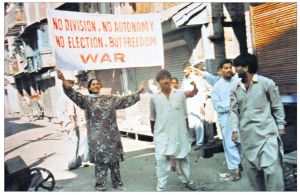 Some intelligence agencies have also warned of a low-poll percentage. But a senior police official said: “One cannot wait for the perfect situation in Kashmir.” According to him “gentle persuasion” in rural and border areas will help improve turnout. “After all, it is not a crime to ask people to vote. In several countries, voting is mandatory,” he argues. [
 The other sometimes amuses, sometimes provokes:

 KAFILA - COLLECTIVE EXPLORATIONS SINCE 2006