
Guest post by IMRAN KHAN
More and more concerns are being expressed by human rights activists in India today on the question of fabricated and false charges on innocent people. When Dr. Binayak Sen spent his time in jail on such charges, activist groups all over the country and abroad came out and protested. For the first time in the history of human rights movement in India, around two dozen Nobel Prize Winners came out to defend him. It should also be noted that there were even protests against such fabrication in front of Indian embassies in different parts of the world.
However, with the arrest of Binayak Sen, the contemporary history of `fabricating false cases’ by the Indian state took a new turn. The arrest took place while Dr. Sen was a national leader of India’s pioneering human rights organization, People’s Union for Civil liberties (PUCL). The activists felt that the message was loud and clear: That even human rights defenders can be imprisoned for no reason under repressive laws of the post-independent India.
Dr. Sen was released due to public pressure. But thousands are still languishing behind bars, waiting for justice. The nameless adivasis who were arrested like Sen from different parts of Chhattisgarh, speak of an unknown territory even to the best of our human rights activists. And new messages are given. Even journalists can be grilled. Thus, K.K. Shahina, Azmi, Seema Azad, Advocate Naushad Kasimji and others have become victims of attacks on freedom of expression. Fabricating false cases has become a norm today rather than an exception, according to human rights groups. Minorities, dalits, adivasis, people’s movements and self determination movements become an easy prey to false charges. Continue reading Terrorism in India – Between Facts and Fiction: Imran Khan
 This release comes from the JAMIA TEACHERS’ SOLIDARITY ASSOCIATION

 Guest post by MAHTAB ALAM
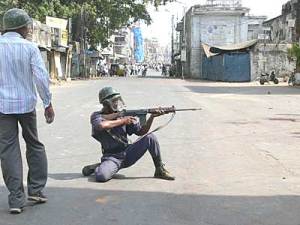 On Friday, 18th May 2007, the RSS terrorists planted bombs at historic Makkah Masjid and immediately after the bomb blast, a group of communal minded policemen started firing on the people who were helping the injured people in the blast. 9 people were killed and hundreds got injured in the blast. The sharp shooter policemen were chosen for firing on the people who came for prayers and who came forward to help the injured and this communal group of policemen was monitored by the then Additional Commissioner of Police (Crime).

 KAFILA - COLLECTIVE EXPLORATIONS SINCE 2006