The One Thing White Writers Get Away With, But Authors of Color Don’t: Gracie Jin

In this article, GRACIE JIN asks why only white writers are assumed to be capable of writing about cultures not their own.

Bill Cheng’s first novel, Southern Cross the Dog, debuted in June. His book, a fine example of writing what you don’t know, has been billed as “audacious” and “ambitious,” but you’ll be hard-pressed to find a review that doesn’t wonder at the novelty of a Chinese-American man from Queens, New York, writing about rural black Mississippi…

Unfortunately, most reviewers and interviewers seem to care less about the quality of Cheng’s writing than they do about the answers to these questions: Did the Chinese guy get it right? Can an authentic picture of the South come from a man of Asian descent who grew up in Queens?

…How many celebrated white writers have written characters who were not exactly like them? William Faulkner, Joseph Conrad, Mark Twain, Pearl S. Buck, Colum McCann, Yann Martel, and Arthur Golden immediately come to mind. In a society masquerading as post-racial, it is still only the white man who can speak authoritatively for every man. People of color, on the other hand, are expected to speak only for themselves….

Ideally, the authority of a work of fiction should be judged against the standards of the world that it creates, not by its alignment with a rigid notion of reality. By this measure both Cheng and Johnson’s books are empathetic, engaging, and deeply imaginative. Both are worth a read. Both are fiction.

Read the full article here.

Let taxpayers pay for ‘our’ treatment abroad, while they rot in government hospitals: Harsh Taneja

Guest post by HARSH TANEJA

The Government of India has recently gifted its bureaucrats a privilege. The state will reimburse the total cost of medical treatment abroad for the three highest civil services officers (the IAS, IPS and IFS).

And this entitlement is not limited to procedures that cannot be carried out in India.

According to this newspaper report, these officers and their families can decide to go abroad for even routine procedures such as bypass surgeries. A privilege that is unfair, undemocratic and borders on institutionalized corruption. Here’s why.

First, the most obvious argument pointed out in the newspaper article itself, is the huge expenditure to the exchequer. However that to me is the beginning of why this is problematic. The following two concerns are perhaps more grave. Continue reading Let taxpayers pay for ‘our’ treatment abroad, while they rot in government hospitals: Harsh Taneja

Modi’s ‘Vanzara’ Moment : Encounter killings as State Policy?

Resignation letters of suspended officers – who are in jail under serious charges-  are never a cause of concern for the powers that be. But with Dahyaji Gobarji Vanzara, suspended DIG of Gujarat police and head of its Anti Terrorist Squad, who once happened to be very close to the powers that be and has the potential of further embarrassing them, situation is entirely different. It is not for nothing that the government led by Narendra Modi has decided to reject the said resignation by not forwarding it to the Central government.

Imagine a murder accused sitting in jail who wants to leave the government service and the state government – which has received enough opprobrium because of these murders – wants to keep the accused in service. The only logical explanation seems to be that the accused officer must be privy to secrets which the government does not want to divulge in public. It is a known fact that till his arrest, Vanzara had been privy to the entire goings on in Gujarat since 2002, which included 2002 riot investigations which were handled by the crime branch, the Pandya murder case and the Akshardham attack, apart from the fake encounters. Continue reading Modi’s ‘Vanzara’ Moment : Encounter killings as State Policy?

Race too, after all, along with Gender: Arvind Elangovan

A few facts and some thoughts on the reception of Michaela Cross’s experience of India – Guest Post by ARVIND ELANGOVAN

Since Michaela Cross’s experience was part of a study abroad program conducted annually by the University of Chicago, and I was part of the program – for three years as a graduate student assistant (for the Fall quarters of 2007-2009), and one year as faculty in the program (Fall of 2010) – I think I could most usefully contribute by highlighting a few facts about the program itself. In the process I would think aloud about some of the issues that have come up in the reception of Cross’s experience in India, especially in the responses of Rajyashree Sen and Ameya Naik. I choose Sen’s and Naik’s responses partly because they have been the most recent, but also because between them they represent the spectrum of possible positions that one could usefully take about this issue. Needless to add, there have been other responses, such as the one posted by another fellow University of Chicago student on the trip, an article titled ‘In Defence of Rose Chasm (Michaela Cross) and countless other comments, criticisms, and responses that have flooded the Internet world.

However, between Sen and Naik, the basic ends of the spectrum are quite clear. Sen contends that it is not only a white woman’s problem but an issue for all women and that some self-regulation and discipline would have gone a long way to avert the unsavory experiences if not completely eliminate their possibility. Naik, at the other end of the spectrum, points out that the expectation of preparedness or caution urged by Sen belies the possibility of questioning the pervasive culture of sexual violence, in which any cautionary attempt to be safe, is to pay merely lip service to acknowledging the crime of sexual violence, instead of combating more difficult questions about such a culture. Continue reading Race too, after all, along with Gender: Arvind Elangovan

How to dress for your body shape

How to dress for your body

Courtesy Pramada Menon’s Facebook Page

Is bypassing the state the best way to push for land reform?

Last month, I visited Harare to cover the Zimbabwe elections but found myself fascinated by the controversial fast track land reform process. This story was first published in The Hindu, but – as always – I am happy to take questions here. A thought worth considering: In the context of the discussion around the Land Bill in India, does Zimbabwe’s experience suggest that questions of land are best resolved outside of the ambit of the state?

For as long as anyone remembered, the border was a dusty track of red sun-baked earth that separated the tidy communal lands in Mhondoro, where the Shona people grew maize, from the fenced farms and private hunting reserves where white farmers grew tobacco and foreign tourists shot antelope.

Young men and women crossed over to work on estates like John Dell, Solitude and Damvuri but hurried back before dusk lest they be arrested for trespass. In the communal lands, children watched that the cattle weren’t confiscated for grazing on white lands. One night in 1998, a young man called Julius was fatally shot on the Damvuri hunting reserve on suspicion that he was poaching wildlife meant for paying guests. Border relations, villagers say, deteriorated from that day on.

A little over a year later, over 200 villagers from Mhondoro walked into Damvuri, a 32,000-acre private game reserve, as part of a nationwide wave of farm invasions that reverberated across the world. At the time, about 4,500 predominantly white farmers owned 11 million hectares, or about 35 per cent of all agricultural land in Zimbabwe while the black population was squeezed onto communal lands.

“For twenty years after independence we waited, we knew, the land is ours,” said a shopkeeper from Mhondoro. Today, 181 families live, farm, and raise cattle on Damvuri. The fences have been torn down and a new community is coalescing around the local bar, pool tables and provisions store. Across Zimbabwe, 170,000 families have settled on 10 million hectares of land since 2000.

Continue reading Is bypassing the state the best way to push for land reform?

Indians of Another Colour, Or why Goans are More than Just Portuguese: Hartman de Souza

This guest post by HARTMAN DE SOUZA is in response to Europeans of An Other Colour – Why the Goans are Portuguese

The news that Goa’s Catholics obtain Portuguese citizenship and flee wherever they can with their families, availing in fact of whatever loopholes are available, is not that new a phenomenon to Goans following matters on the ground – even though it may now serve to open out a new thread in the discussion of postcolonial societies, and in particular, the travails of immigrant communities in what is supposedly a ‘globalized’ world.

It helps to keep in mind that it is Goa that is the classic case of a ‘failed state’, and not Pakistan, as Indians like to believe. Goa was once a beautiful territory protected by Ghats on three sides, rich with an abundance of water, blessed with fertile land, and made up of villages each of which had control of their commons through a sophisticated system of village governance that far predated the Portuguese Colonialists. Today however it is a state governed by politicians who work hand-in-glove with their crony partners whether in mining, real estate or industry,  a state in a freefall towards entropy. Continue reading Indians of Another Colour, Or why Goans are More than Just Portuguese: Hartman de Souza

‘Marriage for men is like puberty for women’: Nandini Krishnan

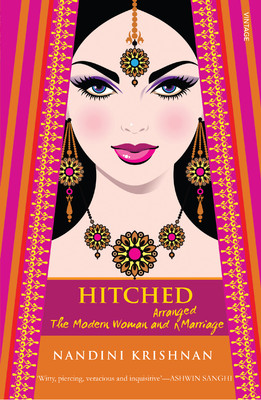
nandini-krishnan-hitched-400x400-imadmuhyuygmg2xeThis is an extract from Hitched: The Modern Indian Woman and Arranged Marriage by NANDINI KRISHNAN

Saurabh laughs that he had the advantage of knowing what the process of spouse-hunting involves. A year before he went through the drill, his sister did.

[…]

However rosy the courting period may be, once you’re married, you get a rude wake-up call when you’re living in the same space. ‘Living with a strange person takes adapting. You could be in love for a few years and then get married, but even that doesn’t prepare you for sharing your personal space with another person. Of the other gender. Who has a different set of bodily smells, and opinions on the way your clothes smell.’

He has an interesting comparison for what men go through after marriage. ‘Remember when you, as a girl, got up close and personal with menstruation. That’s what most guys go through in the first month of marriage, unless they’ve been in a live-in relationship before. The first month is very chaotic because you’re experiencing another gender’s physicality and emotions.

Curiosity and disgust go hand in hand. Men see that their wives menstruate. Women begin to appreciate that belching and farting are natural human processes, but somehow they never manage to complete this process of appreciation.’ Continue reading ‘Marriage for men is like puberty for women’: Nandini Krishnan

When the lid will burst: Fahad Shah

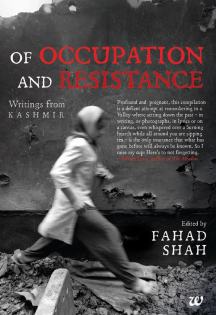
This is an excerpt from the introduction to the anthology Of Occupation and Resistance: Writings from Kashmir, edited by FAHAD SHAH

Once militancy took root in the Valley, it continued unabated, with a few exceptions in the years to come. The sentiment of the resistance movement prevailed across Jammu and Kashmir. At one point in time, blasts and encounters occurred almost every day. The first few years of the 1990s were the most brutal in the history of the conflicted Valley. After the 1996 assembly elections, when people were forced to vote at gunpoint, the National Conference Party and counter-insurgent groups ruled the state. People lived with trauma and threat – treating the injured, mourning for the dead and searching for those who had disappeared.

This was the story for more than a decade. A shift in the nature of resistance has been seen in the past few years; the generation that was born during the start of the war has been able to glean the nuances of the homeland’s political situation. Most of the youngsters from this generation, born between the late 80s and early 90s, choose stones over guns. Continue reading When the lid will burst: Fahad Shah

A Burden of Proof: A Response to “White Woman’s Burden” by Ameya Naik

This is a guest post by AMEYA NAIK

[On the 26th of August 2013, Newslaundry carried a piece by Rajyasree Sen titled “White Woman’s Burden“. This post is offered as a rebuttal of the views expressed in the essay.]

Dear Rajyasree,

Michaela Cross, aka RoseChasm’s CNN blog piece about her experience of India is, as you say, currently unavoidable on the internet. It does seem to be provoking a dialogue on women and safety in India – at least in social media circles. If the result is that Indian girls and women acknowledge and share their own negative experiences, perhaps thereby to make some Indian men re-examine their perceptions and behaviour, it would still be a step forward.

Unfortunately, some responses represent two steps backwards instead. Your writing (“White Woman’s Burden”, 26 Aug, 2013) is one such; it made me profoundly uncomfortable. The gist of your argument appears to be this: Michaela was not suitably prepared, and she *SHOULD* have known better. Indeed, given her account of her actions and experiences, and the trauma she has experienced therein, it is surprising (to you) how unprepared she was.

Did I just read a young, educated Indian woman entrepreneur – from the hospitality industry, no less – say that an exchange student left traumatised after experiencing molestation (and worse) because she was unprepared? I describe myself as a cynic, but surely this is a new low!

What, pray tell, would suggest she was sufficiently prepared? That she came here, had the experiences she did, and considered them “par for the course” in India? Or that she came here aware of (what you call) the skewed psycho-sexual dynamic between Indian men and women in all its rich and diverse forms, behaved in the most conservative and appropriate fashion – only dancing in “safe places”, avoiding public transport entirely, staying only with trusted hosts or in one of Goa’s five star hotels – and left having experienced only milder forms of violation, like the persistent gaze (which she would know to expect)?

This assertion of yours does have one unexpected benefit – it lets us ignore the fair skin debate. If complexion plays no role, she should still be at least as careful as any Indian woman. If complexion does play a role, she should be even more careful! As silver linings go, though, this is pewter on a thundercloud.

How, pray tell, would the students or the University prepare for their visit to the land of the skewed psycho-sexual dynamic? With little docu-dramas of all the kinds of harassment you can expect, and how to be safe at all times? Would you not seed the most pernicious mistrust in your potential visitors? In fact, why would any of them come at all? Surely the University would simply cancel the trip!

And, while you seem to suggest that this is precisely what the “easily traumatised” should do, we would be the first to protest. Already we cry ourselves hoarse over travel advisories saying India is unsafe for women. That, apparently, is an insult to our national pride. And that seems to be the source of this article: “how dare this unprepared white girl write about India this way?” Only Indian writers can suggest that India has a skewed psycho-sexual dynamic, right? (An interesting dynamic which, of course, makes some – but not all – lechers or potential rapists. And on current evidence, I shudder to ask you who these corrupted ones are, and why only they succumb to this taint.) Because Indian women are prepared for such behaviour, and they know – even when they face it abroad – that it is only an aberration.

Too many responses, too many comments, seem to be in this vein. Why this parochial-with-my-fingers-crossed-so-as-not-to-offend-gendered-perspectives reply at all? My thesis is that it is because Michaela’s account makes us ask a few uncomfortable questions. Such as, how many aberrations to make a norm? How much preparation is enough?

Answering those questions is not a White Woman’s Burden – the onus to answer to them lies on us. Discrediting the person who asked them as “easily traumatised” – and really, as someone who says she has lived through incidents enough of her own, how dare you! – is a thoroughly inadequate reply.

[Ameya Naik is currently in a graduate programme in Boston. A psychologist and lawyer by qualification, he worked in New Delhi across 2012-13.]

Why is Sachin Pilot in My Dreams? Or, Three Visas, and No More, to India: Fawzia Naqvi

Guest Post by Fawzia Naqvi

Sachin Pilot was in my dreams last night, with all due apologies to his wife, because I swear, I am not secretly fantasizing at all about India’s youngest cabinet minister. He just showed up. I think it was in Srinagar, though I’ve never been there, I swear. And why Srinagar? Well that’s another matter, requiring numerous sessions of therapy. But the good Minister made a cameo appearance and told me quite categorically that I had already been granted three visas to India and should expect no more. Don’t get me wrong. I like Minister Pilot. I admired the way he handled corporate America when he visited New York to deal with all the whining and complaining about Indian reforms and that pesky CSR Bill. But why is he in my dreams? An Indian friend tells me it’s because I’m constantly nervous about going to India. And herein lies the truth. I observe, analyze, obsess about, pontificate upon, call, email and travel to India more than most Pakistanis, without actually being a spy. Yes. Really. And I resent how easy the spooks have it. I’m guessing they aren’t dreaming about a finger wagging minister, ok Sachin Pilot, telling them they can’t get a visa! But such are the incessant covert and overt anxieties of Pakistanis like me who have careers involving India. And if Sachin Pilot, he of the new generation of Indian leaders is also telling me (in my dreams of course) that I can’t get a visa, then surely the news for Indo-Pak and hence my career, is not good. The twain of course is twinned.
Continue reading Why is Sachin Pilot in My Dreams? Or, Three Visas, and No More, to India: Fawzia Naqvi

Exemplary guidelines for the Police regarding sexual assault

RAHAT is a collaboration between Women and Child Development and Majlis Legal Centre, Mumbai, to provide Socio-Legal Support to Victims of Sexual Assault. One of the initiatives taken by RAHAT was the drafting of  guidelines for Police while recording and investigating cases of Sexual Assault. A circular with these guidelines has been issued by the Police Commissioner of Mumbai to all police stations in Mumbai. 

This is the English translation of the circular.

Special Police Circular No. 27/2013, Dated 12.8.2013

Sexual offences against:

• a person (boy or girl) under 18 years of age shall be registered under POCSO ( Protection of Children from Sexual Offences)Act,  2012

• a woman above 18 years of age shall be registered under IPC ( Under Ss. 354, 354A, 354B, 354C, 354D, 376, 376A, 376B, 376C, 376D, 376E and 509 IPC) Continue reading Exemplary guidelines for the Police regarding sexual assault

The Unknown Fate of Thousands in Sri Lanka: Leena Manimekalai

Guest post by LEENA MANIMEKALAI

‘By the wayside’

“This wreath/ with no name attached /is for you/who has no grave/ As the place of earth/ which embraced you/ could not be found/this wreath was placed by the wayside/Forgive me/ for placing a memorial for you/ by the roadside.”

…writes Basil Fernando about the memorial constructed by families of disappeared  at Radoluwa Junction in Seeduwa, a town near the city of Negombo, Srilanka.  When I visited the memorial with lingering faces of the disappeared, it signified an important attempt to keep the memories alive, a yearning to prevent recurrence of mass disappearances and seek justice on behalf of the victims of disappearances and their families. Srilanka which has a deep and complex history of political violence is struggling to redeem the past with a frozen present and a black hole future. Communal riots, political assassinations and ethnic conflict have been an element of the socio-political landscape of this tear nation for more than a century. Two heads of State, dozen national political leaders and numerous regional and local politicians, journalists, activists and artists have been assassinated by groups representing virtually every shade of political spectrum. The Srilankan state deploys disappearances and extra judicial killings as an instrument of public policy in the name of State Emergencies, Prevention of Terrorism Act, dubbing of persons as terrorists, unpatriotic, enemies of state. Brutal suppression of two armed insurrections in the Sinhala South in 1971-72, 1987-89 led by Peoples Liberation Front (JVP) and an armed Tamil Separatist Movement  since 1970s led by the Liberation Tigers of Tamil Eelam (LTTE) in the Tamil North and East of the island had spotted Srilankan state guilty of horrific human rights abuses. Now the nation is the world leader in number of disappeared crossing millions who have no date of death, no place of death, no body, and no grave or funeral rites. Obviously there is no shelling, no bombing in the island since 2009 and the State wants the world to believe that war is over but who will bring peace to the families who continue to lose their members to State Terror and also been denied their basic right to even open their mouth about the injustice. Continue reading The Unknown Fate of Thousands in Sri Lanka: Leena Manimekalai

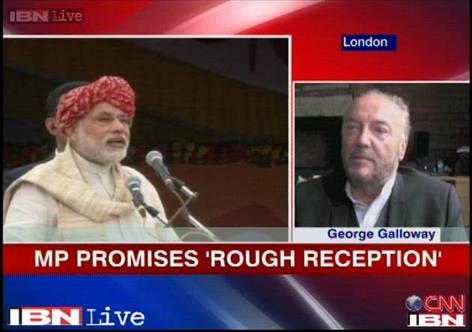
Modi Goes To London

Image

Good news is followed by a flood of bad news.

Narendra Modi, the ‘architect’ of today’s Gujarat, must be realising the truth of this dictum despite the fact that the corporate media – to quote an analyst – ‘loves’ him.

Whether it is the growing resistance of the peasantry inside the state to his vision of development, compelling him to withdraw a major chunk of villages from the much discussed Mandal-Becharaji Special Investment Region (SIR), or the crude manner in which his government’s anti Dalit stance is coming to the fore, the signals are definitely ominous. Continue reading Modi Goes To London