Aadhaar – What next after the SC ruling? Kalyani Menon-Sen

Guest Post by KALYANI MENON-SEN

Poor Mr Nilekani. Just when everything was going swimmingly for him – adulatory interviews in the foreign press, tantalising rumours of a Congress ticket for the 2014 polls, lots and lots of votes on a poll to select the Greatest Living Indian – comes another well-aimed spanner in his works from that bunch of litigacious Jokers who have been playing rasta roko with his Batmobile for some time now.

The Supreme Court ruling of 23rd September is curt and unequivocal – a) two other challenges to Aadhar in the High Courts of Chennai and Mumbai to be clubbed with this one and heard by a Constitution Bench; b) an immediate freeze on linking Aadhar to benefits under social schemes; and c) a direction to tighten up the registration process to make sure that only Indian citizens are enrolled.

Every line of this ruling is a painful blow for Aadhar. It’s bad enough that the Court has taken seriously the charge that Aadhar violates Constitutional rights. The implication that there are serious errors in the registration process is even worse, and pulls the plug on one of the main arguments in support of the UID  – that it will stop leakages in government schemes by weeding out bogus beneficiaries. Worst of all is the decoupling from the “Apna Paisa Apne Haath bandwagon. If the UPA decides not to  jettison the cash transfer scheme – its big-ticket strategy for the 2014 polls – it will find a way to keep it going without Aadhar. Whether or not this strategy pays off, Aadhar will be the loser. Continue reading Aadhaar – What next after the SC ruling? Kalyani Menon-Sen
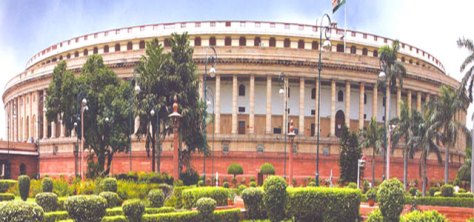
World’s Biggest Old Age Home with Cheapest Canteen

parliamnthouse

Information received via Rakesh Chaturvedi

The only place in India where food is cheap.

Tea- 1.00
Soup-5.50
Daal-1.50
Meals-2.00
Chapati-1.00
Chicken-24.50
Dosa-4.00
Biryani-8.00
Fish-13.00

Rakesh Chaturvedi suggested that instead of the Food Security Bill, let the Government give food to the poor at the Parliament canteen rates.

Good idea. That may allay the corporate media’s fears that the Food Security Bill  may further strain India’s weakening economy.

Taking off from this interesting price list, some idle research  on this rainy Sunday morning yielded the following information: There has been a noticeable shift in the age profile of MPs in  Lok Sabha. Continue reading World’s Biggest Old Age Home with Cheapest Canteen

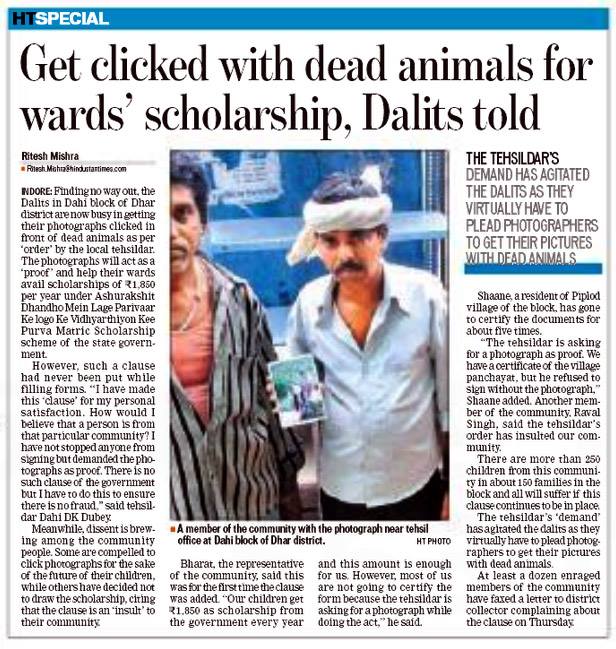
Get Clicked With Dead Animals for Wards’ Scholarship, Dalits told

Image

The chief architect of Indian constitution Dr. B. R. Ambedkar had declared in 1948 ‘democracy in India is a top-dressing on an Indian soil, which is essentially undemocratic.’ How true this is, even after sixty years of Indian democracy! Why have all the legal provisions, and valiant struggles of dalits to emancipate themselves failed to annihilate Caste system? As the ruling elites of India celebrate their arrival on the world scene, these are the skeletons in the cupboards of their rule they are most ashamed to admit.  Continue reading Get Clicked With Dead Animals for Wards’ Scholarship, Dalits told

Online mapping of sexual harassment in Mumbai

header_mumbai-1024x409
After the spate of rapes and molestations in Mumbai and of course, the daily sexual harassment of women, AKSHARA CENTRE decided to launch HarassMap-Mumbai. it is a socio techno tool using crowdsourcing to enable women to report their experiences and citizens to spot and report unsafe spaces. The idea is to get women to report and engage local groups and the police to take action. This is possible if people use their mobiles and internet connections.
Check it out: HarassMap-Mumbai

भगत सिंह और आज का नौजवान: अपूर्वानंद

कभी कभी हर समाज में ऐसे क्षण  आते हैं जब उसे अपने अस्तित्व के तर्क की पड़ताल करनी पड़ती है. उस समय वह अपने किन बौद्धिक संसाधनों का प्रयोग करता है और किन स्रोतों से तर्क की सामग्री जुटाता है, यह  काफी महत्वपूर्ण है.क्या एक समाज के रूप में भारत के लिए अभी ऐसा ही कोई क्षण उपस्थित हो गया है? एक ऐसा तबका है जो भारत नामक किसी एक सामाजिक इकाई के बौद्धिक औचित्य को ही नहीं मानता. उसकी बात जाने दें.भारत अभी भी अनेकानेक लोगों के लिए एक यथार्थ है जिसकी अपनी भावनात्मक और बौद्धिक वैधता है.वे उसे बार-बार समझने और अपने लिए आयत्त करने की कोशिश करते हैं.इस क्रम में वे किनकी ओर  देखते हैं? Continue reading भगत सिंह और आज का नौजवान: अपूर्वानंद

Commonwealth giving Sri Lanka carte blanche for human rights abuses: Amnesty International

This release was put out by AMNESTY INTERNATIONAL on 27 September 2013

Sri Lanka’s disturbing human rights record means it should be barred from hosting a key Commonwealth summit in November or chairing the organization, Amnesty International said ahead of a key meeting of Commonwealth foreign ministers today.

The Commonwealth Ministerial Action Group – made up of foreign ministers and Secretary-General Kamalesh Sharma, who gather to address violations of the Commonwealth’s fundamental values, including human rights – is meeting in New York today.

“Today’s meeting is an opportunity for the Commonwealth to show some real leadership on human rights. The organization has been shamefully silent so far about Sri Lanka’s human rights crisis– including the persistent lack of justice for past crimes and ongoing attacks on human rights defenders and other activists,” said Polly Truscott, Amnesty International’s Deputy Asia- Pacific Director. Continue reading Commonwealth giving Sri Lanka carte blanche for human rights abuses: Amnesty International

Twenty myths about the Pakistani Taliban: Raza Rumi

Continue reading Twenty myths about the Pakistani Taliban: Raza Rumi

PUCL statement on the police raid at Prof GN Saibaba’s residence

24th September, 2013
STOP THE WITCHHUNT!
PUCL STATEMENT CONDEMNING THE POLICE RAID OF PROF. GN SAIBABA’S RESIDENCE

The People’s Union for Civil Liberties (PUCL) condemns the illegal raid and search of the residence Professor GN Saibaba of Delhi University on 12th September, 2013. Professor Saibaba is a differently abled person and is wheel chair bound. Ironically, over 50 police persons and intelligence officers raided his house! Prof Saibaba and his entire family including his minor daughter and the driver were all locked in different rooms, during the three-and-half-hour search. It is believed that the raid is pre-cursor to the imminent arrest of Prof Saibaba.

SEARCH WARRANT ILLEGAL

Continue reading PUCL statement on the police raid at Prof GN Saibaba’s residence

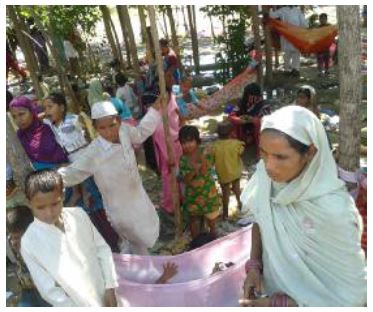
In the relief camps of Muzaffarnagar and Shamli

This report was prepared by a group of citizens (whose names are given at the end), and released on 20 September 2013.

shamli

A human tragedy unfolds, as the State watches, In the relief camps of Muzaffarnagar and Shamli Districts

A Preliminary Citizens’ Report
September 20, 2013

A. On September 17-18, 2013, an 11 member team consisting of both independent activists as well as activists affiliated with 5 organizations based in Lucknow, Chitrakoot, Muzaffarnagar and Delhi visited relief camps in two affected districts of Muzaffarnagar (3 Relief Camps – Madrasa camp at Bassi Kalan, Madrasa camp at Tawli and camp at Haji Aala’s house, Shahpur) and Shamli (3 Relief Camps – Madrasa camp on Panipat Road in Kairana, Malakpur camp in Kairana, and the Idgah camp in Kandhla). In Shamli District the team also met with senior members of the district administration – the District Magistrate and the Superintendent of Police.

B. This was not conceived of as a fact-finding visit, but was a recce visit to determine the human needs on the ground in the relief camps, and to see how we might plan to help survivors in initiating procedures towards criminal justice (lodging of FIRs and complaints), accessing compensation for death, injury, destruction of property, planning rehabilitation, and also to confirm unverified news reports of sexual violence against women. Continue reading In the relief camps of Muzaffarnagar and Shamli

भाषा का फासीवाद

भाषा का कार्य न तो प्रगतिशील होता है और न प्रतिक्रियावादी, वह  फासिस्ट है: क्योंकि फासिज़्म अभिव्यक्ति पर पाबंदी नहीं लगाता, दरअसल वह बोलने को बाध्य करता है. रोलां बार्थ का यह वक्तव्य पहली नज़र में ऊटपटांग और हमारे अनुभवों के ठीक उलट जान पड़ता है. हम हमेशा से ही फासिज़्म को अभिव्यक्ति का शत्रु मानते आए हैं. लेकिन बार्थ के इस वक्तव्य पर गौर करने से, और हमारे आज के सन्दर्भ में खासकर, इसका अर्थ खुलने लगता है. इसके पहले कि हम आगे बात करें, यह भी समझ लेना ज़रूरी है कि बार्थ की खोज कुछ और थी. वे अर्थापन की नई विधि या पद्धति की तलाश में थे. अंततः उनकी खोज अर्थ से मुक्ति की थी, एक असंभव संधान लेकिन दिलचस्प: स्पष्टतः वह एक ऐसी दुनिया का स्वप्न देखता है जिसे अर्थ से मुक्ति हासिल होगी( जैसे किसी को अनिवार्य सैन्यसेवा से छूट मिली होती है). हम हिन्दुस्तानियों के लिए इसका पूरा अभिप्राय समझना कठिन  है लेकिन एक अमेरीकी या रूसी या इस्राइली के लिए नहीं. उन्हें पता है कि वयस्क होते ही राज्य उनको  सेना में भर्ती होने के लिए बाध्य कर सकता है. प्रसंगवश अनेक न्यूनताओं के बावजूद भारतीय लोकतंत्र के पक्ष में  यह बात भी है कि उसने अपने नागरिक को सैन्य पदावली में परिभाषित नहीं किया. भारतीय होने की शर्त या उसकी कीमत अपना सैन्यीकरण नहीं है. Continue reading भाषा का फासीवाद

No Country for Visually Challenged Persons ?

Yesterday I got a call from Lucknow regarding an article I had penned down for a Hindi newspaper.

The focus of the write-up was the plight of four candidates – all of them visually challenged – who had cleared the UPSC (Union Public Service Commission) examinations way back in 2008, scored more marks than many ‘normal’ students and were still waiting for appointment letters. The Commission as everybody knows is India’s central agency authorised to conduct civil services and other important examinations.

The caller said that he was one among the four and shared with me the long struggle he along with others were engaged in to get their due. Apathy exhibited by people in the higher echelons of the Commission as far as visually challenged persons are concerned is really disturbing. And it was not for the first time that it had failed to give appointment letters to such candidates. Merely three years back Ravi Prakash Gupta had to approach the highest courts of the country namely the Supreme Court to get his appointment letter. Last February it was the Prime Minister’s Office  which had to intervene so that seven candidates from similar category could join their duty. Continue reading No Country for Visually Challenged Persons ?

Muzaffarnagar 2013 – Violence by Political Design: Centre for Policy Analysis

This fact-finding exercise was coordinated by the CENTRE FOR POLICY ANALYSIS. Team members were the human rights activist and former civil servant Harsh Mander; former Director-General of the Border Security Force, E N Rammohan; Professor Kamal Mitra Chenoy of Jawaharlal Nehru University; National Integration Council member John Dayal; senior journalist Sukumar Muralidharan and CPA Director and senior editor Seema Mustafa.

Introduction and Overview

The first impression of the Muzaffarnagar countryside, now green with the sugarcane ripening for harvest, is of utter desolation. Villages are tense with fear.  Kasbas and hamlets are purged of their Muslim presence and the Hindu quarters have also emptied out in a self-imposed curfew even at midday, as women and children peep out from behind closed doors and windows, their menfolk having fled to avoid arrest as criminal complaints are made out against them. Fear is in the air. The atmosphere reeks of embitterment and betrayed trust, with neighbour now unwilling to trust neighbour, and apprehensive of ever returning to their accustomed lives. All the evidence points towards people who were forced to flee their habitations in sheer terror and seek out the safety of gathering among others of their own faith, occupying any vacant space in areas where they could be sure of not being targets just because of who they were.

“We will never go back to our villages”, say Muslim women refugees in a makeshift camp in the tehsil town of Budhana, some twenty kilometres from Muzaffarnagar. Continue reading Muzaffarnagar 2013 – Violence by Political Design: Centre for Policy Analysis

Common sense and Hindu nationalism – Why the Catholics in Goa are not Hindu: Albertina Almeida & Others

This Guest Post by ALBERTINA ALMEIDA, AMITA KANEKAR, DALE LUIS MENEZES, JASON KEITH FERNANDES AND R. BENEDITO FERRÃO is a response to a statement by Chief Minister of Goa, Manohar Parrikar.

Can a Goan Catholic be Hindu? Can Catholics professing a tradition of Catholicism that is over five centuries old be considered Hindu in culture? This is what the Chief Minister of Goa, Manohar Parrikar, sought to suggest in a recent interview with Sambuddha Mitra Mustafi of the New York Times India blog India Ink, where he said:

I am a perfect Hindu, but that is my personal faith, it has nothing to do with government. India is a Hindu nation in the cultural sense. A Catholic in Goa is also Hindu culturally, because his practices don’t match with Catholics in Brazil [a former Portuguese outpost like Goa]; except in the religious aspect, a Goan Catholic’s way of thinking and practice matches a Hindu’s. So Hindu for me is not a religious term, it is cultural. I am not the Hindu nationalist as understood by some TV media – not one who will take out a sword and kill a Muslim. According to me that is not Hindu behavior at all. Hindus don’t attack anyone, they only do so for self-defense – that is our history. But in the right sense of the term, I am a Hindu nationalist.

Parrikar’s bizarre statement was in response to the question of whether he saw himself as a Hindu nationalist. Of course, a quick and easy response to his statement would be to summarily dismiss it as expected rhetoric flowing from his saffron affiliations; yet, questions persist, not least because of the peculiar and oft-misrepresented Goan scenario. Continue reading Common sense and Hindu nationalism – Why the Catholics in Goa are not Hindu: Albertina Almeida & Others

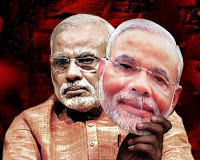
NaMo NaMo or Namaste Sada Vatsale ..

Image Courtesy : http://www.truthofgujarat.com


It is now time for NaMo NaMo in BJP.

To quote a newspaper, Hindutva poster boy Narendra Modi has been declared candidate for Prime Minister’s post by the highest body of the Party.

As planned earlier there were celebrations at different party offices of the BJP spread over the country. It is a different matter that the party could not hide the fact that it was not a unanimous decision rather a majority decision. The ‘tallest leader’ or ‘mentor’ of the party L K Advani made his displeasure clear in a letter the very same day. And not only Advani till a day ago three members of the highest body – whose strength is 12 only – were vehemently opposing the proposal that the candidature be announced immediately and wanted it to be deferred till the assembly elections to five states were over. Two amongst them – Ms Sushma Swaraj and Murli Manohar Joshi – could be persuaded to join the anointment at the last moment only.

The comical part of the whole anointment has been the gentleman who had only a week ago declared that he would like to serve the state – where he was elected CM for the third time – till 2017, had no qualms in dropping all pretensions and rush to Delhi for the coronation. Continue reading NaMo NaMo or Namaste Sada Vatsale ..

In Delhi’s defence

Reuters photo
Reuters photo

By SHIVAM VIJ: The census counts ’urban agglomerations’, and the Census of India says that Mumbai is India’s largest urban agglomeration. This includes Mumbai’s suburbs. In counting Delhi, the suburbs are not added because They are separated by state boundaries. If you were to add suburbs of the ’National Capital Region’, Delhi’s population would be not 16 million but over 22 million, making it the world’s largest urban agglomeration after Tokyo. This bustling urban centre is made of its people. Today’s Delhi cannot be stereotyped as just the seat of power. There is more to Delhi than the endless roundabouts of Lutyens’ capital.

Delhi’s core – the Partition refugee Punjabi – is not xenophobic like the Marathi ’manoos’ of Mumbai. In fact Delhi today is what Bombay once was, India’s foremost cosmopolitan metropolis. It is the city of choice for people from across India to migrate to with dreams of riches.

A lot has been written about “the Delhi gang-rape”. 16 December 2012 started a conversation that doesn’t seem to end. This conversation has largely been about rape, not about Delhi.
Continue reading In Delhi’s defence

विनोद रायना

मेरी मिट्टी जब मिट्टी में मिल रही हो तो मुझे तसल्ली रहे और मेरे दोस्तों को भी कि इसने वाकई अपने आप को खाक कर दिया था. मेरी आखें जो और जितना देख सकती हों, देख चुकी हों, मेरी त्वचा जितने स्पर्शों का अनुभव कर सकती थी, कर चुकी हो, मेरे पैर जितना चल सकते थे, चल चुके हों ;मेरे हरेक अंग और एक-एक इंद्रिय ने, कुदरत ने जो कुछ उन्हें बख्शा था और फिर उन्होंने खुद जो कुछ भी उस नेमत में जोड़ा था, सब का सब लौटा दिया हो.मैं अपने आखिरी लम्हे में मिट्टी के अलावा कुछ और न रह जाऊं , अपने साथ जो कुछ कमाया था, उसमें से कुछ बचा ले जाने का अफ़सोस न रह जाए. मैं ऐसी ही मौत और ऐसी ही ज़िंदगी चाहता हूँ.

4916512513_64a025b94b_mक्या विनोद रायना ने लैटिन अमरीकी कवि हिमनेज के जीवन-सिद्धांत की इस कसौटी पर खुद को कस कर इत्मीनान की आख़िरी साँस ली होगी?विनोद रायना सिर्फ तिरसठ साल के थे. कैंसर ने जब उनकी हंगामाखेज ज़िंदगी पर शिकंजा कसना शुरू किया होगा और उन्हें इसकी भनक लगी होगी,उन्होंने भी जवाब में अपनी रफ़्तार चौगुनी कर दी होगी,ऐसा मुझे लगता है. क्या एक साल को चार साल के बराबर जिया जा सकता है? क्या आप एक घंटे में चौबीस घंटा कस दे सकते हैं ? विनोद ने जैसे यही करना तय कर लिया हो. लेकिन यह वे कोई अभी ही कर रहे हों,कैंसर की पहली आहट जब उन्होंने अपने शरीर में सुनी होगी, ऐसा नहीं है. हम उनसे मजाक किया करते कि हिन्दुस्तान के ऐसे कोने का नाम बताइये जो आपके चरण रज से पवित्र न हुआ हो! विनोद हमेशा कहीं-से-कहीं के बीच में होते थे. फिर भी आप जब इस बीच उनसे मिल रहे होते तो वे आपसे इतने इत्मीनान से बात करते कि इसका अहसास ही नहीं हो पाता कि यह शख्स अभी एक घंटा पहले ट्रेन या हवाई यात्रा करके आया है और इसे घंटे भर बाद ही कहीं और के लिए रवाना हो जाना है. व्यक्तित्व में यह इत्मीनान दुर्लभ है,विशेषकर उनमें जो ‘एक्टिविस्ट’ कहे जाते हैं. इस वजह से उनसे मिलने वाले किसी में कभी न तो हीनता बोध आया और न अपराध बोध. यह भी विरल है. अक्सर ऐसी मुलाकातों के बाद आप आत्म-भर्त्सना के शिकार हो सकते हैं कि आपकी ज़िंदगी उस एक्टिविस्ट के मुकाबले हेच है, आप किसी काम के नहीं. विनोद ने सामनेवाले को कभी यह अहसास होने नहीं दिया, बल्कि इसका उलटा ज़्यादा ठीक है : हर किसी को यह विश्वास दे पाना कि वह सार्थक जीवन जी रहा है और उसमें संभावना है. Continue reading विनोद रायना
How Would You Like your Death Penalty Steak, Rare, Well Done, or Medium Rare?: Arguments Against the Death Penalty

The anger that I felt when a young woman was brutally raped and killed by a group of men on the night of December 16 last year is not something that will ever go away. It marked not just me, but millions of people in Delhi, and elsewhere. That anger has no closure. Nor do I seek the convenience of such a closure. I do not seek the convenience of closure for the rape and murder of dalit women in Haryana, or of women in Kunan-Poshpora and elsewhere in Jammu & Kashmir or in Manipur who were raped and killed by the soldiers of the Indian army and who are still unpunished. I would like such men to be punished, but I will never demand the penalty of death for them. Not because I have any affection for rapists, but because I have a greater regard and respect for human life, which I do not think that we should allow the state to take away, in cold pre-meditation, whatever the circumstances.

Continue reading How Would You Like your Death Penalty Steak, Rare, Well Done, or Medium Rare?: Arguments Against the Death Penalty

The Many Avatars of Fear: Amrita Nandy

Guest Post by AMRITA NANDY

I have recently come to the US for a year. My “settling down” has happened under the viral shadows of the Rose Chasm debates. (See HERE and HERE)

Personally, the online exchanges struck a chord for me because I too, like Rose, am a student who is new in a foreign country and to its culture, trying to feel at home, adjust, mingle, accommodate and, most of all, make sense of some new experiences.

Before you point out that this juxtaposition of Rose’s context with mine is too simplistic and reductive, allow me to say “of course”.

Of course! A comparison, contrast or parallel of our respective experiences is not where I am headed to.

This is merely my account of being an outsider in America. More precisely, this is my attempt to engage with the articulation of fear in its many avatars and contexts.

Yes, fear!

Continue reading The Many Avatars of Fear: Amrita Nandy

Goodbye Sunila Abeysekara

Image

Sri Lanka’s top UN Human Rights award winner Sunila Abeysekara died at a private hospital in Colombo on Monday afternoon after a long battle with cancer.

A founder of Sri Lanka’s feminist movement, Ms. Abeysekara was a leading socialist activist for minority rights, women’s, workers and peasants rights. Recently she was prominent on Lankan human rights issues at the UN Human Rights Council in Geneva. She was also a noted Sinhala folk and opera singer. Ms. Abeysekera, daughter of the late Charles Abeysekara, a noted human rights and social activist, founded Inform, a rights-based NGO. – Ends-

(Sunday Times ,Sri Lanka,  Monday, 09 September 2013 19:02)

It was late 2002 when Delhi witnessed a public meeting of a different kind at Rajendra Bhavan. Hundreds of people from different walks of life – activists, writers, political workers, young students – had gathered there to witness the unveiling of an interim report prepared by an international panel of feminist activists which had visited Gujarat between 14th and 17th December, investigated the violence – particularly the physical and sexual – inflicted upon women since 27th February 2002.

The interim report prepared by the ‘International Initiative for Justice in Gujarat’ unequivocally stated : “this violence, which reflects a longer and larger genocidal project, in our view constitutes a crime against humanity and satisfies the legal definition of genocide, both of which are crimes of the most serious dimension under international law.” (http://www.onlinevolunteers.org/gujarat/reports/iijg/interimreport.htm)

The panelists included leading feminist scholars and activists from different parts of the world.

It was the first time that one had a chance to listen to Sunila Abeysekara. Continue reading Goodbye Sunila Abeysekara

Report of the Fact Finding Investigation conducted to ascertain facts in the case of alleged rape and murder of Dalit girl in Jind district of Haryana

Report of Fact Finding Team put together by  ALL INDIA DALIT MAHILA ADHIKAR MANCH. Received via Kalyani Menon-Sen

01TH-DIVYA-Coun_02_1570280e

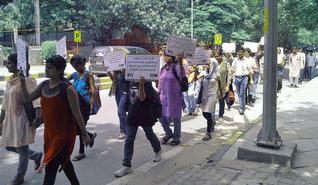
Women activists protest outside Haryana Bhavan in Chandigarh on September 1 demanding a CBI probe into the death of the Dalit girl in Jind. Image from The Hindu

On 24th August, a 20 year old Dalit girl was brutally raped and murdered in Jind, Haryana, while she was on her way to write an examination. Her body was found near a canal the next day by the police. There were cigarette burn marks on her body and significant indications of sexual violence. It is clear that she was kidnapped, raped and then murdered.

However, at the time of the fact finding, even after four days the culprits had not been identified or arrested, and there was no progress on the investigation beyond sending the body for post mortem. In fact, the parents of the girl, members of her village and various Dalit activists refused to cremate the body and were sitting on dharna in front of the Jind Civil Hospital to protest against police and administrative apathy and callousness. It was very clear that the Haryana police and administration was exhibiting gross negligence in this case, ignoring the law and evading established investigative procedure.

It is at this point that the All India Dalit Mahila Adhikar Manch (AIDMAM) decided to put together a fact finding committee to visit the area, meet the key people involved and ascertain the facts of the case. Continue reading Report of the Fact Finding Investigation conducted to ascertain facts in the case of alleged rape and murder of Dalit girl in Jind district of Haryana