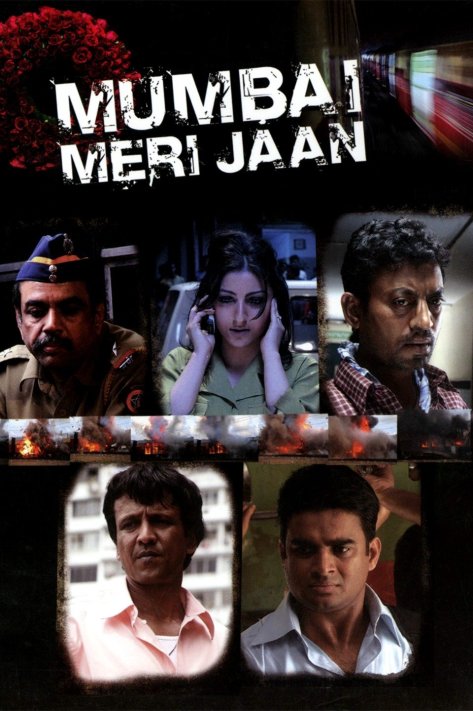
Playing the subaltern – Irrfan Khan as the migrant worker in Mumbai Meri Jaan: Umang Kumar

Guest post by UMANG KUMAR
 

Irrfan Khan reads the iconic poem, “Thakur ka Kuan”, by Dalit writer Om Prakash Valmiki, at the 2014 Jaipur Literary Festival.

While Irrfan Khan essayed a diverse range of roles, his hauntingly powerful cameo appearance in Mumbai Meri Jaan stands out for its intensity in the portrayal of working-class realities, especially those of migrant workers.

Mumbai Meri Jaan, a 2008 film, revolves around the tragedy of the 2006 Mumbai local-train blasts. Khan plays Thomas, a Tamil coffee-vendor who sells coffee from a roadside cart, and speaks minimum, Tamil-accented Hindi. His wife works as a domestic help.

Asif Kapadia, the British filmmaker, who worked with Irrfan on the movie The Warrior, recently shared what he had initially thought about Irrfan: “He looks like someone who’s killed a lot of people, but feels really bad about it.” While that probably had something to do with Khan’s brooding, prominent eyes, it does point to the deep volcano of emotions that Khan seemed to be harboring with perfect equanimity all the time.
Continue reading Playing the subaltern – Irrfan Khan as the migrant worker in Mumbai Meri Jaan: Umang Kumar

Data, New Data, Different kinds of Data, and Covid 19: Bharati Jagannathan

Guest post by BHARATI JAGANNATHAN

“There are three kinds of lies: lies, damned lies and statistics”, quoth Mark Twain. We could add a fourth, pretence of statistics in the absence of it. So, there’s data, more data, and the immensely useful pretend data about COVID-19. And almost all of it liable to totally dissimilar interpretations. In fact, this has been the best lesson, for those who in general find statistics challenging and humbly retreat in the face of data-based proofs in any argument, that the same set of data can serve completely opposite ends. However, I digress.

There was speculation in early March that India had fewer cases of infection owing to 1) exposure to malaria and sometime ingestion of quinine (in medical formulations like hydroxychloroquine), or 2) BCG vaccinations in childhood, or 3) warm weather hindering the spread of COVID-19 like many other influenza viruses. Till we realized that it was the effect of abysmal levels of testing. Continue reading Data, New Data, Different kinds of Data, and Covid 19: Bharati Jagannathan

Exploring Possibilities for Critical Alliances Between Animal Rights and Bahujan Politics: Krishnanunni Hari

Guest post by KRISHNANUNNI HARI

This essay emerged as a response to the following question that was raised during a Q&A session that I had run on social media:

“How does one tackle people who amalgamate veganism with upper caste vegetarianism?”

The immediate answer to this is that veganism avoids all animal products and all forms of animal ab/use, and hence cannot be amalgamated with vegetarianism and its caste baggage.

Such an answer, however, ignores crucial cultural issues that determine how Animal Rights (AR) and veganism are perceived, co-opted or taken forward in Indian society.

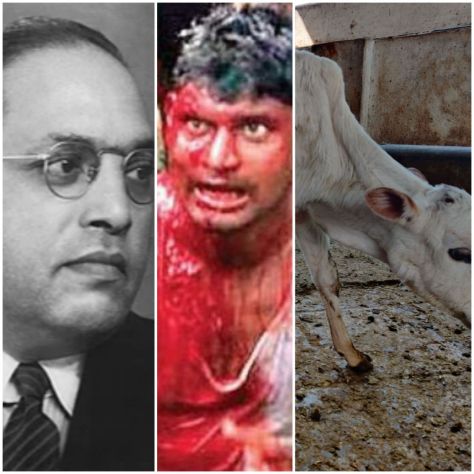
Vegetarians, contrary to what Right wing Hindutva will have us believe, comprise less than 40% of the country’s population.  Jains, most Sikhs and Brahmins and some rich urban forward castes make up the vegetarians in India1. Vegetarianism in India is connected to social power and caste hegemony, unlike its counterpart in the West, where it is an ethical lifestyle and a social justice movement.

Continue reading Exploring Possibilities for Critical Alliances Between Animal Rights and Bahujan Politics: Krishnanunni Hari

Medical Termination of Pregnancy during the Covid pandemic – Statement by concerned citizens

Statement by medical doctors, public health workers, researchers and feminists concerned with issues of reproductive health, rights and justice.

In the case of Sama vs Union of India and Ors, the Hon’ble High Court of Delhi ruled that the Union of India and Government of NCT Delhi

 …shall work in tandem to make sure that no barriers are faced by pregnant ladies and their family members residing in hot spots during the lockdown.”  (High Court of Delhi, W.P.(C)2983/2020 & CM APP Nos 10345-46/2020, dated 22/04/2020)

While this is a welcome move, we urge that access to safe abortion is specifically recognized and appropriate services extended to women seeking abortion.

 It is completely understandable, and correct, that all non-emergency procedures be suspended at hospitals in these times of Covid-19.  Thus, not only elective plastic surgery procedures, but surgeries such as that for inguinal hernia, or thyroid adenomas, have to be postponed. This is for two reasons: first, to prevent exposure of people to Coronavirus in hospitals and second, to reduce the demand on health systems, overwhelmed in the Coronavirus pandemic.

The situation with Medical Termination of Pregnancy (MTP) is however unique, and cannot be classified as a “non-emergency” procedure worthy of postponement. Continue reading Medical Termination of Pregnancy during the Covid pandemic – Statement by concerned citizens

Over 1100 Feminists Condemn Crackdown on Women Activists in Delhi

Issued on 3 May, 2020

Over 1,100  feminsts across religion, class, caste, ethnicity, ability, sexuality and genders

DENOUNCE false narratives that try to link anti-CAA protests with the violence in Delhi.

DENOUNCE false narratives that try to link anti-CAA protests with the violence in Delhi.

DEMAND an immediate stop to targeting of Muslim women activists
under the shadow of the Covid 19 lockdown.

SEEK ACTION against actual perpetrators of violence, not peaceful protestors.

STAND FIRM with the conscience keepers of the nation

We, the undersigned, strongly condemn the brazenly malicious attacks, arrests and intimidation by the Delhi Police of Muslim women, students and activists, as well as other citizens who have spoken up against the unconstitutional moves of the present ruling dispensation. Media reports that about 800 + anti-CAA protesters have been detained or arrested since the Covid 19 lockdown, which means they have had little or no access to lawyers and legal aid, and their families given no information of their whereabouts for extended periods after they were in custody. The impunity with which the Delhi Police is carrying out this sweep under direct orders from the Home Ministry is facilitated by the reduced media, public and legal scrutiny under the lockdown.

Continue reading Over 1100 Feminists Condemn Crackdown on Women Activists in Delhi

Remembering Marx in Lockdown Times – Beyond the “Corona” Paradigm: Maya John

Guest post by MAYA JOHN

On the occasion of the birth anniversary of Karl Marx, the greatest intellectual of the millennium, it is best to steer clear of hero-worshipping. Instead, let us commemorate Marx’s ideas by re-enacting his way of knowing things. Much can be drawn from his writings wherein we can see Marx reinvigorating the revolutionary agenda at a time of deep despair and defeat. Reflecting and writing after the failed revolutions of 1848, Marx provided an introspective critique of unfolding conditions in his essay The Eighteenth Brumaire of Louis Bonaparte (1852). Closely examining the events of the successful coup and assumption of dictatorial powers by Louis-Napoléon Bonaparte in republican France in 1851, Marx was the only contemporaneous political thinker to liken the ascendancy of Louis-Bonaparte to that of his uncle, Napoleon Bonaparte, who seized power in revolutionary France through the coup of 18 Brumaire (7 November 1799).

Continue reading Remembering Marx in Lockdown Times – Beyond the “Corona” Paradigm: Maya John

Why Activists Want Prisons Decongested

The Supreme Court also wants to reduce the Covid-19 risks posed by overcrowded jails, but there is little progress so far.

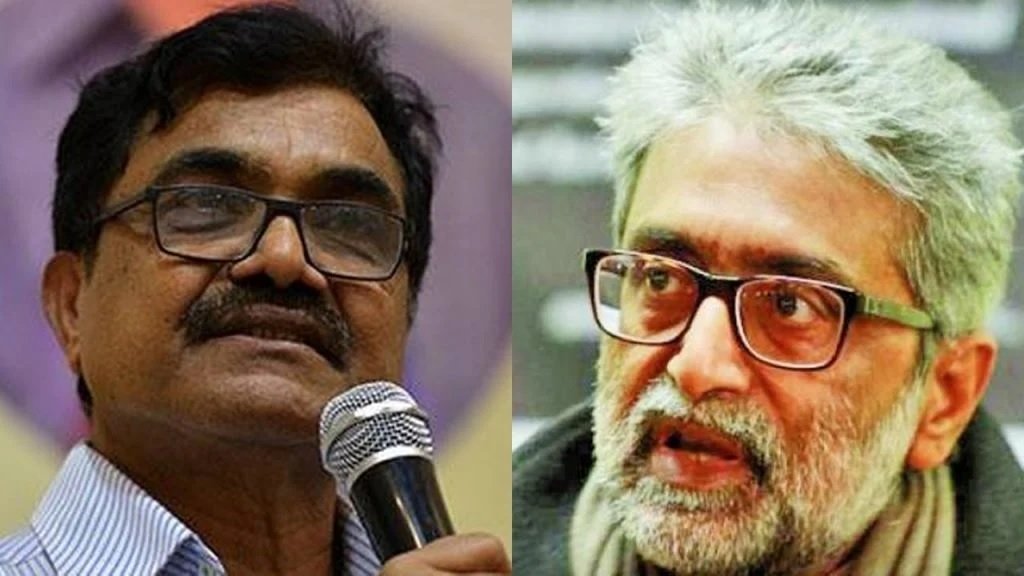
Navlakha and Teltumbde

Late in March, Sirous Asgari, a materials science and engineering professor from Iran, who is at present detained by the United States Immigration and Customs Enforcement (ICE), had warned about the “inhumane” conditions at the ICE facility that could turn it into a hot spot of Covid-19 fatalities.

April has made his worst nightmares come true. Asgari, who has a history of respiratory problems, has been infected by the Novel Coronavirus, which causes the Covid-19 disease. The news created international outrage last month. Not only the Iranian foreign ministry, many United States lawmakers and human rights groups also demanded his release, but it was not to be.

At the facility in which Asgari is still lodged (though he has been exonerated of all the charges he faced in the United States), people are usually detained for no more than 72 hours, but the Coronavirus outbreak has delayed deportations. People like him are simply caught up in the system. Asgari can leave the United States and resume work in Iran—where the viral epidemic has already claimed more than 60,000 lives—because he simply isn’t being taken before a judge.

Asgari’s plight reminds of another incarceration, this one in an Indian jail; that of Anand Teltumbde, who has been arrested in the Bhima-Koregaon case. On 26 April, noted activist-filmmaker Anand Patwardhan had, in a Facebook post, expressed deep concern about the health of 70-year-old Teltumbde, who also suffers from respiratory problems.

( Read the full text here : https://www.newsclick.in/Prisons-during-lockdown-needs-to-be-decongested)