All posts by Nivedita Menon

Women Against Sexual Violence and State Repression in solidarity with HCU

Women Against Sexual Violence and State Repression (WSS) strongly condemns the brutal police action against the students of the University of Hyderabad. The students, who were exercising their democratic right to protest, were lathi-charged, beaten and manhandled and women students were mauled and threatened with sexual assault. Students and faculty members were forcibly dragged into police vans, thrashed and moved from thana to thana to prevent them from contacting their lawyers and families. They have also been mercilessly beaten while in custody. As many as 34 students and three faculty members have been sent to jail – the beatings have continued even after remand.

For the last two months, the students of the Universty of Hyderabad have been protesting the institutional murder of Dalit scholar Rohith Vemula. Their campaign for justice for Rohith has reverberated across the country and has rallied thousands in support of their call for an end to caste discrimination in educational institutions.

The police action follows hard on the heels of the re-appearance of the VC on the campus. This individual is one of the key actors in the events leading to Rohith’s death, and stands charged with offences under the SC/ST Atrocities Act. He was supposedly on indefinite leave pending the results of the inquiry instituted against him, and the students protested against this stealthy attempt at his re-instatement with a gherao of the VC’s lodge.

The response of the Government of Telengana and the University has been to turn the campus into a war zone. The students are under siege – hostel messes have been locked down, electricity and water have been cut off and the gates sealed to prevent the entry of media persons and “outsiders” trying to provide food, water and medical aid to the injured. Students who have volunteered to keep the kitchens running to feed their comrades have been beaten and their provisions confiscated. At least one of these volunteers is critically injured and still not out of danger. The media is being fed with concocted reports that are contradicted by video footage taken by students, with testimonies describing the attacks and showing their injuries. The continued presence on the campus of large numbers of armed police tells its own story.

The strategy of the BJP government – to crush all dissent and establish a totalitarian saffron regime in institutions of higher education – is now visible in campuses across the country, from Hyderabad to JNU, Pune and Chennai. The HRD Ministry is brazenly using every possible instrument to foist their regressive, limited and flawed version of education on the academic community. The government has shown its willingness to use force to stifle critical enquiry and independent thought, and to silence dissent and questioning.

We stand strongly with the students of the University of Hyderabad in their struggle to protect democracy on the campus and to challenge and combat casteism and discrimination in educational institutions. We salute them, and their comrades in struggle in universities across the country, for bringing new energy and hope to our democracy through their determined opposition to the repressive casteist, communal and patriarchal ideology and world view that the Hindutvavadi regime seeks to foist on us.

We salute Radhika Vemula for her determination to claim justice for her son and for the lakhs of Dalit students who are daily facing violence and discrimination in their pursuit of education.

We condemn the actions of the state government, which has shown its subservience to the Modi sarkar and cynically sold out its commitment to the students without whom Telengana would not have come into being.

We demand Continue reading Women Against Sexual Violence and State Repression in solidarity with HCU

JNUTA Condemns Repression in Hyderabad Central University

The Jawaharlal Nehru University Teachers Association, which currently holds Secretary’s position in the Federation of Central University Teachers’ Associations (FEDCUTA), is disturbed by the repots of attacks on the autonomy and democratic life of Hyderabad Central University (HCU). JNUTA condemns in unequivocal terms the brutality unleashed by the Police on unarmed students and teachers in Central University of Hyderabad. JNUTA denounces the resuming of office by the Vice Chancellor of Hyderabad Central University when a Judicial Enquiry is pending against him for his alleged role in the tragic death of Rohit Vemula. It is a matter of concern that basic services including water supply and Internet connections are disrupted in HCU.

JNUTA expresses its concern over the arrest of faculty members and students in HCU and demands their immediate release. It urges upon all to maintain restrain and not to resort to violence of any kind. It appeals to the Administration of Hyderabad Central University to immediately restore the basic services in the residential units of students to ensure that their academic activities do not suffer.

Use of police and coercion is not going to help in the smooth functioning of a University, which is meant to protect justice and democracy and uphold the Constitution of India in letter and spirit.  The Hyderabad Central University VC and administration should bear this in mind before using mindless force against teachers and students.

Prof. Ajay Patnaik                                                Dr. Bikramaditya Choudhary

President, JNUTA                                                              Secretary, JNUTA


Joint Action Committee for Social Justice condemns police brutality at University of Hyderabad

The Joint Action Committee for Social Justice condemns in the strongest terms the brutal physical and sexual assaults unleashed by the police, Rapid Action Force (RAF), Central Reserve Police Force (CRPF) and security personnel, acting upon the orders of the Central and state government, upon students and teachers at the University of Hyderabad on 22nd March. While male personnel were hitting women students, men students, faculty they hurled abuses. During the lathi charge, the CRPF and RAF badly beat hundreds of protesting students in campus, abusing them as “anti-nationals” and yelled that they will file sedition charges on us. Students were beaten for even standing outside their departments, with the police telling them to “go sit inside and study”. Women students were beaten and grabbed by male police officers. After the forcible eviction from the lodge compound the police chased us for another 2 kilo meters, and grabbed and arrested students.Students suffered grievous injuries and were taken to hospitals. The phones of several students were confiscated while they video recorded the brutality. During the lathi charge the police singled out students and hit them even after the crowd had dispersed. Hostels were searched as police appeared to have a pre-determined list of students and faculty they were trying to pick up, which media have said was a list directly supplied by the Podile Apparao.

36 students including 3 professors were picked up yesterday around 5 pm, they were brutally beaten in a police van, and detained in unknown locations all night. We have some information now that they were detained in Miyapur and Narsing police stations; the police blatantly lied to people who went to Miyapur police station that they were not holding any people there.

Emergency like situation imposed on campus.

The moment Podile Apparao entered the campus, the first thing that happened was absolute internet shut down for students. Continue reading Joint Action Committee for Social Justice condemns police brutality at University of Hyderabad

Medical professionals challenge Indian Medical Association (IMA)

STATEMENT BY MEDICAL PROFESSIONALS RAISING QUESTIONS TO IMA

The National President and Honorary Secretary General of Indian Medical Association (IMA), on behalf of its 2.6 lakh members, have written a letter to Home Minister Shri Raj Nath Singh condemning the ‘anti-national’ incident that had taken place recently at JNU. The office bearers have appealed to the government to take strict and necessary action against any persons or organizations or group carrying out any ‘anti-national’ protests, speeches, debates or writings in the country. They have also appealed to the government that investigations should be fair and free and the culprits be punished as early as possible as per the law so that in future no one can dare to do ‘anti-national’ activities in the country. The office-bearers have extended their whole-hearted support to the government in this matter, again, on behalf of it 2.6 lakh members. As per the statement of IMA’s Honorary Secretary General published in The Hindu on 24th February 2016, this letter is also an intervention to tell medical students, nursing students etc. that ‘anti-national’ activities will not be tolerated and that such ‘anti-national’ incidents should be curbed and not debated upon.

For anybody who may be unaware of the ‘anti-national’ incident at JNU being referred to in the above-mentioned letter, here is a description: Continue reading Medical professionals challenge Indian Medical Association (IMA)

‘Danger to Constitutional Values’: Statement by retired civil servants

Full text of the appeal sent to the President of India and the PMO,  issued by 17 retired civil servants belonging to different All India and Central Services.

We, the persons listed below, a group of retired civil servants belonging to different All India and Central Services who have worked in the Government of India (GoI), State Governments and a wide range of governmental and other institutions would urge all Constitutional institutions in India, the media and the general public to reflect upon the deeply disquieting trends visible in the public sphere and in our polity today. These developments are causing deep anguish to us as they question some of the fundamental Constitutional principles and legal safeguards we have long taken for granted. Some of these are mentioned below:

1) The discrimination against Scheduled Caste students and an attempt to clamp down upon Ambedkar study groups as found in IIT, Chennai, and in the University of Hyderabad. The tragic suicide of Rohith Vemula has highlighted the unwarranted interference of the GoI in the University of Hyderabad and its targeting a group of students, who did not subscribe to a narrow concept of nationalism.

Continue reading ‘Danger to Constitutional Values’: Statement by retired civil servants

Many faces of the mother – Four voices on Bharat Mata and a quiz

Articles by SHACHI SETH, SADAN JHA, OM THANVI AND SHOAIB DANIYAL

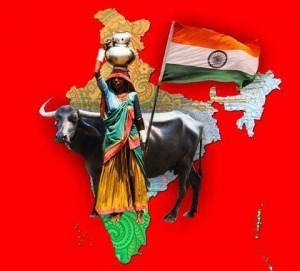
Bharat-Mata-by-Dr.-Lal-Ratnakar-300x271

Bharat Mata by Dr Lal Ratnakar

This image is from a post by Shachi Seth on India Resists:

Are demands for ‘azadi’ from blind state worship, systems of power and exploitation, such an impediment in the identity of Bharat Mata? Is the idea of Bharat Mata not ironic, given the depth to which the roots of patriarchy infiltrate our society? Is it not ironic that the Gau Maata and Bharat Maata which must mandatorily be respected and protected are bound by ideas of selfless giving and motherhood? Is the maata really not okay with being called by other names? Does the maata get to retaliate when her rights are violated, or is she an eternal symbol of sacrifice and docility? Where does the maata go when her resources are stripped to bring about development and when other females are stripped of their dignity on a daily basis? Is this benevolent, great mother in such great need of patronizing protection from the same men that threaten it when it isn’t dressed in a tri color sari? Will the mother ask me to go to the neighbors’ place if I happen to get in an argument with her? Am I not patriotic if I criticize my nation for knowingly or unknowingly allowing exploitation of its people?

Continue reading Many faces of the mother – Four voices on Bharat Mata and a quiz

ABVP Attack on Prof Chaman Lal at event on Bhagat Singh: Vidhya

Guest Post by VIDHYA

On the 18th of March, Bhagat Singh Chhatra Ekta Manch – a student organization in Delhi University and Aahwan: Ek Janwadi Sanskritik Muhim – a cultural organization, organized a talk and discussion with Prof. Chaman Lal on ‘The Life and Writings of Bhagat Singh’. Dr. Vikas Gupta of the History Department in DU introduced it and facilitated the discussion. This event was organized in the Main Gate of the Arts Faculty of DU after several attempts to book a venue inside Arts Faculty failed. We had hoped to organize a discussion on the life of a revolutionary and the relevance of his message today to the students of the university.

The talk was scheduled to begin at 12 pm. At the same time, another cultural organization, namely Sangwari, came to the area outside the Main Gate to perform a play (nukkad-natak) on the JNU issue. Though this play disrupted our talk, since they were not permitted to perform in the Law Faculty, we agreed and asked our speaker and discussant to wait till the end of the performance. Minutes into the play, the ABVP goons disrupted the performance. At first, it wasn’t clear if the fracas was part of the play or not. But as soon as we realized that 15 or so members of ABVP had taken over, all those who had gathered there intervened to stop the hooliganism of these goons. It is important to state here that during the entire time, around 60 to 70 police officers and constables were mute spectators. These ABVP goons started sloganeering and those performing the play dispersed when they realized that they would not be able to perform. Meanwhile, we were waiting to resume the talk by Prof. Chaman Lal.

Continue reading ABVP Attack on Prof Chaman Lal at event on Bhagat Singh: Vidhya

Look who’s calling us anti-national! The pleasant antecedents of Sudhir Chaudhary and journalistic ethics of IBN 7

[An edited version of this post has been published in Scroll.in with a more extensive set of links. I recommend reading it here.]

Sudhir Chaudhary of Zee News has been spewing venom at students and teachers of JNU for some time now, and I have been informed by concerned friends that over the last two days there has been a concerted campaign against me personally. Since I do not watch “news” on a channel that brazenly doctors videos and seems ignorant of minimum levels of journalistic ethics, I am relying on links sent to me by well wishers.

Last evening I believe a clip from a video made in 2014 was circulated, in which I am heard saying that Hinduism is the world’s most violent religion, because its very foundation is the caste system.

I am told that Sudhir Chaudhary challenged me to prove the video was doctored. I am certainly not going to engage with an alleged criminal extortionist (more about his pleasant antecedents in a bit), but here let me say that the clip I have seen circulating on twitter which I assume is the one on Zee, is not doctored, but it is massively decontextualized. I post below the link to the entire event – which was not a classroom lecture, but a political meeting organized by a student group in 2014 after the Kiss of Love protest was attacked in Delhi by Sanghis.

In Part I of this post I will deal with that video, and in Part II with Sudhir Chaudhury and IBN7. Continue reading Look who’s calling us anti-national! The pleasant antecedents of Sudhir Chaudhary and journalistic ethics of IBN 7

Open Letter to the Prime Minister of India: Simar Singh

Guest Post by SIMAR SINGH

Honourable Prime Minister of India,

I am fifteen years old, and I’m not an anti-nationalist, but I believe that having an opinion that differs from that of the state isn’t a crime.

I’m not an anti-nationalist, but I believe that physical and verbal abuse by lawyers against the accused in a courtroom in the presence of the police is a defamation of our legal system and violation of the Right to Fair Trial as stated in the Article 10 of the Universal Declaration of Human Rights.

I’m not an anti-nationalist, but I believe that verbal harassment of an accused on National Television in the name of Media Trial is unjustified. I don’t know journalism or media better than those running the news provision system of our country but what I do know is that each journalist or media personnel or any human being for the matter of fact is subjected to converse or debate with another human being with a certain decency and a sense of respect towards other’s opinion. Defamation of an accused by a journalist by labelling him/her as an anti-nationalist and calling them a shame to the nation is a violation of the article 41 of the Norms of Journalism Conduct published by the Press Council of India in 2010 and a threat to one’s dignity and public image. Continue reading Open Letter to the Prime Minister of India: Simar Singh

The ‘Non-Science’ Of Grabbing Grasslands And Promoting A Futuristic ‘Science City’: A.R.Vasavi

Guest Post by AR VASAVI

January, 26th, 2016, the 66th year of celebrating the declaration of India as a ‘Republic’ and the passage of the Indian Constitution, witnessed an unusual gathering at an auditorium at Challakere town (Chitradurga District, Karnataka). Local residents, farmers, shepherds and a number of environmentalists, academics, reporters, and students from various towns and cities of Karnataka participated at a public hearing on the appropriation by the governments of India and Karnataka of more than ten thousand acres of a common grazing land called the Amrut Mahal Kaval which had been allocated to various public and private sectors for the construction of a futuristic ‘science city’. Organised by Amrit Mahal Kaval Hitarakshana Haagu Horata Samithi [Amrit Mahal Kaval Conservation and Struggle Committee] the public hearing was to assess the pros and cons of such land allocation.  Local shepherds and farmers from the surrounding villages highlighted the impact of the loss of their grasslands (kavals). In their eloquent and well-thought-out statements, the local residents sought to retain their rights to the grassland (a collectively maintained resource) and to the livelihoods and life that it enabled. They questioned the undemocratic process by which their land had been appropriated and commented on  the nature of the nation’s institutions. Although they had all been invited, none of the representatives of the government departments and the organisations which had received land deemed it worthy to attend this public hearing. This meet and the visit to the Kavals (now cordoned off with a double boundary; an outer wire fence and an inner stone, concrete and steel meshed 15 feet high fence, reminiscent of high-security prisons) were testimony to the unusual trajectory of the Indian Republic where the voices of common people are increasingly silenced and the state, and its institutions of the military, the science establishment, and some private players have gained ascendency.

Continue reading The ‘Non-Science’ Of Grabbing Grasslands And Promoting A Futuristic ‘Science City’: A.R.Vasavi

How JNU Taught Me To Celebrate My Womanhood: Shalini Dixit

Guest Post by SHALINI DIXIT

I was an average student in JNU with not much political involvement. There are a large number of students in JNU who do not participate in protests and marches. Still it is said that ‘once in JNU always an activist’. It is because politics in JNU is more about applying your knowledge to society rather than losing our academic track. This comes to happen as a part of academic process that we go through at JNU. The readings that we do are about social structures, political happenings, historical events and economical arrangements. These readings are about things outside the campus. When we do these readings we take them seriously. We start questioning the existing realities, including the reading themselves.  Unlike most of the other universities we are encouraged to do that.

I came to JNU as a small town girl from a religious background from eastern UP. Like most of the girls from my region, I had a baggage of being a ‘good girl’ which reflected in my conduct and thought. I underwent a little bit of culture-shock but thanks to the upbringing of a ‘good girl’ ready for uncertain future, acceptance came naturally. I was in a marriage which my parents had arranged for me and later had a child. Obviously with all the rigorous academic requirements and a child to look after, singlehandedly, I always had some personal responsibility to look after. Goes without saying that since I got a campus accommodation and a 24 hours open library, despite struggling with my personal life, I could do a piece of research which was later conferred with a national award. And yes, I got all these facilities for almost free. JNU allowed me to go out of my residence during nights so that I could study when time allowed me to.  We could meet our teachers anytime, as they were on campus, available for us. All this happened mostly because of the taxpayers money  that JNU enjoys. Continue reading How JNU Taught Me To Celebrate My Womanhood: Shalini Dixit

To feminist solidarities across barbed wires!

International Women’s Day greetings to feminists of all genders struggling against all forms of injustice!

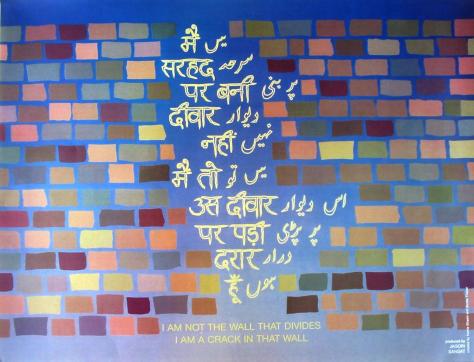
Darar (1)

Poster: Words by Kamla Bhasin, poster design by Jagori

We Sinful Women

Kishwar Naheed

It is we sinful women
who are not awed by the grandeur of those who wear gowns

who don’t sell our lives
who don’t bow our heads
who don’t fold our hands together.

It is we sinful women
while those who sell the harvests of our bodies
become exalted
become distinguished
become the just princes of the material world.

It is we sinful women
who come out raising the banner of truth
up against barricades of lies on the highways
who find stories of persecution piled on each threshold
who find that tongues which could speak have been severed.

It is we sinful women.
Now, even if the night gives chase
these eyes shall not be put out.
For the wall which has been razed
don’t insist now on raising it again.

It is we sinful women
who are not awed by the grandeur of those who wear gowns

who don’t sell our bodies
who don’t bow our heads
who don’t fold our hands together.

[Translated from Urdu to English by Rukhsana Ahmed]

Kishwar Naheed is a feminist Urdu poet from Pakistan

Another patriotic song to counter ‘Mere desh ki dharti’

Justice Pratibha Rani began her bail order on Kanhaiya Kumar with the patriotic song “Mere desh ki dharti”, an upbeat celebration of the beautiful land that yields gold and pearls. Her judgement was emotional about the soldiers who give their lives so that the rest of us can be safe.

Here is another sort of patriotic song from another Hindi film, which Justice Pratibha Rani might connect to. This haunting song about the futility of war also goes out to all those who say it is insulting to the armed forces to raise our voices against widespread militarization of the Indian subcontinent.

The refrain of the song is – “Ask the departing solider, where do you go?” It talks about death and destruction, of weeping women and hungry children. The poet is Makhdoom Mohiuddin (a communist and a Muslim – anti-national on two counts). Whose wars do these men fight?

Would we all be safer, including our soldiers, if the elites of neighbouring countries and a global military industrial complex did not have immense stakes in keeping tensions running high?

Sex workers demand Azadi from ‘Goddess’ Durga: Veshya Anyay Mutki Parishad, Muskan and Sangram

Guest Post by Veshya Anyay Mutki Parishad, Muskan and Sangram

Dear Students of JNU,

Salute! Jai Bhim! Laal salam! We will win this war against sedition! March 3rd, International Sex Workers Rights Day, Zindabad!

We write from the sex worker’s rights movement to hail your struggle and to add to the discourse you have sparked. We would like to discuss why using the term sex worker in the alleged pamphlet in JNU on Mahishasura Martydom Day is a concept fraught with the Whore Stigma. The use of the politically correct sex worker instead of the commonly used `prostitute’ does not take away from the fact that it is used to depict an insalubrious deed. The use of this term has only led to more misunderstandings of the term itself.

Sex worker is the term used by the sex worker’s rights movement in order to claim dignity to the work adults do consensually by providing sexual services for money. The sex workers use this term to give dignity to those that exchange sexual services for money but the use here is to supposedly strip the `goddess’ in this instance, of any dignity. The term since then has taken a life of its own. From a politically correct term it is now being used to describe anti-nationals, anti-goddesses even anti- patriarchy! But the thinly veiled contempt for the sex worker is huge in every utterance, from the Hindu Goddess Durga to the `anti-national’ women students in JNU. Continue reading Sex workers demand Azadi from ‘Goddess’ Durga: Veshya Anyay Mutki Parishad, Muskan and Sangram

A historian’s response to the petition against Sheldon Pollock: Janaki Nair

Guest post by JANAKI NAIR

spine-details-vertical

A petition, signed by 132 “academics” asking Rohan Murty and Narayan Murthy to dismiss Prof Sheldon Pollock from his role as Editor of the Murty Classical Library Series, is receiving attention that the signatories did not anticipate.  I put the word “academics” in quotes because the commitment of the signatories to an academic evaluation of Sheldon Pollock’s intellectual leadership is nowhere in evidence, since a quotation from Pollock was changed mid-way through the signature campaign. Nor does it seem as if the signatories have ever held any one of the hot- pink,  beautifully produced volumes in their hands, where   as much attention has been paid to looks and fonts,  as to the quality of translations.

Had they done so, they too would have appreciated the significance of this effort, in bringing to the wider reading public the oceans of literary texts and traditions, in a mind-boggling array of languages,  from a period covering two and a half millenia.  The individual translators and editors are among the best in the field. Thanks to this series, so many more Indians and others will learn of the sheer beauty and anguish of Punna, a  Therigatha poet (translated from Pali, 3rd century BCE).  People of the south will hear the voice of Bulle Shah, translated from Punjabi, and those from other parts of India will read Allasani Peddanna, translated from Telugu.  True we will miss the mellifluous chanting, or the energetic sounds of performance: for now, we will have to make do with the books on hand. Continue reading A historian’s response to the petition against Sheldon Pollock: Janaki Nair

Bastar to Delhi – Increasing Threat to the Rule of Law and Freedom of Expression

STATEMENT BY CONCERNED CITIZENS

It seems that an undeclared state of emergency is sought to be imposed upon us: a series of seemingly unconnected events across the country, in universities (most recently in Hyderabad and Delhi), factory premises and court halls, our streets and over large parts of the countryside, bear this out. We would like to draw wider attention, in particular, to recent disturbing developments in Jagdalpur, Bastar, that have been somewhat overshadowed by events in the Jawaharlal Nehru University, New Delhi.

In Delhi as in Bastar, the state is using its coercive power to stifle dissent and lock up dissenters by labelling them anti-national or, in the case of Bastar, Maoists. In Chhattisgarh, it has long been standard practice to label anybody with an opinion of development contrary to the mainstream view (of development as corporate welfare and environmental destruction) as a Maoist. This is usually a prelude to police action ranging from harassment and intimidation to arrest, torture, and even death. The adivasi inhabitants of Bastar have not enjoyed the rule of law since 2005, when the Salwa Judum, a vigilante paramilitary group, was formed in the name of combating Maoism. Nor does the law offer much protection to ordinary people elsewhere seeking to exercise their constitutional rights as law enforcement agencies and governments trample upon civil liberties in the name of nationalism.

Continue reading Bastar to Delhi – Increasing Threat to the Rule of Law and Freedom of Expression

Left, Hindutva and Indian nationalism: Pritam Singh

Guest Post by PRITAM SINGH

Triggered by the recent events at JNU, it is inspiring that the Left and genuine liberal voices in India are standing up to the Hindutva fascist onslaught. However, I find it very disappointing that the current Left leadership and some left intellectuals and sympathisers (especially belonging to the CPI and CPM) are succumbing to the pressure of chauvinist Indian nationalism. One would be shirking one’s responsibility if one were not to criticise that misguided and seemingly scared Left for its pitiable practice of for ever chanting mantra of ‘unity and integrity of the country’ in a self-defeating game of competitive Indian nationalism. The Left is beating its breast and going to the town chanting that we are ‘desh bhagats’ in a foolish retaliation against Sanghi’s charges of left being desh dirohi. Tomorrow, the Sanghis will say that you are ‘Ram dirohi’ when you oppose the building of the Ram Mandir. Would you then start saying: we are Ram Bhatkas? Let us not succumb to Sanghi’s brow beating tactics. Let us openly proclaim that India is not one nation but a historically determined territorial space of many nations, nationalities and emerging/potential nations and nationalities. As capitalism expands in India and the regional diversity of India flowers further, new voices of national self-determination would start becoming more articulated.

Continue reading Left, Hindutva and Indian nationalism: Pritam Singh

Does the Indian Constitution Speak for a Nation? Arvind Elangovan

Guest post by ARVIND ELANGOVAN

Like many others, I too have been anguished about the recent developments in JNU. Not only because the institution is my alma mater, but also because there has been a concerted effort now to frame the discourse in terms of nationalism and anti-nationalism. Sadly, in responding to the charge of anti-nationalism, defenders of free speech and other associated values of the integrity of the university are also participating in this discourse and arguing why dissent is not anti-national. While I agree with this latter point of view, I would like to join those voices that argue that the question of nationalism is irrelevant to the functioning of the state. The unity and integrity of India, understood in its territorial sense, is not strengthened by ideas of nationalism nor is it weakened by expressions of antinationalism.

In the context of the current debate about nations, nationalism, and anti-nationalism, an oft-evoked ally is the Indian constitution. Commentators across the board have praised the Indian constitution for either embodying an ‘idea of India,’ one that is noble and worthy, or praised the institutions that are sanctioned by the constitution, such as the Honorable High Courts and the Supreme Court. Strangely, across the ideological divides, it has become a commonplace perception that the nation as embodied in the Indian constitution has been violated, or at the very least not respected. Conversely, at the other end of the spectrum, it is believed that the Indian constitution expressly provides provisions to persecute individuals or groups for espousing ‘anti-national’ views. The belief among the latter group is that the constitution protects the idea of the nation, however it may be defined. This remarkable unity in such a divisive moment in Indian politics today is both a reason for pause and an invitation to at least cursorily reexamine the text and the history of this important document called the Indian constitution. Continue reading Does the Indian Constitution Speak for a Nation? Arvind Elangovan

Bahujan Discourse Puts JNU In The Crosshairs: Pramod Ranjan

PRAMOD RANJAN writes in Forward Press

It is essential to find out how this university, created in 1966 by a special Act of Parliament, became a leftist bastion. The answer lies in its unique reservation system. In this university, from the very outset, aspirants from backward districts, women and other weaker sections were given preference in enrolment. Kashmiri migrants and wards and widows of defence personnel killed in action also get preference (see box). The nature of the questions in the admission tests of the university is such that only the ability to answer multiple-choice questions related to one’s discipline is not enough to see one through. Only those students who have, apart from command over their own subject, analytical skills and reasoning power get admission here. The undergraduate courses of foreign languages are an exception in this regard. But even here, once they have a bachelor’s degree, they can join an MA or an MPhil course only if they have the aforementioned skills. Thus, for years, JNU has been home to the finest and most fertile minds from economically and socially deprived sections of society. And when they analyze the hows and whys of their socio-economic background, they get drawn to Marxism.

This fully residential university, spread over 1000 acres and nestled in the lush green Aravalli Range, never attracted the elite class. The hostels serve plain food and residents drink from jugs – instead of glasses. Estimates suggest that at least 70 per cent students of the university come from either poor or lower-middle-class families…

After the enrolments last year, the percentage of students in JNU from SC, ST and OBC has gone up to 55. A large number of Muslims are enrolled in Arabic, Persian and other language courses in JNU. Data on them is not available. But if, along with them, the number of Ashraf Muslims and other minorities is added, it can be safely presumed that at least 70 per cent of the students in the university are non-Dwij. Note that the number of OBC students in JNU has gone from 288 in 2006 to 2434 in 2015, ie a tenfold increase in nine years. The number of women students has also gone up substantially (see chart)…

This article also points out uncanny similarities between the police report of February 2016 on the controversial cultural event at JNU  and a Panchjanya editorial of 2015.

Read the rest of the article here.


Statement by JNU Faculty on Bar Council of India Report on Patiala House events of February 15 and 17, 2016.

In a shockingly partisan statement that blatantly misrepresents events, the Bar Council of India has issued a report that justifies the well documented attacks by a mob of lawyers on JNU students, teachers and media at Patiala House Courts over two days (February 15 and 17, 2016) as ‘a reaction to the incidents, which are grave in nature and very dangerous for the country’. BCI Joint Secretary Ashok Kumar Pandey claimed that a large number of JNU teachers and students and others had arrived at the court in three to four buses and raised slogans and used ‘provocative words’. This led to the untoward incident in which ‘both the sides took part,’ said the report, adding that ‘any true citizen or a lawyer of India’ was supposed to react strongly to the ‘anti-India’ slogans.

We, the undersigned faculty members of Jawaharlal Nehru University, wish to set the record straight. Nine of us reached Patiala House Court No 4 between 1 and 1.15 pm on 15th February 2016 to attend the hearing on Kanhaiya Kumar’s bail plea. The sole objective of our presence there was that when Kanhaiya Kumar was produced he would see the faces of his teachers in the courtroom. At that time, a few students and other teachers of JNU, and some members of CPI, the parent organization of Kanhaiya’s student group, were already waiting silently outside, similarly wanting him to see friendly and familiar faces when he was produced. There were about 15 to 20 of them, hardly enough to fill 4 cars, let alone one bus.

Continue reading Statement by JNU Faculty on Bar Council of India Report on Patiala House events of February 15 and 17, 2016.

Offer truth and hope, not drama: Faculty of University of Hyderabad to Smriti Irani

Dear Ms Irani,

Thanks to your stunning performance, we, many faculty members from the University of Hyderabad, are compelled to do what we should have done in the last one month or so, but could not bring ourselves to – write, write about Rohith, write about our other students, write about the state of academics, write about ourselves and write about society at large.

Our first acknowledgement to this therefore goes to you for revealing yourself and for bringing us back from grief, from reflection, from teaching and from various other mundane things we do as part of our job.

As we watched you in disbelief on our TV screens on 24th February 2016, you, in a voice choked with emotion, again and again referred to the “child” whose death has been used as a political weapon. We were left bewildered.

At what precise point, Madam Minister, did this sinister, anti-national, casteist, Dalit student of the University of Hyderabad transform into a child for you? Definitely not in those five rejoinders from MHRD (the ministry of human resource development) between 03-09-2015 and 19-11- 2015 with the subject line “anti-national activities in Hyderabad Central University Campus”? Definitely not when you chose to overlook and endorse what can only be read as extraordinarily aggressive and unfounded allegations by a minister in your own government, Mr Bandaru Dattatreya?

Read the rest of the letter in The Telegraph

DISSENT, DEBATE, CREATE