All posts by Nivedita Menon

The RSS coup d’etat in India, and a collage of solidarity actions for Kashmir

Protest in Philadephia on abrogation of Article 370

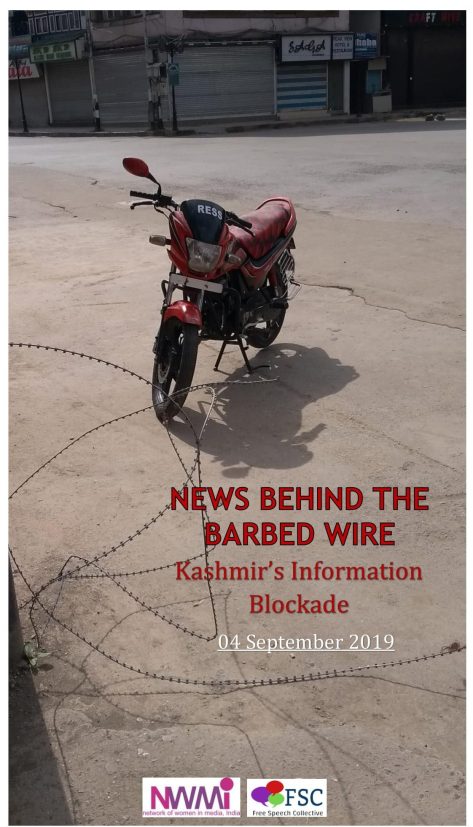
Since the 5th of August, the now abolished state of Kashmir has been under de facto military rule, as shown both by news reports of the numbers of troops stationed there currently, as well as by a fact-finding report released after a visit to Kashmir by Jean Dreze, Kavita  Krishnan, Maimoona Mollah and Vimal Bhai, which begins:

When we arrived in Srinagar on 9 August, we found the city silenced and desolated by curfew, and bristling with Indian military and paramilitary presence. The curfew was total, as it had been since 5th August.

The intention of this post was initially only to put together a quick collage of some news items and statements of solidarity and protests across India and the world, on the abolition of the state of Jammu & Kashmir, bringing the two newly formed Union Territories directly under the rule of the Hindutva formation currently in power at the centre.

However, this move can only be understood in the context of the fact that since May 23, 2019, India is barely any longer even the formal democracy it claimed to be.  Effectively, a coup d’etat was carried out on that date by the RSS (now under the complete control of Modi-Shah), through the extremely dubious “sweeping victory” of the BJP.  We begin therefore with a section on RSS and The Lie as Political Strategy.

The second section is the compilation and in the third, some reflections on democracy in India today. Continue reading The RSS coup d’etat in India, and a collage of solidarity actions for Kashmir

Mujh se integration karogi? Sanghvaad and its war on women

Determined, defiant – not the Kashmiri women of Sanghi fantasies

Protest in Srinagar against the abrogation of Article 370 on August 11, 2019, despite the clampdown by the Indian government. Image courtesy The Wall Street Journal.

When trolls on social media started circulating photographs of young Kashmiri girls, gloating, “now we can marry them”, it was only the overt manifestation by Sanghis of the real spirit behind abrogating Article 370. While Prime Minister Narendra Modi held forth at length on development, rights to education, rights for women and for Dalits, all of which the people of J&K were deprived of because of Article 370, the truth of course, is that J&K stands in the top 10 to 15 states on  different indicators ranging from life expectancy, people served per government doctor, poverty rate and infant mortality rate, to human development index.

Or as Haseeb Drabu puts it:

The level of economic empowerment is evident from the fact that more than 25% of the household earnings in J&K are from own cultivation. In “prosperous” Punjab, it is only 18%, in “vibrant” Gujarat, it is less than 16% and in “terrific” Tamil Nadu, it is only 3%. And yet, J&K is being portrayed as a “sick” state.

Continue reading Mujh se integration karogi? Sanghvaad and its war on women

On Eid, two stories in Times of India June 28, 1958: Ayesha Kidwai

Guest post by AYESHA KIDWAI


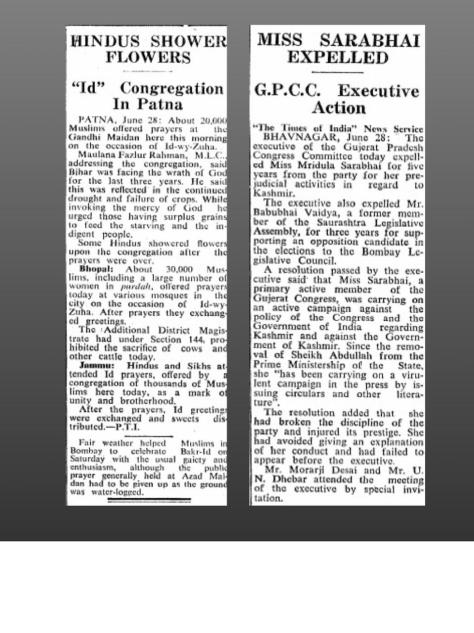
On the same page of the Times of India of June 28, 1958 are two news items. The one on the left is a report of how Bakrid was celebrated the day before in various cities, including Jammu, where Hindus and Sikhs offered namaz along with their Muslim brethren. On the right  is another story that reports the expulsion of Ms. Mridula Sarabhai from the Congress party for her ‘anti-party activities’ in opposing the arrest of Sheikh Abdullah in 1953 and the muzzling of democratic rights in Kashmir.

Continue reading On Eid, two stories in Times of India June 28, 1958: Ayesha Kidwai

More lies from the Election Commission – good job, The Quint!

Previous posts on the stealing of the 2019 Lok Sabha Elections on Kafila, which have links to many other substantiated stories in other journals and news portals:

The “massive mandate” of 2019 and the role of the Election Commission  – Nivedita Menon

Update On “Tally Mismatch” In 2019 Lok Sabha Elections: Ravi Nair

Lok Sabha Elections 2019 – Calling The Election Commission To Account: Statement By Retired Civil Servants, Veterans, Academics And Concerned Citizens

EC Misleads Public With Bogus RTI Reply On VVPAT Count: Poonam Agarwal

RTI Reveals Pvt Consultants Have EVM Access, Why is EC Denying It? POONAM AGARWAL in The Quint.

The Election Commission of India has always maintained that no private company or outsourcing in any form is involved in the election process. But The Quint’s investigation has found this to not be true.

An RTI in The Quint’s possession shows that the Electronics Corporation of India Limited (ECIL), a PSU that manufactures EVMs and VVPAT machines, engaged private engineers as “consultants” and that these private engineers have worked with the Election Commission in Assembly Elections since 2017 and even in the 2019 Lok Sabha election.

Their job was extremely sensitive – to check and maintain EVMs and VVPATs, starting from First level Checking (FLC) right up till and including the Counting Day, which means they had easy access to EVMs through the course of the elections.

Read the full article here.

From revered icon to unruly subject – Irom Sharmila and the politics of gender: Panchali Ray

Guest Post by PANCHALI RAY

In the month of August, 2016, Irom Sharmila Chanu, also known as the ‘Iron Lady’ and ‘Mengoubi’ (the fair one) announced that she would break her 16 year long hunger fast, which she commenced  as a protest against the imposition of AFSPA (Armed Forces (Special Powers) Act) by the Indian state on the tiny hilly state of Manipur. While some cheered, others were curious, and many shocked and angry at what they perceived as her betrayal of the Manipuri cause. The backlash from her community was quick and ferocious, and newspaper headlines carried titillating stories of how she was rejected by her ‘own’.[1]

While much has been written on Sharmila’s hunger strike, her breaking of the fast, and entry into electoral politics, there has not been an equal amount of discussion on the politics of gender. For instance, the fact that Sharmila’s location in the North-Eastern part of the country has been central to her marginalization and non-acknowledgement[2], or that the mainstream media’s highlighting of her predicament, post-hunger strike, reinforced stereotypes of Manipur as the ‘wild’ and ‘savage’ North East[3] has received considerable attention.

Continue reading From revered icon to unruly subject – Irom Sharmila and the politics of gender: Panchali Ray

Immigrant Detention Centres in India – need for transparency: Paresh Hate

Guest post by PARESH HATE

From what knowledge we have so far, it seems clear that the issue of citizenship and migration in South Asia is not any less complicated or politically charged than in Global North. Assam Accord and National Registry of Citizenship were already polarizing individuals across the political spectrum.  The demonisation of Bangladeshi immigrants continues throughout the country. But the entering of BJP in Assam politics has complicated the matter even further. Beyond the stories of deportation and violence at the border between India and Bangladesh, now we are also witnessing a rise of detention centres all over India which has put the lives of many migrants effectively into a state of limbo where they are designated for deportation but do not know when they will meet this fate.

Continue reading Immigrant Detention Centres in India – need for transparency: Paresh Hate

JNU: And still, like dust, we rise…

http://https://www.youtube.com/watch?v=U6xtEZAeflQ

EC Misleads Public With Bogus RTI Reply on VVPAT Count: Poonam Agarwal

Evidence mounts of something extremely rotten in the state of India and the recent Lok Sabha elections.

We have raised this question on Kafila for a while now, see The Massive Mandate and Open Letter to Election Commission of India by civil servants, the serious charges in which have been met with total silence.

Now POONAM AGARWAL writes in The Quint, which has been investigating the issue for some time.

The current state of India’s Election Commission (EC) raises doubts about its transparency and fairness, especially when we find that it is misleading the public in its RTI replies.

The EC was constituted in 1950 to conduct free and fair elections, and was established as an autonomous body solely so that it can work independently. Is that what it’s doing?

The Quint filed an RTI seeking information and documents on the VVPAT count data during the Lok Sabha elections 2019. In reply, the EC refused to share the documents on the grounds that the VVPAT data is not available with the Commission (which means, at the EC headquarters in Delhi).

Here’s How the EC Is Misleading Citizens.

Read the full article at The Quint.


The Politics of Piety in Naya Pakistan: Afiya Zia

Guest Post by AFIYA ZIA

A year ago, Pakistan’s national elections brought in a new government led by the Pakistan Tehreeq e Insaf (PTI) and headed by the former-cricketer-turned politician, Imran Khan. Khan had been drifting in the political wilderness for 22 years, waiting for providence to appoint him Prime Minister. As the 2018 elections loomed, this was not looking possible. However, a series of legal cases of corruption started being levelled against the serving PM, Nawaz Sharif, and efforts were made to atrophy others from the major parties of the PML-N and PPP (who had signed the ‘charter of democracy’ to prevent military intervention in civilian governance). The methods of these moves made it clear that the ‘establishment’ was betting on a new horse. Khan was not taking any risks though.

Six months before the national election, he entered marriage for the third time (with no less controversy than his previous marriages) to Bushra Maneka who was also his spiritual guide or pirni. A mother and a grandmother, there was speculation that Bushra divorced her husband for the higher cause of marrying the PM-in-waiting. In the days prior to the summer election, Khan performed Umrah in Mecca with Bushra, and was seen prostrating at a shrine in Pakistan and accessorised with rosaries and amulets in preparation for the polls.

Continue reading The Politics of Piety in Naya Pakistan: Afiya Zia

Why I Celebrate the Wedding of Nusrat Jahan: Zakia Soman

Guest post by ZAKIA SOMAN 

The wedding of Nusrat Jahan the TMC MP to Nikhil Jain is refreshing news. It is heartening to see two young Indians from different faith backgrounds uniting and celebrating their marriage in the times of religious hate and division.

The mixing of politics and religion has led to a climate where marrying a person from another faith has become extremely difficult specially for young people. The case of Hadiya may have been highlighted in the media but it is certainly not the only instance where a couple had to undergo tremendous hardships for falling in love. The self-appointed guardians of religion who seem omnipresent in family, community, police, judiciary, government, media would walk great lengths to prevent inter-faith marriages from taking place. Continue reading Why I Celebrate the Wedding of Nusrat Jahan: Zakia Soman

Lok Sabha Elections 2019 – Calling the Election Commission to account: Statement by retired civil servants, veterans, academics and concerned citizens

Letter to the Election Commission of India written by 64 former civil servants, endorsed by 83 veterans, academics and other concerned citizens.

Shri Sunil Arora, Chief Election Commissioner, Shri Ashok Lavasa,  Election Commissioner, and Shri Sushil Chandra, Election Commissioner.

Election Commission of India.

Sirs,

Serious Irregularities in the Conduct of General Elections, 2019  

  • We are a group of former civil servants that takes up, from time to time, matters of exceptional national interest, seeking to remind our cherished democratic institutions of their responsibility to uphold the lofty ideals of the Constitution. We write to you today to draw your attention to the several very troubling and still unexplained issues pertaining to the conduct of the General Elections, 2019, by the Election Commission of India (ECI).
  • From time to time, the media has reported on various irregularities in the conduct of the 2019 General Elections. While we accept that not every media report is accurate or true, the ECI’s non-rebuttal of an untrue or inaccurate story leaves the public to draw its own conclusion: that the ECI has no valid explanation to offer. The mere dismissal of the allegations as baseless, without an explanation as to why they should be so considered, is unsatisfactory. As the custodian of the most precious commodity in a democracy – the people’s mandate – it is your duty to be transparent, and accountable to the Constitution and the people of India. Continue reading Lok Sabha Elections 2019 – Calling the Election Commission to account: Statement by retired civil servants, veterans, academics and concerned citizens

Draft New Education Policy 2019 through a Gender and Sexuality Lens

Recommendations on Draft New Education Policy (DNEP) by a collective of women’s groups, queer groups, NGOs, students, and academics working in the field of gender, sexuality and education.

We, a collective of women’s groups, queer groups, NGOs, students, and academics working in the field of gender, sexuality and education, across India strongly recommend and reiterate that for all the recommendations given here, the policy and thereafter, the Government of India and State Governments must ensure that there is a proactive strengthening of democracy within educational institutions. The right to expression, liberty, equality and diversity are rights enshrined in the Constitution of India. We welcome that the DNEP 2019 as it states that it will promote constitutional values in education. However, for the implementation of this objective, changes in the content of the curriculum will not suffice. Constitutional values must be protected in the processes and institutional structures of schools and higher education bodies.

We commend the policy for introducing the following provisions:

  1. DNEP 2019 addresses the issue of early childhood education, especially the timely recommendation of making Years 3 to 8 as a foundational stage. This becomes critical as early education and experiences are the most formative in a child’s life, and a holistic pre-school education continues well beyond traditional schooling years.
  2. It is the first policy to uphold the Honourable Supreme Court’s 2014 directives around transgender inclusion in education.
  3. The policy has taken cognizance of many children who continue to dropout at different levels, and the even more serious problem of enrolled children not attending school regularly.
  4. It seeks to strengthen departments/ centres of education at universities.

Having said this, the subsequent list of recommendations is laid down to strengthen the DNEP 2019 from the lens of gender and sexuality, especially for the most marginalised communities. We feel that gender and sexuality related rights could only be ensured if there is a larger enabling environment, in which diversity of thought and practices are respected. These, we feel, would be critical in developing a robust educational policy for the country, which would address the fundamental intersectionalities that individuals and communities face in their lives. Continue reading Draft New Education Policy 2019 through a Gender and Sexuality Lens

Standing up for those who stood with us – Statement of support for Lawyers Collective

We, the undersigned concerned citizens, are extremely perturbed at the increasing tendency of the Government, through its agencies, to use excessive power to curb the voice of the people, which is the very essence of democracy.

The work of Lawyer’s Collective in general and that of Indira Jaising and Anand Grover in particular, has contributed to changing the lives not just of individuals but of citizens of a democratic republic. They have not only represented the rights of individuals and communities such as slum dwellers, workers, trade unions, prisoners, SC/ST associations, Bhopal Gas tragedy victims, women, LGBTQ+ and other marginalized communities as lawyers, but have also contributed immensely to the discourse of human rights and state accountability as public intellectuals.

Continue reading Standing up for those who stood with us – Statement of support for Lawyers Collective

Draft New Education Policy 2019 – Mass Feedback Campaign: Better Universities

In support of the campaign launched by BETTER UNIVERSITIES.

The Government of India has finally unveiled the much-awaited draft of the National Educational Policy (NEP) 2019, and with that, has come a host of new issues to address and engage with.

To access a copy of the draft, please click here.

Here is the full point by point critique made of the Draft NEP by Better Universities, that anybody concerned about education in India should read very carefully.

At the end you will find the link that will take you the campaign for mass feedback on the NEP.

Response to the Draft National Education Policy 2019

Most significant point in my opinion:

What is even more damning is that the appointments to all statutory bodies in the higher education sector will have to be made by the RSA – and must, by default, await the nod of the Prime Minister. It is unambiguously stated that appointees to the NHERA, HEGC, NRF, NAAC and all other standard-setting bodies must report to the RSA and thus be beholden to the infirmities of political will and favour. Needless to say, this amounts to the NEP’s unashamed surrender to ruling party intervention and an effective imagining of higher education as subservient to political interests. Autonomy is shown the door, both structurally and ideologically – despite the Draft making a shrill pitch for it through the previous chapters.

Introduction

While the former HRD minister’s message (included in the Draft policy) congratulates the exercise as evolving “path breaking reforms” based on the “foundational pillars of Access, Equity, Quality, Affordability and Accountability”, the higher education sector is instead coming under greater political control and contributing to wider inequities with respect to institutional inputs and outcomes. Even the employment goals envisioned by the curricular reforms proposed in the Draft policy might produce greater job insecurities among students coming into higher education from across different social and economic backgrounds. Continue reading Draft New Education Policy 2019 – Mass Feedback Campaign: Better Universities

The politics of Hindutva and its erotic charge: Jaya Sharma

Guest post by JAYA SHARMA

In the post election bewilderment that continues to grip us, might it be that we are asking the wrong questions?

The questions are by now familiar. How can it be that a Pragya Thakur wins and an Atishi loses? How can it be that demonetization doesn’t translate into loss of votes? How can it be that the party under whom lynching of Dalits and Muslims becomes a norm gets re-elected? How can it be that hatred for the other wins over humanity?

In response, journalists, political scientists and writers have pointed out that our assumptions related to the significance of macro economic indicators, caste-based voting patterns, among other things, were faulty. But the questions still remain,  including the big one: why did facts and logic lose so dramatically?

Might it be that the bewilderment continues because there is a glaring blind spot in the way in which we understand politics? Might it be that facts and logic were never the only driving force? I will argue here that in order to understand the recent election results and the power of Hindu Nationalism more broadly, we need the lens of the psyche. The play of desire and the erotic is key to understanding politics and dipping into our own sex and love lives can help us see this.  ‘The personal is political’ mantra can come to the rescue in the bewilderment that we feel today.  In making this argument I will draw upon research that I have undertaken for a book that I am in the process of writing called Fantasy Frames: Sex, Love and Indian Politics, to be published later this year. Continue reading The politics of Hindutva and its erotic charge: Jaya Sharma

Update on “tally mismatch” in 2019 Lok Sabha Elections: Ravi Nair

In an earlier post  we made note of the serious matter of unaccounted movement of EVMs in private vehicles in different parts of the country and the mismatch between the ECI figures for voter turnout and EVM votes cast, neither of which the EC has satisfactorily explained until today.

Now in a detailed analysis in NewsClick, Ravi Nair points out that even three weeks after the last phase of the election, ECI is yet to publish the “final data”, and whatever it has put out till now is “provisional numbers”.  More worryingly, Nair points out that when glaring anomalies came into the public domain, ECI not only deleted the uploaded data from both Suvidha Portal and its main website, but also issued a release to say that whatever was published was “the provisional voter turnout data”, which was “tentative”.

However, the ECI never bothered to answer the fundamental questions: How did it announce winners based on these “provisional” and “tentative” data? How did the automated counting of votes polled in EVMs become “tentative”?

Read Ravi Nair’s article “ECI’s stance on data discrepancies: No right to question?” on NewsClick here.

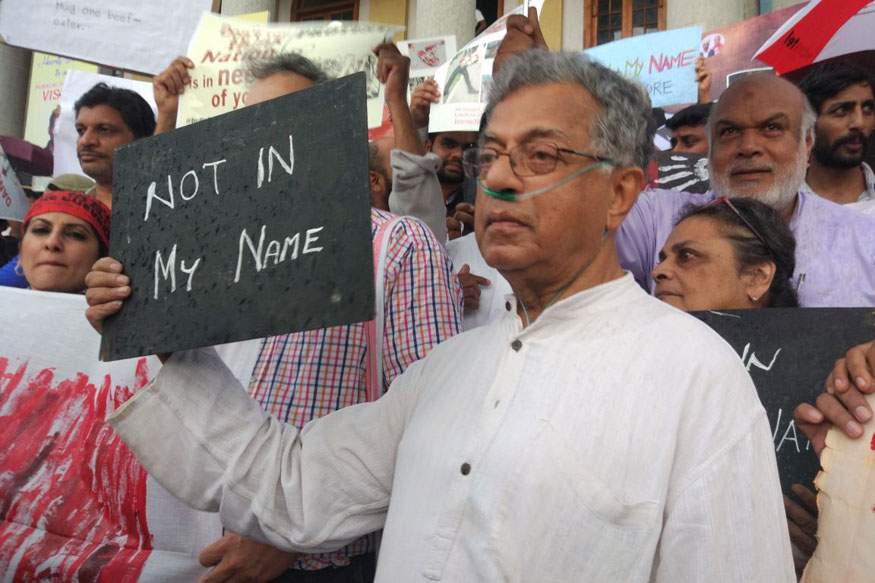
Alvida, Girish Karnad, we promise to keep up the fight for India

Girish Karnad 1938-2019

The “massive mandate” of 2019 and the role of the Election Commission

Caution: Long read!

This is the elephant in the room, is it not? Was this “massive mandate” of the Lok Sabha elections 2019, the result of a free and fair election? Should we continue to discuss this outcome – the scale of the BJP victory, the numbers of seats, the margins by which seats were won – through political analysis alone?

Rather, has not political analysis of the election become inevitably deeply influenced by these margins and these numbers of seats, by the scale of the sweep?  In other words, the analysis is of necessity post facto, assuming that these seats have actually been won fairly, and therefore represent the views of the electorate.

I found very revealing a story by two Reuters journalists who covered rural North India extensively.  Mayank Bhardwaj and Rajendra Jadhav ruminate on how they could have gone so wrong in assessing the mood of the electorate. Although they say they never thought Modi would lose this election, it looked certain that he would return with a reduced majority. There was nothing  they heard and observed on the ground that suggested the actual outcome. They conclude that next time they will travel even more, push their respondents harder, “be more aware of our limitations.”

Many seasoned journalists have the same sense of shock. But what if they were not wrong after all?

Continue reading The “massive mandate” of 2019 and the role of the Election Commission

Sexual Harassment ‘in-house’ for the Supreme Court – is sunlight the best disinfectant? Pratiksha Baxi

Guest Post by PRATIKSHA BAXI

The publication of a sworn affidavit by a former Supreme Court staffer testifying to sexual harassment by the Chief Justice of India has been treated as a scandal, whether the complainant was believed or not. And the subsequent events – an extraordinary suo moto hearing, allegations of a conspiracy against the independence of the judiciary, the in-house committee’s decision to exonerate the CJI – have evoked the normative question whether such forms of judicial exceptionalism are the necessary condition for judging in our courts.

Yet asking such questions ran the risk of being labelled as an ‘institution de-stabiliser’. The intent was to invent social consensus by deploying labelling as a technique of censoring and delegitimising feminist critique. Not so long ago women who challenged male authority were described as witches, today they are labelled anti-national, institution destabilisers, presstitutes or simply, left-liberal/JNU type.

However, whether one walks right, left, centre or zigzag, it cannot be denied that jurisprudential questions need answers beyond the specifics of this case. One would have thought that it is also in the interest of all judges to devise a procedure that is constitutionally sound and invested in gender justice, while recognising the specific problems that judges may have because of the nature of their work. And that the Supreme Court would recognise that it is in the interest of every survivor of sexual harassment, irrespective of ideology or status, to be provided normative answers.

Continue reading Sexual Harassment ‘in-house’ for the Supreme Court – is sunlight the best disinfectant? Pratiksha Baxi

The Saderla story – courage in the face of violent prejudice: Manindra Agrawal

This is a guest post by MANINDRA AGRAWAL

This is the story of a young man who made it to the premier institution of IIT Kanpur against heavy odds, but was then let down by the system and people at the institute. Yet, he showed exemplary courage and stood up for his rights firmly but gently. The story also highlights the frailties of human nature and the vindictiveness that can mar human actions. It is a story that needs to be told.

Prologue

IIT Kanpur, like all other IITs, has very few faculty from reserved categories.​ ​An initiative was taken in August 2017 with an exclusive advertisement for faculty under various reserved categories. The applications received were sent to the respective departments for evaluation, and the shortlisted candidates were called for seminars. The protagonist of this story, Dr SS (I am using initials for the key players for convenience, all names are in the public domain), who is from a scheduled caste of Andhra Pradesh, was shortlisted in the Aerospace Engineering department. He did both his M.Tech and Ph.D from IIT Kanpur under Professor AKG, who happened to be the head of the department at the time. Continue reading The Saderla story – courage in the face of violent prejudice: Manindra Agrawal

Law versus faith, female activists versus male devotees and other strange creatures at Sabarimala

Images of resistance

The three images below teach us how society is transformed – by the courage and determination of the oppressed and marginalized; by tears of rage, and by stony cold resistance in the face of violent retaliation by entrenched power.  It is not that these pioneers were fearless, but that they acted despite their fear.

The first shows Kairali TV camera-person Shajila Ali Fathima, tears running down her face as she continues filming the vandalism of Hindu right-wing mobs over the Sabarimala issue, despite being threatened and physically attacked (her neck was hurt, and she has since been advised a cervical collar and rest).

The second shows fifteen year old Elizabeth Eckford walking steadfastly past the hostile screams and stares of white segregationists on her first day of school in 1957, after the US Supreme Court outlawed racial segregation in schools.

And the third shows the Kalaram Temple satygraha, led by BR Ambedkar and BK Gaikwad in 1930, to fight for the right of Dalits to enter the temple.  Almost nine decades later, Dalits still face immense hostility and violence towards their right to worship and participate in temple festivals.

Women are activists, men are devotees

Continue reading Law versus faith, female activists versus male devotees and other strange creatures at Sabarimala