Category Archives: Bad ideas

Ram Setu: The ecological argument against the Sethusamudram project

Science and discourses claiming the authority of Science routinely make their appearance in order to settle contentious issues in the domain of politics. The invocation of Science is meant to establish the truth of one position over another, even when, as often happens, conflicting views are expressed by different sets of experts all claiming the authority of Science. The Sethusamudram Ship Canal Project is a recent example.
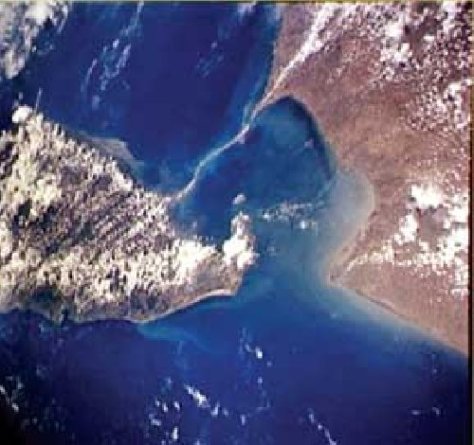
1171876859_ram_bridge

This project aims to reduce the shipping distance from the southern tip of the east coast of India to the northern parts of the coast, by constructing a route through the Gulf of Mannar to the Bay of Bengal. Ships will then be able to go northwards directly through the narrow Palk Strait between the east coast of India and the west coast of Sri Lanka, rather than swinging around Sri Lanka as at present. It is claimed that this project will save time and money for shipping companies, and is expected to radically increase the volume of traffic in that region.

In order to build the canal, an underwater bridge connecting India and Sri Lanka along the Palk Strait would have to be destroyed. Depending on your point of view this bridge is either a natural formation of limestone shoals (Adam’s Bridge), which linked Sri Lanka to the Asian continent in the last Ice Age, or it was built by Hanuman’s army to cross over to Sri Lanka to rescue Sita (Ram Setu as it tends to be referred to in English and North Indian media, but known locally as Ramar Sethu, in Tamil). Continue reading Ram Setu: The ecological argument against the Sethusamudram project
The colonial legacy of capital punishment

G Mohan Gopal writes:

The British and their collaborators had made a similar mistake. They thought that the common people of India would be deterred and cowed down by the violence of the state. A young scholar from Columbia recently shared with me data collected from the National Archives showing that the British were hanging on average three people daily in the 1920s in a desperate bid to frighten Indians into obeying British rule. We know how that ended. The government should know how this will end too. [Frontline]

And Fahad Shah meets Maqbool Butt’s mother:

“Both Maqbool sahib and Guru sahib were innocent and on the right path. India thinks that this freedom movement will stop but it won’t stop. It will continue. There are so many Maqbools in Kashmir” [The Kashmir Walla]


Sanjay and me: Zahir Janmohamed

Guest post by ZAHIR JANMOHAMED

House of a Naroda Patiya massacre survivor. Photo by Zahir Janmohamed

It was 2002. The week before I left for India, my father invited his Gujarati Hindu colleague Rupa Aunty for dinner at our house in California. When I was a kid, I tied the rakhi brotherhood bracelet on her son. When my mom was diagnosed with cancer, Rupa Aunty was the first to spend the night with us at the hospital.

“If you need anything at all,” she told me just before I left for India, “my family is from Ahmedabad and we will be there for you.”

I grew up in California mispronouncing names of Gujarati dishes like thepla and my trip to Ahmedabad in 2002 was the first time anyone in my family had returned since my grandparents left Gujarat for Tanzania in the 1920s. This – my father kept reminding me – was my trip “home”. Continue reading Sanjay and me: Zahir Janmohamed

On Ram Setu: ‘Mahakaal ka ling kiya hain?’

The Government of India again seems to be in the mood of going ahead with the Sethusamudram Shipping Canal Project that would reduce travel time for ships around coastal Tamil Nadu and Sri Lanka, and bring economic advantages to both countries. The project involves breaking limestone shoals that some regard to be the remains of the mythological Ram Setu. The controversy is an old one. In 2007, I had interviewed Hindutva ideologue Bharatendu Prakash Singhal, who was particularly vocal against the ‘destruction’ of the limestone shoals. Singhal is a former Rajya Sabha MP and a retired Indian Police Service officer. The bits from the interview that were directly about the Ram Setu controversy had appeared in Tehelka, but Singhal was more interested in talking about “mind, body and soul” than about Ram Setu. Here are the unpublished bits – though I had put them on my blog back then. Every word was transcribed faithfully from the recorded audio. Continue reading On Ram Setu: ‘Mahakaal ka ling kiya hain?’

Even you are very beautiful: Nikitha Suryadevara

Guest post by NIKITHA SURYADEVARA

Bhopal: Janata Dal (United) President Sharad Yadav today stunned many at a press conference in Bhopal when he called a woman reporter “beautiful.”

The journalist asked him whether he prefers Madhya Pradesh or Bihar – he has represented both in Parliament.

The chief of the Janata Dal (United) dodged a bullet by saying, “The whole country is beautiful.”

Then came the unexpected remark – “Even you are very beautiful,” he said.

Read the complete article here at NDTV


So I figuratively raised an eyebrow when I first read this (raising just one eyebrow is much harder than it looks, trust me I’ve tried). The reporter asked him a question designed to make the man fumble, but Mr Sharad Yadav is just too suave. When asked to pick between one of his two constituencies, he swiftly pointed to the reporters beauty instead. Well that seems like a logical conclusion. Continue reading Even you are very beautiful: Nikitha Suryadevara

Footprints on a Timeline: Gayatri Ugra

Guest post by GAYATRI UGRA; photographs by JAYANT UGRA

1-20 _MG_2200

“I travel so that people will lose track of me. Then I write, so they can find me again.”

I read these lines by Pierre Foglia, and I know nothing else about him. I do know more about why I travel: to retrace lost tracks. And why I write: not for people to find me but for me to find my own self. The last journey I made was just that. A long walk back into my past, and from there to the present in Kashmir, a living, growing, tense reality that I had to visit.

Facebook never served a better cause than ours when we planned our trip last June. On the spur of a moment of nostalgia, I posted this message on my page: “A family holiday in Kashmir. Any takers? All we need now is a travel agent and a motivator.” I could not have anticipated the response: so many of us wanted to come, hoped to come. My brother Gopal took up the task of making travel plans, reservations, bookings for accommodation, and ultimately made it happen for the eight of us that finally went. Continue reading Footprints on a Timeline: Gayatri Ugra

Why India Needs the Death Penalty

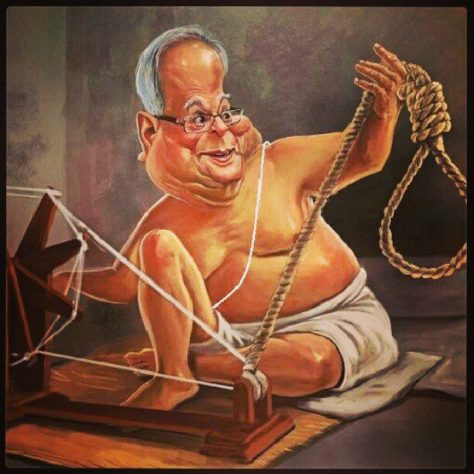
poltu-hangman-gandhi-india

So, The Law has been taking its Own Course, without any help from the political bankruptcy of the Kangress party. The Law took its Own Course and hanged Ajmal Kasab before a Parliament session and co-incidentally Afzal Guru before another Parliament session. The Law’s Own Course is stranger than the river Kosi which changes direction at will (actually, even the Kosi river changes directions because of corruption in the unnecessary embankments the Bihar government builds). Continue reading Why India Needs the Death Penalty

Dear Sisters (and brothers?) at Harvard

Letter from  Indian feminists VRINDA GROVER, MARY E JOHN, KAVITA PANJABI, SHILPA PHADKE, SHWETA VACHANI, URVASHI BUTALIA and others, to their siblings at Harvard

We’re a group of Indian feminists and we are delighted to learn that the Harvard community – without doubt one of the most learned in the world – has seen fit to set up a Policy Task Force entitled ‘Beyond Gender Equality’ and that you are preparing to offer recommendations to India (and other South Asian countries) in the wake of the New Delhi gang rape and murder. Not since the days of Katherine Mayo have American women – and American feminists – felt such a concern for their less privileged Third World sisters. Mayo’s concern, at that time, was to ensure that the Indian State (then the colonial State) did not leave Indian women in the lurch, at the mercy of their men, and that it retained power and the rule of the just. Yours, we see, is to work towards ensuring that steps are put in place that can help the Indian State in its implementation of the recommendations of the Justice Verma Committee, a responsibility the Indian State must take up. This is clearly something that we, Indian feminists and activists who have been involved in the women’s movement here for several decades, are incapable of doing, and it was with a sense of overwhelming relief that we read of your intention to step into this breach. Continue reading Dear Sisters (and brothers?) at Harvard

Punishment by Procedure: Saurav Datta

Guest post by SAURAV DATTA

“An advocate, by the sacred duty which he owes to his client, knows in the discharge of that office but one person in the world- the client, and no other…to protect that client at all hazards and costs to all others, and among others to himself, is the highest and most unquestioned of his duties…..Nay, separating even the duties of a patriot from those of an advocate, and casting them if need be to the wind, he must go on reckless of the consequences…” – Lord Brougham, “Law and Other Things”, Cambridge University Press (1937)

“Beneath this face that appears so impassive hell’s tides continually run.” – Walt Whitman,“You Felons on Trial in Courts”

“Nothing rankles more in the human heart than a brooding sense of injustice.” Justice Brennan’s words keep on ringing in my ears when I see the manifestly violent injustice meted out to Mohammad Afzal- the Courts tore to smithereens his inalienable right to a fair trial. The Parliament attack case was the first litigation I had been part of – I was a student intern in the chambers of Ms. Kamini Jaiswal, who was briefing Mr. Ram Jethmalani. I got to see and understand the case from the closest of quarters, and that maybe that exacerbates my indignation at this egregious miscarriage of justice. Continue reading Punishment by Procedure: Saurav Datta

One Billion Rising for Soni Sori: 8th March 2013 and till she is free.

We Rise Because We Refuse To Support State Violence On Women. 

We Rise Because Rape And Violence Against Women Under Any Circumstances is Unacceptable.

We Rise On This International Women’s Day To Demand Freedom for Soni Sori & Punishment For Her Perpetrators.

  Continue reading One Billion Rising for Soni Sori: 8th March 2013 and till she is free.

Capital Punishment – An Agenda for Abolition: Yug Mohit Chaudhry

This is (a slightly modified) text of the second Shahid Azmi Memorial Lecture, delivered at the Indian Law Institute on 9 February 2013 by advocate YUG MOHIT CHAUDHRY. The lecture and its topic had been scheduled days in advance, but co-incidentally, Mohd. Afzal Guru was hanged in the morning of the day of the lecture. The Shahid Azmi Memorial Lecture has been instituted by his friends, comrades and students, who want to keep alive the memory of his inspiring work. Advocate was shot dead in his office on 11 February 2010, at the age of 32. At the time of his murder, Shahid was fighting several terrorism cases, including of those falsely accused in the Malegaon blasts and the 26/11 Mumbai attacks.You can read tributes to Shahid Azmi in Kafila archives by Mahtab Alam, Arvind Narrain and Saumya Una, and Susan Abraham.

In Furman v. Georgia (1972), where the U.S. Supreme Court struck down the death penalty, Justice Marshall said that if citizens were fully informed about how people are sentenced to death, they would find capital punishment shocking, unjust and unacceptable. However, research on the death penalty and public awareness of the exact nature of the death penalty have been the most neglected areas in the abolition campaign in India. The last three challenges to the constitutionality of the death penalty in India were rejected by the Supreme Court, inter alia, on the grounds that there is no empirical data to support the abolitionists’ claims. Unfortunately, the situation has not changed at all, and even now there is hardly any research on this subject. Therefore, the highest priority in any abolition campaign is to produce empirical research on the death penalty. That, and doing our utmost to stop each proposed execution and, failing that, to make it as difficult as possible for the state to carry out an execution, adopting all legal, political and social means at our disposal.   Continue reading Capital Punishment – An Agenda for Abolition: Yug Mohit Chaudhry

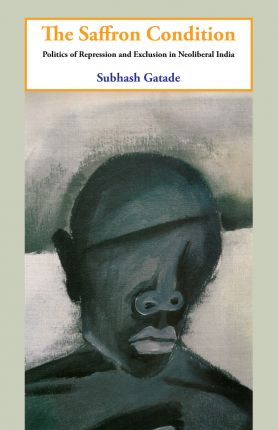
Diabolic designs and demonic actions : Review by Anand Teltumbde

Image


Indian history is fraught with ruling-class intrigues, which tend to keep the lower classes in a perennial state of confusion. The very fact that this history comes to us in a mythologised form is itself the biggest intrigue, obscuring as it does information about how the vast, diverse masses of the Subcontinent lived through the millennia. Reading Indian history, thus, becomes an exercise in speculation. If it provides one kind of insight for one group, it is capable of being interpreted equally plausibly in the opposite way by another. What eventually reaches the people is a partisan viewpoint at best and bewilderment at worst – a condition under which the ruling classes thrive.

 In this context, two books by Subhash Gatade, a committed intellectual and leftist activist, are significant additions to the works of the fast-diminishing community of scholars who continue their work with unstinting commitment in these confusing times. Continue reading Diabolic designs and demonic actions : Review by Anand Teltumbde

What is wrong with this picture? Carole Vance

Guest post by CAROLE VANCE

Two faculty members at Harvard, associated with gender studies, convene a Policy Task Force, designed to “to offer recommendations to India and other South Asian countries in the wake of the New Delhi gang rape and murder” and in this semester “to produce a working paper that advises on the implementation of the recommendations from the Verma Committee”.   This is not a student initiative, though a meeting with students is scheduled to invite their input, along with that of the larger Harvard community. Continue reading What is wrong with this picture? Carole Vance

Unintended consequences of feminist action: Prabha Kotiswaran

Guest post by PRABHA KOTISWARAN

Taking off from the debate here on the Harvard Task Force, I’d like to flag some  disagreements among feminists on law reforms. There are many strains to this debate – I will only engage with a few.

No feminist, whether of Indian origin or not, whether primarily located in India or not, is insecure about feminists/lawyers around the world working on rape in India. Circuits of feminist scholarship and activism become so inter-disciplinary and transnational that maintaining and policing turf (if at all that were possible) is an utterly useless endeavour. Continue reading Unintended consequences of feminist action: Prabha Kotiswaran

On bloodlust: notes towards four imminent executions: Rijul Kochhar

Guest post by RIJUL KOCHHAR

[This June 19, 1993 photo shows Veerapan aides Simon (front row, second from left) and Madaiah (fourth from left) among other landmine blast accused. Courtesy The Hindu/PTI.]
[This June 19, 1993 photo shows Veerapan aides Simon (front row, second from left) and Madaiah (fourth from left) among other landmine blast accused. Courtesy The Hindu/PTI.]

Into my heart an air that kills
From yon far country blows:
What are those blue remembered hills,
What spires, what farms are those?

That is the land of lost content,
I see it shining plain,
The happy highways where I went
And cannot come again.

~A.E. Housman

ज़िन्दगी और मौत ऊपर वाले के हाथ हैं जहापनाह, उसे ना आप बदल सकते हैं न मैं, हम सब तोह रंग-मंच की कठपुतलियाँ हैं, िजनकी डोर उपरवाले की उँगलियों मे बंधी हैं: कब, कौन, कैसे उठेगा, कोई नहीं बता सकता.

~Anand (1971)

I write in an evening shrouded in anticipation, but it is an anticipation of death.

Continue reading On bloodlust: notes towards four imminent executions: Rijul Kochhar

Talk Hindutva, Sell Narcotics?

Curbing Freedom of Press: The Karnataka Way

ImageA 10-member group allegedly assaulted a staff member of Kannada daily Karavali Ale at Kulai here on Wednesday night.According to B.V. Seetaram, director and chairman of Chitra Publications, which publishes the paper, Harish Putran (36), office assistant, was attacked when he was waiting near Vishnumurthy temple to catch a bus back home.He was hit with iron rods and wickets and chased by the attackers, Mr. Seetaram said. Mr. Putran managed to save himself by hiding behind a shop.

Mr. Seetaram suspected the involvement of a rightwing group in the attack. He said Karavali Ale published a report on Wednesday alleging the rightwing group’s involvement in the sale of narcotics in the city. Copies of the newspaper were burnt and some vendors were threatened against selling the Wednesday’s edition, he said.Mr. Putran has been admitted to a private hospital. A complaint has been filed with the Surathkal police.

(Karavali Ale employee attacked : Staff Correspondent, The Hindu – Mangalore, February 7, 2013)

It has been a ‘happening’ week. Celebrations around one billion rising held in different parts of the world.Soni Sori acquitted in four cases. Dr Sunilam and two of his associates getting bail from Jabalpur high court after spending three months in Bhopal jail. More than two hundred intellectuals, activists writing to President of India about the manner in which Afzal Guru was hanged.  Interestingly in the melee of news certain troubling developments in south of Vindhyas have not got enough attention they deserve. And they concern the curbing of media by majoritarian elements with due connivance of the people in power. Continue reading Talk Hindutva, Sell Narcotics?

PUCL statement on the President’s rejection of the mercy pleas of four Veerappan associates

Press release put out on the evening of 16 February by the PEOPLE’S UNION FOR CIVIL LIBERTIES

CHENNAI: The PUCL strongly condemns the rejection by the President of India of the commutation petitions of Simon, Meesakara Mathayan, Bilavendran and Gnanaprakasam. Equally condemnable is the action of the Prison Authorities of Belgaum Central Prison, Karnataka who in the morning of 13.2.2013 merely intimated orally to the convicts of the rejection of their mercy petitions without giving them the written orders of rejection. In sharp contrast, signed acknowledgements of receipt have been obtained from all 4 convicts! Continue reading PUCL statement on the President’s rejection of the mercy pleas of four Veerappan associates

Who’s afraid of the Karachi Literature Festival?: Ayesha Siddiqa

Guest post by AYESHA SIDDIQA

Photo via Dawn.com

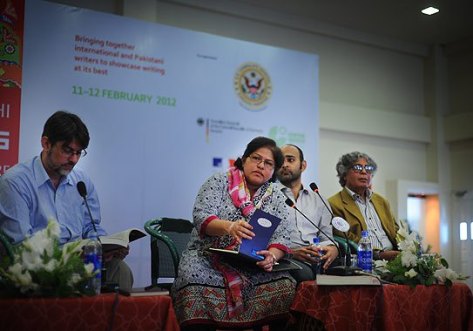
Here we are seemingly in an age of intellectual freedom, burgeoning media industry and literature festivals. There are numerous festivals held all over South Asia celebrating books new and old, bringing people together for exchange of ideas. But these festivals seem to be wrapped in their own politics. In some cases, certain cliques that want to encourage a peculiar perspective dominate the show. I understood this through my interaction with the Karachi Literature Festival. Continue reading Who’s afraid of the Karachi Literature Festival?: Ayesha Siddiqa

Harvard to the rescue!

Some good news for embattled and weary Indian feminists. All those endless submissions to the Verma Committee prepared and submitted, all those critiques of the Ordinance written and disseminated, all those street protests, all those meetings with students and the public, all those delegations to government officials, ministers…not to mention decades of efforts to amend the rape laws.

It’s been a long hard haul, so it’s a great relief that the Harvard Law School has stepped in to take this burden off our shoulders. Continue reading Harvard to the rescue!

Raining Rape-Speech in Kerala

It is hardly news in Kerala by now that its been raining misogynists, rape-talkers, and swollen-rotten masculine egos in these early days of 2013. The PJ Kurien controversy has been a trigger of course. But I am astounded at the collective frenzy of Congress stalwarts. Kerala today is like a coconut garden taken over by a bunch of supremely drunken … well .. simians. Here we are, helplessly watching the tipsy horde ascend the fruit-laden coconut palms, pulling down ripe fruit and raw ones, tender leaves and drying ones, with  nary a care for all of us down here! Everyone, from senior leaders,  many insecure dumb ass-males on FB and Youtube, to minor lawyers in small-town courts with sadly dessicated minds but hugely swollen male-egos, to elected MLAs on the floor of the Kerala State Assembly, and judges whose guardian-angelic misogynist aura glints a bit more menacingly in private conversations,each of them seem to be up their own coconut tree throwing down various half-witted, asinine comments,venting their immense distrust of women who don’t fit into the homely-comely-motherly stereotype. Continue reading Raining Rape-Speech in Kerala

‘Death penalty in India is a legal lottery’

Justice Ajit Shah says that it has been proven beyond doubt that death sentence does not serve as a deterrent against crime; the reason why two third of the world has abolished it all together. He explains the bizarre nature of how the death sentence in India is judge centric and how under the same set of circumstances, some have received the death sentence, while others have been given life and still others acquitted. Death sentence is judge centric with many judges having a history of doling out death penalties and other being kind. Death sentence is thus nothing but a ‘legal lottery’ where if you are lucky you get a lenient judge you survive, else you end up at the gallows. He talks about the caste and class connection to death sentence, where the lower castes and lower classes are usually the ones sent to the gallows because they cannot afford proper legal aid. He says that this discriminatory nature renders death penalty unconstitutional and that there is the need for a larger debate on the same.  Continue reading ‘Death penalty in India is a legal lottery’