Category Archives: Centre watch

India must deliver on its repeated commitments to the human rights council: Amnesty International

This release was put out by AMNESTY INTERNATIONAL on 1 June

On 24 May 2012, India’s human rights record came under renewed international scrutiny during its second Universal Periodic Review (UPR) at the UN Human Rights Council. Amnesty International welcomes the recommendations made to India by the reviewing states, many of which reflect concerns raised previously by the organization.

Amnesty International is disappointed, however, that despite India’s assertion that it sees the UPR mechanism as one of “constructive engagement,” the government did not immediately accept any of the recommendations made, some of which were put forward in 2008 during India’s first UPR. Amnesty International urges India to demonstrate by September 2012, a genuine resolve to deliver on its outstanding human rights commitments and the UPR recommendations, when the report on India’s second UPR is formally adopted at the 21st session of the Human Rights Council. Continue reading India must deliver on its repeated commitments to the human rights council: Amnesty International

“The more they censor the internet the bigger we become” – An interview of Anonymous India

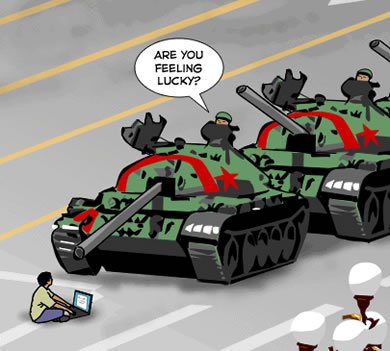
In which I interview “Anonymous India” who have organised a massive protest against internet censorship across 11 Indian cities on 9 June.
Some say such attacks (hacking and defacement of Web sites) could be used by the political class to actually strengthen their argument in favour of control and regulation of the Internet. What do you say to that?

Anamikanon: People on the ground are vulnerable to people with a lot of power and no problems misusing it. Anonymous can’t be found to defame, threaten, suppress, stall…. wrong means? Ok. Worth it.

Netcak3: I say the more they censor the Internet, the bigger we become. We strive in users from across the world. Pro tip: Once an idea has been made, you cannot kill it.

Anamikanon: In my view, these are the means that can be safely used without risking life, limb, careers, reputations, family…

Gummy: Defacing is like posting a nill which is illegal and can be removed. Like people post their advertisement bill (poster) at the back of buses and other public places.

Anamikanon: Except we post it in inside their drawing rooms! [Read the full interview.]

Produce Fasih Mahmood before an Indian Court, NOW: JTSA

This release comes from the JAMIA TEACHERS’ SOLIDARITY ASSOCIATION
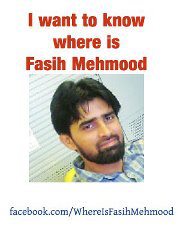
It has been over two weeks that Fasih Mahmood was practically disappeared from his residence in Jubail, Saudi Arabia, where he worked as an engineer. On 13 May, Sunday, Mahmood was taken away by a group of Indian and Arab men, all in civil dress, and their house searched, while his wife, Nikhat Perveen, was held in a room by an Arab woman. Continue reading Produce Fasih Mahmood before an Indian Court, NOW: JTSA

Oppressing the teacher, democratic style

( In 2006 the Parliament had debated and lambasted  Hindi NCERT textbooks prepared as part of the NCF, 2005 process . Our Parliamentarians were then offended  by Premchand, Pandey Bechan Sharma Urg, Dhoomil, M. F. Husein,  Avtar Singh Pash and Omprakash Valmiki. The argument of hurt sentiments had united political parties from left to right to demand action against  the culprits. In the eyes of MPs like Sushma swaraj , Ravi Shankar Prasad and Sita Ram Yechury ,  Hindi textbooks  were full of offensive and abusive words and descriptions which could hurt Brahmin, Women , Dalit and Hindu sensibilities. They were also very concerned about the the effect that these books were to leave on the impressionable minds of our children. The extra-ordinary unity seen this time in the Parliament in   the case of  the  ‘offending’ Political science texts books is not unprecedented. What we need to ask is that why did we not react to This debate and assault on Hindi textbooks then.

Back then I had published this open letter to our MPs in Tehelka. I am re-posting it here to bring historical context to the ongoing debate on an NCERT political science textbook.)

In an open letter, Apoorvanand asks members of Parliament to stop politicising education

Do we really need to legislate on how languages should be used by our writers? Should the State be given authority to issue licenses to our poets? Continue reading Oppressing the teacher, democratic style

Net Loss: Sajan Venniyoor

Guest post by SAJAN VENNIYOOR

Image via dailygalaxy.com

Net: noun, verb.

1. a contrivance of strong thread or cord worked into an open, meshed fabric, for catching fish, birds, or  other animals
2. anything serving to catch or ensnare

The other day, in a Parliamentary debate on Internet Rules 2011, the leader of the Opposition in the Rajya Sabha said something so absurd that for a moment I thought he had joined the government. “You can control print and electronic media, but not internet,” he said, only removing his foot from his mouth to add, “If internet had been in existence, Emergency would have been a fiasco.”

Actually, if the Emergency had been in existence, the Internet would have been a fiasco. Continue reading Net Loss: Sajan Venniyoor

India asks Google to remove 2 items every 3 days

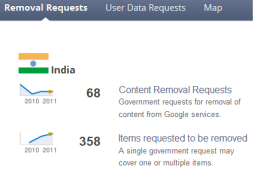
Google’s just released fourth biannual Transparency Report says that between January and June 2011, India asked it to remove 358 different items from various Google-owned web services such as Orkut and YouTube. Google complied in 51% cases. The requests were made by various central and state government departments through 68 different requests. The fourth such report, it goes against communications minister Kapil Sibal’s claims that internet companies are not willing to “self-regulate”.

Worryingly, the report also confirms the allegations that what bothers government officials the most about the internet is not defamation or hate speech but government criticism. Continue reading India asks Google to remove 2 items every 3 days

(Updated) List of websites blocked in India

Given below is a list of websites blocked in India by one or more Internet Service Providers. This list was hacked from Reliance servers by the hacker group ANONYMOUS, which claimed in a web press conference that while most of this list of 434 is blocked as a result of government or court orders, some have been blocked by Reliance on its own. The ones blocked by Reliance on its own relate to Satish Seth, a Reliance ADAG executive. Continue reading (Updated) List of websites blocked in India

A democratic process in Pakistan: Abdullah Zaidi

Guest post by ABDULLAH ZAIDI

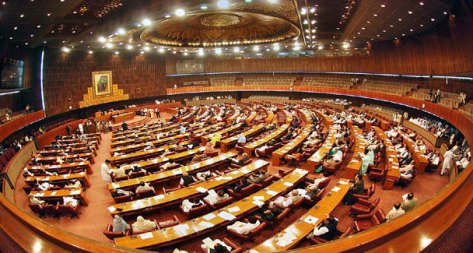
Pakistan’s National Assembly

In a way, the story of Pakistan is the story of a centralised state manipulating the provinces. It is also the story of an overgrown and overfed military destabilising all political forces that posed a challenge to its narrative. It is also the story of institutions wrestling for their due and undue share of power. Finally, it is the story of a powerful state and a weak society. The one thing that is common to all of these dynamics is the power struggle between elected and unelected institutions.

After return to civilian rule in 2008, the country has seen several developments that have somewhat changed these dynamics. Continue reading A democratic process in Pakistan: Abdullah Zaidi

Forging a Nepal for all its peoples

As the constitutional endgame approaches, Nepal is witnessing its most fierce and polarised political debate since the process to transform the state began with the Comprehensive Peace Agreement in 2006. Strikingly, it is not a battle between political parties, but different social groups.

This is the battle over the nature of federalism, the boundaries of future states, and the names and number of provinces. The issue of state restructuring perhaps resonates most among ordinary citizens, especially those belonging to communities excluded from the power structure due to their ethnic, caste, regional and religious identities. It is a battle that has been fought in Constituent Assembly (CA) committees, the State Restructuring Commission, and in the past week, on the streets. Continue reading Forging a Nepal for all its peoples

National Appeal on Koodankulam Becomes a Rallying Point for Solidarity Actions Across India

The “Urgent Appeal to the Conscience of the Nation on Koodankulam” open for signatures on DiaNuke.org was released yesterday, May 20th,  in New Delhi, Mumbai and Kolkata. Concerned people and activists are planning release events and readings of the appeal

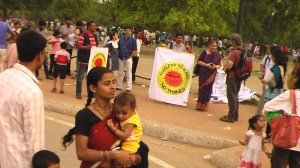
India Gate, Delhi

in Chennai, Bangalore, Pune, Hyderabad and other cities in coming weeks. Grassroots organisations are distributing the appeal as pamphlet, translated in regional languages.

This Sunday, Vandana Shiva, renowned environmentalist and eco-feminist, released the national appeal on Koodankulam at the India Gate in New Delhi. Releasing the appeal, she expressed her anguish on the undermining of democracy by the Indian government in its pursuit of nuclear energy. Inviting NIMHANS doctors to ‘treat’ the mindset opposing nuclear energy projects is reflective of the nuclear-obsessed government’s contempt for its own people and their concerns, she said. Continue reading National Appeal on Koodankulam Becomes a Rallying Point for Solidarity Actions Across India

In Defense of Critical Pedagogy: A Petition

The following is a petition initiated by a group of scholars who have been centrally involved in the debate on pedagogy and the writing of textbooks that followed National Currriculum Framework 2005

We have been watching with deep dismay the events as they have unfolded on the floor of the Indian Parliament and outside. Uproar against an individual cartoon has now snowballed into a wide-ranging attack against the new NCERT textbooks. The office of one of the Advisors of the Political Science textbooks has been ransacked, the Political Science textbooks have been withdrawn from circulation, and the Government has resolved to conduct an inquiry into the role of those who sanctioned the inclusion of the offending material in the textbooks. Clearly what is at stake here is not just the life of cartoons on the pages of school textbooks.

But the fear of cartoons is not unimportant. It tells us a lot about the democracies we now inhabit. Jawaharlal Nehru told Shankar Pillai ‘Don’t spare me Shankar’. B.R. Ambedkar saw the cartoon that is now being seen as ‘offensive’. He had no problem with it. Nehru and Ambedkar, and great democrats like them, were aware of what cartoons mean. They were aware that creative cartoonists like Shankar or Laxman can encourage us to question what is taken for granted, reveal the ambiguities and contradictions of individuals, persuade us to see things in a new light. India has a long creative tradition of satire and irony. The productive power of laughter has been used not only in movements for social justice, but in children’s literature as well. If we celebrate this tradition, we celebrate democracy. Only in non-democratic countries is there a fear of cartoons. Continue reading In Defense of Critical Pedagogy: A Petition

[UPDATED] Urgent Appeal to the Conscience of Nation on Koodankulam

Statement issued from the struggle against the Koodankulam nuclear power plant.

This statement is a reflection of our collective frustration and instead of being sent to the Government, it will be presented before people of India on May 20th (6 pm) at the India Gate, New Delhi.

It is already endorsed by prominent figures like Prashant Bhushan, Vandana Shiva, Lalita Ramdas, Partha Chatterjee, Parful Bidwai, Achin Vanaik, Gnani Sankaran, John Dayal, Meher Engineer, Sandeep Pandey.

Please send the e-petition on DiaNuke.org.

Endorsements can also be directly sent to cndpindia@gmail.com

Dear Fellow Citizens of India,

On the occasion of our Parliament, the pinnacle of democratic governance, celebrating its 60th anniversary, our hard earned democracy is being ruthlessly repressed and violently suppressed. Within the accelerated race towards ‘destructive development’ and the generation of nuclear power to fuel such ‘development,’ entirely peaceful mass protests voicing people’s legitimate dissent are brutally put down. The common man, woman and child are unheard. In utter desperation, people at large are surrendering their ‘Voter ID cards,’ the ultimate symbol of ‘people’s power,’ which is the essence of any genuine democracy. Can there be a more ominous way to dissent?

Continue reading [UPDATED] Urgent Appeal to the Conscience of Nation on Koodankulam

Please Sir, may I take a newspaper into my class?

At last, the real anxieties lurking behind what has come to be called the “Ambedkar cartoon” controversy are out in the open. It is hideously clear by now that MPs “uniting across parties” are acting as one only to protect themselves from public scrutiny, debate and criticism. It turns out, as some of us suspected all along, that the “sentiments” that have been “hurt” this time are the easily bruised egos of our elected representatives.

(By the way, you may have noticed that “MPs unite across party lines” is not a headline you will ever see after a massacre, a natural calamity, brazen public acts of sexual violence  against women and so on.  Oh no. Such unity is reserved only for utterly self-serving and anti-democratic interpretations of  “Parliamentary privilege”).*

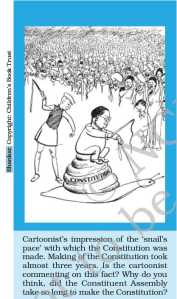
Artist: Abu Abraham

Declared HRD minister Kapil Sibal – “Much before the issue came to parliament, I had already taken action. I called for the NCERT text books and I looked at other cartoons. I realised that there were many other cartoons that were not in good taste and disparaging in nature. They were not sending the right message to our children in classrooms”.

Continue reading Please Sir, may I take a newspaper into my class?

Cartoons All! Politicians and Self-Seekers

The uproar over what is being referred to as the ‘Ambedkar cartoon’ in the class XI textbook prepared by NCERT first began over a month ago, that is to say, almost six years after the books have been in circulation, been taught and received high praise for their lively style and a critical pedagogical approach (more on this below).  It was a political party – one of the factions of the Republican Party of India – that decided to kick up a ruckus over ‘the issue’ – that is, the ‘affront’ to Dr Ambedkar that the cartoon in question supposedly constitutes, and the resultant ‘hurt sentiments’ that it has caused. Very soon everyone began to fall in line, and practically every member of our august Parliament was vying with one other to prove that  they were indeed more hurt than their colleagues. One of them, Shri Ram Vilas Paswan has even demanded that the NCERT itself should be dissolved!

Good old Jurgen Habermas – and good old Habermasians  – have always invested a lot in forums like the parliament, that are to them the hallowed institutions of ‘rational-critical discourse’ where through reasoned argument people convince each other. That is how the voice of Reason ultimately prevails in democracies. I have always been suspicious of this claim and have thought that Habermas’ empirical work on the decline (‘structural transformation’) of the public sphere was more insightful than his normative fantasies. Long long ago, his empirical work on the transformation of the public sphere showed that it was the rise of political parties that had actually destroyed all possibilities of ‘rational-critical discourse’, where organized passion in the service of immediate political interests carried the day.

Continue reading Cartoons All! Politicians and Self-Seekers

14 farmers committed suicide and the Times of India said no one died

The Times of India did not hear of any dead people because Monsanto paid for the taxi from the city to the village for its reporter. Or is that all that Monsanto paid for? P Sainath in The Hindu:

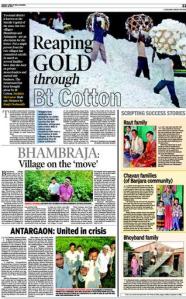
The 2008 full-page panegyric in the TOI on Monsanto’s Bt Cotton rose from the dead soon after the government failed to introduce the Biotech Regulatory Authority of India (BRAI) Bill in Parliament in August 2011. The failure to table the Bill — crucial to the future profits of the agri-biotech industry — sparked frenzied lobbying to have it brought in soon. The full-page, titled Reaping Gold through Bt Cotton on August 28 was followed by a flurry of advertisements from Mahyco-Monsanto Biotech (India) Ltd., in the TOI (and some other papers), starting the very next day. These appeared on August 29, 30, 31, September 1 and 3. The Bill finally wasn’t introduced either in the monsoon or winter session — though listed for business in both — with Parliament bogged down in other issues. Somebody did reap gold, though, with newsprint if not with Bt Cotton. [Full story]

Why do people read the Times of India when we know it tells us lies that corporations pay it to tell us?

Where do the defenders of the free market disappear when stuff like this comes out?

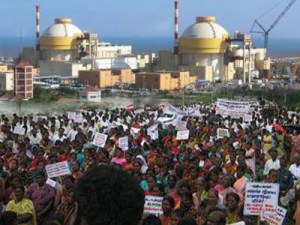
Koodankulam – Anti-nuclear Struggle Continues: Deepa Rajkumar

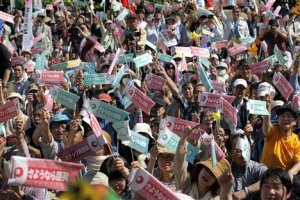
As Japan shut down its last reactor, the Koodankulam project is to go critical in ten days.  Because Japan depends on local consensus for its nuclear decisions, unlike the World’s Largest Democracy, the views of Japanese people counts for something. Thousands of Japanese marched in celebrations to celebrate  the switching off of the last of Japan’s 50 nuclear reactors on Saturday May 5th. 

Traditional ‘koinobori’ fish-shaped banners for Children’s Day have become a potent symbol of the Japanese anti-nuclear movement, symbolizing the commitment to leave a safe and clean earth to children.

Meanwhile, back home in Koodankulam, as  this guest post by DEEPA RAJKUMAR reminds us, unrelenting state repression continues of the massive, non-violent struggle against the proposed nuclear plant there.

6,800 people in Koodankulam face charges of sedition and/or waging war against the state, possibly the largest number so charged ever, in colonial or independent India, in just one police station.

Sathish Kumar and R. S. Muhilan began an indefinite hunger strike from 25th April in Tiruchirapalli prison, Tamil Nadu. They were demanding a fair trial, stoppage of new charges being filed against them and the withdrawal of existing false charges against them. Continue reading Koodankulam – Anti-nuclear Struggle Continues: Deepa Rajkumar

Condemn the Arrest of Advocate Shanavas by “Hi-tech Cell”!

This statement has been released by Manisha Sethi, Adeel Mehdi, Ahmed Sohaib, Sanghamitra Misra and others foJAMIA TEACHERS’ SOLIDARITY ASSOCIATION
Demand his immediate release!

The undersigned condemn in strongest terms the arrest of Advocate Shanavas, a leading human rights activist of Kerala. Advocate Shanavas, who lives and practices in Trivandrum, was arrested on 1st May 2012, and his office raided and his files seized by the Crime Branch of the state. Ostensibly, his arrest has been made by the “Hi-tech Cell” of the Kerala Crime Branch for conspiring to leak intelligence communication in the infamous Email surveillance scandal that rocked the state a few months ago—where a leading daily of the state has alleged that the Hi-tech Cell was snooping on the emails of nearly 250 Muslim individuals and institutions. Continue reading Condemn the Arrest of Advocate Shanavas by “Hi-tech Cell”!

…and now Judicial Impunity?: JKCCS

This release comes from the JAMMU KASHMIR COALITION OF CIVIL SOCIETY
2 May 2012: The recent Supreme Court judgment in the Pathribal case is very disappointing.
Fake encounters, along with various other human rights violations, have been a reality for the people of Jammu and Kashmir over the last twenty two years. In 2008, according to media reports, Supreme Court Justices Aftab Alam and G.S. Singhvi made observations in court in relation to the practice of fake encounters for rewards in Jammu and Kashmir. With about 8000 persons disappeared, 70,000 persons killed, numerous cases of torture, rape and other human rights violations, Jammu and Kashmir has seen institutional denial of justice. Continue reading …and now Judicial Impunity?: JKCCS

Pathribal ruling a setback for justice in Jammu and Kashmir: Amnesty International

This press release comes from AMNESTY INTERNATIONAL

1 May 2012

Special powers that allow India’s armed forces suspected of involvement in extra-judicial killings to sidestep the civilian courts have been reinforced in a disappointing court ruling over the notorious killings of five Kashmiri civilians 12 years ago.

India’s Supreme Court has contradicted a reported statement by its Justices in February 2012 that army personnel suspected of murder should be placed in front of a civil judge.

Instead it opted to give military authorities eight weeks to bring about the court martial of eight army officials allegedly responsible for the unlawful killing of five youths in Pathribal, in March 2000. Failing that, the Central Bureau of Investigation (CBI), may apply to prosecute the army personnel. Continue reading Pathribal ruling a setback for justice in Jammu and Kashmir: Amnesty International

Unpacking India’s Internet Censorship Debate

Recent debates on Internet censorship in India have focused to the allegedly free-for-all nature of the internet. Those of us who have argued against internet censorship have been somewhat misrepresented as arguing for absolute freedom whereby the reasonable restrictions laid down in Article 19 (A) of the Constitution of India don’t apply. Nothing could be farther than the truth.

It has been said that the internet can be used to incite violence, particularly inter-communal violence, and there needs to be a mechanism to prevent that. Communications minister Kapil Sibal wants internet giants to “self-regulate” for this reason, denying that he wants to censor political dissent on the internet. Following on the heels of his expression of such concern in December 2011, Mufti Aijaz Arshad Qasmi and journalist Vinay Rai filed cases against various internet companies for similar material that is religiously offensive.It needs to be pointed out, however, that the cases filed by Qasmi and Rai are under the Indian Penal Code and do not even invoke the Information Technology Act. So if the Indian Penal Code can be used against religiously offensive material why do we need any new mechanism to “regulate” or even “self-regulate” the internet? Continue reading Unpacking India’s Internet Censorship Debate

‘Sau Mein Pachees Haq Hamara’: Caste of a Scam

This press release was put out by the SC/ST BUDGET ADHIKAR ANDOLAN after a large protest in Delhi on 24 April

Massive uproar and agitation by over a thousand SC/ST’s marked the initiation of the campaign “Sau Mein Pachees Haq Hamara” at Jantar Mantar on 24 April, 2012. The protesters flooded the roads of Jantar Mantar as they marched along the high pitch drum beats, adding to the rhythm of the march. Even the scorching heat did not deter those who joined the protest march from several other states. They hooted in unison, “Hamara Haq Idhar Rakho!” Continue reading ‘Sau Mein Pachees Haq Hamara’: Caste of a Scam