Category Archives: Genders

Make Delhi Metro safe for women! Please Mend The Gap

PLEASE MEND THE GAP is a citizen- led initiative to promote gender equality and commuter safety in public spaces. 

Follow these two links for some background:

A few weeks ago, a friend was molested on the Yellow line of the Delhi Metro

A flash mob of citizens got together to protest against the Delhi Metro, claiming that it is promoting a gender divide.

Sign PMTG’s Petition to Chief Minister and DMRC

We believe that a majority of women do not feel safe while travelling in the Delhi Metro. We have spoken to a cross-section of Metro commuters who have shared with us their experiences most of which include instances of verbal and physical harassment mostly faced by women, specifically in the women’s-only compartment. In fact, a few days ago, some of the members of our group who were traveling at night observed that the women’s-only compartment was populated with men who had occupied almost all the seats forcing the women to stand, leaving them with no choice but to actively demand the seats they were entitled to. The men were unapologetic and dismissive. Most shrugged off the women’s protest by claiming falsely that the women’s-only compartment turns general post 9 p.m..

Women who choose to travel in the general compartment are also harassed. There have been many instances where men have told women that they are not welcome in this compartment and should use the compartment reserved for them. This attitude has become so deeply entrenched in commuters’ mindsets that most accidentally refer to the general compartment as the ‘men’s compartment’. There have been times when authorities have driven out men from the women’s-only compartments, but without having imposed any fine whatsoever…

The situation needs to change. It is the duty of the State and the DMRC to spearhead this change.

Read the full petition and sign.

Dominique Strauss-Kahn and the union maid: Dean Baker

A little-reported fact of the Dominique Strauss-Kahn case is that his accuser is a union member – with rights the IMF opposes, says Dean Baker in the Guardian.

But do listen to this song first!


“The reason that this is an important part of the story is that it is likely that Strauss-Kahn’s alleged victim might not have felt confident enough to pursue the issue with either her supervisors or law enforcement agencies, if she had not been protected by a union contract. The vast majority of hotel workers in the United States, like most workers in the private sector, do not enjoy this protection.

Received via Mini Mathew

Choice in the labour market – sex work as “work”

The summary of preliminary findings of the first pan-India survey of sex-workers is now available on-line.  3000 women from 14 states and 1 UT were surveyed, all of them from outside collectivised/organised and therefore politically active spaces, precisely  “in order to bring forth the voices of a hitherto silent section of sex workers.”

The significant finding is this: About 71 percent of them said they had entered the profession willingly.

(The data on male and transgender sex workers has not been processed yet).

The study was conducted by Rohini Sahni and  V Kalyan Shankar under the aegis of the Center for Advocacy on Stigma and Marginalisation (CASAM),  supported by Paulo Longo Research Initiative (“a collaboration of scholars, policy analysts and sex workers that aims to develop and consolidate ethical, interdisciplinary scholarship on sex work to improve the human rights, health and well being of women, men and transgenders who sell sex.”). The study was supported by a large number of groups, organizations and individuals in each state, who helped to conduct the surveys.

This background is important, because it appears to be a study that is well grounded, and drawing on large networks of local interconnections.

Continue reading Choice in the labour market – sex work as “work”

Modest? Sexy? Or just an athlete?

By goddess, it’s that spot again – at once familiar and deeply uncomfortable. Us feminists in the same rage as the patriarchs and religious right, over the same damn thing. For very different reasons, we bellow (cutely), but is anybody listening?

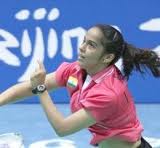
The  Badminton World Federation has announced its new dress code that requires women players to wear skirts  “to ensure attractive presentation of badminton.” Almost every Indian woman player has objected, saying that dress should be one’s personal preference.

Of course most workplaces have dress codes.  So this is about more than simply an infringement of individual tastes. This is about the utter blatant sexism of this particular requirement. Basically, what’s the BWF saying quite shamelessly? That they expect more people to come to the sport if they can see suggestively flying skirts (on women). Even if there are shorts beneath, which they have grudgingly permitted. It’s not enough to show legs, skirts have to fly. Continue reading Modest? Sexy? Or just an athlete?

Enter the Paavam: Women Candidates in Kerala’s Elections

I am not surprised that  neither the LDF nor the UDF both of which had endorsed the reservation of fifty percent seats in the panchayats for women, have not fielded a significantly higher number of women in the forthcoming elections to the Kerala State Assembly.  Anyone who has observed the shaping and widening of the division between ‘high politics’ and ‘local governance’ in Kerala since the mid-1990s can well see that the rules of the game remain totally unchanged in ‘high politics’ and it will stay so even if ‘local governance’ is entrusted completely to women’s love and care.  None of the women leaders who entered public life through the panchayats and have by now completely got beyond the loving-caring-maternal stereotype are in, of course. At least one of them,Latika Subhash, who had indeed been a successful leader in local governance, saw the writing on the wall well in advance. I had a chance to listen to an interview she gave a researcher from our team studying gender and governance a few years back, in which she clearly indicated that in order to move up the political ladder, it was necessary to move into high politics. This is how she justified her decision to get back into politics despite being quite popular as a leader of the panchayat.Not surprisingly, most of the women who have indeed become candidates are well-versed with the ways of high politics and possess the necessary connections. Continue reading Enter the Paavam: Women Candidates in Kerala’s Elections

Compromise in Rape Cases: Whither Constitutional Morality?: Kalpana Kannabiran

Guest post by KALPANA KANNABIRAN

The Supreme Court judgement reported in some newspapers on 24 February 2011, legitimizing compromise in rape cases, is cause for serious concern.  For thirty years now human rights groups and women’s groups have fought difficult battles to have rape recognised as a serious offence both in communities and by courts.  Rights advocates have been concerned by the fact that all too often the view of the judiciary converges with the view of the community in seeing women’s sexuality as communally owned property, thus removing any articulation of violence from the crime of rape.

Some years ago, at a workshop of judicial officers, we had one senior officer arguing that if a man found guilty of raping a woman offered to marry her, this offer should be considered as a “mitigating circumstance,” and his sentence reduced to the bare minimum.  That done, since his continuing in jail will be detrimental to his new family life, he should be set at liberty under the provisions of the Probation of Offenders Act.  Fortunately in that gathering, the majority of officers, most of them junior to the officer concerned, felt strongly that this is a gross misapplication of the law.  But the existence of the possibility that a judge might actually rationalize the gross misinterpretation of a law as critical to women as this, has far reaching consequences.

Continue reading Compromise in Rape Cases: Whither Constitutional Morality?: Kalpana Kannabiran

Madan Gopal Singh on the Jugni debate

Guest post by MADAN GOPAL SINGH


Arif Lohar sining a Jugni with multiple beat instruments – dholak, dhol and bongo and chimta. Even the alghoza – two short and narrow reed flute like instruments – used to keep fast rhythm between three to four notes.
*

With extreme reluctance, I am trying my hand at English even though my command of this language remains highly suspect. After a recent discussion on Kafila, I felt encouraged to contribute my two-penny bit to the lively debate about Jugni… Continue reading Madan Gopal Singh on the Jugni debate

Stop gendering children: Urooj Zia

Image by Frank Baron / The Guardian

Guest post by UROOJ ZIA

A couple of months ago, I was given two books which I was asked to review. Published in India, both were compilations of abridged versions of popular children’s fairy tales and fables. One book, however, had a pink cover; the other was bound in blue. The former said clearly, on the cover, that it was meant for ‘little girls’, the latter was for ‘little boys’.

Having grown up surrounded by books, I wondered, when I saw these two copies, as to how one could tell which stories were meant for girls and which were meant for boys. As a child, I never saw the difference. Lo and behold, the tables of content in both books gave me my answer (and destroyed my peace of mind): the volume with the pink cover was full of stories about lost princesses and damsels in distress seeking saviours; the one with the blue cover had stories such as ‘the boy who cried wolf’. Continue reading Stop gendering children: Urooj Zia

The ‘new’ Indian filmi woman: Arpita Das

Guest post by ARPITA DAS

In these times of celebrating ‘small’ films, ‘new’ unheard-of young directors, little India, and non-filmi characterizations, it seems to have become mandatory for critics to praise every film claiming to build its  narrative around a so-called non-mainstream idea.  If this were not so, two ‘small’, ‘different’ films which created a lot of hype recently, would not have gathered as much post-release steam.  I am talking about No One Killed Jessica and Manu weds Tanu.  Both have been promoted and described in reviews as bold films, with star heroines showing a no-holds-barred temperament and verbal acumen, and this being the central focal point of their ‘different-ness’, both have made that oft-repeated Bollywood claim, ‘pikchar hatke hai’. If the films are to be believed, this new Indian woman can be instantly recognized by one or more of the following traits: smoking nicotine or other substances, mouthing expletives both in Hindi and English with ease, being sexually promiscuous or even vaguely ambivalent, manipulating people close to them without giving a thought to causing hurt, and a sound lack of any sense of ethics in the professional sphere or personal turf.

Continue reading The ‘new’ Indian filmi woman: Arpita Das

The disappearing body and feminist thought

Presented at conference organized by  Department of English (Delhi University)  February 14, 2011. The title of the  conference was “Postfeminist Postmortems?  Gender, Sexualities and Multiple  Modernities”.
Cross-posted on Critical Encounters

To paraphrase Anthony Appiah’s famous and oft-quoted question – Is the post of postfeminist the post of postmortem? That is, as in postmortem, does “post” mean definitively over, after, having transcended, gone beyond? To those who would answer “yes”, those privileged young women who float through their empowered lives in the wake of over a century of feminist struggles but disown their own heritage, to them I can only say – I’ll be a post-feminist in post-patriarchy. Or – not for a long time yet, baby.

But my answer to that question is “no”. I understand the post of postfeminism in the sense that Laclau and Mouffe understand their postmarxism. That is, post-feminist as indicating “having passed through” that body of thought; having lived through, experienced, feminist theory and politics in such a way that the terrain one now inhabits has been decisively transformed; but also post-feminist in the sense that in the course of this passage new objects have been configured that the old feminism could not have seen, or recognized.

It is in this kind of postfeminist moment that I locate my presentation today.

Continue reading The disappearing body and feminist thought

JNU and the ‘sex scandal’: Aprajita Sarcar

This is a guest post by APRAJITA SARCAR

As a former JNU student, it is a pity that I have to write this post in order to draw attention to a crisis that needs urgent attention: the inability to talk about intimacy.  I say intimacy, as against sex, as against scandal, as against molestation, as against the “professionally shot” footage that made it to the front pages of newspapers.

Jawaharlal Nehru University (JNU) has a crisis to face that has been imminent for a while, and it comes from the inability to talk intimately, about intimacies. Because intimacies are distinct from rhetoric. Continue reading JNU and the ‘sex scandal’: Aprajita Sarcar

Chitrasutram: Post-modern Cinema?

Months ago, while watching what was in effect a docu-hagiography about a prominent literary icon in Malayalam and wondering about its structure, I was enlightened by a little voice that piped up from a few rows behind. “Nyoosh” (news), it said. On screen, the literary icon appeared and began to talk. A few minutes later, the little voice trilled again, “Parshyam” (commercial). And lo! The icon dissolved, followed by what looked exactly like a commercial, a sequence of visual tricks, visual hallelujah to the wisdom of the revered sage. The little voice thus revealed to me that the structural rhythm of the docu-hagiography was effective precisely through its prayer-like repetitiveness; it also alerted me to the fact that it was extraordinarily similar that to the visual strategy of television (Truth-dream-Truth-dream…), which again is perhaps vital to its sway over viewers. Continue reading Chitrasutram: Post-modern Cinema?

Public statement condemning the recent incidents of sexual assault on women from North East India

The endorsements are still coming in. Protest demonstration at Jantar Mantar, Delhi at 5 pm tomorrow, December 1, 2010. Please send endorsements to:

nirantar.mail@gmail.com

As women’s groups, child rights groups, sexual rights groups, Lesbian, Gay, Bisexual, Transgender and Queer rights groups and other progressive groups, academicians and concerned individuals, we are shocked by the repeated incidents of sexual assault on women from the North East in the capital of India in recent months. The incident of rape of a 30-year-old woman in Dhaula Kuan on 23rdNovember has again pointed to the failure of the Delhi government to ensure safety of women and especially of women from the North East. Continue reading Public statement condemning the recent incidents of sexual assault on women from North East India

Don’t miss the Nigah Queer Fest in Delhi

Artists: Neelima and Abhinandita

Models: (to put my nepotistic interests up-front) – my sister Pramada, my mother Devaki and friend Rituparna

This is just one panel of a visual arts exhibition at Max Mueller Bhavan, Delhi, and there are films and performances too. It’s on from 26th November to 5th December, 2010.

Check out the programme at http://www.thequeerfest.com/

Rayana R Khazi and The Specter of Religious Fundamentalism in the Kerala Public Sphere: Jenny Rowena & K Ashraf

This is a guest post by JENNY ROWENA and K ASHRAF
Rayana R Khazi is a young student from Cherkalam in Kasargode. Recently she has been in the news after she came out to speak to the media about the threatening letters and phone calls that she was receiving, all of which demanded her to wear the Purdah. After Rayana’s revelations, media, human rights and feminist activists have rushed to her aid, starting off yet another round of anxieties about the growth of Islamic fundamentalism.  Even as we fully support Rayana’s need for a more livable life, it is also important that, at this juncture, we look at the numerous issues that this incident brings forth into the public sphere of Kerala.
Control of Women’s Bodies
In this controversy, one of the most important issues being raised is about the control of women’s bodies by male, religious fundamentalists in the Muslim community.  Such responses, be it from a reactionary, anti-Islamophobic perspective or from a more progressive view- point, which is aware of the rampant Islamophobia of our times, carries out a similar function in Kerala. Continue reading Rayana R Khazi and The Specter of Religious Fundamentalism in the Kerala Public Sphere: Jenny Rowena & K Ashraf

University Community for Democracy on relay hunger-strike against CWG evictions

We have had an earlier post on the University Community for Democracy which was formed in the wake of the arbitrary and authoritarian eviction of students from the hostels of Delhi University for the Commonwealth Games, but which raises wider questions about the “reckless logic by which the city is being re-made”.

This is their latest press release, followed by their letter to the National Commission for Women.

University Community for Democracy

PRESS RELEASE 10/08/10

The University Community for Democracy is initiating a RELAY HUNGER STRIKE FROM  9 AM TO 9 PM, 12TH AUGUST THURSDAY ONWARDS at the Arts Faculty Main gate, North Campus. Each day there will be five people (teachers, students and researchers) who will be on a hunger strike, as well as many others who will sit in solidarity.

The University Community for Democracy has been challenging a number of decisions taken by both Delhi University and the government with regard to the commonwealth games for over a month now. The Forum is deeply concerned by the gross violations of rights that the city has witnessed in the name of the Games and condemns the irresponsible manner in which Delhi is being prepared for this mega- event.

Continue reading University Community for Democracy on relay hunger-strike against CWG evictions

Have I Joined the Popular Front?

In the past few weeks, I have been asked over and over again, not always in jest, if I had joined the Popular Front. I am not surprised. The police investigation around the violence against the college teacher at Muvattupuzha has broken all previous records in not only the violation of human and civil rights, but also in the silence of Kerala’s enlightened intellectuals. If I recall right, only Nandigram evoked such a dense and deliberate silence from them. No wonder, anyone who speaks up against the manner in which the police is being armed and authorized against ‘bad muslims’ is immediately dubbed a supporter of the Popular Front. But I am intrigued by this simple question, by which the entire history of that person’s engagement with discussions around religion and the state is erased. Continue reading Have I Joined the Popular Front?

While we thank A.P.Shah, some reflections

The text below was written as an email on many LGBT lists in India. Followed by the text of the email are a few after thoughts on the email itself and the reaction to it.

Dear all,
It’s been interesting to watch all the reactions to A.P.Shah’s unfair retirement. This has been from various quarters including the LGBT community.
One must admit, among all the communities whose lives his judgments have attempted to change, we have been rather vocal in thanking him profusely. This is a good trend to set in general as sometimes I feel others working on various issues whose work has been vindicated rather literally by him have not taken the time out to do an analysis and express their gratitude towards the existence of a judge like him, in the otherwise difficult judiciary in this country. This might make a difference to him. He is hurt by the judiciary which he dedicated his life to which has now slighted him through opaque, undemocratic processes, thus going against all that he stands for and what the judiciary claims to stand for. So am glad we are doing this! Continue reading While we thank A.P.Shah, some reflections

“Living outside the track”: A woman worker’s struggle against caste and patriarchy in Kerala

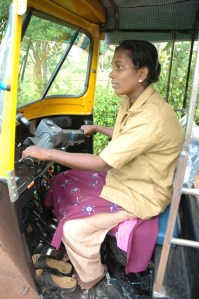
This is the report of a solidarity mission that was invited by Feminists Kerala Network to visit Payyanur and attempt to ascertain the facts around an incident of violence involving Chithralekha, a Dalit woman auto driver, on January 20, 2010.

Feminists Kerala Network is a loose network based in Kerala and outside, of feminists, Dalit activists, queer activists and other individuals involved with new social movements in Kerala.

The solidarity mission consisted of

Gail Omvedt, Professor, B. R. Ambedkar Chair at Indira Gandhi National Open University, Delhi; V Geetha , Publisher (Tara Books), author and social activist, Chennai; K.K Preetha, Advocate, Kerala High Court, Ernakulam; Nivedita Menon, Professor, Jawaharlal Nehru University, Delhi.

The team visited Payyanur on February 7-8, 2010.

Continue reading “Living outside the track”: A woman worker’s struggle against caste and patriarchy in Kerala

Tilting at Wind Mills Aren’t We

The Jamiat Ulama-e-Hind Conference held recently, has raised Cain through one of the 25 resolutions that were passed at the conference. The kind of noise that has been generated by this resolution has virtually air-brushed the other resolution out of reckoning. Did the remaining 24 resolutions not deserve closer scrutiny, especially in view of the fact that many of these resolutions had taken off from the recommendations of the Sachar Committee report.

The 24X7 “News” channels that claim to keep us updated on developments even before they occur, have by and large concentrated all their energies on this one resolution which claims that the “Singing of Vande Maatram is Un-Islamic”. Given the kind of attention that this resolution has already received, it may be worth our while to talk about some of the other resolutions before getting into the raging debate of Vande Maatram. Continue reading Tilting at Wind Mills Aren’t We

Tatte Girao, Hijra Hattao: Satya Rai Nagpaul

This guest post was sent to us by  SATYA RAI NAGPAUL, Transman, Cinematographer, Founder Member: SAMPOORNA: A Network for Asian & Diasporic Asian Trans Persons.

‘Tatte Girao, Hijra Hattao’ was written in response to Farrukh Dhondy’s article ‘The male eunuch & other chromosomes’ in The Asian Age newspaper, August 29th, 2009.  The Asian Age did not publish Satya’s response, and so it has been circulating on relevant e-lists for a while.


Caster Semenya’s record breaking run in the Berlin World Athletic Games this August, not only raised doubts in the organisers about her ‘real sex”, but back home, has precipitated our very own Mr Farrukh Dhondy’s jounalistic activism to save our boys from falling into any possible sexual/gender ambiguity.
His prescription: Get ‘the apparatus’ and you shall be a ‘man’!

If the medical and legal communities were not enough, we have now to fight our so called “progressive” journalists who write columns about ‘so called eunuchs’, who their medical friends tell them ‘were not eunuchs at all’.

The transphobia, gender essentialism and high moral ground in Mr Dhondy’s article couldn’t have been more naked. What appears throughout the article as his well meaning and sympathetic concern, finally reveals its true face in that last draconian sentence: ‘Make hijras history’. How could the corporeal realities of the hijra be so lost on a journalist [and one who is himself a minority, being a parsi, as stated in his article] that he can wish for the wiping out of an entire way of life? Instead of espousing their human rights, he wishes them not to exist at all?!

Mr Dhondy’s statement that all hijras suffer from Cryptorchidism, and that it is a simple medical procedure that will make men out of them, not only reveals his journalistic smugness but also that he has been completely absent from all discourses on sex/gender emerging ever since the years of the second world war. The binary conceptualisation of sex/gender is long dead in cutting edge academia and even the medical sciences have begun to open out their sex/gender categories to the new conceptualisations.
Continue reading Tatte Girao, Hijra Hattao: Satya Rai Nagpaul