Category Archives: Identities

On Hindutva terrorism

This joint public statement, signed by 34 citizens whose names are given at the end, was put out on 25 January

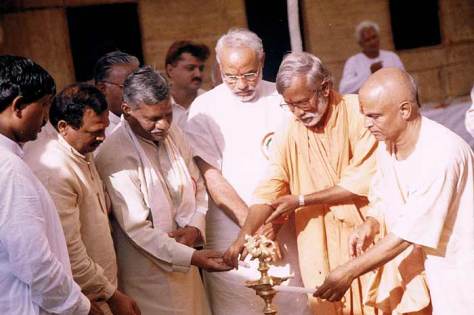
Swami Aseemanand (second from right): Terrorist?

While one may or may not agree with the terminology employed by the Home Minister in his recent speech at Jaipur, we feel that for long prejudice has ruled investigations, obscuring the role of organizations and their multiple affiliates in planning and executing of attacks and bombings in the country. The veneer of ‘nationalism’ — narrow, exclusionary and based on hatred for minorities as it is– cannot hide the violence that Sangh and its affiliates beget and peddle.  Continue reading On Hindutva terrorism

PUCL Rajasthan condemns FIR against Ashis Nandy

This release was put out by the Rajasthan unit of the PEOPLE’S UNION FOR CIVIL LIBERTIES on 26 January

PUCL condemns the FIR lodged under sec. 506 IPC, criminal intimidation and 3-1(10) of prevention of atrocities against SC,ST 1989 against Prof. Ashis Nandy for his statements in a discussion at the Jaipur Literature Festival 2013 and the protest demanding his arrest.

From the reports we have received, he was not exhorting hate and not being casteist and was only making an academic point which means that nobody is free from corruption.

Proceeding criminally against him and arresting him is restricting academic freedom and academic debate. Now that he has apologised and regretted  what he has said the matter should be closed.

Prem Krishan Sharma, President
Kavita Srivastav, General Secretary

See also: Most of the corrupt come from SC/ST, OBCs: Ashis Nandy
Below: Video report from CNN-IBN and ABP TV video of Nandy’s press conference Continue reading PUCL Rajasthan condemns FIR against Ashis Nandy

‘भारतीय विचारधारा’: मिथक से यथार्थ की ओर

[An edited version of this review of Perry Anderson’s ‘Indian Ideology‘ (Three Essays Collective, October 2012) appeared in January edition of Samayantar]

the-indian-ideologyअपनी किताब‘ द जर्मन आइडिओलोजी’ (रचनाकाल 1845-46) मार्क्स एवं एंगेल्स इतिहास की अपने भौतिकवादी व्याख्या का निरूपण करते है। किताब की शुरूआत 19 वीं सदी के शुरूआत में जर्मनी के दार्शनिक जगत पर हावी हेगेल की आदर्शवादी परम्परा एवं उसके प्रस्तोताओं की तीखी आलोचना से होती है जिसमें यह दोनों युवा इन्कलाबी चेतना एवं अमूर्त विचारों पर फोकस करनेवाले और सामाजिक यथार्थ के उससे निःसृत होने की उनकी समझदारी पर जोरदार हमला बोलते हैं। इस ऐतिहासिक रचना से नामसादृश्य रखनेवाली पेरी एण्डरसन (थ्री एसेज़, 2012) की किताब ‘द इण्डियन आइडिओलोजी’ का फ़लक भले ही दर्शन नहीं है, मगर अपने वक्त़ के अग्रणी विचारकों द्वारा भारतीय राज्य एवं समाज की विवेचना की आलोचना के मामले में वह उतनी ही निर्मम दिखती है।
आज की तारीख में भारतीय राज्य एक स्थिर राजनीतिक जनतंत्र, एक सद्भावपूर्ण क्षेत्रीय एकता और एक सुसंगत धार्मिक पक्षपातविहीनता के मूल्यों को स्थापित करने का दावा करता है। उपनिवेशवादी गुलामी से लगभग एक ही समय मुक्त तीसरी दुनिया के तमाम अन्य मुल्कों की तुलना में – जहाँ अधिनायकवादी ताकतों ने लोकतांत्रिक प्रक्रियाओं एवं संस्थाओं को मज़बूत नहीं होने नहीं दिया है – विगत साठ साल से अधिक समय से यहां जारी संसदीय जनतंत्र के प्रयोग को लेकर वह आत्ममुग्ध भी दिखता है। इतना ही नहीं अक्सर यह भी देखने में आता है कि भारतीय समाज की विभिन्न गैरबराबरियों, जाति-जेण्डर-नस्ल आदि पर आधारित तमाम सोपानक्रमों के विभिन्न आलोचक भी भारतीय राज्य की  इस आत्मप्रस्तुति/आत्मप्रशंसा से सहमत हुए दिखते हैं। मगर यह बेचैन करने वाला सवाल नहीं पूछा जाता कि भारतीय राज्य के तमाम दावों एवं वास्तविक हकीकत के बीच कितना तारतम्य है ? अगर दावों एवं हकीकत के बीच अन्तराल दिखता है तो उसे हम परिस्थिति की नियति कह सकते हैं या उसकी जड़ें शासकों के आचरण में ढूंढ सकते हैं। Continue reading ‘भारतीय विचारधारा’: मिथक से यथार्थ की ओर

A visit to the abode of Guru Nanak: Shiraz Hassan

Guest post by SHIRAZ HASSAN

This slideshow requires JavaScript.


Photographs by Shiraz Hassan

You can divide a piece of land but you cannot divide a belief. This was my first impression when I reached Kartarpur, a historic and sacred place, located just three kilometres away from the Indian border in the north-eastern city of Narowal, in Pakistani Punjab.

My journey started from Lahore and it was one of the most exciting journeys of my life. As I travelled, I saw  lush green rice fields on either side,and wondered why I had undertaken this journey. It was only when I reached Kartarpur that I got the answer. Continue reading A visit to the abode of Guru Nanak: Shiraz Hassan

Let’s Meet – On Ajay Bharadwaj’s ‘Milange Babey Ratan De Mele Te’: Virinder S Kalra

Guest post by VIRINDER S KALRA


Milange Babey Ratan De  Mele Te (Let’s Meet At Baba Ratan’s Fair); Length: 95 minutes, Year 2012; Directed and Produced by Ajay Bhardwaj

Ajay Bhardwaj’s third documentary film based in East Punjab, India, takes us into a deeper exploration of some of the themes touched upon in his previous works: Kitte Mil Ve Mahi and Rabba Hun Ke Kariye. Indeed, at one level Milange Babe Ratan De Mele Te is about a journey of an impossible return to a pre-Partition Punjab in which religious identity was fluid and the sacred and profane intermingled and fused. Continue reading Let’s Meet – On Ajay Bharadwaj’s ‘Milange Babey Ratan De Mele Te’: Virinder S Kalra

In Multiples of Ten Ravanas

Some (more) thoughts on Indian and Pakistani soldiers beheading each other at the ceasefire line in Jammu & Kashmir

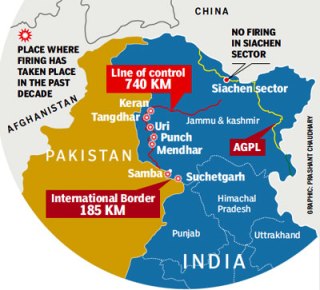
Hindustan Times Graphic
From the Hindustan Times

In the early hours of 10 January 2013, I published a post here that asked, “Was an Indian soldier decapitated at the Line of Control or not?” Soon thereafter, the family of Lance Naik Hemraj Singh of 13 Rajputana Rifles cremated his body and went on a hunger strike, demanding the government get the head. Several readers commented that now that it was clear a beheading did take place, I owe them an apology. I do not see why I owe them such an apology considering  I never said that an Indian soldier wasnot beheaded. I only pointed to the conflicting reports, the absence of official mention about whether or not a soldier was beheaded, a quoted a Reuters report that categorically said that according to the official spokesperson of the Northern Command, no soldier was beheaded, though the two soldiers’ bodies were mutilated. Despite such an official denial quoted in a trusted news source, I had written, “It is possible the anonymous sources are right, because this is not the first time both sides are blaming each other of showing disrespect to bodies of dead soldiers in violation of the Geneva convention.” Continue reading In Multiples of Ten Ravanas

Letting Go of Fear: Tenzing Choesang

Guest post by TENZING CHOESANG

Nine years ago, on a hot summer day, I was sitting in the New Delhi railway station waiting for a train to Dharamsala where I had planned to do my summer internship in a human rights organisation. There, I met a person who used to live in the same locality as I did when I was a child. He asked me where I was headed and I excitedly told him about the summer internship I was going for. He gave me a sympathetic look and said in Nepali “God, what all, daughters have to do these days”. I was taken aback by his statement but I knew where it was coming from. I come from Sikkim, a beautiful state in the foothills of the Himalayas. Students from Sikkim generally come to Delhi for graduation and after completing their higher studies most of them return back. After their return, they either start their own businesses or get into comfortable government jobs and live with their parents. This is how things work there. So, I think he felt bad for me since he thought that I was being made to “face the big bad world” when I could have gone back home happily. I didn’t agree to his logic then and have not till date. Continue reading Letting Go of Fear: Tenzing Choesang

An open letter to Madhu Purnima Kishwar: Zahir Janmohamed

Dear Madhu ji,

I was very excited when I learned you were coming to Ahmedabad and I was honoured that you expressed interest in possibly meeting with me.

I was sitting with a journalist friend when I read your Tweet about visiting Ahmedabad and he told me you are a “pioneering feminist who did ground breaking work.” He also told me that in 2005 you signed a very strong petition calling for Gujarat Chief Minister Narendra Modi’s dismissal because of Modi’s role in the 2002 Gujarat riots. He also added that you have been very vocal on behalf of Kashmiri Pandits. After I witnessed the Gujarat riots in 2002, I returned to the United States—where I was born and raised—and I gave lectures for six months about the violence I saw. In each lecture, an audience member would inevitably shout at me that I have ignored the plight of the Kashmiri Pandits. It is true. I know very little about Kashmir, and for that matter Kashmiri Pandits, and I would have enjoyed and benefited from listening to your views on the conflict there.

I understand from your Twitter feed that you have left Ahmedabad. I know your days in Ahmedabad were limited and I fully understand that you were not able to meet. Therefore in this letter I will try to convey some of the things I had hoped to tell you in person, in particular about your Tweets. Continue reading An open letter to Madhu Purnima Kishwar: Zahir Janmohamed

A petition to end tensions at the Line of Control from citizens on both sides of the LoC

Signatures given at the end. Should you want to add your signature to this petition, write to Anuradha Bhasin at anusaba[at]gmail[dot[com]. The petition with the final list of signatories will be sent to the heads of state in both India and Pakistan.

To,
Indian Prime Minister Manmohan Singh and Pakistan President Asif Ali Zardari,

Dear Sirs,

We, the people of Jammu and Kashmir on both sides of the Line of Control, have been observing with great concern the escalation of tensions at the LoC that have been building up gradually since June 2012 and have suddenly taken an ugly turn since the first week of January, 2013.

We express grave concern at the loss of lives of the soldiers and any casualties to civilians on both the sides. At the same time, we are also concerned about the safety and security of the people of Jammu and Kashmir, particularly the people living at the borders, who are directly hit by sporadic incidents of shelling and firing. Continue reading A petition to end tensions at the Line of Control from citizens on both sides of the LoC

Suran: A poem by Uzair

This guest post is a poem by UZAIR, who grew up near the Indian side of the ‘Line of Control’ in Poonch

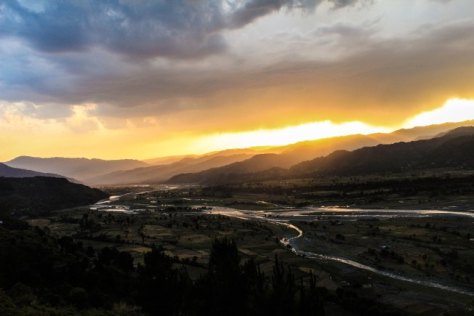
The poet took this photograph in Poonch by the river Suran last summer.Across the second ridge lies the Line of Control. Taken from the Indian side, the photo captures the sun setting on the Pakistani side.
The poet took this photograph in Poonch by the river Suran last summer. Across the second ridge lies the Line of Control. Taken from the Indian side, the photo captures the sun setting on the Pakistani side.

The river carries with it
Snow of distant peaks,
Floating memories
Twigs, leaves.

Only a few miles west
it would be stripped
at the border, asked
to produce a permit,
shot dead or may be not.

Waters were negotiated upon;
so the river travels seamlessly
only a few miles west
to another country.

On its bank, I heard
a cuckoo speak
“The sun shines during day
and stars illuminate the night sky
even across the border”

“And a few collect the twigs
like memories of childhood;”

“smell of dead wood, so familiar
grief and longing, so natural
decades of hope; still alive,
even across the border”

One day the river would flow
eastwards, said the old man
whose corpse floated across,
only a few miles west
and met his children
across the border.

(Uzair blogs at Untitled Untitled.)

See also:

The Country With A ‘Balancing Office’: Suvaid Yaseen

Guest Post by Suvaid Yaseen

Of late there has been a rising trend of Kashmiris – professionals, artists, writers, musicians et al presenting their works on Kashmir on a much wider level than before. The larger impression that comes out of it all is that the narrative has been taken up by the people for themselves. A welcome contrast to outsiders flying in and telling us what we want, how we think, and what is actually good for us.

So, every time a Kashmiri artist is presenting his/her work on Kashmir, the expectations among Kashmiris tend to go up. People start feeling that finally their narrative, of how they saw the things, what they went through, would be told to the world, bereft of the lenses of security paradigm through which Kashmir has been usually viewed  –  a strategic territory, with not-so-strategic, dispensable people.

This can be fortunate as well as unfortunate. On one hand there is a ready audience to appreciate and applaud your work. On the other hand there are expectations to ‘perform’. For the artists themselves, there are additional pressures of ‘balancing’ and having a ‘non-biased’ view from the other side.

Continue reading The Country With A ‘Balancing Office’: Suvaid Yaseen

Come Frolic with Me in the Streets of Delhi: Amrapali Basumatary

Guest post by AMRAPALI ‘TARA’ BASUMATARY

Another Report on the Gathering of the Night of 31st of December 2012/Ist January 2013 against Patriarchy in Delhi

It was 31st December 2012, city-Delhi, the same Delhi which has gained the infamy of being the Rape-Capital of a country called India, a nation whose ‘dignity’ has been maligned by the increasing cases of sexual assault on women. Around three hours before the clock struck the decisive moment of New Year, many of us gathered at the PVR Anupam complex in Saket to “take back the night”, back from the shackles of misogyny, sexual assault, patriarchy and above all from the banal and real fear of being subjected to crimes meted out by multifarious forms of male-supremacy and power. It was a night when ‘dented and painted’ females as well as males were showing that ‘denting and painting’ are not reasons that ‘invite’ rape or sexual assault and those ‘hormone driven gazes’. Continue reading Come Frolic with Me in the Streets of Delhi: Amrapali Basumatary

You were amongst those six; un chhay main tum bhi shamil thay: Swaang Songs

This song in memory of the unknown citizen is produced by Swaang, a Bombay based cultural group, whose members include actors, writers, music directors, musicians and producers “all in the grips of the market-driven Bombay film industry, but whose hearts continue to pull towards progressive politics!”

Composer – Rohit Sharma
Lyrics – Ravinder Randhawa
Singers – Rohit Sharma, Pankaj Badra, Pinky
Narration – Pravishi Das, Ravinder Randhawa

English translation of ‘Maa Nee Meri’

Mixed in every morsel,
What was that chant you kept repeating?
In the garb of concern and worry,
Why was fear the only virtue I learnt of your teaching?
Mother, I will not fear
Mother, I will not become you. Continue reading You were amongst those six; un chhay main tum bhi shamil thay: Swaang Songs

Your rapists and ours

Two interesting articles:

Emer O’Toole in the Guardian CiF:

There’s something uncomfortably neocolonial about the way the Delhi gang-rape and subsequent death of the woman now known as Damini is being handled in the UK and US media. While India’s civil and political spheres are alight with protest and demands for changes to the country’s culture of sexual violence, commentators here are using the event to simultaneously demonise Indian society, lionise our own, and minimise the enormity of western rape culture. [Full article]

And Ananth Krishnan in The Hindu:

The rape case was one of the most discussed topics in Chinese microblogs over the past week, prompting thousands of posts and comments. By Sunday, however, the authorities appeared to move to limit the debate: on Monday, a search for the topic triggered a message on Sina Weibo – a popular Twitter-equivalent used by more than 300 million people – saying the results could not be displayed according to regulations. The message is usually seen as an indicator of a topic being censored by the authorities. [Full article]


In Memory of The Unknown Citizen

We may never know her name. But not every memory needs a name or a pile of stone. Her memorial need not claim space on a city street, or square, or on the river-front. Let the well-known Leader and the Unknown Soldier have their real estate, but for the Unknown Citizen, let us not fire gun salutes, fly flags at half-mast or build portals and pedestals. And let us not for even a moment imagine that instituting police measures against the people the Prime Minister calls ‘foot-loose migrants’ will mean anything remotely resembling justice.

We can think about what the contours of enduring justice can be without being hangmen. Only safe cities, safe towns and safe villages, and freedom for all men and women will mean justice. Justice does not come from the gallows. It springs from a freedom from fear, and the gallows only perpetuate fear. Hangmen will turn the bullies who rape into the cowards who will automatically murder so that there may not be a trace of their rape. It will make fathers who rape their daughters into fathers who rape and murder their daughters. Capital punishment will lead to less, not more convictions for rape and heinous sexual violence. That can never lead us to justice. Continue reading In Memory of The Unknown Citizen

A Day in the Life of a Sikh Prejudice: Pukhraj Singh

Guest post by PUKHRAJ SINGH

Part I

“The very ink with which history is written,” allegorised Mark Twain, “is merely fluid prejudice.” By that rationale, religion can often be the quill which defaces the truth with its broad strokes, perverting history than promulgating it. And like the bastard child of these perversions, a few counter-narratives manage to wade through the tides of public opinion, carrying the dim outline of the ossified ideas that led to its tragic pursuit. But one has to have the right kind of eyes, says Hunter S. Thompson, to “see the high-water mark—that place where the wave finally broke and rolled back.”

A similar, horrid apparition of truth opened the floodgates of memories and angst very recently as a headline screamed through the Twitterverse—40 Sikhs Convert to Christianity in a Tarn Taran District Village: Gurdwara Management’s Treatment of “Low Caste” Sikhs Calls for Strict Action—in the particularly sultry month of August. Continue reading A Day in the Life of a Sikh Prejudice: Pukhraj Singh

Seeing Pakistan from Juhapura: Zahir Janmohamed

Guest post by ZAHIR JANMOHAMED

Since I started conducting research in March 2011 about the aftermath of the 2002 Gujarat riots, I have learned that the worst way to begin a conversation with a Muslim here in Ahmedabad is to ask about the 2002 riots. I was an eye-witness to the riots in 2002 and I thought my experiences might make some Muslims in Gujarat feel more comfortable speaking with me. I was wrong.

Sometimes I had to interview a person four or five times before they felt comfortable speaking about the 2002 riots. The reasons are varied. Some feel there is no use speaking about the riots as they know justice will never come under Narendra Modi’s watch. Others feel exploited by NGOs and Islamic groups who have used their stories to raise funds for their organizations abroad. And others, as one rape survivor told me, do not want to “relive the trauma.”

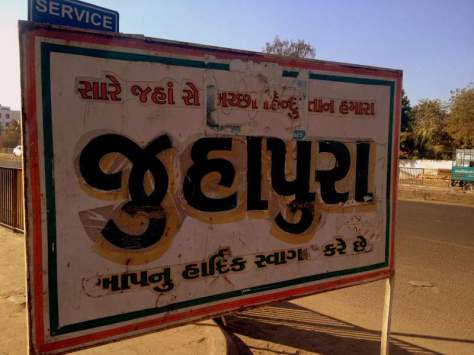
But if you ask Muslims in Ahmedabad about Pakistan, chances are you will walk home with a notebook full of comments. Earlier this week I went around my neighborhood of Juhapura—an area pejoratively known as “mini Pakistan”—and asked residents for their comments on Pakistan. The answers are telling. Continue reading Seeing Pakistan from Juhapura: Zahir Janmohamed

What Do Men Have To Do With It?: Rahul Roy

Guest post by RAHUL ROY

I have been sitting quietly trying to finish my new film and had promised myself that I would not get side tracked and concentrate on the task at hand. But enough is enough. I am shocked and disappointed at the way men high jacked a protest that could have been and probably still is the most significant pouring out of women who may never have thought in their wildest dreams that they would be facing water cannons and cops giving them a chase with iron tipped sticks. I am sure it is a coming of age moment for many young women of the city of Delhi.

I am aware that there has been a fair bit of cynicism about middle class women running up and down Raisina Hill and whether it adds up to anything. It damn well does. The next time they see adivasis being chased down by the police in Chattisgarh or in Orissa a penny will drop. It already is, today there is an article by a 19 year old student form Lady Sri Ram College narrating her brush with Delhi Police at the Parlaiment Street Police station and quite significantly she adds that if they are capable of behaving the way they did with a group of ‘well connected’ college students in Delhi then what must be happening in the more remote areas of non metropolitan India. Continue reading What Do Men Have To Do With It?: Rahul Roy

Passage of Amendments to UAPA – Further erosion of Constitutional Rights: JTSA

This release was put out today by the JAMIA TEACHERS’ SOLIDARITY ASSOCIATION

The pushing through of the amendments to Unlawful Activities Prevention Act (UAPA) in the Rajya Sabha, despite protests and calls for further discussion and deferment, indicates the consensus between Congress and BJP on the issue of civil rights. The passage of the amendments, which now bring economic offences under terrorism, and broaden the definition of person to an extent that will criminalize all forms of associations, will provide sweeping powers to the police and security agencies, and create a regime of suspicion.

False Claims of the Government:

Responding to the debate in the RS, Minister of State for Home stated that, “The Act does not give sweeping powers to the police and there are checks and balances that will prevent misuse of the Act.” He further assured the House that the law was “religion neutral” and would not target any particular community.

This is patently false. Continue reading Passage of Amendments to UAPA – Further erosion of Constitutional Rights: JTSA

Appeal to Dalit Groups for Solidarity with Laxmipet Dalit Victims: Hyderabad Political Economy Group

Statement issued by the HYDERABAD POLITICAL ECONOMY GROUP, received via RAVICHANDRAN BATHRAN

It is necessary for all of us to look beyond whatever we do. The killing of Laxmipet Dalits on 12th June 2012 and subsequent events indicate that divided houses of Andhra Pradesh Dalit Mahasabha must re-examine the nature of political divisions that have long since afflicted it leading to numerous splinter dalit groups and the formation of two major groups, the Mala Mahanadu demanding status-quo and the Madiga Dandora claiming for categorisation in reservation policy. There are three major issues emerging over the last six months after Laxmipet events unfolded which is why we appeal to both political groups of Dalits to show support and solidarity with each other.

First, time has now come for these Dalit organisations to realise how their persistent bickering has divided them and has weakened their struggle for justice.  The Dalit organisations, especially the Mala Mahanadu and the Madiga Dandora, must realise that a full-fledged reservation system in Laxmipet, ensuring representation of  Dalits in administration and politics, have failed to protect  Dalits from atrocities committed by dominant castes over land issues.  Continue reading Appeal to Dalit Groups for Solidarity with Laxmipet Dalit Victims: Hyderabad Political Economy Group

A song for snow: Arif Ayaz Parrey

Guest post by ARIF AYAZ PARREY

The beloved is like snow after a chilly wind. The beloved is a bright sun after snowfall. The lover is like the cinders in a kãger that refuse to die. The lover is the immortal heat of ashes.

     In the 2008 Hindi movie Oye Lucky! Lucky Oye! the playing out of virtues of theft in a world of (corrupt) systems is not the only delicious element. As a matter of fact, even more lovable is the song Tu raja ki raj dulari which echoes Shiv’s plea to Parvati after she has hopelessly fallen in love with him, and chosen a path of austerity competing with his asceticism. Tu raja ki raj dulari mein sirf langoti aala sun, bhaang ragd ke piya karoun mein kunde sote aala sun.  He tells her. “You are a king’s royal darling, I possess only a loincloth (Will tiger-cloth be a more helpful description here?), I drink ashes which I grind on a pistil and mortar.” Now there are several ways of looking at this parable. At the surface, and then again at its very core, it is a narration of one of the major themes of storytelling: An independent, beautiful and strong woman poignantly falling for a clumsy, reclusive and basically loser-type man, against better advice and to much heart-ache all around. But this characterisation holds only at the surface, the patriarchy of this theme works through the neat device of depth, the woman is strong, but only on the outside, quite literally when you know that Parvati once shed her outer mantle which became a powerful warrior-goddess in its own right, but in depth and beyond the obvious, she is a woman after all, while the man, clumsy, reclusive, scrawny on the surface, has an inner strength which can gulp Halahal (funnily enough called zahr-e-Hilal or ‘poison of the crescent-moon’ in Kashmiri) without much ado or do the Tandav when he feels like it. Continue reading A song for snow: Arif Ayaz Parrey