Category Archives: Law
GPS and receipts will not stop Delhi’s auto-wallahs from overcharging: Simon Harding
Guest post by SIMON HARDING

Last week, the Delhi High Court gave the go-ahead for the compulsory installation of GPS systems and printers in the capital’s auto-rickshaws by dismissing petitions against the policy from auto unions (download judgement .pdf here). The GPS kits are supposed to allow the Transport Department to track the movement of Delhi’s autos. The printer will provide the passenger with a fare-receipt, which will show the distance travelled and the amount paid. The policy will eliminate over-charging and will provide “secure and transparent travel” to the capital, claims The Hindu.
Sadly, the installation of GPS systems will do little to address the problem of over-charging. On the contrary, it may actually exacerbate it. Continue reading GPS and receipts will not stop Delhi’s auto-wallahs from overcharging: Simon Harding
A statement against the arrest of Punjabi publishers and editors for publishing the poetry of Babu Rajab Ali
Names of signatories given at the end; for more details on the campaign, see Whitewashing History
The arrest of two Punjabi publishers and two editors for reprinting old books of poet Babu Rajab Ali which allegedly contained some then used caste names, under the Prevention of Atrocities Against Scheduled Castes and Scheduled Tribes Act, is a totally thoughtless, callous and ruthless action taken by the Punjab government.
We understand that Mr. Amit Mittar of Tarak Bharti Prakashan and Mr. Ashok Garg of Sangam and editors Mr. Jagjeet Singh Sahoke from Moga and Mr. Swatantar from Samana, were arrested by the police on September 15 at the behest of the Punjab government. This is absolutely against academic freedom. Continue reading A statement against the arrest of Punjabi publishers and editors for publishing the poetry of Babu Rajab Ali
Stuck Between Gandhi and Cultural Crap: Papilio Buddha Reveals Much
Sometimes a minor cut on the surface of the skin will do to reveal the rot beneath. This is precisely what the film Papilio Buddha, made by the New York-based Malayalee film-maker Jayan Cherian, which draws broadly upon contemporary caste politics in Kerala, has achieved for us. In fact, its achievement on this count is simply amazing. At a single stroke, it has brought to light several stinking sores above which Malayalees, especially many Malayalee intellectuals who occasionally don the garb of public intellectuals, strut. Continue reading Stuck Between Gandhi and Cultural Crap: Papilio Buddha Reveals Much
JTSA responds to Delhi Police’s comments on their report “Framed, Damned, Acquitted”
This guest post by the JAMIA TEACHERS’ SOLIDARITY ASSOCIATION is a response to the Delhi Police’s comments on their report, “Framed, Damned, Acquitted”

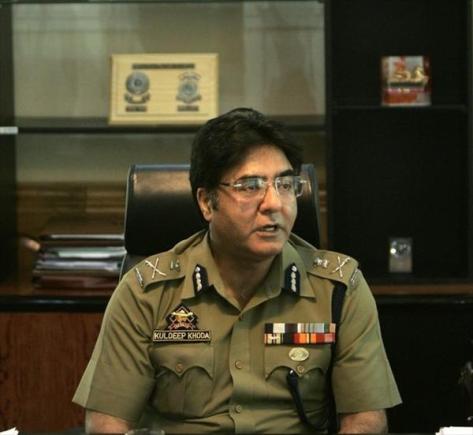
Did you think that the Special Cell or the Delhi Police would introspect on its ways after the publication of Framed, Damned, Acquitted? How wrong you were. It is now attempting desperately to defend the indefensible by hiding behind a maze of statistics, ignoring the real questions that the report has raised: namely the brazen and systematic violation of all established legal norms and due process. Continue reading JTSA responds to Delhi Police’s comments on their report “Framed, Damned, Acquitted”
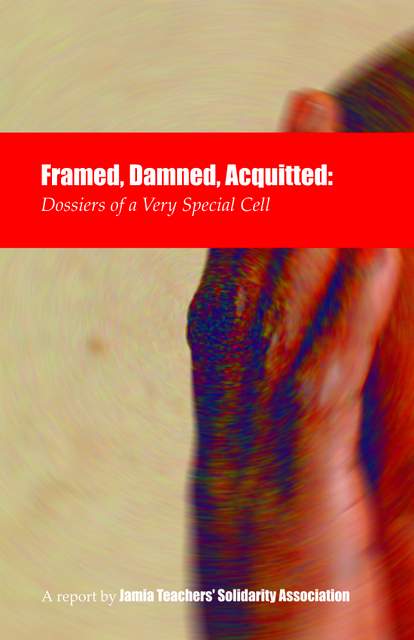
Framed, Damned, Acquitted: Dossiers of a ‘Very’ Special Cell
Given below is the report Framed, Damned, Acquitted: Dossiers of a ‘Very’ Special Cell, released yesterday in Delhi by the JAMIA TEACHERS’ SOLIDARITY ASSOCIATION.

When human rights activists, or families of those arrested on charges of terrorism, allege foul play on part of the investigating agencies, the usual response is this: Surely, there must have been some involvement, or else why would the police arrest him, and not me? Continue reading Framed, Damned, Acquitted: Dossiers of a ‘Very’ Special Cell
Joga’s disappearance: Amandeep Sandhu

This guest post by AMANDEEP SANDHI is an extract from his new book, Roll of Honour, a novelset in the backdrop of the Indian Army’s Operation Blue Star in 1984
During the last summer vacation (from my military school), when I was at home in Patiala, the soldiers had taken away my friend Joga. The government had already censored the newspapers, but the airwaves sneaked in the news of what was happening elsewhere in Punjab. In our living room, Nanaji’s white beard had trembled when we listened to Mark Tully from the British Broadcasting Corporation on our Murphy radio:
The battle of the Golden Temple in Amritsar is being fought hard and constantly. At the height of the battle, there were three hours of hand-to-hand fighting. Weapons allegedly recovered from the separatist Sikh militants were displayed to the world. The fatalities are not… Unofficial estimates go into thousands… Continue reading Joga’s disappearance: Amandeep Sandhu
Will there be justice in the Bhaderwah triple murder case?
This press release was put out by the JAMMU KASHMIR COALITION OF CIVIL SOCIETY on 13 September

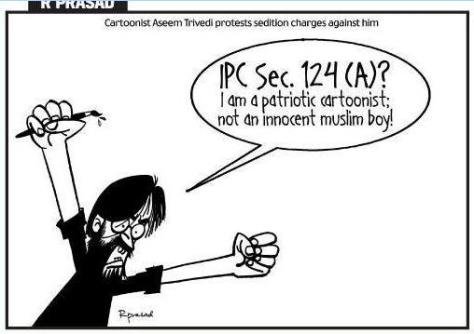
Sedition? Who, me?
I am taking the liberty of sharing here this brilliant cartoon by R PRASAD of Mail Today

On the Violence Unleashed against Protesting Citizens in Koodankulam: Chennai Solidarity Group
A Statement issued by the Chennai Solidarity Group
Background
For more than a year the people of Idinthakarai village, along with fellow citizens from nearby villages have been protesting the setting up of a nuclear power plant at Koodankulam in Southern Tamil Nadu. The protests have been peaceful and have included people from different strata of society. Women have been in the forefront of the struggle, and over the last year even children have learned about the perils of nuclear power plants and the need to look for alternative energy sources.
In spite of this being a peaceful citizens’ protest, the state has chosen to treat it as dangerous – and arrested hundreds of people, intimidated many others and have more than once treated Idinthakarai village and its environs as if it were ‘enemy’ territory. Sedition charges have been slapped against the protesters, along with other criminal charges. The legality of these measures has since been subject to questioning. A high level Public Hearing, presided over by Former Chief Justice A B Shah has in fact called attention to the manner in which the law has been misused in this instance, and in fact abused to harass and prevent ordinary citizens from exercising their right to protest, and defend their constitutionally guaranteed right to life and livelihood. Continue reading On the Violence Unleashed against Protesting Citizens in Koodankulam: Chennai Solidarity Group
If speaking the truth is sedition then I am guilty of sedition: Aseem Trivedi writes from jail

This is the text of a statement issued by ASEEM TRIVEDI from inside a jail in Mumbai. Trivedi has been remanded to judicial custody till 24 September for displaying and publishing cartoons that are allegedly seditious, insult national honour and, under the IT Act, are “grossly offensive” and of “menacing character”. An English translation of his letter is followed by the Hindi original.
Friends,
I am a true citizen of this country, not someone who has committed sedition.
If speaking the truth is sedition, then I am indeed guilty of sedition. If raising one’s voice against injustice is sedition, then I am guilty of sedition. If patriotism and the definition of patriotism have changed, then you could say I am guilty of sedition. If Gandhi, Bhagat Singh and Azad were guilty of sedition, so am I.
Even a small child of this country can understand my motive. I oppose the insulting of the people and the Constitution of India. I have been opposing the insulting of the people and the Constitution of India through my cartoons. Continue reading If speaking the truth is sedition then I am guilty of sedition: Aseem Trivedi writes from jail
Ten Reasons Why You Should Sign the Petition at RepealSeditionLaw.in
- Section 124(A) of IPC criminalizes the ‘disaffection’ towards the government by words, either spoken or written, or by signs or by visible representations
- This 1860 draconian colonial law was created to stifle dissent during colonial rule.
- Tilak, Gandhi, Maulana Azad and Annie Besant were convicted under this law
- Today, the law is used to suppress legitimate criticisms of the government
- Journalists, Human rights activists, political dissenters, public intellectuals, and even farmers and tribals are targetted by this law
- The law goes against the inalienable fundamental right to expression enshrined in our Constitution
- The law goes against the very nature of democratic process which relies on active consent and dissent/opposition
- The law goes against the Universal Declaration of Human Rights, which guarantees freedom of speech and expression
- All major world democracies have either repealed this law or discontinued prosecutions
- The existence of sedition laws in India’s statute books and the resulting criminalization of ‘disaffection’ towards the state is unacceptable in a democratic society.
To sign the petition, go to RepealSeditionLaw.in
See also:
Naroda Patiya judgement rekindles the death penalty debate in India
The Naroda Patiya massacre in Ahemdabad on 28 February 2002 killed 97 Muslims. It is the massacre infamous for the gory stories of a pregnant woman disemboweled and raped, a 20 day child killed, and so on. If this massacre is not fit to be considered “rarest of the rare,” what is?
It is ironical that the court found the kingpin of the massacre to be a woman, Dr Maya Kodnani, a practicing gynaecologist, a former Minister of State for Women and Child Welfare in the Narendra Modi government! The court came down particularly hard on her, commenting that as a legislator, a representative of the people she had done the opposite of what she was expected to: she helped kill people rather than save them. “She led the mob and incited them to violence. She abetted and supported the violent mob,” the court observed.
However, special court judge Jyotsna Yagnik chose not to sentence the accused to death when he announced the sentencing on 1 September. Her court found 32 people guilty, of whom one is absconding. 7 will spend 31 years in jail, 22 will spend 24 years, Maya Kodnani 28 years and former Gujarat state Bajrang Dal president Babu Bajrangi is to live the rest of his life in jail. Continue reading Naroda Patiya judgement rekindles the death penalty debate in India
Saving our heritage
The National Commission for Minorities (NCM) received a letter from the Jamiat-ul Ulama-e-Hind. The letter wanted 31 protected mosques to be opened for prayers. “Although the commission was not very keen that heritage monuments should be opened for prayers, it decided to suggest a joint survey for ascertaining the condition of these mosques.” Officials from the NCM, the Archaeological Survey of India (ASI) and the Wakf Board will carry out the joint inspection according to the suggestion made by the commission in its letter sent to the Ministry of Culture towards the end of July.
This reference made by the NCM needs to be looked at a little carefully, because the issue is not likely to remain restricted to these 31 mosques nor will it remain confined to Delhi. The reference impinges on questions of law and will eventually inform our attitude to the wider question of heritage protection. Continue reading Saving our heritage
Are We Not Alive: Women’s Voices from Kudankulam
Guest post by ANITHA. S
As I sit here in my home village of Idinthikara watching the hot sun light up the waves rolling onto the shores, I think of the news that has hit the world today about the Koodankulam Nuclear Power Plant. All of you must have seen the news that Madras High Court has given the go-ahead for the KKNPP.
When we carried the dead body of democracy and burnt it in the outskirts of our village on Aug15th, 2012, little did we realize that so soon we would witness the real death of democracy. As this last nail is being tightened on our lives, we realize how insignificant has been our voice. But this has only strengthened our vow to be together. Continue reading Are We Not Alive: Women’s Voices from Kudankulam
Copyrights versus The Right to Copy – A Normative Perspective: Rajshree Chandra
Guest post by RAJSHREE CHANDRA
For those not familiar with the recent spate of events at Delhi University; and for those who may have missed Lawrence Liang’s post, here’s a bird’s eye view: Impatient with an old gargantuan University’s obsolete ways, the authorities have attempted a make-over. As in all make overs, the old structure is retained but glossed over with cosmetic changes so as to appear ‘new’. So we have new hip courses, new syllabi content for old courses, new reading lists, new reading packages, new exam system, semesters and so on. Making all transitions possible of course, is a team of make-over artists. At one end of the set up are photocopiers like Rameshwari Photocopy Service located within the renowned Delhi School of Economics and Sociology; and at the other end, we the teachers. Reading material – by way of recommended articles, papers, chapters – was provided to the photocopiers by University faculty, who then made copies of them, segregated them year wise and instruction wise. The first page specified the semester for which the reading material was relevant, the ‘max marks’, the course objective and the syllabus all clearly outlined. Only after they were thus meticulously detailed were they spiral bound with the customary blue plastic cover and voila! Teachers and students alike had accessible reading and teaching material for all the new jazzed-up-courses. Emails circulated by departments instructed the college departments to use and recommend these dossiers; phone numbers of relevant photocopiers were given; and before long an entire chain of dissemination of this ‘new knowledge’ was established. It was all ‘official’. But more importantly, it was affordable, effective and terribly efficient. There was just one problem – it was in violation of the copyright law! The Rameshwari photocopiers were the new pirates!
Continue reading Copyrights versus The Right to Copy – A Normative Perspective: Rajshree Chandra
Quietly censors the nanny state: Mishi Choudhary
Guest post by MISHI CHOUDHARY

The recent curbs on social networking websites in India demonstrate the unpredictability of the legal environment, both for businesses and the citizens. Whether its the Government of India’s (GoI) insistence on getting access to corporate emails and text messages sent via BlackBerry devices, or changing stances on “pre-screening” user generated content, the authorities seem to be doing a tap dance around legal issues. The implementation of rules seems surreptitious as they are bent conveniently in the name of “security”. Continue reading Quietly censors the nanny state: Mishi Choudhary
Fair Use and Course Packs: A Comparative Perspective : Danish Sheikh
Guest post by Danish Sheikh
The first day of law school, we were handed 5 sets of non-aesthetically pleasing spiral bound sheets of paper. They contained a jumble of articles from eclectic sources; varied in size from a 150 pages to this-is-going-to-sprain-my-arm; and when relied on by the instructor, were absolutely indispensable. The course packs were provided by the university at a reasonable fee, and soon became an integral part of our legal education. True, there were occasional classes where a textbook was imposed on you by the professor, but again, it was often possible to track down a helpful senior’s tattered copy. Only if you got truly unlucky did you have to deplete your dwindling student resources to fork out money for a 500 page hardbound tome.
Continue reading Fair Use and Course Packs: A Comparative Perspective : Danish Sheikh
Full text: The Indian government’s recent orders to Internet Service Providers to block websites, webpages and Twitter accounts
Joji Thomas Philip has put out these documents in The Economic Times.
18 August:
Drugs in 3(d) and What Matters in the Novartis Case at Supreme Court: Dwijen Rangnekar
Guest post by DWIJEN RANGNEKAR
Background
Glivec (called Gliveec in the US) is a drug for chronic myelogenous leukaemia (CML) – a rare and debilitating form of cancer. A Novartis drug, it has been heralded as a sign of pioneering pharmaceutical research. And, no doubt, it is a ‘life-saving’ drug; though, it also has to be taken life-long. Most narratives of the research pathways of Glivec gloss over the 40+ years of publicly funded and conducted research that isolated the cause, a BCR-ABL oncogene, and performed the initial clinical research that identified a promising candidate (STI 571 – imatinib mesylate). Novartis, the Swiss-headquartered pharma transnational, proceeded to synthesise and test STI 571, which in 1993 was patented. Further research found that a beta crystalline form of imatinib mesylate was more stable – and this was also patented (in 1997) and approved in the US in 2001. In 1998, a patent application for this beta crystalline form was filed in India – and this is in dispute here.
Section 3(d) is a provision in India’s patent law – and is unique to India; though, as explained in the article, it reflects a wider authorship of global public concern. The section was introduced in the third amendment to Patent Act, 1970 (i.e. The Patents (Amendment) Act, 2005) when India was fulfilling its final commitments to patent-related obligations at TRIPS. Written in technologically neutral language, 3(d) seeks to deny the availability of patents where a ‘new form of a known substance … does not result in the enhancement of the known efficacy of that substance’. This, along with other provisions, would hopefully make it more difficult to patent trivial and incremental modifications to a drug; thus, extending patent terms and delaying entry of generic alternatives. Continue reading Drugs in 3(d) and What Matters in the Novartis Case at Supreme Court: Dwijen Rangnekar