Category Archives: Right watch

Last of Warsaw Ghetto Survivors Calls for Rebellion Against Israeli Occupation

Rebel against the Occupation. No–it is forbidden for us to rule over another people, to oppress another [people].  The most important thing is to achieve peace and an end to the cycle of blood[letting].  My generation dreamed of peace.  I so want to achieve it.  You have the power to help.  All my hopes are with you.  If only [you could]. – Chavka Fulman-Raban, arrested and imprisoned at Auschwitz, two of her family members died as resistance fighters.

Last year, long before this current round of blood-lust, Chavka Fulman-Raban, among the last of the Warsaw Ghetto survivors delivered, On Yom Ha-Shoah (Holocaust Remembrance Day), “a fierce denunciation of evil and injustice, including the Israeli Occupation. Her speech was offered to guests at the ceremony of Beit Lohamey Ha-Getaot (the Ghetto-Fighters House)”, says Richard Silverstein, who has translated the speech into English.

The once-invincible Nazism did not last. Zionazism too will not last, however invincible it might appear today. And we must say it loud and clear: Zionism is not about Jews and Judaism. To oppose Zionism is not anti-Semitism. As if this simple fact needs to be stated. But it seems it does, over and over again. Just as Judith Butler had to recently, contesting Lawrence Summers, President, Harvard University. So virulent is the mobilization of the Zionist fascists, especially inside Israel, that what David Shulman recently referred to as “lynch gangs” and “organized fascist groups”, have been on the prowl attacking, killing Palestinians and protestors against the bombings. And cheering the lynch mobs and fascists gangs are spectators of the kind we see below:

Israeli viewers enjoy the spectacle of Gaza

Continue reading Last of Warsaw Ghetto Survivors Calls for Rebellion Against Israeli Occupation

Why its hard for me to accept the killing of Mohsin Sheikh in Pune: Sameer Khan

Guest Post by SAMEER KHAN

The nation was outraged with the news of the murder of Mohsin Shaikh in Pune following the riots after the suspected defaming face book post. Many people were horrified by the killings of the young techie. The news media and the social media used the word Pune in a very generic manner but the fact was much of Pune remained unaffected with the violence. The initial protest that started on the day of FB rumors took place mainly in selected places and appeared to have been clearly organized by some group that was closely coordinating its cadres by use of social media and other communication by circulating fake planted stories and directing the mobs to target specific places.

The place Mohsin Shaikh was murdered, and where the worst damage occurred was the Hadapsar area of Pune which is actually on the outer limits of Pune towards the Sholapur road.Hadapsar was a sleepy town couple of decades ago. It is Hadapsar that is the native place of the author of this article. My father was raised in Hadapsar and completed his primary education from the local Bunter School, one of the oldest surviving schools in the region

I was born and raised in South Mumbai and my world came crashing down when my father decided to move back to his native Hadapsar in mid 1980’s. I was in 7th grade and my transition from a south Mumbai boy to sleepy Hadapsar town was a very painful one. It took my very long to reconcile the fact that Hadapsar the sleepy semi rural town was now my new home. Continue reading Why its hard for me to accept the killing of Mohsin Sheikh in Pune: Sameer Khan

Idiocy as Scholarship


It was probably late sixties or early seventies – when this pen pusher was a school student – one came across an article by a gentleman called P N Oak in a Marathi magazine called ‘Amrit’. The article made a particular case about Taj Mahal which it termed as ‘Tejo Maha Aalay’ or hindu god Shiva’s abode. It tried to establish through various ‘explanations’ that a Shiva Temple was destroyed to build Taj Mahal and if we dig deep we can find ‘remnants’ of the earlier structure.

For someone who was taught in an ambience, where few of our teachers never lost any opportunity to fill our gullible minds about the ‘hated other’, it was rather difficult to immediately grasp the lie which was peddled by this soldier turned writer. Nobody could then have the premonition also that such false claims – that their places of worship were buried beneath the Mosques as a lame excuse to demolish them – would become order of the day, in Hindutva politics. Continue reading Idiocy as Scholarship

To Understand the Mind of NDA II, turn to Singhal and the Sangh: Teesta Setalvad

Guest post by TEESTA SETALVAD

I do not expect there to be any outrage, comment or protest over the most recent rants of Ashok Singhal, senior RSS leader and patron of the Viswa Hindu Parishad (VHP), an RSS offshoot in an interview published in the July 17,2014 of The Hindustan Times  daily. We have as a nation and a polity become sinisterly and compliantly accustomed and accepting of aggressive hatred spilt by the majority and hypocritically touchy and outraged by similar rantings by so-called leaders of the minority. How deep this hypocrisy of majoritarianism has spread is evident in the coverage and depiction of hate speech by our electronic media that picks and chooses what to show, how often and when. So the hate ridden rantings of an Owaisi, or a Qader Rana will be run and re-run across networks and channels but equally insidious and as or more dangerous ravings of politicians who play on the identity of the majority are glossed over, hidden and remarkably, not even commented upon.

Singhal tells us through this interview today, that he welcomes with all his heart the first RSS pracharak as Prime Minister of India but, adding the proverbial sting to the tale, says that what is truly historical and remarkable about NDA II’s victory is that this electoral win was ensured without Muslim votes or support. Barefacedly lending voice to what more sophisticated faces in government including the now maun PM would presently rather leave unsaid, Singhal gloats on the disenfranchisement of India’s largest minority during democratically conducted elections. A time-tested tactic of the octopus-like sangh that generates terror and intimidation in the public sphere by the mutterings of a Singhal and a Togadia and allows the flag bearer beneficiaries of this hate-splitting in governance, the luxuries of convenient, intermittent,  silences.  The Advani-Vajpayee duo in the first NDA were a fine example of this. [Though,  Advani often relapsed into expressing well trained views especially after the brutal burning alive of Graham Staines and his sons (Orissa, January 1999).] NDA II has witnessed some interesting role reversals with many of the flag bearers of hate mongering now at the helm: a cabinet full of hate mongers are in the government’s driving seat. Singhal also emphasises and welcomes – undoubtedly for the reassurance of the sangh support base — all those being chosen for post of Governors are sanghis,  Ram Naik or a  Kesari Nath Tripathi. Continue reading To Understand the Mind of NDA II, turn to Singhal and the Sangh: Teesta Setalvad

The ‘Patriots’ of Our Times !

India is a land of surprises, say many.

And how can Bihar, which they say has been witness to a glorious past, be an exception. Of course nobody could have imagined that ‘surprise of surprises’ or (should I call) ‘mother of all surprises’ would be reserved for the Bihar police. In fact it was one life time experience for all of them there where they found how ‘Rs 50,000 can balloon into Rs 1.14 crore’.

The central character in the still unfolding drama is Giriraj Singh, a RSS activist since his childhood days, and a senior leader in the state, who has already carved out a name for himself nationally for his controversial statements. People would remember how he proposed to Modi opponents to go to Pakistan during election campaign or how he eulogized Brahmeshwar Singh, leader of Ranveer Sena, the private army of landlords which had been allegedly responsible for hundreds of killings of innocents as ‘true Gandhian of our times’ when the dreaded figure was killed in a gang war. As an aside it needs be mentioned here that Giriraj Singh was one of the first in the state who had vouched for Mr Narendra Modi’s PM candidature also. Continue reading The ‘Patriots’ of Our Times !

Scholar David Shulman on the Gaza Bombings

The following is a report from the indefatigable Prof David Shulman, who teaches at the Hebrew University of Jerusalem. Prof Shulman works on the history of religion in South India and poetry and poetics in Tamil, Telegu and Sanskrit. David Shulman writes as protests inside Israel increase, as do right-wing attacks on the protestors. This report has been circulated by Prof Louise Bethlehem of the Hebrew University of Jerusalem.

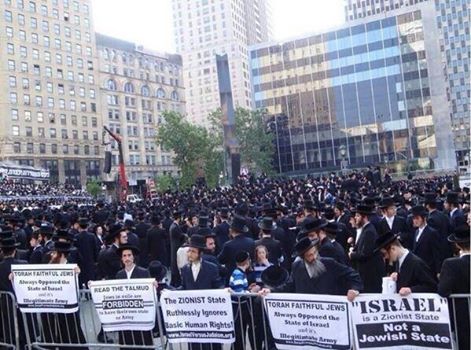
Jews demonstrate in New York Against Bombings

July 12, 2014 Umm al-Ara’is, Susya, Bi’r al-‘Id, Ma’asara

Business as usual in the South Hebron hills. There’s a war on in Gaza, but that too is business as usual, the meaningless biannual ritual in which both sides gleefully smash one another before reverting to the status quo ante. The Israeli media are drowning us in words, a vast and raucous flood, and the government is putting out its familiar, mendacious statements; perhaps in recent days only Abu Mazen has spoken the truth. The only solution, he said, is a political one, and Netanyahu is no partner. Meanwhile, rockets are flying, the Air Force is bombing, children are dying, soldiers are doing what soldiers mostly do, that is, wait around, and in South Hebron the land-grab proceeds apace, as always. Nothing, it seems, can stop that.

But wait a minute, some things have changed. Since the horrible murder of three Israeli teenagers, followed by the equally abominable revenge killing of the Palestinian boy from Shuafat, Israel has witnessed a wave of racist hatred on a scale perhaps not known before. Part of it has to do with the near-infinite opportunities of the internet: tens of thousands of virulent hate messages sent by ordinary Israelis have clogged the major sites; thousands of them call openly for revenge. I remember a time somewhat like this one, in the summer and autumn of 1982, the days of the first Lebanon War; the nadir came when a hate-filled nationalist threw a grenade into a Peace Now demonstration, killing my student, Emil Grunzweig. Some of the internet sites these days have called for the execution of leftists. Perhaps most striking of all is the utter shamelessness of this wave. Probably people used to have these same feelings but were not so ready, or eager, to state them in public. Decades of demagoguery and xenophobic incitement by the right, including, famously, by Netanyahu himself, have had an effect. The sluices are open. Continue reading Scholar David Shulman on the Gaza Bombings

Pearls of Wisdom of A RSS Leader – ‘Elections equivalent to Independence Struggle’

Suresh Soni, RSS’s point person with the BJP, who facilitated ‘anointment’ of fellow Pracharak as PM candidate last year and smoothly engineered the marginalisation of the senior Advani and proved his clout within the organisation, is in news these days albeit for wrong reasons.

News has come in that he along with his former supremo (the late) K S Sudarshan were also beneficiaries of the yet unfolding MPEB scam which has already claimed the head of a senior minister – another fellow Pracharak – in Shivraj Singh Chauhan’s cabinet. Laxmikant Sharma, the said minister, who earlier handled important portfolios like mining, culture, human resources had claimed at the time of his arrest that he has been made a sacrificial lamb and when time comes he would also ‘reveal the truth’. He allegedly facilitated appointment of Mihir, a personal assistant to the late Sudarshan, as a ‘Nap Taul Inspector’ at the behest of Suresh Soni. Continue reading Pearls of Wisdom of A RSS Leader – ‘Elections equivalent to Independence Struggle’

How History Was Unmade At Nalanda! D N Jha

This response to Arun Shourie by DN JHA is the complete original, of which a shorter version was published in The Indian Express today.

Ruins of Ancient Nalanda University

Ruins of Nalanda University

I was amused to read  ‘How History was Made up at Nalanda’ by Arun Shourie who has dished out to readers his ignorance masquerading as knowledge –  reason enough to have pity on him and sympathy for his readers! Since he has referred to me by name and has  charged  me with fudging evidence to distort the historical narrative of the destruction of  the ancient Nalandamahavihar,  I consider it necessary to rebut his allegations and set the record straight instead of ignoring his balderdash.

My presentation at the Indian History Congress in 2006 (and not 2004 as stated by Shourie), to which he refers, was not devoted to the destruction of ancient Nalanda per se – his account misleads  readers and pulls wool over their eyes.  It was in fact focused on the antagonism between the Brahmins and Buddhists  for which I drew on different kinds of evidence including myths and traditions. In this context I cited the tradition recorded in the 18th century Tibetan  text, Pag-sam-jon-zang by Sumpa Khan-Po Yece Pal Jor,mentioned by B N S Yadava in his Society and Culture in Northern India in the Twelfth Century (p.346) with due acknowledgement, though in his pettiness, Shourie is quick to discover plagiarism on my part! I may add that “Hindu fanatics” are not my words but  Yadav’s which is why they are in quotes. How sad that one has to point this out to a Magsaysay awardee journalist! Continue reading How History Was Unmade At Nalanda! D N Jha

An Endless Budget Session, Even Before it Begins: Shambhu Ghatak

Guest post by SHAMBHU GHATAK

“You can fool some people some times but you can’t fool all the people all the time”

So goes one of the famous lines of Bob Marley’s song that draws upon statement by Lincoln. Perhaps the same can be said about the new BJP government because it seems that this time there will be nothing new left to be presented during the upcoming Union Budget. Most of the things to be presented by the Finance Minister have gradually been placed even before the actual budget could see the light of the day (on 10 July). In fact, the entire stretch since the Government took power can be termed as a long, extended budget session – a session in slow motion.

Just think about the policy decisions announced or showcased by the new Government so far—allowing 100% foreign direct investment (FDI) in defence sector (to boost technology transfer and employment growth, so to speak); reforming environmental clearance (to avoid discrepancies, end red-tapism and ensure transparency) by making the process online; raising import duties on sugar by more than double and extension of existing sugar export subsidy of Rs 3,300 per tonne (to help the sugar mills) till September besides raising the mandatory level for blending cane-based ethanol in petrol from 5% to 10%; allowing hike in price of non-subsidized cooking gas (LPG) by Rs 16.50 per cylinder (which is partly attributed to the crisis situation in Iraq); and raising train fares by 14.2% & freight rates by 6.5% in the month of June prior to the just-presented Rail Budget, among other things. Continue reading An Endless Budget Session, Even Before it Begins: Shambhu Ghatak

(How) Does the Sovereign Speak?: Akshaya Kumar

This is a guest post by Akshaya Kumar

In a recent piece, entitled The Modi Wave, I analyzed the orientations of the Modi campaign, and argued that crucial to Modi’s repackaging was his ‘sovereignty effect’. In this case, entirely a property of the media narratives that pitched Narendra Modi as someone from outside history, he was offered as an intervention into national history. I have suggested that this was a masterstroke to the extent that the subject within history has a compromised agency. The continuities – of forces, events, rationales and time as a whole – blunt the provenance of the outsider. In order for the subject to act upon history, he must stand entirely outside it. In this way, he cannot be accessed from within historical time. Modi not only offered a historical narrative of an unending Congress rule, infested with corruption, appeasement and misrule, but also that of him observing this lingering malady from outside the fence. His story of his own rise goes from being a tea-seller to the Chief Minister of Gujarat, from a not-yet to a fully sovereign. He is never a deputy, never a peg within the system; he suffers till his agency is still being shaped, and appears as already the incumbent. This fundamental separation from the substance of historical progression is needed to project oneself as unsullied, unlike those defiled by the their political existence within history.

Continue reading (How) Does the Sovereign Speak?: Akshaya Kumar

Whose Ambivalence – Modi’s or Varshney’s? Jyoti Punwani

Guest post by JYOTI PUNWANI

What is it about Narendra Modi that makes people suspend disbelief? Ashutosh Varshney in his Modi’s Ambivalence, Indian Express, June 28, actually considers it possible that the new Prime Minister has a chance of going  down as “one of the greatest leaders of independent India”.  Surely anyone qualifying for such a status must be acceptable to the majority of Indians? Last we heard, the magic of Modi had left almost two-thirds of the electorate untouched, not to forget the fact that he doesn’t exactly inspire respect among our largest minority.

Varshney makes some bewildering assertions in his evaluation of Modi’s first month as PM. From a “novel policy language for poverty alleviation”  to a new acceptance of Mahatma Gandhi as the Father of the Nation,  to his RSS-defying portfolio distribution,  Varshney sees signs of a new Modi, quite different from the man cursed forever with the burden of Gujarat 2002.

Continue reading Whose Ambivalence – Modi’s or Varshney’s? Jyoti Punwani

Remembering Naz: Danish Sheikh

Guest Post by DANISH SHEIKH

“We declare that Section 377 IPC, insofar it criminalises consensual sexual acts of adults in private, is violative of Articles 21, 14 and 15 of the Constitution.” Today marks 5 years of the Delhi High Court’s Naz Foundation v. Union of India judgment. Every year since the judgment came out, this has been a day marked by celebration. I remember this day in 2009 when the sheer novelty of the “decriminalized” tag reverberated through us in euphoric waves; the time in 2011 when we stood with flamboyant helium balloons in Bangalore’s Cubbon park, struggling with an untimely Bangalore drizzle; and then in 2013 in the same park, where the rain gave way to a too bright sun and lingering uncertainty about the fate of the judgment. It is now 2014 and we know its immediate fate. It has hit a bit of a, shall we say, roadbump.

Continue reading Remembering Naz: Danish Sheikh

PUCL Petition to NHRC Urges Inquiry in the Case of Human Rights Defenders Teesta Setalvad and Javed Anand

The following is the text of the PUCL petition to NHRC in the case of Teesta Setalvad, Javed Anand and the Citizens for Justice and Peace

PEOPLE’S UNION FOR CIVIL LIBERTIES

270-A, Patpar Ganj, Opposite Anand Lok Apartments, Mayur Vihar I, Delhi 110 091 Phone 2275 0014 PP FAX 4215 1459 Founder: Jayaprakash Narayan; Founding President: V M Tarkunde President: Prof. Prabhakar Sinha; General Secretary: Dr. V. Suresh

E.mail: puclnat@gmail.com; pucl.natgensec@gmail.com

7th June, 2014

TO: THE HON‟BLE CHAIRPERSON AND HON‟BLE MEMBERS,

NATIONAL HUMAN RIGHTS COMMISSION,

Manav Adhikar Bhawan Block-C, GPO Complex,

INA, New Delhi – 110023

SUB.: SEEKING AN INDEPENDENT REVIEW AND INTERVENTION IN RESPECT OF CONTINUING PERSECUTION AND PROSECUTION OF HUMAN RIGHTS DEFENDERS, TEESTA SETALVAD AND JAVED ANAND OF CITIZENS FOR JUSTICE AND PEACE AND OTHERS

Continue reading PUCL Petition to NHRC Urges Inquiry in the Case of Human Rights Defenders Teesta Setalvad and Javed Anand

When Are Foreign Funds Okay? A Guide for the Perplexed

The Intelligence Bureau has, as we know prepared a document, updating it from the time of the UPA regime (which had reportedly started the dossier) indicating large scale foreign funding for subversive anti-development activities. Such as claiming that you have a greater right to your own lands and to your livelihood than monstrous profit-making private companies. Or raising ecological arguments that might stand in the way of the profits to be made by private corporations and the corrupt state elite, from mining, big dams, multi-lane highways and so on.

The IB report, signed by IB joint director Safi A Rizvi — alleges that the “areas of action” of the foreign-funded NGOs include anti-nuclear, anti-coal and anti-Genetically Modified Organisms protests. Apart from stalling mega industrial projects including those floated by POSCO and Vedanta, these NGOs have also been working to the detriment of mining, dam and oil drilling projects in north-eastern India, it adds. 

Imagine – working against the interests of POSCO and Vedanta! Is there no end to the depraved anti-nationalism of these NGOs!

These folks must have made millions of dollars

narmada

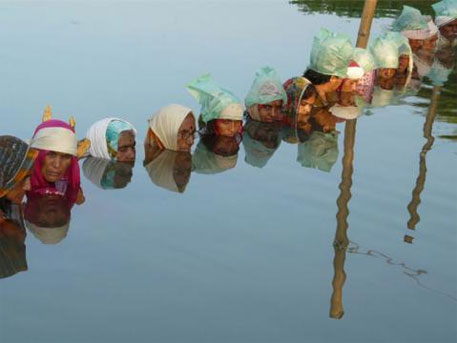
In 2012, people affected by the Omkareshwar and Indira Sagar dams protested the raising of dam storage levels by staying in neck-deep water for over a fortnight (Photo: Narmada Bachao Andolan). 

The average observer of Indian politics – being like me, not as sharp as the IB – might be a little befuddled by this apparently anachronistic allergy of two successive governments and its intelligence gathering organization, towards foreign funding, in an era in which the slightest slowing down of the pace of handing over the nation’s resources to multi-national corporations,  is termed as “policy paralysis”, and attacked as detrimental to the health of the mythical “Sensex”. Older readers might remember that the  inspiring slogan of the legendary Jaspal Bhatti’s Feel Good party was Sensex ooncha rahe hamara.

This post is just to help you figure out then, when it is Okay to applaud foreign funding and when it is not – because otherwise you might post something on your FaceBook page that attacks foreign funding when it is actually Okay – and then how stupid and anti-national you’ll look.   Continue reading When Are Foreign Funds Okay? A Guide for the Perplexed

Media Freedoms, Coercive regimes and Blasphemy-mania: M. Amer Morgahi

Guest post by M. AMER MORGAHI

[What the corporate interests have done to the Indian media the military is doing in Pakistan. In the continuing face-off, the Pakistan Electronic Media Regulatory Authority (PEMRA) has suspended Geo TV’s license for fifteen days and imposed a fine of $ 104, 000 on it. See report here]

Media revolutions in different developing countries are seen as an important factor in democratic process, in acquiring information and in enhancing consciousness. However, the media can be manipulated, coerced and used to develop certain consensuses that favors the ruling groups, as the example of recent happenings in Pakistan shows.

Photo: Anjum Naveed
Photo: Anjum Naveed

Continue reading Media Freedoms, Coercive regimes and Blasphemy-mania: M. Amer Morgahi

Looking back – and forward – from Modi’s election: Shashank Kela

Guest post by SHASHANK KELA

So now the gloves are off. For the BJP, that is, whose victory in these elections gives India not only its most right-wing government, but, more to the point, a prime minister to the right of his party – more laissez faire, openly contemptuous of minorities, authoritarian in style. What the party, and Narendra Modi, will make of its – and his – comprehensive victory will soon be apparent, but the omens are far from good. Working in a coalition and under the supposedly moderate leadership of Atal Behari Vajpayee, the BJP between 1998 and 2004 achieved quite a lot – not just in the cultural wars that are its forte, but also in terms of putting economic “reform” on steroids. Now that it is being advised by that distinguished dispenser of received opinion and tireless self promoter, Dr Jagdish Bhagwati – an economist whose ignorance of history and the methods through which economic development was actually achieved in almost every successful industrial economy from Great Britain in the 16th and 17th centuries to South Korea in the 20th (cue: protectionism and lots of effective government intervention) is stupendous even by the low standards of the discipline – all bets are off. Continue reading Looking back – and forward – from Modi’s election: Shashank Kela

Honouring Mukul Sinha: The Struggle of Memory Against Forgetting: Saumya Uma and Arvind Narrain

This is a guest post by Saumya Uma and Arvind Narrain

Among the miniscule tribe of human rights lawyers, even one loss is irreplaceable. We felt that way when we lost K. Balagopal in 2009, K.G. Kannabiran in 2010 and most recently when, Mukul Sinha passed away on 12 May 2013. Each of these figures were giants in the world of human rights activism who struggled for an idea of India which all too often remained an ideal and a vision, sometimes far from reality. Regardless of how distant the vision of a real and functioning democracy, founded on the ideals of social and economic justice was, these three figures never lost heart, always communicating a spirit of hope about the future based on concrete and grounded work in the present. Continue reading Honouring Mukul Sinha: The Struggle of Memory Against Forgetting: Saumya Uma and Arvind Narrain

Queer Eye for Narendra bhai – Affect, Memory, and Politics in Desperate Times: Pronoy Rai

This is a guest post by Pronoy Rai

There is something awfully nostalgic about May 16. The election results brought with them a sense of melancholy-laden déjà vu. For the queers and allies on the political Left, the sinking feeling that May 16 brought with it, was reminiscent of yet another day, December 11, 2013; the day the Indian Supreme Court reversed the decision of the Delhi High Court decriminalizing homosexuality in India. It was once again criminal to be gay in India; once again the legal State apparatus had rendered queer bodies vulnerable to violence, from the State and from the political Right. There was a sense of desperation and disheartening injustice; what avenues remained to be sought when the country’s highest courts had us disappointed?

The Rashtriya Swayamsevak Sangh (RSS) and the Bharatiya Janata Party (BJP) had vehemently welcomed the Supreme Court judgment then, but our incoming Prime Minister, Narendra Modi, remained silent. It was perhaps too trivial an issue for him to address; when were rights anyway a matter of importance for him? If the indigenous people and forest dwellers of Gujarat could make the Indian mass media listen to them, they would tell us the story of Gujarat’s abysmal performance in settling land claims and distributing title deeds. Rights, especially of the fragments, are a roadblock for the Modi-style Development machine.

Continue reading Queer Eye for Narendra bhai – Affect, Memory, and Politics in Desperate Times: Pronoy Rai

Welcome to Pseudo-Democracy – Unpacking the BJP Victory: Irfan Ahmad

Guest Post by IRFAN AHMAD

This article offers a preliminary analysis of what the Modi phenomenon means in terms of BJP’s sweeping win on 16 May. It makes four propositions.

First, we stop seeing it as an individual phenomenon centered on the personality of Modi even as his votaries as well as some critics tend to view it that way.

Second, the Modi phenomenon is triumph of a massive ideological movement at the center of which stands the Rashtriya Swayamsewak Sangh, RSS. Sharply distinguishing between the BJP and the RSS is a naivety; the RSS’ influence goes far beyond as numerous politicians under its influence have gone to the non-RSS parties in the same way as politicians from the non-RSS parties have joined the RSS-BJP collective.

Third, the BJP victory is neither due to development nor due to anti-corruption but due to Hindutva dressed as development so that both were rendered synonymous. The BJP victory, I contend, is an outcome of a violent mobilization against “the other”, Muslims.

Fourth, BJP’s victory is not the triumph of democracy but its subversion. Charting a different genealogy of demokratiain Greek, I argue how it is pseudo democracy.

As I explain these propositions, I request readers to be somewhat patient –they are a bit long, like the night of 16 May.    Continue reading Welcome to Pseudo-Democracy – Unpacking the BJP Victory: Irfan Ahmad

A Stolen Verdict: Nirmalangshu Mukherji

Guest Post by NIRMALANGSHU MUKHERJI

The Bharatiya Janata Party secured about 19% votes in the general elections of 2009 to win 116 seats in the Parliament. With this most impressive conversion ratio, they had more or less exhausted their possibilities in their ‘safe’ states like Gujarat, Madhya Pradesh, Chhattisgarh, Jharkhand, Karnataka, and the like. They were still 157 seats away from a simple majority in the Loksabha. Even assuming the impressive conversion ratio, they needed at least 26% more of the vote share, that is 45% in all, to form a government.

When the elections for 2014 were announced, it was hard to see where the BJP would get these additional votes from. Moreover, unlike the NDA of 1999-2004, they had rather modest support from other parties with most of the big parties like AIADMK, TMC, JDU, BJD, and the like staying away. Hence, even if we factor in some rise in number of seats in ‘safe’ states, plus handsome gains in Rajasthan, Maharashtra etc., their ability to reach anywhere near the 272+ mark looked rather dim.

Continue reading A Stolen Verdict: Nirmalangshu Mukherji

Tampering of EVMs, Benaras Magistrate in Trouble

Reports of manipulations of Electronic Voting Machines across constituencies have been coming in, and discrepancies in voting figures have been noted in some constituencies. Earlier, before the elections, there had been reports of two machines in Assam that were so programmed as to vote BJP, whichever button you pressed. A Congress counterpart of this was also discovered in Maharashtra. These reports were then dismissed as aberrations. The question now, it seems, is far more serious. Here is a report from Dainik Jagaran (Varanasi edition), that reports that a Sector Magistrate who had taken the machines home is now in trouble after the EC had to investigate an allegation to this effect and found it to be true. Acdcording to the report, the son of the magistrate concerned took some photographs and posted them on Facebook. One of them went viral.

The self-righteous Delhi based mainstream media has of course chosen to ignore this news completely; Jagaran has at least reported it, even it actually minimizes the significance of this lapse. Here is the Jagaran report:

Jagaran photo on EVM manipulation
Jagaran report EVM manipulation and the photograph that went viral, courtesy Naveen Gaur


Of course, this is not the first time that this has happened. Earlier, soon after the 2009 elections too, serious allegations had been raised and this is what one report in Huffington Post had observed:

From May 6 onwards, the candidate’s name was ‘coded’, based on their position on the EVM, and the number of ‘votes polled’ were added, even though voting had yet to take place in many constituencies and, even where voting had taken place, votes were yet to be counted. Even more confounding, the ‘votes polled’ numbers were adjusted in subsequent spreadsheets before the results were announced.


The matter is very serious and needs to be pursued. Investigations continue.