Category Archives: Right watch

‘The Meerut Girl’, desperate Hindutvavaadis and their Jihad against Love

[With two updates added on October 15, 2014]

The phrase ‘Jihad Against Love’ is Janaki Nair’s in The HinduWhy Love is a Four Letter Word. I can’t think of a better description of this sick, twisted, violent campaign, in which local Hindutvavaadi thugs ally with families desperate to control their young sons and daughters from – quite simply – falling in love. Families that have no qualms in violently separating their children from relationships outside their caste or religious community, often killing one or both of them. Such murders have come to be dubbed ‘honour killings’ by the English media, but a starker, more revealing term is suggested by Pratiksha Baxi – ‘custodial deaths’. Indeed, the young people killed in such cases are in the custody, much like prisoners, of their own families.

If you haven’t had enough of tragic love stories, take a look at Perveez Mody’s book, The Intimate State: Love-Marriage and the Law in Delhi (Routledge, Oxford and New Delhi, 2008) for  heart-breaking accounts of of treachery and betrayal by parents, of their own children who fall in love with the wrong people, and the kinds of physical violence unleashed on rebellious couples by their own families.

The Hindutvavaadi campaign has an able ally in the Christian Right. A report in 2009 in The Times of India said:

‘Love Jihad’, a religious conversion racket which lures gullible girls by feigning love, has brought rivals Vishwa Hindu Parishad and Christian groups in Kerala together.

“Both Hindu and Christian girls are falling prey to the design. So we are cooperating with the VHP on tackling this. We will work together to whatever extent possible,” said K S Samson, an office-bearer of Kochi-based Christian Association for Social Action (CASA), a voluntary Christian association.

Samson said some days ago, CASA got to know about a Hindu family in a Christian parish where a school going girl was the victim. ”We immediately referred it to the VHP,” he said, adding the saffron outfit has helped them in many cases.

Continue reading ‘The Meerut Girl’, desperate Hindutvavaadis and their Jihad against Love

Challenges to “Islamic State” from within Islam

This news was not as widely reported in the Indian media, to my knowledge, but on September 24, 204, 120 Islamic scholars wrote an Open Letter to to the “fighters and followers” of the Islamic State, denouncing them as un-Islamic, using the most Islamic of terms.

Lauren Markoe wrote in Huffington Post a report reproduced in NewAge Islam:

Relying heavily on the Quran, the 18-page letter released Wednesday (Sept. 24) picks apart the extremist ideology of the militants who have left a wake of brutal death and destruction in their bid to establish a transnational Islamic state in Iraq and Syria.

Even translated into English, the letter will still sound alien to most Americans, said Nihad Awad, executive director of the Council of American-Islamic Relations, who released it in Washington with 10 other American Muslim religious and civil rights leaders.

“The letter is written in Arabic. It is using heavy classical religious texts and classical religious scholars that ISIS has used to mobilize young people to join its forces,” said Awad, using one of the acronyms for the group. “This letter is not meant for a liberal audience.”

Even mainstream Muslims, he said, may find it difficult to understand.

Awad said its aim is to offer a comprehensive Islamic refutation, “point-by-point,” to the philosophy of the Islamic State and the violence it has perpetrated. The letter’s authors include well-known religious and scholarly figures in the Muslim world, including Sheikh Shawqi Allam, the grand mufti of Egypt, and Sheikh Muhammad Ahmad Hussein, the mufti of Jerusalem and All Palestine.

Continue reading Challenges to “Islamic State” from within Islam

Open Letter to the Prime Minister – Stop the Dilution of MGNREGA

We are publishing below an Open Letter written by concerned citizens to the Prime Minister opposing the dilution of MNREGA

Dear Prime Minister,

We are very disturbed by impending moves of this government to undermine the Mahatma Gandhi National Rural Employment Guarantee Act (MGNREGA) and the support it provides to crores of vulnerable rural families. We write this letter to seek your immediate assurance that these retrograde, anti-poor and anti-labour measures will be withdrawn, and that every attempt will be made by your government to implement the MGNREGA in its true spirit.

Based on recent public statements from Shri Nitin Gadkari, Union Minister of Rural Development, and other available information, we learn that the Central Government has initiated the following changes under MGNREGA:

  • Restriction of NREGA to tribal/backward districts of the country through an amendment to the Act.
  • Reduction of the minimum labour-material ratio from the current level of 60:40 to 51:49.
  •  Severely restricting the MGNREGA through a budget squeeze. There have been unprecedented communications by the Central Government to States capping MGNREGA expenditure for the rest of the financial year, undermining the fundamental principle of demand-driven employment.

These changes are inimical to the spirit of the Act and compromise its basic objectives. They will only benefit the contractor class and other middlemen, and severely undermine the employment generating potential of the MGNREGA. The changes are also being undertaken without any public consultation. The MGNREGA was passed unanimously by all parties and all members of Parliament. We fundamentally object to this critical social legislation being undermined through casual use of executive powers and even a parliamentary majority.

The illegal and unwarranted budget squeeze has led to widespread reports of employment rationing and acute delays in wage payments. Even as MGNREGA workers are struggling to be paid for work already done, the Central Government is sending the message that money is going to be further rationed.

The undersigned demand that your Government immediately revoke the above decisions and renounce any dilution of MGNREGA. We urge you to ensure that MGNREGA employment remains a legal right of every rural household across the country and that there is no dilution of any MGNREGA entitlements. The MGNREGA budget should be based on work demand, keeping with the spirit of the act, without any discretionary cuts. Continue reading Open Letter to the Prime Minister – Stop the Dilution of MGNREGA

‘Nirmal Gujarat’ – Chronicle of ‘Swachh Bharat’ foretold? Rohit Prajapati

ROHIT PRAJAPATI, indomitable Vadodara-based activist, invites Narendra Modi to read 2 reports:

Report of the Task Force on Waste to Energy (In the context of Integrated MSW Management)’ and

Comprehensive Environmental Pollution Index (CEPI) Report of 2009, 2011 & 2013 of CPCB’.

These reports reveal the hollowness of Modi’s political sloganeering.

Mr. Modi launched the “Swachh Bharat Mission” on 2 October 2014 and in his message on his website, he says, “A clean India is the best tribute we can pay to Bapu when we celebrate his 150th birth anniversary in 2019. […] Today, I appeal to everyone, particularly political and religious leadership, mayors, sarpanchs and captains of industry to plan and wholeheartedly engage in the task of cleaning your homes, work places, villages, cities and surroundings.”[1]

I want to remind Mr. Modi that earlier as the  Chief Minister of Gujarat,  Mr. Narendra Modi had also launched a similar campaign ‘Nirmal Gujarat – 2007’[2] and made tall claims during that campaign. But reality is best seen in Ahmedabad at illegal solid waste dumping site, the ‘Gyaspur-Pirana Dumping Site’ – a Waste Mountain near Sabarmati River adjacent to the main road.

Mr. Modi should know the basic facts as revealed in the ‘Report of the Task Force on Waste to Energy’ dated 12 May 2014 by the Planning Commission of India. This report states “As per CPCB report 2012 – 13 municipal areas in the country generate 1,33,760 metric tonnes per day of MSW, of which only 91,152 TPD waste is collected and 25,884 TPD treated.”[3]

Continue reading ‘Nirmal Gujarat’ – Chronicle of ‘Swachh Bharat’ foretold? Rohit Prajapati

On The Real Tragedy of Secular Modernity: Anand Vivek Taneja

This is a guest post by ANAND VIVEK TANEJA

anandpost

In the discussion around Aarti Sethi’s essay on Remembering Maqsood Pardesi some very important questions arose. As these questions are directly relevant to my work, but also to the larger concerns of the Kafila community, I decided to dwell on them at some length. As these reflections were written in response to the comments of one particular person, I address him directly in what follows below.

Dear Imtiaz,

In your comments on Aarti’s essay, you say the following things about my work:

The tragedy of secular moderns of India is their fascination with Islam… And it appears secular modern Hindus are too busy analyzing jinns of Delhi, which is really sad!

… what do I do with the knowledge of emerging liberal ideologues working for the empire writing enchanting texts about chattan baba or the jinns?


I think that your opening statement is profound. But to understand its true depth, we need to revisit the terms “secular”, and “modern”, as well as our understandings of “Hinduism” and “Islam.” As an entry point into these questions, I will address your (rhetorical) question about what one should, and can do with “enchanting” texts about jinns. Continue reading On The Real Tragedy of Secular Modernity: Anand Vivek Taneja

Marginalized Sections Living Under Fear – A Letter to NHRC

[We are reproducing below a letter to the NHRC Chairperson by Teesta Setalvad, Secretary, Citizens for Justice and Peace, Mumbai]

October 6, 2014
To the Chairperson Mr Balakrishnan, National Human Rights Commission.

Dear Sir,

There are extremely disturbing reports about the climate of abject fear that the poor and marginalised communitoies of JJ Colony, Bawana are living in, following recent incidents. Prominent residents of Delhi have carried out an independent fact finding into allegations of cow slaughter and the systematic intimidation of local Muslims. The team consisting of Dr. Mrigank (Delhi Committee, Indian Federation of Trade Unions, IFTU), Poonam Kaushik (Gen. Secy. Pragatisheel Mahila Sangathan, PMS), Rajeev (Convener, Progressive Democratic Students’ Union, PDSU) visited JJ Colony Bawana.

This report available here.

We urge Sir that the National Human Rights Commission carries out a suo moto inquiry into the incident and especially inquires into the following;-

From the above Report (see below) the observations made are :

1. That the allegations that there is plan of cow slaughter is bogus. There is no possibility of hiding the cows. And no cows were found.

2. That there is intimidation of Muslims and they are living amidst fear. The police protection is not enough.

3. That the organizations like Hindu Krantikari Sena are not spontaneous organizations. It is clears from the fact that among the main organizer was the nephew of BJP MLA. Also total inactivity of BJP MP is a clear indication.

4. That there is total communal harmony in JJ Colony and even today they are together. Continue reading Marginalized Sections Living Under Fear – A Letter to NHRC

Towards a Rational Literacy – Education and Beyond: Shivali Tukdeo

[Anyone who is familiar with the writings and positions of various Kafila authors will see, we do not subscribe to or share many of the views expressed by Shivali Tukdeo in this essay. Several of us have our own fairly strong critiques of the processes of colonial and post-colonial knowledge formation which condemned a whole host of practices, and the lifeworlds in which they were located, as “andhvishwas”. However there is also a simultaneous extremely interesting history of efforts at the inculcation of a “rational temperament” that used emergent discourses of science and modernity to question traditional hierarchies of caste and so on. Maharashtra is an especially vibrant locale for such experiments and their location within long histories of oppressed caste mobilizations. Recent violent assertions by the Hindu Right on the grounds of “tradition”, as evidenced in the tragic murder of Dr. Dabholkar, further complicate the terrain within which these questions arise. So we are carrying this essay as an offering and opening to what we hope will be a spirited conversation around reason, science and faith of all varieties – andh, kana and trilochan. AS]

This is a guest post by SHIVALI TUKDEO

In what can only be termed as an ultimate irony and deep embarrassment, the Maharashtra police allegedly resorted to relying on planchet tricks of a self-claimed god-man to investigate the brutal murder of Dr. Narendra Dabholkar, a rationalist and organiser of Andhashraddha Nirmoolan Samiti (ANS)—Committee against Eradication of Blind Faith[i]. The ‘supernatural intervention’ in this high-profile murder case is painfully damaging, no doubt; however, it is neither an isolated instance nor is it confined to the police department alone. As reportage in the aftermath of the case reveals, police departments routinely subscribe to such practices. Moreover, the widespread practice of offering prayers to Thirupathi before a space launch or the decision to conduct excavation based on a Sadhu’s dream aptly illustrate the powerful hold superstitions have. Such instances also point to the deep and long standing crisis in India’s education. Continue reading Towards a Rational Literacy – Education and Beyond: Shivali Tukdeo

Urgent demand to bring Normalcy to Vadodara: Letter to Commissioner of Police by concerned citizens

To Mr. E. Radhakrishan, Commissioner of Police, Vadodara.

Take concrete steps to bring normalcy in the city of Vadodara and take immediate action in the cases of assault on women by police.

Sir,

A team of social activists visited some of the affected areas on 27th September 2014 on the request of affected people.  A detailed report of our visit is under process  but after visiting the area we have personally discussed with you and informed you about the role of Police, (particularly plain clothes police, also known as D Staff). The police should prevent violence and arrest those who undertake violence. Instead many people particularly women, complained about the verbal abuse and physical assault on them by police. The marks of injury were visible on their bodies. You had promised to look in to the matter and assured us that this will not be repeated.

We are shocked to know that brutal police attacks continued on the night of 27th September 2014.

Continue reading Urgent demand to bring Normalcy to Vadodara: Letter to Commissioner of Police by concerned citizens

Koni koni chhe Gujarat: Rita Kothari

Guest post by RITA KOTHARI

[‘Koni koni chhe Gujarat’ is a poem by Narmadashankar Lalshankar Dave, popularly known as Narmad, who is understood to have introduced the notion of Gujarat in the 19th century, by identifying the region of Gujarati-speaking people. In the poem ‘Koni koni chhe Gujarat’ Narmad wrote that Gujarat belongs to people from different religions and also to those who belong to other parts of the country or globe.]

In 2006, St.Xavier’s College in Ahmedabad (where I then taught) hosted a conference on “Ahmedabad: Past and Present.” Towards the end of the conference a panel discussion focused on religious, linguistic, and other minorities to discuss how for instance, Jews, Muslims, Christians and Parsis felt about the city. Did they feel they belonged to the city, was their experience of citizenship complete, the panel moderator had asked. It was saddeningly clear that Ahmedabad, despite being multi-religious and multi-ilingual, did not hold the same social meaning and comfort for all. The reasons why this city, like some others, has been losing its historical contours of experience and pluralism are not far to seek. Some of the answers could be found in the history of Ahmedabad by Achyut Yagnik and Suchitra Sheth. I would only be reiterating the familiar and well established story of a majoritarian hegemony that has transformed lives irrevocably. Anyway, of the many stories that emerged during this panel, one in particular stayed in mind, reappearing intensely at some times, but receding again in ‘normal’ times.

Continue reading Koni koni chhe Gujarat: Rita Kothari

Fast Track to Troubling Times: The Ghadar Alliance

1400132554-1045_1

A promise fulfilled? File photo from scroll.in of what was left in the wake of Modi’s helicopter on the election campaign trail (Image by Ravi Mishra)

The first 100 days of the Modi government points to emergent disaster, says this report by The Ghadar Alliance, a US-based educational/watchdog coalition created by concerned citizens in the wake of the BJP victory. The report points to the Economy, Religious Extremism and Human Rights as areas of biggest concern, and is released on the eve of Modi’s visit to the USA as Prime Minister of India.

The entire report can be downloaded at Fast Track to Troubling Times.

In a press release, The Ghadar Alliance said:

The report is the first independent ‘people’s’ report to be published since Modi came into office, and identifies the economy, religious extremism and human rights as grave areas of concern. Continue reading Fast Track to Troubling Times: The Ghadar Alliance

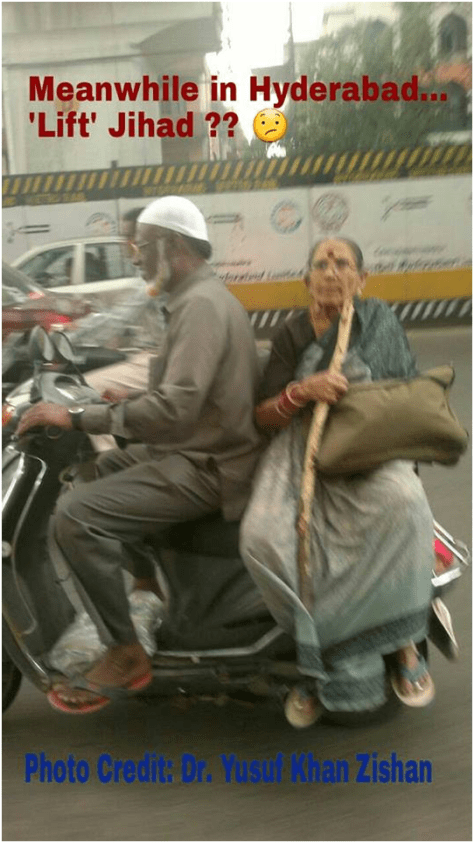
Lift Jihad: Yusuf Khan Zishan

This picture by YUSUF KHAN ZISHAN is circulating widely on Facebook. Received @ Kafila from Janaki Rajan who writes:

I was in Hyderabad on that day – August 19th, the day of the Telengana Intensive Household Survey, when people with two wheelers volunteered to help those arriving by trains to reach their homes as autos and taxis were not permitted to to ply that day… a spontaneous idea..

securedownload


Syrian Jihad spawned the Islamic State: Nauman Sadiq

Guest Post by NAUMAN SADIQ

Let me admit at the outset that Assad is an illegitimate tyrant who must abdicate his hereditary throne to the will of the people when the opportune moment arrives. But at the moment our primary concern shouldn’t be bringing democracy to Syria; at the moment our first and foremost priority should be reducing the level of violence in Syria. There are two parties to this conflict: the regime and the rebels (the majority of whom are takfiri jihadis). It is not possible for the regime to deescalate the conflict because it is holding a tiger by the tail. The regime is fighting a war of defense; and what is at stake in this war is its survival; not only its survival but the survival of its clan: the Alawite minority of 2.6 million people who comprise 12% population of Syria’s 22 million people.

The second party to the conflict is the rebels who are generously supported by the Gulf monarchies, Turkey (Sunni Muslims), Western powers and Israel. Don’t get alarmed and be dismissive of the possibility of an alliance [1] between the Sunni Muslims of Saudi Arabia, Qatar, Jordan, Turkey and the Zionists of Israel. It is realpolitik: the enemy of my enemy is my friend. In fact the Western interest in this war is partly about Israel’s regional security[2] because the Shia axis comprising Iran-Syria-Hezbollah is an existential threat to Israel; and with each passing year the nature of this threat will enhance proportionally with the increased sophistication of Iranian missile program. During the 2006 Israel-Hezbollah conflict in Lebanon, most of the rockets fired by Hezbollah into the Israeli territory missed their target; but according to some reports Iran and Hezbollah have already developed smarter missiles and with every passing year the threat of Hezbollah’s guided missiles so close to Israeli borders will keep on haunting the Israeli strategists’ dreams.  Continue reading Syrian Jihad spawned the Islamic State: Nauman Sadiq

Muslims should Counter the Divisive ‘Love Jihad’ Campaign with Friendship Towards Secular Hindus: Kaleem Kawaja

This is a guest post by KALEEM KAWAJA

Abhee sub kuch nahin mita shaayad
Hindu-Muslim main pyaar baaqi hai
Ek Bhaayee kaa ek Bhaayee pur
Pyar ka kuch udhaar baaqi hai … 

Jawaid Badauni.

unnamed

Since the past one year, especially after the parliamentary elections were looming close, extremist RSS elements have become all the more aggressive all over the country, especially in the north, east and west. They have taken pains to circulate false news stories about Muslims in general, and Muslim youth in particular, as somehow prone to violence ,and conniving to entrap Hindu girls in romantic relationships with the sole object of securing their conversion to Islam. Regional vernacular newspapers have carried fabricated stories about Muslim youth turning to terrorism and planning bomb blasts in many Indian cities.

Since the past one year, especially after the parliamentary elections were looming close, extremist RSS elements have become all the more aggressive all over the country, especially in the north, east and west. They have taken pains to circulate false news stories about Muslims in general, and Muslim youth in particular, as somehow prone to violence ,and conniving to entrap Hindu girls in romantic relationships with the sole object of securing their conversion to Islam. Regional vernacular newspapers have carried fabricated stories about Muslim youth turning to terrorism and planning bomb blasts in many Indian cities. Continue reading Muslims should Counter the Divisive ‘Love Jihad’ Campaign with Friendship Towards Secular Hindus: Kaleem Kawaja

Look who’s leading the campaign against ‘Love Jihad’!

jihad-l

Hindu Mahasabha members protest against ‘love jihad’ in Lucknow (File photo by Vishal Srivastav in The Indian Express)

Right up in front, a police bike. Imagine the level of intimidation. And the brazen implication of state agencies in what Paul Brass described as “institutionalized riot systems.

The Indian Illusion: Shashank Kela

Guest post by SHASHANK KELA

Some time ago, I wrote an article seeking to dissect certain myths about Indian politics – and the class that dominates it, despite protestations to the contrary, the middle-class.[1] It is one of the habits of this class to see, and self-pityingly portray itself as victim – of mass politics, reservation policies, the great unwashed, of politicos bent upon appeasing the poor at the cost of sound principles and policies. Its conviction, of course, is that India was great, and on the cusp of becoming so again. This unfading glory is no more to be disputed than the existence of the sun, although opinions differ upon the precise placement of our golden age.

To the rabid fanatics of Hindutva, it resides in an unspecified Vedic time, when Hindus (not Indians) mysteriously succeeded in inventing aeroplanes, dynamite, nuclear weapons, the wheel, zero, and what have you (and mysteriously losing most of these wonderful things). To the Nehruvians, it is the age of Akbar, Ashoka, Harsha, periods of syncreticism and unique tolerance, where people of different faiths lived together peacefully and a composite culture flowered. To them, and to Gandhians, it also resides in the figure of Gandhi and the tradition of practical spirituality. To the fanatics of Islam, it is probably the age of Alauddin Khilji, the reign of Aurangzeb, and so on.

The never-ending debate about India’s pasts contains a diversity of opinions; however, on its future destiny, these begin to converge. The RSS and BJP believe, for example, that India is destined to become a great industrial power. So did Nehru, and assorted Indian Marxists. Indeed, it is an article of faith for the burgeoning middle-class (mostly, but not entirely Hindu) that India can, should and will equal China to become a great power, economic and military (thus leaving Japan and South Korea in the dust). Continue reading The Indian Illusion: Shashank Kela

Temperance in the time of Rahu

So Onam is here again — despite the fact that several contradictory stars above  now form a malefic conjunction in the fate of poor Malayalis in Kerala. Indeed, rarely has a stranger gang dominated the starry heavens of our destiny: V M Sudheeran’s targeted gullet moralism that promises to close down a very large number of bars in Kerala and pave the way for total prohibition in the future, gangs of Hindu right wing youth and women forcing the government’s liquor outlets to close, policemen puffed up with jingoistic nationalism who hallucinate about Maoists in wake and sleep and declare social activists like Ajitha “dead”, CPM offspring who think that making foul, putrid public statements justifying murder is politics. All these are, well, rather drunk on self-righteousness and to be true, present a slightly ridiculous sight. Even the weather looks ridiculously inebriated – the sky alternates between bright sunny spells and horrid, harsh showers, crazily swinging between sunny smiles and bursts of tears. Continue reading Temperance in the time of Rahu

‘लव जेहाद’ की असलियत – इतिहास के आईने में: चारू गुप्ता

Guest post by CHARU GUPTA

लव जेहाद आंदोलन स्त्रियों के नाम पर सांप्रदायिक लामबंदी की एक समकालीन कोशिश है. बतौर एक इतिहासकार मैं इसकी जड़ें औपनिवेशिक अतीत में भी देखती हूँ. जब भी सांप्रदायिक तनाव और दंगों का माहौल मज़बूत हुआ है, तब-तब इस तरह के मिथक गढ़े गए हैं और उनके इर्द गिर्द प्रचार हमारे सामने आये हैं. इन प्रचारों में मुस्लिम पुरुष को विशेष रूप से एक अपहरणकर्ता के रूप में पेश किया गया है और एक ‘कामुक’ मुस्लिम की तस्वीर गढ़ी गयी है.

मैंने 1920-30 के दशकों में उत्तर प्रदेश में साम्प्रदायिकता और यौनिकता के बीच उभर रहे रिश्ते पर काम किया है. उस दौर में लव जेहाद शब्द का इस्तेमाल नहीं हुआ था लेकिन उस समय में भी कई हिंदू संगठनों — आर्य समाज, हिंदू महासभा आदि –- के एक बड़े हिस्से ने ‘मुस्लिम गुंडों’ द्वारा हिंदू महिलाओं के अपहरण और धर्म परिवर्तन की अनेकोँ कहानियां प्रचारित कीं. उन्होंने कई प्रकार के भड़काऊ और लफ्फाज़ी भरे वक्तव्य दिए जिनमें मुसलमानों द्वारा हिंदू महिलाओं पर अत्याचार और व्यभिचार की अनगिनत कहानियां गढ़ी गईं. इन वक्तव्यों का ऐसा सैलाब आया कि मुसलमानों द्वारा हिंदू महिलाओं के साथ बलात्कार, आक्रामक व्यवहार, अपहरण, बहलाना-फुसलाना, धर्मान्तरण और जबरन मुसलमान पुरुषों से हिंदू महिलाओं की शादियों की कहानियों की एक लंबी सूची बनती गई. अंतरधार्मिक विवाह, प्रेम, एक स्त्री का अपनी मर्जी से सहवास और धर्मान्तरण को भी सामूहिक रूप से अपहरण और जबरन धर्मान्तरण की श्रेणी में डाल दिया गया. Continue reading ‘लव जेहाद’ की असलियत – इतिहास के आईने में: चारू गुप्ता

A civil-war is on the doorstep of India: Interview with Kancha Ilaiah by Mahmood Kooria

This is a guest post by Mahmood Kooria

We are publishing an English translation of an important interview of the intellectual and academic Kancha Ilaiah, conducted by Mahmood Kooria for the Malayalam weekly Mathrubhumi. While what I see as Professor Ilaiah’s underestimation and perhaps misreading of the historic role of the Communists in Indian politics leaves me severely uncomfortable, especially when he exonerates the right from commensurate charges of elitism, his framing of Hindustva and Modi’s appeal within the great stream of caste in the subcontinent is brilliant and thought-provoking, as always. 

Kooria conducted the interview as well as translated it in to English. His introduction is as follows, “At a time when there was no any such discussion, in 2002 Professor Kancha Ilaiah predicted that Narendra Modi will be the prime-ministerial candidate of Baratiya Janata Party. It has come true and now Modi is in the office. At this point, I talked with him at Moulana Azad Urdu University Hyderabad where he chairs the Centre for the Study of Social Exclusion and Inclusive Policy. In the conversation, he talked about the future of Modi government and he predicted that a civil war is going to break out in India if Modi does not cater the needs of backward classes. A Malayalam-version of this interview was published in the Mathrubhumi Illustrated Weekly (August 24, 2014).”

Mahmood Kooria: Ten years ago you wrote that Modi will be the prime ministerial candidate of BJP. What would be your response as your prediction has come true?

Kancha Ilaiah: Well, at that time I was predicting that based on the Left parties’ indifference to understand the caste question. The caste question is not been seriously taken by the Left parties. And, after Mandal, the BJP and the RSS wings started looking at caste-question seriously because when Babari Masjid was demolished they mobilized a lot of backward classes. Though they oppose Mandal reservation, they wanted the backward classes to be part of the Hindu religion. Around 1994, a non-Brahmin called Rajju Bhaiya became the Sarsanghchalak of the RSS. Then he recruited a large number of backward classes, large number of youth, and he promoted the people like Narendra Modi, Uma Bharati at that time. Earlier, the first backward-class chief minister of Uttar Pradesh was a BJP man: Kalyan Sing. He was the chief minister in 1992 when the Babri Masjid was demolished.

The Sangh Pariwar was responding to the backward class demands more. But the Left or the Congress was not responding to the OBCs. The Congress was responding to the Dalits and Muslims. There was upper caste all the time on the top. So, when Narendra Modi became the chief minister and this whole atmosphere was created, I was writing a column in The Hindu. I thought that this seems to be cause/course of India, since the Hindu religion is surviving because of the backward classes. It is inevitable for the Hindutva organizations that they will have to project an OBC for the prime-ministership. But there was resistance from within itself. It is not that the Brahmins have given up the principle of varna-dharma. After that article came and of course after my writing Why I am not a Hindu itself, the backward classes even within RSS seemed to use that material for their advantage. The communists did not use or recognize it. The question of labour and caste which I have been consistently raising, which was also part of their theory, they did not care about. So the Communist Party remained tightly under the control of upper castes.

Continue reading A civil-war is on the doorstep of India: Interview with Kancha Ilaiah by Mahmood Kooria

Reading the Debate on the Planning Commission

I find it hard to think through the current debate on the Planning Commission (PC) outside a few things. The first is a clear centralisation of power at and within the PMO which I cannot help but be alarmed by. It’s all well and good when the decisions are those you agree with and all to easy to forget what centralisation does in the hands of, let’s please not forget so easily, a man whose IMHO has no H.

Its faults are easy to list but the PC (when it worked) did remain a space for thinking through a centre-state relationship and a development vision outside the government. It was a moment of articulation of intent with an (albeit diminishing) ability to put some weight behind it. I can’t quite bring myself to defend it because of what it refused to become in the more recent years, and the fights it refused to fight, but the need for such an autonomous voice remains. I don’t believe this new body will be anything other than a rubber stamp for a deeply authoritative PMO. In that, I am cautious of what will come. And by cautious, I mostly mean afraid.

Continue reading Reading the Debate on the Planning Commission

When David Became Goliath: Lee-Alison Sibley

Guest post by LEE-ALISON SIBLEY

Back in the 1960s when Hollywood was making a number of movies based on biblical stories, they came out with Orson Welles as King Saul in “David and Goliath.” I was a little kid when I saw this movie, but I remember identifying with little David who yes, played beautifully on his harp, and used his slingshot with divine accuracy. I also remember the monster Goliath – he was huge and ugly and represented the Philistines, our enemies.  I cheered in my head and my heart for David to defeat the monster and he did, so that I could feel the good guys won and God was indeed on our side, the side of the Israelites.

Like any idealistic Jew, though not religious, I went to Israel to work on a kibbutz in the summer of 1971.  I was in the south, near Eilat and the border with Jordan.  Young and naïve, I was friendly with everyone I met — the Sabras of Israel, the Christians in Bethlehem, and Arabs in Gaza. In Gaza?  Yes, I was there with a British fellow from the kibbutz who was picking up some cane furniture he had ordered.  I wasn’t supposed to be there, of course, and when an Israeli army jeep spotted me, my friend was in big trouble.  “Get her out of here immediately!” was the order he shouted.  I guess it had something to do with my appearance and that there were no other women on the street at that time.  Like I said, I was friendly with everyone – my parents did not raise me to hate, they raised me to love.  The Israelis tried to make me feel guilty for not staying in Israel, but I kept saying, “I’m an American, my home is the U.S.A.”  Still, I certainly supported Israel and every person I met there had lost someone, a family member or a friend in a war and I felt very sad for them and angry that they lived with the constant threat of attack. Continue reading When David Became Goliath: Lee-Alison Sibley

Why should we stand for the national anthem?

A-homeless-young-boy-waves-the-Indian-flag

With increasing reports of people being arrested for not standing for the national anthem,  it’s a good idea to remember why they stopped the practice of playing the thing in cinema halls in the first place – nationalism cannot be coercively produced in people’s breasts through such inane, superficial and empty gestures.

And the converse – just because you dont stand up for the national anthem, it doesn’t make you anti-Indian. You may just have another idea of India,  or you may show your concern for “India” by some more concrete gesture, or through your politics.

As Anmol Karnik asks:

If we play the national anthem before a television show begins at home, would people stand up? I doubt it. Most people who do it, do it because it’s not socially acceptable to sit down when everyone else is standing. It’s being part of the herd, so there’s probably some part of unity embedded in it, but unity in a forceful and degrading manner.

Just as a matter of interest, this is what the Prevention of Insults to National Honour Act, 1971 says:

Whoever intentionally prevents the singing of the Jana Gana Mana or causes disturbances to any assembly engaged in such singing shall be punished with imprisonment for a term, which may extend to three years, or with fine, or with both.

There is thus, no legal obligation whatsoever to actually stand while Jana Gana Mana plays.  Continue reading Why should we stand for the national anthem?