Category Archives: Sex

A hunt, the aftermath, angry Indian men and a tragedy: Rahul Roy

Guest Post by RAHUL ROY

Nivedita Menon ends her commentary on the unfolding Tehelka sexual assault case in Kafila by asserting – “the time has come. It is now”. It should be, but is it? Are we witnessing the end game of an old Indian patriarchal sport called sexual assault? The sport is akin to another old game called the royal hunt that was an important part of elite political culture of South Asia. The rules of the sport were then as now heavily loaded in favour of the royal huntsman – weapons, support teams, timing, everything required for the thrill of a kill were with powerful men out to conquer. The expeditions however were not just about the kill. The sport was also a means of asserting authority over tracts of the wild and those that lived there and were by some misfortune not aware of prevailing authority structures. The royal hunt was an event to showcase to subjects the might, prowess and authority of the elite rulers. It was the stamping of power over human as well as animal kingdom. The royal huntsman could not but win. He could not but kill.
Continue reading A hunt, the aftermath, angry Indian men and a tragedy: Rahul Roy

The Misogyny of India’s Cultural Elite: Kavita Bhanot

Guest post by KAVITA BHANOT

Thanks to the brave actions of a woman who had the courage to speak out against her very powerful boss, something huge has happened in the last week in India. The very sophisticated, cosmopolitan English-speaking cultural elite of India has been forced, for once, to look at itself, to face up to the sexism and misogyny that it has long harboured.

For many years this elite has been protesting, exposing, judging, mocking the patriarchy of the lower classes – of the policeman, the religious fundamentalist, the ‘unpolished’ politician, the working class urban migrant, the eve-teaser on the street.  But rarely have the men, or the women of this class, looked, in public, at themselves – the men examining their attitude towards women and the women thinking about their own complicity, the ways in which they have allowed or turned a blind eye to the misogyny of the men of their own class.

Neither the incident, nor Shoma Chaudhury’s response to it, surprises me in the least. In the time that I spent in this world, it became quickly apparent to me that deeply entrenched in the suave, cosmopolitan world of English language media, literature, art – were problematic attitudes towards women that neither the men or the women seemed to question.

Continue reading The Misogyny of India’s Cultural Elite: Kavita Bhanot

Tehelka, Jhatka and now Tamasha:Satya Sagar

Guest post by Satya Sagar

Eight years ago I remember listening to Tarun Tejpal in Bangalore as he held forth on how the news media could change the world for the better. It was a gathering of journalism students from Catholic institutions around the country and Tejpal was impressive in his defense of media freedoms.

He was passionate, charismatic, extremely articulate and as Chief Editor of Tehelka- with some of the best stories of Indian journalism behind them- very credible too. After his speech Tejpal left in a hurry, like a star priest dashing off to his next flaming sermon and fawning audience. Continue reading Tehelka, Jhatka and now Tamasha:Satya Sagar

Former Tehelka journalist speaks out

This is the full text of the statement issued today to the media by the gutsy woman journalist who refused to take sexual harassment as routine. More power to her and others like her!

I am heartened by the broad support I have received over the past fortnight. However, I am deeply concerned and very disturbed by insinuations that my complaint is part of a pre-election political conspiracy.

I categorically refute such insinuations and put forward the following arguments:

The struggle for women to assert control over their lives and their bodies is most certainly a political one, but feminist politics and its concerns are wider than the narrow universe of our political parties. Thus, I call upon our political parties to resist the temptation to turn a very important discussion about gender, power and violence into a conversation about themselves.

Continue reading Former Tehelka journalist speaks out

The Tangled “Tonalities” of Mr. Tejpal

By now the details are well known: a young journalist describes a harrowing encounter with Tarun Tejpal, owner and editor of Tehelka, in an elevator during Tehelka’s Think fest in Goa. The description of the incident alleges gross sexual misconduct and bodily violation of an aggravated nature.  Her description does not make for easy reading: it clearly demonstrates the incredibly vulnerable position in which young women are placed when confronted with the sexual misdemeanors of powerful men in positions of managerial authority. Indeed Mr. Tejpal says as much, that to cooperate with him is the best way for her to keep her job. She writes to Ms. Shoma Chaudhury the managing editor describing the incident and asks that she be tendered an official apology, and that Tehelka’s senior management constitute an enquiry and anti-sexual harassment committee as per the Vishaka guidelines. Instead what she is offered is a pathos-laden tale of fall and redemption: directed by and starring Mr. Tejpal, producer Ms. Shoma Chaudhury. There has been near continuous discussion across the web and the news and it can get difficult to keep track of all the various versions being produced on an hourly basis by Tehelka’s bullshit factories. So at this stage it might be useful to simply collate and compare various accounts. Continue reading The Tangled “Tonalities” of Mr. Tejpal

Protect the Privacy of the Tehelka Journalist: Report Responsibly

GUEST POST BY ‘REPORT RESPONSIBLY’
To all editors, journalists, bloggers, users of social media, and the public:

Some websites and blogs are posting the Tehelka journalist’s complaint to the magazine’s management or reproducing parts of it, perhaps with intent to expose a grave act of sexual assault by a man occupying a powerful position. However, in doing so, they are violating basic ethical and legal injunctions on the way cases of sexual assault must be reported.

The journalist’s complaint to her company is a private document and not a public one. While private documents can be leaked in the ‘public interest’, this principle is applicable to the emails of Tarun Tejpal and Shoma Chaudhury sent to Tehelka staffers, not to the journalist’s emailed complaint. In cases of sexual assault, it is a well established principle that the media can name the perpetrator, but not the victim. The identity and privacy of a victim must be protected at all costs.We are distressed that many people are circulating the journalist’s emails, and other journalists, bloggers and users of social media are publishing it in parts or whole.

Continue reading Protect the Privacy of the Tehelka Journalist: Report Responsibly

Online mapping of sexual harassment in Mumbai

header_mumbai-1024x409
After the spate of rapes and molestations in Mumbai and of course, the daily sexual harassment of women, AKSHARA CENTRE decided to launch HarassMap-Mumbai. it is a socio techno tool using crowdsourcing to enable women to report their experiences and citizens to spot and report unsafe spaces. The idea is to get women to report and engage local groups and the police to take action. This is possible if people use their mobiles and internet connections.
Check it out: HarassMap-Mumbai

Race too, after all, along with Gender: Arvind Elangovan

A few facts and some thoughts on the reception of Michaela Cross’s experience of India – Guest Post by ARVIND ELANGOVAN

Since Michaela Cross’s experience was part of a study abroad program conducted annually by the University of Chicago, and I was part of the program – for three years as a graduate student assistant (for the Fall quarters of 2007-2009), and one year as faculty in the program (Fall of 2010) – I think I could most usefully contribute by highlighting a few facts about the program itself. In the process I would think aloud about some of the issues that have come up in the reception of Cross’s experience in India, especially in the responses of Rajyashree Sen and Ameya Naik. I choose Sen’s and Naik’s responses partly because they have been the most recent, but also because between them they represent the spectrum of possible positions that one could usefully take about this issue. Needless to add, there have been other responses, such as the one posted by another fellow University of Chicago student on the trip, an article titled ‘In Defence of Rose Chasm (Michaela Cross) and countless other comments, criticisms, and responses that have flooded the Internet world.

However, between Sen and Naik, the basic ends of the spectrum are quite clear. Sen contends that it is not only a white woman’s problem but an issue for all women and that some self-regulation and discipline would have gone a long way to avert the unsavory experiences if not completely eliminate their possibility. Naik, at the other end of the spectrum, points out that the expectation of preparedness or caution urged by Sen belies the possibility of questioning the pervasive culture of sexual violence, in which any cautionary attempt to be safe, is to pay merely lip service to acknowledging the crime of sexual violence, instead of combating more difficult questions about such a culture. Continue reading Race too, after all, along with Gender: Arvind Elangovan

‘Marriage for men is like puberty for women’: Nandini Krishnan

nandini-krishnan-hitched-400x400-imadmuhyuygmg2xeThis is an extract from Hitched: The Modern Indian Woman and Arranged Marriage by NANDINI KRISHNAN

Saurabh laughs that he had the advantage of knowing what the process of spouse-hunting involves. A year before he went through the drill, his sister did.

[…]

However rosy the courting period may be, once you’re married, you get a rude wake-up call when you’re living in the same space. ‘Living with a strange person takes adapting. You could be in love for a few years and then get married, but even that doesn’t prepare you for sharing your personal space with another person. Of the other gender. Who has a different set of bodily smells, and opinions on the way your clothes smell.’

He has an interesting comparison for what men go through after marriage. ‘Remember when you, as a girl, got up close and personal with menstruation. That’s what most guys go through in the first month of marriage, unless they’ve been in a live-in relationship before. The first month is very chaotic because you’re experiencing another gender’s physicality and emotions.

Curiosity and disgust go hand in hand. Men see that their wives menstruate. Women begin to appreciate that belching and farting are natural human processes, but somehow they never manage to complete this process of appreciation.’ Continue reading ‘Marriage for men is like puberty for women’: Nandini Krishnan

A Burden of Proof: A Response to “White Woman’s Burden” by Ameya Naik

This is a guest post by AMEYA NAIK

[On the 26th of August 2013, Newslaundry carried a piece by Rajyasree Sen titled “White Woman’s Burden“. This post is offered as a rebuttal of the views expressed in the essay.]

Dear Rajyasree,

Michaela Cross, aka RoseChasm’s CNN blog piece about her experience of India is, as you say, currently unavoidable on the internet. It does seem to be provoking a dialogue on women and safety in India – at least in social media circles. If the result is that Indian girls and women acknowledge and share their own negative experiences, perhaps thereby to make some Indian men re-examine their perceptions and behaviour, it would still be a step forward.

Unfortunately, some responses represent two steps backwards instead. Your writing (“White Woman’s Burden”, 26 Aug, 2013) is one such; it made me profoundly uncomfortable. The gist of your argument appears to be this: Michaela was not suitably prepared, and she *SHOULD* have known better. Indeed, given her account of her actions and experiences, and the trauma she has experienced therein, it is surprising (to you) how unprepared she was.

Did I just read a young, educated Indian woman entrepreneur – from the hospitality industry, no less – say that an exchange student left traumatised after experiencing molestation (and worse) because she was unprepared? I describe myself as a cynic, but surely this is a new low!

What, pray tell, would suggest she was sufficiently prepared? That she came here, had the experiences she did, and considered them “par for the course” in India? Or that she came here aware of (what you call) the skewed psycho-sexual dynamic between Indian men and women in all its rich and diverse forms, behaved in the most conservative and appropriate fashion – only dancing in “safe places”, avoiding public transport entirely, staying only with trusted hosts or in one of Goa’s five star hotels – and left having experienced only milder forms of violation, like the persistent gaze (which she would know to expect)?

This assertion of yours does have one unexpected benefit – it lets us ignore the fair skin debate. If complexion plays no role, she should still be at least as careful as any Indian woman. If complexion does play a role, she should be even more careful! As silver linings go, though, this is pewter on a thundercloud.

How, pray tell, would the students or the University prepare for their visit to the land of the skewed psycho-sexual dynamic? With little docu-dramas of all the kinds of harassment you can expect, and how to be safe at all times? Would you not seed the most pernicious mistrust in your potential visitors? In fact, why would any of them come at all? Surely the University would simply cancel the trip!

And, while you seem to suggest that this is precisely what the “easily traumatised” should do, we would be the first to protest. Already we cry ourselves hoarse over travel advisories saying India is unsafe for women. That, apparently, is an insult to our national pride. And that seems to be the source of this article: “how dare this unprepared white girl write about India this way?” Only Indian writers can suggest that India has a skewed psycho-sexual dynamic, right? (An interesting dynamic which, of course, makes some – but not all – lechers or potential rapists. And on current evidence, I shudder to ask you who these corrupted ones are, and why only they succumb to this taint.) Because Indian women are prepared for such behaviour, and they know – even when they face it abroad – that it is only an aberration.

Too many responses, too many comments, seem to be in this vein. Why this parochial-with-my-fingers-crossed-so-as-not-to-offend-gendered-perspectives reply at all? My thesis is that it is because Michaela’s account makes us ask a few uncomfortable questions. Such as, how many aberrations to make a norm? How much preparation is enough?

Answering those questions is not a White Woman’s Burden – the onus to answer to them lies on us. Discrediting the person who asked them as “easily traumatised” – and really, as someone who says she has lived through incidents enough of her own, how dare you! – is a thoroughly inadequate reply.

[Ameya Naik is currently in a graduate programme in Boston. A psychologist and lawyer by qualification, he worked in New Delhi across 2012-13.]

Exemplary guidelines for the Police regarding sexual assault

RAHAT is a collaboration between Women and Child Development and Majlis Legal Centre, Mumbai, to provide Socio-Legal Support to Victims of Sexual Assault. One of the initiatives taken by RAHAT was the drafting of  guidelines for Police while recording and investigating cases of Sexual Assault. A circular with these guidelines has been issued by the Police Commissioner of Mumbai to all police stations in Mumbai. 

This is the English translation of the circular.

Special Police Circular No. 27/2013, Dated 12.8.2013

Sexual offences against:

• a person (boy or girl) under 18 years of age shall be registered under POCSO ( Protection of Children from Sexual Offences)Act,  2012

• a woman above 18 years of age shall be registered under IPC ( Under Ss. 354, 354A, 354B, 354C, 354D, 376, 376A, 376B, 376C, 376D, 376E and 509 IPC) Continue reading Exemplary guidelines for the Police regarding sexual assault

To travel or not to travel to India: Karen Dias

This is a Guest Post by KAREN DIAS

The most recent ‘Incredible India’ video ad campaign shows a young woman of seemingly European descent traveling alone through India. She is seen drinking coconut water and being friendly with a man, playing chess with holy men, being helped after a fall by two men, cheering at a snake boat race on a boat filled with men, playing Holi surrounded by more men and strolling on what looks like a deserted beach with a male mahout and his elephant. Sadly, the truth is far from what the video depicts for foreign women traveling in India, and most of them will try their best to not find themselves alone in situations like the ones shown in the video.  Stories of foreign women being verbally and sexually harassed are not new in this country and being accompanied by male friends or relatives is almost never a deterrent. Continue reading To travel or not to travel to India: Karen Dias

Network of Women in Media demands safety for women media professionals

The Network of Women in Media, India, (NWMI) is shocked and angry at the alleged gangrape of a woman journalist and the assault on her male colleague in the evening of August 22 while they were on assignment for a print publication near the Shakti Mills compound at Mahalaxmi in Central Mumbai.

The two journalists were accosted and intimidated by a few people who demanded to see their authorisation for shooting in the area. They took the woman journalist aside on the pretext of securing the authorisation for her, tied up her colleague and allegedly gangraped her. In all, five persons perpetrated the attack, according to preliminary reports. The woman journalist showed great presence of mind in freeing herself and also managed to free her colleague and the two then sought to file a complaint with the N M Joshi Marg police station. They are being treated at Jaslok Hospital now for multiple injuries.

The incident is a grim reminder of the deteriorating state of safety for women in Mumbai as well as the lack of security for media professionals, especially women media professionals. The harassment of women professionals in the media is on the rise and, along with work-place related harassment, journalists also have had to contend with anti-women prejudices and biased reactions from employers as well as law enforcement officers.

The Network of Women in Media, India extends all support and solidarity to the journalists who were assaulted. The NWMI also cautions its colleagues in the media to report on the incident responsibly and sensitively, without providing unnecessary details that provide markers to the identity of the journalists involved.

NWMI also demands that the police conduct a speedy investigation into the assault and ensure that justice is delivered without delay. It also urges media employers to ensure the safety and security of their staff.

Yours sincerely,

Geeta Seshu, Kalpana Sharma, Meena Menon, Sameera Khan, Sandhya Srinivasan, Laxmi Murthy, Sharmila Joshi, Ammu Joseph, Rajashri Dasgupta, Jyoti Punwani and others

on behalf of

Network of Women in Media, India

The Public Secret of Savita Bhabhi: Jyoti Singh

This is a  guest post by JYOTI SINGH

In May 2013, makers of the erotic comic strip came out with the Savita Bhabhi movie, where apart from Savita Bhabhi doing what she is best at, she also helps the two nerds, who mistakenly teleport her into their Orwellian India of 2070, take their revenge upon the notorious I&B Minister who bans all online porn but engages in all offline porn. With this, Savita Bhabhi was back in our ever-so-fickle public memory after 4 years of ban, but yet not quite. Her resurfacing was not as resounding as her going away. One could ascribe this to the spoken language of the movie being Hindi instead of English, which is the original language of the strip and also the official language of all modern day revolutions of the middle class on social media. Perhaps they misjudged the ‘maximum reach’ bit, which rendered her an orphan. Nevertheless, that aside, why isn’t Savita Bhabhi missed enough anyway?

Continue reading The Public Secret of Savita Bhabhi: Jyoti Singh

Gendered Violence and the Hall of Mirrors: Parnal Chirmuley

Guest Post by Parnal Chirmuley

A very young man, who should have been cheerfully devouring the world of ideas over samosas and tea from the canteen, tries instead to hack an equally young woman, his classmate, to death. With an axe, some say. Tries to shoot her too, but the pistol is too stubborn, they say. Then turns the blade and the poison on himself. There he sees success. Succumbs to both.

This leaves behind rivers of blood in the classroom and gashes in the minds of those who witnessed this, bravely intervened, or ran away from it. It leaves everybody entangled in a sea of Gordian knots that are just questions.

Continue reading Gendered Violence and the Hall of Mirrors: Parnal Chirmuley

The Affective Claims of Violence – Reflections on the JNU Campus Tragedy: Pratiksha Baxi

Guest Post by Pratiksha Baxi

Many competing frameworks have given expression to shock, disbelief, rage, grief, guilt and fear after the violence witnessed as the new semester kicked in, with a monumental tragedy, on the JNU campus. Everyone is stunned by the tragic turn of events that has resulted in a young woman battling for her life in a neuro–ICU in Safadarjung hospital. Confusion gripped the campus as the classroom became a scene of crime, a classmate became a bloodied body and the familiar transformed into the incomprehensible. It was devastating that the assailant, who succeeded in extinguishing his own life, aimed to unite in death the object of his obsession through a planned and highly performative act of violence in the routine setting of a classroom.

Continue reading The Affective Claims of Violence – Reflections on the JNU Campus Tragedy: Pratiksha Baxi

Unrequited love or simply ‘self love’? – Reflections in the wake of a Campus Tragedy at JNU: Shivani Nag

Guest Post by Shivani Nag

In the days following the brutal rape and murder of a young woman in December last year, I remember waking up each day and being out on the streets raising slogans on women’s freedom and liberation. For months after that, there were a series of mobilizations, vigils, parades and protests, and my strongest recollection of those events is the resounding reverberation of ‘mahilaayein maangi azaadi… khaap se bhi azaadi aur baap se bhi azaadi, shaadi karne ki azaadi aur na karne ki azaadi…’. It WAS about justice for that one woman, but it wasn’t ONLY about that… it was also about many other such women – some forgotten, some not, some dead and some still around… it was also about all women, demanding not just justice but their right to life as equal citizens. We did not come out on the streets to be told how to be safe, but to convey it loud and clear that we cannot spend our entire lives trying to be safe without actually getting to live it. We came out to demand and defend our right to choice!! Continue reading Unrequited love or simply ‘self love’? – Reflections in the wake of a Campus Tragedy at JNU: Shivani Nag

Ilavarasan: At a deadly new junction of caste and electoral politics: Rajan Kurai Krishnan

ilavarasan_divya-350_070513040519This is a guest post by RAJAN KURAI KRISHNAN
The gruesome death/alleged murder of Ilavarasan, a Dalit youth, at the outskirts of Dharmapurai on the afternoon of 4th July has come as a shock to all those who have heard of his case. Murders, ironically called honour killings, and socially abetted suicides as outcomes of inter-caste marriages are of course as common as catching cold in most parts of India. However, what has made Ilavarasan’s case something that could penetrate the armour of the middle class everyday plated with trained nonchalance to extract a possible expletive under their breath is the fact that his case has been in the limelight for more than eight months now.

It was a few weeks after his marriage with Divya, a girl belonging to the caste of Vanniars, a Most Backward Caste in the official description of Tamil Nadu Government,  in October 2012, Divya’s father was found dead allegedly having committed suicide due to the “dishonour” caused by his daughter’s marriage. Making the suicide an excuse, the Vanniyars organized riots in which three Dalit hamlets, about 250 houses, were destroyed. The scale of violent destruction caught the national attention and so did the love story behind the riots. The young couple earned a media profile while trying to live in peace beyond the reach of the raging Vanniyar caste men. It was fated that was not to be. The Vanniar caste leaders used Divya’s mother to temporarily separate Divya from Ilavarasan by using the well known tactics of emotional blackmail. They then broke the communication link between Ilavarasan and Divya. When Ilavarasan saw Divya in the court on the first of July, Divya told the court that she would live with Ilavarasan after convincing her mother. Divya’s lawyer, however, managed to make her tell the press that she is separated from Ilavarasan forever. Ilavarasan, on the other hand, told India Today, that he was highly hopeful of re-uniting with Divya. After two days, he was found dead near a railway track in broad daylight. Given this history, the news had some potential to shock people. Continue reading Ilavarasan: At a deadly new junction of caste and electoral politics: Rajan Kurai Krishnan

‘Ladies Still not Empowered in Kerala?’ Questions Raised by the Solar Scam

How does one respond critically and effectively when non-politics, non-government, and non-sense, all rolled together, assail the political public? I have been thinking about this recently — surely, this is a question that troubles all those who would wish to keep the focus of public life on politics and power. We witness, in present-day Kerala,politics being reduced to the internal bickerings over power indulged in by the powerful elite interest-groups that constitute the ruling UDF. Or, reduced to ‘sex scandals’ or ‘domestic squabbles’ when gender politics surfaces.  Simultaneously, we are witnessing the era of non-government and the severing of the link between public politics and government. While the bickerings between the coalition partners of the UDF continues unabated, news of infant deaths and severe malnutrition continue to flow from tribal hamlets in Attappady; the problems of mounting waste in both towns and rural areas continues to be criminally neglected; dengue and other dangerous fevers continue to exact daily, rising tolls all over the state. And even as the consequences of widening social inequalities become more and more visible, this government’s discourse of welfare remains pegged insistently on human mercy and charity. It continues to be dismissive of concerns of social justice and power — even as these harrowing tales continue to appear in the press, there is no dearth of advertisement of the goverment’s kaarunyam. And in the midst of all this, the Chief Minister being projected as the exemplar of human goodness and chairty! Or, the UN, ever-interested in ‘innovation’, conferring an award on his Mass Contact Programme at a time when his government has been least innovative or imaginative in solving problems that now stare us in the face. the This of course is the non-sense — the absurdity of it all. Continue reading ‘Ladies Still not Empowered in Kerala?’ Questions Raised by the Solar Scam

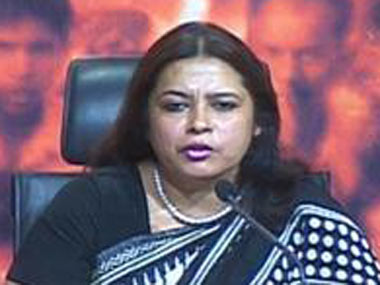
Women condemn Meenakshi Lekhi’s sexist slandering of Ishrat Jahan

Meenakshi Lekhi
Meenakshi Lekhi

Over 115 women have signed a letter seeking an apology from Ms. Meenakshi Lekhi for her sexist slandering of deceased Ishrat Jahan in a television channel. The letter has also been sent to the Chairperson of the National Commission for Women for appropriate action.

As the noose is tightening around the conspirators who cynically and coldly planned and executed the killing of teenaged Ishrat Jahan and three other people in 2004, there is a concerted campaign – the final, last ditch bid to save their skins – by tarnishing the image of this college student. There have been planted stories in the media linking her to a terrorist group –all of them false and concocted, even as the Gujarat High Court has clearly said that the CBI’s mandate is to simply investigate whether Ishrat and others were killed in cold blood. Continue reading Women condemn Meenakshi Lekhi’s sexist slandering of Ishrat Jahan

Shahrukh Khan, Surrogacy and Sex-Selection: Sneha Banerjee

Guest post by SNEHA BANERJEE: It was a Monday morning that didn’t bring me blues, after many weeks of sweltering heat I could keep the door to my balcony open without fearing the skin-burning ‘loo’ and my room filled with the pleasant breeze which had the promise of bringing in rains once again.  I decided to keep my diligently prepared to-do list aside and embarked on staring at the neem tree observing the avian cohabitants of my neighbourhood with the radio on my phone tuned to a FM station.  It was then that the unnecessarily loud, over-enthusiastic voice of a radio-jockey broke the serenity of the surroundings.  His shrieky voice exhorted a promise to keep Dilliwalon up-to-date with the latest controversies in Bollywood.  Now, that was not something that I was very interested in – imagined competition among biggies, who ate what, who holidayed where and with whom and after betraying whom was going to be too depressing to handle, but before I could reach out to change the station, he took somebody’s name that still makes my heart skip a beat even after couple of leap-years have come and gone since I was sweet-sixteen.  Yes, any and every news about this ‘star’ interests me and I want to know it all, true or untrue, gossip or through ‘reliable sources’.

But what I heard then, broke my heart.  The RJ quoted a Mumbai tabloid, that Shah Rukh Khan (SRK) is having a third child through surrogacy and that he has ensured it is a son through sex-selection.  Continue reading Shahrukh Khan, Surrogacy and Sex-Selection: Sneha Banerjee