Stop the Police Brutality Against Maruti Suzuki Workers: Joint Statement

The following is a joint statement issued by ADR Punjab, PUCL Haryana, PUDR and NTUI against police repression on Maruti Suzuki workers

Kaithal, 19 May 2013: The Haryana Government yet again in a brazen and outright cowardly manner has sought to protect the interest of capital and particularly the management of Maruti Suzuki India Ltd by refusing to allow the victimised workers and their families to undertake a peaceful demonstration planned for today which was expected to draw in ten thousand people from across the state.

A short while ago, police lathicharged a peaceful demonstration of workers families outside the residence of State Industry Minister Randeep Singh Surjewala. Scores have been hurt in the lathicharge and the demonstrators are being arrested.

The Haryana Government, on the eve of this peaceful protest at Kaithal, imposed IPC Section 144 in the town and arrested close to 100 workers and their family members from the dharna site at the Kaithal Mini Secretariat at 11:30 pm last night. Several more were picked up from the entry points to the town including the bus terminus this morning. The workers and their family members have been sitting on an entirely peaceful dharna at the Mini Secretariat from 28 April 2013 demanding release of the 147 workers in Gurgaon Jail and reinstatement of the workers, both permanent and contract, terminated without enquiry following the 18 July incident. Despite the heavy police mobilisation and barricades at entry points of the town, thousands of people from across Haryana have been pouring into the city to gherao the State Industries Minister, Randeep Singh Surjewala at his residence. Wives, mothers and sisters of workers are present in large numbers at this demonstration demanding a just inquiry and an end to the state effort at criminalisation of the workers.

Continue reading Stop the Police Brutality Against Maruti Suzuki Workers: Joint Statement
End of Postcolonialism and the Challenge for ‘Non-European’ Thought

A lively debate has been going on lately in Al Jazeera, following the question posed by Hamid Dabashi in an article provocatively titled “Can Non-Europeans Think“? Dabashi’s piece, published earlier in January this year was a response to an article by Santiago Zabala, Research Professor of Philosophy at the University of Barcelona. Zabala’s article, entitled “Slavoj Zizek and the Role of the Philosopher”, was actually on an entirely different issue, as will be evident from the title. Zabala attempts, in this article, to read in Zizek’s persona and oeuvre, the possible implications for the philosopher as such. He dwells on Zizek as a figure who is at once a philosopher and a public intellectual – a role not very easily available, according to him, to academic philosophers.

If most significant philosophers become points of reference within the philosophical community, he says, “few have managed to overcome its boundaries and become public intellectuals intensely engaged in our cultural and political life as did Hannah Arendt (with the Eichmann trial), Jean-Paul Sartre (in the protests of May 1968) and Michel Foucault (with the Iranian revolution).” Zabala explains this rare ability/ possibility by invoking Edward Said on the ‘outsider’ status of the intellectual and by underlining the direct engagement of the thought of such philosophers with contemporary events. He says:

These philosophers became public intellectuals not simply because of their original philosophical projects or the exceptional political events of their epochs, but rather because their thoughts were drawn by these events. But how can an intellectual respond to the events of his epoch in order to contribute in a productive manner?

In order to respond, as Edward Said once said, the intellectual has to be “an outsider, living in self-imposed exile, and on the margins of society”, that is, free from academic, religious and political establishments; otherwise, he or she will simply submit to the inevitability of events.

Read the full essay here at Critical Encounters.

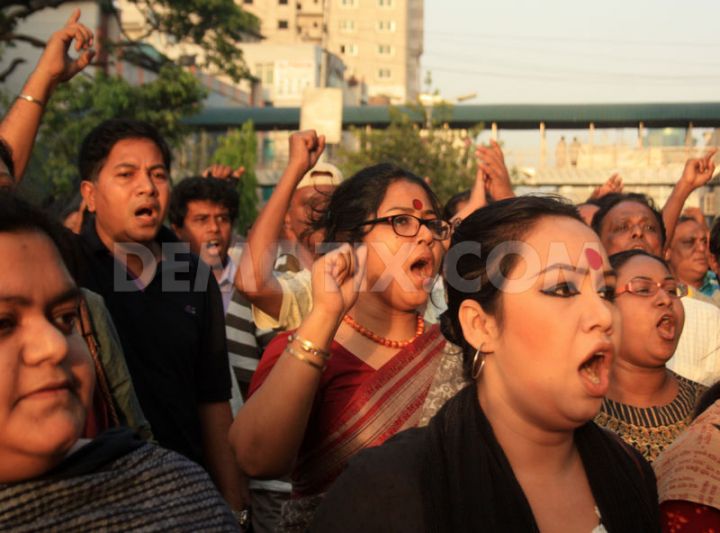
Letter from Shahbagh: Kalyani Menon-Sen

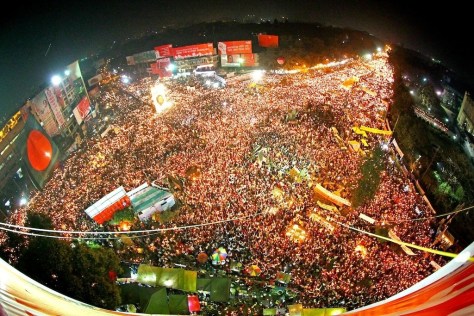
POWER_OF_LIGHT_orgGuest post by KALYANI MENON-SEN: Ever since I came back from Dhaka on 12th April this year, I have been opening my mailbox every morning with a feeling of excitement and anticipation, confident that there will be a mail from  Bangladesh with the latest news from Shahbagh. Just brief snippets – a slogan, a comment, a moment captured in a cellphone photo – but they are enough to bring back the   feeling of being there, feeling the excitement and the energy, sensing the emergence of a new kind of political space – chaotic and confused, yet alive with radical possibilities.

But last Sunday, 12th May, came a brief one-liner from Habib: “The police have dismantled Projonmo Chottor. Will keep you informed of further developments.”  Continue reading Letter from Shahbagh: Kalyani Menon-Sen

When the Levee Breaks: A report from a very large farm

IMG_0980 Earlier this month, I travelled to Gambella in South West Ethiopia to visit the 100,000 ha farm managed by Karuturi Global Ltd ; an Bangalore-based company that hopes to use its farm in Ethiopia to become one of the largest food producers in the world. Karuturi has become the most visible symbol of what activists have termed “land grab” in Africa; a term that is as contentious as the process itself. At various times, Kafila has also carried pieces on the subject. Some the material put out by groups like Human Rights Watch has been  hard to verify, but the process itself is worth following. Appended below, my Sunday story for The Hindu.

Gambella (Ethiopia): Last August, Ojulu sat smoking a cigarette outside his thatch-roofed hut in Pino village when a rising tide of water seeped through the reed fence. “The water came in the morning,” Ojulu said, “And stayed for a month.”

As Ojulu and his neighbours scrambled to higher ground the Baro river swirled through the village, gathering in force until it breached a series of dykes, built by Bangalore-based Karuturi Global, and swamped the company’s vast 100,000-hectare farm. “Karuturi blocked the natural route of the water [with the dyke], so the water came into our village,” Ojulu said. “Karuturi was the cause of the flood.” Read the rest of the story here

Sign Petition on the Custodial Killing of Khalid Mujahid

Image
Order CBI enquiry into the Custodial Killing of Khalid Mujahid
 
: Arrest the guilty Police Officers without delay

Khalid Mujahid, proclaimed by the police as one of the executors of the serial blasts that rocked UP courts in November 2007, died in police custody yesterday (18th May 2013). This young man, with no past medical record, the police claim died of sudden medical complications, on his way back to Lucknow prison, having made his appearance in court in Barabanki in connection with the serial blasts case. In 2011, a report, Torture in India, had documented how custodial killings were rampantly passed off as sudden medical complications and natural deaths (ACHR, p. 8). Continue reading Sign Petition on the Custodial Killing of Khalid Mujahid

Kerala apologizes for Sreesanth: Sajan Venniyoor

This is a Guest post by our sports correspondent, SAJAN VENNIYOOR:  In an unprecedented gesture, the state of Kerala has apologized for what it calls “the darkest chapter in our history”, Shanthakumaran Sreesanth.

downloadIn the face of overwhelming criticism that it did nothing to prevent Sreesanth, the state’s Chief Minister and Governor, in a joint statement, apologized formally for the crime against those bits of humanity that watch cricket, and admitted collective responsibility for Sreesanth. “It is time for us to acknowledge that Kerala civil servants, sports administrators and other Malayalis took part in Sreesanth.” Continue reading Kerala apologizes for Sreesanth: Sajan Venniyoor

India needs a third imagination

In a brilliant column in the The Indian Express, Pratap Bhanu Mehta (with whom I have much to disagree about reservations) calls the bluff of the “national” parties who want Indian voters to be wary of the ‘instability’ and impossibility of a third front coalition government. This argument, strangely posing itself in a nationalist tone, is unfortunately also bought by too many left-liberal intellectuals and activists who don’t want us to get out the non-choice of the BJP-Congress binary. Mehta writes:

Sometimes an ordered instability can be more productive than a comatose stability. It is said that a third front leadership is unlikely to have a national perspective. But the cringingly desperate way in which the leadership of the national parties have put their own survival above any principle makes you wonder what the charge of not having a national perspective is all about. The third front will make foreign policy hostage to regional interests. In a way, it already is. But the source of the problem is deeper. Even a supposedly national party like the BJP cannot get its act together on the enclaves agreement with Bangladesh. Why blame regional parties? The third front will be fiscally irresponsible. It is a risk, but no more than a risk with any political party. The Congress squandered the best of economic opportunities in a fiscally irresponsible way. It is something of an irony that the only Chidambaram budget described as a “dream budget” came under Deve Gowda. And many states have shown innovation in a kind of pro-business entrepreneurial capitalism and in social sector schemes. Many of the regional leaders who would make up the third front are autocrats. Indeed, many of them are. But that autocracy is more visible because the national parties can use the state structure in a very sophisticated way to further their ends. But they are articulate and engage with their constituents. In short, the constituents of the third front are as much India and Indian interests as anyone else. [Full article]

India needs a third imagination, and by constantly being told that it is not possible we are told not to imagine it. This is the argument of, as Mehta puts it, the ‘entrenched elites’, to save their privileges. The fear of the third front, of the ‘regional’, needs to be fought and defeated. We see this poverty of imagination thrown at us whether we’re talking of Nitish Kumar or Arvind Kejriwal or Mayawati by people who will do not think it necessary to subject the Congress and the BJP to similar scrutiny. This bias against the “regional” is remarkably shared amongst a lot of people across the ideological spectrum. Their bluff needs to be called.

Citizen-Students and the University: Sanjay Kumar

 Image

The proposed 4-year undergraduate degree programme of the Delhi University is being pushed through in undue haste without adequate debate and public discussion. The special emphasis on Foundation and Integrating Mind, Body and Heart courses, controversial components of the 4-year scheme, is indicative of an extra-academic zeal. The pedagogical thinking behind these courses is authoritarian and against the spirit of liberal citizenship.

Typically students under the 10+2+3 system of education in the country enter the university at the age of seventeen or eighteen. Time spent in the university helps students transition to adulthood. While there, they attain the legal age that confers citizenship rights and duties on them. The way they are treated in classes and in college and university offices; the rules of conduct they are expected to follow; and the extent and form of recognition they receive as adult citizens from the university– all have a lasting influence on how they imagine their citizenship. University life also involves informal and formal associations with other students and with teachers and staff. The form, purpose and operative principles of these associations shape the affective and cognitive behaviour of students, which partially determine the kind of public sphere they build later in life. This note discusses the recent developments in Delhi University and their implications for students from the perspective of citizenship. Continue reading Citizen-Students and the University: Sanjay Kumar

Of Education and Democracy in India: Preeti Chauhan

This is a guest post by Preeti Chauhan Now that the cat is out of the bag and the four year undergraduate programme(FYUP) is being criticized and thereby being discussed threadbare by some of the leading scholars of the country, one needs to also think of its relationship with the current state of democracy in India. The manner in which FYUP is being pushed through crushes the very idea of a university and with it the ideals and ideas of democracy.

Even if one assumes and believes that the “Academic Congress” held last year in the University gave a go ahead to change the existing three year undergraduate programme to FYUP and frame courses accordingly, then also the way the University administration has functioned goes against the very values that the University of Delhi or for that matter any university is supposed to promote. Continue reading Of Education and Democracy in India: Preeti Chauhan

Burma – Lest We Don’t See, A Genocide Is In The Making: Bonojit Hussain

“We have to ask ourselves whether we may have over-romanticized its (Burmese pro-democracy movement within and outside of Burma) battles against the junta as a broader quest to bring pure, universal human rights to Burma, when in fact we had little evidence of a wholesale commitment to the principle of tolerance.” – Francis Wade (Thailand based Journalist and a keen observer of developments in Burma)

Since the summer of 2012 Burma has seen pogroms, massacres, riots of unprecedented scale against religious minorities, the latest being on the 30th April. Few hundreds have been killed and few hundred thousands have been rendered homeless.Much has been talked about how it is a ploy by the hardliners in the army and the post-reform government to stall further reforms. It might be true to a large extend, but the silence of the pro-democracy opposition is intriguing. While many from the “pro-democracy” camp have remained either silent or ambivalent; many others have shown that they actually belong to the ranks of fundamentalist who in the pretext of unfounded “sense of self-victimization” are fomenting a near genocidal situation in the country.  Continue reading Burma – Lest We Don’t See, A Genocide Is In The Making: Bonojit Hussain

Sarabjit, Sanaullah, you and me

sarabjit2

I met Sarabjit Singh’s brave lawyer Awais Sheikh in Delhi some months ago, where his book was released. He was very confident Sarabjit wouldn’t be hanged. As was Justice (Retd.) Katju, who launched the book. Justice Katju said there was no point campaigning for Sarabjit’s release until the Pakistan elections were over. I got a similar impression of optimism from people who had been following the Sarabjit case.

Well, they were right. Sarabjit wasn’t hanged. But hanging is only one way of killing. Continue reading Sarabjit, Sanaullah, you and me

Asghar Ali Engineer (1939-2013)

B_-_portrait.Ashgar_Ali_Engineer-Salzb05__c__RLA_Foundation__Ulrike_AltekruseAn obituary by ZAHIR JANMOHAMED: I first met Asghar Ali Engineer in January 2002 in Mumbai. I was a fellow with the America India Foundation and a few weeks later I would be posted to work with an NGO in Ahmedabad.
A few minutes before his presentation, I noticed him standing off to the side in silence, staring at the ground. I walked up and introduced myself. I was young, in my twenties, and I did not know what to say.

“As-salaam alaikum,” I said.

“Wa-alaikum salaam,” he replied.

I am not sure what response I expected but I thought that perhaps because he and I share the same faith that we might have a special bond, that my greeting would spark a conversation. After all, I always thought phrases like these serve less as greeting and more as an announcement, as in, I am part of the same religion as you.

But Asghar saab just held my hand and then put his hand on his heart. “Nice to meet you,” he said, and then stared at the ground again in silence. I thought it was odd, rude even.

As I continued to meet Asghar saab, I realized that he had very little patience for superficial connections. I witnessed this when I saw him greet crowds after his lectures. If you told him you were from the same caste or city he would not be as excited as if you told him that you also believe that we must fight patriarchy with the same vigor that we must fight communalism. Continue reading Asghar Ali Engineer (1939-2013)

Hefazat-e-Jamaat, Nothing Else : On the Recent Developments in Bangladesh

Image


Talibaner aar ek naam – hefazat-e-Islam!” (Another name for Taliban, Hefazat-e-Islam)               

– Slogan raised at Shahbagh square


To such a degree has Religion fuelled conflict, complicated politics, retarded social development and impaired human relations across the world, that one is often tempted to propose that Religion is innately an enemy of Humanity, if not indeed of itself a crime against Humanity. Certainly it cannot be denied that Religion has proved again and again a spur, a motivator and a justification for the commission of some of the most horrifying crimes against Humanity, despite its fervent affirmations of peace. Let us, however, steer away from hyperbolic propositions and simply settle for this moderating moral imperative: that it is time that the world adopted a position that refuses to countenance Religion as an acceptable justification for, excuse or extenuation of – crimes against Humanity.

(Wole Soyinka, Source: http://www.granta.com/New-Writing/Religion-Against-Humanity)

I

The above quote was part of a long intervention made by Wole Soyinka, Nigerian writer, recipient of the 1986 Nobel Prize in Literature, and the first one from Africa, as part of UNESCO International High Panel, in a Conference on the Culture of Peace and Non-Violence.(21 September 2012) . The immediate context for Soyinka’s speech – was the desecration and destruction of centuries old tombs of Muslim saints in Timbuktu, Mali by radical Islamist group Ansar-al Dime which had ‘discovered’ them to be unIslamic. There were rumours  that the ‘invaluable library-treasures of Timbuktu may be next.’ on their agenda. Cautioning people about the fact that “[t]he science-fiction archetype of the mad scientist who craves to dominate the world has been replaced by the mad cleric who can only conceive of the world in his own image, proudly flaunting Bond’s 007 credentials – License to Kill.” he urged leaders to “..[u]nderstand this, and admit that no nation has any lack of its own dangerous loonies, be they known as Ansar-Dine of Mali, or Terry Jones of Florida, the earlier they will turn their attention to real issues truly deserving human priority. “

One was reminded of Soyinka’s words when one was witness to the march organised by the newly emergent group Hefazat-e-Islam ( can be loosely translated as ‘Defenders of Islam’) on the streets of Dhaka, capital of Bangladesh and the consequent mayhem that followed.  Continue reading Hefazat-e-Jamaat, Nothing Else : On the Recent Developments in Bangladesh

Science and Modernity : Ravi Sinha

Guest post by RAVI SINHA

Science and modernity are widely considered among the most celebrated features of contemporary human civilization. Increasingly they are taken as the defining elements that distinguish our times from the times gone by. At such a sweeping level, there can be many other ways to characterize the contemporary. One can, for example, refer to capitalism, market, globalization, democracy or nation-states. One can also include various critiques of capitalism and the widespread resistance to its hegemonic and imperialistic avatars among the characteristic features of our times. Such characterizations, however, belong to a layer of historical reality that is more systemic than civilizational. Science and modernity, especially when taken as a correlated pair, characterize our times at a deeper level. They have, so to speak, seeped into the subterranean layers of contemporary historical reality.

On the face of it, such an assertion would appear to be far removed from the actual state of affairs in the real world. It would be rare, for example, to find a person whose beliefs and practices are fully consistent with established precepts of science. Such a search would be a fruitless endeavour, more or less, in any society on the planet. A similar anomaly is apparent in the case of modernity too. One can safely say that an overwhelming majority of humans in the contemporary world does not live by the canons or conventions of modernity. While few may be completely untouched by the laws and institutions of a modern polity or by the processes and pressures of a modern economy, most live by traditions and practices that do not sit well with basic attributes of modernity. Continue reading Science and Modernity : Ravi Sinha

The Political Parties of Pakistan: Saim Saeed

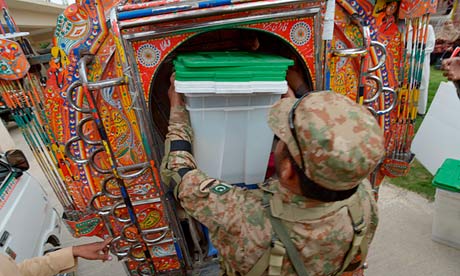
A Pakistani soldier loads ballot boxes into a van in Rawalpindi. Authorities hope the app, combined with a fully revised voter list and an unprecedented level of public scrutiny, will help ensure the election will be the cleanest ever. Photograph: Farooq Naeem/AFP/Getty Images

Guest post by SAIM SAEED: Democracy in South Asia is its own animal, and has little resemblance with its counterparts in the United States and elsewhere. Gone are any kind of faultlines between liberals and conservatives, ideologies and the like; “Social Democrats” means little, and Greens, Communists and Freedom, even less.

A widely held view is that political parties in Pakistan (and India) are based on ethnic lines. And there is good reason to believe that view. The PML-N, run by Punjabis, controls northern Punjab. The PPP, run by Sindhis, controls Sindh and parts of Southern Punjab. The ANP, run by Pushtuns, controls the Pushtun-dominated Khyber Pukhtunkhwa province in the North-West, and represents a few Pashtun-heavy neighborhoods in Karachi. Smaller parties run similarly. The MQM, a party founded as a Muhajir – immigrant – party, runs Karachi, the city with the largest Muhajir constituency. The BNP, founded as a Baloch pro-independence party is the most popular party in Balochistan. At various points, parties have tried to fashion themselves nationally, reflecting their larger ambitions. PPP’s official rhetoric talks of a national narrative. The MQM, originally short for Muhajir Quami Movement – National Immigrant Movement – changed to become the Muttahida Quami Movement (without any change to its initials), Muttahida meaning United. These changes have been cosmetic, however, and each party’s constituency remains more or less the same.

This view, however, is incomplete.

Continue reading The Political Parties of Pakistan: Saim Saeed

Two days in the Srinagar High Court: Shrimoyee Nandini Ghosh

This is a guest post by SHRIMOYEE NANDINI GHOSH

Impressions of the Hearing of the Public Interest Petition on the Mass Rapes at  Kunan Poshpora

Day 1: 7th May 2013: I happen to be in Srinagar. I hear through a friend that a Public Interest Petition has been filed by a group of fifty odd Kashmiri women, before the Srinagar Bench of the High Court, asking that the Kunan Poshpora mass rape case be reopened, and re-investigated. It would take a group of very odd women indeed, to ask for something so far fetched. They are students, housewives, teachers, doctors, some of whom were not even born in 1991, when the rape took place on the ‘intervening night’ (as such records always read) of the 23rd and 24th of February during a ‘search and cordon’ operation by personnel of the Indian army.

Continue reading Two days in the Srinagar High Court: Shrimoyee Nandini Ghosh

Back to ‘family’ at CDS – How to push false pride under the carpet! Anonymous

This is a guest post by Anonymous

I went to the CDS campus today hearing of the great tumult there, news of which has been appearing off and on in the press. I was just curious. I know personally one of the SEWA ladies; she told me her version of events. The students, of  course, have been venting their ire amply. In the past few days, I have also seen many of their comments in FB which made me want to puke, partly because of the fact that the faculty members who they revile now were fawned upon just a few days back. Normal people cannot help marveling at such extraordinary ability to reverse emotions towards the same object and at the same time, land on all four emotional feet. Continue reading Back to ‘family’ at CDS – How to push false pride under the carpet! Anonymous

Naya Pakistan, an old fable: Ayesha Siddiqa

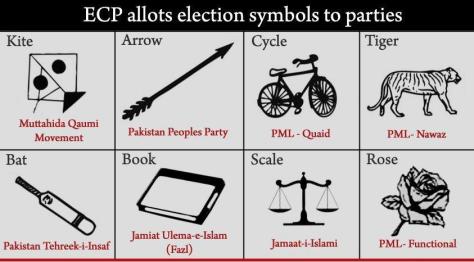
pakvotes-election-symbols

Guest post by AYESHA SIDDIQA: The renowned television anchor Quatrina Hosain was in tears. A day after the incident of her being sexually assaulted at a Pakistan Tehreek-e-Insaaf (PTI) jalsa by party workers in Wah Cantonement, she talked about how the bruises may heal but not her emotional scars. She was covering election rallies and got invited by a PTI candidate Mohammad Sarwar to his rally in Wah. It was a sudden plan so no one could have conspired to misbehave. This is important to note, as  many PTI workers have subsequently tried to blame the incident on Pakistan Muslim League (Nawaz)’s workers. However, when confronted with facts, PTI workers tried to hide behind the argument that women should not provoke people by coming out and mixing with them. Continue reading Naya Pakistan, an old fable: Ayesha Siddiqa

Sinful liberals and the war against jihadi terror: Manisha Sethi responds to Praveen Swami

Guest post by MANISHA SETHI: It has been seven months since the Jamia Teachers’ Solidarity Association brought out its report, Framed, Damned, Acquitted, chronicling in detail how the Delhi Police’s Special Cell implicated innocents – former militants, police informers, businessmen, and just ordinary, unlucky men – as terrorists. It is one of the few documents that lends evidentiary credence to the widespread sense amongst Muslims that they are being targeted in the war against terror. Apologists for the police and investigative agencies however do not tire of contesting its conclusions, namely that there is a systemic and systematic bias against minorities when it comes to terror investigations. What bias, they ask. As does our chief National Security ‘analyst’ Praveen Swami, who has stressed that “liberals are compromising the war against jihadi terror“.

Could such ‘analysts’ be echoing the sentiments of a judge of the Allahabad High court, who less than two decades after India gained independence, noted, that “in the entire country there is not another criminal force whose misdeeds can come anywhere near the list of crimes of that organised body called the Indian Police force” (All India Reporter, 1964, Vol. 51, 702). Do they mean, that our extraordinarily brutal police force is even-handed in its application of cruelty across the spectrum of our citizenry, and is not especially biased against the Muslims, or Dalits, adivasis and so on?

Continue reading Sinful liberals and the war against jihadi terror: Manisha Sethi responds to Praveen Swami

Gandhi’s fourth monkey: Suvaid Yaseen

Guest post by SUVAID YASEEN: Incredible India is a land of promises. Amnesia and half narratives. Selective remembrance and deliberate forgetting. The national interest is incredibly important. And everything is allowed in this war.

Gandhi’s – the father of the nation – maxim of bura mat kaho, bura mat suno, bura mat dekho (don’t say evil, don’t hear evil, don’t see evil), interestingly forgets to say bura mat karo (don’t do evil). So, you can do it, and forget it. Gandhi should smile. And his monkeys can make merry.

Mohammad Yasin Malik, the Jammu Kashmir Liberation Front commander turned ‘Gandhian leader’ must know this irony very well.

When, in the early nineties, the guns started ringing, Kashmiris were told that they should leave the path of the armed struggle and have a peaceful agitation, and they would be listened to, by India and by the international community. Continue reading Gandhi’s fourth monkey: Suvaid Yaseen

On higher education in India: Saattvic responds to Thane Richard

This is a guest post by SAATTVIC

Hi Thane,

I recently read your piece for Kafila, which was subsequently reproduced in part in the Hindu. I studied economics there as well, batch of 2006. I subsequently went on to read for an MPhil in Economics at Oxford.

Good on you for writing that piece. It raised lots of questions about our education system, and I agree with a lot of what you wrote (and share the same dismay at the dictation sessions from one particular professor you referred to).

There’s just a few things that I’d like to say, but before I say them let me say that none of this comes from being ‘nationalist’ or ‘patriotic’ in the slightest – just as you spent three years studying, working and paying taxes in India, I spent five studying, working and paying taxes in the UK, and I would like to believe that doing so has given me a bit of a world view of these things. Moreover, my area of interest is education economics, which is what my research focused on. Continue reading On higher education in India: Saattvic responds to Thane Richard

DISSENT, DEBATE, CREATE