
Law teachers and researchers from across the world have strongly condemned the recent police brutality against students of different universities struggling the recent changes in Citizenship law. They have also criticized the CAA and the NRC ideas as majoritarian and one that subverts our Consttitutional vision. Their statement:
We, the undersigned teachers and researchers of law, strongly condemn the police brutality on the peaceful protest by the students at Jamia Milia Islamia, Aligarh Muslim University and other universities.
On 15 December 2019 police entered the Jamia Milia Islamia and Aligarh Muslim University, and assaulted and detained the students. Students were dragged out of campus, and were paraded outside with hands raised. We believe that the action of the police is an attempt to suppress dissent and is an attack on the autonomy of the universities. The police action violates, inter alia, the right to peaceful assembly and freedom of speech and expression guaranteed under the Constitution of India and international law instruments to which India is a state party. We emphasize that academic institutions are an arena of discussion, debate and dissent, and the peremptory and ultimate objective of universities is to speak truth to power. By using force against the students, the government has struck at the heart of the culture of protests.
Continue reading Law Teachers and Researchers Condemn Police Brutality, CAA and the NRC
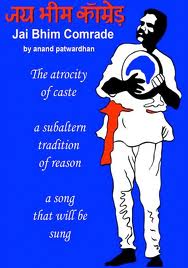 How many murdered Dalits does it take to wake up a nation? Ten? A thousand? A hundred thousand? We’re still counting, as Anand Patwardhan shows in his path-breaking film Jai Bhim Comrade (2011). Not only are we counting, but we’re counting cynically, calculating, dissembling, worried that we may accidentally dole out more than ‘they’ deserve. So we calibrate our sympathy, our policies and our justice mechanisms just so. So that the upper caste killers of Bhaiyyalal Bhotmange’s family get life imprisonment for parading Priyanka Bhotmange naked before killing her, her brother and other members of the family in Khairlanji village in Maharashtra, but the court finds no evidence that this may be a crime of hatred – a ‘caste atrocity’ as it is termed in India. Patwardhan’s film documents the twisted tale of Khairlanji briefly before moving to a Maratha rally in Mumbai, where pumped-up youths, high on testosterone and the bloody miracle of their upper caste birth are dancing on the streets, brandishing cardboard swords and demanding job reservations (the film effectively demolishes the myth that caste consciousness and caste mobilisation are only practised by the so-called ‘lower castes’). Asked on camera about the Khairlanji murders, one Maratha manoos suspends his cheering to offer an explanation. That girl’s character was so loose, he says, that the entire village decided to teach her a lesson.
 KAFILA - COLLECTIVE EXPLORATIONS SINCE 2006