Deora Uncle, this ain’t fair

Read this post by Girish Shahane before it’s removed under the threat of a legal notice:

At the start, I reported to a gentleman on deputation from Intel, but he was soon replaced by a gang of four youngsters whose designations were never made clear. Three of them had a parent on the board of Reliance Industries, while the fourth, Milind Deora, was the son of the politician Murli Deora. Continue reading Deora Uncle, this ain’t fair

The horror, the horror: India’s new IT act

An article from last week’s Outlook magazine on the new cyber law makes the following points:

Rakhi Sawant Ka Swayamvar!

“Yeah yeah, take a good show and spoil it by theorizing” said my labour lawyer/bollywood-gossip-junkie flat mate. All I said was that I thought Rakhi Sawant Ka Swayamvar was an “Interesting phenomenon that comments on the articulations of the notion of marriage within the context of fixed notions of culture among upper middle class north Indian families and within that the tropes of gender, normativity and melodrama! And so I should write about it on Kafila”.

Her comment wasn’t entirely unjustified.

The way in which one watches these shows in itself raises a range of questions. The show has taken over my life as of now. The final decision of who she will marry will be made soon and the restlessness and anxiety about it is immense and requires effort to contain. Continue reading Rakhi Sawant Ka Swayamvar!

Anger Aftermath: ‘Encounter’ killings escalate in the Tarai

On Sunday night, around 10.30 pm, Chandrashekhar – a leader of the Madhes Rashtriya Janatantrik Party (MRJP), Revolutionary – called me up. An old acquaintance who had shifted from social activism to the armed movement, he was committed to the cause of Madhesi autonomy.

He was panic-stricken, and said, “Our chairman, Ram Narayan alias Manager Mahato, was arrested by Jaynagar police in Bihar this afternoon. They have just handed him over to a Siraha police team, which came to pick him up. We want to spread the news because they may kill him.” Continue reading Anger Aftermath: ‘Encounter’ killings escalate in the Tarai

Eclipsed by Western News Orientalism

In the apparently historic ongoing battle of the Asian Tigers that generates so much interest and anxiety amongst corporate types and policymakers all over the world, the recent solar eclipse may have ruined the chances of the Indians. Here’s a video on the eclipse that leaves no doubt as to who’s leading the race for the twentieth century. Please note the difference in reactions within India and China to the eclipse. If msn news is to be believed, when the sun turned black, an all-Hindu India erupted in a frenzy of religious and superstitious activity, while the Chinese and Japanese calmly took their children out to parks to see the celestial event through those cute eclipse goggles – a kind of pleasantly scientific national pastime. Enjoy this little snippet of orientalist reporting… Or is it the truth about ‘us’?

MILITARIZATION WITH IMPUNITY: A Brief on Rape and Murder in Shopian, Kashmir

This release dated 19 July comes from the International People’s Tribunal on Human Rights and Justice in Indian-administered Kashmir (IPTK)

Enclosed, please find our brief on the events and investigative process in Shopian, Kashmir, connected to the brutalization and death of Asiya Jan and Neelofar Jan in end May 2009, in which the state security forces have been implicated.

While investigations have emphasized the procedural conduct of the police in their handling of the investigation, they failed to focus on the actual crimes that were committed, or the conduct of state institutions. The investigations in Shopian have not focused on the identification and prosecution of perpetrators or on addressing structural realities of militarization in Kashmir that foster and perpetuate gendered and sexualized violences, and undermine rule of law and justice. The investigations have instead concentrated on locating ‘collaborators’ and manufacturing scapegoats to subdue public outcry. ‘Control’ rather than ‘justice’ has organized the focus of the state apparatus, including all processes related to civic, criminal, and judicial matters.

What is the ‘truth’ of the matter, who are in the know, and what is being shielded?

We were compelled to write this brief to mark the inability of the state apparatus to deliver justice. We urge civil society institutions and international human rights groups and those working with issues of social justice to seek accountability.

In writing this, we have visited, and been in contact with, the family of Asiya Jan and Neelofar Jan, and civil society leaders and organizations in Shopian, and in Srinagar. We are grateful for the collegiality extended us, and especially to those that placed themselves at risk to offer us insight.

You can read here the full report.

Of Bhoomiputra and Housing

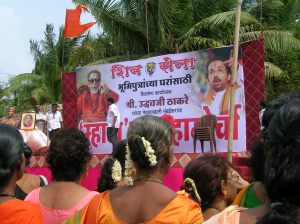
DSCN8740I was moving around Mumbai city on that weekend, mainly in the western suburbs. Several posters and banners were put up all over, announcing a call to a mass rally by Shiv Sena chief Uddhav Thackeray. Thackeray’s clarion call for that meeting was: “Housing for the bhoomiputra“. Bhoomiputra literally means son of the land. On an overt reading of the poster and slogan, one could conclude that the Sena is back to its advocacy of the sons of the soil theory which originally raised it to prominence in the 1960s. But when I attended the rally and noticed the people who attended it, I asked myself, so who exactly is this son of the soil that the Sena is talking about? Is it the Marathi manoos, the local underdog who the Sena argues has no social and economic space in his/her own city? If it is truly the Marathi manoos, then how do I interpret the presence of North Indian women, Bohra muslim women, perhaps even Dalit women, and many other women who I tried to mark but could not classify as either Hindu or Christian or any other particular else.  Hmmm …. Continue reading Of Bhoomiputra and Housing
Teachers and Academics Against 377

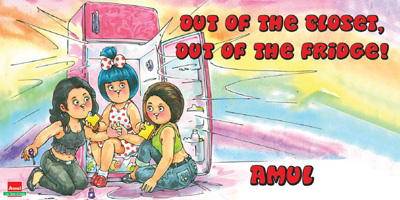
University teachers, researchers and academics from all over India issued a strong statement in support of the recent Delhi High Court judgement decriminalizing consensual sex among adults and challenged the legitimacy of “religious leaders” to speak for the whole of society.

180 signatories from institutions and universities in Allahabad, Calicut, Peechi, Punalur, Thiruvananthapuram, Kottayam, Sonipat, Goa, Jammu, Nanded, Mumbai, Pune, Pondicherry, Kolkata, Ahmedabad, Baroda, Chennai, Chandigarh, Delhi, Bangalore, Hyderabad, Guwahati and Shillong endorsed a statement that said:

Continue reading Teachers and Academics Against 377

Fanatic Dalits, Empowered Dalits? The Not-So-Fascinating World of Dalit-Hindutva Engagement

Fascinating Hindutva: Saffron Politics and Dalit Mobilisation
Badri Narayan, 2009, Sage, pages 195

—the Negro is a sort of seventh son, born with a veil, and gifted with second-sight in this American world, —a world which yields him no true self-consciousness, but only lets him see himself through the revelation of the other world. It is a peculiar sensation, this double-consciousness, this sense of always looking at one’s self through the eyes of others, of measuring one’s soul by the tape of a world that looks on in amused contempt and pity. One ever feels his twoness,—an American, a Negro; two souls, two thoughts, two unreconciled strivings; two warring ideals in one dark body, whose dogged strength alone keeps it from being torn asunder. Continue reading Fanatic Dalits, Empowered Dalits? The Not-So-Fascinating World of Dalit-Hindutva Engagement

धारा 377, यौनिकता और नेहरू – संतानोत्पत्ति से परे

[अगर आप मोज़िल्ला फायरफ़ॉक्स के ज़रिए नेट देखते हैं तो पढ़ते वक़्‍त फ़ॉंट बढ़ाने के लिए Ctrl + का इस्‍तेमाल करें]

धारा 377 अब स्वेच्छा से यौन संबंध बनाने वाले समलैंगिकों पर लागू नहीं होगी. दिल्ली उच्च न्यायालय के इस निर्णय ने भारतीय समाज की नैतिकता की परिभाषाओं की चूल हिला दी है. फैसला आने के बाद हिन्दू , मुस्लिम और अन्य धार्मिक समूहों के कई नेताओं ने इसे खतरनाक बताया है और इसके खिलाफ उच्चतम न्यायालय तक जाने की धमकी दी है. कुछ तो जा भी चुके हैं। सरकार को भी कहा जा रहा है कि वह इस फैसले को चुनौती दे. अब तक के सरकार के रुख से ऐसा कुछ नहीं लग रहा कि वह इस दबाव के आगे झुकेगी.

फैसला ऐतिहासिक है. इसका सबसे महत्वपूर्ण पहलू यह है कि यह एक विशेष संविधान को स्वीकार करके अपने-आपको एक राष्ट्र-राज्य के रूप में गठित करने वाले जन-समुदाय के रहने-सहने और जीने के तौर-तरीकों को निर्णायक रूप से उसके पहले के सामाजिक आचार-व्यवहार से अलगाता है. यह आकस्मिक नहीं है कि न्यायाधीश ने अपने फैसले के लिए जिन राष्ट्रीय नेताओं के दृष्टिकोण को आधार बनाया , वे हैं जवाहरलाल नेहरू और भीमराव  अम्बेडकर.  नेहरू औपनिवेशिक शासन से मुक्ति के बाद एक नए भारत के लिए आवश्यक  नैतिक और सांस्कृतिक बुनियादी तर्क खोजने की कोशिश कर रहे थे. इस खोज में सब कुछ साफ–साफ दिखाई दे रहा हो, ऐसा नहीं था और हर चीज़ को वे सटीक रूप से व्याख्यायित कर पा रहे हैं, ऐसा उनका दावा भी नहीं था. नेहरू के जिस वक्तव्य को फैसले में उद्धृत किया गया है, उसमें  भी शब्दों की   जादुई ताकत के  उल्लेख करने के साथ यह भी कहा गया है कि वे पूरी तरह से एक नए समाज की सारी आकांक्षाओं को व्यक्त कर पाने में समर्थ नहीं. वे निश्चितता से भिन्न विचार और मूल्यों के एक आभासी लोक की कल्पना करते हैं. राजनेता का विशेष गुण माना जाता है, फैसलाकुन व्यवहार. नेहरू, इसके बावजूद कि एक तानाशाह बन जाने के लिए उनके पास सारी स्थितियां थीं , हमेशा इससे बचते रहे कि चीज़ों को साफ-साफ और  अलग-अलग खाचों में डाल दिया जाए.
Continue reading धारा 377, यौनिकता और नेहरू – संतानोत्पत्ति से परे

My son Jane: Moira McDonald

Guest post by MOIRA MCDONALD (Written three years ago).

“I want to be Jane,” repeats my two year old, this time bringing his face very close to mine for special emphasis.  “He has to be Michael. Michael is the boy” says his nearly four year old sister Naomi who is oh-so aware of her budding gender identity.  “Honey, you know in our family, anyone can pretend to be anything.  Someday you may want to pretend to be boy, or a cow for that matter,” I explain. She shrugs agreeing to his choice as long as she can be Mary Poppins.   I wish the contradictions surrounding gender identity were as easily resolved for the other adults in our lives.

Continue reading My son Jane: Moira McDonald

A Month and a Half after Aila: Jadavpur Academics

This is guest post sent by DEEPTANIL RAY from Jadavpur University

Seven weeks after the cyclone Aila hit West Bengal, the situation in the Sunderbans remains alarming. Some of us, teachers, research scholars and students at JU, without any affiliation tags, have tried over the last month and are still trying to reach out to some of the remote areas with materials and distribute them first hand, though our efforts are feeble and insignificant compared to the magnitude of the crisis. Last weekend, we had gone to one of the remotest villages of the Hingalgunj island in the Sunderbans— with the forests on one side, and the Bangladesh border on the other.

As most of you know, Hingalgunj is a Sundarban island on the south-eastern tip of the North 24 Parganas District of West Bengal, with the Sundarban Tiger Reserve Forest on one side, and a small river separating this country from Bangladesh on the other. It is one of the block areas to suffer most from Aila— with over 28,000 families and more than 1,26,000 people affected, according to modest government reports.
Continue reading A Month and a Half after Aila: Jadavpur Academics

‘My friends have always urged me to come out’

These situations haven’t changed much. My identity is still a threat to me. It may effect my promotions, appraisals, friendships and relationships. I live every moment of my life in this fear. I feel that there will be many like me who will be leading such dual lives… we deceive ourselves, trying to hide our identities.

No, that’s not another post about 377 on Kafila. It’s about something else, on a fantastic new blog that you should immediately add to your feedreader.

Job Losses: A Reality Check

The right to work involves just and fair condition of employment, and also, protection against unemployment. It also entails access to employment without discrimination and a supportive structure that aids access, including appropriate and free choice, skill building and vocational education. However, the economic survey 2008-09 and the union budget 2009-10 demonstrate how the burning issue of job losses – retrenchment, lay off, redundancy – in times of global financial crisis and economic slowdown, are perhaps the least understood of the economic, social and political concerns. There are clear evidences that the job losses have worsened in many sectors in the recent past, posing a threat to the overall inclusive growth prospects, and are a challenge to continue successful poverty reduction efforts. Job insecurity in the country is on the rise and an expected decline in growth and investment is likely to exacerbate this problem. It is critically important to recognize the issue, and build a political will to tame anti-labour atmosphere and practices. Supportive structures should come with innovative policies and programmes. Continue reading Job Losses: A Reality Check

Right Hand, Wrong Hand

I have two daughters, born 1984 and 1988. As they grew up we noticed that both of them were ambidextrous but gradually the 84 born started favouring her right hand over the left but the 88 born did the exact reverse. She began to rely more and more on her left hand to do things like eating, opening doors, picking up things, writing etc,things that “normal” people including my elder daughter do with their right hand.

A couple of interfering neighbours tried telling us to ‘teach’ our daughter to do things properly and not to eat or touch ‘saraswati’ with her dirty hand. Luckily we told these busy bodies to mind their own business and let her be. Continue reading Right Hand, Wrong Hand

Savarkar’s Phoney Followers

(Politics is a game of the impossible. The Sangh Parivar, which never enjoyed a smooth relationship with Vinayak Damodar Savarkar when alive, now wants us to believe that it is the true and the only heir to his legacy. It is a different matter that even Savarkar’s diehard followers do not seem amused with all their rope-tricks. The manner in which RSS-BJP handled the issue of memorial for Savarkar in faraway France indicates once again the floundering of their strategy.)

I

Gopinath Munde, senior leader of BJP, was in for a great shock the other day when he realised that his move to corner the ruling dispensation at the centre on the issue of Savarkar memorial had boomranged on himself and the party as well. In fact he had discussed the issue with his close associates and had informed senior leaders of the party about his plans. He had expected that by raising an emotive issue around ‘Swatantryaveer’ Savarkar on the eve of elections to the Maharashtra assembly, he would be able to score a point vis-a-vis the Cong-NCP coalition. Continue reading Savarkar’s Phoney Followers

Why I Feel For B.P. Singhal

In the aftermath of the Delhi High Court judgement reading down Section 377, the initial euphoria and celebration is now being increasingly met with an equally strong backlash. Some of this has of course come from the religious right of all denominations (Hindu,Muslim, Sikh, Isayi Apas mein sab bhai bhai), the army, politicians, conservative commentators in the press. Underlying much of the oppositions seems to be a sense that somehow the decriminalization of homosexuality is going to turn everyone gay, a sentiment that sounds bizarre to us.

But now that I have been thinking about this I think I am beginning to understand the fear that is articulated in this “homosexuality-as-contagious-virus” position. Because in one sense they are right. In his post Lawrence speaks of the radical politics of impossibility – the change in the law suddenly makes possible a new set of imaginary possibilities that we could not dream of hitherto. And so BP Singhal and Dominic Emmanuel and everyone else who is saying that the presence of the law performs a stellar function against the rise of a virtual army of gay people and must remain on the books, even if, and indeed especially because, it is never used against actual real gay people, have a point. Continue reading Why I Feel For B.P. Singhal

A Tale of Two Encounters – Dehradun and Batla House: Jamia Teachers Solidarity Group

We publish below a statement from Jamia Teachers Solidarity Group, formed after the “encounter” at Batla House in Jamia Nagar, Delhi. For background information on this issue, see Some questions about the Delhi encounter; A little less melodrama, a lot more forensics; Shame is a revolutionary sentiment.

Jamia Teachers’ Solidarity Group extends its heart-felt condolences to the family of Ranbir Singh, the youth who was killed in a police encounter in Dehradun last week. This encounter again brings to the fore the trigger happy ways of the Indian police who kill and torture for medals and promotions. We demand exemplary punishment for the guilty policemen. Continue reading A Tale of Two Encounters – Dehradun and Batla House: Jamia Teachers Solidarity Group

Home, house

I entered Yunus’s house. He was allotted 150 square meters of land to build his home. Parts of the house were done up with brick and cement. The roof was still kutcha, raw – in the process of construction. You could see the incompleteness of the roof from the opening around the right hand side from which rain likely comes into the house (as does sunshine). I asked Yunus,

Ghar mein barsaat ka pani aata hai kya? Baarish se pareshaani nahi hoti? Continue reading Home, house