All posts by subhash gatade

AK versus NaMo

Neelanjan Mukhopadhyay, author of a much discussed book on Modi, made few interesting observations about AAP’s (Aam Aadmi Party ) foray into the electoral politics of Gujarat. Underlining the fact that Kejriwal’s entry into the state – wherein he tried to put the government on the mat for its acts of omission and commission – did raise expectations, he maintains that the momentum did peter away slowly.

What is more important to note that when the electoral battle started the party did not field a single candidate from the minority community despite the fact that population of Muslims in Gujarat is more than nine percent. According to the state leadership of the party it did not ‘find any suitable candidate from the community’ to contest elections. Questioning this explanation Neelanjan says that it thus did not challenge the prevalent norm that ‘Muslims are not to be given tickets’ by the mainstream parties. (Modi ki Raah Chale Kejriwal, Deshbandhu, 30 April 2014).

Any neutral observer of the whole situation – who is familiar with the fact that there are places where AAP did field ‘outsiders’ to fight elections – would also be of the opinion that this explanation seems insufficient and perhaps there are deeper reasons involved in this decision. If at the political level it could bracket BJP as well as Congress at the same level by portraying their alleged proximity to the Adanis’ and Ambanis’ why did not it try to make another strong political point by giving ticket(s) to candidate(s) belonging to the minority community. (To put it on record, the BJP did not field a single Muslim candidate and Congress could muster courage to do it in only one constituency). Continue reading AK versus NaMo →

Should only Minorities be Worried over Mr Modi? Sanjay Kumar

(Photo Courtesy : ibnlive.in.com)

Guest Post by SANJAY KUMAR

By stealth, wealth, and media barrage a phalanx of powerful interests is trying to create a public opinion favourable to Mr Narendra Modi. It appears the entire privilegenstia of the country, the super rich capitalists, professional elites, entrepreneurs of the religion, top bureaucracy, including retired army men and police, upper castes, media pundits, even NRI academics, are united in their enthusiasm for Mr Modi. From Ratan Tata to Ramdev, people have been told how the man is the only saviour of a country in crisis. What exactly do this bunch of rich and privileged, but discontented people hope from Mr Modi as PM is important for the future of the country. The moot point here is the difference between declared intentions and actual motives. Perhaps even more important is the response of Mr Modi’s political opponents, because that indicates the kind of resources the country can fall back upon when confronted with the reality of him in power. The moot point here is a lack of understanding of the significance of the usual, non-Modi type politics for ordinary Indians. The stakes are high indeed. Far from what the phalanx and its ideologues claim, it is actually this politics which is their target, and which they wish to change under Mr Modi.

The most prominent charge leveled by Mr Modi’s opponents is that he is communal and divisive, and will alienate minorities. From Mr Lalu Prasad to Prof Amartya Sen, that appears to be the chief misgiving. If the charge against Mr Modi is so framed, then by implication it also appears to be asserting that if there had been no Gujarat 2002, Mr Modi and the kind of politics his party represents will be as good or bad as any other party politics. Are minorities’ misgivings about Mr Modi’s the only fact that the rest of Indians should worry about? Is the hesitation of minorities about him the only legitimate concern that may stop the man from reaching the PMO? Continue reading Should only Minorities be Worried over Mr Modi? Sanjay Kumar →

Condemn the Gruesome Massacre in Bodoland (Assam) : Statement by New Socialist Initiative (NSI)

Text of a statement issued by New Socialist Initiative

New Delhi; 07/05/2014

New Socialist Initiative (NSI) strongly condemns the gruesome massacre of Bengali speaking Muslims in the Bodoland Territorial Autonomous Districts (BTAD) in Assam, which has witnessed the resurgence of the ugly head of ethnic violence. As per latest official reports, 38 people have been killed, the majority being women and children, while several have been injured and many are missing.

On the evening of 1st May at 7.30 pm, 8 armed Bodo youths riding on 4 bicycles entered a house in Narasinghbari village in Baksa District and fired gunshots. The next day (2nd May), allegedly 40 Bodo militants surrounded 77 houses in Narayanguri village in the same district and fired indiscriminately. Until now 30 dead bodies have been found. According to district administration 15 people are still missing, among them 12 children and 3 women. Simultaneously, in Balapara village in Kokrajhar district at around 12.30 am on 2nd May, armed Bodo youths killed 8 people. The survivors in Baksa district told that the death toll will substantially increase as the militants killed and threw the dead bodies into the Beki River that flows through the area. Continue reading Condemn the Gruesome Massacre in Bodoland (Assam) : Statement by New Socialist Initiative (NSI) →

Tsundur Massacre – Normalising Injustice the Judicial Way

Tsundur, Guntur, A.P. which had made headlines way back in 1991 when eight dalits were lynched by a 400 strong armed mob of Reddys is again in the news. The recent judgment of the A.P high court has overturned the judgment of the Special courts and has acquitted all the accused involved in the case for ‘want of evidence’.

As rightly noted by Human Rights Forum (HRF) the judgment is ‘brazen injustice’ and is ‘reflective of upper caste anti-dalit bias’ and ‘betrays insensitivity in the judiciary to an inhuman caste atrocity.’ It is expected that the state does not waste time in moving the Supreme Court to get this retrograde judgment overturned and render justice to the families of dalits.

What is more disturbing and shocking is the fact that when the Special Court formed to deliberate on the case had finally given its verdict seven years back, it was considered a ‘historic’ in very many ways. The conviction of the perpetrators – twenty one of the accused were life imprisonment and 35 of the accused were asked to serve one year rigorous imprisonment – was considered a significant milestone in the ongoing dalit emancipation movement. Continue reading Tsundur Massacre – Normalising Injustice the Judicial Way →

On Community Profiling

New York Police Department (NYPD) is in the news again for wrong reasons. It’s campaign to carry photos of citizens with its officers via Twitter backfired,as users flooded the hashtag with photos decrying alleged police brutality.

Not sometime ago it had to disband its Demographic Unit, which was engaged in spying on Muslim neighborhoods, infiltrating groups and eavesdropping on conversations across the northeastern United States, in the years following the Sept. 11 attacks. It had to finally admit that this secret Demographics Unit failed to yield a single terrorism investigation or even a single lead. Senior police officers of the department had to confess that the police gathered information on people even when there was no evidence of wrongdoing, simply because of their ethnicity and native language.

It may be added here that Adam Goldman, a journalist who with the help of his colleague Matt Apuzzo first broke this story about New York Police Department’s Muslim Spy Programme in a series of articles they wrote for Associated Press for which they were rewarded with Pulitzer Price.

Interestingly it was quite a coincidence that when the world at large was discussing how NYPD tried to stigmatise a community and terrorise a people, reports about the ‘informer-cop nexus behind Islamic Fundamentalism in Tamil Nadu’. Continue reading On Community Profiling →

द्वार पर नीरो !

नरम फासीवाद के सौंदर्यीकरण के वक्त़ में

(To be published in the next issue of ‘ Samakaleen Teesari Dunia’)


जनसंहार को अंजाम देने वाले लोग क्या बीमार मस्तिष्क और परपीड़क होते हैं।

अपनी बहुचर्चित किताब ‘आईशमैन इन जेरूसलेम: ए रिपोर्ट आन द बॅनालिटी आफ इविल’ में जर्मन-अमेरिकी दार्शनिक हाना अरेन्डट इस प्रश्न का जवाब देने की कोशिश करती हैं। एक नात्सी सैन्य अधिकारी एडॉल्फ आइशमैन जो हिटलर की हुकूमत में चली नस्लीय शुद्धिकरण की मुहिम के अग्रणी सूत्राधारों में से था, उस पर चले मुकदमे की चर्चा करते हुए वह बताती हैं कि किस तरह ऐसे घिनौने अपराधों को अंजाम देनेवाले अक्सर सामान्य, साधारण लोग होते हैं जो अपने काम को नौकरशाहाना दक्षता के साथ अंजाम देते हैं।

एक ऐसे समय में जबकि 2002 के स्याह दौर को – जब राज्य के कर्णधारों की अकर्मण्यता और संलिप्तता के चलते हजारों निरपराधों को जान से हाथ धोना पड़ा – और कुछ लाख लोग अपने मुल्क में ही शरणार्थी का जीवन जीने के लिए अभिशप्त हो चले हैं, को भुला देने की, उनका साफसुथराकरण करने की कोशिशें तेज हो चली हैं, और विकास का एक ऐसा शगूफा खड़ा किया जा रहा है जिसके तले असहज करनेवाले तमाम प्रश्न दफन हो जाएं तो इन सारे सवालों से रूबरू होने की जरूरत बनती है।

इसी पृष्ठभूमि में हम 2014 के चुनावों की आजाद भारत के इतिहास में अहमियत पर गौर कर सकते हैं और इस बात को समझ सकते हैं कि क्यों उसकी तुलना जर्मनी के 1933 के चुनावों से की जा रही है, जिसने हिटलर के आगमन का रास्ता सुगम किया था।

वजह साफ है कि आज़ादी के बाद पहली बार ऐसी घड़ी आयी है जब तमाम अनुदारवादी, संकीर्णमना, असमावेशी ताकतें – जिन्होंने हमेशा ही संविधान के बुनियादी मूल्यों की मुखालिफत की है- आज नयी वैधता हासिल कर जनता के एक हिस्से को अपनी ओर आकर्षित करने में कामयाब होती दिख रही हैं। और इस मुहिम की अगुआई वही शख्स कर रहा है जो खुद एक अकार्यक्षम मुख्यमंत्राी है जिसकी अकर्मण्यता या संलिप्तता के चलते उसका सूबा साम्प्रदायिक दावानल में झुलस गया था, और यह इल्जाम महज विपक्षी पार्टियों ने ही उसकी पार्टी के वरिष्ठतम नेता ने ही लगाया है कि वह कठिन समय में ‘राजधर्म’ निभाने में असफल रहा था। Continue reading द्वार पर नीरो ! →

Pogrom Politics from 1984 to 2002: Sanjay Kumar

Guest post by SANJAY KUMAR

Delhi 1984 and Gujarat 2002 are among the darkest spots in India’s post independence history. Like all other communal killings in the country, they too were similar in the mechanics of their violence. Connivance of the top state authorities, active role of elected politicians, police and bureaucratic indifference, a cornered and hapless minority, and participation of ordinary folks in violence and looting, all elements of the process of communal killings almost reached the  point of perfection in these two pogroms. So much so, that they indeed were not contained, but played themselves out fully, till the time killers and looters got tired, or when nobody was left to be killed, and nothing remained to be burnt and looted. All those who talk, think, write or make claims about civilisation in India, should take a few moments off to come to terms with these two events. Victims of these pogroms too, like of other communal killings in the country, continue to wait for justice. Collusion of investigative agencies, protective shadow of state power and judicial lethargy has meant that prime movers behind these killings have remained beyond the arm of justice. In fact, particularly in these two cases, the political fortunes of parties involved in killings witnessed an unprecedented boom. Congress party under Rajiv Gandhi in 1984 returned with the largest ever national mandate to Lok Sabha; and the BJP under Narendra Modi has successfully decimated all political opposition in Gujarat, and is now eyeing central power under his leadership. Continue reading Pogrom Politics from 1984 to 2002: Sanjay Kumar →

अल्पसंख्यक अधिकार और राज्य हिंसा

 अगर मैं नहीं जलता

अगर आप नहीं जलते 

हम लोग नहीं जलते

फिर अंधेरे में उजास कौन करेगा
– नाजिम हिकमत

1.
कुछ समय पहले एक अलग ढंग की किताब से मेरा साबिका पड़ा जिसका शीर्षक था ‘रायटर्स पुलिस’ जिसे ब्रुनो फुल्गिनी ने लिखा था। जनाब बुल्गिनी जिन्हें फ्रांसिसी संसद ने पुराने रेकार्ड की निगरानी के लिए रखा था, उसे अपने बोरियत भरे काम में अचानक किसी दिन खजाना हाथ लग गया जब दो सौ साल पुरानी पैरिस पुलिस की फाइलें वह खंगालने लगे। इन फाइलों में अपराधियों, राजनीतिक कार्यकर्ताओं के अलावा लेखकों एवं कलाकारों की दैनंदिन गतिविधियों का बारीकी से विवरण दिया गया था। जाहिर था कि 18 वीं सदी के उत्तरार्द्ध में महान लेखकों पर राजा की बारीकी निगरानी थी।

जाहिर है कि अन्दर से चरमरा रही हुकूमत की आन्तरिक सुरक्षा की हिफाजत में लगे लोगों को यह साफ पता था कि ये सभी अग्रणी कलमकार भले ही कहानियां लिख रहे हों, मगर कुलीनों एवं अभिजातों के जीवन के पाखण्ड पर उनका फोकस और आम लोगों के जीवनयापन के मसलों को लेकर उनके सरोकार मुल्क के अन्दर जारी उथलपुथल को तेज कर रहे हैं। उन्हें पता था कि उनकी यह रचनाएं एक तरह से बदलाव के लिए उत्प्रेरक का काम कर रही हैं। इतिहास इस बात का गवाह है कि कानून एवं सुरक्षा के रखवालों द्वारा विचारों के मुक्त प्रवाह पर बन्दिशें लगाने के लिए की जा रही वे तमाम कोशिशें बेकार साबित हुई और किस तरह सामने आयी फ्रांसिसी क्रान्ति दुनिया के विचारशील, इन्साफपसन्द लोगों के लिए उम्मीद की किरण बन कर सामने आयी।

या आप ‘अंकल टॉम्स केबिन’ या ‘लाईफ अमंग द लोली’ नामक गुलामी की प्रथा के खिलाफ अमेरिकी लेखिका हैरिएट बीचर स्टोव द्वारा लिखे गए उपन्यास को देखें। इसवी 1852 में प्रकाशित इस उपन्यास के बारे में कहा जाता है कि उसने अमेरिका के ‘‘गृहयुद्ध की जमीन तैयार की’। इस किताब की लोकप्रियता का अन्दाज इस बात से भी लगाया जा सकता है कि 19 वीं सदी का वह सबसे अधिक बिकनेवाला उपन्यास था। कहा जाता है कि अमेरिका के तत्कालीन राष्ट्रपति अब्राहम लिंकन, जिन्होंने गुलामी की प्रथा की समाप्ति के लिए चले गृहयुद्ध की अगुआई की, जब 1862 में पहली दफा हैरिएट बीचर स्टोव से मिले तो उन्होंने चकित होकर पूछा ‘‘ तो आप ही वह महिला जिन्होंने लिखे किताब ने इस महान युद्ध की नींव रखी।’ Continue reading अल्पसंख्यक अधिकार और राज्य हिंसा →

Bombers for a Cause ?

Bombs always make news – even when they do not explode.

Terrorists of various stripes as well as criminals know it very well. And they time their actions accordingly.

Bombs – even if they do not explode – or even when they cause symbolic damage have an added traction for the politicos of the right. They pay rich dividends.

It is one of the easiest things to stigmatise, terrorise a community, a people. In an ambience where all such anti-human acts are projected as handiwork of the ‘other’ it takes very less time to polarise the ‘us’. It is common knowledge that the vitiation of atmosphere is so immediate and complete that all talk of harmony and composite heritage can just evaporate in a fraction of a second and the saner elements within can suddenly find themselves on the margins.

Kagal, a town in Kolhapur district, was witness to such an incident, where the police discovered a bomb making factory in the Lakshmi Hill near MIDC area. The culprits involved in this action could be nabbed before they could ‘operationalise their bomb’.

The gravity of the situation could be understood by the fact that police could bust this criminal module on the eve of Narendra Modi’s proposed rally in that area. It has arrested four youths who were involved in the operation. While Ajinkya Manohar Bhopade(22) and Aniket Bhivaji Mali(22) belong to Chokak village in Hatkananagale, Nilesh Babanrao Patil (20) is from Male Mudshingi, in Hatkanangale and Anil Popat Kharase (26) hail from Kabnur-Ichalkaranji in Hatkanangale. Patil and Kharase supplied material for bomb making and Bhopade – who has a diploma in electronics and Mali – who works as wireman have been arrested for making bombs. Continue reading Bombers for a Cause ? →

Know Your NaMo

Not very many people – living outside Gujarat – know that Narendra Modi, the Parivar’s ‘PM in waiting’ also happens to be a ‘passionate writer, poet and a lover of culture..’ and how ‘[d]espite his busy, .. schedule, ..devotes time to ..writing, interacting with people on social media etc.’ (www.narendramodi.in) We are also told that he has been writing ‘since he was young.’

Let me admit at the outset that this poor penpusher was rather unaware of Modi’s writing prowess apart from one of his initial attempts to pen a book called ‘Karmyog’ which had miserably backfired. It was basically a collection of his speeches to IAS aspirants and had to be withdrawn rather unceremoniously as it ‘glorified untouchability’. (http://blogs.timesofindia.indiatimes.com/true-lies/entry/modi-s-spiritual-potion-to-woo-karmayogis).

Coming back to Mr Modi’s writing skills recently I came across a series called ‘Modi and His Mentors’ (www.firstpost.com) where the would be PM of this country has talked about many of those people who impacted his life in very many ways. Continue reading Know Your NaMo →

Appeal to all Voters to Protect Democracy – People’s Alliance for Democracy and Secularism

Dear fellow citizens

Sixty seven years ago, independent India adopted a democratic constitution that created a platform for equality and justice by ensuring the participation of all. Our constitution-makers were concerned to maintain a secular society free from any divisions of caste, sect and religion. 

What has become of that vision? A large part of the population lives in extreme poverty. Millions of Indians are denied their fundamental rights. There are strong linkages amongst powerful capitalists, biased officials and unscrupulous political representatives. The political system is in danger of being taken over and run for the benefit of the rich, rather than for the vast bulk of the Indian people. Communal forces of all colours thrive in our society. Their growth has been evident since the Delhi carnage of 1984. Biased behavior has appeared in the media, police, bureaucracy and executive. We are witnessing the criminalisation of the state. One example of this is the operation of private armies all over the country.

The Sixteenth Lok Sabha elections are an opportunity for us to preserve democracy. The RSS has emerged as a direct participant, discarding its ‘cultural’ mask. Continue reading Appeal to all Voters to Protect Democracy – People’s Alliance for Democracy and Secularism →

आओ हम ढोएं हिन्दुत्व की पालकी


अस्सी के दशक में उत्तर भारत के कुछ शहरों में एक पोस्टर देखने को मिलता था। 

रामबिलास पासवान के तस्वीर वाले उस पोस्टर के नीचे एक नारा लिखा रहता था ‘मैं उस घर में दिया जलाने चला हूं, जिस घर में अंधेरा है।’ उस वक्त़ यह गुमान किसे हो सकता था कि अपनी राजनीतिक यात्रा में वह दो दफा राष्ट्रीय स्वयंसेवक संघ के आनुषंगिक संगठन भारतीय जनता पार्टी का चिराग़ रौशन करने पहुंच जाएंगे। 2002 में गुजरात जनसंहार को लेकर मंत्रिमंडल से दिए अपने इस्तीफे की ‘गलति’ को ठीक बारह साल बाद ठीक करेंगे, और जिस शख्स द्वारा ‘राजधर्म’ के निर्वाहन न करने के चलते हजारों निरपराधों को अपनी जान से हाथ धोना पड़ा, उसी शख्स को मुल्क की बागडोर सम्भालने के लिए चल रही मुहिम मंे जुट जाएंगे।

मालूम हो कि अपने आप को दलितों के अग्रणी के तौर पर प्रस्तुत करनेवाले नेताओं की कतार में रामबिलास पासवान अकेले नहीं हैं, जिन्होंने भाजपा का हाथ थामने का निर्णय लिया है। Continue reading आओ हम ढोएं हिन्दुत्व की पालकी →

Condemn the Vengeful Actions of the Gujarat Government – A Statement In Solidarity with Teesta Setalvad and her Comrades

The following is a statement issued by activists and intellectuals in solidarity with Teesta Setalvad and her comrades

We, the undersigned express our deep shock at the rejection of the anticipatory bail application of Teesta Setalvad and four others in what is being called the Gulberg Embezzlement Case, by the City sessions court of Ahmedabad. From its beginning, the so-called embezzlement has been the concoction of elements instigated by the state government of Gujarat, including the Gujarat Crime Branch. In January 2014, an FIR was registered against the five accused for defrauding the members of the Gulberg Society of funds meant for the building of the Gulberg Memorial commemorating the state sponsored carnage.

It may be in order to recall the facts of the case, especially, since a section of the media is spreading canards that the funds thus raised were used for buying jewellery, wine and such like, and gloating over the possibility of the arrest of Teesta Setalvad and others.

Continue reading Condemn the Vengeful Actions of the Gujarat Government – A Statement In Solidarity with Teesta Setalvad and her Comrades →

साम्प्रदायिक फासीवाद की चुनौती – नयी ज़मीन तोड़ते हुए

यहुदी तथा ईसाई, हिन्दू तथा मुस्लिम ‘मूलवादी/बुनियादपरस्त’ श्रेष्ठ भिन्नता (सुपीरिअर डिफरेन्स) की बात करते हैं। हरेक का मुक़ाबला एक कनिष्ठ और डरावने अन्य से होता है। हरेक असमावेश की राजनीति में सक्रिय रहता है। इसलिए हरेक अपने दायरे में अल्पसंख्यक समुदायों के लिए खतरे के तौर पर उपस्थित होता है।.. मुस्लिम मिलिटेण्ट के लिए ‘अन्य’ यहुदी होते हैं, कभी ईसाई होते हैं और दक्षिण एशिया में हिन्दू, ईसाई और अहमदी होते हैं। मैं ऐसे किसी धार्मिक-राजनीतिक संगठन को आज नहीं जानता जिसके सामने एक दानवीकृत, डरावना अन्य नहीं है।

अन्य हमेशा एक सक्रिय निषेध (active negation) होता है। ऐसे तमाम आन्दोलन नफरत की लामबन्दी करते हैं और अक्सर इसके लिए अभूतपूर्व सांगठनिक प्रयास करते हैं।..
हिंसा का सम्प्रदाय और दुश्मनों का विस्तार भिन्नता की विचारधाराओं में निहित होता है। सभी अन्य के प्रति अपनी नफरत को संगठित ंिहंसा के जरिए अभिव्यक्त करते हैं। सभी धर्म और इतिहास की दुहाई देते हुए अपनी हिंसा को वैधता प्रदान करते हैं। लगभग सभी मामलों में दुश्मनों की संख्या बढ़ती जाती है। पहले भारतीय परिवार के निशाने पर मुस्लिम अन्य रहता था और अब उसने ईसाइयों को उसमें शामिल किया है।
( प्रोफाइल आफ द रिलीजियस राइट – इकबाल अहमद, 1999)

1.
मुखौटा और आदमी

बच्चों की फन्तासियां अनन्त एवं अकल्पनीय होती हैं।

वह शेर का मुखौटा पहनेगा और अपने आत्मीयों को अपनी गुर्राहट से ‘डराने’ लगेगा और दूसरे ही क्षण वह स्पाइडरमैन का मुखौटा पहन कर कल्पना करेगा कि वह हवा में उड़ रहा है। आप ने किसी वयस्क को शायद ही कहीं देखा हो जो बच्चे की उन शैतानियों से परेशान हो उठे, भले ही उसके लिए वह बच्चा बिल्कुल अजनबी हो।

क्या होगा कि किसी अलसुबह आप को वयस्कों का एक समूह या उसी तरह शरीर से दृष्टपुष्ट लोग सड़कों पर घुमते मिलें जिन्होंने उसी किस्म के या वही मुखौटे पहनें हों ? आप निश्चित ही उन बुजुर्गों की मानसिक स्थिति को लेकर चिन्तित होंगे और उन्हें यह सलाह देना चाहेंगे कि वह नजदीकी मनोवैज्ञानिक से अवश्य मिल लें।

जनाब नरेन्द्र मोदी के सियासत में आगमन – पहले गुजराती हिन्दुओं के एक नेता के तौर पर, जिस वक्त ‘गुजरात का शेर’ के तौर पर उन्हें सम्बोधित किया जाता था और बाद में ‘भारत माता के शेर’ के तौर पर राष्ट्रीय राजनीति में पदार्पण – के साथ हम ऐसे ही मुखौटा पहननेवाले वयस्कों से रूबरू हैं जो एक ऐसे चेहरे में अपनी पहचान ‘विलीन’ कर देना चाहते हैं जो 21 वीं सदी में सबसे ध्रुवीकृत करनेवाली छवियों में शुमार की जाती है। Continue reading साम्प्रदायिक फासीवाद की चुनौती – नयी ज़मीन तोड़ते हुए →

Hidden in Plain Sight – Problems of Democracy Under Capitalism: Ravi Sinha

Talk delivered by RAVI SINHA at the International Seminar on “Democracy, Socialism, and the Visions for the 21st Century”, 7th to 10th March, 2014 Hyderabad, India

If one has to say something brief and short about a large and complex subject, which is also a much discussed topic, one always runs the risk of stating the obvious. But one may also chance upon the unexpected and the counter-intuitive. Problems of democracy under capitalism and under socialism have by now a ring of tiring familiarity around them, but they also contain surprises that are hidden in plain sight. While fixing my coordinates by recounting the obvious, my hope is to point towards aspects that may be counter-intuitive to the political common sense prevalent in much of the left and the social movements.

 Let me begin with the status of democracy under capitalism. Popular mind considers them complementary to each other. Ancients – whether in Greece or in India – were familiar with the concept of democracy and, at least in some famous examples, they are also supposed to have practiced it. But the large-scale acceptance and practice of democracy overlaps with the history of capitalism. In addition, the history of socialism of the twentieth century has been such that this association got further entrenched in the popular mind. I will come to the socialism question a little later. For now, let me stay with the relationship between democracy and capitalism.
If I were to say, then, that at the core of this relationship lies a tension that is fundamentally irresolvable, it would appear counter-intuitive to the popular common sense. On the other hand, it would appear obvious to a leftist. On both counts there are reasons to dig a little deeper. Truth is often counter-intuitive for the wrong reasons, but at times it is also obvious for the wrong reasons.

1933 of 2014 ? : Time to break New Grounds in Confronting Communal Fascism

( To be published in the coming issue of ‘Critique’ a magazine published by  ‘New Socialist Initiative’s Delhi University team )

The Jew as well as the Christian, the Hindu no less than the Muslim ‘fundamentalist’ plies an ideology of superior difference. Each confronts an inferior and threatening Other . Each engages in the politics of exclusion. Hence each poses a menace to the minority communities within its boundary…For the Muslim militants the Other are the Jews, occasionally Christians and, in South Asia, the Hindus, Christians, and Ahmedis. I know of no religio-political formation today which does not have a demonized, therefore threatened, Other.

The Other is always an active negation. All such movements mobilize hatred, and often harness unusual organizational effort to do so. ..

The cult of violence and proliferation of enemies are inherent in ideologies of difference. All express their hate for the Other by organized violence. All legitimize their violence with references to religion and history. In nearly all instances the enemy multiplies. At first, the Indian Parivar had the Muslim Other for target. It has now turned on Christians.

Profile of the Religious Right – Eqbal Ahmad (1999)

I.

Masks and the Man

Child’s fantasies are endless and unimaginable.

It will wear a mask of a tiger and start ‘scaring’ it’s near and dear ones with a growl and the very next moment would imagine itself to be flying in the air with the mask of a Spiderman. Have you ever noticed any adult -may be completely stranger to the kid – getting annoyed with such tantrums of a child. Definitely not.

What will happen if you tomorrow discover the same group of adults or similar physically grown-up people moving on the streets or herding together wearing similar masks or identical masks? You will have sincere doubts about their mental faculties and if possible, would love to advise them that they consult the nearest psychiatrist. Continue reading 1933 of 2014 ? : Time to break New Grounds in Confronting Communal Fascism →

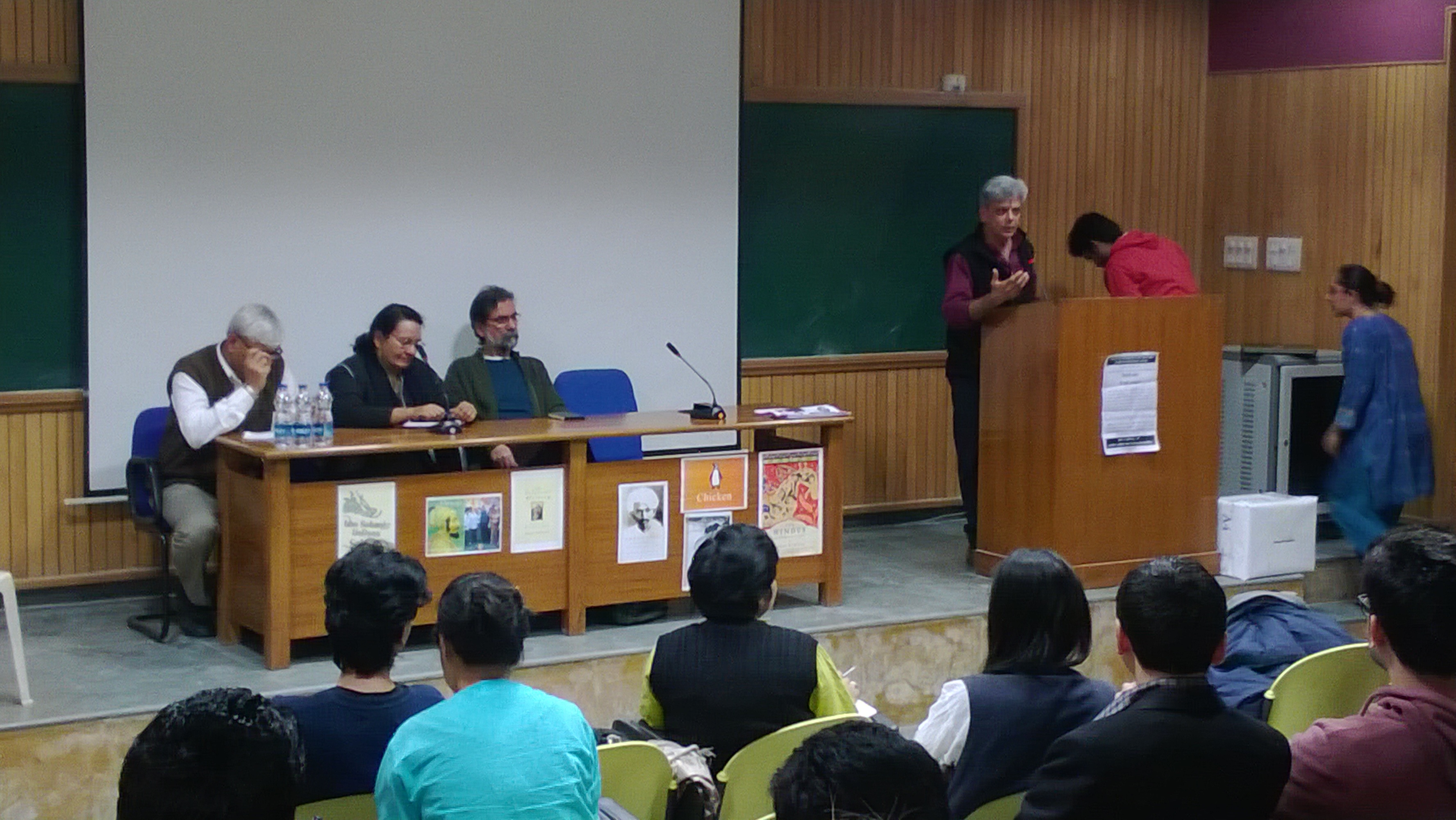
Whose “Hurt Sentiment”? On Pulping of Wendy Doniger’s Book: Association of Students for Equitable Access to Knowledge (ASEAK)

Issued by Association of Students for Equitable Access to Knowledge (ASEAK)

Image

From Rushdie’s The Satanic Verses to Wendy Doniger’s The Hindus: An Alternative History, we are witness to an increasingly regressive trend of banning books, films and art in the name of ‘hurt sentiments’. However, while in a plural and diverse society as ours where sentiments are routinely hurt, when do certain instances of ‘hurt sentiments’ translate into the clamping down of such ‘hurtful’ narratives, leading to their censorship and banning? The aggressive intolerance towards any effort that challenges the dominant discourse on religion, caste, gender, sexuality, nation, etc. points us in a direction where knowledge produced takes the shape of propaganda. In the face of this attack, let us reclaim our right to think, question, challenge and criticize – the pillars of knowledge production. Continue reading Whose “Hurt Sentiment”? On Pulping of Wendy Doniger’s Book: Association of Students for Equitable Access to Knowledge (ASEAK) →

Modi and The Art of ‘Disappearing’ of Untouchability

It is a story attributed to a famous Saint from Middle Ages – a votary of the idea of Brahma Satya, Jagat Mithya (Brahma is the Only Truth, Rest is All Illusion). Once this gentleman was walking with his Shishya (disciple) on a road and suddenly a elephant appeared from nowhere and rushed towards this duo. Abruptly ending his discussion on Maya (illusion) the Guru instructed his Shishya to just run away to save himself. When both of them were at a safe place, the exasperated Shishya asked the Guru, why did he ask him to run knowing well that everything else is an ‘illusion’. Without winkling his eyelid the Guru said ‘Gajopi Mithya, Palayanopi Mithya‘ (The elephant was also an illusion and our running away was also an illusion).

One does not know whether the famous sage had visited Gujarat or not but his influence seems palpable there at least among the ruling elite. If the Guru could ‘invisibilise’ the elephant calling it an illusion, here in Gujarat an age old problem like untouchability could be similarly ‘disappeared’ by terming it a matter of ‘perception’. Continue reading Modi and The Art of ‘Disappearing’ of Untouchability →

Mirror, Mirror on the Wall ! Who Were Those ‘Bad Elements’ Mr Bhagwat?

‘Cat drinks milk with closed eyes and thinks the world is not watching it’

(Marathi Proverb)

 I.

Rare have been occasions in recent times that the RSS, with all its anushangik (affiliated) organisations on their toes, is engaged in dousing the fire in which it has caught itself unawares. Reason being the ‘interview’ of one of its own Pracharaks (wholetimer) turned terrorist named Swami Aseemanand which was published in a leading magazine named ‘Caravan’.(http://www.caravanmagazine.in/reportage/believer).  According to the RSS, it is a ‘concocted’ one and has even issued a handwritten letter supposedly written by the interviewee ‘denying’ that any such interview occurred whereas the magazine has stood the ground and has even made transcripts of the said interview and its audio recordings public.

Perhaps with the ‘denial’ by the interviewee the matter should have ended there for the RSS, but this does not seem to be the case. And for reasons which is known to itself, it is trying to ‘clarify’ its stand on various aspects which came up during the interview and is trying to distance itself – once again – from Swami Aseemanand alias Naba Kumar Sarkar, a disciplined activist of the ‘Parivar’ for last more than three decades, who hails from a village in West Bengal. Continue reading Mirror, Mirror on the Wall ! Who Were Those ‘Bad Elements’ Mr Bhagwat? →

The Unending Amnesia Over Hindutva Terror

image : Courtesy – http://www.abplive.in


..[A]seemanand’s description of the plot in which he was involved became increasingly detailed. In our third and fourth interviews, he told me that his terrorist acts were sanctioned by the highest levels of the RSS—all the way up to Mohan Bhagwat, the current RSS chief, who was the organisation’s general secretary at the time. Aseemanand told me that Bhagwat said of the violence, “It’s very important that it be done. But you should not link it to the Sangh.”

Aseemanand told me about a meeting that allegedly took place, in July 2005. ..In a tent pitched by a river several kilometres away from the temple, Bhagwat and Kumar met with Aseemanand and his accomplice Sunil Joshi. Joshi informed Bhagwat of a plan to bomb several Muslim targets around India. According to Aseemanand, both RSS leaders approved, and Bhagwat told him, “You can work on this with Sunil. We will not be involved, but if you are doing this, you can consider us to be with you.”


(Reportage : The Believer: Swami Aseemanand’s radical service to the Sangh, by LEENA GITA REGHUNATH | 1 February 2014, Caravan Magazine, http://www.caravanmagazine.in/reportage/believer)


‘Law is an ass’ a phrase which was used by Charles Dickens in  ‘Oliver Twist’ in a completely different context today finds a deep resonance in this part of South Asia. And nothing illustrates this better than the predicament of what is popularly known as Hindutva terror. Continue reading The Unending Amnesia Over Hindutva Terror →

सामाजिक मुक्ति की ज्ञानमीमांसा : स्वामी दयानन्द, विवेकानन्द एवं महात्मा ज्योतिबा फुले के बहाने चन्द बातें

कल्पना की उड़ान भरना हर व्यक्ति को अच्छा लगता है।

कभी कभी मैं सोचता हूं कि आज से 100 साल बाद जबकि हम सभी – यहां तक कि इस सभागार में मौजूद अधिकतर लोग – बिदा हो चुके होंगे तो आने वाले समय के इतिहासलेखक हमारे इस कालखण्ड के बारेमें, जिससे हम गुजर रहे हैं, जिसकी एक एक घटना-परिघटना को लेकर बेहद उद्वेलित दिखते हैं, ‘हम’ और ‘वे’ की बेहद संकीर्ण परिभाषा को लेकर अपने पारिवारिक, सामाजिक एवं राजनीतिक फैसले लेते हैं, क्या कहेंगे ? आज हमारे लिए जो जीवन मरण के मसले बने हैं और जिनकी पूर्ति के नाम पर हम किसी भी हद तक जाने को तैयार हैं, उनके बारे में उनकी क्या राय होगी ? क्या वे इस सदी में सामने आए जनसंहारों के अंजामकर्ताओं को लेकर उतनीही अस्पष्टता रखेंगे और कहेंगे कि मारे गए लोग दरअसल खुद ही अपनी मौत के जिम्मेदार थे, जिन्होंने खुद मृत्यु को न्यौता दिया था ? क्या वह किसी वैश्विक मानवता के तब लगभग सर्वस्वीकृत फलसफे के तहत इस दौर की घटनाओं को देखेंगे और अपने अपने ‘चिरवैरियों’ के साथ हमारे रक्तरंजित संग्रामों पर एक अफसोस भरी हंसी हंस देंगे ?

स्पष्ट है कि स्थान एवं समय की दूरियां किसी विशाल कालखण्ड की वस्तुनिष्ठ आलोचना करने का मौका प्रदान करती हैं। दरअसल जब हम खुद किसी प्रवाह/धारा का हिस्सा होते हैं तब चाह कर भी बहुत वस्तुनिष्ठ नहीं हो पाते हैं, समुद्र की खतरनाक लगनेवाली लहरों पर सवार तैराक की तुलना में किनारे पर बैठा वह शख्स कई बार अधिक समझदार दिख सकता है, जिसे भले तैरना न आता हों, मगर जिसके पास लहरों का लम्बा अध्ययन हो।

Continue reading सामाजिक मुक्ति की ज्ञानमीमांसा : स्वामी दयानन्द, विवेकानन्द एवं महात्मा ज्योतिबा फुले के बहाने चन्द बातें →