All posts by Nivedita Menon

Strange yet familiar – race politics in the USA

images (1)

Here is a link to Jon Stewart on race politics in the USA, in the context of the recent shooting by a white cop of a black unarmed teenager in Ferguson.

See any resemblances to our own fair country and the politics of caste, class, gender and community here? So familiar are the doubts expressed, questions raised, biases proudly stated, you could be pardoned for thinking it’s not the US of A, but Mera Bharat Mahan.  Continue reading Strange yet familiar – race politics in the USA

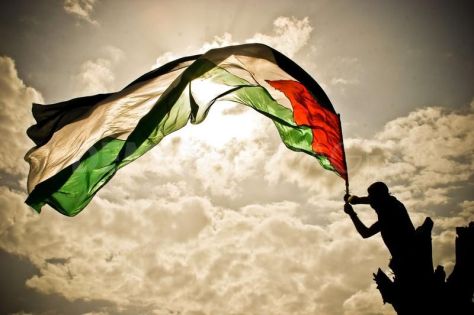
Reflections on Solidarity for Palestine in India: Urvashi Sarkar

Guest post by URVASHI SARKAR

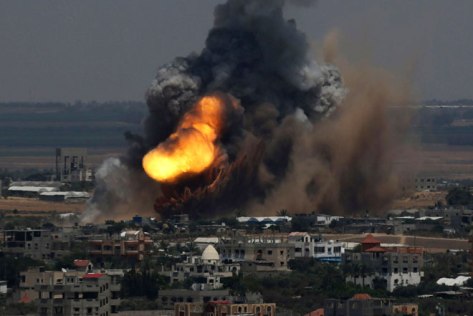
Some sections of Indian civil society have reacted to Israel’s most recent brutalities in Gaza with outrage, and rightly so. In its pounding of Gaza which lasted over a month, Israel destroyed essential services and infrastructure, razed houses to debris and wiped out entire families.  Over 2000 Palestinians were killed, many of them civilians, and of which over 400 were children. On the Israeli side, sixty-four soldiers and four civilians died. A shaky ceasefire between Israel and Hamas, announced in early August, did not last, with hostilities resuming almost immediately.

It is not uncommon to hear Indian voices supporting Palestine even at a time when right wing forces hold sway in the country; yet there is more to this support than meets the eye. There are internal differences on the matter of Kashmir for instance, regarding the extent to which parallels can be drawn between the Palestine and Kashmir conflicts.  The actualization of both conflicts dates back to the 1940s.  Both regions are heavily militarized; its people suffer routine human rights violations and both are undergoing prolonged self-determination struggles. Each year, Kashmir joins different parts of the world to observe Al-Quds day, held on the last Friday of Ramzan, to observe solidarity with the Palestinian struggle.  Popular anti-India protest sites in Kashmir, such as Ramban Chowk and Maisuma, are referred to as ‘Gaza’ in local parlance.  A Kashmiri teenager lost his life during firing by security forces, in an anti-Israel protest in South Kashmir in July this year. Continue reading Reflections on Solidarity for Palestine in India: Urvashi Sarkar

Why should we stand for the national anthem?

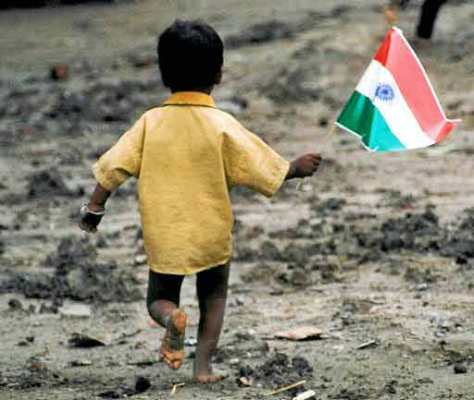
A-homeless-young-boy-waves-the-Indian-flag

With increasing reports of people being arrested for not standing for the national anthem,  it’s a good idea to remember why they stopped the practice of playing the thing in cinema halls in the first place – nationalism cannot be coercively produced in people’s breasts through such inane, superficial and empty gestures.

And the converse – just because you dont stand up for the national anthem, it doesn’t make you anti-Indian. You may just have another idea of India,  or you may show your concern for “India” by some more concrete gesture, or through your politics.

As Anmol Karnik asks:

If we play the national anthem before a television show begins at home, would people stand up? I doubt it. Most people who do it, do it because it’s not socially acceptable to sit down when everyone else is standing. It’s being part of the herd, so there’s probably some part of unity embedded in it, but unity in a forceful and degrading manner.

Just as a matter of interest, this is what the Prevention of Insults to National Honour Act, 1971 says:

Whoever intentionally prevents the singing of the Jana Gana Mana or causes disturbances to any assembly engaged in such singing shall be punished with imprisonment for a term, which may extend to three years, or with fine, or with both.

There is thus, no legal obligation whatsoever to actually stand while Jana Gana Mana plays.  Continue reading Why should we stand for the national anthem?

Arrested for sitting during the national anthem: Solidarity Statement with Salman

News Report in The Hindu

A youth from Peroorkada (Kerala) was arrested on Wednesday by the police on charges of showing disrespect to the national flag and the national anthem.

The police said Salman, 25, and his six friends, including two women, had showed disrespect to the national anthem while it was being played inside a movie theatre in the city on August 18. A few others who saw the group remaining seated and allegedly “making catcalls” when the anthem was being played lodged a complaint with the police.

This incident comes just days after a student was arrested in Karwar, Karnataka for similar charges. The Kumta police had arrested Jabeer Khan, a student for allegedly forwarding a message, that according to the complainant, mocked the National Anthem and India.

Statement by concerned citizens on the arrest of Salman and demanding his immediate release

On August 20th night 12 pm Salman a student and social activist from Trivandrum was picked up by the police from his home in Peroorkada. The immediate accusation against him was that he had insulted the national anthem while it was being played in a theatre, where he had gone to watch a movie. Later his comments on Facebook where he questions nationalism as a philosophical and political concept were also pointed out as a reason for his arrest. It is also being reported that there was a deliberate attempt to frame him by some right-wing hindutva groups and that they are the ones who are behind his arrest.

There is a lack of clarity regarding his arrest and the way it was conducted, late in the midnight hours of August 20th. It is clear, though, that none of the customary norms were followed during his arrest. Even after it was said that Salman was taken to the Thampanoor station, the police themselves later denied this. For a whole night and the next day even Salman’s parents had no access to him. In fact, Salman was taken from prison to prison like it is usually done with so called ‘notorious terrorists’ and the police refused to give out any information about him both to his parents and to the lawyers who had contacted them. It was onlyon August 21st evening that it was made known that there was an FIR recorded against him and that a case was registered under IPC act 124 A and 66 A charging him of sedition and of sending offensive messages through communicative service. Though there were many other students with him it is surprising that it was only Salman who was picked out and arrested.  Continue reading Arrested for sitting during the national anthem: Solidarity Statement with Salman

September 5 as Teachers’ Day – The Dalit Critique: Abhay Kumar

Guest post by ABHAY KUMAR

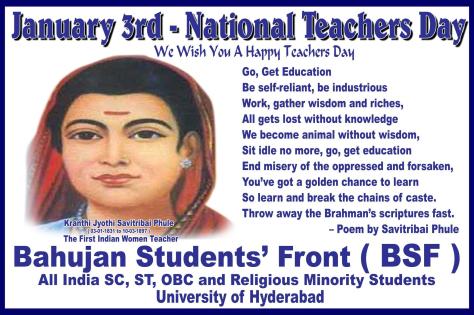
While the schools and educational institutions of the country have been observing September 5 as Teachers’ Day since 1962, on the birth anniversary of the first Vice-President and second President of independent India Dr. Sarvepalli Radhakrishnan (1888-1975), a section of Dalits, mostly students, activists and intellectuals at public universities, are increasingly denouncing its observance. They contend that the birthday of Radhakrishnan, a Brahmin, should no longer be held as Teachers’ Day because he had made no contribution to the educational uplift of lower castes and classes. Instead they exhort people to observe National Teachers’ Day on January 3, the birth anniversary of the nineteenth century social reformer, and teacher from backward caste, Savitribai Phule (1831-1897).

national_teachers_day

According to the biographer of Savitribai Phule, M. G. Mali (Krantijyoti Savitribai Phule, 2005), she was taught by her husband in a school run under the shade of a mango tree. Access to education enabled her to become aware about egalitarian movements at global level as she managed to read the biography of Thomas Clarkson (1760-1846), who fought for liberation of the Black. Later when she became a teacher, it was vehemently opposed by reactionary Brahmins who pelted stone and threw dung on her in order to “save” orthodox Hindu religion. When frustrated Brahmins were unable to deter the zeal of Phules about imparting education, they succeeded in reasoning with her father-in-law, Govinda Rao, to force them to leave home. She preferred eviction with her husband from home to giving up her mission on education. Despite the opposition, they continued to persuade parents to send their daughters to schools. As a result of their hard work, 18 schools were opened from 1848 to 1852. Her dedication to spread education, particularly among subalterns is self-evident from a few lines of her poem. ‘All gets lost without knowledge… We become animal without wisdom…So learn and break the chains of caste….Throw away the Brahman’s scriptures fast.’   Continue reading September 5 as Teachers’ Day – The Dalit Critique: Abhay Kumar

Why I am an anti-Zionist Jew: Ray Filar

RAY FILAR on openDemocracy

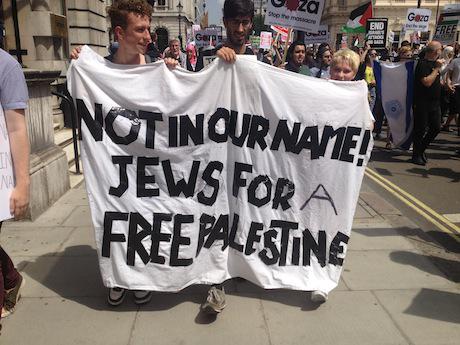
IMG_1810

The Israeli government deliberately invokes terrorist attacks, rockets, and scary brown men in headscarfs to stoke the population’s fear, but I am scared of the racism Zionists use to justify the occupation.

The discussions in the comments that follow are equally instructive and interesting – do scroll down and follow those as well.

African Solidarity with Palestine: African scholars and scholars of Africa

We, the undersigned African scholars and scholars of Africa, hold that silence about the latest humanitarian catastrophe caused by Israel’s new military assault on the Gaza Strip—the third and most devastating in six years—constitutes complicity. Member state of NATO which mounted an air war on Libya ostensibly to protect civilians in Benghazi have been by and large quiet about the fate of civilians in Gaza. World governments and mainstream media do not hold Israel accountable for its violations of international law. We, however, as a community of scholars have a moral responsibility to do so.

Neither the violation of international law nor the destruction of Palestinian life in Gaza, however, began or will end with the current war[1]. The suffering of Palestinians is not limited to Gaza: the occupation and dispossession in East Jerusalem, the Naqab (Negev), and the West Bank; the construction of walls and fences around the Palestinian population, the curtailment of Palestinian freedom of movement and education, and the house demolitions, all have long histories that will have to be addressed. 

Continue reading African Solidarity with Palestine: African scholars and scholars of Africa

Gaza Calls! Day of Rage August 9th, Jantar Mantar, Delhi

703_n736880310_353679_6664

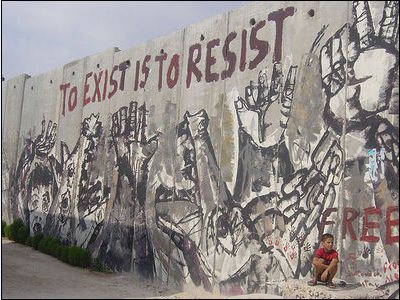
The Apartheid Wall with which Israel has annexed almost half of the already Occupied West Bank

The Indian Campaign for the Academic and Cultural Boycott of Israel (InCACBI) calls on all Indians to join the Day of Rage on August 9, called by the International BDS Movement.

Join us at Jantar Mantar between 4 – 8 PM. 

InCACBI and the Palestine Solidarity Committee in India join the world in condemning Israel’s war on Gaza.

We also condemn the Indian government’s continuing military, trade, educational and cultural ties with Israel.

The war Israel is currently waging against the Palestinian civilians in Gaza is a continuation of its occupation and blockade of Gaza over many years; its violation of international laws; its apartheid policies and day-to-day violence against people in Gaza. It has become a truism that Gaza has for long been “an open air prison” for its men, women and children, making it impossible for them to live normal lives, leave alone move forward on the road to self determination.

The international community has responded to the mounting civilian death toll in Gaza with millions of people on the streets to demand that Israel stop its one-sided war.  In Berlin and other places, including Israel, Jewish people have joined protests. Palestinian protesters across France have defied a ban on demonstrations. The African National Congress has called on the Israeli ambassador to leave immediately. Latin American countries Brazil, Chile, Ecuador Peru and El Salvador have recalled ambassadors from Tel Aviv. Bolivian president Evo Morales has called Israel a “terrorist state” and revoked their visa exemption agreement. 21,000 noted individuals in London have demanded an immediate arms embargo on Israel. A major shift in international public opinion against Israel is taking place.

In India, citizens have protested against Israel’s actions, as well as the Indian government’s timid response to the ongoing carnage in Gaza. While citizens in Mumbai and other cities have called for a boycott of Israeli products, the Indian government is strengthening its relations with Israel, ignoring our call to stop military ties with Israel—one way in which India subsidises the occupation and violence in Gaza.

We ask you, as Indians of conscience, to

1. Demand that the Indian government respond to our call for a military embargo on Israel;

2. Boycott all direct and indirect collaborations with the Israeli state, and demand that the Indian government, Indian industry, media, educational and cultural institutions do the same;

3.  Build afresh our old association with Palestine, beginning with more education and cultural exchanges; and

4.  Share information with fellow Indians on the siege and destruction of Gaza.

End the Blockade/Siege on Gaza!

Tear down the Apartheid Walls in West Bank & Gaza!

End the Israeli collective punishment on the Palestinian people!

End the illegal Israeli Occupation of all of Palestine!

Right to Return to their homes and homeland for all Palestinians!

End all U.S. aid to Israel!

End India’s military ties with Israel!

Free Palestine!

The Indian Campaign for the Academic and Cultural Boycott of Israel (InCACBI)

www.incacbi.in

The Palestine Solidarity Committee in India

https://www.facebook.com/PalSolComIndia

Urgent Call: Bir Zeit University Institute of Women’s Studies, Palestine

Statement from Bir Zeit University Institute of Women’s Studies, Palestine

gaza-under-attack_1

Gaza Under Attack

As we write this statement, 25 days after the brutal incursion on Gaza, over a thousand and four hundred of innocent civilian women, men and children have been butchered by Israel’s war machine and much more are threatened to be killed. The call for raping Palestinian women by the so-called “Bar-Illan University Arabic Literature Professor” teaches us, once again, that Israeli “scholars” and “academic institutions” are an organic and integral part of the Zionist colonial project. Also, the parliament member, who happens to be a woman, advocates the killing of all Palestinian women, a Rabbi calls for mass murder of Palestinians while taking their foreskins as trophies, in addition to the display of many rape references on banners and images (head covered woman from the top while indecent from the waist down with a very provocative statement below) in their neighborhoods that promotes a rape culture and misogyny at the least. Continue reading Urgent Call: Bir Zeit University Institute of Women’s Studies, Palestine

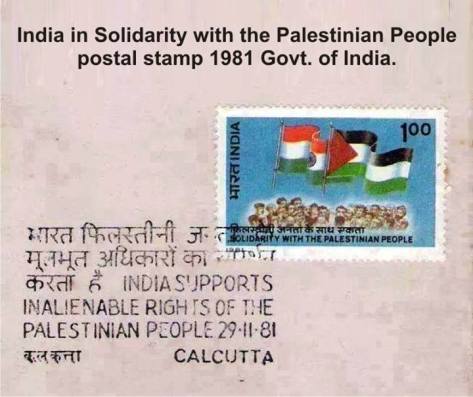
India’s solidarity with Palestine – from the pages of history

securedownload

Image from article by PRIYAMVADA GOPAL ‘India’s Forgotten Solidarity with Palestine’ on Aljazeera.


Spring in Israel? Internal voices of dissent grow

3197080467

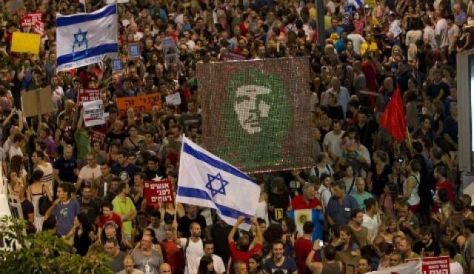
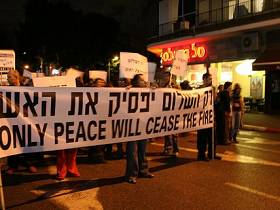
Over 150,000 social justice protesters took to the streets of 11 cities across Israel.These protests, which some are calling part of an “Israeli Spring”, began initially in response to the country’s housing crisis. But since as they began gaining momentum, they have spread to a host of social and economic complaints, including overlap with the struggling Israeli peace movement.

315563642_589779924e_428x321

Running Orders: Lena Khalaf Tuffaha

1282231687-the-secrets-behind-the-palestinian-flag-_414349

What happens before the Israeli military bombs your house? For many Gaza Strip residents, it’s a phone call. Sawsan Kawarea, a resident of Khan Younis, said she was in the house Tuesday when the phone rang. She answered, and on the other side was “David,” who claimed he was with the Israeli military.

“He asked for me by name. He said: ‘You have women and children in the house. Get out. You have five minutes before the rockets come,’ ” Kawarea said in an interview.

LENA KHALAF TUFFAHA writes a poem in response. (Received via Magid Shihade)

They call us now.
Before they drop the bombs.
The phone rings
and someone who knows my first name
calls and says in perfect Arabic
“This is David.”
And in my stupor of sonic booms and glass shattering symphonies
still smashing around in my head
I think “Do I know any Davids in Gaza?”
They call us now to say
You have 58 seconds from the end of this message.
Your house is next.
They think of it as some kind of
war time courtesy.
It doesn’t matter that
there is nowhere to run to.
It means nothing that the borders are closed
and your papers are worthless
and mark you only for a life sentence
in this prison by the sea
and the alleyways are narrow
and there are more human lives
packed one against the other
more than any other place on earth
Just run.
We aren’t trying to kill you.
It doesn’t matter that
you can’t call us back to tell us
the people we claim to want aren’t in your house
that there’s no one here
except you and your children
who were cheering for Argentina
sharing the last loaf of bread for this week
counting candles left in case the power goes out.
It doesn’t matter that you have children.
You live in the wrong place
and now is your chance to run
to nowhere.
It doesn’t matter
that 58 seconds isn’t long enough
to find your wedding album
or your son’s favorite blanket
or your daughter’s almost completed college application
or your shoes
or to gather everyone in the house.
It doesn’t matter what you had planned.
It doesn’t matter who you are
Prove you’re human.
Prove you stand on two legs.
Run.

Seen on a Bathroom Mirror

Received via KALYANI MENON-SEN

Beauty-Reflection-Warning-250x187

Lobbying for a tax-free banana republic: Aditya Velivelli

Guest Post by ADITYA VELIVELLI

POST-BUDGET UPDATE ADDED AT THE END OF THE POST (JULY 12, 2014)

Consider that an individual bought a house in 1992, made a few modifications, added a garden etc. and rented it out for the next 15 years. This would have brought the individual a steady stream of income over that 15 year period.  In 2007, the individual decides to sell the house and it fetches a much larger sum than it was bought for (considering real estate prices went up quite a bit during 1992-2007). The income tax department sends a bill for 20% of the sale price. This is the long term capital gains tax and applies to both residents of India as well as non-residents.

Now consider this.

In 1992 the Hutchison Group of Hong Kong invested in the Indian mobile telecom industry through a joint venture later named Hutchison Essar Ltd or HEL. By 2006, Hutchison expanded its presence into 23 mobile telecom circles.

In 2007, the Hutchison Group’s 67% controlling interest in HEL was indirectly sold to Vodafone for an amount of USD 10.8 billion. This transaction occurred through Vodafone’s purchase of shares in a Cayman Islands (offshore) entity. It was a calculated attempt by Hutchison and Vodafone to avoid paying tax on capital gains. Continue reading Lobbying for a tax-free banana republic: Aditya Velivelli

How History Was Unmade At Nalanda! D N Jha

This response to Arun Shourie by DN JHA is the complete original, of which a shorter version was published in The Indian Express today.

Ruins of Ancient Nalanda University

Ruins of Nalanda University

I was amused to read  ‘How History was Made up at Nalanda’ by Arun Shourie who has dished out to readers his ignorance masquerading as knowledge –  reason enough to have pity on him and sympathy for his readers! Since he has referred to me by name and has  charged  me with fudging evidence to distort the historical narrative of the destruction of  the ancient Nalandamahavihar,  I consider it necessary to rebut his allegations and set the record straight instead of ignoring his balderdash.

My presentation at the Indian History Congress in 2006 (and not 2004 as stated by Shourie), to which he refers, was not devoted to the destruction of ancient Nalanda per se – his account misleads  readers and pulls wool over their eyes.  It was in fact focused on the antagonism between the Brahmins and Buddhists  for which I drew on different kinds of evidence including myths and traditions. In this context I cited the tradition recorded in the 18th century Tibetan  text, Pag-sam-jon-zang by Sumpa Khan-Po Yece Pal Jor,mentioned by B N S Yadava in his Society and Culture in Northern India in the Twelfth Century (p.346) with due acknowledgement, though in his pettiness, Shourie is quick to discover plagiarism on my part! I may add that “Hindu fanatics” are not my words but  Yadav’s which is why they are in quotes. How sad that one has to point this out to a Magsaysay awardee journalist! Continue reading How History Was Unmade At Nalanda! D N Jha

Remembering our feminist heritage – Satyarani Chadha and Shahjahan Apa

22 001

Sheba Chhachhi, artist, feminist and chronicler of feminist struggles, immortalized Satyaraniji and Shahjahan Apa in this image of an anti-dowry protest in 1981. Satyaraniji is in front, Shahjahan Apa on the right, behind her.

For those of us who came into the women’s movement in the 1980s in Delhi, the memory of Satyaraniji’s determined visage is a perennial source of energy and inspiration. In 1979,  her daughter Kanchanbala, twenty years old and six months pregnant, was burnt to death following harassment for more dowry in her marital home. After her death, Satya Rani Chadha began a long battle for justice.

With the support of the parents of more than 25 other dowry death victims, Satyaraniji embarked on 21 years of sustained legal activism and court cases, which led to many landmark judgments and fundamental amendments in the criminal law. In 1987, Shakti Shalini, a Delhi-based organisation that helps and motivates other parents of dowry victims to fight this social menace, was formed jointly by Satyarani Chadha and Shahjehan Aapa. 

Satyarani Chadha passed away this week, and Shahjahan Apa in October last year. Continue reading Remembering our feminist heritage – Satyarani Chadha and Shahjahan Apa

Harassment or Domestic Violence? The Case of Preity Zinta and Ness Wadia: Amrita Mukhopadhyay

Guest Post by AMRITA MUKHOPADHYAY

On Friday, 13 June 2014, a well known Bollywood actress Preity Zinta lodged a criminal complaint against her former boyfriend and business associate Ness Wadia, with the Marine Drive Police Station, Mumbai. In this case, the actress brought about criminal charges against a powerful businessman under different sections of the Indian Penal Code (IPC). The criminal complaint, which forms the basis of the First Information Report (FIR), alleges a range of behaviour that amounts to different crimes under the IPC falling under specific sections categorised as ‘offences affecting the human body’ and offences dealing with ‘criminal intimidation, insult and annoyance’. The first offence of ‘assault or criminal force to woman with intent to outrage her modesty’ under Section 354 of the IPC is a cognizable non-bailable offence liable with imprisonment ranging from one to five years with or without fine. Section 504 of the IPC forms the basis of another offence dealing with breaching ‘public peace’ on account of intentional insult or provocation, is a bailable non-cognizable offence with a maximum punishment of two years in imprisonment with or without fine. Under Section 506 of the IPC, the businessman is accused of criminal intimidation with ‘threat’ that may deal with intention to cause ‘death or grievous hurt’ or ‘destruction of property’ or to ‘impute, unchastity to a woman’. This offence is liable with imprisonment for seven years and is non cognizable and bailable. Finally under Section 509 of the IPC, the businessman stands accused of a cognizable and bailable crime of insulting the ‘modesty’ of a woman based on ‘any word, sound or gesture’ and carries a term of imprisonment for three years with or without a fine.

Ness Wadia dismissed the allegations as ‘false’.

In this maze of criminal charges, the glaring anomaly is the absence of a focus on nature of the relationship between the person who lodged the complaint and against whom the complaint is alleged. Continue reading Harassment or Domestic Violence? The Case of Preity Zinta and Ness Wadia: Amrita Mukhopadhyay

FDI in E-commerce – Under cover of the ‘honeymoon’ period: Aditya Velivelli

Guest Post by ADITYA VELIVELLI

Although Mr. Modi has said that he has not had the luxury of a ‘honeymoon’ period, recent news headlines say otherwise. For instance PTI carried this headline on June 7: “Modi hailed as new ‘fashion icon’ by American media” and Christian Science Monitor has “Modi 2.0: How India’s new prime minister may have evolved” without waiting to evaluate Mr. Modi’s performance over the coming months.

One should look beyond these headlines to see what the new Government is up to under cover of the ‘honeymoon’ period.

Reuters reported on June 4 that the Modi Government will be allowing FDI in online retail or business to consumer (B2C) e-commerce during the upcoming budget session in July. FDI in e-commerce would mean foreign entities such as Ebay, Amazon and Walmart can start selling their inventories directly, and can have their own supply chains. No comment or analysis has been offered by the news media or the opposition parties so far. Neither was attention paid to the multiple instances of opposition from retailers body CAIT. Continue reading FDI in E-commerce – Under cover of the ‘honeymoon’ period: Aditya Velivelli

Seriously, who writes Modi’s blogs?

While I would promptly concur with any sane person who thinks that this is the least of our worries, I have to return to a suspicion I expressed in an earlier post – at least one of the writers of blog posts attributed to ‘Narendra Modi’ is someone based in the USA who basically lifts American political idiom wholesale, regardless of its relevance to the Indian situation. The posts sound absurd, or should, to any reasonably aware person, but the Indian media seems to lack even one such person in its ranks. Hence the brain-dead way in which these blogs are reported, with much enthusiasm and empathy for the PM.

The first one I noticed was a blog post reported at the end of polling, in which ‘Narendra Modi’ said :

Lets place people over politics, hope over despair, healing over hurting, inclusion over exclusion and development over divisiveness. It is natural for the spirit of bipartisanship to get temporarily lost in the midst of an election campaign but now is the time to resurrect it.

We’ll come to those phrases I have emphasized in a minute, but first, the term ‘bipartisanship’ rang oddly in my ears. This is what bipartisan means:

representing, characterized by, or including members from two parties or factions

That’s the US party system, not India. For example, Reagan is said to have had a “bipartisan spirit”, reaching across the aisle to Democrats. Or take this essay ‘What is “bipartisanship” ‘? in The Economist in a section titled Democracy in America, which discusses this term in its specific context.

In India it would have to be multipartisan, for there are not just two parties. And there never has been a “spirit of multipartisanship” in Indian politics, where there are still real differences between parties, unlike the US, where the Republicans and the Democrats pretty much mirror each other. Continue reading Seriously, who writes Modi’s blogs?

3 ways to speak English: Jamila Lyiscott

While Rita Kothari’s post on Hindi and the politics of language is being debated, take a look at this performance by JAMILA LYISCOTT that makes you fundamentally rethink what ‘being articulate’ means.

http://http://www.youtube.com/watch?v=k9fmJ5xQ_mc

How Wikipedia Works: Bishakha Datta

BISHAKHA DATTA is on the Wikimedia Foundation Board of Trustees. In the wake of the shocking distortions found in the Wikipedia entry on Bhanwari Devi by an alert reader, Bishakha gives us a tutorial on how Wikipedia works.

1. Wikipedia is the world’s 5th biggest website, visited by almost 500 million readers each month – but created entirely by volunteers. We (meaning the Wikimedia Foundation in San Francisco/wikimedia chapters in 40 countries) do not pay writers or anyone to contribute to wikipedia; anyone contributing to wikipedia is called an ‘editor’. Currently, there are about 80,000 editors around the world creating wikipedias in 285 languages, of which 20 are Indian languages. To see English wikipedia being created in real time, click this link: https://en.wikipedia.org/wiki/Special:RecentChanges

Each line represents a change being made to an article. If you refresh the page, you’ll see how quickly new content keeps getting added.

2. This model of open knowledge has its own pros and cons. Biggest pro: it is a bottom-up grassroots model of gathering knowledge, based on the assumption that each of us has some knowledge (or ‘expertise’) that we can share with the world. The site is designed such that anyone who knows how to use a wiki can add content. So if you know how you can add facts, make it more accurate, correct spellings, add new information etc. This is how Wikipedia lives and grows and becomes better each day, through volunteer efforts. Continue reading How Wikipedia Works: Bishakha Datta