All posts by Nivedita Menon

Spring in Israel? Internal voices of dissent grow

3197080467

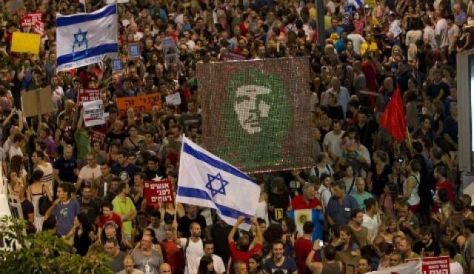
Over 150,000 social justice protesters took to the streets of 11 cities across Israel.These protests, which some are calling part of an “Israeli Spring”, began initially in response to the country’s housing crisis. But since as they began gaining momentum, they have spread to a host of social and economic complaints, including overlap with the struggling Israeli peace movement.

315563642_589779924e_428x321

Running Orders: Lena Khalaf Tuffaha

1282231687-the-secrets-behind-the-palestinian-flag-_414349

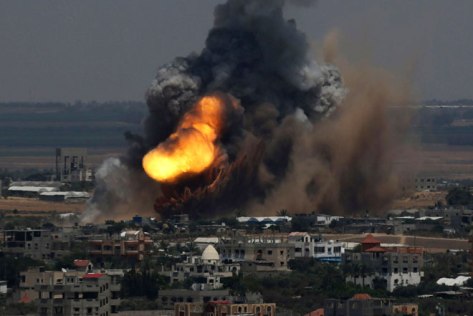
What happens before the Israeli military bombs your house? For many Gaza Strip residents, it’s a phone call. Sawsan Kawarea, a resident of Khan Younis, said she was in the house Tuesday when the phone rang. She answered, and on the other side was “David,” who claimed he was with the Israeli military.

“He asked for me by name. He said: ‘You have women and children in the house. Get out. You have five minutes before the rockets come,’ ” Kawarea said in an interview.

LENA KHALAF TUFFAHA writes a poem in response. (Received via Magid Shihade)

They call us now.
Before they drop the bombs.
The phone rings
and someone who knows my first name
calls and says in perfect Arabic
“This is David.”
And in my stupor of sonic booms and glass shattering symphonies
still smashing around in my head
I think “Do I know any Davids in Gaza?”
They call us now to say
You have 58 seconds from the end of this message.
Your house is next.
They think of it as some kind of
war time courtesy.
It doesn’t matter that
there is nowhere to run to.
It means nothing that the borders are closed
and your papers are worthless
and mark you only for a life sentence
in this prison by the sea
and the alleyways are narrow
and there are more human lives
packed one against the other
more than any other place on earth
Just run.
We aren’t trying to kill you.
It doesn’t matter that
you can’t call us back to tell us
the people we claim to want aren’t in your house
that there’s no one here
except you and your children
who were cheering for Argentina
sharing the last loaf of bread for this week
counting candles left in case the power goes out.
It doesn’t matter that you have children.
You live in the wrong place
and now is your chance to run
to nowhere.
It doesn’t matter
that 58 seconds isn’t long enough
to find your wedding album
or your son’s favorite blanket
or your daughter’s almost completed college application
or your shoes
or to gather everyone in the house.
It doesn’t matter what you had planned.
It doesn’t matter who you are
Prove you’re human.
Prove you stand on two legs.
Run.

Seen on a Bathroom Mirror

Received via KALYANI MENON-SEN

Beauty-Reflection-Warning-250x187

Lobbying for a tax-free banana republic: Aditya Velivelli

Guest Post by ADITYA VELIVELLI

POST-BUDGET UPDATE ADDED AT THE END OF THE POST (JULY 12, 2014)

Consider that an individual bought a house in 1992, made a few modifications, added a garden etc. and rented it out for the next 15 years. This would have brought the individual a steady stream of income over that 15 year period.  In 2007, the individual decides to sell the house and it fetches a much larger sum than it was bought for (considering real estate prices went up quite a bit during 1992-2007). The income tax department sends a bill for 20% of the sale price. This is the long term capital gains tax and applies to both residents of India as well as non-residents.

Now consider this.

In 1992 the Hutchison Group of Hong Kong invested in the Indian mobile telecom industry through a joint venture later named Hutchison Essar Ltd or HEL. By 2006, Hutchison expanded its presence into 23 mobile telecom circles.

In 2007, the Hutchison Group’s 67% controlling interest in HEL was indirectly sold to Vodafone for an amount of USD 10.8 billion. This transaction occurred through Vodafone’s purchase of shares in a Cayman Islands (offshore) entity. It was a calculated attempt by Hutchison and Vodafone to avoid paying tax on capital gains. Continue reading Lobbying for a tax-free banana republic: Aditya Velivelli

How History Was Unmade At Nalanda! D N Jha

This response to Arun Shourie by DN JHA is the complete original, of which a shorter version was published in The Indian Express today.

Ruins of Ancient Nalanda University

Ruins of Nalanda University

I was amused to read  ‘How History was Made up at Nalanda’ by Arun Shourie who has dished out to readers his ignorance masquerading as knowledge –  reason enough to have pity on him and sympathy for his readers! Since he has referred to me by name and has  charged  me with fudging evidence to distort the historical narrative of the destruction of  the ancient Nalandamahavihar,  I consider it necessary to rebut his allegations and set the record straight instead of ignoring his balderdash.

My presentation at the Indian History Congress in 2006 (and not 2004 as stated by Shourie), to which he refers, was not devoted to the destruction of ancient Nalanda per se – his account misleads  readers and pulls wool over their eyes.  It was in fact focused on the antagonism between the Brahmins and Buddhists  for which I drew on different kinds of evidence including myths and traditions. In this context I cited the tradition recorded in the 18th century Tibetan  text, Pag-sam-jon-zang by Sumpa Khan-Po Yece Pal Jor,mentioned by B N S Yadava in his Society and Culture in Northern India in the Twelfth Century (p.346) with due acknowledgement, though in his pettiness, Shourie is quick to discover plagiarism on my part! I may add that “Hindu fanatics” are not my words but  Yadav’s which is why they are in quotes. How sad that one has to point this out to a Magsaysay awardee journalist! Continue reading How History Was Unmade At Nalanda! D N Jha

Remembering our feminist heritage – Satyarani Chadha and Shahjahan Apa

22 001

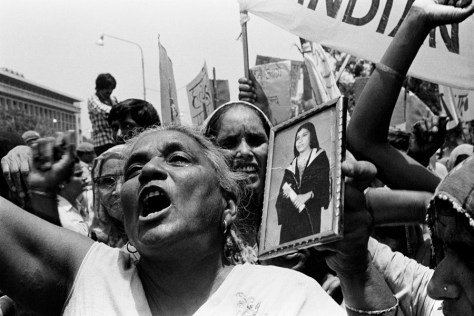
Sheba Chhachhi, artist, feminist and chronicler of feminist struggles, immortalized Satyaraniji and Shahjahan Apa in this image of an anti-dowry protest in 1981. Satyaraniji is in front, Shahjahan Apa on the right, behind her.

For those of us who came into the women’s movement in the 1980s in Delhi, the memory of Satyaraniji’s determined visage is a perennial source of energy and inspiration. In 1979,  her daughter Kanchanbala, twenty years old and six months pregnant, was burnt to death following harassment for more dowry in her marital home. After her death, Satya Rani Chadha began a long battle for justice.

With the support of the parents of more than 25 other dowry death victims, Satyaraniji embarked on 21 years of sustained legal activism and court cases, which led to many landmark judgments and fundamental amendments in the criminal law. In 1987, Shakti Shalini, a Delhi-based organisation that helps and motivates other parents of dowry victims to fight this social menace, was formed jointly by Satyarani Chadha and Shahjehan Aapa. 

Satyarani Chadha passed away this week, and Shahjahan Apa in October last year. Continue reading Remembering our feminist heritage – Satyarani Chadha and Shahjahan Apa

Harassment or Domestic Violence? The Case of Preity Zinta and Ness Wadia: Amrita Mukhopadhyay

Guest Post by AMRITA MUKHOPADHYAY

On Friday, 13 June 2014, a well known Bollywood actress Preity Zinta lodged a criminal complaint against her former boyfriend and business associate Ness Wadia, with the Marine Drive Police Station, Mumbai. In this case, the actress brought about criminal charges against a powerful businessman under different sections of the Indian Penal Code (IPC). The criminal complaint, which forms the basis of the First Information Report (FIR), alleges a range of behaviour that amounts to different crimes under the IPC falling under specific sections categorised as ‘offences affecting the human body’ and offences dealing with ‘criminal intimidation, insult and annoyance’. The first offence of ‘assault or criminal force to woman with intent to outrage her modesty’ under Section 354 of the IPC is a cognizable non-bailable offence liable with imprisonment ranging from one to five years with or without fine. Section 504 of the IPC forms the basis of another offence dealing with breaching ‘public peace’ on account of intentional insult or provocation, is a bailable non-cognizable offence with a maximum punishment of two years in imprisonment with or without fine. Under Section 506 of the IPC, the businessman is accused of criminal intimidation with ‘threat’ that may deal with intention to cause ‘death or grievous hurt’ or ‘destruction of property’ or to ‘impute, unchastity to a woman’. This offence is liable with imprisonment for seven years and is non cognizable and bailable. Finally under Section 509 of the IPC, the businessman stands accused of a cognizable and bailable crime of insulting the ‘modesty’ of a woman based on ‘any word, sound or gesture’ and carries a term of imprisonment for three years with or without a fine.

Ness Wadia dismissed the allegations as ‘false’.

In this maze of criminal charges, the glaring anomaly is the absence of a focus on nature of the relationship between the person who lodged the complaint and against whom the complaint is alleged. Continue reading Harassment or Domestic Violence? The Case of Preity Zinta and Ness Wadia: Amrita Mukhopadhyay

FDI in E-commerce – Under cover of the ‘honeymoon’ period: Aditya Velivelli

Guest Post by ADITYA VELIVELLI

Although Mr. Modi has said that he has not had the luxury of a ‘honeymoon’ period, recent news headlines say otherwise. For instance PTI carried this headline on June 7: “Modi hailed as new ‘fashion icon’ by American media” and Christian Science Monitor has “Modi 2.0: How India’s new prime minister may have evolved” without waiting to evaluate Mr. Modi’s performance over the coming months.

One should look beyond these headlines to see what the new Government is up to under cover of the ‘honeymoon’ period.

Reuters reported on June 4 that the Modi Government will be allowing FDI in online retail or business to consumer (B2C) e-commerce during the upcoming budget session in July. FDI in e-commerce would mean foreign entities such as Ebay, Amazon and Walmart can start selling their inventories directly, and can have their own supply chains. No comment or analysis has been offered by the news media or the opposition parties so far. Neither was attention paid to the multiple instances of opposition from retailers body CAIT. Continue reading FDI in E-commerce – Under cover of the ‘honeymoon’ period: Aditya Velivelli

Seriously, who writes Modi’s blogs?

While I would promptly concur with any sane person who thinks that this is the least of our worries, I have to return to a suspicion I expressed in an earlier post – at least one of the writers of blog posts attributed to ‘Narendra Modi’ is someone based in the USA who basically lifts American political idiom wholesale, regardless of its relevance to the Indian situation. The posts sound absurd, or should, to any reasonably aware person, but the Indian media seems to lack even one such person in its ranks. Hence the brain-dead way in which these blogs are reported, with much enthusiasm and empathy for the PM.

The first one I noticed was a blog post reported at the end of polling, in which ‘Narendra Modi’ said :

Lets place people over politics, hope over despair, healing over hurting, inclusion over exclusion and development over divisiveness. It is natural for the spirit of bipartisanship to get temporarily lost in the midst of an election campaign but now is the time to resurrect it.

We’ll come to those phrases I have emphasized in a minute, but first, the term ‘bipartisanship’ rang oddly in my ears. This is what bipartisan means:

representing, characterized by, or including members from two parties or factions

That’s the US party system, not India. For example, Reagan is said to have had a “bipartisan spirit”, reaching across the aisle to Democrats. Or take this essay ‘What is “bipartisanship” ‘? in The Economist in a section titled Democracy in America, which discusses this term in its specific context.

In India it would have to be multipartisan, for there are not just two parties. And there never has been a “spirit of multipartisanship” in Indian politics, where there are still real differences between parties, unlike the US, where the Republicans and the Democrats pretty much mirror each other. Continue reading Seriously, who writes Modi’s blogs?

3 ways to speak English: Jamila Lyiscott

While Rita Kothari’s post on Hindi and the politics of language is being debated, take a look at this performance by JAMILA LYISCOTT that makes you fundamentally rethink what ‘being articulate’ means.

How Wikipedia Works: Bishakha Datta

BISHAKHA DATTA is on the Wikimedia Foundation Board of Trustees. In the wake of the shocking distortions found in the Wikipedia entry on Bhanwari Devi by an alert reader, Bishakha gives us a tutorial on how Wikipedia works.

1. Wikipedia is the world’s 5th biggest website, visited by almost 500 million readers each month – but created entirely by volunteers. We (meaning the Wikimedia Foundation in San Francisco/wikimedia chapters in 40 countries) do not pay writers or anyone to contribute to wikipedia; anyone contributing to wikipedia is called an ‘editor’. Currently, there are about 80,000 editors around the world creating wikipedias in 285 languages, of which 20 are Indian languages. To see English wikipedia being created in real time, click this link: https://en.wikipedia.org/wiki/Special:RecentChanges

Each line represents a change being made to an article. If you refresh the page, you’ll see how quickly new content keeps getting added.

2. This model of open knowledge has its own pros and cons. Biggest pro: it is a bottom-up grassroots model of gathering knowledge, based on the assumption that each of us has some knowledge (or ‘expertise’) that we can share with the world. The site is designed such that anyone who knows how to use a wiki can add content. So if you know how you can add facts, make it more accurate, correct spellings, add new information etc. This is how Wikipedia lives and grows and becomes better each day, through volunteer efforts. Continue reading How Wikipedia Works: Bishakha Datta

The untold tale of Soorpanakha: Drishana Kalita

DRISHANA KALITA’s subversive imagining of Soorpanakha’s version of the events that befell her, was one of the top 5 entries for June’s ‘Muse of the Month’ on Women’s Web. 

I am Soorpanakha. My name is synonymous with Sin for many, encased for eternity in the pages of the epic Ramayana. I am not the role model parents would point their daughters towards. Why is that? You may ask. Because I admitted to lust. My name was pitted against Sita, the embodiment of purity and womanly virtues. She was everything I was not and I was everything she was not.

She was beautiful and so was I. Do not believe those terrible sketches of me with sharp fangs and blood shot eyes. I was a peerless beauty with large fish shaped eyes, for which my mother had named me ‘Minakshi’ at birth. A single woman, independent enough to roam the forests alone. I was free.

My freedom was my sin, as was my open sexuality. I dared to invite a man, the exiled king of Ayodhya, to make love to me.

Read this wonderful retelling here.

And as a bonus, watch Harinarayana Ehat Edneer performing Shoorpanakha in Yakshagana – ‘Main swachhand bhraman karti hoon!” she declares – I wander at my will!

Wikipedia, Bhanwari Devi and the need for an alert feminist public: Urvashi Sarkar

Guest Post by URVASHI SARKAR

Until June 20th 2014, if you visited the Wikipedia entry on Bhanwari Devi — a women’s rights Dalit activist who was raped for taking on child marriage in an upper caste community in her Rajasthan village— you would have been in for a nasty surprise.

The following lines from the biography section of the article would have stood out starkly:

“Bhanwari, the young, illiterate potter woman…strutting about the village giving gratuitous, unctuous advice to her social superiors made attempts to persuade the family against carrying out their wedding plans. Standing unveiled in the street outside the house of the brides-to-be she loudly berated the elderly patriarch… flaunted her government appointment…and threatening them that she would stop at nothing to ensure their public disgrace by stopping the planned marriage.”

The citation for this paragraph was provided as ‘Bhateri Rape Case: Backlash and Protest’ by Kanchan Mathur published in the Economic and Political Weekly (EPW).

Not a single sentence from that paragraph features in the EPW article; but a preceding paragraph in the Wikipedia entry, which describes Bhanwari Devi’s work as a sathin or grassroots worker with the Women’s Development Project of the Rajasthan Government, is correctly attributed to the EPW piece. Continue reading Wikipedia, Bhanwari Devi and the need for an alert feminist public: Urvashi Sarkar

Collective struggle strengthens autonomy: Saroj Giri

Guest post by SAROJ GIRI, continuing the discussion on roll-back of FYUP in Delhi University. 

Earlier posts on this issue are listed and linked to here.

Here is one way to make sense of the core issue at stake in Delhi University today – this piece by Nandini Sundar arguing that the UGC directive amounts to hampering institutional autonomy of DU.

But this is a flawed position in the present context. It conflates the autonomy of DU with the autonomy of the VC. It construes DU’s autonomy in narrow institutional terms, overlooking the larger movement of teachers and students which is also ‘DU’ and which has consistently opposed the FYUP.

Sundar suggests withdrawal of the UGC directive, the setting up of a DU committee to overhaul the programme, and deliberation in the Academic Council, this time taking proper heed of anti-FYUP views. But do we need a fresh round of discussion on the pros and cons of FYUP?

Absolutely not. For there have been tons of deliberations over the FYUP. Just go back to the minutes and records of the many different meetings and Committees, or recall the many demos and dharnas. There is ample evidence of deliberation where the members of the University have given sound reasons why the FYUP is bad.

Indeed, the picture presented that it is the Ministry or the UGC imposing its diktat from above is simply not true. It is not some committee in the UGC or Ministry which on their own have decided to stall the FYUP. For it is force of the movement against FYUP and the many, many voices active since the last few years who have prevailed now – it is this which is reflected in the UGC directive. Continue reading Collective struggle strengthens autonomy: Saroj Giri

The Hindi Imbroglio – Videshi Nationalism? Rita Kothari

Guest post by RITA KOTHARI

Bqkh32sCcAAodoA

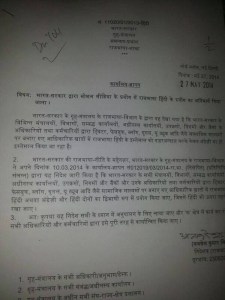
We live with multiple Hindis – one for instance, in railway and flight announcements, the other in cinema, a mixture of Hindi and Urdu, or Hindustani,  the kind Gandhi wanted India to adopt as its national language. The former kind – sarkari Hindi – survives only in its ceremonial avatar. This  was acknowledged in a rare moment of honesty when   the Rajbhasha unit of Ministry of Home Affairs issued an order in December 2011 to provide relief to beleaguered translators who came up with words like ‘Misil’ (for file) and sanganak (for computer). It suggested using English words or words from Indian languages instead of  coining new ones but to be written in the Devangari script. It is interesting that this remained unnoticed, for it was business as usual when it happened. How is language both incidental and central at the same time? I wondered.


Government Order dated May 27, 2014 on use of Hindi

Continue reading The Hindi Imbroglio – Videshi Nationalism? Rita Kothari

Growing up with the Cup (Part Two): Hartman d Souza

Second Part of Growing Up With the Cup by HARTMAN DE SOUZA.

Part One can be read here.

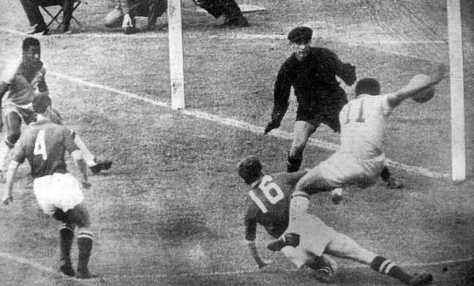
cliberofootball.com_garrincha-urss

Brazil playing the Soviet Union in the 1958 World Cup, ‘stamping their imprint on the game’, as Hartman puts it below. (Image from here).

It is an interesting coincidence that my mother ended her part of the scrap book for me, with the World Cup in Sweden 1958: while I ended that scrap book in 1963 with the World Cup in Chile in 1962.

In both tournaments, for contrasting reasons, Brazil played an important role. So, at the outset, it ought to be said that the style of playing they gave the world – by virtue of stamping their imprint on the game in 1958 – continues to be the universal model aspired to.  You can always find reasons to deny this, rationalize matters, but when push comes to shove the whole world knows who plays authentic football!

This is largely because the Brazilians continue to bring their gifts and place them on a football field where everyone partakes, rival players as well as spectators. The élan with which they play is an inspiration that is duly acknowledged, respected, bowed to and imitated, in every single part of the world where they learn to love playing with a ball and get to see re-runs of Brazil’s old matches. While rival players may hate them with a vengeance, no spectators whose teams have lost to them ever bear them a grudge. Continue reading Growing up with the Cup (Part Two): Hartman d Souza

Growing up with the Cup: Hartman De Souza (Part I)

Guest post by HARTMAN DE SOUZA

49c3c50e7

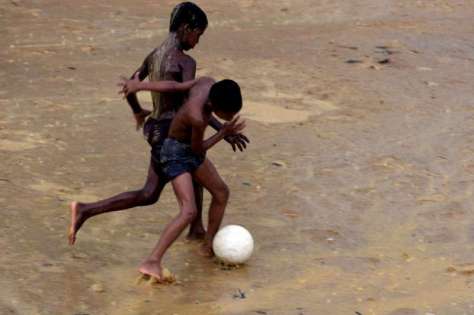
Boys playing football in Bangladesh. The only thing this has to do with Hartman’s post is that it has boys playing football. Also, it’s a lovely picture. (From the UNCHR Bangladesh website)

I only knew there was something called the World Cup courtesy an eccentric mother who kick-started a thick scrap book dedicated to football, to get me to start reading the newspaper. I was ten years old, and lived in Mombasa, on the coast of Kenya.

In it, my mother had gummed various newspaper and magazine articles and features on football. In 1960 when she handed it to me to continue, the last entry was her exhaustive coverage of the World Cup in Sweden in 1958, with reports of every one of the qualifying rounds and all the internationals friendly matches leading up to it. The very last clippings were news-items and commentaries talking about the next World Cup in Chile, in just two years time.

My tasks were cut out. Armed with a dictionary, I may have been one of the first ten year olds in Kenya if not the so-called Commonwealth, to discover Brian Glanville, a very bright and daring football columnist; a man who still writes about the game as if it was the only pleasure worth pursuing with passion.

I spent days and nights reading and re-reading my scrap book. I replayed countless matches in my head so that I could tinker with them and change the results. I always changed the results in my head, so logically the teams I supported always won. Continue reading Growing up with the Cup: Hartman De Souza (Part I)

When Are Foreign Funds Okay? A Guide for the Perplexed

The Intelligence Bureau has, as we know prepared a document, updating it from the time of the UPA regime (which had reportedly started the dossier) indicating large scale foreign funding for subversive anti-development activities. Such as claiming that you have a greater right to your own lands and to your livelihood than monstrous profit-making private companies. Or raising ecological arguments that might stand in the way of the profits to be made by private corporations and the corrupt state elite, from mining, big dams, multi-lane highways and so on.

The IB report, signed by IB joint director Safi A Rizvi — alleges that the “areas of action” of the foreign-funded NGOs include anti-nuclear, anti-coal and anti-Genetically Modified Organisms protests. Apart from stalling mega industrial projects including those floated by POSCO and Vedanta, these NGOs have also been working to the detriment of mining, dam and oil drilling projects in north-eastern India, it adds. 

Imagine – working against the interests of POSCO and Vedanta! Is there no end to the depraved anti-nationalism of these NGOs!

These folks must have made millions of dollars

narmada

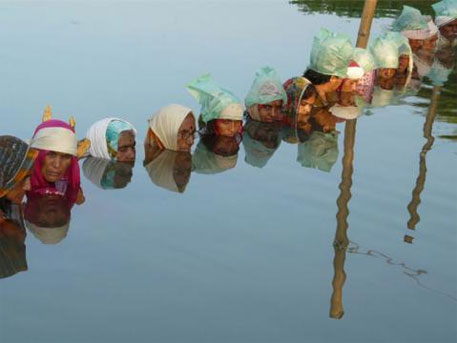
In 2012, people affected by the Omkareshwar and Indira Sagar dams protested the raising of dam storage levels by staying in neck-deep water for over a fortnight (Photo: Narmada Bachao Andolan). 

The average observer of Indian politics – being like me, not as sharp as the IB – might be a little befuddled by this apparently anachronistic allergy of two successive governments and its intelligence gathering organization, towards foreign funding, in an era in which the slightest slowing down of the pace of handing over the nation’s resources to multi-national corporations,  is termed as “policy paralysis”, and attacked as detrimental to the health of the mythical “Sensex”. Older readers might remember that the  inspiring slogan of the legendary Jaspal Bhatti’s Feel Good party was Sensex ooncha rahe hamara.

This post is just to help you figure out then, when it is Okay to applaud foreign funding and when it is not – because otherwise you might post something on your FaceBook page that attacks foreign funding when it is actually Okay – and then how stupid and anti-national you’ll look.   Continue reading When Are Foreign Funds Okay? A Guide for the Perplexed

“Trashy Tastes” and Permeable Borders – Indian and Iranian Soap Operas on Afghan Television: Wazhmah Osman

We apologize to readers for having to take down this guest post by WAZHMAH OSMAN, which was a chapter from her Ph.D thesis from New York University, Thinking Outside the Box: Television and the Afghan Culture Wars.

The author has since written to us that she does not have permission to reproduce the entire chapter. Apologies to everybody all round!

download

A young Afghan poster seller displaying Smriti Irani as Tulsi

Image: Reuters/Ahmad Masood 

History Scholars Write to UGC on Need to Radically Restructure NET

To:

The Chairman, University Grants Commission.

Dear Sir,

The University Grants Commission has mandated that an exam i.e. the National Eligibility Test, be passed as a requirement for the teaching of History at the undergraduate and post-graduate levels, except in the case where the candidate has a PhD. Those who score highly are given the Junior Research Fellowship which greatly strengthens their candidacy for the Ph.D. program.

We the undersigned, as teachers and researchers of History, believe that the NET exam as it exists does not measure competence in History as a discipline in any imaginable sense. The NET’s own understanding of History is fundamentally different from the practice of the discipline across the world. This understanding, as reflected in the question papers, holds History to lie solely in the memorization of facts. Therefore, in the NET’s version of History, the mechanical retention and retrieval of information appears to be the only competence required for the teaching of the subject.  Continue reading History Scholars Write to UGC on Need to Radically Restructure NET

Enough is enough: Anand Teltumbde

ANAND TELTUMBDE in The Hindu today

http%3A%2F%2Fmedia.npr.org%2Fassets%2Fimg%2F2014%2F05%2F31%2F494819135_custom-58300287d01c3c0d94b0654967811781d07b8f74

The tree in Katra Shahadatganj village (Badaun district) from which two young Dalit women, sisters, were found hanging after being gang-raped on May 27, 2014. Their bodies were found on May 28th.

The images of two innocent Dalit girls hanging from a tree in Katra village in Badaun district of Uttar Pradesh and a crowd of spectators looking bewildered at them best describes our national character. We can endure any amount of ignominy, can stand any level of injustice, and tolerate any kind of nonsense around us with equanimity. It is no use saying if those girls were our own daughters or our own sisters, we would still stare at them, bewildered and resigned like anyone in that crowd did. In just the past two months, while we as a country were busy playing fiddle to Narendra Modi and his promise of acche din, there have been a series of gory rapes and murders of Dalit teens across the country.

But beyond the residual anger, there is hardly any real concern for these atrocities. The rulers are not concerned, the media is hardly interested, and then there is indifference of the progressive lot and Dalits’ own frigidity towards them. It is shameful that we take the rape and murder of innocent Dalits as an adjunct of our social environment and forget about them.