This was written yesterday, 24 March 2011: Today we witnessed most humiliating, fascist nature of pulverising already vulnerable communities – most of whom are Dalits and backward castes in Gayatri colony near Faridpur of Baljit Nagar. Continue reading Hundreds of lives reduced to rubble in Delhi: Paul Divakar→
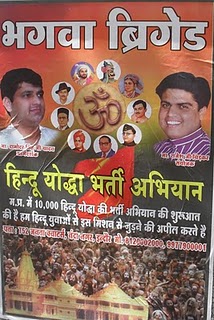
“The communists’ ideologues conveniently ignore the truth that the roots of Bhagat Singh’s ideology lie in the very concept of Hindu Rashtra,” claims an article by Dipin Damodharan, published on this day last year. Damodharan, as introduced at the end of the article, is a student pursuing Masters in Communication and Journalism (MCJ) at the Calicut University of Kerala. He argues: “To my knowledge, he sacrificed his precious life for a noble cause, for the liberation of Bharat from the invaders, for nationalism. Undoubtedly Bhagat’s legacy belongs to every Bharati. But for the communists (experts in transforming sheep to dog), he died for communism and not for nationalism. They are incessantly advocating Bhagat as their poster boy, for several years they have been using Goebalsian tricks to claim Bhagat’s legacy.” The author further argues, “They are injecting fake stories about Bhagat into the blood of youth who are ignorant about Bharat’s history. Discarding the historical facts, the communists become angry with the Sangh inspired organizations for propagating Bhagat’s ideals”. Continue reading Bhagat Singh and the Hindu Rashtra: Mahtab Alam→
Teri azaān mein nahin meri sahar ka payām. [Your call to prayer heralds not my dawn] – Allama Iqbal
A grab from the university's website
The recent judgment of the National Commission for Minority Educational Institutions (NCMEI), favoring ‘minority status’ for Jamia Millia Islamia University, has generated vigorous debate. While it seems to me that most of the articulations have probably been reluctant in staging the immanent logics governing the entire controversy, I see this debate as offering yet another opening for democratic transformation within the Muslim community. While I will resist from taking a straightforward for/against position on the issue, it would be my endeavor to trace the discursive ruptures that instantiated the articulation around the ‘minority status’ for Jamia, and to indicate at the need to frame the Muslim ‘community’ now as a contested terrain with multiple sites of negotiations, cleavages and transformations.
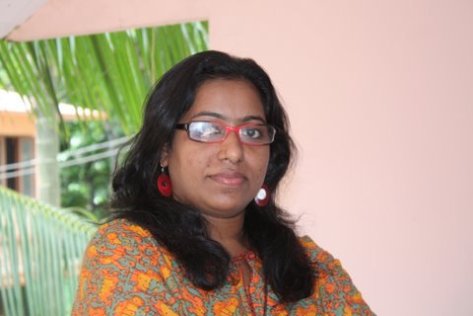
Recently, Shanina K K, a journalist from Kerala, who worked with Tehelka news weekly and now works with Open magazine, received the Chameli Devi Award for being an outstanding woman journalist. While receiving the award she said, “See, I happen to be a Muslim, but I am not a terrorist.” What made her say that and what was she trying to convey or explain? It means, as she explains, “If you belong to the minority community, they will also profile you. It is very difficult to prove that you are not a terrorist. It is equally difficult to prove that you are not a Maoist in our life and times.” Continue reading What does it mean to be a Muslim in India today?: Mahtab Alam→
Amnesty International has released a report calling on India to repeal the Jammu & Kashmir Public Safety Act. The report, called A ‘Lawless Law’: Detentions Under the Jammu and Kashmir Public Safety Act, can be downloaded here. Given below is the text of the Introduction and Summary of the report.
A ‘March of Million’ in Egypt’s Tahrir Square picked up the momentum of the people’s movement in Egypt, and finally led to the ouster of the dictator who had ruled Egypt with an iron fist for thirty years. Hosni Mubarak, the US backed Egyptian President, fled the country on 11th of February.
In Kashmir, 11th of February is an important day. It was on this day in 1984, that Maqbool Bhat, the founding member of the Jammu Kashmir Liberation Front (JKLF), a militant group that started the armed struggle for Independence of Kashmir, was hanged at Delhi’s Tihar Jail. He is remembered every year on his death anniversary, which has been a day of strike and protest since then. His remains still lie in the premises of Tihar jail in Delhi, and Kashmiris every year ask for their return. An empty grave in Srinagar’s Martyrs’ graveyard waits with Maqbool’s name on the plaque. For Kashmiris, the date of the flight of the modern Pharoah of Egypt, with Maqbool’s date of martyrdom brought a melancholic delight to this date. Continue reading A Million March in Kashmir?: Suvaid Yaseen→
“Ask the Home Ministry, because this is a security issue.”
That is what India’s Minister for Communications and Information Technology said recently when asked about the lack of transparency in the blocking of websites in India.
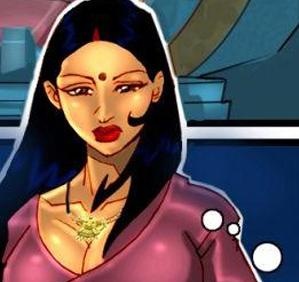
Now, one of the websites blocked in India is Savita Bhabhi, as also several mirror websites of the same. Savita Bhabhi, as you doubtless know, was a soft-porn web comic. All I want to ask Kapil Sibal is: How is Savita Bhabhi a threat to India’s national security? Wait, I have another question: Continue reading How is Savita Bhabhi a Threat to India’s National Security?→
Mr. [Murli] Deora’s “long-standing connection” to the Reliance industrial group, which includes significant energy equities, was described by the cable as his “only vulnerability.” Besides Mr. Deora, the new entrants with strong pro-U.S. credentials, according to the cable, included Mr. Saifuddin Soz, Mr. Anand Sharma, Mr. Ashwani Kumar, and Mr. Kapil Sibal. [Link]
Gems like the one above should keep readers of The Hindu entertained for days. Congratulations to them on getting the whole set of 5,100 India-related cables from WikiLeaks. They’ve created a sub-site for this. Here’s N. Ram on how they got the cables. Makes you wonder if others tried.
Kapil Sibal said the following at a conference on social media in Delhi recently:
We’ve seen the power of the medium in the last six months or so seeking to perform a transformational role, but in the absence of a balance… this is really the danger of sites like these. What happens in the process is that all kinds of opinion get both elicited and taken forward, without the necessary wherewithal, and there’s a great danger, because this, I believe, is a part of freedom of speech. Continue reading Here’s what India’s Communications and IT Minister thinks about online freedom→
Arif Lohar sining a Jugni with multiple beat instruments – dholak, dhol and bongo and chimta. Even the alghoza – two short and narrow reed flute like instruments – used to keep fast rhythm between three to four notes. *
In the video above, Niyamat Ansari, NREGA/RTI activist in Jharkhand, speaks of the threats to his life. Ansari was murdered on 2 March 2011. You can watch more videos of him here.
Given below are facts of how and why Niyamat Ansari was killed, and the follow-up threafter. You can follow the campaign to get justice for Niyamat Ansari on this Facebook page set up in his memory and in pursuit of justice for him. Please share these links widely, because Your Channel will not organise a candle-light vigil at India Gate. See this statement calling for justice.
The struggle of the NREGA is regularly chronicled at Nrega.net.in. NREGA, the world’s largest rural employment guarantee scheme, recently completed five years.
A couple of months ago, I was given two books which I was asked to review. Published in India, both were compilations of abridged versions of popular children’s fairy tales and fables. One book, however, had a pink cover; the other was bound in blue. The former said clearly, on the cover, that it was meant for ‘little girls’, the latter was for ‘little boys’.
Having grown up surrounded by books, I wondered, when I saw these two copies, as to how one could tell which stories were meant for girls and which were meant for boys. As a child, I never saw the difference. Lo and behold, the tables of content in both books gave me my answer (and destroyed my peace of mind): the volume with the pink cover was full of stories about lost princesses and damsels in distress seeking saviours; the one with the blue cover had stories such as ‘the boy who cried wolf’. Continue reading Stop gendering children: Urooj Zia→
The Telegraph's "File picture of suspected illegal migrants detained by police"
I think that should be the title of a poem, but since I can’t write poetry, I want to bring to your attention in pithy prose the Congress party’s time-worn ‘soft Hindutva’ election strategy is back in Assam. Which means that while the Congress, BJP and others in Assam want to welcome Hindus from Bangladesh, the Muslims from there are as ever the “illegal” immigrants, the terrorists, the jehadis, the infiltrators.
They want citizenship for Bangladeshi Hindus and the Bangladeshi Muslims kicked out.
As per India’s non-existent refugee policy, Hindus from Pakistan and Sikhs from Afghanistan have been getting citizenship, but so many other persecuted peoples from all over the world come to India and find it very difficult to get by and soon seek resettlement in a developed country.
This, then, is how I want to introduce Indian secularism to you.
Sanchar Bhawan, office of the Ministry of Communications and Information Technology in New Delhi
The Internet in India is regulated by the Information Technology Act (2000) to which amendments were passed in 2008 and in 2009 the IT (Amendment) Act 2008 was passed. The Ministry of IT has now gotten down to notifying additional rules for the Act. Amongst the set of rules is one specifically for cyber cafes, about which I’ll write another post, and there’s one on ‘due diligence on intermediaries’. Intermediaries in the context of internet means that if you post any comment on this blog, I am legally responsible for your comments too. Intermediary liability is a favourite tool of internet censorship by repressive regimes the world over.
To those familiar with Indian laws, this will appear to be routine stuff, the sort of laws that regulate newspapers, for instance, or freedom of expression in India in general. However, three main problems here: one, the over-emphasis on blogs and bloggers, indicating the government’s anxiety over controlling blogs; two, the vagueness and vast scope of the reasons for which the government can block websites; and three, the utterly regressive move of introducing ‘intermediary due-diligence’, a favourite tool of repressive regimes against bloggers.
It is interesting that while “Blogs” and “Blogger” are defined in the Definitions section of this rule, the words aren’t used in the rules per se. In other words, they had blogs in mind while making the rules. These rules, if notified, will basically be India’s Blogger Control Act.
Update: Please see bottom of the post for several updates.
*
“Shivam!” Nikhil Pahwa of Medianama called this morning. “It’s 2006 all over again. They’ve blocked Typepad.” I instantly knew what this meant. They’ve done this at least twice before, the fellas at CERT-IN. In 2003, 2006 and now 2011.
Typepad.com is a blogging service, much like Google Blogger (Blogspot.com) or WordPress.com that this site, Kafila.org runs on. Now. Airtel users who go to Typepad.com find this:
Here’s a crime: February 27 2002, 59 people killed when a train is set on fire in Godhra. 90+ people are arrested and accused of the slaughter. Bail is denied to them all. The trial takes nine years, the trial verdict acquits 63 of them, finds the other 31 guilty. The judge sentences 11 of those 31 to death, the other 20 to life in prison.
Here’s another crime: February 28 2002 (the next day), 69 people killed when a building called Gulberg Society is set on fire and its residents attacked in Ahmedabad.
In the May of 2006, Praveen “Five Police Station” Swami wrote in Frontline: ““Long live Pakistan,” chanted the hundreds of young men who, armed with axes and crowbars, had gathered to demolish Sabina Hamid Bulla’s home in downtown Srinagar on May 5. “We want freedom!” … Last month, residents of Srinagar complained to the police about two 30-second pornographic video clips that had been circulating through mobile phones. A 16-year old girl was then detained, who said she had been recruited by a prostitution ring run by Bulla. In an unsigned statement to the police, the girl said Bulla, to whom she is related, supplied her with drugs and cash for having sex with two State Ministers, a Border Security Force officer, 10 policemen and several well-known businessmen. … As thing stand, though, the Central Bureau of Investigation – which was, notably, given charge of the case before the protests began – has an enormous mission before it. First, it will have to persuade the girl, who was married off in April with some financial assistance from Bulla, to make a formal statement before a magistrate. Then, corroboration will have to be found to back the charges she has made – no small task, given the influence of the men who now face charges of rape.” [Frontline, May 20 – June 2, 2006.] Continue reading Sopore sisters, in death and life: Nawaz Gul Qanungo→
Recently the Supreme Court of India upheld the constitutional validity of extending subsidy on air fare to the Hajj Pilgrims. This year Rs.280 Crores were reportedly spent by the Government of India to subsidise the air fare of one lakh pilgrims. This amounts to a subsidy of Rs.28000/- per pilgrim. The subsidy provided to the pilgrims has understandably generated a lot of debate within political and social circles in India. While the right wing political parties, when not in power, consider it as an unnecessary appeasement of Indian Muslims, the governments formed by any party have always seen it as a necessary expenditure to help Muslims perform their religious obligation of Hajj.
Since I have also performed my Hajj this year, I decided to do some quick calculations to check the veracity of the tall claims made by the GoI and the Hajj Committee regarding the subsidy amount (see box). The results were quite shocking. I checked with one of the service providers —‘makemytrip.com’— and it showed up the Saudi Airline’s fare of a little over Rs.26000/- for a return Delhi-Jeddah ticket with a gap of around forty days. It was amazing to find that the total airfare of Rs.26,000 for a hajj pilgrimage is even lower than the subsidy amount of Rs.28,000 thousand which is allegedly paid by GoI to airlines to subsidise the “high cost” of the air tickets. Continue reading The myth of India’s Hajj subsidy: Muhammad Farooq→
Last week, when an eight member delegation of the outlawed United Liberation Front of Asom (ULFA) returned to Guwahati after the first round of peace-talks with the central government in New Delhi, the response in Assam is a mixed bag of emotions. Arabinda Rajkhowa, the ULFA chairman who led the delegation, while addressing the press, said that they had been assured of an honourable solution to the three decade long Assam conflict by the Prime Minister. Earlier, on 10th February the ULFA made history by coming to the talks table in New Delhi for the first time with no firm pre set conditions on its agenda. It is understood as of now, that no substantial talks would begin before the Assam assembly elections which are expected to be held in April-May this year. However this ‘familiarisation exercise’ of the centre with one of India’s most influential and violent separatist outfits at such a crucial time is a hugely significant move in contemporary history of the insurgency-hit election bound Assam. Continue reading Talking to ULFA: Assam’s Peace Myths and Reality: Tanmoy Sharma→

 Guest post by MAHTAB ALAM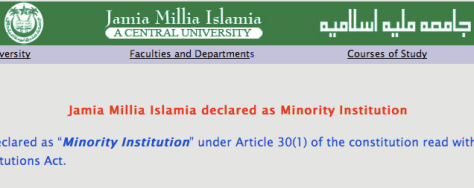

 “Ask the Home Ministry, because this is a security issue.”


 KAFILA - COLLECTIVE EXPLORATIONS SINCE 2006