All posts by Shivam Vij

Shivam Vij is a writer and journalist based in New Delhi.

Revisiting Obama’s Visit: Suvrat Raju

Guest post by SUVRAT RAJU

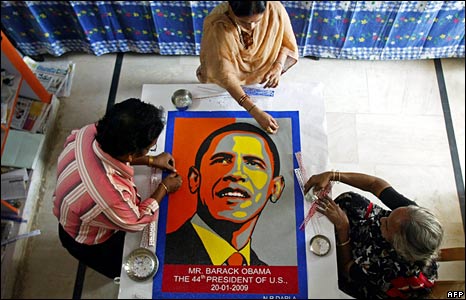
January 2009: Indian artist Darla Nageswara Rao (left) has used more than 33,000 coloured stickers on his portrait of Barack Obama. The work has taken 160 hours to complete.

Although the Indian media collectively swooned on President Obama, and breathlessly informed its audience about how many rooms he had booked at various five-star hotels, there was surprisingly little discussion on two key questions. What is Obama’s foreign policy record? Moreover, what impact will his visit have on most Indians?

Continue reading Revisiting Obama’s Visit: Suvrat Raju

This Chhath Puja, Ram ke naam: Mahtab Alam

Guest post by MAHTAB ALAM

Last week, after a gap of almost 12 years, when I was asked by my family members to accompany them to see Chhatth Puja, an ancient Hindu festival dedicated to Surya, the Sun God, I could not resist myself and readily agreed to join them. As a school going boy, I had always enjoyed watching the festival and devotees performing the rituals observed for the Puja in my hometown Supaul, a district of Bihar, which borders the Tarai region of Nepal. In the last 12 years, I couldn’t get a chance to do so due to the mobile nature of work I am involved in. The Puja, most elaborately observed in Bihar, Jharkhand and the Terai regions of Nepal in modern times, and those areas where migrants from these regions have a presence. Chhath, usually observed six days after Diwali, was observed on 12 November this year. Continue reading This Chhath Puja, Ram ke naam: Mahtab Alam

Dilemmas of ‘Right of Nations to Military Occupation’: A Response to Rohini Hensman

Dear Rohini,

Apologies for taking the liberty of writing a separate post to respond to yours. I am doing so as a separate post not only because this response is rather too long for the comments space, but also because I have been wanting to address the issues you have raised. The issues are not new; I have been hearing them ad nauseaum since 2008, when the Kashmiri demand for independence from India took on a renewed momentum. In your post you bring in various external contexts – such as Rosa Luxemburg and the Sinhala-Tamil conflict. I am grateful that you do so, because it is always useful to learn from history and not repeat history’s mistakes. However, there are other recent histories of conflict and conflict resolution you don’t talk about, but which many Kashmiris are aware of – Kosovo, East Timor, Northern Ireland. Some new countries are being formed as we speak!

Also, there is history and context in Kashmir too, which you don’t go into. Your post talks more about LTTE than about Kashmir. Here, I will try to stick to Kashmir in responding to you.

Photo credit: Shivam Vij Continue reading Dilemmas of ‘Right of Nations to Military Occupation’: A Response to Rohini Hensman

Protesting FTII students write to Ambika Soni

Studnets at the Film and Television Institute of India, Pune, have been protesting against the commercialisation of India’s best known film school. In letters to the Union Information and Broadcasting Minister Ambika Soni, they write:

In the proposal, made by Hewitt at the behest of your ministry for the ‘up-gradation of FTII to international standards’, refers to FTII as a ‘brand’. What this company fails to understand that this ‘brand value’ it refers to has come into being because of the diploma films that the students of the ‘3 year subsidized course’ have made it in the last 50 years. The other ‘self sustained courses’ that exist today (with its self sustainence) exists and has any value, if at all, because of these 3 year diploma courses. Continue reading Protesting FTII students write to Ambika Soni

October 27, 1947: Dakota in my dell: Sameer Bhat

Guest post by SAMEER BHAT

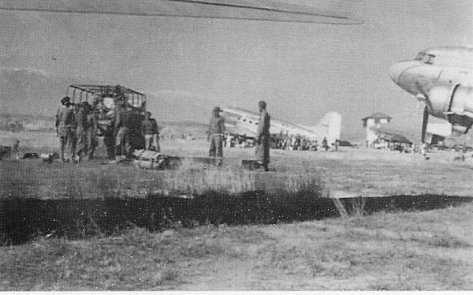
Dakotas at Srinagar airfield, October 1947

Continue reading October 27, 1947: Dakota in my dell: Sameer Bhat

Report #1: Attack and killing on Pattan hospital premises

This is the first of a series of fact-finding reports on the recent violence in Kashmir. The fact-finding has been conducted independently by a team of BELA BHATIA, VRINDA GROVER, SUKUMAR MURALIDHARAN and RAVI HEMADRI. For a introduction to this series, see here.

View of the hospital ward ‐ staff think that Adil may have been on the bed with the red mattress when the CRPF incursion took place.

Continue reading Report #1: Attack and killing on Pattan hospital premises

Introduction: Fact Finding Team to Kashmir

This post introduces a fact finding team’s work on the recent violence in Kashmir. The contents of the report are being posted as separate posts and will be linked below as and when they’re posted.

Since June this year, the Kashmir valley has been torn by mass protests which have been met with overwhelming force by Indian security forces. Curfews and closures have been frequent, often shading into each other. No less than 111 deaths have been registered, of which a large number have been of students and youth in the age group of 8 to 25 years. There have besides, been hundreds of cases of injuries, of both protesters and those who just happened to be at the wrong place at the wrong time. An independent fact-finding team went to the Kashmir valley at the end of October to go into the totality of the situation, principally to inquire into the causes for the unconscionably large number of deaths that have occurred in the current phase of mass agitation. The team comprised of academic BELA BHATIA, advocate VRINDA GROVER, journalist SUKUMAR MURALIDHARAN and activist RAVI HEMADRI of The Other Media, a Delhi based campaign and advocacy organisation, at whose initiative the effort was organised. Each member of the team spent varying lengths of time in the valley, but in total, roughly about twenty-five person days were put in the fact-finding exercise. In groups or individually, the team met the families of almost 40 persons who had been killed since the beginning of the civil unrest. Several individuals who had suffered serious injuries were also met. The team worked out of the state capital of Srinagar, and visited villages and towns in five of the Kashmir valley’s ten districts: Baramulla in the north (Sopore and Baramulla tehsils); Anantnag (Bijbehara and Anantnag tehsils) and Pulwama (Pulwama tehsil) in the south; Badgam in the west (Chadura and Badgam tehsils) and Srinagar itself. Separate sessions were held with journalists and media practitioners, university teachers and students, doctors, lawyers and activists besides officials in the police headquarters and the civil administration. The findings of the team are being released in a series of short reports beginning with following two sections. Forthcoming reports will deal with various facets of the situation that civilians in the Kashmir valley face in a season of unabated turmoil.


Next in this series
Report #1: Attack and Killing on Pattan Hospital Premises
Report #2: Palhallan Under Siege
Report #3: Shooting the Messenger in Kashmir

Ayodhya Verdict: Does it provide closure?

Guest post by WARISHA FARASAT

I was a child when the Babri Masjid was desecrated. After the news of the demolition spread across Uttar Pradesh, we were huddled in buses and packed off home from our boarding school. We were happy that the school had announced the winter break earlier than usual. That apart, we didn’t think much of the episode. In fact, I think that we were oblivious, almost entirely, to the gravity of the incident.

Much later, when I read the Sri Krishna Committee Report on the Bombay riots of 1992-93, and about thousands who had lost their life in the aftermath of the demolition, memories of 1992 returned. I remembered whispers. I remembered the fear in the eyes of our teachers accompanying us home. I remembered the instructions to the bus driver not to stop the bus if we were mobbed. I remembered leaving school at three in the morning. And, I remembered being asked not to tell my real name if we were stopped. Continue reading Ayodhya Verdict: Does it provide closure?

Islam Colony Riders vs. Ward 2 Worriers [sic]

You are a young politician in Delhi and you want to make a mark in an area, in a seat. You want to be known, you want to be a leader, you want followers, you want to be taken seriously. You want votes. You have the right kind of Delhi first name – Mahender rather than Mahendra – and an even better surname – who better than a Chaudhary to be your leader? But there would be many Mahender Chaudharys. What can you do? You can get basic work done – permissions and pipelines and land conversions and garbage clean-up. But anyone with the right contacts can do that. Anyone can become a protege of a Congress leader like Yoganand Shastri. In a city like Delhi, in a city of migrants, in a city whose citizens think they have the right to be treated better than the rest of India, in a city that does not seem to be ‘politicised’ like the seemingly distant world of the ‘real’ India, in a city that is a state – how do you begin being taken seriously as someone with political ambitions? One Mahender Chaudhary has this poster put up all over Mehrauli (which was once all there was to Delhi). Check it out: Continue reading Islam Colony Riders vs. Ward 2 Worriers [sic]

From New York, a letter to fellow Kashmiris

Guest post by MOHAMAD JUNAID

Dear fellow Kashmiris,

I’m writing this letter from New York, a place far away, yet so close to everything. This city can make you forget, by filching reality away from you. But it also reminds you perpetually, by bringing you close to a different reality, through the pain and suffering of others. There are exiled specimens from all over the world here (yes, mostly those permitted to come to the US). There are Irish and Greeks, escapees from famines and wars. There are Jews from Germany and Germans from Russia, ones who survived persecution. There are Latinos from El Salvador, Peru, Guatemala, and Bolivia, who fled Western-backed dictatorial regimes in their countries in the 1970s and 80s. There are Africans who narrowly missed genocide in Southern Sudan. There are Kurds from Turkey, and Berber from North Africa, driven out of their lands by years of conflict. And, then there are African Americans, who were forcibly brought hundreds of years before to slave for their White masters, and who, despite recent claims of dawning of an age of “post-racial America,” are still groveling at the bottom of the socio-economic heap. Their stories tell a similar conclusion: The world is shrinking for small nationalities and powerless minorities. Continue reading From New York, a letter to fellow Kashmiris

India Bans US Professor from Kashmir, threatens Indian writer with sedition charges: JKCCS

A note from JAMMU KASHMIR COALITION OF CIVIL SOCIETY

November 2, 2010

On November 1, 2010, shortly after 5.10 am, Professor Richard Shapiro was denied entry by the Immigration Authorities in New Delhi. Richard Shapiro is the Chair and Associate Professor of the Department of Anthropology at the California Institute of Integral Studies (CIIS) in San Francisco. He is also the life partner/husband of Angana Chatterji, who is the Co-convener of the International People’s Tribunal on Human Rights and Justice in Indian-administered Kashmir (IPTK) and also Professor of Anthropology at CIIS. Continue reading India Bans US Professor from Kashmir, threatens Indian writer with sedition charges: JKCCS

The Shock Doctrine

Minutes of the seminar on ‘Azadi: The Only Way’

(Shuddhabrata Sengupta has written eloquently his account of the day-long seminar, ‘Azadi: The Only Way’. The seminar was organised by the Committee for the Release of Political Prisoners. Given below are CRPP’s minutes of the seminar. You can also see, on YouTube, two short videos showing the ruckus that some Kashmiri Pandits created before Syed Ali Shah Geelani was to speak (1, 2). Also on YouTube, in two parts (1, 2), is Arundhati Roy’s speech, for which some want her booked for sedition. Those on Facebook can also see most of SAS Geelani’s speech (1, 2, 3). A small part of Geelani’s speech is on Youtube, here. Those hurling abuses at Roy and Geelani would do well to read this text, see these videos, and engage with these ideas intellectually, instead of asking for individuals to be jailed and persecuted.)

Continue reading Minutes of the seminar on ‘Azadi: The Only Way’

GQ Boy’s platinum pain

Guest post by HILAL MIR


There are various divisions of pain the different classes of people feel in Jammu and Kashmir. Like those bank credit cards which classify customers according to precious metals—Platinum, Gold, Silver—pain is a class thing. For example, when PDP veteran Muzaffar Hussain Baig, after making a long convoluted speech in the Jammu and Kashmir Assembly, said Omar Abdullah’s name figured in the list of the people who used their authority to sexually exploit girls, the junior Abdullah was transformed into a character from a Greek tragedy.

Continue reading GQ Boy’s platinum pain

Kashmir: A “No-Peace” Political Initiative

Guest post by ANGANA CHATTERJI

The 8-point Plan, New Delhi’s political initiative to address the crises in Kashmir, attests to the parallel and incommensurate realities of the sovereign and the subjugated, the Indian state and the Kashmiris.

The 8-point Plan renders obvious New Delhi’s limited comfort zone. The Plan is not an overture to healing the reality of suffering and outrage inside Kashmir. Rethinking militarization and military governance is not the priority. The ambition is to manage Kashmiris and to keep the disarray concealed from the international gaze.

New Delhi announced its 8-point Plan on September 25, 2010, following the visit to India-ruled Kashmir of a 39-member All Party Delegation from New Delhi led by Union Home Minister Palaniappan Chidambaram, and parallel to the 65th Session of the United Nations General Assembly meetings in New York City. That Defence Minister Arackaparambil Kurian Antony did not accompany the All Party Delegation was indicative of New Delhi’s mood.

Continue reading Kashmir: A “No-Peace” Political Initiative

Let Delhi have its thali

Guest post by HILAL MIR

During the convention, Azadi the only Way, at LTG auditorium on Thursday, a potbellied man was standing on the aisle, listening intently to the speech of professor of history at Jadavpur University Sugata Bhadra. The man, I reckon, might be easily burdening earth with nearly 130 kilograms of his fair, north Indian bulk.  The professor was stripping the Indian state to its bare minimum and the audiences clapped. The man could stand it no more. I soon found out his voice was equally weighty, and gravelly—a cross between Shatrugan Sinha and Kulbushan Kharbanda. Quite audibly he said jis thali ma khatey hai usi main chaid kartey hain. In Bollywood films this saying condemning treachery is reserved for domestic helps who fall in love with the pretty daughters of their employers. Here, the context was different. A Maoist sympathizer was sharing the dais with a Kashmiri pro-freedom leader who was sharing the dais with a Sikh secessionist who was sharing the dais with a Naga human rights defender…A veritable thali of secessionism and dissent indeed. No wonder Arnab Goswami was hysterical. Continue reading Let Delhi have its thali

The Japanese are telling you something, MMS

Manmohan Singh is in Tokyo, trying to conclude yet another nuclear deal with yet another country. As the deal is under a cloud, many Japanese citizens have written an open letter to him:

It is true, as India has repeatedly pointed out, that the Nuclear Non-Proliferation Treaty (NPT) is an unequal treaty. However, looking at India now, one cannot help thinking that India believes power and prestige derive from the possession of nuclear weapons. India might have adopted a nuclear no-first-use strategy, but seen from the perspective of the experience of the Hibakusha, the possession of nuclear weapons is by no means a source of power and prestige. Rather, it is the epitome of immorality.

India reaffirmed its moratorium on nuclear testing when the Nuclear Suppliers Group (NSG) amended its guidelines to allow a special exemption permitting nuclear cooperation with India, which is not a member of the NPT. However, India has not promised never again to conduct a nuclear test. Nor has it agreed to IAEA safeguards that would prevent it from using domestically produced material to produce nuclear weapons. Under these circumstances, given that India has not promised not to produce nuclear weapons in future, if Japan were to proceed with cooperation on nuclear technology with India, this would be interpreted by other countries, including Pakistan and other Islamic countries, as meaning that Japan, the victim of nuclear weapons, is cooperating in India’s development of nuclear weapons. [Read the full letter]

Jats rock, caste shocks

This post is dedicated to a Facebook friend who, when I asked her her caste, replied: “Now, now, now! In any case, with the brouhaha surrounding the census, what’s the proper form these days? Mention of caste in or out?”

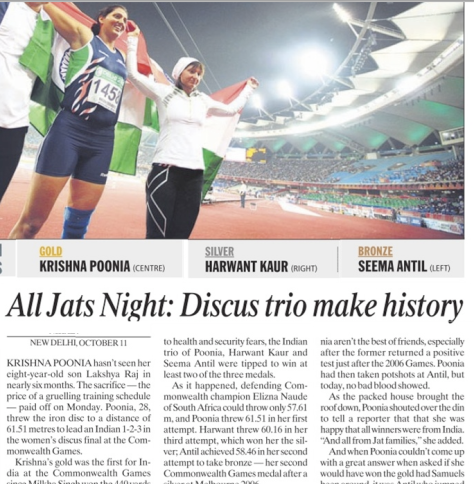
I woke up to this headline in The Indian Express today. My reaction was to wonder what many others’ reaction would have been? Those who argue that reservation and ‘caste census’ and such measures serve to solidify caste identities rather than weaken them – I wonder what they would make of this headline?  Continue reading Jats rock, caste shocks

Notes from a Beautiful City


Research and Edit:
Rintu Thomas

Photography and Sound:
Sushmit Ghosh

Produced by:
Open Space & Black Ticket Films

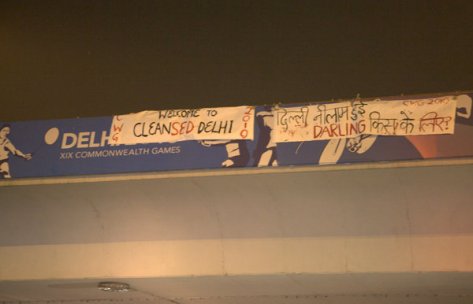
Seen in Delhi

Bovine Intervention

This article on Kashmir by HILAL MIR was written in 2008, when a land transfer dispute became a catalyst for azadi protests of a scale not seen since 1991. Two years later, it remains relevant.

Moo! Moo! Oh ye white men in blue camouflage uniforms and caps, hearken to my bootless cries. Continue reading Bovine Intervention