All posts by Shivam Vij

Shivam Vij is a writer and journalist based in New Delhi.

The urban-rural divide in Modi’s Gujarat

Christophe Jaffrelot gives us perspective on why Gujarat’s development numbers don’t look as impressive as Gujarat’s economic growth – it’s about Modi’s neglect of the rural:

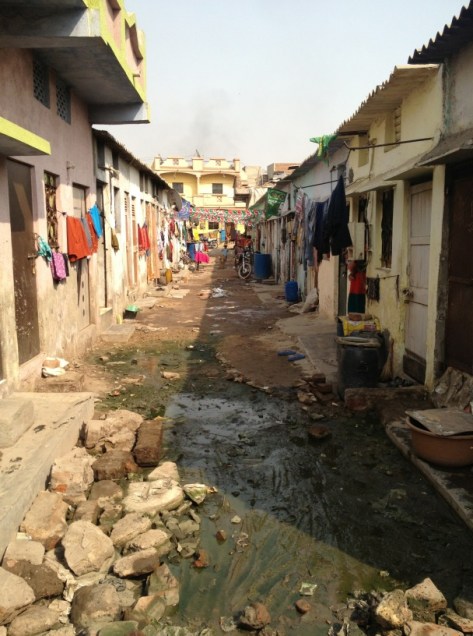
Modi’s policy, over the last 10 years, has benefited the urban middle class more than anybody else. If Gujarat ranks only 11th out of 23 states in terms of the human development index, it’s because groups in rural Gujarat continue to lag behind. Indeed, Gujarat is a case of social polarisation with the new rich in the cities and most of the groups that are at the receiving end concentrated in the villages. There, the number of families below the poverty line has jumped from 23.39 lakh in 2000 to 30.49 lakh in July 2012, according to the rural development commissioner. Unsurprisingly, 9 lakh of the 11 lakh houses without electricity, according to the Gujarat 2011 census, are in rural areas. In terms of education, the excellent report of the NGO, Pratham, shows that rural Gujarat was lagging behind states like Haryana.

Dalits and Adivasis (11.3 and 16.5 per cent of the state population, respectively) are particularly affected. For instance, the percentage of tribal underweight children (0-5 years old) is much higher in Gujarat than the tribal average at the national level (64.5 per cent compared to 54.5 per cent). The under-five mortality rate of tribal children is also much higher. Similarly, the percentage of Dalit participation in the NREGA programme is three times less in Gujarat (7.83 per cent) than in India at large (22.67 per cent). In fact, development has meant socio-economic polarisation, because Gujarat is a typical case of growth without development for all. The Gujarat chapter of the India Human Development Report of 2011 concluded that “the high growth rate achieved by the state over the years has not percolated to the marginalised sections of society, particularly STs and SCs, to help improve their human development outcomes”. [Full article here]

More on Gujarat from Kafila archives: Continue reading The urban-rural divide in Modi’s Gujarat

A conversation that didn’t take place in Juhapura: Madhu Purnima Kishwar and Zahir Janmohamed

On 15 January, Kafila published an open letter to MADHU PURNIMA KISHWAR by ZAHIR JANMOHAMED. Three months later, Kishwar has sent us a response. Given below her response are comments by Zahir Janmohamed.

*

Dear Zahirbhai,

My apologies for the delay in responding to your “Open Letter” addressed to me through Kafila on January 11 2013.

Unlike most of those upset at my articles on Gujarat, you have been remarkably measured in your tone and tenor and also respectful in questioning my observations. However, the content of your letter annoyed me no end. I kept postponing my response in the hope that my annoyance at the absurdity of your chargesheet would subside over time. I honestly did not want to give you an angry or discourteous response so that the dialogic mode you established remained undisturbed.

However, as I began processing the enormous load of material I had gathered from Gujarat, my annoyance kept increasing at your jaundiced viewpoint. Therefore, I thought of letting the series of articles I am writing answer some of your questions. I had made it a point to ask all the questions you raised from Gujaratis I interviewed. At the end of my first series on Gujarat I would have written to ask you if you got your answers. Continue reading A conversation that didn’t take place in Juhapura: Madhu Purnima Kishwar and Zahir Janmohamed

We are all Hari Sadu: Veena Venugopal

VEENA VENUGOPAL writes: Saw the ad about the horrible boss? The one in which the employee comes in with a new idea and in return he gets a load of sarcasm? And even when the boss likes the idea, he reveals it with an air of impudent superiority. Seen that one? What was it called? Hari Sadu?

Well, no. This ad is for a new brand of cookies; Gold Star, it is called. A male “attendant”/“peon”/“employee” comes in to a plush white room and serves a plate of cookies to Amitabh Bachchan. On biting into one, he realizes these are not his regular cookies. “Arre suno,” he calls because come on, he isn’t expected to know the name of all the people who serve him cookies at home. The employee admits they are new. “Maine socha ki…” (I thought…) he says at which Bachchan rolls his eyes and says, “aaj kal aap sochne bhi lag gaye?” (you have even started thinking now?). But then he realizes he likes the new ones and instructs the man, “ayenda yeh sochna band karo,” (please stop thinking in the future). Continue reading We are all Hari Sadu: Veena Venugopal

Sign this petition to abolish death penalty in India

AMNESTY INTERNATIONAL lists some reasons why death penalty should be abolished in India:

amnesty2

Inconsistency: Three people, Harban, Kashmira and Jeeta were sentenced to death for a crime in which they played similar roles. But they met different fates. Kashmira Singh’s petition to the Supreme Court was accepted and his sentence commuted to life imprisonment. Harbans Singh was recommended by the court for clemency from the President. Jeeta Singh’s petition was dismissed and he was hanged.

Flaws: In August 2012, 14 retired judges wrote to the President of India, pointing out that the Supreme Court had wrongly awarded the death sentence to 13 people. They called the execution of two wrongly sentenced prisoners in 1996 and 1997, “the gravest known miscarriage of justice in the history of crime and punishment in independent India”.

Bias: “I thought I should get all these (capital punishment) cases examined from a normal citizen’s point of view in terms of the crime, intensity of the crime and the social and financial status of the individuals who were convicted and awarded capital punishment. This study revealed to my surprise that almost all the cases which were pending had a social and economic bias.” APJ Abdul Kalam.

To sign their petition to the Prime Minister of India, go here.

On the Supreme Court of India’s rejection of the mercy plea of Devinder Pal Singh Bhullar: PUDR

Press statement put out by the PEOPLE’S UNION FOR DEMOCRATIC RIGHTS on 12 April 2013.

PUDR strongly denounces the Supreme Court’s dismissal this morning of Devinder Pal Singh Bhullar’s plea for commutation of the death sentence awarded to him to life. The issues at stake in this dismissal are multiple, that of clemency, death penalty, miscarriage of justice and precedence.

Bhullar was sentenced to death in 2003 for carrying out a bomb blast outside the Delhi Youth Congress office which killed nine people in 1993. He has been deemed mentally unstable. The High Court’s decision of upholding the death sentence was not a unanimous decision. After he was given the death sentence by the Supreme Court, he appealed to the then President of India for clemency in 2003. The President, after a lapse of over eight years, dismissed his mercy plea in 2011. Bhullar had sought commutation of his death penalty to life sentence by the Supreme Court on the ground that there was inordinate delay by the President over his plea for clemency. Continue reading On the Supreme Court of India’s rejection of the mercy plea of Devinder Pal Singh Bhullar: PUDR

Lethal Lottery: A study on death penalty in India, 1950-2006

When an April Fool’s Day joke is not funny: Zahir Janmohamed

A colony of 2002 riot affected families in Ahmedabad. Photo by Zahir Janmohamed

This is a guest post by ZAHIR JANMOHAMED: This morning, April 1, Google announced its latest product: Gmail blue. It is email except for one critical difference—everything is blue.

 “I can’t believe I waited so long for this,” a hilarious Google video says.

It works because it is funny and so obviously absurd—you would have to be, well, a fool to believe this April fool’s day joke. But the Google prank is also something else: harmless. It does not hurt anyone nor it does not trigger painful memories.

When does an April fool’s day cross the line? Continue reading When an April Fool’s Day joke is not funny: Zahir Janmohamed

Reject the National Food Security Bill: Right to Food Campaign

This release was put out by the RIGHT TO FOOD CAMPAIGN on 19 March 2013

More than 500 people of the Right to Food Campaign sitting at Jantar Mantar in New Delhi rejected the National Food Security Bill 2013 which was passed by the cabinet of the UPA Government today evening and will now be placed in the Parliament in this session.

NO TIME FRAME FOR IMPLEMENTATION

People were shocked to learn that according to the Bill that was passed, the law will not be applied in one stroke. The language of the law is that different dates may be appointed for different states and different provisions for the implementation of the Act.  This clearly means that there is no time frame for full implementation or objective criteria for phased implementation. It means the government in power has the choice to decide which state and what provisions need to be implemented. We condemn this as being against the fundamental rights of the people and the federal nature of the Indian state.  This also clearly shows that the Government is not really committed towards ensuring the end of food insecurity of the teeming millions of the country. Continue reading Reject the National Food Security Bill: Right to Food Campaign

India, International Law and an Act of Hypocrisy: JKCCS

Press release put out 24 March by the JAMMU AND KASHMIR COALITION OF CIVIL SOCIETY

Srinagar: The 21 March 2013, United Nations Human Rights Council [UNHRC] resolution is a welcome initial step in the ongoing struggle to hold countries responsible for human rights violations, ranging from Genocide, Crimes against Humanity and War Crimes to Enforced Disappearance, Torture, Rape and Extra-judicial executions. The watered down resolution, moved by the United States, and India’s support for the resolution, requires both commendation and severe criticism at the same time.

There can be no selective morality when it comes to standing against the commission of human rights violations by State’s. Every country must be held to the same standards, as Sri Lanka has been in the instant case, regardless of economic or geo-political concerns. In this regard, the United States and India stand accused of hypocrisy in their dealings with human rights violations in their regions or across the world. Similarly, Pakistan’s vote against the resolution raises serious questions on its own approach to human rights violations in the region or elsewhere. Continue reading India, International Law and an Act of Hypocrisy: JKCCS

Alan Rusbridger on Open Journalism and the Looming Threat of Supra-Regulation: Saurav Datta

Photo: Bhushan Koyande /Free Press Journal

Guest post by SAURAV DATTA

“Open” Journalism – it’s all about transparency, challenging, correction and clarification.

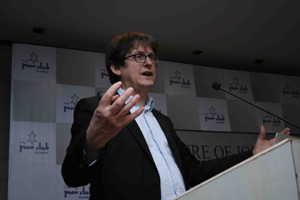
Marking a refreshing departure from the hackneyed “economic model” analysis of digital journalism, Alan Rusbridger, The Guardian’s Editor-in-Chief recently held forth on its effects and manifestations from the perspective of “journalistic practices”. Whether to fortify stories and content behind “gigantic (pay)walls” or not, is the wrong starting point, because one has to see if actions are “journalistically right,” he said. Continue reading Alan Rusbridger on Open Journalism and the Looming Threat of Supra-Regulation: Saurav Datta

On Narendra Modi’s strange bedfellows in Washington DC: Zahir Janmohamed

Guest post by ZAHIR JANMOHAMED

PTI photo
PTI photo

The headline on Zee News at 5:09pm today read: “America opens its gates for ‘very dynamic’ Narendra Modi.”

The Business Standard in an article posted a few minutes earlier, at 4:57pm, wrote: “After UK, now US softens stand on Modi.”
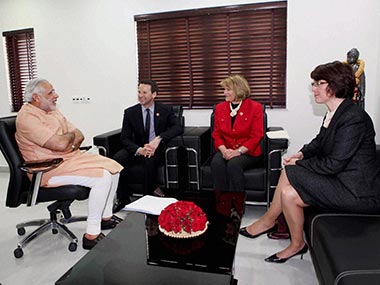
Indeed three members of the US Congress, along with a few US business leaders, did meet with the Gujarat Chief Minister today in Gujarat. But should we infer any shift in US policy towards Narendra Modi?

In short, no.
Continue reading On Narendra Modi’s strange bedfellows in Washington DC: Zahir Janmohamed

Lok Sabha committee tells Kapil Sibal to re-examine the Information Technology Rules 2011

SFLC.in has a quick summary:

The Thirty-first Report of the Committee on Subordinate Legislation (2012-2013) was presented in the Lok Sabha today on 21 March, 2013 by Shri P. Karunakaran, Chairman of the Committee.

The Committee examined the following rules:-

(i) The Information Technology (Reasonable security practices and procedures and sensitive personal data or information) Rules, 2011[GSR 313(E)]

(ii) The Information Technology (IntermediariesCommittee Report Guidelines) Rules, 2011[GSR314 (E)]

(iii) The Information Technology (Guidelines for Cyber Cafe) Rules, 2011[GSR315(E)]

(iv) The Information Technology (Electronic Service Delivery) Rules, 2011[GSR316 (E)]

The Committee made the following observations: Continue reading Lok Sabha committee tells Kapil Sibal to re-examine the Information Technology Rules 2011

When the Vishwa Hindu Parishad went time travelling: Ilija Trojanow and Ranjit Hoskote

3_3

This is an excerpt from Confluences: Forgotten Histories of East and West by ILIJA TROJANOW and RANJIT HOSKOTE (Yoda Press, 2012). In defiance of the current tide of national and cultural neo-tribalism, the authors argue that the lifeblood of culture is confluence. No culture has ever been pure, no tradition self-enclosed, no identity monolithic. Employing a variety of approaches, ranging from the essayistic to the poetic, from rigorous historical analysis to the playfulness of fiction, they follow the journeys of stories, ideas, people and songs, and trace the umbilical connections between Europe and Asia, Zoroastrianism and Christianity, Western revolutionary thought and the annihilatory politics of Jihad and Hindutva. In this particular section, titled ‘Travelling Back in Faith’, history is presented through the prism of science fiction:

vhp2The Vishwa Hindu Parishad (VHP) is a powerful organization founded on the belief that the Hindu religion is eternal and unvarying, that it has existed in India for thousands of years (the VHP’s chronological estimates vary between 8,000 and 50,000 years), and that its essence has never been affected by any foreign influence or borrowing. Hinduism is unique to India, and India is a uniquely Hindu country: such is the logic of the VHP. And yet, occasionally, the VHP is assailed by a sense of doubt. It is all very well to thunder at Muslims and Christians in self-congratulatory public meetings, its leaders say to themselves, but it would be nice to have some proof with which to fight off the scoffing scientists. And so, as documents recently made available to researchers reveal, the high command of the VHP decided to sponsor a time travel project, sending a fact-finder back to the glorious Vedic age to collect evidence of how the ancestors of the Hindus performed their rituals, worshipped their gods, and conceived of their relationship to the Divine. Continue reading When the Vishwa Hindu Parishad went time travelling: Ilija Trojanow and Ranjit Hoskote

A summary of the National Food Security Bill, 2013

This summary of the National Food Security Bill 2013 (revised version, as tabled in Parliament, 22 March 2013) comes to us via Jean Dreze

1. Preliminaries

The Bill seeks “to provide for food and nutritional security in human life cycle approach, by ensuring access to adequate quantity of quality food at affordable prices to people to live a life with dignity and for matters connected therwith and incidental thereto”.

It extends to the whole of India and “shall come into force on such date as the Central Government may, by notification in the Official Gazette appoint, and different dates may be appointed for different States and different provisions of this Act”. Continue reading A summary of the National Food Security Bill, 2013

Why the Delhi Police Special Cell will continue to manufacture terrorists: JTSA

This release was put out yesterday by the JAMIA TEACHERS’ SOLIDARITY ASSOCIATION

Last year, JTSA compiled and released a report documenting 16 cases where the Delhi Police, especially its Special Cell, had framed innocents as terrorists. An overwhelming number of these unfortunate men were from Kashmir. Despite the fact that we cited court judgements which reprimanded the Cell for refusing to join independent witnesses, for willfully violating established procedures, for illegally detaining accused and showing their arrests on later dates; for fabricating evidence and failing to provide an iota of evidence in support of their charges – neither the leadership of the Delhi Police nor the Home Ministry felt the need for any enquiry. Continue reading Why the Delhi Police Special Cell will continue to manufacture terrorists: JTSA

Carpets and kebabs in Isfahan: Marryam H Reshii

Guest post by MARRYAM H RESHII

iran67

I could write a book about my week in Iran, but will restrict myself to captioning these photographs I took.

The only two cities I visited were Mashad and Isfahan. Mashad is famous for two things. The shrine of the Eighth Imam of the Shia sect of Islam, Imam Reza, the only one out of all twelve Imams to actually be buried in Iran (all the others are buried in Saudi Arabia and Iraq) and saffron that grows far, far more plentifully than it does in Kashmir.

Mashad sells carpets woven/produced elsewhere. While the large carpets are traditionally Iranian, the small ones in frames are too suspiciously perfect to be made with human hand. Most of them have a plethora of shades of white in them, making the weaver something of a genius! Continue reading Carpets and kebabs in Isfahan: Marryam H Reshii

चे का चेहरा: ओम थानवी

ओम थानवी का यह लेख जनसत्ता अखबार में 23 सितंबर 2007 को प्रकाशित हुआ था। ओम थानवी जनसत्ता के संपादक हैं।

che-gu-22

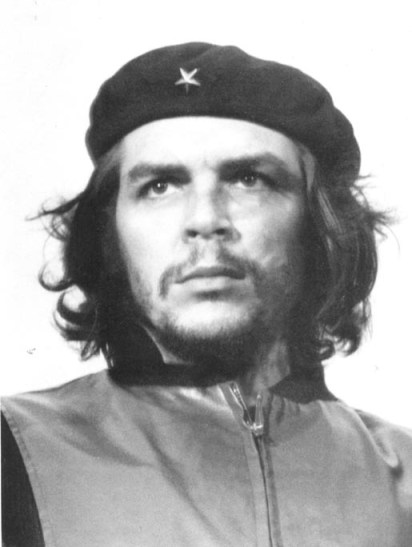
वह तस्वीर चे ने खुद कभी नहीं देखी। उस तस्वीर से उसके छविकार ने कभी एक पैसा नहीं कमाया। मगर दुनिया के हर कोने में आज वह छवि मौजूद है। विद्रोह और क्रांति के एक सशक्त प्रतीक के रूप में। ‘टाइम’ पत्रिका द्वारा चे गेवारा को पिछली सदी की सौ हस्तियों में शरीक करने से बहुत पहले वह छवि दुनिया में सबसे ज्यादा छपी तस्वीर घोषित हो गई थी। Continue reading चे का चेहरा: ओम थानवी

When rape survivor becomes victim: Sherin B.S.

SHERIN B.S. writes from Hyderabad: There is a constant demand for a change in the terminology from ‘rape victim’ to ‘rape survivor’ in the agenda of feminist concerns in discourses related to rape. But beyond the feminist investment on surviving rape, a systematic reading of public discourses presents the traumatic sustenance of layers of violence that follows rape. The Suryanelli girl has survived rape, but the violent experience of life after rape perpetrated by systemic structures of patriarchy places her at the receiving end of a system that consciously alienates, humiliates and hunts her down.

While referring to the Suryanelli rape case there are two kinds of discourses circulated widely. One is the question of legality of the crime involved, with a heavily prejudiced and unsympathetic legal frame work attempting to frame the girl as an eternal victim subject for whom justice is almost impossible, mediated through parallel machinery of the state, including law enforcement. The impossibility of justice is not the intention of the legal machinery but it comes through the operating forces of judgments, prosecution stands, law enforcing offices like police stations and officers, and questions of evidence, alibis and so on. Continue reading When rape survivor becomes victim: Sherin B.S.

Pakistan ka Jugraafiya: Kyunki Patras

This guest post by KYUNKI PATRAS is in Roman Urdu.
KYUNKI PATRAS ka yeh mazmoon Roman Urdu mein hain.

Pakistan samundr-e-kufr mein aik roshan jazeera hai. Continue reading Pakistan ka Jugraafiya: Kyunki Patras

An undivided history of Punjab’s Partition: Ajay Bharadwaj

This is a book review by AJAY BHARADWAJ of an authoritative new book on the Punjab’s Partition by Prof Ishtiaq Ahmed. If you have any questions about the book or about the Partition in general, please leave them in the comments section and we will soon put them to Prof Ahmed.

images
The Punjab Bloodied, Partitioned and Cleansed
By Ishtiaq Ahmed
Rupa Publishers, Delhi; 2011, 754 pp., Rs 995

Ishtiaq Ahmed claims that his work is “the first holistic and comprehensive case study of the partition of Punjab” (p.xlv); he has lived up to it admirably.  A study of rigorous scholarship, with painstaking fieldwork on both sides of the divide, The Punjab Bloodied, Partitioned and Cleansed’ offers unbiased insights into a minefield called the Partition of Punjab. As the title itself suggests, the book delves deep into the most difficult aspect of Partition history which has come to define it — the scale and magnitude of the killings at that juncture.

The primary sources that Ahmed has accessed in his endeavour are equally interesting for a number of reasons. While the historian draws extensively from the classified fortnightly reports (FRs) of the Punjab governors and chief secretaries to the viceroys, he simultaneously pays heed to oral history or the personal narratives of individuals — “witness to or victim of traumatic events” — that he has recorded over a decade and a half. The coming together of the two strands creates an intricate web of high politics and everyday life, which contributes to a layered, richly detailed and immensely moving account of the partition of Punjab — leaving a permanent imprint on the mind of the reader. Continue reading An undivided history of Punjab’s Partition: Ajay Bharadwaj

Ilyas Masih wants to stay in the dustbin: Saad Sarfraz Sheikh

This slideshow requires JavaScript.

SAAD SARFRAZ SHEIKH sends us this photo essay from Lahore: On 9th March, 2013, I saw an entire neighborhood burn right in front of my eyes. All I could do was watch, as the houses fell and their residents watched in vain.

And now, there are burnt teddy bears and dolls, broken doors and melted buckets stuck on the floor. It seems I am on fire.

Nasreen’s defunct washing machine is now as black as the night. Her child sits on it and weeps. Like a surgeon, she salvages the motor and tells me that it could still work. But her microwave, she tells me, is a painful puddle on the floor. Continue reading Ilyas Masih wants to stay in the dustbin: Saad Sarfraz Sheikh