Category Archives: Bad ideas

Science and Modernity : Ravi Sinha

Guest post by RAVI SINHA

Science and modernity are widely considered among the most celebrated features of contemporary human civilization. Increasingly they are taken as the defining elements that distinguish our times from the times gone by. At such a sweeping level, there can be many other ways to characterize the contemporary. One can, for example, refer to capitalism, market, globalization, democracy or nation-states. One can also include various critiques of capitalism and the widespread resistance to its hegemonic and imperialistic avatars among the characteristic features of our times. Such characterizations, however, belong to a layer of historical reality that is more systemic than civilizational. Science and modernity, especially when taken as a correlated pair, characterize our times at a deeper level. They have, so to speak, seeped into the subterranean layers of contemporary historical reality.

On the face of it, such an assertion would appear to be far removed from the actual state of affairs in the real world. It would be rare, for example, to find a person whose beliefs and practices are fully consistent with established precepts of science. Such a search would be a fruitless endeavour, more or less, in any society on the planet. A similar anomaly is apparent in the case of modernity too. One can safely say that an overwhelming majority of humans in the contemporary world does not live by the canons or conventions of modernity. While few may be completely untouched by the laws and institutions of a modern polity or by the processes and pressures of a modern economy, most live by traditions and practices that do not sit well with basic attributes of modernity. Continue reading Science and Modernity : Ravi Sinha
Back to ‘family’ at CDS – How to push false pride under the carpet! Anonymous

This is a guest post by Anonymous

I went to the CDS campus today hearing of the great tumult there, news of which has been appearing off and on in the press. I was just curious. I know personally one of the SEWA ladies; she told me her version of events. The students, of  course, have been venting their ire amply. In the past few days, I have also seen many of their comments in FB which made me want to puke, partly because of the fact that the faculty members who they revile now were fawned upon just a few days back. Normal people cannot help marveling at such extraordinary ability to reverse emotions towards the same object and at the same time, land on all four emotional feet. Continue reading Back to ‘family’ at CDS – How to push false pride under the carpet! Anonymous

Sinful liberals and the war against jihadi terror: Manisha Sethi responds to Praveen Swami

Guest post by MANISHA SETHI: It has been seven months since the Jamia Teachers’ Solidarity Association brought out its report, Framed, Damned, Acquitted, chronicling in detail how the Delhi Police’s Special Cell implicated innocents – former militants, police informers, businessmen, and just ordinary, unlucky men – as terrorists. It is one of the few documents that lends evidentiary credence to the widespread sense amongst Muslims that they are being targeted in the war against terror. Apologists for the police and investigative agencies however do not tire of contesting its conclusions, namely that there is a systemic and systematic bias against minorities when it comes to terror investigations. What bias, they ask. As does our chief National Security ‘analyst’ Praveen Swami, who has stressed that “liberals are compromising the war against jihadi terror“.

Could such ‘analysts’ be echoing the sentiments of a judge of the Allahabad High court, who less than two decades after India gained independence, noted, that “in the entire country there is not another criminal force whose misdeeds can come anywhere near the list of crimes of that organised body called the Indian Police force” (All India Reporter, 1964, Vol. 51, 702). Do they mean, that our extraordinarily brutal police force is even-handed in its application of cruelty across the spectrum of our citizenry, and is not especially biased against the Muslims, or Dalits, adivasis and so on?

Continue reading Sinful liberals and the war against jihadi terror: Manisha Sethi responds to Praveen Swami

Gandhi’s fourth monkey: Suvaid Yaseen

Guest post by SUVAID YASEEN: Incredible India is a land of promises. Amnesia and half narratives. Selective remembrance and deliberate forgetting. The national interest is incredibly important. And everything is allowed in this war.

Gandhi’s – the father of the nation – maxim of bura mat kaho, bura mat suno, bura mat dekho (don’t say evil, don’t hear evil, don’t see evil), interestingly forgets to say bura mat karo (don’t do evil). So, you can do it, and forget it. Gandhi should smile. And his monkeys can make merry.

Mohammad Yasin Malik, the Jammu Kashmir Liberation Front commander turned ‘Gandhian leader’ must know this irony very well.

When, in the early nineties, the guns started ringing, Kashmiris were told that they should leave the path of the armed struggle and have a peaceful agitation, and they would be listened to, by India and by the international community. Continue reading Gandhi’s fourth monkey: Suvaid Yaseen

On higher education in India: Saattvic responds to Thane Richard

This is a guest post by SAATTVIC

Hi Thane,

I recently read your piece for Kafila, which was subsequently reproduced in part in the Hindu. I studied economics there as well, batch of 2006. I subsequently went on to read for an MPhil in Economics at Oxford.

Good on you for writing that piece. It raised lots of questions about our education system, and I agree with a lot of what you wrote (and share the same dismay at the dictation sessions from one particular professor you referred to).

There’s just a few things that I’d like to say, but before I say them let me say that none of this comes from being ‘nationalist’ or ‘patriotic’ in the slightest – just as you spent three years studying, working and paying taxes in India, I spent five studying, working and paying taxes in the UK, and I would like to believe that doing so has given me a bit of a world view of these things. Moreover, my area of interest is education economics, which is what my research focused on. Continue reading On higher education in India: Saattvic responds to Thane Richard

Shahbag no imperialist conspiracy, Mr Umari

Image

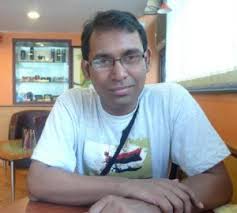
Photograph : Martyr Ahmed Rajib Haider

GUWAHATI: The echo of the Shahbag protest in Bangladesh was heard about 200 miles away here on Sunday with citizens, under the banner of Janamat, expressing solidarity with protesters in that country. Janamat, a Guwahati-based socio-cultural body which organised the solidarity meet here, said that the issue raised by the Shahbag protesters is relevant to India in general and Assam in particular because both the countries’ secular and democratic fabrics are threatened by communal forces.

Solidarity meet in city for Shahbag protest

TNN Apr 29, 2013, 09.35AM IST

Representatives of different Gonojagoron Mancha across the country on Friday suggested spreading its activities to grassroots level to aware people about its demands. They urged all to be united to fight against Jamaat-Shibir and move forward with a view to realising their demands …Around 300 representatives from 167 gonojagoron manchas from seven divisions attended the daylong representative conference at Senate Bhaban of Dhaka University to express their views and suggestions to strengthen the movement.

Imran H Sarkar, spokesperson for the Gonojagoron Mancha, announced a mass rally at Mymensingh on May 18 and a grand rally at Projonmo Chattar in Dhaka on May 31 at the end of the conference.

(The Daily Star, May 3, 2013)

Maulana Syed Jalaluddin Umari, President of Jamaat-e-Islami Hind, (Born in 1935), seems to be a learned man, at least that’s what his biographical details tell us. Elected for the second time as Ameer (President) of the Jamaat he is known to have ‘authored more than thirty books’ and is ‘considered an ‘authority on human rights in general, and women and Islamic family system in particular’. Interestingly, despite his long innings in social-political life and exposure to the outside world his understanding of some crucial developments in this part of the subcontinent seems to be at variance from what can be said as a general consensus around the issue.

The manner in which he and the organisation he leads reacted to the recent developments in B’desh, the emergence of what is known as Shahbagh movement – the spontaneous movement initiated by youth seeking ‘exemplary punishment to the war criminals’ and banning of ‘politics based on religion’ – is an indicative of this disconnect between what Maulana Umari and the organisation he leads thinks and what actually happened.

Continue reading Shahbag no imperialist conspiracy, Mr Umari

Of Angry Young Students and Education in India – A Response to Thane Richard: Aritra Chatterjee

This is a guest post by ARITRA CHATTERJEE: In his response to the article by some students of St. Stephen’s College, Thane Richard has raised a set of questions about the college, about the students participating in the present movement, about education in India and students’ voice in shaping education. He is critical about what he calls the lack of quality education, of a system where education is primarily about rote learning and conformity to structures of authority; in such a situation the promise of a good liberal arts education remains a mere promise and students migrate to the West in search of it. He also rues the lack of students’ voice in the education system, rhetorically asking, “Do students have any right?” He welcomes the students’ fight against the oppressive regime at St. Stephen’s College but views it as a movement that is too little too late and even that in “the wrong direction”. I shall respond to his views at two levels – at the level of education in the country as a whole, and that of the present movement at St. Stephen’s College. Continue reading Of Angry Young Students and Education in India – A Response to Thane Richard: Aritra Chatterjee

Evicting the Gandhians: Justin Podur interviews Himanshu Kumar

Himanshu Kumar

Himanshu Kumar is a Gandhian activist who, together with his wife, ran the Vanvasi Chetana Ashram in Dantewada, Chhattisgarh for 22 years. He learned the local adivasi language (Gondi) and worked through the Ashram to help adivasis access their rights under the law. Starting in 2005, during the murderous Salwa Judum campaigns of vigilante groups against the adivasis of Bastar in Chhattisgarh, Himanshu worked to try to get villagers back to their homes, get people falsely accused out of jail, and win justice for the victims of police and vigilante crimes. His Ashram was eventually bulldozed and he was forced to move to Delhi, from where he continues to try to follow up with legal cases on the state’s treatment of the adivasis. JUSTIN PODUR interviewed him there in February 2013.

JP: When I first got here, you told me you would probably be in jail shortly. Maybe we should start with that story? Continue reading Evicting the Gandhians: Justin Podur interviews Himanshu Kumar

Is there anything like ‘copying’ fairly?: Rajshree Chandra

photocopy

Guest post by RAJSHREE CHANDRA: In the backdrop of the on going battle in the Delhi High Court, between publishers (OUP, CUP and Taylor and Francis) and Rameshwari photocopiers-Delhi University (next hearing 8th May, 2013), there are two perspectives to which attention needs to be drawn. The first, of course, is a legal one which allows for course pack to be compiled for dissemination of course and research material, provided they adhere to stipulated norms. What are these stipulated norms? Have DU, and its network of photocopying, infringed these legal guidelines or even transgressed internationally evolved, legally acceptable norms of “fair use”. Continue reading Is there anything like ‘copying’ fairly?: Rajshree Chandra

What Rediff Could Have Done to Support Kavita Krishnan Against Rape Threats: Anja Kovacs

Guest post by ANJA KOVACS: Imagine a TV station inviting a guest and giving the audience the opportunity to freely ask questions, with the guest deciding which questions to respond to. Imagine a member of audience then threatening the guest with rape, and the TV station’s representative responding by simply passing on the microphone to the next person, leaving the guest to fend for herself. Imagine the TV station then also refusing to provide any assistance to the guest following the incident. Outrage would, justifiably, ensue. Last week, Rediff treated a guest in much this way – during a Rediff-organised online public chat.

On 24 April, Kavita Krishnan, Secretary of AIPWA and a leading figure in the anti-rape protests that have been rocking the capital since December 2012, participated in a public chat at the invitation of Rediff. The topic of the chat was the rising incidences of rape and violence against women in the country. During the chat, Krishnan was repeatedly threatened with rape by a participant whose handle read ‘RAPIST’. RAPIST wrote: ‘Kavita tell me where I should come and rape you using condom’. Earlier the same person had made comments such as ‘Kavita tell women not to wear revealing clothes then we will not rape them’, to which Krishnan had in fact responded. All comments by RAPIST were written in capital letters.

Continue reading What Rediff Could Have Done to Support Kavita Krishnan Against Rape Threats: Anja Kovacs

Islamo-fascists in Bangladesh – Whose side are you on?: Javed Anand

 Guest post by JAVED ANAND

[This piece by Javed Anand  was sent to a major daily but not published for undisclosed reasons]

Leaders and the led from a host of rightwing Indian Muslim organisations – Jamaat-e-Islami Hind (JEI), All India Muslim Majlis-e Mushawarat, All India Milli Council, All Bengal Minority Youth Federation, West Bengal Sunnat Al Jamaat Committee included – have not been sleeping well in the last several weeks. Their angst is on two counts.
One, the International Crimes Tribunal (ICT) set up by the ruling Awami League in 2009 to investigate and prosecute suspects for the genocide committed in 1971 by the Pakistan army and their local collaborators, Razakars, Al-Badr and Al-Shams during the Bangladesh Liberation War of 1971.
 
Two, the “atheist conspiracy” to banish Islam from Bangladesh that is supposedly behind the lakhs who have been thronging Shahbagh.
So far, nearly a dozen men including nine currently top-ranking leaders of the Jamaat, the largest Islamist party in Bangladesh, have been held guilty and served stiff sentences. According to the sleepy-heads, the ongoing trials are a sham, a mere cover for the ruling Awami League’s “vendetta politics” against the Jamaat and its youth wing, Islami Chhatra Shibir. That the Jamaat had any hand in the genocide is news to them. Continue reading Islamo-fascists in Bangladesh – Whose side are you on?: Javed Anand

May Day – Let us Talk ‘Degrowth’

“I saw men on television (trade union stars, Cabinet Ministers, left-wing think tank advisers) visibly hystericized by talking economics: eyes would glaze, shoulders hunch, lips tremble in a sensual paroxysm of ‘letting the market decide’, ‘making the hard decisions’, ‘levelling the playing field’, ‘reforming management practices’, improving productivity’…those who queried the wisdom of floating exchange rate, deregulating the banks, or phasing industry protection were less ignored than washed away in the intoxicating rush of ‘living in a competitive world’ and ‘joining the global economy’.” (Meaghan Morris cited in J K Gibson-Graham, The End of Capitalism (As We Knew It), University of Minnesota Press, Minneapolis and London, 2006: 92)

Degrowth, courtesy extraenvironmentalist.com

Meaghan Morris is talking about Australia, but she could be talking about anywhere in the world and the description would be perfect. This is how capitalism is performed – literally and figuratively. Eyes glaze, shoulders hunch, lips tremble, as policy-makers, media personalities, economists and even those supposedly at the left end of the spectrum, talk about taking hard decisions. Manmohan Singh, Montek Singh Ahluwalia, P. Chidambaram, to be sure – but also Narendra Modi, LK Advani and even Buddhadeb Bhattacharya (now waiting in the wings, hoping his act isn’t over yet), Pinarayi Vijayan…we could go on.

This May Day, the day of international solidarity of labour, comes to us in some very special circumstances. It comes against the backdrop of heightened attacks on workers’ livelihoods and on their fundamental right to organize and their right of collective bargaining. We have covered and commented on some of the recent workers struggles in the last couple of years in particular on Kafila (here, here, here and here). The most recent post on the attack – on the NOIDA workers tells a story of the creation of luxury living amidst destitution, a story of super-exploitation by the real estate mafia, a story of non-payment of wages and of repression and violence when the workers demand no more than their rightful due.

This May Day also comes as the countdown to the impending 2014 general elections begins and there is frenetic activity in corporate circles and their media houses to determine the political agenda in keeping with their interests. The ‘policy paralysis’ that  afflicts the UPA government, they all sing in chorus, needs to be quickly overcome  – and of course, as has been pointed out by commentators, ‘policy paralysis’ does not mean that Food Security should be rapidly ensured or the Lokpal idea should be immediately put into practice. Rather, it means that the obstacles to growth should be immediately removed. Hard decisions must be taken!

Continue reading May Day – Let us Talk ‘Degrowth’

Disciplining at Tuljapur: A First-hand Experience : Sunandan K N

This is a guest post by SUNANDAN K N

From the earlier article by Hartman De Souza and comments here on recent incidents at Tata Institute of Social Science campus at Guwahati, we had a glimpse into how a Deemed University heavily funded by the UGC and by both the Central and State governments could conduct its business in totally autocratic and authoritarian ways. Even with the risk of repetition I want to share my first-hand experience at another extension counter of TISS Mumbai which is TISS Tuljapur where exactly same events unraveled six months ago. Continue reading Disciplining at Tuljapur: A First-hand Experience : Sunandan K N

Ground Report on the Real Estate Mafia’s Reign of Terror in Noida: Bigul Mazdoor Dasta

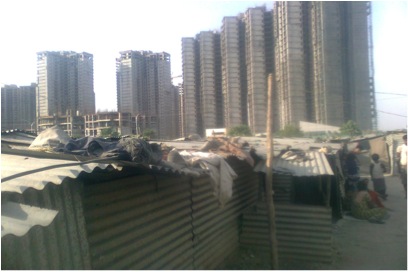
This is a guest post by Bigul Mazdoor Dasta  Noida is one among those places which are highlighted as the hub of the ’emerging’ and ‘shining’ India. The glittery shopping malls, world class expressway, flyovers, F1 International circuit, luxury apartments, villas etc. are cited as the symbols of India’s ‘growth story’ and Noida has all of these. For the last couple of decades, the mainstream corporate media has been busy selling this growth story to the emerging urban upper middle class; in the process making them a customer of artificially inflated dreams such as having one’s own luxurious house. But, curiously, the harrowing stories of those whose labour power is responsible for this so called development are conspicuous by their absence in the mainstream media’s narrative. The labourers come into the news only when some untoward incident happens and they are immediately held responsible for any such incidents without carrying out any investigation. One such horrendous incident took place on April, 28 at one of the hundreds of construction sites in Noida in which the security guards of the site opened fire on the labourers and in the process injuring some of them. On the morning of the April 28, the workers of the 3C Lotus Panache company’s constructions site at Noida’s Sector 110 witnessed the naked reign of terror by the company’s management. At the beginning of the morning shift at around 8 a.m., the workers had reached the construction site to join the construction work of the multi-story apartment complex, but they had to stand in a big queue because the security guards at the gate were taking a long time to intensively check each worker and make an entry. When some workers protested against this lax attitude of the guards, saying that they had to listen to the supervisor’s abuses if they were late even by one minute, a heated exchange took place between the security guards and workers and suddenly the guards started firing indiscriminately over the workers. As per the media reports, two workers were injured, but when a team of Bigul Mazdoor Dasta visited the workers settlement adjacent to the construction site, some workers said that the number of the injured workers could be four which includes a child as well and one of the workers is seriously injured and his life is in danger. As per the records of the district hospital in Noida, only one worker was admitted on April 28. Other workers were admitted to some private hospital.

Bigul1

The workers settlement adjacent to the construction site where the incident took place

Continue reading Ground Report on the Real Estate Mafia’s Reign of Terror in Noida: Bigul Mazdoor Dasta

Academic Excellence and St. Stephen’s College: A response by Thane Richard

This is a guest post by THANE RICHARD

I recently read an article in Kafila – more like an angry, reflective rant – written by some students from St. Stephen’s College in Delhi.  To quickly summarize, the piece criticized the draconian views of the Principal of St. Stephen’s College regarding curfews on women’s dormitories and his stymying of his students’ democratic ideals of discussion, protest, and open criticism.  More broadly, though, the article’s writers seemed to be speaking about the larger stagnant institution of Indian higher education, overseen by a class of rigid administrators represented by this sexist and bigoted Principal, as described by the students.  The students’ frustration was palpable in the text and their story felt to me like a perfect example of what happens when an unstoppable force meets an immovable object.  Except Indian students are not an unstoppable force.  Not even close. Continue reading Academic Excellence and St. Stephen’s College: A response by Thane Richard

Horn Tata Not OK! — Hartman de Souza

This is a guest post by HARTMAN DE SOUZA

If you were to say that the right we give to those younger, to be contrary and different to those older, is not just their right after they turn eighteen, but that it is our need to let them speak so that learning continues, you would probably get a bigwig from the Tata’s sensing the USP of that and  using it in his next PPP to jack himself up the ladder.

So it’s a little puzzling that the Tata Institute of Social Sciences (TISS), Mumbai, a major beneficiary of the munificence of the Tata’s would not only fail to see the veracity of that statement, but appear to actively work against it.

Let me give you the background and context to that connection, and indeed to this post: Continue reading Horn Tata Not OK! — Hartman de Souza

The Runaway Union: Notes on Marikana and the National Union of Mineworkers

I have been interested in forms of organisation in general, and unions in particular, for some time now. On a recent trip to South Africa I ended up profiling the National Union of Mineworkers for The Hindu, and was intrigued to learn that most unions in South Africa have their own investment companies run, with varying degrees of success, by professional money managers. The following piece attempts to map how one of South Africa’s most powerful unions was transformed by its encounter with high-finance. I would be interested to hear what Kafila readers think of this.

Emperors Palace casino — edifice of dreams, self-proclaimed Vegas of Africa with its 1,724 slot machines, 68 gaming tables, and giant fibreglass statues of Egyptian pharaohs — is a five-minute drive from Johannesburg airport.

In a country of desperate inequality, the casino offers one way past the seemingly impermeable barriers of race and class. Yet, Emperors Palace is a bet in itself, a wager, placed by the National Union of Mineworkers (NUM) on behalf of its many thousand members that money pulled from gamblers’ pockets in Johannesburg will find its way past the city’s smart suburbs into the streaked overalls of men crouched at a faraway mine face thousands of feet underground.

The casino is part of a diverse portfolio, with a net asset value of just over R3 billion (Rs.1,786 crore), managed by the Mineworkers Investment Company (MIC), an investment company set up by NUM, one of South Africa’s largest and wealthiest unions.

Till recently, NUM had 320,000 members, a cash surplus of R134.4 million, and was pivotal to South Africa’s resource driven economy: mining employs half a million workers and accounts for 10 per cent of Gross Domestic Product and 38 per cent of all exports. MIC is one of the most successful investment companies in the country and disburses R45 million every year as dividends to a union-controlled trust to finance education bursaries for the children of mineworkers. NUM is also part of the national government through the Congress of South African Trade Unions (COSATU) federation. COSATU, the African National Congress (ANC), and the South African Communist Party form South Africa’s ruling alliance.

Read the rest of the article here

A Report from the Protests: Kavya Murthy

Guest post by KAVYA MURTHY.

In the middle of the day a few days ago, a group of around ten people held hands and blocked the traffic on the road opposite the police headquarters at ITO, Delhi, protesting and calling for the removal of the Police Commissioner after a young, young child  had been raped and the police had done nothing, not file an FIR, nor act.

In this instance, it was not only the brutality of the act that had shaken us up. A young child, five years of age, raped by neighbours, bad enough to hold one’s head in shame – yes. There was outrage. But there was also outrage that a police officer had tried to bribe the family of the girl – with two thousand rupees – to avoid filing an FIR. Then, to add insult to injury, a young woman protester slapped repeatedly by an impatient policeman, an Assistant Commissioner of Police no less, when she tried to get inside the hospital where the child was in a critical condition.

Why were we there, that afternoon outside the Delhi Police Headquarters? What had prompted people to gather at the AIIMS metro station the day the child was shifted there for care, what was being said, who was being addressed? Was it  a silent vigil, in hope that this little child does not meet the same fate as the 23 year old woman gang raped just a few months ago? Was it also to say,  this is not the first time it is happening after that fateful day on December 16, 2012? 363 rapes already in just around the NCR the last few months, and here we are again, not exactly happy to be standing outside in outrage thinking of a little girl with bottles in her vagina and terrible infections. Continue reading A Report from the Protests: Kavya Murthy

The Monopoly of Knowledge: Rakshita Swamy

This is a Guest Post by RAKSHITA SWAMY

I recently was reading a PhD dissertation that was aiming to deconstruct the movement that eventually led to the passing of India’s historic Right to Information Act. The study involved unpacking recent agendas of good governance and placing the RTI Act in the center of this reform agenda. By attempting to stitch the narrative of the role played by different factors, the convergence of which led to the eventual passing of the Act, the author tried to compare one version of the narrative, with the other, thereby pronouncing a judgment on what actually may be the “truth”. It was while reading this particular piece of scholarly research, funded by one of the leading Universities of the world, that I was struck by the thought of what purpose we imagine academic research in the field of social science to actually serve. Does it serve to throw light on aspects that are not discussed enough? Or is it meant to pose one set of facts versus the other, and facilitate the reader in coming to a conclusion on what actually can be deemed as a fact. Can research emanating within the broad field of poverty alleviation, development and instrumentalities of governance ever seek to really influence policy making, or even public action? This essay makes a fledgling beginning in attempting to answer this question.   Continue reading The Monopoly of Knowledge: Rakshita Swamy

Of campus democracy and academic excellence: Students of St. Stephen’s College

This is a guest post by some STUDENTS OF ST. STEPHEN’S COLLEGE, Delhi

Over the past one year Delhi University has been subjected to significant changes in the name of academic excellence, and many more changes are in the offing, like an un-thought-out introduction of the four-year undergraduate course. Teachers and students who have voiced concerns (and protested) have been harassed and not paid any heed to. One can witness a general shrinking of democratic space, and the space for dissent within the university. It is almost as if democratic decision making is an enemy of academic excellence, and thus needs to be curbed! A sharp contradiction between campus democracy and a vaguely defined academic excellence has come up recently in some issues pertaining to St. Stephen’s College. In this article, we – some students of the college would like to draw attention to the injuries inflicted on campus democracy, and the questions thrown up about the very meaning of academic excellence in the process.    Continue reading Of campus democracy and academic excellence: Students of St. Stephen’s College

Same Difference? The Politics of Development in Rajapakse’s Sri Lanka and Modi’s Gujarat: Anonymous

This is a  guest post by ANONYMOUS

President Mahinda Rajapakse in Sri Lanka and Gujarat’s Chief Minister Narendra Modi in India have positioned themselves as champions of development and good governance. Hardly a day passes without a media comment in the two countries on their respective development achievements. By and large, claims and counter-claims regarding development in Gujarat and Sri Lanka have tended to focus on mobilising data and ‘facts’ pertaining to a range of vital indicators—economic growth, levels of foreign investment, per capita income, employment, industrial or agricultural output, housing, rural infrastructure, roads, electrification, social welfare allocations, etc.

While working with development data is useful and necessary, an approach that relies too heavily on them tells us little about why development matters to the two regimes and how and to what ends it is actually deployed and leveraged by them at this point in time—the focus of this commentary. The question is not just what Modi and Rajapakse are doing for development but also what development is doing for them. Notwithstanding the significant differences between Gujarat and Sri Lanka, as argued herein, there are many striking similarities with respect to how and why Modi and Rajapakse are constructing, invoking and championing the cause of development. Continue reading Same Difference? The Politics of Development in Rajapakse’s Sri Lanka and Modi’s Gujarat: Anonymous