Category Archives: Bad ideas

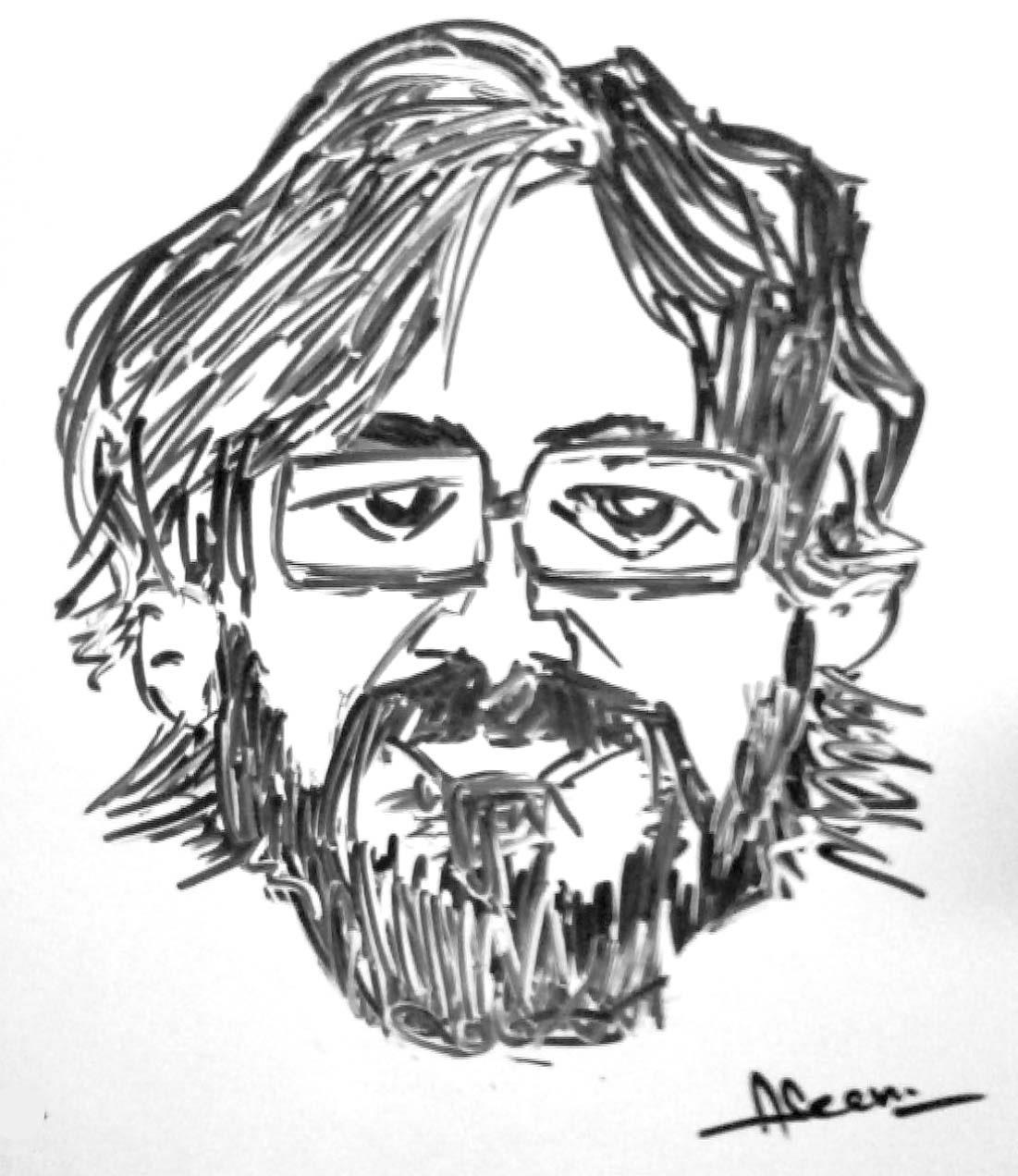
If speaking the truth is sedition then I am guilty of sedition: Aseem Trivedi writes from jail

Aseem Trivedi: self-portrait

This is the text of a statement issued by ASEEM TRIVEDI from inside a jail in Mumbai. Trivedi has been remanded to judicial custody till 24 September for displaying and publishing cartoons that are allegedly seditious, insult national honour and, under the IT Act, are “grossly offensive” and of “menacing character”. An English translation of his letter is followed by the Hindi original.

Friends,

I am a true citizen of this country, not someone who has committed sedition.

If speaking the truth is sedition, then I am indeed guilty of sedition. If raising one’s voice against injustice is sedition, then I am guilty of sedition. If patriotism and the definition of patriotism have changed, then you could say I am guilty of sedition. If Gandhi, Bhagat Singh and Azad were guilty of sedition, so am I.

Even a small child of this country can understand my motive. I oppose the insulting of the people and the Constitution of India. I have been opposing the insulting of the people and the Constitution of India through my cartoons. Continue reading If speaking the truth is sedition then I am guilty of sedition: Aseem Trivedi writes from jail

Ten Reasons Why You Should Sign the Petition at RepealSeditionLaw.in

  1. Section 124(A) of IPC criminalizes the ‘disaffection’ towards the government by words, either spoken or written, or by signs or by visible representations
  2. This 1860 draconian colonial law was created to stifle dissent during colonial rule.
  3. Tilak, Gandhi, Maulana Azad and Annie Besant were convicted under this law
  4. Today, the law is used to suppress legitimate criticisms of the government
  5. Journalists, Human rights activists, political dissenters, public intellectuals, and even farmers and tribals are targetted by this law
  6. The law goes against the inalienable fundamental right to expression enshrined in our Constitution
  7. The law goes against the very nature of democratic process which relies on active consent and dissent/opposition
  8. The law goes against the Universal Declaration of Human Rights, which guarantees freedom of speech and expression
  9. All major world democracies have either repealed this law or discontinued prosecutions
  10. The existence of sedition laws in India’s statute books and the resulting criminalization of ‘disaffection’ towards the state is unacceptable in a democratic society.

To sign the petition, go to RepealSeditionLaw.in

See also:

Naroda Patiya judgement rekindles the death penalty debate in India

The Naroda Patiya massacre in Ahemdabad on 28 February 2002 killed 97 Muslims. It is the massacre infamous for the gory stories of a pregnant woman disemboweled and raped, a 20 day child killed, and so on. If this massacre is not fit to be considered “rarest of the rare,” what is?

It is ironical that the court found the kingpin of the massacre to be a woman, Dr Maya Kodnani, a practicing gynaecologist, a former Minister of State for Women and Child Welfare in the Narendra Modi government! The court came down particularly hard on her, commenting that as a legislator, a representative of the people she had done the opposite of what she was expected to: she helped kill people rather than save them. “She led the mob and incited them to violence. She abetted and supported the violent mob,” the court observed.

However, special court judge Jyotsna Yagnik chose not to sentence the accused to death when he announced the sentencing on 1 September. Her court found 32 people guilty, of whom one is absconding. 7 will spend 31 years in jail, 22 will spend 24 years, Maya Kodnani 28 years and former Gujarat state Bajrang Dal president Babu Bajrangi is to live the rest of his life in jail. Continue reading Naroda Patiya judgement rekindles the death penalty debate in India

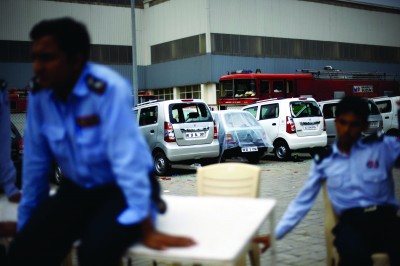
Don’t let him drink water because then he’ll also want to go to the bathroom

Photo credit: Ishan Tankha

My name is… let that be. Maruti Suzuki is out to get me, not because I did anything but because they want to put virtually every worker in jail, even those who belonged to the third shift and were not even present when violence took place in the Manesar factory on 18 July. I was present there and will tell you what happened, but to understand it you will have to let me begin from the beginning. Read more…

Petition to Chief Justice of India – Remove Justice Bhaktavatsala of Karnataka High Court

On August 9, during the hearing of a matrimonial dispute, Karnataka High Court Judge K Bhaktavatsala told a young woman lawyer that she was unfit to argue the matter since she was unmarried. “Family matters should be argued only by married people, not spinsters. You should only watch. Bachelors and spinsters watching family court proceedings will start thinking if there is any need to marry at all. Marriage is not like a public transport system. You better get married and you will get very good experience to argue such cases,” he advised her.

Last week, hearing a case between a separated couple, in which the woman accused her husband of regularly beating her, the judge told the woman, “Women suffer in all marriages. You are married with two children, and know what it means to suffer as a woman. Yesterday, there was a techie couple who reconciled for the sake of their child. Your husband is doing good business, he will take care of you. Why are you still talking about his beatings?”

Justice Bhaktavatsala has shown grave disrespect towards the Indian Constitution, which he is sworn to protect, and which guarantees equal rights to all citizens, men and women. As such, he has revealed himself to be utterly unfit for his high office of responsibility.

Sign the petition asking the Chief Justice of India, Hon’ble Mr. Justice S.H. Kapadia, to remove Justice K Bhaktavatsala from his post for these appalling statements.

Cast Away Caste – Breaking New Ground …

‘Turn in any direction you like, caste is the monster that crosses your path. You cannot have political reform, you cannot have economic reforms unless you kill the monster.’

Annihilation of Caste, Ambedkar

‘If Lenin was born in India , he would not have even  let the idea of revolution come to his mind before he had completely  buried casteism and untouchability’

– Ambedkar

1.

The Indian left today presents a very contradictory picture. As opposed to many left formations/movements in different parts of the world which witnessed decline/3reverses after the Soviet collapse, it has been able to sustain itself and at places even expand itself. Yes, the movement is far from united, there are ruptures and divisions at various levels, which at times even prove deadly, but if one is able to look at the cumulative impact of what is known as left and contrast it with many other countries, situation does not appear that bleak.

It’s sustenance and continuation amongst heavy odds, does not mean that it is not beset with challenges. The challenge of outlining its emancipatory vision of social transformation for 21 st century, devising innovative strategies of mobilisation and rejuvenating itself organisationally still remains. It also needs to reboot itself to address few important issues which are of key importance for any radical restructuring of Indian society and state. Undoubtedly, its failure on this count has cost it heavily. Question of dalit emancipation or the whole struggle for annihilation of caste forms one such core issues which demand serious attention. Continue reading Cast Away Caste – Breaking New Ground …

Saving our heritage

The National Commission for Minorities (NCM) received a letter from the Jamiat-ul Ulama-e-Hind. The letter wanted 31 protected mosques to be opened for prayers. “Although the commission was not very keen that heritage monuments should be opened for prayers, it decided to suggest a joint survey for ascertaining the condition of these mosques.” Officials from the NCM, the Archaeological Survey of India (ASI) and the Wakf Board will carry out the joint inspection according to the suggestion made by the commission in its letter sent to the Ministry of Culture towards the end of July.

This reference made by the NCM needs to be looked at a little carefully, because the issue is not likely to remain restricted to these 31 mosques nor will it remain confined to Delhi. The reference impinges on questions of law and will eventually inform our attitude to the wider question of heritage protection. Continue reading Saving our heritage

Are We Not Alive: Women’s Voices from Kudankulam

Guest post by ANITHA. S

As I sit here in my home village of Idinthikara watching the hot sun light up the waves rolling onto the shores, I think of the news that has hit the world today about the Koodankulam Nuclear Power Plant. All of you must have seen the news that Madras High Court has given the go-ahead for the KKNPP.

When we carried the dead body of democracy and burnt it in the outskirts of our village on Aug15th, 2012, little did we realize that so soon we would witness the real death of democracy. As this last nail is being tightened on our lives, we realize how insignificant has been our voice. But this has only strengthened our vow to be together. Continue reading Are We Not Alive: Women’s Voices from Kudankulam

Copyrights versus The Right to Copy – A Normative Perspective: Rajshree Chandra

Guest post by RAJSHREE CHANDRA

For those not familiar with the recent spate of events at Delhi University; and for those who may have missed Lawrence Liang’s post, here’s a bird’s eye view: Impatient with an old gargantuan University’s obsolete ways, the authorities have attempted a make-over. As in all make overs, the old structure is retained but glossed over with cosmetic changes so as to appear ‘new’. So we have new hip courses, new syllabi content for old courses, new reading lists, new reading packages, new exam system, semesters and so on. Making all transitions possible of course, is a team of make-over artists. At one end of the set up are photocopiers like Rameshwari Photocopy Service located within the renowned Delhi School of Economics and Sociology; and at the other end, we the teachers. Reading material – by way of recommended articles, papers, chapters – was provided to the photocopiers by University faculty, who then made copies of them, segregated them year wise and instruction wise. The first page specified the semester for which the reading material was relevant, the ‘max marks’, the course objective and the syllabus all clearly outlined. Only after they were thus meticulously detailed were they spiral bound with the customary blue plastic cover and voila! Teachers and students alike had accessible reading and teaching material for all the new jazzed-up-courses. Emails circulated by departments instructed the college departments to use and recommend these dossiers; phone numbers of relevant photocopiers were given; and before long an entire chain of dissemination of this ‘new knowledge’ was established. It was all ‘official’. But more importantly, it was affordable, effective and terribly efficient. There was just one problem – it was in violation of the copyright law! The Rameshwari photocopiers were the new pirates!

Continue reading Copyrights versus The Right to Copy – A Normative Perspective: Rajshree Chandra

Quietly censors the nanny state: Mishi Choudhary


Guest post by MISHI CHOUDHARY

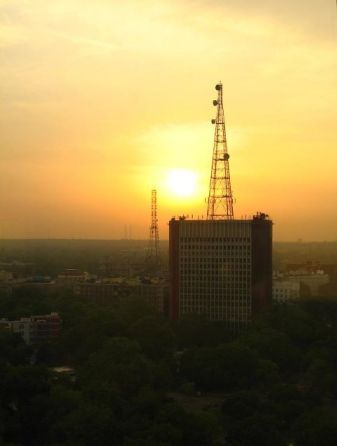
New Delhi’s Sanchar Bhawan, which houses the office of the Ministry of Communications and Information Technology

The recent curbs on social networking websites in India demonstrate the unpredictability of the legal environment, both for businesses and the citizens. Whether its the Government of India’s (GoI) insistence on getting access to corporate emails and text messages sent via BlackBerry devices, or changing stances on “pre-screening” user generated content, the authorities seem to be doing a tap dance around legal issues. The implementation of rules seems surreptitious as they are bent conveniently in the name of “security”. Continue reading Quietly censors the nanny state: Mishi Choudhary

Why is the Indian media building a case for internet censorship rather than against it?

Hundreds of webpages now stand blocked in India, the government has openly been appealing to internet companies to pre- or post-screen content and remove what the government wants it to remove. One Google Transparency Report after another has been revealing how the number one target of the government is criticism of politicians and government. Just imagine what would the Indian media’s response to such censorship have been like had it been hundreds of books or articles we were talking about? Instead of asking Facebook to ‘pre-screen’ our posts, had Kapil Sibal been asking for someone to pre-screen articles in the newspapers, would it not be like the Emergency?

Okay, point taken. Let us not trivialise the Emergency, which entailed jailing of dissidents and forced sterilisation and so on. But still, there’s so much internet censorship in India now that it is surprising that instead of outrage you find the Indian media actually building the case for censorship. What about hate speech, they ask. What about the trolls, Why is there so much abuse on the internet? Continue reading Why is the Indian media building a case for internet censorship rather than against it?

News pornography and mediated cultures of violence: Anirban K. Baishya, Shaheen S. Ahmed and Amit R. Baishya

Guest Post by ANIRBAN K. BAISHYA, SHAHEEN S. AHMED and AMIT R. BAISHYA

Satyamev Jayate, the popular Aamir Khan-helmed TV show, aired an episode in May this year that praised northeast India [an unfortunate “directional category” (Barbora) that homogenizes a complex, polyglot region] for its virtual absence of dowry-related crimes and its general “liberalism” on gender issues.  Subsequently, one saw a virtual deluge of “Proud to be from the northeast”- type of messages on social networking sites such as Facebook.  June and July, though, were cruel and dispiriting months that belied such declarations of identitarian pride, especially for people from Assam. Continue reading News pornography and mediated cultures of violence: Anirban K. Baishya, Shaheen S. Ahmed and Amit R. Baishya
Fair Use and Course Packs: A Comparative Perspective : Danish Sheikh

Guest post by Danish Sheikh

The first day of law school, we were handed 5 sets of non-aesthetically pleasing  spiral bound sheets of paper.  They contained a jumble of articles from eclectic sources; varied in size from a 150 pages to this-is-going-to-sprain-my-arm; and when relied on by the instructor, were absolutely indispensable.  The course packs were provided by the university at a reasonable fee, and soon became an integral part of our legal education.  True, there were occasional classes where a textbook was imposed on you by the professor, but again, it was often possible to track down a helpful senior’s tattered copy. Only if you got truly unlucky did you have to deplete your dwindling student resources to fork out money for a 500 page hardbound tome.

Continue reading Fair Use and Course Packs: A Comparative Perspective : Danish Sheikh

Oxford and Cambridge University Publishers v. Students of India

This is an op ed which was written for the Indian Express  and addresses some of the key issues in the ongoing copyright case filed against Rameshwari Photocopy services and the Delhi university. I am reposting  it here for now. It is a little truncated because of the word limit for newspapers but will post a longer version with comparisons from other countries.

Oxford and Cambridge University Publishers v. Students of India

 Accompanying a team conducting a raid against a photocopying shop outside AIIMS a few years ago a copyright lawyer had a moment of revelation akin to the apocryphal story of St Paul’s conversion  on the road to Damascus when Paul was asked by God “Why do you persecute me?”. In this case even as the photocopier was being arrested he defiantly turned to the lawyer and said “If I don’t sell these photocopies where do you think your doctors are going to come from? The lawyer in question is now a leading expert on copyright and public interest and one wonders whether a similar question posed to the lawyers representing Oxford and Cambridge University Press would evoke a similar change of heart especially if they considered their own route to becoming lawyers. The fact of the matter is that in most academic disciplines textbooks are extremely expensive and unaffordable for the average student and if one attempted to buy all the books which are prescribed for a course it would mean that only very few privileged students would afford an education in India. Continue reading Oxford and Cambridge University Publishers v. Students of India

The Hidden Injuries of Race: A Response to Lawrence Liang: Rijul Kochhar

Guest post by RIJUL KOCHHAR

Turn on the television any given day now, and you will be greeted by the news-media in unison informing you about the psychosis of fear—“north east fear/scare” is a useful shorthand—that seems to have gripped some of our fellow citizens. The numerous characterizations, all of which are variations on a theme, are not only ill-informed, they are also wholly inadequate and directionless. What does it mean to say that north-easterners are in the grip of fear, running away herd-like to their corners of the home-world? The bovine image, though useful in the sense of visualizing the sheer numbers involved, doesn’t allow us to think beyond.

This piece is an attempt in that direction. The fear is real, it is palpable on the railway platforms and at airports of major cities, and it surely has had the potency to disrupt a large number of people in the steps and motions of their daily lives. Others, including on Kafila, have written about the contentious issue of borders and migrants, of numbers and mutable identities; The Hindu has featured a series of interesting articles under the Sunday Story section, delineating the central role of information-technology and communication—technology whose role itself has radically transmuted amidst the last few months of the troubles, where we have seen the emergence of the cellphone screen as the new, unchartered frontier of radical, affective simulacra. Fingers have been raised, especially by our ever-articulate military-intelligence-scholarly community, against the customary foreign hand, and many of their accusations, might, in the days ahead, speak their own truth.

Continue reading The Hidden Injuries of Race: A Response to Lawrence Liang: Rijul Kochhar

An Analysis of the Latest Round of Internet Censorship in India (Communalism and Rioting Edition): Pranesh Prakash

Guest post by PRANESH PRAKASH

How many items have been blocked?

There are a total of 309 specific items (those being URLs, Twitter accounts, img tags, blog posts, blogs, and a handful of websites) that have been blocked. This number is meaningless at one level, given that it doesn’t differentiate between the blocking of an entire website (with dozens or hundreds of web pages) from the blocking of a single webpage. However, given that very few websites have been blocked at the domain-level, that number is still reasonably useful. Continue reading An Analysis of the Latest Round of Internet Censorship in India (Communalism and Rioting Edition): Pranesh Prakash

How Delhi paper ‘Sahafat’ fell for fake images of violence in Burma

Yousuf Saeed wrote in Kafila on 13 August how fake images of violence against Muslim Rohingyas in Burma – images that were in fact, of, say, earthquake victims. In his post he mentioned how even some Urdu papers in India were fooled by the images,which provoked violent protests in Mumbai,and recently, Lucknow.

Now, CM Naim describes in detail how Sahafat, an Urdu newspaper published from Delhi, fell for these fake images. Naim translates large parts of two charged-up articles in Sahafat, one of which calls for the boycott of Buddhists in Delhi. One article was published on 10 August and one on 16 August. As Naim says, it’s time for the Press Council of India to take note. One excerpt: Continue reading How Delhi paper ‘Sahafat’ fell for fake images of violence in Burma

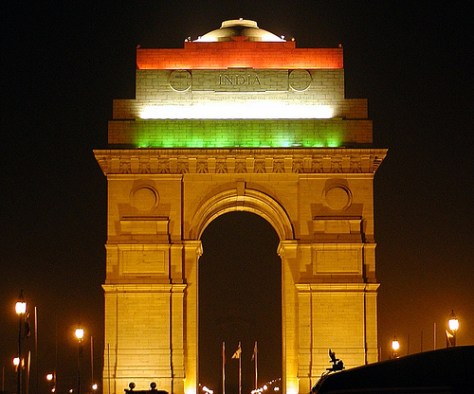
India Gate vs. India

August 15 marked the 65 anniversary of India’s Independence from foreign rule and colonialism. September 21 will mark the 155 anniversary of the recapture of Delhi by the British and the end of the first valiant rebellion against foreign rule.

Between May 11, 1857 and May 21, 1857, Delhi was free of the British. The rebel soldiers had chosen Bahadur Shah Zafar as their leader and since the Red Fort was where he lived, the Lal Qila came to be seen as the centre of the First War of Independence. Delhi was seen as the heart of India and Lal Qila was the heart of Delhi and that is why once the British recaptured Delhi they wasted no time in arresting Bahadur Shah Zafar and quickly moving into the fort. Continue reading India Gate vs. India

Kashmir civil society express concern over Amarnath construction plans

The press release below has been jointly issued by a number of eminent citizens and civil society members in Kashmir. Full list of signatories at the end.

Srinagar, 18 August 2012: Civil society groups of Kashmir express their serious concern over the recent Supreme Court directions to the J&K government for undertaking civil engineering works leading to construction of roads and other infrastructure in the environmentally fragile Himalayan habitat around the Amarnath cave shrine in the valley of Kashmir. This move comes even as the committee formed by the Hon’ble court for recommending ways and means to promote safe journey of pilgrims to the cave shrine is yet to submit its report.

At a joint meeting of various civil society groups held on 16 August at Srinagar, the following resolution was adopted: Continue reading Kashmir civil society express concern over Amarnath construction plans

Strangers in a Place They Call Home: Lawrence Liang

Publishing a post for Lawrence Liang who is unable to do so himself at the moment. This piece also appeared in the Hindu this morning. I flew in myself from Bangalore last night and scenes of departure, though not nearly similar to those at the train stations, were palpable at the airport as well. Let me add to Lawrence’s words below three more thoughts that are still forming in my head. The first is the weakness of the word of public institutions and officers in our cities and how little solace they seem to offer or reliability they seem to have, particularly for “minority” residents — (how that word seems to have lost all other meaning other than identifying targets). Panic is also evidence of the fragility of structures that are meant to protect difference rather than just tolerate it. As Lawrence says below, the empirics do not negate how real the fear itself is.

The second is the limits to ideas of “tolerance” in response to diversity versus a more affirmative and protective inclusion — what would it take for the space between rumour and panic to be wider, deeper and further so it is not so easy to bridge?  Here a range of global experiences on cities and their attempts to hold difference are well worth looking at — we are not the first and nor will we be the last to fight this battle which is, in a sense, as old as cities themselves. But, to take one example, would we tell a different story today if public services in Bangalore were framed in response to the diversity of the residents — where they were offered, in all the languages really spoken by residents including the hundreds and thousands of residents from the states of the Northeast? Would the word of the Law minister have more power then? Would panic hesitate? 

The third is a reminder of how Indian cities still belong to states. The supposed linguistic and ethnic organisation of our federal structure has scripted a different urban future for many of our cities — how can Lawrence’s desired anonymity and cosmopolitanism take root if Bangalore still belongs not to its residents but to the idea of Karnataka?  Onto Lawrence’s much more articulate thoughts.

Strangers in a Place They Call Home

Lawrence Liang

One of the underrated pleasures of living in a city is anonymity —guaranteed not by the fact that you look the same as everyone else but that no one really cares that you look different. And a truly cosmopolitan city is one in which everyone looks different. I have been fortunate that for the 30 or so years that I have lived in Bangalore I have not had to deal with the fact that I look different. Save for occasional reminders of my Chineseness, the city has given me enough space to be who I am — cinephile, bibliophile, foodie — without having to bother too much about questions of identity. It is therefore disconcerting to suddenly step out into public spaces self-conscious of my Mongoloid features. Paranoia is not a grand sensation and it manifests itself in the myriad minute gestures and encounters. It seems unbelievable that the experience of a city can change so rapidly because it is clear to me that the last few days in Bangalore have been precisely about that. A miasma of fear, doubt and anxiety has descended on the city. It is possible that much of this has been fuelled by rumours and hearsay; and while the rumours may be false the fear sadly isn’t.

Continue reading Strangers in a Place They Call Home: Lawrence Liang

Celebrating Tyranny and Victimisation in Kashmir: JKCCS

This press statement comes from the JAMMU AND KASHMIR COALITION OF CIVIL SOCIETY

Srinagar, 15 August 2012: It is despicable that the police officers responsible for serious human rights violations are receiving awards despite the crimes they have perpetrated. Today’s awards to some of the Jammu and Kashmir Police officers are an act of celebrating tyranny and victimization.

Superintendent of Police, Altaf Ahmad Khan is one of the officers who has been awarded with the President’s Police Medal for Gallantry. Altaf Ahmad Khan is notoriously known for perpetrating human rights violations in the areas where he has served. Continue reading Celebrating Tyranny and Victimisation in Kashmir: JKCCS