Category Archives: Centre watch

Statement condemning raid on Kavita Srivastava’s house: Right to Food Campaign

This statement come from the RIGHT TO FOOD CAMPAIGN

October 3rd, 2011

Arbitrary Raid on Kavita Srivastava’s house: Latest act of harassment of human rights workers

We condemn in the strongest possible terms the arbitrary raid this morning (3 October), in Jaipur, on the house of Kavita Srivastava, General Secretary of PUCL and convenor of the Right to Food Campaign’s steering group. This is yet another instance of harassment of human rights workers under the cover of fighting Naxalism. Kavita Srivastava is the convenor of the Steering Committee of the Right to Food Campaign and PUCL is the petitioner in the Supreme Court case on the Right to Food which has recently challenged the Government on the issue of the poverty line. Continue reading Statement condemning raid on Kavita Srivastava’s house: Right to Food Campaign

Sufi Doctors and Nehru’s Ailing Centre of Excellence: Kaveri Gill

Guest post by KAVERI GILL

“AIIMS is like my aging mother, whose clothes are in tatters, and I feel I must hold them together to cover and protect her”. A senior anaesthetist said this the evening before I was due to have a relatively small but complex surgery, and my search for the best surgeon had bought me to the institute’s doorstep. Fifty five years after Nehru’s dream of a medical centre of excellence materialised, with state of the art teaching, world class research and high quality patient care, the All India Institute of Medical Sciences in Delhi is mostly in the news for all the wrong reasons: fracas over reservation, cheating on entrance exams and charges of  mismanagement.

Continue reading Sufi Doctors and Nehru’s Ailing Centre of Excellence: Kaveri Gill

Nutritional Neglect: Starving Our Future: Priyanka Nandi

Guest post by PRIYANKA NANDI

Urja aehi, swadha aehi, sunrita chirawatyehiti
[Come nutrition, come food, come truth, come security]
– Atharvasamhita 8.10.4

“Come nutrition, come food, come truth, come security”, invites the Atharvasamhita. Clearly, this is not the expensive military view of security we are encouraged to take these days. What, then, is this security?

This is the security that comes from having access to regular and adequate nutrition. From not having to starve, or suffer chronic hunger. There is no violence in this idea of security, except the quiet, steady violence done to generations of ‘common’ people by making something as basic as daily nutrition unavailable to them. Continue reading Nutritional Neglect: Starving Our Future: Priyanka Nandi

David Barsamian’s Deportation: Statement of Protest

STATEMENT OF PROTEST

We write to protest the denial of entry to David Barsamian by Immigration Authorities at the New Delhi airport in the early hours of September 23, 2011, and we write to draw attention to the growing arbitrariness of the Indian Government in dealing with dissent of any kind.

David Barsamian is a veteran broadcaster, and founder and director of Alternative Radio, a weekly one-hour public affairs program offered free to all public radio stations in the US, Canada, Europe and beyond. For more than 25 years Alternative Radio has provided information, analyses and views that are frequently ignored in other media. Structured around intensive interviews conducted by David Barsamian, these programs are carried by over 125 radio stations and heard by millions of listeners. He is the author of numerous books with Edward Said, Eqbal Ahmad, Howard Zinn, Noam Chomsky, Arundhati Roy and Tariq Ali.

Continue reading David Barsamian’s Deportation: Statement of Protest

An extraordinary general strike for Telangana: A Suneetha, Vasudha Nagaraj and Others

Guest post by A. SUNEETHA, VASUDHA NAGARAJ, R. SRIVATSAN, GOGU SHYAMALA, SARATH DAVALA and R.V. RAMANA MURTHY

[This post was sent to us on the 23rd of September, when the strike, still on-going, entered its tenth day.  On the date of posting this, the strike had entered its sixteenth day].

Sakala Janula Samme (extraordinary general strike) in the ten districts of Telangana has entered its tenth day today. Miners in the Singareni Collieries, private college teachers and students, road transport employees unions, school teachers, university staff, lawyers in the lower and high courts, the electricity employees union—in short almost all employees (who usually refuse to see beyond their immediate benefits) and contract workers (who under normal circumstances cannot afford to lose wages) needed by the state to “govern” its people—have gone on strike.

Telengana general strike
Telengana general strike, photo courtesy: msn news

Government in this region, already seriously impaired and facing severe challenges from the movement since 2009 has come to a standstill. In an extraordinary “do or die” battle for the formation of a separate Telangana state, the various joint action committees promise to continue this strike till a separate Telangana state is formed.

Continue reading An extraordinary general strike for Telangana: A Suneetha, Vasudha Nagaraj and Others

What the Indian media will not tell you about Kingfisher Red

So Kingfisher has decided to ground its low-cost airline, Kingfisher Red. Here’s what the Indian media will not tell you. Continue reading What the Indian media will not tell you about Kingfisher Red

Unknown and Unmarked Graves of Kashmir: Investigation, Prosecution, and Reparation: IPTK

This release comes from the INTERNATIONAL PEOPLE’S TRIBUNAL ON HUMAN RIGHTS AND JUSTICE  IN INDIAN-ADMINISTERED KASHMIR (IPTK)

Srinagar, September 26, 2011

To: Honourable Members
Jammu and Kashmir Legislative Assembly
Government of Jammu and Kashmir

Re.: Unknown and Unmarked Graves of Kashmir: Investigation, Prosecution, and Reparation

We appeal to the Members of the Jammu and Kashmir State Legislative Assembly to address the following urgent issues in light of the findings put forward by the State Human Rights Commission of Jammu and Kashmir (SHRC) pertaining to unknown and unmarked graves. The SHRC investigated unmarked graves in Bandipora, Baramulla, Kupwara, and Handwara districts across 38 graveyards and verified 2,156 unidentified bodies in unidentified graves, as documented in its report of July 2011. Continue reading Unknown and Unmarked Graves of Kashmir: Investigation, Prosecution, and Reparation: IPTK

The Decline of Communist Mass Base in Bihar: Jagannath Sarkar

[JAGANNATH SARKAR, who passed away in April, was among those who led the spectacular rise of CPI in Bihar in the 1960s and 1970s. He was among a handful of Bihar CPI leaders who envisioned the crisis in CPI in the mid-1970s. Today is his first birthday after he passed away – he was born on 25 September 1919.  The piece below is an important document that gives a glimpse of the debate on new caste assertions in the CPI. It was written by Sarkar in 1998, following the National Council meeting of the CPI. It has been translated by Raj Ballabh from Hindi. – AN]

The National Council of the CPI accepted, if belatedly, in its review report of March 1998 that there has been a serious decline in the basic mass base of the party and its class-based mass base has fragmented on the basis of caste. It has accepted that the party could not face the deviation of ‘social justice’ in the form of ‘backward casteism’ in its theatricality, or indeed politically and practically; that the party could not maintain its distinct identity, as a party that was politically and practically different from the Laloo-led Janata Dal Government. What is more, the toxin of casteism began to show its effects within the party as well. Indeed, it is an issue of serious concern which should be analyzed in detail.

Continue reading The Decline of Communist Mass Base in Bihar: Jagannath Sarkar

How To Have Chicken Curry in Peace: Parayi

Guest post by PARAYI

The Indian government’s planning commission has just told the Supreme court that about 31 rupees a day [slightly more than half a dollar] is enough for a family to live on. The news papers had the details of a diet which can be had on that money.  Few grams of rice+ fewer grams of vegetable + no fruit + no fuel etc etc…. Continue reading How To Have Chicken Curry in Peace: Parayi

Revealed: The Jihadi Literature that Delhi Police Recovered from the Terrorists They Killed in Batla House

In a damning revelation, a Right to Information application has revealed the Jihadi Literature that Delhi Police recovered from amongst the belongings of the slain terrorists killed in an encounter at Batla House in Delhi two years ago. The hateful, provocative and extremist nature of the recovered literature should be a matter of alarm for everyone. Given below is the cover of the book that contained the Jihadi Lit: Continue reading Revealed: The Jihadi Literature that Delhi Police Recovered from the Terrorists They Killed in Batla House

India deports radio broadcaster David Barsamian upon arrival at Delhi airport

Update: The Press Trust of India confirms the Kashmir angle. See more updates at the end of this post.

David Barsamian

David Barsamian, founder director of Alternative Radio, and independent radio legend, was deported on arrival from New Delhi airport in the early hours of Sept 23. Details are awaited since David is probably still on the plane back. But between his arrival sometime after midnight, and his being “put back” on a flight at 3am, David was able to only make a quick call to his ‘home’ here in Delhi, to the family of his longtime sitar guru, Debu Chaudhuri. Continue reading India deports radio broadcaster David Barsamian upon arrival at Delhi airport

‘Jan Sansad demands a Development Planning Act not an Act to Facilitate Land Acquisition’

This release comes via the NATIONAL ALLIANCE FOR PEOPLE’S MOVEMENTS

Nellore, September 18 : “Government of Andhra Pradesh has given licenses to 28 companies to establish thermal power plants with a total capacity of 32,000 MW. How can a fragile coastal zone can take up so much of ecological pressure ? Is this the way to plan the needs of electricity for development ?” asked the delegates who had come from different parts of the State and joined by eminent social activists Medha Patkar, Sandeep Pandey, Banwari Lal Sharma, Gabriele Dietrich, Sister Celia, Manoj Tyagi, Viveknanad Mathane, P Chennaiah, Ramakrishnam Raju and others. Jan Sansad was hosted by NAPM and Jana Vigyan Vedika at the premises of Nehru Yuva Kendra, Nellore. Continue reading ‘Jan Sansad demands a Development Planning Act not an Act to Facilitate Land Acquisition’

Lessons from Malegaon: JTSA

This is a statement put out by the JAMIA TEACHERS’ SOLIDARITY ASSOCIATION

Punish those guilty of misleading probes
Compensate the victims NOW!

13 September 2011: The NIA has finally put the official seal on what many activists, the families of the accused and the people of Malegaon had been saying for long: that the arrest of nine Muslim men for the 2008 Malegaon blast was a result of a communal witch-hunt, which passes for investigations into terror charges. As a consequence of the investigating agencies’ hubris and prejudice, nine innocent men had to spend five long years in jail, while their families suffered and they were stigmatized.  Continue reading Lessons from Malegaon: JTSA

A Critical Primer on India’s UID: Simi Chacko and Pratiksha Khanduri

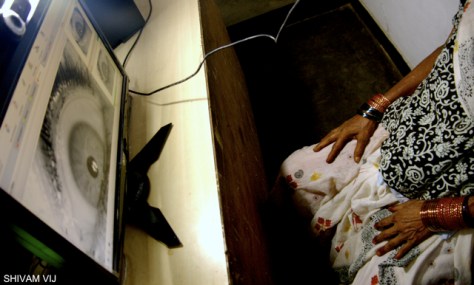
This guest post by SIMI CHACKO and PRATIKSHA KHANDURI is the full text of a booklet released in August 2011. A .pdf version of the booklet (41 pages, 304 KB) can be downloaded here.

A citizen gets her iris scanned for a UID 'Aadhar' card in Delhi.

Introduction

A. UID: The Basics

B. The Enrolment Process

C. Benefits of UID

D. Concerns: Biometrics, Privacy, Data security, Surveillance

Continue reading A Critical Primer on India’s UID: Simi Chacko and Pratiksha Khanduri

Prominent Indian journalist beaten up by Jammu and Kashmir Police

Is the Jammu and Kashmir Police a private, leaderless, unaccountable militia force that can go about beating up anyone they like in the name of saving Kashmir for India?

Well known Indian author and journalist David Devadas, a fellow with the Nehru Memorial Museum and Library in Delhi and author of a book on Kashmir, was beaten up by personnel of the Jammu and Kashmir Police in Srinagar on September 5. Sheela Bhatt reports on Rediff.com:

In a letter written to Jammu and Kashmir Chief Minister Omar Abdullah, Devadas said that on September 5, when he was crossing the Rambagh bridge in his car in evening in heavy traffic, he heard a loud bang at the back of his car. His car was hit by another car. Continue reading Prominent Indian journalist beaten up by Jammu and Kashmir Police

On a Lit Note: Hilal Mir

Guest post by HILAL MIR

I woke up this morning in an utterly confused state of mind. During the night I dreamt about having the tour of the Harud Literary Festival. My first astonishment came while in a queue outside the venue. Like the French streaming Parisian streets in teary-eyed joy at the sight of American liberators after having secreted themselves in root cellars for months from the sniffing gaze of Nazi jackboots, I felt similar joy at observing Indian soldiers not hurling ritual abuses from vehicle rooftops while asserting the right to overtake from any side and any crevice on the busy Panthachowk intersection.

The venue, Delhi Public School, is stone’s throw away from the intersection and within the earshot of any moist abuse hurled from those ubiquitous army trucks. Kashmiris finally had a dry day. Continue reading On a Lit Note: Hilal Mir

POSCO and the People: Ayush Ranka and Arati Choksi

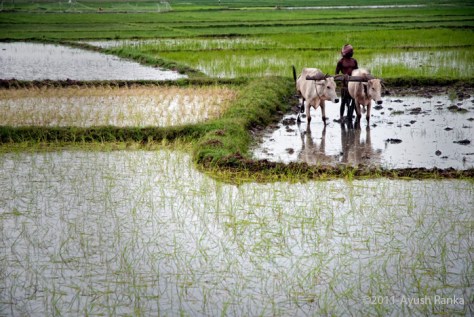
This is a guest post by ARATI CHOKSI with photographs by AYUSH RANKA

01. Odisha is scarcely known to most people as the state of rich agriculture. It is more famous for it's floods and droughts which occur once in a while. However, the entire state, barring a few small regions, is rich with fertile soil and apart from betel leaves and cashew, food grains like rice, wheat, jowar and pulses are also grown

POSCO catapulted out of nowhere into the periphery of my imagination last year. On May 15, 2010, in a brutal show of aggression and violence, armed police battalions attacked unarmed protesters at Balitutha opposing a forceful takeover of their lands by the state for a POSCO steel plant. Members of police force set fire to shops, eateries and thatched homes, including the dharna site of people’s peaceful protest. Police fired upon unarmed protesters with rubber bullets. One person died, and hundreds were severely injured in this firing, many of these were women and the elderly. Continue reading POSCO and the People: Ayush Ranka and Arati Choksi

Bring Dr Chishty home – alive

An elderly, bed-ridden man sentenced to life imprisonment in an ‘enemy’ country for a murder he didn’t commit awaits the signature on his clemency petition. By Beena Sarwar and Shivam Vij

Human rights activists in India are renewing their efforts for the release of the elderly Pakistani prisoner Dr Khalil Chishty lodged in Ajmer prison hospital, whose mercy petition awaits just one signature from the Rajasthan Governor Shivraj Patil. The mercy petition had earlier been approved by the state government and had reached Patil in June this year. At that point, it was expected that Dr Chishty, 78, a renowned virologist bed-ridden with various illnesses in jail, would soon be released.

Instead, Governor Patil raised a set of questions for the state government to answer. The Rajasthan government has answered all the queries, but has not submitted the file to the Governor again – perhaps because, according to sources, the Governor has already indicated that he will not sign the petition. Continue reading Bring Dr Chishty home – alive

No One Killed Meena Khalkho?: Akhil Katyal

Guest post by AKHIL KATYAL

Now that the Anna Hazare Show is over, will the Indian media go back to looking at India as also existing outside Delhi? On 6 July 2011, Meena Khalkho, a sixteen year old tribal girl from Karcha village in the state of Chhattisgarh was raped and murdered by the local police and it barely made a dent on our news universe. A search for her name on most television news websites returns nothing. The police in Chattisgarh immediately hit upon a strategy that has now long been in circulation. They subsume Meena’s horrible rape and murder within what goes these days as a laudable mission, one that manages to neutralize all rage against police atrocities, by claiming Meena to be a Naxal and by claiming her to be fatally wounded in an encounter that night against a larger party of Naxallite cadres.

Continue reading No One Killed Meena Khalkho?: Akhil Katyal

‘Muslim Quota’: Keep it Simple, Silly! – Khalid Anis Ansari

Guest post by KHALID ANIS ANSARI

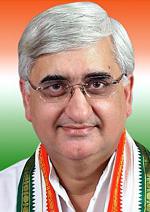
In an interview last month, Mr. Salman Khursheed was posed the query: ‘There are reports that you are considering Muslim reservations within the OBC quota?’ He responded affirmatively: ‘Absolutely. Sachar described them as SEBC, socially and educationally backward classes. This is a special segment within OBC.’

Nowhere in the Sachar report are Muslims categorized as SEBC (Socially and Educational Backward Classes). They are categorised merely as one of many SRCs (Socio-Religious Communities). Moreover, the Sachar Report has acknowledged caste-based stratification within Muslims and has suggested quite unequivocally: ‘Thus, one can discern three groups among Muslims: (1) those without any social disabilities, the ashrafs; (2) those equivalent to Hindu OBCs, the ajlafs, and (3) those equivalent to Hindu SCs, the arzals. Those who are referred to as Muslim OBCs combine (2) and (3) [p. 193 (emphasis added)]’.

So, according to the Sachar Report all Muslims cannot be conceived as a socially and educationally backward class (OBC) because the forward Muslims (ashrafs) are ‘without any social disabilities’. Well, one may ask if the minister who exhorted everyone to read the Sachar Report critically and not as gospel truth, has failed to practice what he himself preached. The honorable minister seems to have read the report incorrectly.

Strange are the ways politics affects one’s judgment! Continue reading ‘Muslim Quota’: Keep it Simple, Silly! – Khalid Anis Ansari

Hypocrisy in Any Season: Mridu Rai responds to Rahul Pandita on the Harud Literature Festival

Guest post by MRIDU RAI

Rahul Pandita has written a misleading piece—in the tone of high dudgeon and ethical outrage no less—in the ‘essays’ section of the 3 September 2011 issue of Open magazine titled “The Autumn of Hypocrisy”. I think it is a piece that, nevertheless, requires some examination mostly because it makes several assertions in ways that queer any possibility of debate around the important question of what a literary festival held in Kashmir today might mean. Whether or not it was the author’s intention to do so, its effect is also to discredit, off-hand, several literary and artistic voices whose greatest sin would appear to be to have disagreed with the kind of literary festival in Kashmir Rahul Pandita and his fellow organizers had in mind. Of course, it is also troubling to hear from Mr. Pandita on this question since he is both an aggrieved party, deprived of his right to express himself at the festival, and also, as the credit at the bottom of his piece elaborates, a former “member of the advisory committee for the Harud literary festival”. I wonder if this conflict of interest bothers anyone other than me. Continue reading Hypocrisy in Any Season: Mridu Rai responds to Rahul Pandita on the Harud Literature Festival