Category Archives: Countryside

Rip Van Winkle and Raman Singh Government

Can an elected Panchayat deprive a section of its own people belonging to a minority community its constitutionally granted right to practise its religion – e.g. organise prayers or engage in religious propaganda and have sermons?

Or can it ever deprive them of their mandatory quota of grain under PDS (public distribution system) which is focused more on persons living below poverty line?

Anyone conversant with rudimentary understanding of law would reply in the negative. It appears that in Chattisgarh they do it differently. In fact, Sirisguda, Kunguda and many other villages in Jagdalpur and adjoining areas in the state are in the news for similar reasons. Continue reading Rip Van Winkle and Raman Singh Government

Open Letter to the Prime Minister – Stop the Dilution of MGNREGA

We are publishing below an Open Letter written by concerned citizens to the Prime Minister opposing the dilution of MNREGA

Dear Prime Minister,

We are very disturbed by impending moves of this government to undermine the Mahatma Gandhi National Rural Employment Guarantee Act (MGNREGA) and the support it provides to crores of vulnerable rural families. We write this letter to seek your immediate assurance that these retrograde, anti-poor and anti-labour measures will be withdrawn, and that every attempt will be made by your government to implement the MGNREGA in its true spirit.

Based on recent public statements from Shri Nitin Gadkari, Union Minister of Rural Development, and other available information, we learn that the Central Government has initiated the following changes under MGNREGA:

  • Restriction of NREGA to tribal/backward districts of the country through an amendment to the Act.
  • Reduction of the minimum labour-material ratio from the current level of 60:40 to 51:49.
  •  Severely restricting the MGNREGA through a budget squeeze. There have been unprecedented communications by the Central Government to States capping MGNREGA expenditure for the rest of the financial year, undermining the fundamental principle of demand-driven employment.

These changes are inimical to the spirit of the Act and compromise its basic objectives. They will only benefit the contractor class and other middlemen, and severely undermine the employment generating potential of the MGNREGA. The changes are also being undertaken without any public consultation. The MGNREGA was passed unanimously by all parties and all members of Parliament. We fundamentally object to this critical social legislation being undermined through casual use of executive powers and even a parliamentary majority.

The illegal and unwarranted budget squeeze has led to widespread reports of employment rationing and acute delays in wage payments. Even as MGNREGA workers are struggling to be paid for work already done, the Central Government is sending the message that money is going to be further rationed.

The undersigned demand that your Government immediately revoke the above decisions and renounce any dilution of MGNREGA. We urge you to ensure that MGNREGA employment remains a legal right of every rural household across the country and that there is no dilution of any MGNREGA entitlements. The MGNREGA budget should be based on work demand, keeping with the spirit of the act, without any discretionary cuts. Continue reading Open Letter to the Prime Minister – Stop the Dilution of MGNREGA

Vicious cycle of ‘Development’, Displacement and Death

Gujarat Oustees jump into Narmada Canal 

Kashinathbhau Mohite, Wang Marathwadi dam affected activist, commits suicide 

7th October, Narmada Dist/ Satara /New Delhi: False promises; snatching away of  rights  and even hope; continued mistreatment and harassment at the hands of police and administration; physical, psychological and emotional exploitation- these are not just sporadic instances but a common pattern of grave injustices seen where people have been displaced in the name of ‘development’.

On 6th October, 12 oustees of Sardar Sarovar Dam from Gadher village in Narmada district of Gujarat, jumped into Narmada canal to awaken the administration to their plight of 22 years. The official claim is that they were ‘rehabilitated’ in 1992, however in reality, they still have not been given alternate land and government job to one family member at the time of acquiring their land, which is clear and outright non-compliance of Narmada Water Dispute Tribunal Award 1979, Rehabilitation policy of Government of Gujarat and orders Hon’ble Supreme Court.  After 22 long years, they still await justice and were left with no other option but to resort to this form of protest. On one hand, the Government of Gujarat has always justified Sardar Sarovar Project and glorified the Narmada Canal as the ‘lifeline of Gujarat’, but  on the other, it turns a complete blind eye to its own people of Gujarat who have been so severely affected by  the displacement caused by this very project. Why this apathy? Whose interests are being served? Continue reading Vicious cycle of ‘Development’, Displacement and Death

Towards a Rational Literacy – Education and Beyond: Shivali Tukdeo

[Anyone who is familiar with the writings and positions of various Kafila authors will see, we do not subscribe to or share many of the views expressed by Shivali Tukdeo in this essay. Several of us have our own fairly strong critiques of the processes of colonial and post-colonial knowledge formation which condemned a whole host of practices, and the lifeworlds in which they were located, as “andhvishwas”. However there is also a simultaneous extremely interesting history of efforts at the inculcation of a “rational temperament” that used emergent discourses of science and modernity to question traditional hierarchies of caste and so on. Maharashtra is an especially vibrant locale for such experiments and their location within long histories of oppressed caste mobilizations. Recent violent assertions by the Hindu Right on the grounds of “tradition”, as evidenced in the tragic murder of Dr. Dabholkar, further complicate the terrain within which these questions arise. So we are carrying this essay as an offering and opening to what we hope will be a spirited conversation around reason, science and faith of all varieties – andh, kana and trilochan. AS]

This is a guest post by SHIVALI TUKDEO

In what can only be termed as an ultimate irony and deep embarrassment, the Maharashtra police allegedly resorted to relying on planchet tricks of a self-claimed god-man to investigate the brutal murder of Dr. Narendra Dabholkar, a rationalist and organiser of Andhashraddha Nirmoolan Samiti (ANS)—Committee against Eradication of Blind Faith[i]. The ‘supernatural intervention’ in this high-profile murder case is painfully damaging, no doubt; however, it is neither an isolated instance nor is it confined to the police department alone. As reportage in the aftermath of the case reveals, police departments routinely subscribe to such practices. Moreover, the widespread practice of offering prayers to Thirupathi before a space launch or the decision to conduct excavation based on a Sadhu’s dream aptly illustrate the powerful hold superstitions have. Such instances also point to the deep and long standing crisis in India’s education. Continue reading Towards a Rational Literacy – Education and Beyond: Shivali Tukdeo

After the Flood: Sabah Hamid

Guest Post by SABAH HAMID

The pilot announces we’re approaching Srinagar. I have a window seat near the right wing, and I lean forward to look down. I always do this, trying to catch a first glimpse of the city I call home despite having lived away for more than half my lifetime now. Today, for the first time, I’m afraid of what I’ll see. The entire valley was flooded two weeks ago when the river Jhelum and then the Dal Lake spilled over. This is not the first flood to hit Kashmir, but nothing of this magnitude has been experienced in living memory. As we descend, I see a lot of large muddy tracts wherever I look. The elderly gentleman sitting in the aisle seat next to me mutters something, probably a prayer, and I turn to look at him. He shrugs resignedly, and I shrug back.

There are an unusual number of Indian passengers in the plane, and at the baggage carousel I am reminded of this again. It’s odd to have tourists so soon after the floods. I cannot make sense of it. Catching sight of a pair of fashionably dressed young women I wonder if they are the relatives of armed forces personnel stationed in the Valley.  It does not matter. I collect my lone suitcase, shoulder my backpack, and head to the pre-paid taxi counter. My parents live close by, just two kilometres away, and I am hoping to hitch a ride with someone if no taxis are available.

Exactly two Sundays ago though, when my parents, sister and young cousin landed in Srinagar, those two kilometres turned out to be very long indeed. Continue reading After the Flood: Sabah Hamid

Sailaab Nama – An Insider’s View of the Flood in Kashmir from the Outside: Gowhar Fazili

Guest Post by Gowhar Fazili

The floods in Kashmir can provide an outsider a momentary glimpse into the reality of Kashmir behind the corporate media propaganda smokescreen that is fumbling at the moment and like Truman Show (1998) exposing bits of the backstage. At the moment there are three key actors in Kashmir. There are the floods, the state and the people. Each one is on its own. One limb of the state—the state government was the first to crumble before the approaching waters.   The other limb—the mammoth military apparatus that has already inundated Kashmir since several decades, took two days to wake up to the crisis and when it finally did, its priority was to fish out the rich Indian tourists and the people close to the establishment out of the state. In the initial days, local people had to risk their own lives to get their marooned relatives to safety. Some hired local boats, some swam or waded through water, some made makeshift rafts out of anything that floats, including water tanks, car tubes, foam sheets, inflated baby bathtubs, so on and so forth to save their dear ones. The rest either drowned or kept moving up the floors of their houses as the waters kept rising until they reached their attics.

Continue reading Sailaab Nama – An Insider’s View of the Flood in Kashmir from the Outside: Gowhar Fazili

Learning from Babasaheb: Harsh Mander

Guest post by HARSH MANDER

Among most  secular progressive people in India today there is the belief – indeed an article of faith – that India has been, through most of its long history, a diverse, pluralist and tolerant civilization – the land of Buddha, Kabir and Nanak, of Ashoka, Akbar and Gandhi. It is a culture in which every major faith in the world found through the millennia the space and freedom to flourish and grow, where persecuted faiths have received refuge, where heterodox and sceptical traditions thrived alongside spiritual and mystical traditions, and where ordinary people live and instinctive respect for faith systems different from their own.

All of this is true, and this is why the rise of a narrow, monolithic and intolerant interpretations of Indian culture – what Romila Thapar describes as the right-wing Semitisation of Hinduism – in new India causes us deep disquiet. But what our analysis does not stress often or deeply enough is that all of India, both old and new, has been also built on the edifice of the monumental inequality and oppression of caste, and that this is equally the story of India, old and new. Continue reading Learning from Babasaheb: Harsh Mander

Chhering – A Guiding Star

This article has appeared in the June issue of Terrascape

Travelling with a knowledgeable guide makes a trip worth it. And if the guide is someone like Chhering, you’ll cherish the trip all your life.

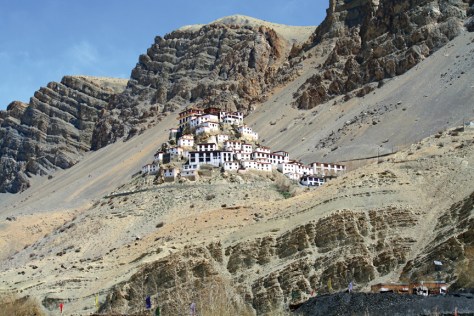
Kee Monastery, Spiti

Broadly speaking there are two kinds of human beings, the inquisitive and the conformist. It is the inquisitive kinds who try new things; experiment, ask questions, make most discoveries, travel to unchartered territories and constantly venture into terrain, geographic and cephalic, where angels fear to tread. The conformist does none of the above. They travel only the well-trodden path, visit places where the food, the hotel, the weather, in fact nothing whatsoever has the potential of throwing up a surprise.

The world cannot exist without either. The inquisitive opens up the world, both physically and in terms of ideas, while the conformist fashions new territories – geographical and cerebral – habitable and familiar for others and prepares the ground for the next generation of the inquisitive to venture beyond what has by then become familiar.

It is a fact that I am not one of those who can be included among the ‘inquisitive’, not in the sense in which I use the term here. It is equally true that I do not want to belong to the category that I have chosen to describe as the ‘conformist’. Why I do not want to be placed in the second category will be revealed once you go through this episode placed below. Your perusal of the same would perhaps justify my reluctance to be counted among the second category. Continue reading Chhering – A Guiding Star

The pasts in our present

This piece has appeared in the May issue of Terrascape

A quest for those mountains where a true seeker of truth can find solace and solitude – and a lesson in geology

I had grown up being told, as were most children who grew up in the times when I did, about great spiritual seekers, sanyasis, sufis and such like who had chosen to seek truth and to give up everything that tied them to the mundane concerns and attachments of this world. The stories of all these seekers of truth invariably ended with many of them finding what they sought in the mountains.

The mountains they visited were not the mundane, run-of-the-mill mountains, that ordinary mortals like us visit. They went in search of mountains that gave meaning to words like desolate, forsaken, remote, impassive, distant and words that created similar impressions. It was mountains such as these that the gods had chosen as their abodes, it were these that invited the seeker of truth within their folds. The seekers immersed themselves completely in the contemplation of the unknown and the unknowable, and emerged years later wiser and all-knowing.

As I and other children of my age grew up, we were drawn away from the spiritual and into the thick of the knowledge of the ‘this worldly’. We studied the secular sciences and gradually came to acquire a totally different understanding of  the mountains.

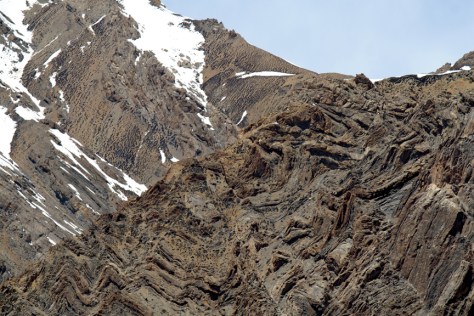
Spiti3

Continue reading The pasts in our present

Accident at Koodankulan Nuclear Reactor, at least 6 Injured

An Urgent Alert has been posted by NITYANAND JAYARAMAN in DiaNuke.org on an accident that occurred in Koodankulan sometime in the afternoon today.

Koodankulan protest, courtesy New Indian Express

After initially flashing news about the incident, the media is now reportedly playing NPCIL’s statements denying and downplaying the incident. If NPCIL’s past record is anything to go by, truth will be a while in coming. Dr. APJ Abdul Kalam was unavailable for comment.

Today’s accident comes less than a week after the Honourable Supreme Court ruled that it was satisfied with the safety features installed at the plant. Read the rest of the report here.

Koodankulan protest 2, image courtesy The Hindu

We have reported earlier in Kafila on the ongoing struggle of the local people against the establishment of the nuclear reactor in Koodankulan here, here and here.

भगाणा कांड के पीड़ितों ने इंसाफ की मांग की: भगाणा कांड संघर्ष समिति

Press statement issued by the BHAGANA KAAND SANGHARSH SAMITI in New Delhi, 11 May 2014


Latthmar Mahila Sena
A call for direct action – an armed women’s squad – Latthmar Mahila Sena

हरियाणा के भगाणा गांव में सामूहिक बलात्कार की शिकार हुई चार नाबालिगों के हक में न्याय की मांग के समर्थन में आज पीड़ितोंके साथ भारी संख्या में दिल्ली के सामाजिक कार्यकता, बुद्धिजीवी और विद्यार्थी भी जुटे। यहां दिल्ली में पंत मार्ग पर स्थित हरियाणा के मुख्यमंत्रीआवास पर धरना देते हुए आंदोलनकारियों ने पीड़ितों के प्रति हरियाणा सरकार के रवैए की तीखी आलोचना की और कहा कि ऐसा लगता है कि हरियाणा सरकार सामंती उत्पीड़नकर्ताओं के पक्ष में खड़ी हो गई है और दलितों-पीड़ितों की आवाज को जानबूझ कर दफन किया जा रहा है।

बड़े पैमाने पर जुटेलोगों ने यहां दिल्ली में सरकार और प्रशासन से यह मांग की कि पीड़ितों पर जुल्म ढाने वाले दोषियों को  सख्त सजा दी जाए और फास्ट ट्रैक अदालतों का गठन कर पीड़ितों को जल्द से जल्द इंसाफ दिलाई जाए। Continue reading भगाणा कांड के पीड़ितों ने इंसाफ की मांग की: भगाणा कांड संघर्ष समिति

Notes on Velaveping Kerala : Inside a Brand-New Paradigm and Outside

Insiders: Velaveping Idukki

All I can say about the Supreme Court verdict striking down Kerala’s position on the Mullaperiyar Dam issue is that we are due for another round of the Hysterics vs. Imperialists media game. The managers of the Hysterics team, our local Malayali politicians, do have the advantage that their experience in fear-mongering has gone up considerably with the controversies over the Gadgil and Kasturirangan reports regarding ecological conservation of the Western Ghats. The Imperialists team out there in Tamil Nadu is also now more experienced, after their successful suppression of their own people’s fears for their lives at Koodankulam. So we are set for an interesting match!

However,please don’t underestimate us. The truth is that you north Indians (or others) never really got us — what we are today you will be –well — ten years later. There are of course simple souls, many ordinary folk in Idukki, who are scared for the land and their lives. But in any society, there are bound to be backward people who are always under old delusions? The sophisticated among us may be marginally scared of the dam break but our fear is not really that the land will disappear. Actually our issue is that the dam-break will make that happen too quickly. Please note that we intend to do it little by little, so that full economic advantage can be obtained! Ah, what is the use of letting everything get washed into the Arabian Sea? Our plan was simple and you will admit that no one can maximise advantage better than us. You have to realize that Kerala’s topography is too unfriendly towards profit-making ventures and we need to do something about it. Consider the following steps: Continue reading Notes on Velaveping Kerala : Inside a Brand-New Paradigm and Outside

Universal Adult Francise? A Reality Check: Reena Gupta

Guest Post by REENA GUPTA

When polling began on the morning of April 10, our team coordinating the Aam Aadmi Party campaign in Bawal was expecting to respond to complaints of money and alcohol distribution. During the jan sabhas throughout the area, Yogendra Yadav, the AAP candidate for the constituency, had made it amply clear that, “na toh hum shraab bechenge, nah hum bikne denge.” We had spent days training booth volunteers who would be available to assist voters with information and monitor elections throughout the 200 odd villages in Bawal. Our mobile teams would document any violations of the electoral code and lodge complaints with the requisite authorities. Having campaigned in the Delhi elections for AAP, I knew firsthand that the secrecy of the ballot gave people the chance to rise above external pressures and inducements. After the hard yards of campaigning, voting day seemed set to be relaxing and I occupied myself with preparations for lunch for the numerous volunteers who were streaming in and out of our office.

Bawal is less than 100 kms from Delhi and is one of 9 legislative constituencies that comprise the Gurgaon Parliamentary constituency. In fact, Bawal falls within the National Capital Region and has been proclaimed as soon joining the constellation of Delhi’s satellite towns. There are already hi-tech factories strewn along the Delhi-Ajmer Highway and then there’s the buzz about the upcoming Delhi-Mumbai Industrial Corridor. Of course, the symptoms of lop-sided development are visible right behind the façade of big industrial complexes. With one quick turn off the highway, the roads fall apart and you are welcomed to villages with virtually non-existent education and public health infrastructure. However, I realized the extent of the distance between Bawal and Delhi only after our phones started ringing on the morning of 10th April and we set out to see for ourselves the manner in which citizens are allowed to exercise their electoral rights, in the world’s largest democracy.

Continue reading Universal Adult Francise? A Reality Check: Reena Gupta

Condemn the Massacre in Assam: A Statement by Civil Society Groups, Activists and Concerned Citizens

Text of a statement issued by Civil Society Groups and Concerned Citizens

5th May 2014

Condemn the Massacre in Assam, Demand immediate arrest of Pramila Rani Brahma; Ensure safety of Muslims in BTAD: A Statement by Civil Society Groups, Activists and Concerned Citizens

We, the undersigned, express our profound sense of grief and alarm over the gruesome massacre of Bengali-speaking Muslims on 2nd May. This most recent round of killings — in which 32 people, mostly women and children have lost their lives – is another link in the long and… bloody sequence of ethnic cleansing being carried out by tribal Bodo militant groups with impunity.

For years, Hindutva politics has successfully created the bogey of the ‘Bangladeshi’, rendering Muslims as suspects and targets, locked in a perpetual battle with the tribal Bodos. In his rally at Silchar, the BJP’s Prime Ministerial candidate reiterated precisely this. He said: “There are two kinds of people who came from Bangladesh to Assam: those brought as part of a political conspiracy for vote bank politics of a particular party (Muslims) and others who were harassed in the neighbouring country (Hindus). Those brought for vote bank politics and smugglers must be pushed back, while the second category must be accommodated.” (Silchar, 22nd February). Continue reading Condemn the Massacre in Assam: A Statement by Civil Society Groups, Activists and Concerned Citizens

The Carnage in Kokrajhar: Saba Sharma

Guest post by SABA SHARMA

Since the evening of the 1st of May, it has been reported that at least 23 people have been killed in Kokrajhar and Baksa districts in Assam, administered under the Bodoland Territorial Council. All the victims were from the Muslim community, and were allegedly shot by the militant Bodo group, the National Democratic Front of Bodoland (Songbijit), named after its ruthless leader Songbijit, from the Karbi Anglong area in Assam. Indefinite curfew has been imposed here and in neighbouring districts as well, as rumours of other killings and beatings filter in, impossible to separate from facts in the atmosphere of panic that currently prevails.

Polling ended in the Kokrajhar constituency in Assam on the 24th of April, ending a temporary sense of calm and normalcy. Ethnic violence between Bodos and Bengali Muslims took place in July 2012, majorly affecting Kokrajhar, Chirang and Dhubri district. Nearly 5 lakh people were displaced from their homes, and most did not return until January 2013, staying in relief camps, too afraid to return. Once the camps were formally shut down and people returned to their homes, normalcy was still a distant reality. An economic boycott imposed by Bodo leaders on the Bengali Muslim community meant that agricultural labour, a primary occupation for Bengali Muslims, was all but non-existent. In the last year, this economic boycott has slowly been relaxed in some areas, while in other areas, it prevails as strongly as ever. In most areas, markets were among the first spaces to become mixed again, an almost neutral zone where people began to interact with one another again. But in other markets, like Koila Moila bazaar in Chirang, Muslims are still ‘banned’. Continue reading The Carnage in Kokrajhar: Saba Sharma

Democracy dies in Mewat – Should Gurgaon Elections be countermanded? Vivek Sharma

VIVEK SHARMA on FaceBook

If elections have been called the ‘dance of Indian democracy’, the number staged in Mewat recently could well be one of the most vulgar yet.  Evidently, the Executive has done the tango with the choreographers. The question now is: will the dance break records at the box-office or will it crash?

Last week Mewat demonstrated at the hustings how a people could be swindled in front of the half-shut eyes of the world’s largest democratic state. Beyond the squeaky clean Nirvachan Sadan on Ashoka Road, the supra-institution of the electoral process flounders in muddy waters. Its grassroots representative, the presiding officer on the last polling outpost, is conceivably either a stooge of the system or just too afraid of it. Mewat stands testimony.

Even in this day and age, women did not cast their vote in Mewat. Why not? The argument forwarded by one of the ostensibly independent election observers of the Gurgaon Parliamentary constituency – after the AAP team made their complaint – was, they are politically blind. After all, through the mustard-wheat harvest season in Mewat which coincided with the elections on April 10, the women worked in the fields while the men smoked hookahs and sipped on chai discussing politics. Women harvested, tended the cattle, ran the hearths, and raised the long train of children born to them practically every other year. With a life so busy where is the time to exercise their most basic right of casting their vote?

But in fact, not only did women not vote – nor did the youth, the poor and all those placed lower in the social pecking order. And the reason is simple. They did not vote because were physically prevented from reaching the polling stations. Continue reading Democracy dies in Mewat – Should Gurgaon Elections be countermanded? Vivek Sharma

मर्दवादी और असमान सामाजिक व्यवस्था में स्त्री प्रतिरोध – ‘हाईवे’: धर्मराज कुमार

Guest Post by धर्मराज कुमार

वर्त्तमान परिदृश्य में हमारे इर्द-गिर्द जितने भी विमर्श मंडराते नजर आ रहे हैं उन सबके के आक्रामक शुरुआत को सोलह दिसंबर की बलात्कार की घटना से जोड़े बगैर नहीं देखा जा सकता है। इसमें कोई शक नहीं कि उस रात को दहला देने वाली घटना तक को कई खांचों में रखकर देखा जाता है। उदाहरणस्वरूप, आलोचना के तौर पर यह भी कहा गया कि निर्भया अभिजात वर्ग से आती थी इसलिए उसके बलात्कार ने पूरे देश की राजनीति को झकझोर कर रख दिया। जबकि उसी दरम्यान दिल्ली के करीब हरियाणा में कई दलित और सामाजिक रूप से प्रताड़ित लड़कियों और महिलाओं का निर्ममता से बलात्कार किया गया और मारकर फ़ेंक दिया गया और जिसका आज तक कोई अता-पता तक नहीं है। इससे भी इंकार नहीं किया जा सकता कि दिसंबर की घटना के पहले भी अनगिनत बलात्कार की घटनाएं हररोज हो रही थी और उसके बाद भी हो रही है। मगर कभी भी किसी विरोध ने इतना विकराल रूप धारण नहीं किया जिससे देश की राजनीति को हिलानी तो दूर उससे आजतक न्याय प्रक्रिया में गति तक आ सके। इसके कई कारण हैं।
मेरा उद्देश्य उस तरफ ध्यान खींचना कतई नहीं है। मेरा उद्देश्य है मुख्यधारा में इन मुद्दों से जुड़ती सवालों को उठाये जाने की तरफ ध्यान ले जाना। मैं बात कर रहा हूँ मुख्यधारा में चल रही फिल्मों और उससे जुड़े सवालों के ऊपर। फ़िल्म समीक्षा की दुनिया में ऐसा कम ही देखने को मिलता है जब कोई फ़िल्म अपनी रिलीज के बाद एक चर्चा का विषय हो या विवाद का हिस्सा हो। बल्कि तमाम विचारधारा से जुड़े लोग जब किसी फ़िल्म के ऊपर अपनी प्रतिक्रिया जताने लगे इसका मतलब है कि ऐसी फिल्में लोगों को संवाद करने के लिए विवश कर रही हैं। Continue reading मर्दवादी और असमान सामाजिक व्यवस्था में स्त्री प्रतिरोध – ‘हाईवे’: धर्मराज कुमार

Can there be a ‘socially responsible’ tea? Ashwini Sukhtankar and Peter Rosenblum

Guest post by ASHWINI SUKHTANKAR AND PETER ROSENBLUM

Almost four years ago, we first traveled to Rungamuttee, a tea estate in the Dooars, so far north that it nuzzles the Bhutan border. The region has recently fallen prey to the craze of “tea tourism,” and the estates jostle for space with eco-green-homestay lodges that lure middle class families with the opportunity to play at a mythic British sahib-memsahib life, sitting on verandahs sipping tea while gazing out over vast reaches of picturesque monoculture, with rows of squat green bushes as far as the eye can see.

We were not unmoved by the beauty and the weight of history, but we were there to talk to workers and to understand what plantation life meant for them in the 21st century.

At Rungamuttee, we sat perched in red plastic chairs, almost brushing knees with a sinewy old man, also in a red plastic chair in the tiny “labour quarters” that he shared with his children and grandchildren.

The old man at Rungamuttee in his red chair

The old man at Rungamuttee in his red chair

He leaned forward and unfurled the frayed scroll in his hand. It was his “depot challan,” the document that he had been given when he showed up at the labour depot in Ranchi in 1955, and it told him that he had been assigned a job as a tea labourer in Jalpaiguri District, more than three days’ journey away. Continue reading Can there be a ‘socially responsible’ tea? Ashwini Sukhtankar and Peter Rosenblum

Adivasi-yagna, The Great Sacrifice – Tribal Communities for ‘Greater’ Hyderabad? R Uma Maheshwari

This is a guest post by R UMA MAHESHWARI

The Andhra Pradesh ministers are fighting like the hooligans they show in Telugu films (one is reminded, in particular, of an old Telugu film aptly named Assembly Rowdy). The fight is all over, and about, investments in Hyderabad and elsewhere. As it is about money. The Parliament fight is with pepper sprays and knives. Back there, on the ground, in tribal villages in AP (yet to be declared as either Seemandhra or Telangana), absolutely unarmed Koyas, Kondareddis, and a few other tribal communities are opposing the construction of the Polavaram dam. And have been marking their protests with dharnas, rasta rooks and burning of effigies of leaders of all political parties. The former have some plum real estate and business interests to protect; the latter have their everything to fight for – homes, land and histories. Not for a while, in the entire debate and fighting over the state of either unification or creation of Telangana have any of these picketers in the Parliament have sought the opinions of the tribal people whose land is today a battleground for investment. One has no qualms of using the peculiar Sanskritic terminology, in the Vedic sense of sacrificial rituals, conducted by the wealthy and upper castes for their benefits, in the name of the ‘common good’. A Former Chief Minister of the state of Andhra Pradesh, YSR, too, used the same Sanskritic term (in spite of his being a Christian) for the irrigation projects (or contractor businesses) he initiated (86 nos.) under jalayagam.  Today the sacrificial ritual continues, and it is a human sacrifice, of more than three hundred thousand tribal people (as it is the sacrifice of animals and birds and every visible or invisible organism), in return for the illusory real-estate-driven world called ‘Greater’ Hyderabad; what if it is going to be a “joint capital for ten years” (and who has seen what the world will look like after ten years, any way? Or what shape it will assume? But these are matters of philosophy and metaphysics, I guess, talking of who knows where we will be, what will be…). Continue reading Adivasi-yagna, The Great Sacrifice – Tribal Communities for ‘Greater’ Hyderabad? R Uma Maheshwari

Efforts to save the endangered oral traditions of Rajasthan: Vishesh Kothari

Guest Post by VISHESH KOTHARI

574802_10151322516287197_1967840932_nMedieval feudal social systems and attitudes in Rajasthan persisted until very recently. This, and perhaps a host of other reasons, allowed several aspects of culture to remain preserved here for much longer than in other parts of our country. While Rajasthan has become well known for its architectural heritage, it is the intangible heritage of this state that is in need of the most urgent intervention to protect it from being lost – from the oral lore to the epic ballads, everything is threatened by the onslaught of modernity.

Komalji Kothari and Vijaydanji Detha embarked on such a project many years ago and achieved great success – however an even greater amount remains to be done. For more than a decade now, the Jaipur Virasat Foundation has been continuing and enhancing this project to protect, preserve and promote the oral musical traditions of this state. Continue reading Efforts to save the endangered oral traditions of Rajasthan: Vishesh Kothari

Gandhi’s Dystopia – More Mobile Phones Than Toilets: Apurv Mishra

Guest Post by APURV MISHRA 

Sanitation is more important than independence”, said Gandhi, the godfather of our freedom fighters, in 1925. Unlike Nehru, who believed that sovereignty and self-rule were a prerequisite for social change, Gandhi insisted that true Swaraj could only be achieved when political independence was accompanied by a parallel program of social reform. As we go through the perfunctory national routine of remembering Gandhi on his death anniversary every year, it is a good time to take stock and reflect on the irreconcilable gap between Gandhian values and our societal priorities. I am not talking about the ambitious Gandhian ideas of village republics, Nai Talim, strict vegetarianism, zealous celibacy or his suggestion of disbanding the Congress, but simple principles like cleanliness and sanitation.

Out of the 1.1 billion people around the world who openly defecate everyday, 626 million belong to India. Indonesia is second with 63 million. Our step-sibling China has just 14 million who defecate in the open, despite having a larger population. In fact, India has more than twice the number of the next 18 countries combined. Just think over these numbers for a minute.

This is not just a hygiene issue; open defecation is the single largest threat to the long term well-being of our country. Continue reading Gandhi’s Dystopia – More Mobile Phones Than Toilets: Apurv Mishra