Category Archives: Ecology/Environment

Letter from Japan to the Prime Minister of India

Respected Prime Minister of India, and Chief Minister of Tamilnadu:

We are residents and organisations from Japan, and are intimately aware of the unpredictability and uncontrollable nature of nuclear power. We are the unfortunate witnesses of two nuclear holocausts.  It is with pain that we see the Indian Government pursuing a dangerous path of constructing large nuclear power plants within even larger nuclear “parks” where power generation capacities are pegged at up to 10,000 MW.

Continue reading Letter from Japan to the Prime Minister of India

POSCO and the People: Ayush Ranka and Arati Choksi

This is a guest post by ARATI CHOKSI with photographs by AYUSH RANKA

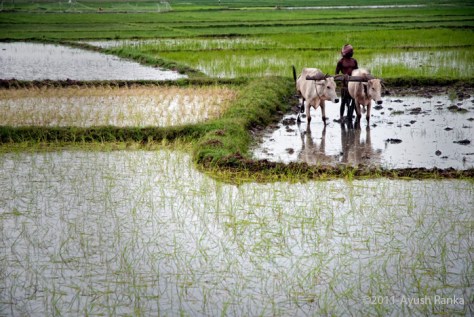
01. Odisha is scarcely known to most people as the state of rich agriculture. It is more famous for it's floods and droughts which occur once in a while. However, the entire state, barring a few small regions, is rich with fertile soil and apart from betel leaves and cashew, food grains like rice, wheat, jowar and pulses are also grown

POSCO catapulted out of nowhere into the periphery of my imagination last year. On May 15, 2010, in a brutal show of aggression and violence, armed police battalions attacked unarmed protesters at Balitutha opposing a forceful takeover of their lands by the state for a POSCO steel plant. Members of police force set fire to shops, eateries and thatched homes, including the dharna site of people’s peaceful protest. Police fired upon unarmed protesters with rubber bullets. One person died, and hundreds were severely injured in this firing, many of these were women and the elderly. Continue reading POSCO and the People: Ayush Ranka and Arati Choksi

जोश मलीहाबादी की एक नज़्म – आज के नाम

जोश मलीहाबादी की नज़्म ‘रिश्वत’ के कुछ टुकड़े, इस स्वाधीनता दिवस के नाम.

[Apologies for some missing nuqtas, despite my best efforts.]

लोग हमसे रोज कहते हैं ये आदत छोडिये
ये तिजारत है खिलाफे-आदमियत छोडिये
इससे बदतर लत नहीं है कोई, ये लत छोडिये
रोज अखबारों में छपता है की रिश्वत छोडिये

भूल कर भी जो कोई लेता है रिश्वत, चोर है
आज कौमी पागलों में रात-दिन ये शोर है. Continue reading जोश मलीहाबादी की एक नज़्म – आज के नाम

यहाँ से शहर को देखो …..

[यह लेख “बस्ती तो बसते बसती है” शीर्षक से आउटलुक हिंदी  के  स्वाधीनता विशेषांक में छपा है.]

अब जबके हर तरफ यह एलान हो चुका है के दिल्ली १०० बरस की हो गयी है और चारों ओर नई दिल्ली के कुछ पुराने होने का ज़िक्र भी होने लगा है, इन दावों के साथ साथ कि “दिल्ली तो सदा जवान रहती” है और “देखिये ना अभी कामनवेल्थ खेलों के दौरान यह एक बार फिर दुल्हन बनी थी”, वगेरह वगेरह, तो हमने सोचा के क्यों न इन सभी एलाननामों की सत्यता पर एक नजर डाल ली जाए, और इसी बहाने उस दिल्लीवाले से भी मिल लिया जाए जो इस अति प्राचीन/ मध्यकालीन/ आधुनिक नगरी का नागरिक होते हुए भी वैशवीकरण के झांसे में इतना आ चुका है के वो अपने आप को २१वीं शताब्दी के पूर्वार्द्ध में आने वाले आर्थिक संकट को पछाड देने वाले चमचमाते भारत देश की राजधानी का शहरी  होने का भरम पाले हुए है.

अब सब से पहले तो यह फैसला कर लिया जाए के नई दिल्ली है किस चिड़िया का नाम? पाकिस्तान के मशहूर व्यंग कार इब्न-ए–इंशा ने अपनी विख्यात पुस्तक उर्दू की आखरी किताब में एक अध्याय लाहौर के बारे में लिखा है.  इस अध्याय में इंशा कहते हैं “ किसी ज़माने में लाहौर का एक हुदूद-ए–अरबा (विस्तार) हुआ करता था अब तो लाहौर के चारों तरफ लाहौर ही लाहौर वाके (स्थित) है और हर दिन वाके-तर  हो रहा है”

एक फर्क है, इब्न-ए-इंशा के लाहौर में पुराना लाहौर और नया लाहौर दो अलग अलग चीज़ें नहीं हैं मगर दिल्ली के मामले में ऐसा नहीं है, एक समय था के नई दिल्ली में बाबू बसा करते थे और नई दिल्ली के पास शाहजहानाबाद था जो शहर था, अब नई दिल्ली वालों के हिसाब से पुराना शहर सिर्फ शादी के कार्ड, आचार मुरब्बे और हार्डवेअर खरीदने की जगह है, या उसे इस लिए बनाया गया है के उनकी पार्टियों के लिए बिरयानी, चाट, कुल्फी वगेरह मुहैया करवाए और जब उनके विदेशी मित्र या एन आर आई सम्बन्धी यहाँ आयें तो उन्हें इस जीते जागते संघ्राल्य के दर्शन करवा सकें. मुसलमान और सिख वहाँ धार्मिक कारणों से भी जाते हैं, मगर उनकी बात अलग है वो तो अल्प संख्यक हैं हम तो आम लोगों की बात कर रहे हैं.

Continue reading यहाँ से शहर को देखो …..

Solidarity letter to anti-POSCO movement from Korean jail: Sung-Hee Choi

Madhumita Dutta has sent us this powerful letter in solidarity with the people of Jagatsinghpur opposing the POSCO project, written by a South Korean activist SUNG-HEE CHOI, in prison for opposing a naval base.

Dear residents in Jagatsinghpur,

I am a woman and activist living in South Korea, the country of the POSCO you oppose. I am currently being jailed in the Jeju prison, under the charge of ‘interruption of business’, because of my resistance against the enforcement of the naval base construction in the Jeju Island located in the south of South Korea. As of today, July 3, I met 46th day since my arrest and 44th day since my being restrained.

I accidently happened to see two of your struggle photos and a photo in the Korean Times, June 13, 2011 had a  caption underneath it:
‘Anti POSCO action in India: A village sprays water to relieve children lying with other villages along the entry point to prevent policemen and officials from entering their area at Jagatsinghpur district, about 140 kilometers(87 miles) east of eastern Bhubareshwary India, Saturday. The villagers have been protesting against turning their farmland into an industrial developed area for a $12 billion steal plant of South Korean conglomerate POSCO (AP-Yonhap).’

Continue reading Solidarity letter to anti-POSCO movement from Korean jail: Sung-Hee Choi

Cities and Infrastructure – The Road Widening Saga in Bangalore

This evening, I was sitting in a coffee shop and writing about the sociology of information, how information is mired in relationships and how trust, suspicion and social relations develop in the course of circulation and exchange of information. As I was beginning to disentangle the complex web of legitimacy and regulations surrounding information, a friend called to inform that some activists and citizens had been arrested for protesting against the tree felling and road widening at Sankey Road in the northern part of Bangalore. In the last few days, the conflict regarding road widening and tree felling at Sankey Road got strong coverage in the media because citizens began gathering around the trees and the roads to prevent authorities from felling the trees. Despite this, the authorities went about felling the trees for widening the roads. The activists and protestors were clearly becoming a nuisance for the government officials and institutions who have not been able to execute the works. Hence, today, at some point, some of our activist friends were arrested on the false charges that they had assaulted public officials in their conduct of ‘government’ duty. The charges were filed under section 343 or 353 CrPC which also implied that the arrest was non-bailable. Over the course of the evening, news went about on FaceBook and Twitter about these arrests, and people from in and around Sankey Road were called to silently protest at the Aiyyappa Temple where the trees were being felled for enabling the road widening. The arrested activists and citizens were released from jail and all the charges against them were ‘dropped’ at about 6 PM. The court also granted a stay order on the tree felling around the same time, with further hearings and orders to arrive on Monday. Continue reading Cities and Infrastructure – The Road Widening Saga in Bangalore

Two statements on the Environment Ministry’s ‘forest clearance’ to POSCO

In response to the Union Environment Ministry’s decision, given below are two press releases, from POSCO Pratirodh Sangram Samiti and Campaign for Survival and Dignity

POSCO PRATIRODH SANGRAM SAMITI

(based out of villages Gadkujang, Nuagaon and Dhinkia in Erasama block of Jagatsinghpur district, Odisha. )

A Mercenary Minister and a Lying Government Cannot Crush Our People
Money Worth More to Government than Truth, Law and Justice; but the Corrupt and the Criminal Will Not Triumph

2 MAY 2011: Today, in a sanctimonious order riddled with lies and distortions, the Environment Ministry allowed thePOSCO project to proceed. The livelihoods of 4000 families (over 20000 people) and the laws of the land have been sold to the highest bidder. Certain facts should be brought to the notice of the public: Continue reading Two statements on the Environment Ministry’s ‘forest clearance’ to POSCO

The Fragility of Oppositional Civil Social Ecology and the Impact of V S

Now that most of us Malayalees are basking in the warmth of the global ban on Endosulfan,even enjoying a brief spell of ‘unity’ (yes, even the UDF folk have joined, if more warily), what I’m about to write will probably make me quite unpopular. Well, here goes —  I have been watching the unfolding of events since last month’s elections to the Kerala State Assembly right up to the gathering of protest and the CPM-led charge against Endosulfan and it all looked like the ultimate festival of depoliticized mediatized dramatics. The dramatics during candidate-selection, the emotional performances of candidates, pretenders, leaders etc etc of various sorts for TV, the weepy complaints combined with nimble hopping across the LDF-UDF boundary by seekers of candidature, the lack of attention to manifestoes and the general attrition of discussion, all of this seemed to taper endlessly — exactly like the long-drawn-out daytime temple rituals during the Pooram at Thrissur. It was indeed a festival, consumed heavily and enjoyed immensely by the people — perhaps not in the sense of being a ‘festival of the people’.

Continue reading The Fragility of Oppositional Civil Social Ecology and the Impact of V S

The Making of an Authority: Anna Hazare in Ralegan Siddhi

(I am posting a much longer version of my previous article that will also respond to some of the queries and comments. This article is based on my research, field work and interviews in Ralegan Sidhi since 1991.)

This article is focussed mainly on understanding how exactly the rural environmental works in the journey of Anna Hazare and Ralegan Sidhi are articulated within a coherent ideological framework, to acquire their legitimacy and authority, which are fed by, and fed into, some dominant political cultures of the state. Any political theory and practice, built on this framework, can open the possibilities of a strengthening of the conservative and nationalist forces. Certainly, the ideology of a rural organisation or a movement and its appeal is not based on a single plank. In the case of Anna Hazare and his programme, though the developmental and the environmental works form the core of its ideological structures, it includes other issues as well. At times it provides a different scale of activities to its audience, but eventually reinforces its principal ideological framework. Some understanding of the ideological DNA of the green villagers and the fellow environmental travellers also gives us an idea as to what elements of this endeavour and ideology motivate villagers and environmentalists.

The Historical Context of Maharashtra
Anna Hazare and Ralegan Siddhi are not a new addition to the social history of the Maharashtra state. Indeed, the movement has borrowed many features from the historical evolution of the region, and the political culture of the state, with which it negotiates at different levels. There are many factors at play, though three are of prime importance in the context of this paper: (i) nativism and regionalism in Maharashtrian culture and politics (ii) structure and nature of caste and class and (iii) agrarian economy and local environmentalism.
Continue reading The Making of an Authority: Anna Hazare in Ralegan Siddhi

The Making of Anna Hazare

[This piece is based on my extensive field work on Anna Hazare and his movement in Ralegan Sidhi over some years and is also a part of my forthcoming book Green and Saffron: Hindu Nationalism and Indian Environmental Politics. MS]

The anti-corruption movement, spearheaded by Anna Hazare, and the passage of the Lokpal Bill have generated unprecedented interest amongst a wide spectrum of society about the ideas, politics and organisations of civil society in general, and Anna Hazare in particular. Hazare’s anti-corruption crusade merits attention not only for its importance in ensuring a corruption-free society, but also due to its multifaceted nature. Hazare’s politics however has to be seen in a larger framework and in a wider historical context. Howsoever laudable the goals of anti-corruption movement in India today, the movement is not beyond the categories of gender, caste, authority, democracy, nationalism and ultra-nationalism. Far from transcending them, the movement is transforming and being transformed by the implicit deployment of such categories. I wish to place Hazare in the larger context of his environmental journeys, where the elusive but crucial element is one of authority that is exercised due to a large degree of consent and conservatism. Yet, almost all accounts on him, largely celebratory in nature, do not examine the ideology and politics of his works. These are crucial not only to critically assess the present and the future of our anti-corruption movements, but also to interrogate certain brands of civil society activisms and environmentalisms. Continue reading The Making of Anna Hazare

The Earthquake and Japan: Kojin Karatani

[We are posting below a piece by Japanese philosopher and literary critic Prof Kojin Karatani, sent to us by a friend. Karatani has authored a number of works, including a very important recent book Transcritique: On Kant and Marx (MIT Press 2003). In this brief but thoughtful piece, Karatani talks about the ways in which the experience of the earthquake is forcing many Japanese people to rethink the whole idea of becoming a world economic power and its concomitant idea of development. AN]

I was on the streets of Tokyo when the earthquake struck. The ground shook violently, while buildings swayed around me for a long time. It was beyond anything I had experienced before, and I sensed that something terrible had happened.  My first thought was of the Kobe earthquake that killed more than 6,000 people in 1995.  Although I did not experience the Kobe earthquake first hand, it hit the region of my hometown where many close relatives lived, and so I headed immediately to the scene of the disaster. I walked the streets where building after building had collapsed into rubble.

Clearly, the scale of the current disaster far surpasses that of the Kobe earthquake. For it also includes the damage caused by the tsunami to coastal regions across hundreds of kilometers as well as the danger of nuclear catastrophe. Yet these are not the only differences. The Kobe earthquake was completely unexpected. Aside from a small number of experts, no one had imagined the possibility of an earthquake there. The recent earthquake, on the other hand, had been anticipated. Earthquakes and tsunamis have struck the Northeastern region of Japan throughout its history, and frequent warnings had been sounded in recent years. Meanwhile, nuclear power had always given rise to strong opposition, criticism, and warnings.  Yet the scale of the earthquake went far beyond any prior anticipation.  It was not that anticipating the scale of such a disaster was impossible, just that people had purposely avoided doing so.

The full article can be read in Counterpunch.


हिरोशिमा से फ़ुकुशिमा: अनिल मिश्र

Guest post by ANIL MISHRA

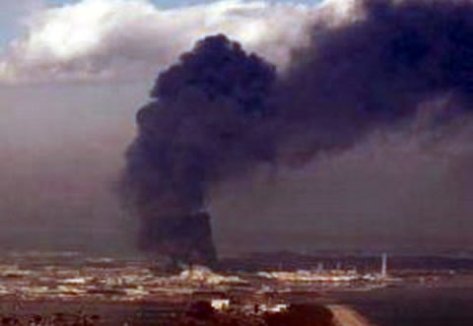
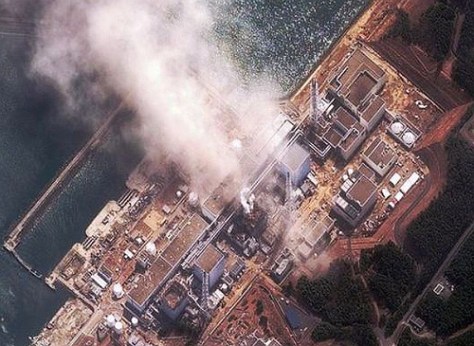
पिछले सप्ताह जापान में सुनामी के साथ आए भूकंप ने समूची दुनिया को दहला कर रख दिया है. इस विभीषिका से होने वाले नुक़सानों का वास्तविक आकलन, एड़ी चोटी के प्रयासों के बावजूद, अभी तक नहीं हो पाया है. सब कुछ धरती के नीचे दफ़्न हो जाने की सैकड़ों ख़बरें अभी तक आ रही हैं. रही सही कसर  परमाणु संयंत्रों में विस्फ़ोट के बाद विकिरण के ख़तरे ने पूरी कर दी है जिसके असर कई कई सालों और पीढ़ियों तक मारक होते हैं.

People evacuated from a nursing home
Fukushima - evacuated people

जापान के प्रधानमंत्री नाओतो कान के बयान कि ’दूसरे विश्वयुद्ध के बाद यह उनके देश में सबसे भयानक तबाही है, और कुछ मायनों में उससे भी ज़्यादा विनाशकारी’, के कई पहलू हैं. इसे प्राकृतिक आपदा में नष्ट हो चुके एक देश द्वारा महज वैश्विक मानवीय सहायता और सहानुभूति की अपील की तरह देखना पर्याप्त नहीं होगा. प्रधानमंत्री का बयान परमाणु ऊर्जा के ख़तरनाक पहलुओं की भी एक स्वीकारोक्ति है. मानवतावादी संकटों से निपटना निश्चित ही एक अहम और तात्कालिक चुनौती है. लेकिन परमाणु संयंत्रों में विस्फ़ोट और विकिरण के जो खतरे पैदा हो रहे हैं उनसे निपटना आने वाले दिनों में बेहद कठिन होगा. साथ ही, ऊर्जा के लिए परमाणु ईंधन को प्रोत्साहन देने वाले अन्य देशों की योजनाओं के लिए इससे कई महत्वपूर्ण सबक़ मिले हैं.
Continue reading हिरोशिमा से फ़ुकुशिमा: अनिल मिश्र

Anti-Nuclear Parliament March on 25th March, 2011

Organized by  Anti-Nuclear Struggles Solidarity Forum

Mandi House to Parliament. Assemble in front  of the Sahitya Academy Lawns at 12.00 noon.

This protest march is to state our stand that we oppose all  forms of nuclearisation of India, including nuclear (fission) power and weaponisation plans and programmes.

We further demand an immediate moratorium on all new projects, and a stringent review of existing plants by independent experts.

We demand investment in exploring sustainable alternative forms of energy.

Continue reading Anti-Nuclear Parliament March on 25th March, 2011

The evidence from Fukushima: nuclear power means nuclear catastrophe – Daniel Tanuro

Excerpts from an article by Daniel Tanuro, an eco-socialist environmentalist

What has happened is entirely predictable: yet another major nuclear “accident”. At the time of writing, it is not yet certain that it will take on the dimensions of a disaster similar to Chernobyl, but that is the direction in which things, alas, look set to evolve. But whether it develops into a major disaster or not, we are once again faced with evidence that the technology can never be 100% secure. The risks are so frightening that the conclusion is obvious: it is imperative to abandon nuclear energy, and to do so as quickly as possible. This is the first lesson of Fukushima, one which raises absolutely fundamental social and political questions, requiring a real debate throughout society about an alternative to the capitalist model of infinite growth…

Continue reading The evidence from Fukushima: nuclear power means nuclear catastrophe – Daniel Tanuro

Praful Bidwai on Lessons for India from Fukushima

Excerpts from a recent article by Praful Bidwai, journalist, social science researcher and activist on issues of human rights, the environment, global justice and peace.

The crisis holds a number of lessons for India as it embarks on a massive nuclear power expansion programme, which will double and then further triple India’s nuclear power capacity.

First, nuclear power generation is inherently hazardous. It is the only form of energy production that can lead to a catastrophic accident with long-time health damage and environmental contamination. Human error or a natural calamity can trigger a catastrophe—but only because reactors are themselves vulnerable.

Reactors are high-pressure high-temperature systems in which a high-energy fission chain-reaction is only just controlled. Nuclear reactors are both systemically complex, and internally, tightly coupled. A fault or malfunction in one sub-system gets quickly transmitted to others and gets magnified till the whole system goes into crisis mode.

Continue reading Praful Bidwai on Lessons for India from Fukushima

Nukes, Wikileaks and Corruption: National Alliance of People’s Movements

Press Release by NAPM

PM Must Reveal Truth to Nation
Cancel all the Proposed Nuclear Power Plants and Related Facilities
Moratorium on Dams in High Seismic Zones

New Delhi Delhi, March 18 : Prime Minister Manmohan Singh’s statement after the nuclear disaster in Japan that there is no need to be panicky as India will take all safety measures is not only amateurish but also lacks wisdom.
His statement gives the impression that the Japanese have not taken adequate safety measures. What type of natural calamities or man made lapses are in store for us, no one can visualise or predict leave alone taking safety measures against them.

The Prime Minister who has no control over his own cabinet ministers and has unashamedly wailed in public that he was ineffective due to coalition government, and caused the nation unimaginable and unprecedented loss by allowing mind blowing scams, issuing such absurd statements like taking all safety measures- lacks any tangible weight. Continue reading Nukes, Wikileaks and Corruption: National Alliance of People’s Movements

Reflections on Sudipta Kaviraj’s ‘Marxism in Translation’

[The following is a revised version of some comments made during a discussion with Sudipta Kaviraj at the Centre for the Study of Developing Socoeties, Delhi on 21 October 2010. Kaviraj made a presentation based on a recent essay of his ‘Marxism in Translation: Critical Reflections on Indian Political Thought’ (published in Political Judgement: Essays in Honour of John Dunn, Eds Raymond Geuss and Richard Bourke) to which some of us responded. AN]

It is interesting to revisit, with Sudipta Kaviraj, the field of ‘Indian Marxism’. It is an abandoned field, a piece of haunted land where no living beings go – at least not in their senses. What is more, it is a field that ‘Indian Marxists’ themselves are afraid of revisiting. It is their past – the land of the dead, of unfulfilled ancestral spirits, where the ghosts of yesteryears hang like betaal from every tree. The terror of this forbidden territory has redoubled, after the collapse of socialism. It is as if some deep secrets of the past lie buried there which they would rather not bring back to life, for fear of what might be revealed to them of their own selves. It is strange but true that Marxists who swear by history are perhaps as afraid of it as anybody else.

Read the full post in Critical Encounters.

The Answer My Friend, is Blowin’ in the Wind…

Even as the western and Indian media go ecstatic over the new democratic upsurges in the Arab world, something else has begun to happen. The Tunisian ‘virus’ that spread rapidly via Egypt, is now finding newer and equally hospital bodies elsewhere – that is to say, bodies made vulnerable by the years of plunder by corporate capital. Now, what precisely, is the connection between corporate capital and the Arab ‘jasmine revolutions’? On the face of it, nothing. However, as the state legislature in Wisconsin sat considering a bill to severely curb state workers’ rights of collective bargaining a few days ago, thousands of state employees descended on the building, virtually occupying it.

And as protests against Republican Governor Scott Walker’s assault on collective bargaining rights entered the fifth day, the support for the movement has begun to expand. Demonstrators were joined by union supporters from Illinois, Pennsylvania and New Jersey, as well as national union leaders and civil rights advocate the Rev. Jesse Jackson.

An interesting article by Dan La Botz, “A New American Workers’ Movement Has Begun“, underlines the connections of the ongoing struggle in Wisconsin with the Arab virus!

Continue reading The Answer My Friend, is Blowin’ in the Wind…

Anbulla kaadu (My beloved forest): Madhumita Dutta

Thervoy Kandigai Industrial Complex. The Government issued orders alienating 1127 acres of poramboke land in favour of SIPCOT for formation of a new Industrial Complex in Thervoy Kandigai village of Gummidipoondi Taluk, Thiruvallur District. The land development work is in progress now.

From the website of Industries Department, Government of Tamil Nadu

What this “land development work” involves, and the price that will be paid in human and ecological costs is something that MADHUMITA DUTTA encountered recently.

“A forest that was once ours is now private, a land that was once green now stands barren, a forest where we played, where we wandered freely is now fenced, men in uniform now guard the forest which we protected for generations.”

Thervoy Kandigai. A small nondescript village in Gummidipoondi Taluk of Thiruvallur district, 50 kms north of Chennai.  Surrounded by dense shrubby forests, natural lakes, rice fields and undulating terrain with misty mountain range of Sathyavedu in Andhra as the back drop. This small dalit village of about 1000 families is in the eye of a storm.  A storm that can blow away the dreams of Tamil Nadu government to hand over hundreds of acres of land to French tyre company Michelin, a big ticketed investment worth Rs 4000 crore for the state.   Continue reading Anbulla kaadu (My beloved forest): Madhumita Dutta

The ‘Viral’ Revolutions of Our Times – Postnational Reflections

The Arab Turmoil

According to a  report in The Guardian, the movement in Egypt that overthrew the regime of Hosni Mubarak is “a movement led by tech-savvy students and twentysomethings – labour activists, intellectuals, lawyers, accountants, engineers – that had its origins in a three-year-old textile strike in the Nile Delta and the killing of a 28-year-old university graduate, Khaled Said”. It has emerged, says the report, “as the centre of what is now an alliance of Egyptian opposition groups, old and new.” The April 6 Youth Movement (primarily a Facebook network), came into existence in in 2008, in support of the ongoing workers’ struggle in the industrial town of El-mahalla El-Kubra primarily on issues related to wages. The struggle in the past few years, also moved towards a restructuring of unions with government appointed leaders. The list of demands for the April 6 strike also included a demand for raising the national minimum wages that had remained stagnant for over two and a half decades. Increasing workers militancy over the past few years was a direct response to the World Bank imposed ‘reforms’ that had pushed lives of industrial labour to the brink. It was this sharpening conflict, consequent upon the serious impact of structural adjustment policies, that provides the backdrop in which the middle class youth decided to rally in support of the April 6 2008 strike. It was they who converted the call for an industrial strike into a general strike, according to some reports.  It is virtually impossible to get a sense of any of this in the ecstatic reports of the ‘networking babalog’ making a revolution that is now all over the Indian media.

Continue reading The ‘Viral’ Revolutions of Our Times – Postnational Reflections

Death of a River

This was first presented as a paper in a seminar on “The River” organised by the Max Muller Bhawan on 11 and 12 December 2010. Photo credits: Gigi Mon Scaria, Himanshu Joshi and Sohail Hashmi. Maps: The coloured map of Delhi is the restored version of an 1850 map; restoration is by E Ehlers and T Krafft. The black and white map is based on an 1807 map of the draingage of Delhi, made by a British cartographer. The three current three maps have been drawn by Shela Hashmi Grewal. You can stop at any image in the silde show above, by using the controls that you will discover once you hover the cursor over the slideshow.

This slideshow requires JavaScript.

The Final scene in the epic tragedy of the Jamna is being enacted at these very moments and the agencies that have wrought this havoc continue to initiate decisions that will permanently erase all signs of the river that has sustained the city that you and I call Hamari Dilli.

Before coming to my understanding of what needs to be done to save the Jamna, instead of what is being done to destroy it. I would like to draw your attention to certain geographical features of the land around Delhi, in order to better understand the factors that contributed to the location of the several Delhis and their relationship to the river. Continue reading Death of a River