Category Archives: Identities

To Understand the Mind of NDA II, turn to Singhal and the Sangh: Teesta Setalvad

Guest post by TEESTA SETALVAD

I do not expect there to be any outrage, comment or protest over the most recent rants of Ashok Singhal, senior RSS leader and patron of the Viswa Hindu Parishad (VHP), an RSS offshoot in an interview published in the July 17,2014 of The Hindustan Times  daily. We have as a nation and a polity become sinisterly and compliantly accustomed and accepting of aggressive hatred spilt by the majority and hypocritically touchy and outraged by similar rantings by so-called leaders of the minority. How deep this hypocrisy of majoritarianism has spread is evident in the coverage and depiction of hate speech by our electronic media that picks and chooses what to show, how often and when. So the hate ridden rantings of an Owaisi, or a Qader Rana will be run and re-run across networks and channels but equally insidious and as or more dangerous ravings of politicians who play on the identity of the majority are glossed over, hidden and remarkably, not even commented upon.

Singhal tells us through this interview today, that he welcomes with all his heart the first RSS pracharak as Prime Minister of India but, adding the proverbial sting to the tale, says that what is truly historical and remarkable about NDA II’s victory is that this electoral win was ensured without Muslim votes or support. Barefacedly lending voice to what more sophisticated faces in government including the now maun PM would presently rather leave unsaid, Singhal gloats on the disenfranchisement of India’s largest minority during democratically conducted elections. A time-tested tactic of the octopus-like sangh that generates terror and intimidation in the public sphere by the mutterings of a Singhal and a Togadia and allows the flag bearer beneficiaries of this hate-splitting in governance, the luxuries of convenient, intermittent,  silences.  The Advani-Vajpayee duo in the first NDA were a fine example of this. [Though,  Advani often relapsed into expressing well trained views especially after the brutal burning alive of Graham Staines and his sons (Orissa, January 1999).] NDA II has witnessed some interesting role reversals with many of the flag bearers of hate mongering now at the helm: a cabinet full of hate mongers are in the government’s driving seat. Singhal also emphasises and welcomes – undoubtedly for the reassurance of the sangh support base — all those being chosen for post of Governors are sanghis,  Ram Naik or a  Kesari Nath Tripathi. Continue reading To Understand the Mind of NDA II, turn to Singhal and the Sangh: Teesta Setalvad

Scholar David Shulman on the Gaza Bombings

The following is a report from the indefatigable Prof David Shulman, who teaches at the Hebrew University of Jerusalem. Prof Shulman works on the history of religion in South India and poetry and poetics in Tamil, Telegu and Sanskrit. David Shulman writes as protests inside Israel increase, as do right-wing attacks on the protestors. This report has been circulated by Prof Louise Bethlehem of the Hebrew University of Jerusalem.

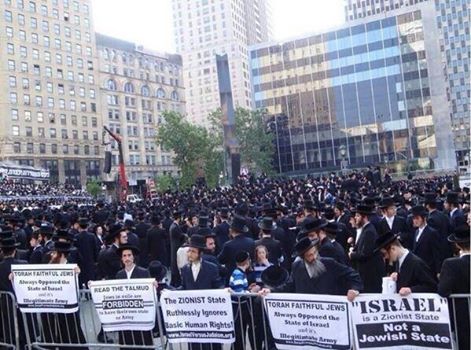
Jews demonstrate in New York Against Bombings

July 12, 2014 Umm al-Ara’is, Susya, Bi’r al-‘Id, Ma’asara

Business as usual in the South Hebron hills. There’s a war on in Gaza, but that too is business as usual, the meaningless biannual ritual in which both sides gleefully smash one another before reverting to the status quo ante. The Israeli media are drowning us in words, a vast and raucous flood, and the government is putting out its familiar, mendacious statements; perhaps in recent days only Abu Mazen has spoken the truth. The only solution, he said, is a political one, and Netanyahu is no partner. Meanwhile, rockets are flying, the Air Force is bombing, children are dying, soldiers are doing what soldiers mostly do, that is, wait around, and in South Hebron the land-grab proceeds apace, as always. Nothing, it seems, can stop that.

But wait a minute, some things have changed. Since the horrible murder of three Israeli teenagers, followed by the equally abominable revenge killing of the Palestinian boy from Shuafat, Israel has witnessed a wave of racist hatred on a scale perhaps not known before. Part of it has to do with the near-infinite opportunities of the internet: tens of thousands of virulent hate messages sent by ordinary Israelis have clogged the major sites; thousands of them call openly for revenge. I remember a time somewhat like this one, in the summer and autumn of 1982, the days of the first Lebanon War; the nadir came when a hate-filled nationalist threw a grenade into a Peace Now demonstration, killing my student, Emil Grunzweig. Some of the internet sites these days have called for the execution of leftists. Perhaps most striking of all is the utter shamelessness of this wave. Probably people used to have these same feelings but were not so ready, or eager, to state them in public. Decades of demagoguery and xenophobic incitement by the right, including, famously, by Netanyahu himself, have had an effect. The sluices are open. Continue reading Scholar David Shulman on the Gaza Bombings

The Crisis of Devendran’s Father Muthu P.


One question I have faced umpteen times in my career as a Malayali feminist academic is the following: what is peculiar about patriarchy in Kerala? I have offered many answers to non-Malayalis but it is time now, I feel, to offer one which is non-technical makes unique sense to Malayalis. Why? Because the most conspicuous thing in Kerala’s contemporary cultural scene is the insecurity of the Malayali patriarchal-male, now bulging out like the paunches gifted to us by our recent prosperity. Like a feminist colleague once commented, patriarchy in Kerala is so ubiquitous, it is almost like air, all over the place. But a whole new generation of Malayali women have, mostly unwittingly,have caused it to condense into threatening dark clouds of male insecurity. What if the monsoon has been playing truant over my fair land, from these ominous clouds we now receive the copious showers of misogyny. Continue reading The Crisis of Devendran’s Father Muthu P.

(How) Does the Sovereign Speak?: Akshaya Kumar

This is a guest post by Akshaya Kumar

In a recent piece, entitled The Modi Wave, I analyzed the orientations of the Modi campaign, and argued that crucial to Modi’s repackaging was his ‘sovereignty effect’. In this case, entirely a property of the media narratives that pitched Narendra Modi as someone from outside history, he was offered as an intervention into national history. I have suggested that this was a masterstroke to the extent that the subject within history has a compromised agency. The continuities – of forces, events, rationales and time as a whole – blunt the provenance of the outsider. In order for the subject to act upon history, he must stand entirely outside it. In this way, he cannot be accessed from within historical time. Modi not only offered a historical narrative of an unending Congress rule, infested with corruption, appeasement and misrule, but also that of him observing this lingering malady from outside the fence. His story of his own rise goes from being a tea-seller to the Chief Minister of Gujarat, from a not-yet to a fully sovereign. He is never a deputy, never a peg within the system; he suffers till his agency is still being shaped, and appears as already the incumbent. This fundamental separation from the substance of historical progression is needed to project oneself as unsullied, unlike those defiled by the their political existence within history.

Continue reading (How) Does the Sovereign Speak?: Akshaya Kumar

Queer Eye for Narendra bhai – Affect, Memory, and Politics in Desperate Times: Pronoy Rai

This is a guest post by Pronoy Rai

There is something awfully nostalgic about May 16. The election results brought with them a sense of melancholy-laden déjà vu. For the queers and allies on the political Left, the sinking feeling that May 16 brought with it, was reminiscent of yet another day, December 11, 2013; the day the Indian Supreme Court reversed the decision of the Delhi High Court decriminalizing homosexuality in India. It was once again criminal to be gay in India; once again the legal State apparatus had rendered queer bodies vulnerable to violence, from the State and from the political Right. There was a sense of desperation and disheartening injustice; what avenues remained to be sought when the country’s highest courts had us disappointed?

The Rashtriya Swayamsevak Sangh (RSS) and the Bharatiya Janata Party (BJP) had vehemently welcomed the Supreme Court judgment then, but our incoming Prime Minister, Narendra Modi, remained silent. It was perhaps too trivial an issue for him to address; when were rights anyway a matter of importance for him? If the indigenous people and forest dwellers of Gujarat could make the Indian mass media listen to them, they would tell us the story of Gujarat’s abysmal performance in settling land claims and distributing title deeds. Rights, especially of the fragments, are a roadblock for the Modi-style Development machine.

Continue reading Queer Eye for Narendra bhai – Affect, Memory, and Politics in Desperate Times: Pronoy Rai

Shazia Ilmi – Why Her Exit is Such a Blow: Jyoti Punwani

Guest post by JYOTI PUNWANI

Shazia Ilmi’s exit marks a real blow for AAP supporters. Her frequent TV appearances as AAP spokesperson made her out to be an articulate, confident woman who didn’t need to assert her religious identity to prove a point, which is a rare thing in today’s politics. Her participation in the Anna andolan was as much a pointer to its inclusive nature as it was to the emergence of a new kind of Muslim in public life: one who had no hesitation plunging into a mass movement which had strong nationalist overtones, was avowedly against the political system and had little to do with minority concerns.

When Shazia almost won from Delhi’s R K Puram constituency, it suddenly came home – for the first time in years, a Muslim candidate had been fielded from a Hindu-dominated constituency, and the Hindus had voted for her. In Mumbai, a Muslim political activist who’s friendly with every political party, has for long told Shiv Sena leaders that the moment they field a Muslim from any of their strongholds, he would join them. “The ability to take the other community along, that’s the test of a secular politician,’’   a senior Congress Muslim in Nanded  told me, rueing the fact that Muslims who could do this were ignored by his leader Ashok Chavan (one of the two Congressmen to win in the state this time). Continue reading Shazia Ilmi – Why Her Exit is Such a Blow: Jyoti Punwani

How The AAP Won Punjab: Harjeshwar Pal Singh

 This is a guest post by HARJESHWAR PAL SINGH

Amidst the unprecedented Tsunami of Modi which swept away opposition in most of the country, one result stood out as truly exceptional. AAM AADMI PARTY’s (AAP) stunning debut in Punjab. The virtually unheard of party in Punjab even 5 months before won 4 Parliamentary seats out of 13 and secured 25% of the popular vote announcing itself to be an equal of the ruling SAD/BJP combine and the opposition Congress. Two of its candidates Bhagwant Maan (Sangrur) and Prof Sadhu Singh (Faidkot ) won with a stunning margin of over 2 lakhs and 1.7 lakhs respectively. This popular groundswell of support which was ignored by most political analysts, conventional media and political parties had begun to take visible form through buzz on the street, social media and in common discourse by the election day.

What explains this massive upsurge by a fledgling political outfit lacking money, muscle, men and a local organization to humble two of the most well equipped political machines -SAD/BJP and Congress? Continue reading How The AAP Won Punjab: Harjeshwar Pal Singh

भगाणा कांड के पीड़ितों ने इंसाफ की मांग की: भगाणा कांड संघर्ष समिति

Press statement issued by the BHAGANA KAAND SANGHARSH SAMITI in New Delhi, 11 May 2014


Latthmar Mahila Sena
A call for direct action – an armed women’s squad – Latthmar Mahila Sena

हरियाणा के भगाणा गांव में सामूहिक बलात्कार की शिकार हुई चार नाबालिगों के हक में न्याय की मांग के समर्थन में आज पीड़ितोंके साथ भारी संख्या में दिल्ली के सामाजिक कार्यकता, बुद्धिजीवी और विद्यार्थी भी जुटे। यहां दिल्ली में पंत मार्ग पर स्थित हरियाणा के मुख्यमंत्रीआवास पर धरना देते हुए आंदोलनकारियों ने पीड़ितों के प्रति हरियाणा सरकार के रवैए की तीखी आलोचना की और कहा कि ऐसा लगता है कि हरियाणा सरकार सामंती उत्पीड़नकर्ताओं के पक्ष में खड़ी हो गई है और दलितों-पीड़ितों की आवाज को जानबूझ कर दफन किया जा रहा है।

बड़े पैमाने पर जुटेलोगों ने यहां दिल्ली में सरकार और प्रशासन से यह मांग की कि पीड़ितों पर जुल्म ढाने वाले दोषियों को  सख्त सजा दी जाए और फास्ट ट्रैक अदालतों का गठन कर पीड़ितों को जल्द से जल्द इंसाफ दिलाई जाए। Continue reading भगाणा कांड के पीड़ितों ने इंसाफ की मांग की: भगाणा कांड संघर्ष समिति

Bittersweet Gujarat: Reena Patel

This is a guest post by REENA PATEL

I looked around the room and my gaze was met with the kohl lined eyes and stares of bewilderment and distrust. My heart pounded as I listened to three Muslim women describe their latest attempt to find their father and brother after they disappeared in the riots. They were speaking to Rahidbhai* from a local NGO who was accompanying me into the Ahmedabad relief colonies for the first time. Why was I so scared? Why was my heart pounding? The eldest woman of the home disrupted my thoughts, she asked me for my name. I looked around and looked at Rahidbhai, who looked back uneasily. “Mera naam Reena hai.” I said, almost choking on the words, knowing what the next question would be. “Aap ka surname kya hai?” The room grew thick with silence. “Patel.”

As far back as I could remember, I was taught to regard Muslims differently from the rest of the general population. My parents, both from Surat, Gujarat moved and met in the United States in their twenties. They both lived in England and spent time in Gujarat, and had families that were deeply involved in the Gujarati community. My brother and I were born in Long Beach California. I went to Gujarati school on Sundays, went to every function, picnic, and cultural show put on by the Leuva Patidar Samaj in Southern California. Many of my family members were apart of the organization. In fact, my great grandfather Vallabhai Patel was one of the first Patels to land upon the shores of the United States, now estimated at a population of over 140,000. We went to religious camps that were meant to teach us about Hindu ideology, handed out saffron prayer books and modeled how to become ideal Hindu men and women for our communities.

Continue reading Bittersweet Gujarat: Reena Patel

There’s a G on my Neck (again): Simran Kaur

Guest post by SIMRAN KAUR

Shekhar Gupta is at it again: lacing an insidious agenda with just enough actual facts that even the targets of his vitriol become eager to swallow. Aspiring Indian Journos, this is how a good Sardar Joke—and while you are at it, jibe at the poor, the rural, the unemployed, the mourning—is done, while earning your paycheck yet again as an esteemed Editor-in-Chief, at best with head-in-clouds, at worst, a stake-in-oppression.

Shekhar G’s latest thesis: The rest of the country has moved on but Punjab has become a prisoner of its boisterous old stereotype. It has forgotten its entrepreneurial energy, its competitive spirit and slipped into a complacent, decadent trance of perpetual balle-balle.

His first argument for the thesis of Punjab’s decline: “the Punjabification”…of Punjab. He bemoans that signs and posts are in Punjabi, in Punjab.

The 50s and 60s saw Punjabi Hindus becoming the unique community to denounce their own mother-tongue. Upping the ante, G. ridicules Punjabis who use Gurmukhi, the script developed in the time of the Sikh Gurus. He finds tell-tale signs over Punjab (he notes his fieldwork of actually travelling on the Grand Trunk Road and flying over Punjab by helicopter recently) of the people being un-couth:  signage on Punjabi establishments, in poor English.

You will take a minute figuring out what the “burgars” and “nudles” painted on so many fast-food shops mean, or why Lily is always spelt “Lilly”, whether it be the name of a restaurant in Phagwara or a beauty parlour in Bathinda…If you haven’t figured out already that this, indeed, is Singh’s English.

Brilliant two-birds strike, Shekhar G. Continue reading There’s a G on my Neck (again): Simran Kaur

Condemn the Massacre in Assam: A Statement by Civil Society Groups, Activists and Concerned Citizens

Text of a statement issued by Civil Society Groups and Concerned Citizens

5th May 2014

Condemn the Massacre in Assam, Demand immediate arrest of Pramila Rani Brahma; Ensure safety of Muslims in BTAD: A Statement by Civil Society Groups, Activists and Concerned Citizens

We, the undersigned, express our profound sense of grief and alarm over the gruesome massacre of Bengali-speaking Muslims on 2nd May. This most recent round of killings — in which 32 people, mostly women and children have lost their lives – is another link in the long and… bloody sequence of ethnic cleansing being carried out by tribal Bodo militant groups with impunity.

For years, Hindutva politics has successfully created the bogey of the ‘Bangladeshi’, rendering Muslims as suspects and targets, locked in a perpetual battle with the tribal Bodos. In his rally at Silchar, the BJP’s Prime Ministerial candidate reiterated precisely this. He said: “There are two kinds of people who came from Bangladesh to Assam: those brought as part of a political conspiracy for vote bank politics of a particular party (Muslims) and others who were harassed in the neighbouring country (Hindus). Those brought for vote bank politics and smugglers must be pushed back, while the second category must be accommodated.” (Silchar, 22nd February). Continue reading Condemn the Massacre in Assam: A Statement by Civil Society Groups, Activists and Concerned Citizens

India’s 16th Lok Sabha General Elections and Persons with Disabilities: Avinash Shahi

This is a guest post by Avinash Shahi

When the challenges and daily difficulties of approximately 70 million persons with disabilities in public life are not highlighted in political rallies and in the TV studios, it raises a serious question about an elite political class’s commitment to empower persons with disabilities. Do they consider persons with disabilities as India’s citizens to be taken seriously? Politicians of major political parties are crisscrossing India’s vast geographical terrain to address voters. But neither Narender Modi nor Rahul Gandhi have ever bothered to utter a single word about their plan for voters who are persons with disabilities in their campaigns. Continue reading India’s 16th Lok Sabha General Elections and Persons with Disabilities: Avinash Shahi

Professors of Political Science and the Modi Phenomenon

Ashutosh Varshney has written yet another piece on the Modi phenomenon. This time he has invoked “the discipline of political science”, which he has “taught for two decades”, and underlined that it fundamentally disagrees with an “institutions-free” view of the rise of Narendra Modi. [See my response to his earlier piece here.] Before I examine Varshney’s ‘arguments’ about present politics, let me cite the following from nothing less than the American Political Science Review – a revealing chapter from the history of the discipline that he and I share:

Following World War I came the turbulence of the 1920s and 1930s. Communism and fascism rose to prominence as the world’s great powers fell to deflation and imperialism. Yet during this time of great political upheaval, political science became a study in irrelevance. Perhaps as a result of no longer sharing common theories and assumptions, the discipline fragmented and retreated inwards. Scanning the American Political Science Review from 1923 to 1936 for any sustained analysis of the great events of the day such as Mussolini’s march on Rome, Japan’s occupation of Manchuria, or even the Great Depression, one will come up empty. What one does find are, for example, reports of constitutional change in Estonia (Roucek 1936), predictions that the German administrative structure would stop Hitler becoming a dictator (Friedrich 1933), and analysis of the legal monism of Alfred Verdoross (Janzen 1935). [Mark Blythe, ‘Great Punctuations, Randomness, and the Evolution of Comparative Political Science’, APSR, Vol. 100, No. 4, November 2006. All emphasis added]

Perhaps this delusional business of waxing on the strength of institutions has been a professional pastime in the discipline but one could excuse the political scientists of the 1920s and 1930s, insofar as they were making the mistake for the first time. What do you say of someone who repeats the same error with ever greater self-righteousness, eighty/ ninety years down the line? And if this business of repeating the same error over and over again is something more than a pastime, if it is integral to political science, then all one can say is, so much the worse for political science! Continue reading Professors of Political Science and the Modi Phenomenon

Implausible Deniability – Reading Amish Tripathi’s ‘Shiva’ Trilogy: Eric Gurevitch

Guest Post by Eric .M. Gurevitch

A few years ago I had the pleasure of sitting in on a seminar Wendy Doniger taught on Hindu Mythology. On the final day of the class, Professor Doniger was addressing the continuing questions of students. A young man raised his hand and was called upon. “Professor Doniger,” he said somewhat sheepishly, “why do Indians keep retelling the same stories over and over again?” The rest of the students looked on somewhat aghast—clearly this student hadn’t understood the point of the class at all. But Doniger just chuckled. “Well,” she said, a sly grin creeping across her face, “because they can never get them quite right.” Her point is a simple but powerful one. As she went on to explain to the class (and in her book The Implied Spider), the stories we tell reflect the world around us. And as soon as we write a story down, the world we were trying to capture has changed. We cannot help but retell the stories that we value—after all, they are never quite right for us—in our time. And even if we manage to get them quite right, they are only right for us—other people living around us will have different reasons for telling similar stories, for appealing to the same stock of authoritative figures for different purposes. The importance of analyzing the implications of retelling of Indian stories takes on new meaning in a modern India where Wendy Dongier’s controversial book The Hindus, an Alternative History is no longer sold in stores.

Continue reading Implausible Deniability – Reading Amish Tripathi’s ‘Shiva’ Trilogy: Eric Gurevitch

Lesser Citizens: Trapped in a Queer world of Dystopia: Indrani Kar, Shuvojit Moulik & Somya Tyagi

This is a guest post by Indrani Kar, Shuvojit Moulik & Somya Tyagi

Any dominant, mainstream model undoes the very idea of multiple modes of living and diversity which excludes the real demands of the minority groups and contributes to their social exclusion. Whereas everyone is entitled to equal and inalienable rights and opportunities set forth in the Preamble to the Constitution of India without distinction of any kind, such commitments are yet to be translated into action. Although Article 21 of the Constitution guarantees ‘Right to life and personal liberty’ to all, of which the Right to Healthcare forms an integral part, a large section of the society is still insensitive to the healthcare needs of the transgender community.

n1

The transgender population faces grave misunderstanding, prejudice, harassment, ridicule, rejection and even exploitation at the hands of health service providers as they do not fit into the society’s prescribed, rigid gender roles. Though the transgender community is hardly a homogeneous entity and is considerably diverse in terms of gender identity and livelihoods, in public imagination such complex identities of gender ranging from hijra to transgender are all lumped into one category, which becomes extremely problematic. Unfortunately, government policies also seem to feed on these generalisations, making use of such umbrella terms rather than focus on the specific needs of different groups.

Continue reading Lesser Citizens: Trapped in a Queer world of Dystopia: Indrani Kar, Shuvojit Moulik & Somya Tyagi

Pogrom Politics from 1984 to 2002: Sanjay Kumar

Guest post by SANJAY KUMAR

Delhi 1984 and Gujarat 2002 are among the darkest spots in India’s post independence history. Like all other communal killings in the country, they too were similar in the mechanics of their violence. Connivance of the top state authorities, active role of elected politicians, police and bureaucratic indifference, a cornered and hapless minority, and participation of ordinary folks in violence and looting, all elements of the process of communal killings almost reached the  point of perfection in these two pogroms. So much so, that they indeed were not contained, but played themselves out fully, till the time killers and looters got tired, or when nobody was left to be killed, and nothing remained to be burnt and looted. All those who talk, think, write or make claims about civilisation in India, should take a few moments off to come to terms with these two events. Victims of these pogroms too, like of other communal killings in the country, continue to wait for justice. Collusion of investigative agencies, protective shadow of state power and judicial lethargy has meant that prime movers behind these killings have remained beyond the arm of justice. In fact, particularly in these two cases, the political fortunes of parties involved in killings witnessed an unprecedented boom. Congress party under Rajiv Gandhi in 1984 returned with the largest ever national mandate to Lok Sabha; and the BJP under Narendra Modi has successfully decimated all political opposition in Gujarat, and is now eyeing central power under his leadership. Continue reading Pogrom Politics from 1984 to 2002: Sanjay Kumar

Why Modi will become PM of India: Uzair Belgami

Guest post by UZAIR BELGAMI

I have been reading around of late and was surprised to see that there are actually still some people who think there is still a chance that Narendra Modi will not become PM of this country in 2014. Hah! Must be those minorities, or those Secularists, or those Communists who are saying and thinking this – all are Pakistan-lovers, Leftists and anti-nationals. I felt it is necessary I deal with these people through this article, in order to deal the ‘final blow’ before the elections. Continue reading Why Modi will become PM of India: Uzair Belgami

Muslims Will Consider Supporting AAP, if it Offers Concrete Programme for Them: Jamaat-e-Islami

An Interview with the Jamaat-e-Islami Hind Amir (National President) MAULANA JALALUDDIN OMARI conducted by MISHAB  IRIKKUR, MOHAMMAD RAGHIB and ABHAY KUMAR

Amid the talk of communal forces emerging stronger, India is going to polls. The fear of BJP’s prime ministerial candidate Narendra Modi is perhaps more felt by the Muslim minority than anyone else. The “secular” Congress—charged with corruption and misrule—does not seem much energetic and confident at this moment. At this crucial juncture what strategy should the largest religious minority community of the country adopt in the upcoming General and assembly elections? What are the options available for them? To learn about this and more, Mishab Irikkur, Mohammad Raghib and Abhay Kumar interacted with Maulana Jalaluddin Omari, the Amir (national president) of Jamaat-e-Islami Hind (JIH) last week at its New Delhi headquarter. The seventy-nine year old Amir–who is an Islamic scholar and author of dozens of books–spoke on a host of issues such as elections, politics, the social and economic problems of Muslims, reservation, framing of innocent Muslim youth on terror charges etc. The JIH—which came into existence soon after the Jamaat-e-Islami had split into two separate organisations at Partition–is one of the most influential Islamic organizations among Muslims that mainly does “intellectual” work and carries out welfare activities as well. The excerpts are as follows.

Amir_JIH_Omari
Amir_JIH_Omari

What are the major concerns of Muslims ahead of the upcoming elections?

Omari: Our Constitution does not discriminate any citizen on the basis of caste, colour, religion, region, sex etc. It has also given minorities some special rights related to their personal laws and culture. Muslims, therefore, should vote to power those forces, which are committed to upholding democracy, secularism and the principles of Indian Constitution. At the same time we should defeat the parties which are opposed to diversity. The very language of cultural assimilation is a threat to the spirit of our Constitution and interests of people. Continue reading Muslims Will Consider Supporting AAP, if it Offers Concrete Programme for Them: Jamaat-e-Islami

गोधरा भूल भी जाएँ पर इन आंकड़ो को कैसे भूलें, मोदी जी? : संजीव कुमार

Guest post by SANJEEV KUMAR

अगर हम 2002 के गोधरा के जनसंहार को भूल भी जाये तो भी आतंकवाद के दमन के नाम पर सिलसिलेवार ढंग से हो रही फर्जी मूठभेड़ो में मुसलमानों की हत्या को हम कैसे भुला पाएंगे। कुछ देर के लिए अगर हम इन क़ानूनी हत्यारों को भी भूल जाएँ और प्रदेश में पिछले 10 वर्षों के दौरान मुसलमानों की आर्थिक और शैक्षणिक विकास पर नजर दौड़ाए तो पता चलेगा की मोदी सरकार ने गुजरात के मुसलमानों के साथ किस प्रकार की भेदभाव की नीति को सुविचारित ढंग से आपनाया है।
गुजरात में मुसलमानों की जनसंख्या गुजरात की कुल जनसंख्या का 9.7% है पर वर्तमान सरकार द्वारा पिछले एक दशक में चलाये गए SJSRY (स्वर्ण जयंती शहरी रोज़गार योजना)  और NSAP (नैशनल सोशल असिस्टेंस प्रोग्राम)  योजना को छोड़कर ज्यादातर योजनाओं में मुसलमानों की भागीदारी उनके जनसंख्या के अनुपात से कम ही है (सच्चर समिति रिपोर्ट, पृ.स. 178)। उदहारण के तौर पर कृषि बीमा योजना में मुसलमानों की भागीदारी मात्र 3.5% है, जबकि पॉवर टिलर आवंटन के मामले में मुसलमानों की भागीदारी मात्र 1.4% और ट्रेक्टर के मामले में 4.1% है। गुजरात में मोदी के शासन काल में सहकारी बैंक या ग्रामीण विकास बैंक से वहां के मुसलमानों को किसी प्रकार का कोई कर्ज नहीं मिला है (सच्चर समिति रिपोर्ट, पृ.स. 373-75)। Continue reading गोधरा भूल भी जाएँ पर इन आंकड़ो को कैसे भूलें, मोदी जी? : संजीव कुमार

Dalit Students and Journalists – from Classroom to Newsroom: Shivnarayan Rajpurohit

This is a guest post by SHIVNARAYAN RAJPUROHIT

The conscious or unconscious exclusion of Dalits (SC/ST) from the Indian mediascape has given way to a lopsided public sphere which hardly manages to generate comprehensive debates. Corporate interests have aggravated this malaise, given the indifference of the corporate sector towards fomenting a diverse media, cutting across caste, religious and class lines. The following paper looks at the absence of Dalit journalists and students from English press and journalism schools. The primary conclusion of my research is that English-language media as an institution has been undemocratic because it draws its workforce from a homogenous set of people, overlooking the urgent need for diversity. In that sense it is hostile to opposing viewpoints and diversity of arguments. The paper is primarily divided into five parts: counting Dalit journalists, reason for exclusion, classroom to newsroom, need for Dalits in media and Blacks in USA.

Continue reading Dalit Students and Journalists – from Classroom to Newsroom: Shivnarayan Rajpurohit

Jamaate-E-Islami’s Tryst With Politics – Tilting at the Electoral Windmills: Fahad Hashmi

Guest Post by FAHAD HASHMI

‘It was all very well to say “Drink me”, but the wise little Alice was not going to do that in a hurry. “No, I’ll look first,” she said, “and see whether it’s marked ‘poison’ or not”; for she had read several nice little stories about children who had got burnt, and eaten up by wild beasts, and other unpleasant things, all because they would not remember the simple rules their friends had taught them: such as, that a red-hot poker will burn you if you hold it too long; and that, if you cut your finger very deeply with a knife, it usually bleeds; and she had never forgotten that, if you drink much from a bottle marked “poison,” it is almost certain to disagree with you, sooner or later.’

(Alice’s Adventure in Wonderland)

Continue reading Jamaate-E-Islami’s Tryst With Politics – Tilting at the Electoral Windmills: Fahad Hashmi